Strength at home
Chair exercises for seniors: a seated workout
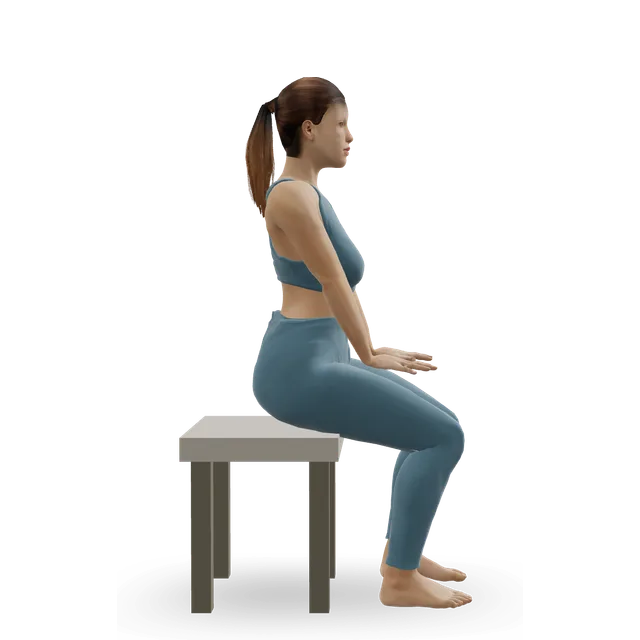
Use a solid chair without wheels or arms, feet flat and knees at right angles. Everything is seated except the sit-to-stands and the optional standing finish. Seated exercise builds some strength but does not train balance, so use this as a starting point: when it feels easy, add the standing finish, then move on to the balance routine.
Warm-up
- Seated march1 to 2 minBeginner · Hip flexors, Quads, Abs · 3D demoSit tall, hold the sides of the seat and lift the knees in turn. When it is easy, march standing, holding the chair backHarder: Standing march
- Thoracic rotation5 each side, 5 s holdsBeginner · 3D demoSeated, arms crossed on your chest, hips facing forwardHarder: Reverse lunge with rotation
- Chin tuck5 reps, 3 s holdBeginner · Neck · 3D demoEasier: Lying chin tuckHarder: Isometric neck holds (four-way)



Strength
2 rounds · Rest 60 s between rounds
- Seated knee extension (chair)Up to 10 reps each legBeginner · Quads · 3D demoUp for a slow count of 3, down for 5; add an ankle weight when it gets easyEasier: Quad set (static quads)Harder: Leg extension
- Seated bent-knee calf raise (soleus raise)10 to 20 repsBeginner · Calves · 3D demoHarder: Slow calf raise
- Sit to stand, pushing on the thighs5 to 10 repsBeginner · Quads, Glutes, Triceps · 3D demoPush on your thighs, not the chair; when it is easy, stand up without using your handsHarder: Bodyweight squat
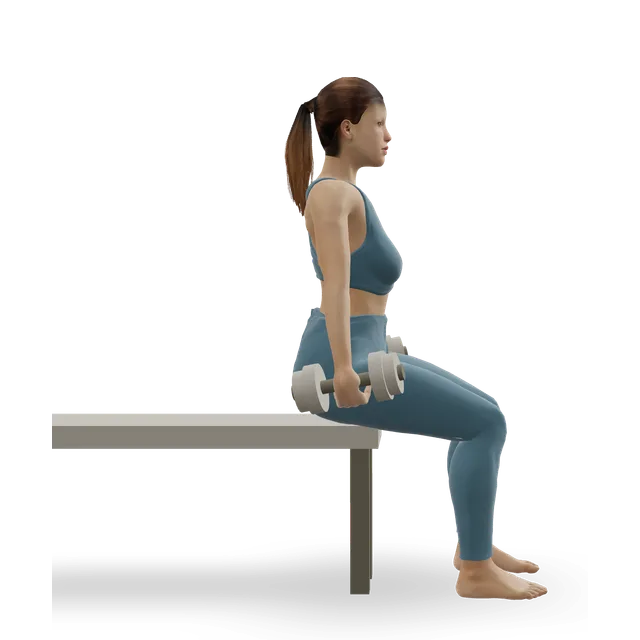
- Seated dumbbell curl5 to 10 reps each armBeginner · Biceps, Forearms · 3D demoFilled water bottles are fineHarder: Dumbbell biceps curl
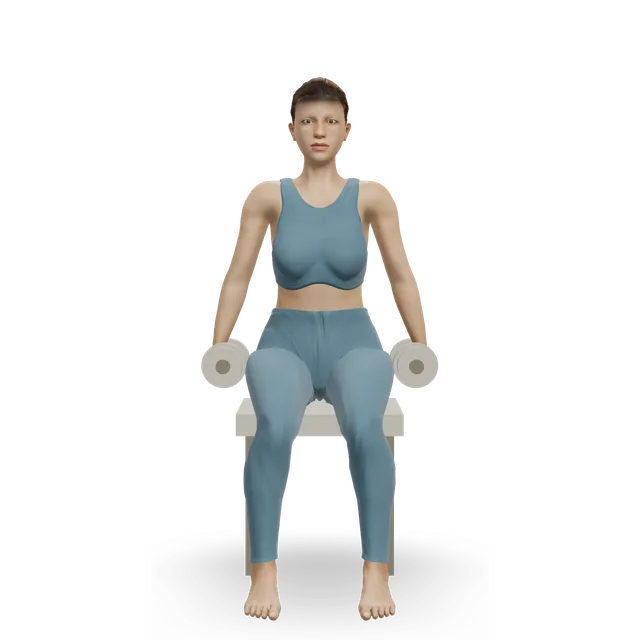
- Seated dumbbell lateral raise8 to 10 repsBeginner · Shoulders · 3D demoLight weights or none; stop at shoulder height, and skip it with shoulder painEasier: Band lateral raiseHarder: Smith machine upright row
- Seated upper-back lift (sit tall, shoulders back)5 holds of 3 to 5 sBeginner · Back, Shoulders, Neck · 3D demoSitting tall near the front of the seatEasier: Elbows backHarder: Prone Y-T-W raises



Cool-down

Standing finish (when you are ready)
- Slow calf raise5 to 10 repsBeginner · Calves · 3D demoHolding the chair backEasier: Seated bent-knee calf raise (soleus raise)Harder: Standing dumbbell calf raise

Tips
- Do it at least twice a week, and on other days stand up and move about every hour if you can.
- Stop and sit still if you feel dizzy or breathless or have chest pain. Call 999 if chest pain does not settle.
- If you have fallen, ask your GP about a falls service: seated exercise does not train balance, and a falls service can offer supervised strength and balance training.
- When the seated moves feel easy, add the standing finish, then move on to the balance exercises routine.
The doses are suggested starting points, not a prescription. Choose a range you can control and stop for sharp or increasing pain, numbness or tingling. Get individual advice after an injury or surgery, or if you are pregnant or managing a health condition.
Find more moves like these
More strength at home




Beginner bodyweight workout
A 20-minute full-body workout with no equipment: squats, knee push-ups, bridges, lunges and planks.
20 minBeginner10 movesNo equipment


Full-body bodyweight workout
An intermediate no-equipment workout: push-ups, split squats, single-leg bridges, pike push-ups and core work.
30 minIntermediate11 movesNo equipment


Full-body dumbbell workout
A 35-minute full-body strength workout with dumbbells: goblet squats, presses, rows, Romanian deadlifts and carries.
35 minIntermediate9 movesA band, A dumbbellQuestions people ask
How long does the chair exercises for seniors: a seated workout take?
About 20 minutes, including any warm-up and cool-down listed. Shorten it by doing fewer rounds; lengthen it by adding one.
What equipment do I need?
You need: A bench or box, Something with weight, A dumbbell, A wall. Each move links to its guide, where you can find an alternative if you are missing something.
Is it suitable for beginners?
It is written for beginners. 5 of its 11 moves have an easier option listed beside them if you need one.
How do I make it easier or harder?
Use the easier or harder option listed under each move, change the number of rounds, or adjust the rest. Progress one change at a time.