Use the map to pick a starting point, not to diagnose
The NHS says elbow and arm pain is not usually a sign of anything serious, and asks readers not to diagnose themselves. The map tells you what is likely, not what you have. If your pain doesn't fit, or isn't easing after a few weeks, get it checked.
Source 1
The good news: elbow tendon pain usually settles, slowlyStrong evidence
Tennis elbow, the most common cause, usually gets better on its own, but over months rather than weeks. In the no-treatment and placebo groups of 24 trials (1,085 people), 89% were much better or recovered at a year. Every 2.5 to 3 months, about half of those still sore recovered, and how long it had already lasted made no difference to the chances. In two trials, 83% and 90% of people told to wait and see had a successful outcome at a year.
Golfer's elbow has been studied far less, but it is managed the same way.
Sources 21, 22, 23, 33
"Elbow tendonitis" is usually tennis or golfer's elbowEmerging evidence
Searches for elbow tendonitis usually mean one of two common problems: tennis elbow on the outside or golfer's elbow on the inside. Clinicians now prefer "tendinopathy" to "tendonitis", because by the time people seek care the inflammation has often settled, and guidelines recommend loading the tendon rather than resting it completely. Tendon problems at the front (biceps) and the back (triceps) of the elbow are rare.
Sources 12, 11, 33
Is it my neck?Emerging evidence
The JOSPT tennis elbow guideline lists a pinched nerve in the neck (cervical radiculopathy) first among the conditions that can mimic tennis elbow, alongside nerve problems near the elbow. People who reported nerve symptoms had worse pain and disability at 8 weeks.
Clues that point to the neck (editorial): pins and needles or numbness in the hand, pain that changes when you turn or tilt your head or look up, and neck pain or stiffness alongside the elbow pain. The pinched nerve in the neck guide has its own staged plan. The NHS advises seeing a GP for pins and needles that keep coming back or don't go away.
Sources 12, 9
Swelling on the point of the elbow (bursitis)Emerging evidence
The bursa is a small fluid-filled sac between the bony point of the elbow and the skin. Pressure or friction, such as leaning on your elbows, can make it swell; occasionally it gets infected. It can ache, feel tender or warm, and hurt more when you press on it or move it.
The NHS advice: rest it from pressure, use ice for about 10 minutes every few hours, take painkillers, and pad or cushion it. See a GP if it isn't better after 1 to 2 weeks, and get a same-day check (urgent GP appointment or NHS 111) if you have a high temperature or feel hot, cold or shivery, can't move the joint, or have very severe or shooting pain.
In a trial of 90 people with non-infected bursitis, a compression bandage plus anti-inflammatories cleared it in 83% by 4 weeks, draining it in 65%, and draining plus a steroid injection in 85%. The steroid worked fastest, but the authors favoured compression and anti-inflammatories as the safest balance: reviews link steroid injections for bursitis with more complications, including infection and thinning of the skin, and found non-surgical care safer than surgery.
Exercise isn't a treatment for bursitis, and no study has tested it. Keep the elbow moving within comfort with the stage 1 moves below, avoid leaning on it, and do forearm planks on padding, or swap them for straight-arm planks, while it settles (editorial).
Sources 3, 20, 5, 47, 48, 49
Back of the elbow: the tricepsMixed evidence
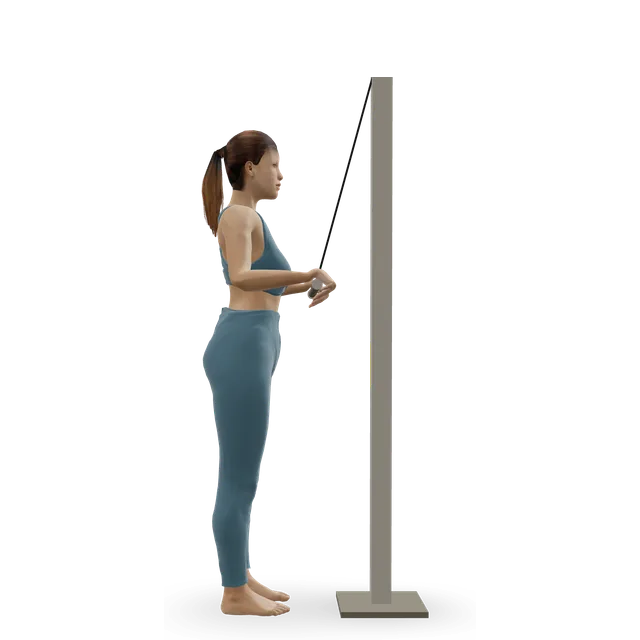
Triceps tendinopathy is very rare, and little has been published about it. Pain at the back of the elbow when straightening against resistance (dips, skull crushers, close-grip pressing) is the usual story, compared with tennis elbow on the outside (editorial). Use mid-range triceps work such as pushdowns and the elbow pain rule. A sudden pop with weakness straightening the elbow could be a torn tendon: get help from NHS 111.
Sources 33, 4
Children and teenagersEmerging evidence
Pulled elbow: when a young child's arm is pulled or the child is swung by the arms, a forearm bone can slip out of the ligament that holds it at the elbow. The child holds the arm still at their side. A doctor or nurse moves it back, usually in the emergency department. It can happen again, but rarely once children reach school age; avoid pulling or swinging children by the arms.
Young throwers: in 50 young throwers with a fracture of the growth plate on the inner elbow, 84% of those asked had elbow pain before the injury. In US high school baseball, specific pitching rules (rest between consecutive days, a daily limit of 105 pitches or fewer) were linked with fewer shoulder and elbow injuries, though the national rule change as a whole made no measurable difference. Elbow pain in a young thrower is a reason to stop throwing and get checked, not to play through. A UK care pathway also lists elbow pain in a child or teenager as a reason for referral.
Sources 18, 52, 53, 11
Myths worth dropping
Several popular beliefs about elbow pain are weaker than they sound.
- "Tennis elbow only happens to tennis players." Most cases come from gripping and twisting at work and at home: computer work, manual trades, DIY and playing instruments.
- "Golfer's elbow comes from golf." Most cases are in people doing repetitive, forceful gripping and manual work, not golfers.
- "It's inflammation, so rest it until it's gone." Clinicians now call it a tendinopathy: by the time people seek care, the inflammation has often settled. Guidelines recommend loading the tendon, not complete rest. (The NHS page still says the tendons become inflamed.)
- "A cortisone injection will fix it." For tennis elbow it is better for about 6 weeks, then worse at 6 to 12 months, and the pain is more likely to come back.
- "PRP or shockwave is the advanced fix." Little or no benefit over a placebo in Cochrane reviews; a UK care pathway recommends strongly against shockwave.
- "If it's lasted 6 months, you'll need surgery." The chance of recovering stays about the same through the first year, and surgery hasn't been shown to beat a placebo operation.
- "You need a scan to know what's wrong." Tennis elbow is diagnosed from the story and an examination; imaging is only for when the diagnosis is uncertain.
- "Slow lowering (eccentrics) is the only exercise that works." Still holds, lifting and lowering are all recommended, and the differences between them are small.
- "Exercise must be completely pain-free." Mild discomfort that settles is acceptable; at the elbow, keep it mild.
- "A brace heals it." A strap eases pain while you wear it; no long-term benefit has been shown.
- "Nerve glides are essential for the funny-bone nerve." In one trial, nerve glides and night splints added nothing to an explanation and avoiding the positions that bring it on.
Sources 2, 12, 31, 32, 11, 24, 25, 34, 35, 21, 38, 30, 28, 41, 45, 40, 46