Exercise guide

Exercise in pregnancy: what's safe, how much, and what to avoid

In a pregnancy without complications, exercise is safe for you and your baby, and it is recommended. The NHS, the World Health Organization and other major guidelines advise at least 150 minutes of moderate activity a week, plus muscle strengthening. It lowers the odds of gestational diabetes and of depression in pregnancy.

Tell your midwife or GP what you plan to do before you start, and ask them first if you have a pregnancy complication, such as bleeding, a low-lying placenta, pre-eclampsia or a history of early labour, or a heart or lung condition. Stop and call your midwife or maternity unit if you have bleeding, fluid leaking, regular painful contractions, chest pain, dizziness, or calf pain or swelling.

The short version

Is exercise safe in pregnancy?Strong evidence

Yes, in a pregnancy without complications. The NHS calls exercise safe for you and your baby, and WHO, the UK Chief Medical Officers and the American College of Obstetricians and Gynecologists (ACOG) all recommend it. It is not linked with miscarriage, stillbirth or early birth, though the miscarriage studies are of very low quality. If you were active before, keep going. If not, start gently.

Sources 1, 2, 3, 4, 5, 6

How much, and how hard

Aim for at least 150 minutes of moderate activity a week, for example 30 minutes on 5 days, plus muscle strengthening twice a week. Ten-minute bouts count. If you're new to exercise, start with about 10 minutes a day and build up. Moderate means you can talk but not sing.

Good choices are brisk walking, swimming, aqua-natal classes, a static bike, pregnancy exercise classes and strength training.

Sources 7, 1, 8, 9, 10

What to avoid

Contact sports, activities where you could fall (such as horse riding, skiing and off-road cycling), scuba diving, hot yoga or hot Pilates, and hard exercise at high altitude unless you're used to it. After the first trimester, keep time flat on your back short. The NHS also advises against taking up a new vigorous sport, such as running, in pregnancy.

Sources 9, 11, 2, 1, 12

Can I lift weights?

Yes. Every major guideline recommends strength work in pregnancy. If you already lift, you can usually carry on, perhaps a little lighter. Breathe out on the effort rather than holding your breath, and after the first trimester move bench work to an incline or a seat.

Sources 2, 7, 3, 8, 12

By trimester

First trimester: carry on with what you already do safely, and avoid overheating. Second: swap moves flat on your back for propped-up, side-lying or all-fours versions. Third: slow down, keep strength work lighter, do pelvic floor exercises every day, and go to sleep on your side. The trimester section below has the detail.

Sources 3, 11, 10, 13

Stop if you notice warning signs

Stop and call your midwife or maternity unit for bleeding, fluid leaking from the vagina, regular painful contractions, chest pain, dizziness or feeling faint, or calf pain or swelling. The full list is in the next section.

Sources 3, 9

When to stop, and who should check first

Call 999 if you think it is a life-threatening emergency.

Stop and call your midwife or maternity unit straight away

Stop exercising and get advice if you have:

  • bleeding from the vagina
  • fluid gushing or leaking from the vagina
  • regular, painful contractions
  • tummy pain
  • dizziness or feeling faint
  • shortness of breath before you start exercising
  • chest pain
  • a headache
  • muscle weakness that affects your balance
  • calf pain or swelling

Sources 3, 9

Get help urgently, whether or not you were exercising

Who to call: before 12 weeks, your GP surgery or early pregnancy unit; from about 20 weeks, your midwife or maternity unit; NHS 111 if you're not sure; and 999 if you think it is a life-threatening emergency.

Get help straight away for:

  • a change in your baby's movements
  • sudden swelling of your face, hands, legs or feet, a severe headache, or problems with your vision such as blurring or flashing lights (possible pre-eclampsia)
  • breathlessness that comes on suddenly, that comes on when you lie down, or that comes with chest pain
  • vaginal bleeding or fluid leaking
  • a temperature of 38°C or above

Source 14

See your midwife or GP soon

These aren't emergencies, but get them checked:

  • pelvic pain that makes it hard to move around
  • leaking urine that isn't improving with pelvic floor exercises
  • low mood or anxiety that affects your daily life

Sources 15, 16, 14

Conditions that rule out strenuous exercise

The 2019 Canadian guideline lists these as reasons not to do strenuous exercise. You can usually keep up your everyday activities: ask your midwife or doctor what is right for you.

  • your waters have broken
  • premature labour
  • unexplained vaginal bleeding that persists
  • placenta praevia (a low-lying placenta) after 28 weeks
  • pre-eclampsia
  • a weak (incompetent) cervix
  • your baby not growing as expected (growth restriction)
  • triplets or more
  • type 1 diabetes, high blood pressure or thyroid disease that isn't controlled
  • another serious heart, lung or whole-body condition

Source 8

Conditions to talk through first

With these, talk to your midwife or doctor before moderate or vigorous exercise. Activity is usually still recommended, sometimes adapted. ACOG advises against routinely prescribing bed rest to prevent early birth: it carries risks of blood clots, bone loss and losing fitness.

  • repeated miscarriages
  • high blood pressure that started in pregnancy
  • a previous early (preterm) birth
  • mild or moderate heart or lung disease
  • anaemia that causes symptoms
  • malnutrition or an eating disorder
  • twins, after 28 weeks
  • another significant medical condition

Sources 8, 3

What the evidence says

An odds ratio below 1 means lower odds with exercise; 1 would mean no difference.

Safe for your babyStrong evidence

Across 23 studies of 7,125 women, exercise in pregnancy was not linked with miscarriage (odds ratio 0.88) or with a baby dying around the time of birth (0.86). Guidelines agree on this, though the studies themselves are of very low quality. Exercise also didn't raise the odds of preterm birth, growth restriction or low birth weight, and it lowered the odds of a baby over 4 kg (odds ratio 0.61, high-quality evidence from 15 trials).

Sources 5, 6, 8

Lower odds of gestational diabetesStrong evidence

In trials of 6,934 women, exercise on its own cut the odds of gestational diabetes by about 38% (odds ratio 0.62). About 140 minutes a week of moderate exercise, such as brisk walking, was the amount linked with at least a 25% lower risk.

Sources 17, 2, 3

Lower odds of pre-eclampsiaEmerging evidence

In trials of 3,322 women, exercise cut the odds of pre-eclampsia by about 41% (odds ratio 0.59). The estimate is less certain than the one for diabetes.

Sources 17, 2

High blood pressure in pregnancy: mixed resultsMixed evidence

One meta-analysis found lower odds of high blood pressure that starts in pregnancy (odds ratio 0.61), but WHO's review found no difference in how often it happened.

Sources 17, 2

Better moodEmerging evidence

In 5 trials of 683 women, exercise cut the odds of depression in pregnancy by about two-thirds (odds ratio 0.33) and eased symptoms. It didn't change rates of depression after the birth.

Source 18

Healthier weight gainStrong evidence

Exercise cut total weight gain by about 0.9 kg on average, and the odds of gaining too much by 32% (odds ratio 0.68). It slightly raised the odds of gaining too little (odds ratio 1.32, 5 trials), a weaker signal that is less certain.

Sources 19, 2

Strength training helps tooEmerging evidence

In a review of 50 studies with 47,619 participants, resistance training was linked with lower odds of high blood pressure in pregnancy (odds ratio 0.42), gestational diabetes (0.62) and mood disorders around the birth (0.48), with no sign of harm. Most programmes were light to moderate, and 90% combined strength work with other exercise.

Source 20

Fewer assisted birthsEmerging evidence

Exercise lowered the odds of a forceps or ventouse delivery by 24% (odds ratio 0.76). It wasn't linked with caesarean birth, the length of labour, tears or injury.

Source 21

Your baby's heart rateEmerging evidence

Exercise raises your baby's heart rate a little: by about 6 beats a minute on average during exercise across 91 studies (ACOG gives a range of 10 to 30). It didn't harm the baby's heart rate or blood flow to the womb and placenta. The studies are of very low to moderate quality.

Sources 22, 3

How much, and how hard

These doses are for a pregnancy without complications. If you can't manage them, do what you can: any activity is better than none.

The guideline targetsStrong evidence

The guidelines agree on at least 150 minutes of moderate activity a week, with muscle strengthening:

  • UK Chief Medical Officers: at least 150 minutes of moderate activity every week, and muscle strengthening twice a week. "If you're not active, start gradually. If you're already active, keep going."
  • WHO: at least 150 minutes of moderate activity a week, with a variety of aerobic and muscle-strengthening activities; gentle stretching may also help.
  • ACOG: at least 150 minutes a week, for example 20 to 30 minutes a day on most or all days, with aerobic and strength exercise.
  • Canada: at least 150 minutes a week over at least 3 days, a mix of aerobic and resistance training, and pelvic floor exercises every day.
  • NHS: 150 minutes a week, the same as all adults, plus 2 strength sessions. "If you cannot do 150 minutes each week, do what you can."

Sources 7, 2, 3, 8, 1

It doesn't have to be in one go

The NHS says the 150 minutes don't need to be done in one go. ACOG suggests 30 minutes on 5 days, or 10-minute bouts through the day. The Canadian guideline accepts that tiredness or discomfort will sometimes make the targets impossible: do what you can, and come back to them when you're able.

Sources 1, 9, 8

How hard: the talk testStrong evidence

Moderate activity raises your heart rate and makes you breathe faster and feel warmer: you should be able to talk but not sing. ACOG says your sense of effort may be a better guide than heart rate in pregnancy, because your heart rate may rise less than usual; aim for "somewhat hard", about 13 to 14 on the 6 to 20 effort scale. The old advice to stay under 140 beats a minute was dropped in 1994.

Sources 1, 3, 23

Strength work, twice a week

No guideline sets a dose for pregnancy. A sensible starting point, in line with adult guidance, is 8 to 12 repetitions of exercises for the main muscle groups, twice a week, stopping with a few repetitions to spare (editorial). Breathe out on the effort.

Sources 7, 20, 12

Starting from little or nothing

Choose walking, swimming, a static bike, aqua-natal or pregnancy exercise classes, and build up slowly. Three ways to start:

  • NHS: about 10 minutes a day, building up slowly.
  • ACOG: as little as 5 minutes a day, adding 5 minutes each week until you reach 30 minutes a day.
  • POGP, the UK's pelvic health physiotherapists: 15 minutes of continuous activity 3 times a week, building to 30 minutes at least 4 times a week.

Sources 1, 11, 9, 10

If you already train hard

If you exercised vigorously before pregnancy, you can usually continue. ACOG notes that hard or long sessions, beyond about 45 minutes, can lower your blood sugar, so eat enough beforehand or shorten the session, and suggests elite athletes consider lighter resistance loads. For athletes, the IOC advises against training above 90% of maximum aerobic capacity.

Experienced lifters who kept lifting at least 80% of their one-rep maximum reported typical pregnancy and pelvic floor outcomes in a survey of 679 women. That is reassuring but weak evidence: the women chose to take part, and there was no comparison group.

Sources 2, 3, 12, 24

What to change as your bump grows

Some of these rules rest on evidence and some are precautions. Each note says which.

Lying on your back: one practical ruleStrong evidence

From the end of the first trimester, keep moves on your back short, prop your upper body up, or switch to side-lying, all-fours, seated or standing versions. If you feel dizzy, sick or unwell lying down, roll onto your side.

Every guideline below fits this rule, though they differ on timing. It starts a little earlier than the NHS's "later pregnancy" because WHO says to avoid exercise on your back after the first trimester. The grade is for the guidance: the evidence of harm from short bouts is thin.

Sources 2, 1, 11, 10, 8, 12

Why the guidelines differ on lying on your backMixed evidence

After about 20 weeks, the womb can press on the large vein that returns blood to the heart, which can lower your blood pressure. In one study, blood flow to the womb fell 13% when women moved from lying on their left side to exercising on their back.

The evidence of harm is thin. A review of 7 studies found no link between exercise programmes that included moves on the back and low birth weight, and no harm to mothers, though 31% of babies showed unusual heart-rate patterns during a single bout. Its authors concluded there isn't enough evidence to say whether exercise on your back is safe or should be avoided. The guidelines say:

  • WHO: avoid activities lying on your back after the first trimester.
  • NHS: in later pregnancy, avoid lying flat on your back for more than a few minutes. NHS Best Start in Life adds "particularly after 16 weeks".
  • POGP: short periods of exercise on your back are safe; avoid long periods after 18 weeks.
  • ACOG: avoid long periods lying flat on your back; the concern applies after 20 weeks.
  • IOC: side effects are more likely after 28 weeks; tilt your upper body to 45 degrees, or use side-lying, sitting or standing versions.
  • Canada: only women who feel light-headed, sick or unwell lying flat need to change position.

Sources 3, 25, 2, 1, 11, 10, 12, 8

Going to sleep on your side from 28 weeksEmerging evidence

This is a separate question from exercise. Going to sleep on your back from 28 weeks is linked with late stillbirth: in a pooled analysis of 851 stillbirths and 2,257 comparison pregnancies, the odds were about 2.6 times higher. Sleeping on either side appeared equally safe.

The NHS says to go to sleep on your side from 28 weeks, and not to worry if you wake up on your back. The concern is long, unbroken sleep, not a few minutes of exercise.

Sources 26, 13

Keep cool and drink waterEmerging evidence

Drink water, wear loose clothing, and avoid hard exercise in hot, humid weather or the midday sun, particularly in the first trimester. Skip hot yoga and hot Pilates, and don't exercise on an empty stomach.

The evidence is reassuring. Across 12 studies of 347 women, no one's core temperature reached 39.0°C, including women exercising hard for up to 35 minutes at 25°C. In a trial, 15 women cycling for 45 minutes at 32°C peaked at 37.9°C. On average, exercise raised temperature by about a quarter of a degree, and it wasn't linked with birth defects. The studies are small and mostly after 12 weeks, though, so keep to the guideline advice.

Sources 3, 9, 1, 11, 27, 28, 29

Activities to avoidStrong evidence

These rules are guideline advice based on the risk of a blow to the bump, a fall or pressure changes, not on trials.

  • Contact and collision sports, such as boxing, martial arts, rugby, football, basketball and ice hockey. FIFA's decision aid suggests stopping full-contact football after 12 weeks, with adapted training allowed.
  • Activities with a high risk of falling, such as downhill skiing, water skiing, surfing, off-road cycling, gymnastics and horse riding. ACOG prefers a static bike to road cycling as your balance changes.
  • Scuba diving: your baby isn't protected from decompression problems.
  • Skydiving.
  • Hot yoga and hot Pilates.

Sources 9, 11, 1, 12, 30, 3, 7

Altitude: the thresholds differ

WHO advises avoiding activity that might limit oxygen, such as exercise at high altitude when you don't normally live there. The numbers vary:

  • NHS Best Start in Life: avoid exercising at 2,500 m or higher until you're used to the altitude.
  • ACOG: women from sea level managed activity up to about 1,800 m (6,000 feet).
  • IOC, for athletes: no hard training above 1,500 to 2,000 m until you're used to the altitude.

Sources 2, 11, 3, 12

Don't take up running for the first time

This is current NHS advice: "It's not recommended to start a new vigorous activity in pregnancy, such as running." There is no outcome evidence either way on starting to run. In 1,293 women who kept running through pregnancy, running wasn't linked with earlier birth or smaller babies, but they were runners already.

Brisk walking, cycling and swimming bring the same benefits without a new impact load on your pelvic floor and joints. The Canadian guideline encourages women who were inactive to become active, building up gradually. If you ran before, you can usually carry on, slowing down or switching to brisk walking as your bump grows.

Sources 1, 11, 31, 8, 10

Lifting: breathe out on the effortMixed evidence

The IOC advises adjusting hard lifts so you don't strain with a held breath or push down on your pelvic floor, tightening the pelvic floor before and during heavy lifts, and taking care with lifting on your back. That is expert opinion: in the survey of experienced lifters, women who held their breath or lifted on their back had similar outcomes to those who didn't. In practice, breathe out on the effort, and after the first trimester move bench work to an incline or a seat.

Heavy lifting at work is a different exposure. In a study of more than 62,000 Danish women, lifting over 20 kg more than 10 times a day was linked with preterm birth. Ask your midwife about lifting limits at work.

Sources 12, 24, 3

Face down, deep twists, upside down and deep backbends

No trial has tested these in pregnancy, and the guidelines we read set no rules for them beyond falls and lying on your back. These are practical adjustments of our own:

  • Face down (sphinx, cobra, locust): lying on the bump gets uncomfortable as it grows. Switch to all-fours or standing versions.
  • Deep twists that press on the belly: twist gently, turning away from the bent knee, or lie on your side.
  • Upside down: not the time to learn headstands, handstands or wall walks, because of the risk of falling. Shoulderstand and plough also put weight on the neck and fold the belly.
  • Deep backbends (wheel, camel, bow): keep backbends small, and skip any done lying face down.

Sources 9, 12, 32

Exercise by trimester

These are guideline-based adjustments, not tested rules. "Keep" means carry on if it's comfortable and you have no warning signs.

First trimester (to about 12 weeks)

Tiredness and nausea are common, and overheating matters most now. On days you feel rough, do what you can.

  • Keep: everything you already do safely, including running and lifting if you're experienced.
  • Change: avoid overheating and hot classes.
  • Avoid: contact sports, activities with a risk of falling, scuba diving, and hard exercise at altitude.
  • Moves: any on this page, plus the glute bridge and dead bug heel taps while lying flat is comfortable.

Sources 3, 12, 2, 1, 9, 8

Second trimester (about 13 to 27 weeks)

Your bump grows, and time on your back needs limiting.

  • Keep: walking, cycling and swimming; standing, seated, side-lying and all-fours strength work.
  • Change: move exercises on your back to propped-up, side-lying or all-fours versions (NHS Best Start in Life: particularly after 16 weeks), and stop face-down moves when they get uncomfortable.
  • Avoid: the same as before, plus contact sports (FIFA: after 12 weeks) and any upside-down pose you haven't mastered.
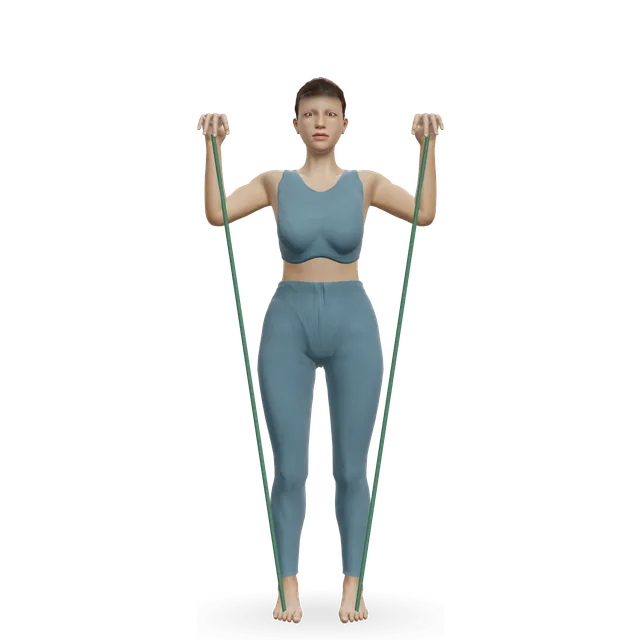
  • Moves: sit-to-stands, wall push-ups, band rows, clamshells, side-lying leg raises, bird dogs, the Pallof press and cat-cow.

Sources 11, 30, 10, 1

Third trimester (28 weeks to birth)

Your balance changes, you may get breathless sooner, and pelvic girdle pain is more common. Most women slow down naturally.

  • Keep: walking, swimming and a static bike; lighter strength work; pelvic floor exercises every day.
  • Change: smaller ranges; one arm or leg at a time on all fours; hold a support for balance.
  • Avoid: the same as before; with pelvic girdle pain, wide stances and one-legged moves.
  • Moves: sit-to-stands, wall push-ups, band rows, clamshells, the one-limb bird dog, cat-cow, child's pose with the knees wide, and pelvic floor exercises.
  • Sleep: go to sleep on your side.

Sources 15, 33, 14, 10, 13

Strength and aerobic moves for every trimester

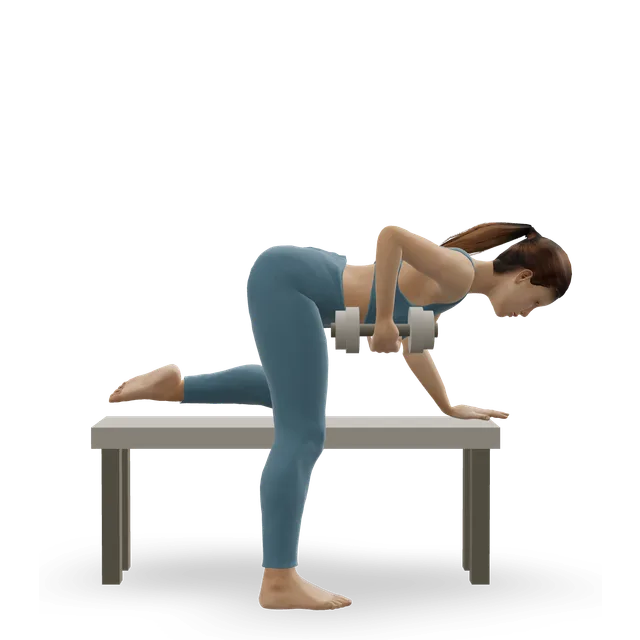
The 3D figure can't show a pregnant body, so every move here is shown on the standard figure; each was chosen because it suits pregnancy. Walk or cycle at talk-but-not-sing pace, building to 30 minutes on 5 days (NHS, ACOG). For the strength moves, 2 to 3 sets of 8 to 12, twice a week, with a few reps to spare: an editorial start in line with adult guidance. Wall sit: 2 to 3 holds of 20 to 30 seconds, breathing throughout. Keep a chair behind you for squats, use a low step and a rail for step-ups, and sit for the shoulder press if your balance feels off.

Side-lying, all-fours and kneeling moves for later pregnancy

Trunk and hip work that skips lying on your back. Put a pillow under your bump for the side-lying moves. Starting doses (editorial): clamshells and side-lying leg raises, 2 sets of 10 to 15 each side; bird dog, 5 to 8 each side with a 3 to 5 second hold, one limb at a time later on; Pallof press, 2 sets of 8 to 10 each side, standing if kneeling is uncomfortable; cat-cow, 10 slow reps without letting your back sag (the NHS back exercise); open book, 5 each side.

Pelvic floor, breathing, stretches and balance

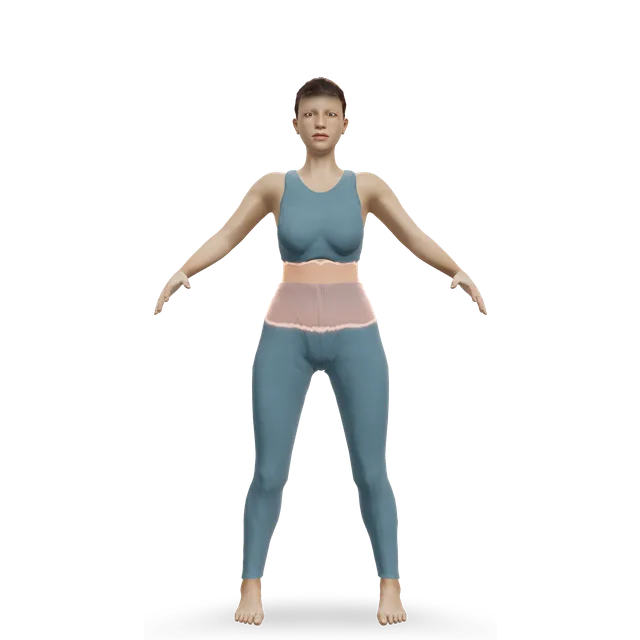
Pelvic floor: 10 slow holds of up to 10 seconds and 10 quick squeezes, 3 times a day (POGP); no figure can show it, so follow the written steps. Lateral breathing: 5 to 10 breaths, sitting after the first trimester. Stretches: about 30 seconds each side (editorial); child's pose 30 to 60 seconds with the knees wide; mermaid 4 to 6 each side, sitting on a cushion or a chair. Calf stretches against a wall can help leg cramps (POGP). Balance next to a counter, 2 holds of 20 to 30 seconds each side; skip standing on one leg if you have pelvic girdle pain.

Your tummy muscles and pelvic floor

A gap between your tummy muscles is normalEmerging evidence

As your bump grows, the two sides of the six-pack muscle move apart (diastasis recti). In 300 first-time mothers, a third had a gap of at least two finger widths at 21 weeks; on ultrasound, all 84 women in another study had a gap of more than 16 mm at 35 weeks. There is no proven way to prevent it in pregnancy, and exercise in pregnancy isn't linked with it. The guide to exercise after birth covers what happens next.

Sources 34, 35, 12, 21

Keep training your trunk, in positions that suit you

You can keep working your tummy muscles. ACOG notes that more than 60% of pregnant women get low back pain, and that strengthening the tummy and back muscles could reduce that risk. After the first trimester, swap sit-ups and crunches on your back for side-lying, all-fours and standing work.

POGP teaches a deep tummy contraction: draw in your lower tummy as you breathe out and hold for 2 to 3 breaths, propped up on pillows or lying on your side. If the middle of your tummy bulges into a ridge during a move, make it easier. That is a practical teaching cue, not a tested rule.

Sources 3, 10, 12, 1

Pelvic floor exercises every dayStrong evidence

In women without leaks, pelvic floor training from early pregnancy cut the risk of leaking in late pregnancy by 62%, and at 3 to 6 months after the birth by 29% (Cochrane review, moderate to high-quality evidence). Guidelines recommend it daily, ideally with the technique taught by a professional. NICE suggests considering a 3-month supervised programme from 20 weeks if your mother or sister has had pelvic floor problems.

Sources 36, 8, 16

How to do them

The move page explains how to find the right muscles. Two doses:

  • POGP: 10 long squeezes held for up to 10 seconds, then 10 quick squeezes, at least 3 times a day. Start lying or sitting, and progress to standing.
  • IOC: strong squeezes in sets of 8 to 12, three times a day on most days.

Sources 10, 12

If you already leakMixed evidence

Pelvic floor training in pregnancy hasn't been shown to treat leaking that has already started, but that evidence is of low to very low quality. Leaking is common and treatable: tell your midwife or GP. NICE recommends at least 3 months of supervised pelvic floor training for leaking with coughs, sneezes or effort, including in pregnancy.

Sources 36, 37, 16

Back and pelvic girdle pain

Common, and exercise helps it hurt lessEmerging evidence

More than two-thirds of pregnant women get low back pain, and almost one in five pelvic pain. Across 15 trials, exercise made the pain less severe but didn't stop it starting. A Cochrane review found that an 8 to 12 week exercise programme reduced the number of women reporting low back and pelvic pain by about a third, and their sick leave by about a quarter (moderate-quality evidence).

Sources 38, 39

What pelvic girdle pain feels like

Pelvic girdle pain (PGP, once called SPD) affects up to 1 in 5 pregnant women to some degree. It isn't harmful to your baby, and most women with it can have a vaginal birth. You may feel pain over the pubic bone, across one or both sides of your low back, in the area between your vagina and anus, or spreading into your thighs. It is often worse when you walk, climb stairs, stand on one leg, turn over in bed or move your legs apart.

Sources 15, 33

What to change with pelvic girdle pain

Keep active, but avoid what makes it worse:

  • standing on one leg, wide or uneven steps, and more stairs than you need
  • sitting or standing for long periods, and heavy lifting
  • keep your knees together getting in and out of a car and turning in bed, sit down to get dressed, and sleep with a pillow between your knees

Sources 15, 33

What that means for your moves

With pelvic girdle pain, skip or shrink the step-up, lateral band walk, standing on one leg, bound angle pose, goddess pose and split squats. Favour sit-to-stands with your feet hip-width apart, small clamshells, cat-cow and pelvic floor exercises.

Get help: you don't have to put up with it

Call your midwife or GP if it's hard to move around, it hurts to get out of a car or turn over in bed, or stairs are painful. NICE says to consider physiotherapy for exercise advice, a non-rigid pelvic support belt, or both. In RCOG's words, "PGP is not something you just have to put up with."

Sources 15, 40, 33

Back pain warning signs in pregnancy

Contact your GP or midwife urgently if you have back pain in the second or third trimester (it could be early labour), or back pain with a fever, vaginal bleeding, pain when you pee, or pain in one or both sides under your ribs. Call 999 or go to A&E if you lose feeling in one or both legs, your bottom or your genitals.

Source 41

The NHS back exercise

On all fours, pull in your stomach muscles and raise your back towards the ceiling, hold for a few seconds, then return to a flat back. Do it 10 times, slowly. It is the cat-cow above, without letting your back sag.

Source 41

Myths

"Keep your heart rate under 140"

ACOG set this limit in 1985 and dropped it in 1994. There is no evidence-based heart-rate ceiling in pregnancy: use the talk test, or aim for "somewhat hard". ACOG's 2020 example plan still has a footnote saying effort is "usually not exceeding 140 beats per minute", which is partly why the number lingers. If you were already fit and your midwife agrees, harder sessions can continue.

Sources 23, 3, 1

"Exercise can cause a miscarriage"

In 23 studies of 7,125 women, exercise wasn't linked with miscarriage, and the NHS calls exercise safe for you and your baby. The honest caveat: the evidence is of very low quality, and little is known about extreme amounts of exercise.

Sources 5, 1, 12

"Lifting weights is dangerous in pregnancy"

Every major guideline recommends muscle strengthening in pregnancy, and resistance training was linked with lower odds of gestational diabetes and high blood pressure in a review of 50 studies. Experienced heavy lifters reported typical outcomes. What changes is how: breathe out on the effort, avoid long sets flat on your back after the first trimester, and choose lifts you can control without risk of falling.

Sources 2, 7, 3, 8, 20, 24, 12

"Pregnancy is a time to rest"

ACOG says no credible evidence supports bed rest, which carries risks of blood clots, bone loss and losing fitness.

Source 3

"Ab work causes a tummy gap, so stop all core exercise"

The gap is a normal part of pregnancy: on ultrasound, every woman in one study had one at 35 weeks. Exercise in pregnancy isn't linked with it, and nothing has been shown to prevent it. Keep training your trunk in positions that suit your bump.

Sources 35, 21, 12

"Any warmth from exercise harms the baby"

Moderate exercise doesn't raise your core temperature into the range of concern. Still skip hot classes, very hot and humid weather, and long hard sessions in the heat.

Sources 3, 27, 9

Free workouts that suit pregnancy

Easy cardio suits every trimester: keep cool and drink water. In the beginner home workout, swap the dead bug for the bird dog after the first trimester, and the step-up for sit-to-stands if you have pelvic girdle pain. In the pelvic floor routine, do the settle breathing sitting or on your side once lying face down is uncomfortable. In the low-impact leg workout, swap the glute bridge for clamshells or a wall sit after the first trimester. Beginner Pilates suits the first trimester, or later with its side-lying and all-fours swaps.

If you already train: a weekly plan

The workout plan for women has a sourced section on pregnancy and after birth. After the first trimester, swap its floor moves on your back for standing or side-lying ones.

Questions people ask

Is it safe to exercise while pregnant?

Yes, in a pregnancy without complications. The NHS calls exercise safe for you and your baby, and WHO, ACOG and the UK Chief Medical Officers all recommend it. Exercise isn't linked with miscarriage, stillbirth or early birth. If you have a pregnancy complication or a condition such as heart disease, ask your midwife or doctor first.

How much exercise should I do when pregnant?

Aim for at least 150 minutes of moderate activity a week, for example 30 minutes on 5 days, plus muscle strengthening twice a week. Moderate means you can talk but not sing. If you're new to exercise, start with about 10 minutes a day and build up. Any activity is better than none.

What exercise is safe in the first, second and third trimester?

In the first trimester, carry on with what you already do safely and avoid overheating. In the second, move exercises on your back to propped-up, side-lying or all-fours versions and stop contact sports. In the third, slow down, use smaller ranges and a support for balance, and keep up daily pelvic floor exercises. Walking, swimming, a static bike and strength training suit all three.

Which exercises should I avoid when pregnant?

Contact sports, activities with a high risk of falling (such as horse riding, skiing and mountain biking), scuba diving, hot yoga, and hard exercise at high altitude unless you're used to it. After the first trimester, avoid long periods lying flat on your back. The NHS also advises against taking up a new vigorous sport such as running.

Can I lift weights while pregnant?

Yes. Strength training is recommended by every major guideline. If you already lift, you can usually continue, lighter if your midwife or your sense of effort suggests it. Breathe out on the effort rather than holding your breath, and after the first trimester avoid long sets lying flat on your back.

Can I run while pregnant?

If you ran before, you can usually continue, slowing down or switching to brisk walking as your bump grows. In 1,293 runners, carrying on wasn't linked with earlier birth or smaller babies. If you didn't run before, the NHS advises not to start in pregnancy; there is no evidence either way on harm, and walking, cycling and swimming give the same benefits. Stop for any warning sign, pelvic pain, leaking or heaviness.

Can I lie on my back to exercise when pregnant?

In the first trimester, yes. After that, keep it to a few minutes, prop yourself up, or use side-lying or all-fours versions. Guidelines differ on the timing, from the end of the first trimester to 28 weeks, but all fit this rule. If you feel dizzy, sick or unwell lying flat, roll onto your side. Separately, from 28 weeks go to sleep on your side.

What heart rate should I keep under when exercising pregnant?

There is no evidence-based limit. The old 140 beats a minute rule was dropped in 1994. Use the talk test, so you can talk but not sing, or aim for an effort that feels "somewhat hard".

Are ab and pelvic floor exercises safe in pregnancy?

Yes. Keep working your tummy muscles, but after the first trimester swap crunches on your back for side-lying, all-fours and standing work, and ease off if your tummy bulges into a ridge. A gap between the tummy muscles is normal in pregnancy. Start pelvic floor exercises now and do them every day: they cut the risk of leaking later in pregnancy and after the birth.

When should I stop exercising and get help?

Stop and call your midwife or maternity unit for vaginal bleeding, fluid leaking, regular painful contractions, tummy pain, chest pain, feeling dizzy or faint, breathlessness before you start, a headache, muscle weakness affecting your balance, or calf pain or swelling. Call 999 if you think it is a life-threatening emergency.

Sources

  1. NHS · Exercise in pregnancy (reviewed September 2026)
  2. Bull 2020 · World Health Organization 2020 guidelines on physical activity and sedentary behaviour (BJSM)
  3. ACOG 2020 · Physical activity and exercise during pregnancy and the postpartum period (Committee Opinion 804, reaffirmed 2023)
  4. UK Chief Medical Officers 2019 · Physical activity guidelines: pregnancy and after childbirth (updated 2026)
  5. Davenport 2019 · Prenatal exercise is not associated with miscarriage or perinatal death (meta-analysis, BJSM)
  6. Davenport 2018 · Prenatal exercise and newborn and childhood outcomes (meta-analysis, BJSM)
  7. DHSC 2026 · Physical activity for pregnant women (text of the UK Chief Medical Officers' infographic)
  8. CSEP · 2019 Canadian guideline for physical activity throughout pregnancy: recommendations and contraindications
  9. ACOG · Exercise during pregnancy (patient FAQ, updated 2024)
  10. POGP 2021 · Fit for Pregnancy: exercises and advice from the UK's pelvic health physiotherapists (booklet)
  11. NHS Best Start in Life · Exercising in pregnancy
  12. Bø 2018 · Exercise and pregnancy in recreational and elite athletes: IOC expert group recommendations, part 5 (BJSM)
  13. NHS · Tiredness and sleep problems in pregnancy: going to sleep on your side
  14. NHS · Pregnancy symptoms you need to get help for
  15. NHS · Pelvic pain in pregnancy (pelvic girdle pain)
  16. NICE NG210 2021 · Pelvic floor dysfunction: prevention and non-surgical management
  17. Davenport 2018 · Prenatal exercise for preventing gestational diabetes and high blood pressure disorders of pregnancy (meta-analysis, BJSM)
  18. Davenport 2018 · Prenatal exercise and anxiety and depression during and after pregnancy (meta-analysis, BJSM)
  19. Ruchat 2018 · Exercise to prevent too much weight gain in pregnancy (meta-analysis, BJSM)
  20. Prevett 2025 · Resistance training in pregnancy: 50 studies of pregnancy, delivery and pelvic floor outcomes (meta-analysis, BJSM)
  21. Davenport 2019 · Prenatal exercise and maternal harms, labour and delivery (meta-analysis, BJSM)
  22. Skow 2019 · Prenatal exercise, the baby's heart rate and blood flow to the womb and placenta (meta-analysis, BJSM)
  23. Evenson 2023 · Monitoring exercise intensity in pregnancy, including the history of the 140 beats a minute limit (Am J Lifestyle Med)
  24. Prevett 2023 · Heavy resistance training in pregnancy: a survey of 679 women (Int Urogynecol J)
  25. Mottola 2019 · Is exercise lying on your back in pregnancy linked with harm to mother or baby? (systematic review, BJSM)
  26. Cronin 2019 · Going-to-sleep position and late stillbirth (individual participant data meta-analysis, EClinicalMedicine)
  27. Ravanelli 2019 · Heat stress and the baby: safe limits for exercise and heat in pregnancy (systematic review, BJSM)
  28. Smallcombe 2021 · Overheating during exercise in the heat in pregnancy (controlled trial, Sports Med)
  29. Davenport 2019 · Prenatal exercise, birth defects and overheating (meta-analysis, BJSM)
  30. Dufour 2026 · Stay in Play: a FIFA decision aid for football in pregnancy (BJSM)
  31. Kuhrt 2018 · Running in pregnancy, birth timing and birth weight in 1,293 runners (retrospective cohort, BMJ Open Sport Exerc Med)
  32. Polis 2015 · Mother and baby responses to 26 yoga postures at 35 to 37 weeks (Obstet Gynecol)
  33. RCOG · Pelvic girdle pain and pregnancy (patient information)
  34. Sperstad 2016 · Diastasis recti during pregnancy and 12 months after birth: prevalence in 300 first-time mothers (cohort, BJSM)
  35. Fernandes da Mota 2015 · Diastasis recti from late pregnancy to 6 months after birth (ultrasound cohort, Man Ther)
  36. Woodley 2020 · Pelvic floor muscle training for preventing and treating incontinence in pregnancy and after birth (Cochrane review)
  37. Davenport 2018 · Prenatal exercise, including pelvic floor training, and urinary incontinence during and after pregnancy (meta-analysis, BJSM)
  38. Liddle 2015 · Interventions for preventing and treating low back and pelvic pain in pregnancy (Cochrane review)
  39. Davenport 2019 · Exercise for low back, pelvic girdle and lumbopelvic pain in pregnancy (meta-analysis, BJSM)
  40. NICE NG201 2021 · Antenatal care: pelvic girdle pain
  41. NHS · Back pain in pregnancy

Exercise education, not a diagnosis or treatment plan, and clinical review of these guides is pending. Stop and get advice for chest pain, unusual breathlessness, dizziness or fainting, or new pain, and check with your doctor or midwife first if they have told you to limit activity. Health disclaimer.