Tandem stance and heel-to-toe walk
One foot directly in front of the other, held, then walked: a narrow base the balance has to manage.
Standing balance family
Tandem stance and heel-to-toe walk
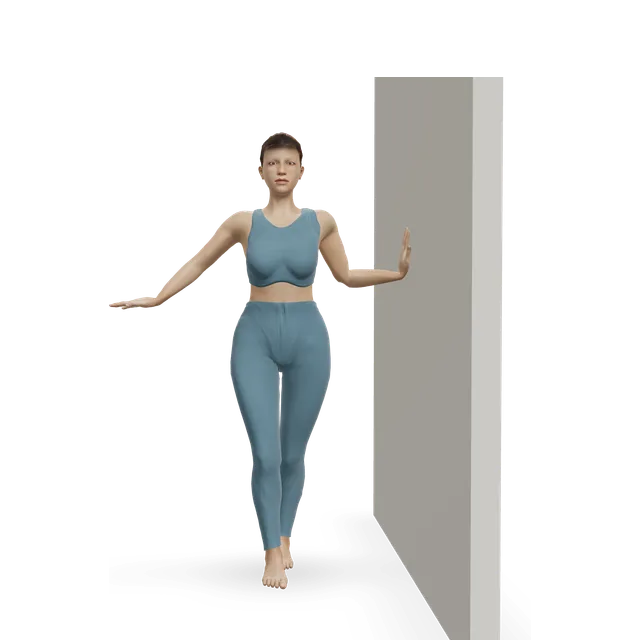
Loading the 3D figure…
Source-researched guide.
How to move
- Stand near a wall or counter and place one foot directly in front of the other, heel to toe.
- Hold for about ten seconds with a hand on the support, then without it.
- Walk ten steps heel to toe in a straight line, the support close by.
Form cues
- Look ahead, not at the feet.
- Use the support for balance, not to hold you up.
Practice and cautions
No universal dose is assigned. Choose a manageable amount for your current capacity, leave room for controlled repetitions, and allow recovery. A clinician’s individual plan takes priority.
With numb feet, keep a hand on a counter or wall. Walk beside a wall or rail if you have fallen in the past year or feel unsteady with your feet together. This is movement education, not an assessment or treatment prescription. Stop for sharp or increasing pain, dizziness, numbness or tingling; seek individual guidance for symptoms, injury or restrictions.
Sources and review status
Sources support the educational description; they do not establish that this exercise is suitable for you.
- Otago exercise programme balance progressions: tandem stance, then the one-leg stand (PMC table) ↗
- CDC STEADI · The 4-Stage Balance Test (feet side by side, semi-tandem, tandem, one foot: each harder to hold than the last) ↗
No variation is labeled clinically validated.
What it works
Muscles
Main: Calves. Also: Hip abductors.
Anatomy: Gastrocnemius, Soleus, Tibialis posterior, Popliteus, Plantaris, Flexor hallucis longus.
Equipment
A wall
Level
Beginner. See the easier and harder options above.
Workouts that use it
- Balance exercises routine · 10 min
- Bone-strengthening workout · 40 min
- Strength and balance exercises for seniors · 40 min
- Claudication walking workout: walk-rest-walk · 45 min
- Foot and ankle strengthening routine: toes, arches, calves and balance · 15 min
- Vestibular rehabilitation exercises: a balance routine for dizziness · 15 min
- Pickleball warm-up · 10 min
- Pickleball strength and balance workout · 30 min
Show all 34 workoutsShow fewer workouts
- Sensory movement break: wake up, focus, calm down · 12 min
- Gym workout for seniors: machine strength training for muscle loss · 50 min
- Balance, agility and speed workout for roller skaters: the 4-week school team programme · 50 min
- Mini-trampoline workout for beginners: bounces, balance and strength on a rebounder · 30 min
- Haemophilia joint exercises: knees, ankles and elbows · 20 min
- Balance training workout: from standing still to moving · 20 min
- Power and balance workout: fast lifts and one-leg control · 40 min
- Yoga for balance: a 30-minute standing class, from steady to moving · 30 min
- Standing Pilates for balance: a 25-minute counter and mat class · 25 min
- Yoga for osteoporosis: a 30-minute class with the safe swaps built in · 30 min
- Yoga for vertigo and dizziness: a 20-minute head-up class, sitting then at a counter · 20 min
- Pilates for spinal stenosis: a 25-minute bend-forward class, from chair to mat to counter · 25 min
- Yoga for spinal stenosis: a 25-minute bend-forward class, from chair to mat to counter, with no backbends · 25 min
- Feet-first Pilates for flat feet: a 25-minute class for the arches, ankles, hips and balance · 25 min
- Yoga after an ankle sprain: a 25-minute class for ankle range, calf strength and balance, built up step by step · 25 min
- Weighted vest workout: a walk, then strength moves · 45 min
- Ankle-steadying Pilates after a sprain: a 25-minute class for ankle strength, hips and one-leg balance · 25 min
- Head-up Pilates for vertigo and dizziness: a 20-minute chair and counter class · 20 min
- Court-ready Pilates for pickleball players: a 25-minute class for balance and stepping, calves, hips, the trunk, and the paddle shoulder and forearm · 25 min
- Yoga for pickleball players: a 25-minute class at a counter for calves, one-leg balance and stepping, standing strength, and the paddle shoulder and forearm, with nothing head-down · 25 min
- Yoga for over 50s: a 30-minute class for strength, balance and a strong back · 30 min
- Strength, balance and stamina Pilates: a 35-minute class for ageing well · 35 min
- Yoga for longevity: a 35-minute class for strength, balance, stamina and getting up from the floor · 35 min
- Buddy Pilates for Down syndrome: a 25-minute class for trunk control, balance and strength, with nothing on the head or neck · 25 min
- Counter-to-mat Pilates for women over 60: a 30-minute class for the pelvic floor, bone, leg and back strength, and balance · 30 min
- Yoga for women over 50: a 35-minute class for strength, bone, balance and the pelvic floor · 35 min
Pain guides that use it
Part of a staged plan, with when to get help first.
- Lumbar spinal stenosis: exercises that ease leg pain when you walk
- Hip arthritis exercises: a staged plan that follows the guidelines
- Exercises for knee arthritis (osteoarthritis)
- Meniscus tear exercises: when exercise is the first treatment
- Foot pain: where it hurts, what helps, and when to get it checked
- Sprained ankle: what to do now, exercises, and stopping the next one
- Ankle arthritis and stiff ankles: what exercise can and cannot do
- Exercises after a broken shoulder: the sling, pendulums and getting your arm moving again
Show all 52 pain guidesShow fewer pain guides
- Spinal compression fracture: recovering, exercising and living with an osteoporotic spinal fracture
- Exercises after a shoulder replacement: the stages, and the precautions for reverse and anatomic replacements
- Recovering from a broken hip (hip fracture): a guide for you and your family
- Recovery after bunion surgery: the post-op shoe, swelling and exercises
- Hammer, claw and mallet toes: shoes, pads, toe exercises and when surgery helps
- Sinus tarsi syndrome: pain in the hollow on the outer ankle, the causes to rule out and what helps
- Cuboid syndrome: outer midfoot pain, what manipulation can and can't do, and how thin the evidence is
- Plantar plate tear: second toe pain, a toe that drifts or lifts, and what taping, shoes and surgery can do
- Broken pelvis (pelvic fracture): breaks in later life, crash injuries and recovery
- Köhler's disease (Kohler's disease): a young child's limp from the navicular, and how it settles
- Foot drop: when it's urgent, braces and stimulation, and exercises while the nerve recovers
- In-toeing (pigeon toes) in children: what's normal at each age, and when to see a GP
- Toe walking in children: when it's normal, the signs to get checked, and what helps
- Tarsal coalition: a stiff, painful flat foot and ankles that keep spraining, and what helps
- Numb, burning or painful feet when cycling: shoes, cleats, insoles and when to get it checked
- Hip pain when walking: the joint, the outer hip, a limp, walking sticks and how to build back
- Foot pain when walking: the heel, arch, ball of the foot and toes, shoes, insoles and what helps
- Ankle pain when walking: an old sprain, the tendons, arthritis, shoes, supports and what helps
- Lower back pain when walking: ordinary back pain, spinal stenosis, the arteries and what helps
- Pain on top of the foot: tight laces and tendons, a stress fracture, the midfoot, gout and nerves
- Ankle pain at night: arthritis, an old sprain, tendons, gout, cramps and the night pain to check
- Foot pain at night: nerve pain, gout, circulation, cramps, restless legs and the night pain to check
- Groin pain when walking: the hip joint, a strain, a hernia, pregnancy and a stress fracture
- Foot pain in women: bunions and shoes, heel pain, Morton's neuroma, pregnancy and the menopause
- Knee pain in older adults: arthritis and other causes, what helps, walking aids, stairs and falls
- Foot pain in children: heel pain, flat feet, growing feet and shoes, sport and the signs to check
- Hip pain in older adults: arthritis, the outer hip, the back, falls and a broken hip, and what helps
- Back pain in older adults: stenosis, spinal fractures from thin bones, what helps and warning signs
- Shoulder pain in older adults: rotator cuff tears, frozen shoulder, arthritis, falls and what helps
- Neck pain in older adults: arthritis, a trapped nerve, spinal cord pressure, a fall, and what helps
- Hip pain in menopause and perimenopause: the outer hip tendons, arthritis, your bones and the back
- Knee pain in pregnancy: the kneecap, weight and looser joints, swelling, exercise by trimester
- Foot pain in pregnancy: swollen feet, arches and heels, cramps, shoes, and the signs to act on
- Foot pain in older adults: arthritis, heel pain, bunions and toes, numb feet, circulation and shoes
- Ankle pain in pregnancy: swollen ankles, sprains and looser ligaments, cramps, and when to get help
- Ankle pain in older adults: arthritis, tendons and flat feet, swelling, falls, gout and circulation
- Wrist pain in older adults: arthritis, carpal tunnel, pseudogout, falls and walking aids
- Ankle pain in women: sprains, tendons and flat feet, heels, loose joints and swollen ankles
- Upper back pain in older adults: spinal fractures, a rounded back, arthritis, shingles and the heart
- Foot pain when standing up: first steps after rest, the heel and arch, stiff joints and what helps
- Foot pain when hiking: blisters, boots, laces, the heel, the ball of the foot, toes and what helps
- Knee pain from pickleball: the meniscus, arthritis, kneecap pain, courts and shoes, and what helps
- Knee pain from bowling: the fast bowler's front knee, the ten-pin slide, lawn bowls and what helps
- Hip pain from pickleball: the outer hip, the groin, arthritis, lunges, falls and what helps
Guides that use it
- Pilates for seniors guide
- Chair Pilates guide
- Pilates for balance guide
- Pilates for ADHD guide
- Pilates for spinal stenosis guide
- Pilates for neuropathy guide
- Pilates for flat feet guide
- Pilates for the feet guide
Show all 100 guidesShow fewer guides
- Pilates over 50 guide
- Pilates for the prostate guide
- Pilates for thyroid problems guide
- Pilates after an ankle sprain guide
- Pilates for vertigo guide
- Pilates after a concussion guide
- Pilates for pickleball players guide
- Pilates for hikers guide
- Pilates for cerebral palsy guide
- Pilates for knee arthritis guide
- Pilates for longevity guide
- Pilates for older men guide
- Pilates for autism guide
- Pilates for Down syndrome guide
- Pilates for older women guide
- Pilates for the ankles guide
- Pilates for women over 50 guide
- Yoga for balance guide
- Yoga for osteoporosis guide
- Yoga for vertigo guide
- Yoga for feet guide
- Yoga for hikers guide
- Yoga for kyphosis guide
- Yoga for spinal stenosis guide
- Yoga for an ankle sprain guide
- Yoga for flat feet guide
- Yoga for bunions guide
- Yoga after a concussion guide
- Yoga for pickleball players guide
- Yoga over 50 guide
- Yoga for longevity guide
- Yoga for older men guide
- Yoga for older women guide
- Yoga for the ankles guide
- Yoga for women over 50 guide
- Ankle and foot guide
- Older adults guide
- Exercise for older adults
- Exercise for osteoporosis and osteopenia
- Exercise in pregnancy
- Exercise for menopause and perimenopause
- Exercise for type 2 diabetes
- Exercise for arthritis
- Exercise during and after cancer treatment
- Exercise for Parkinson's
- Exercise with MS
- Exercises after a stroke
- Exercise and dementia
- Exercise for hypermobility
- Exercises for ankylosing spondylitis
- Exercise for kidney disease
- Exercise for peripheral arterial disease
- Exercise for ADHD
- Exercise for an underactive thyroid (hypothyroidism)
- Exercises for vertigo
- Exercises for peripheral neuropathy
- Exercise with cerebral palsy
- Exercise for autistic children and adults
- Exercise for Down syndrome
- Exercise after a concussion
- Exercise with HIV
- Exercise for sarcopenia
- Exercise with prostate cancer
- Exercise with myasthenia gravis
- Exercise for polymyalgia rheumatica
- Exercise with an overactive thyroid (hyperthyroidism)
- Exercise in recovery from alcohol or drugs
- Exercise with bowel cancer
- Exercise with blood cancer
- Exercise with glaucoma
- Exercise after cataract surgery
- Exercise with diabetic retinopathy
- Exercise after a brain injury
- Exercise with haemophilia (hemophilia)
- Exercise for prediabetes
- Scoliosis guide
- Bow legs guide
- How to improve balance guide
- Building muscle after 50 guide
- Strengthen your ankles guide
- Strengthen your feet guide
- Strengthen your legs guide
- Bone density guide
- Coordination guide
- Running in the cold guide
- Weighted vest guide
- Vibration plate guide
- Sitting-rising test guide
- Timed up and go test guide
- Balance test guide
- 2-minute step test guide
- Pickleball guide
Similar moves
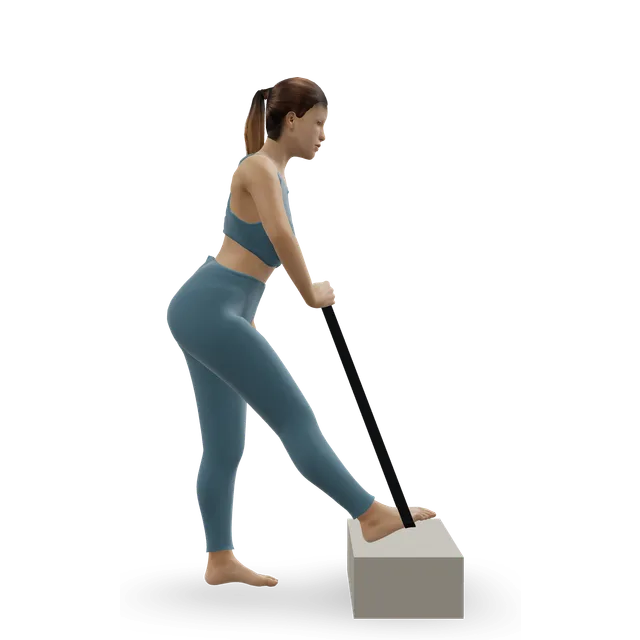 3D demoHeel-on-step calf and hamstring stretchBeginner · A step
 Big toe joint self-mobilisationBeginner · A bench or boxShort foot + toe splayBeginner · No equipment
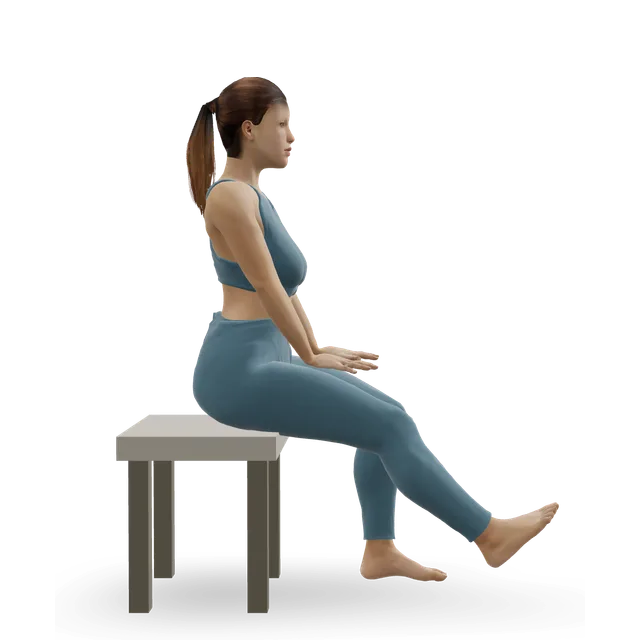 3D demoAnkle CARs (controlled articular rotations)Beginner · No equipment
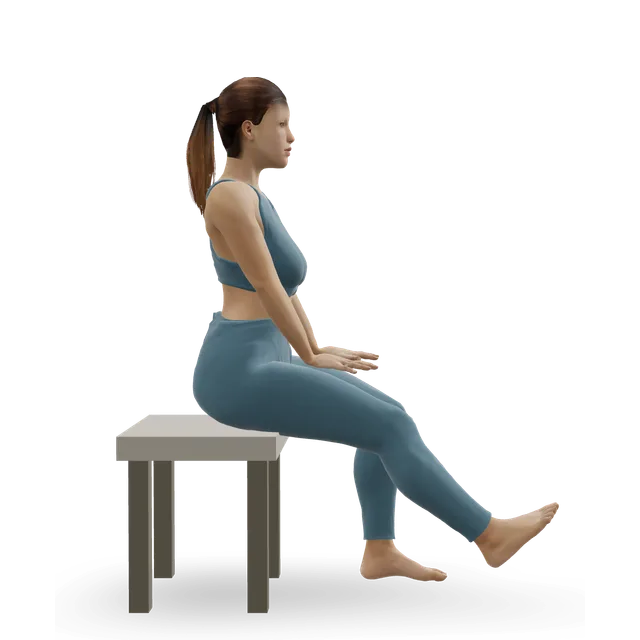 3D demoAnkle circlesBeginner · No equipment
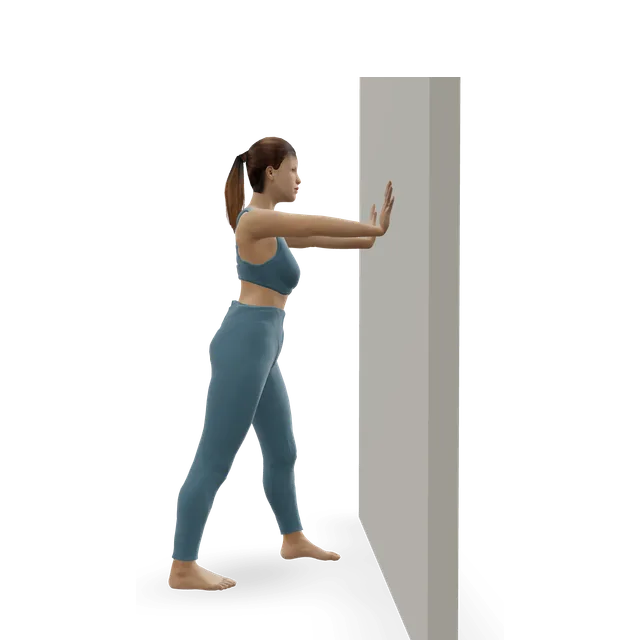 3D demoForearms-on-wall calf stretchBeginner · A wall
Browse more
Questions people ask
What muscles does the Tandem stance and heel-to-toe walk work?
Mainly the calves, with help from the hip abductors.
What equipment do I need for the Tandem stance and heel-to-toe walk?
A wall.
Is the Tandem stance and heel-to-toe walk good for beginners?
It is graded beginner, so it suits most people starting out. When it feels easy, try the Single-leg stand.
What is an easier alternative to the Tandem stance and heel-to-toe walk?
Try the Semi-tandem stance. Both are written steps in the same progression.
How do I make the Tandem stance and heel-to-toe walk harder?
Progress to the Single-leg stand or the Toes-tucked kneeling (toe squat). Follow that guide’s technique and any stated timing.