Pain guide · Ankle pain

Ankle pain in older adults: arthritis, tendons and flat feet, swelling, falls, gout and circulation

Ankle pain is common in later life, affecting about 1 in 9 people over 50, but it isn't just part of getting older. The usual causes are arthritis, which mostly follows an old sprain or break, the tendon that holds up the arch along the inner ankle, and gout, while swollen ankles have causes of their own, from sitting still and some blood pressure tablets to the veins and the heart. Strength and balance exercise, good shoes and a few changes at home help at any age, and they also help you stay steady on your feet.

This guide starts with the warning signs: one swollen, painful leg needs help the same day, swollen ankles with breathlessness need an urgent general practitioner (GP) appointment or the National Health Service's 111 line (NHS 111), and chest pain or severe breathlessness needs 999. A twist or fall that leaves you unable to take four steps needs checking, and a hot, swollen ankle needs help the same day. Then it sorts the causes by where it hurts, explains which swelling matters, covers shoes, sticks, stairs and falls, says when to see a GP, and gives a three-stage plan with 3D demos.

When to get help first

Exercise is for pain that has been checked or is clearly mild and settling.

Get urgent medical help if

  • Call 999 or go to A&E: after an injury, you heard a crack, the foot or ankle has changed shape or points at an odd angle, a bone is sticking out, there is a bad cut over it, you're in severe pain, or the toes look blue or white, feel numb or are cold to touch. These can mean a broken bone. Don't drive yourself.
  • Call 999 if you or someone else has fallen and may have hurt the head, back, neck or hip, or cannot get up. Get help from NHS 111 after a fall if you may be in pain, injured or unwell.
  • Leg pain or swelling with breathlessness or chest pain: call 999 or go to A&E, and do not drive yourself. It can be a blood clot that has reached the lungs.
  • Call 999 or go to A&E if breathing suddenly becomes difficult, if pain in your chest or upper back comes on suddenly with breathlessness or a very fast heartbeat, or if someone passes out. Do not drive yourself. It can be a blood clot that has reached the lungs.
  • Call 999 or go to A&E: a foot or leg that is suddenly cold, pale, numb, weak or very painful without an injury. A sudden loss of blood supply is a vascular emergency.
  • Ask for an urgent GP appointment or get help from NHS 111 if you feel breathless when lying down or from everyday activity, you're coughing up frothy pink phlegm, or you have suddenly gained weight, especially with swollen ankles. These can be signs of heart failure. Call 999 if you're having severe difficulty breathing (gasping, choking or not able to get words out), your lips or skin are pale, blue or grey, or someone has passed out and is not responding normally.
  • Ask for an urgent GP appointment or get help from NHS 111 if you have swelling in 1 ankle, foot or leg and you don't know what's causing it; a lot of swelling after an injury, or swelling that is getting worse; swelling that is severe, painful or starts very suddenly; swelling in other parts of your body too, such as your face or tummy; a swollen area that is red or feels hot; a very high temperature, or you feel hot, cold or shivery; or diabetes and swollen feet or ankles. Call 999 if you also feel short of breath or are struggling to breathe, your chest feels tight, heavy or painful, you're coughing up blood, your heartbeat is more noticeable (palpitations), or you feel lightheaded, faint, confused, sick or clammy.
  • Same day (urgent GP appointment or NHS 111): throbbing pain in one leg (rarely both), usually the calf or thigh; swelling in one leg (rarely both); red, blue or darkened skin around the painful area, which may be harder to see on brown or black skin; or swollen veins. It could be a blood clot (DVT). Watch for it after an ankle injury or time in a cast or boot.
  • Same day (NHS 111 or an urgent treatment centre): after an injury, you can't put weight on it or walk more than a few steps, the pain is very bad or getting worse, there is a lot of swelling or bruising or it is getting worse, it feels very stiff, or it's not feeling any better after treating it yourself. Get the same help if you also have a very high temperature, or feel hot, cold or shivery: this could be an infection. If you think it's broken, don't treat it yourself.
  • Same day: after a twist or a fall, if you can't take four steps, or pressing on the back edge or the tip of the bony bump on either side of the ankle hurts, get it checked. Clinicians use these points, the Ottawa ankle rules, to decide who needs an X-ray, and you can have a break and still walk.
  • Same day: a sudden, very painful, hot, swollen, red joint, often the big toe but sometimes the middle of the foot (the midfoot) or the ankle, especially with a high temperature, feeling shivery or being unable to eat. It may be gout, but it could be a joint infection (septic arthritis), which is urgent.
  • Same day: skin on the foot that is painful, hot and swollen. It could be a skin infection (cellulitis).
  • Contact a GP immediately (or NHS 111 if you can't): severe burning foot pain that carries on even when you're resting, skin turning pale, shiny, smooth and dry, wounds or ulcers on your feet that don't heal, or toes that become cold and numb, then turn red and then black. The blood supply to the foot may be failing.
  • Same day: you have diabetes and a new foot problem, such as an ulcer or wound, signs of infection, or a hot, swollen foot with a change in colour, even if it doesn't hurt. Contact your diabetes foot team or GP: NICE asks for these to reach a specialist foot service within 1 working day, and a suspected Charcot foot is kept off weight until it has been checked.
  • Call 999 or go to A&E: you have diabetes and a foot ulcer with a fever or signs of sepsis, an ulcer with poor circulation, or gangrene. NICE asks for these to go straight to hospital.
  • Same day: in a cast or boot, pain that is getting worse, toes that are numb or burning, a cast that feels too tight, toes that are swollen, blue or white, or a bad smell from under the cast.

See a doctor or physiotherapist if

  • Both ankles, feet or legs swollen, and it hasn't improved after a few days of looking after it at home, it gets worse, or you have a condition that affects your heart, kidneys or leg veins: see a GP.
  • Pain that isn't better after 2 weeks of looking after it yourself, is getting worse, keeps coming back, or stops you doing normal things.
  • You can't rise onto tiptoe on that foot, or its arch is dropping: see a GP, physiotherapist or podiatrist. Tibialis posterior tendon problems are easier to treat when they're found early.
  • Flat feet that are painful, stiff, weak or numb, that you didn't have before, or that affect only one foot, or flat feet and you often get foot or ankle injuries or have problems with walking or balance.
  • Any fall or near-fall, new unsteadiness, or a new fear of falling: ask about a falls assessment.
  • Leg ache when you walk that goes after a few minutes' rest: possible peripheral arterial disease (narrowed leg arteries), especially if you smoke or have diabetes.
  • See a GP if you have symptoms of gout for the first time (sudden, severe pain in a joint with hot, swollen, red skin), or you have gout and your usual treatments aren't helping.
  • Swelling in several joints, or morning stiffness that lasts more than 30 minutes: see a GP. It can be an inflammatory arthritis such as rheumatoid arthritis rather than osteoarthritis.
  • Tingling or loss of feeling in the foot, or a foot that feels weak.
  • Any foot pain if you have diabetes: foot problems can be more serious.
  • An ankle that keeps giving way months after a sprain.
  • You're 50 or over, or past the menopause, and have broken a bone in a fall from standing height or less, or you take steroid tablets long term: ask your GP about a fracture risk assessment. NICE recommends offering a bone density (DXA) scan after a broken hip or spine from thin bones, or another major fragility fracture, such as a broken wrist or shoulder, in the last 2 years.

Where does it hurt?

Location narrows the likely causes; it does not diagnose.

A deep ache in the ankle joint, stiff after rest and worse walking or on slopes, years after a break or repeated sprains

Usually ankle arthritis, which mostly follows an old injury rather than age. Our ankle arthritis guide covers it.

Read: Ankle arthritis and stiff ankles →
Behind and below the inner ankle bone and along the arch, worse walking and by evening, with the arch dropping on one side

Often the tibialis posterior tendon, most common in women from middle age and often missed. Being unable to rise onto tiptoe on that foot is the clue. Our tibialis posterior guide covers it.

Read: Posterior tibial tendon dysfunction →
A flat foot you didn't have before, or on one side only

See a GP, as the warning signs say. Our flat feet guide explains which flat feet matter.

Read: Flat feet →
Burning or tingling into the sole from the inner ankle

Possibly a squeezed nerve behind the inner ankle bone. Our tarsal tunnel guide covers it.

Read: Tarsal tunnel syndrome →
The cord at the back of the ankle, stiff in the morning

Usually Achilles tendinopathy. A sudden snap there needs checking the same day. Our Achilles guide covers it.

Read: Achilles tendinopathy →
The outer ankle after a twist, or an ankle that keeps giving way

Usually a sprain, but a break is possible even if you can walk, so check the X-ray points in the warning signs. Our outer ankle pain guide maps the causes.

Read: Outer ankle pain →
Both ankles puffy, worse by the evening and better overnight or with the legs raised

Usually fluid, from sitting or standing still, warm weather, the veins or some medicines such as amlodipine. See a GP if it doesn't settle in a few days, or you have a heart, kidney or vein condition.

Both ankles swollen, with breathlessness on everyday activity or lying down, tiredness or sudden weight gain

Possibly heart failure, which treatment helps: get an urgent GP appointment or NHS 111, as the warning signs say.

One calf or leg swollen, throbbing, red or darker, especially after surgery, a hospital stay, a long journey or a cast

It could be a blood clot (DVT): get help the same day, as the warning signs say. Our calf pain guide covers it.

Read: Calf pain →
A sudden, very painful, hot, red, swollen ankle with no injury

Gout or a crystal arthritis, which become more common with age, but it could be a joint infection: get help the same day, as the warning signs say.

Calf, thigh or buttock ache on walking that goes after a few minutes' rest

Possibly peripheral arterial disease (narrowed leg arteries): see a GP. Our calf pain when walking guide covers it.

Read: Calf pain when walking →
A hot, swollen foot or ankle with diabetes, even if it doesn't hurt

Possibly an infection or a Charcot foot: contact your diabetes foot team or GP within 1 working day, as the warning signs say.

Ankle pain that wakes you at night

Our ankle pain at night guide sorts the causes.

Read: Ankle pain at night →
Ankle pain when you walk

Our ankle pain when walking guide covers shoes, supports and a plan.

Read: Ankle pain when walking →
Recovering from a broken ankle

Our broken ankle guide covers the boot or cast and the exercises; your fracture clinic's plan comes first.

Read: Broken ankle →
The foot rather than the ankle: the heel, big toe, midfoot, toes or numb feet

Our foot pain in older adults guide covers the foot, footcare, shoes and falls.

Read: Foot pain in older adults →

Understand it

Common in later life, but not just ageEmerging evidence

In one UK study of 5,109 people aged 50 and over in North Staffordshire, 11.7% had ankle pain in the past month: 14.1% of women and 9.2% of men. In that study it was no more common in older age groups (12.2% at 50 to 64, 11.2% at 65 to 74 and 11.1% at 75 and over), though the age groups' ranges overlapped and fewer women over 75 took part. Across population studies, about 15% of people aged 45 and over had frequent ankle pain.

Sources 1, 2

Ankle arthritis: less common than people think, and usually after an old injuryStrong evidence

Only 3.4% of people over 50 had painful ankle arthritis on X-ray in the UK study, against 16.7% for the foot and 12.0% for the knee. In specialist centres, 70% to 78% of severe ankle arthritis followed an injury, most often an old ankle fracture. "Joint injuries can also make you more likely to get osteoarthritis, and this is particularly the case with ankle injuries", Arthritis UK says.

The National Institute for Health and Care Excellence (NICE) diagnoses osteoarthritis without an X-ray from 45 when the pain comes with activity and morning stiffness lasts 30 minutes or less. Longer stiffness, or several swollen joints, points to an inflammatory arthritis, which needs a GP.

Sources 1, 3, 4, 5, 6

The tendon along the inner ankle: common, and often missedEmerging evidence

Tibialis posterior tendon problems affected 3.3% of women over 40 at one English practice, and none had been diagnosed. A review lists flat feet, high blood pressure, diabetes and a steroid injection near the tendon as risks, and an NHS Lothian leaflet adds past ankle injuries, a sudden rise in activity, less supportive footwear and a higher body weight. Most people are first told they have a sprain or arthritis.

The signs are pain and swelling behind and below the inner ankle bone, worse with walking and by evening, the arch flattening, and being unable to rise onto tiptoe on that foot. The NHS asks you to see a GP for flat feet that are new, painful or on one side only.

Sources 7, 8, 9, 10

Swollen ankles: often harmless, but the pattern mattersStrong evidence

"Swelling in the ankles, feet or legs often goes away on its own", the NHS says. The usual causes are sitting or standing still for long, salty food, weight, some medicines (blood pressure tablets, steroids, antidepressants, hormone treatments), varicose veins and thyroid problems; less often the kidneys, liver or heart, a clot or an infection. One US review calls weak leg veins the commonest cause in older adults.

Amlodipine and similar blood pressure tablets caused ankle swelling in 10.7% of people across 106 trials (12.3% with the amlodipine group), against 3.2% on placebo or other tablets, more often at higher doses. Lymphoedema is less common: soft swelling that may come and go and get worse during the day.

Sources 11, 12, 13, 14, 15, 16

Heart failure and clots: the swelling that needs helpStrong evidence

Heart failure causes swollen ankles with breathlessness on everyday activity or lying down, tiredness and sudden weight gain. About 1 million people in the UK have it, and the average age at diagnosis is 76. The NHS stresses that it "does not mean your heart has stopped working", and treatment "can help manage symptoms and keep heart failure stable for many years".

A clot in a leg vein (deep vein thrombosis, DVT) usually causes throbbing pain and swelling in one leg, with red or darker skin. Being over 60, heart failure, varicose veins, surgery or a hospital stay, a long journey and time in a cast make it more likely.

Sources 17, 18, 19, 11

Twists and falls: breaks are more common in later lifeEmerging evidence

In Denmark, broken ankles were more common in women (203 against 154 per 100,000 a year), and rising most in women over 50. In one Turkish emergency department study of 160 people aged 65 and over with an ankle injury, 37.5% had a break, against about 10% to 12% of adults in the original Canadian studies, so a twist in later life deserves a check.

Clinicians use the Ottawa ankle rules to decide who needs an X-ray: tenderness at the back edge or tip of either ankle bone, or being unable to take four steps. Across 27 studies they missed almost no breaks, they worked in that study of people aged 65 and over (98% of breaks picked up), and NICE uses them for everyone over 5. Whether ankle fractures in later life are linked with thin bones is mixed: one study found higher weight, not osteoporosis, raised the odds.

Sources 20, 21, 22, 23, 24, 25, 26, 27

Gout, pseudogout and infectionStrong evidence

Gout is still more common in older men than women, but the gap narrows with age (2.5 times at over 90), and water tablets, kidney problems and the menopause raise the risk. NICE names the ankle among the joints it can affect. Calcium pyrophosphate crystal arthritis (once called pseudogout) is linked with ageing and osteoarthritis, and fluid from the joint confirms it. A joint infection is less common but urgent; a high temperature is usual, "although not everyone has one", the NHS says.

Sources 28, 29, 30, 31, 32

Circulation and diabetesStrong evidence

About 20% of people over 60 have some narrowing of the leg arteries (peripheral arterial disease), often without symptoms; smoking is the biggest risk. The ache usually comes in the calf, thigh or buttock on walking, and eases with rest. "Many people mistakenly think this is just part of growing older", the NHS says.

With diabetes, NICE asks clinicians to suspect a Charcot foot with redness, warmth or swelling "even when deformity is not present or pain is not reported", and warns that a broken foot or ankle can progress to it.

Sources 33, 34, 35, 36

When a scan or test helpsStrong evidence

Ankle arthritis needs no routine X-ray, NICE says. An X-ray matters after a twist or fall when the Ottawa points apply, and before surgery. The tibialis posterior tendon is diagnosed by examination ("Scans are not usually needed").

Swelling in one leg needs an ultrasound scan within 24 hours if a clot is suspected; breathlessness with swollen ankles needs a blood test (NT-proBNP) and, if it is raised, a heart scan (echocardiogram); leg ache on walking needs the ankle-brachial pressure index; a hot, swollen joint may need a urate test and fluid from the joint; and a suspected Charcot foot needs a weight-bearing X-ray, then magnetic resonance imaging (MRI) if that is normal.

Sources 6, 23, 25, 9, 19, 37, 38, 39, 30, 36

How it usually goesEmerging evidence

"In many cases, new pain or a flare-up of long-standing ankle problems should begin to settle within 6 weeks", NHS inform says. With ankle arthritis, "your symptoms probably won't get worse, and they may even improve", Arthritis UK says, though no study has put numbers on it. The tibialis posterior tendon is easier to treat early. A broken ankle "usually takes 6 to 8 weeks to heal, but it can take longer", and an untreated gout attack "usually lasts 1 to 2 weeks". No one can promise a timescale.

Sources 40, 5, 9, 41, 29, 17

What helps, and how strong the evidence is

Exercise is a core treatment for arthritis at any ageStrong evidence

NICE offers therapeutic exercise to everyone with osteoarthritis and warns that "joint pain may increase when they start", but that regular exercise "will be beneficial for their joints". The evidence is borrowed from other joints, as ankle trials are thin. Strength training works in later life: across 121 trials of older adults, it gave large gains in strength and in getting out of a chair, with serious side effects rare.

Sources 6, 42

Strength and balance exercise prevents fallsStrong evidence

Across 108 trials of people living at home (average age 76, 77% women), exercise cut falls by 23% and the number of people falling by 15% (high certainty). Foot and ankle exercise programmes improved balance and ankle movement a little in 8 trials, but haven't been shown to cut falls on their own. NICE's 2025 falls guideline offers a falls assessment, including footwear and foot problems, after a fall that needed treatment, 2 or more falls, or being unable to get up.

Sources 43, 44, 45

Feet, shoes and falls: a podiatry package helped in one trial, less in a larger oneMixed evidence

Stiff ankles, weak toes, poor feeling under the foot and foot pain predicted falls in 176 older people. A podiatry package of insoles, shoe advice and foot and ankle exercises, done for 30 minutes 3 times a week, cut falls by 36% in 305 people aged 65 to 93, but a larger UK trial of 1,010 people found a smaller, uncertain effect.

Sources 46, 47, 48

The inner ankle tendon: insoles and strengthening, from small trials in younger peopleEmerging evidence

In a trial of 36 adults, insoles with slow-lowering band exercises improved function most; in another of 39, adding home strengthening was "minimally effective". The trials, 93 people in all, were mostly women in their 50s, so the evidence is borrowed for older readers. NHS Lothian advises insoles, "supportive footwear, such as a running type trainer or boot" and exercise, starting early. A steroid injection near the tendon is advised against.

Sources 49, 50, 51, 9, 8

Ankle arthritis: medicines, braces and surgeryStrong evidence

NICE prefers a gel anti-inflammatory for joints other than the knee, doesn't routinely offer paracetamol or weak opioids, allows a steroid injection for "short-term relief (2 to 10 weeks)", and offers braces only when the joint is unstable and exercise alone isn't enough. Arthritis UK suggests "A light but stiff walking boot" or a rocker added to your shoes, untested in trials.

When other treatments haven't worked, ankle replacement and fusion gave similar walking and standing scores at a year in a UK trial of 303 people aged 50 to 85, with more wound problems after replacement (13.4% against 5.7%).

Sources 6, 5, 52

A broken ankle over 60: a cast can do as well as surgeryStrong evidence

In 620 adults over 60 (average age 71) with an unstable ankle fracture, a closely moulded cast gave the same ankle function as surgery at 6 months, with fewer infections and wound problems (1% against 10%) but more bones healing out of line (15% against 3%); 19% of the cast group went on to have surgery. Your fracture team decides which suits you.

Sources 53, 25

Swelling: raise, move, and check the medicinesStrong evidence

The NHS advises raising the legs, gentle walking, wide comfortable shoes and not sitting or standing still for long. Amlodipine-type swelling was less common at lower doses in the trials, so a GP or pharmacist can review the tablet; don't stop it on your own. Compression stockings help some vein problems, but NICE checks for narrowed arteries before compression.

Sources 11, 19, 13, 35, 15

Shoes, sticks and stairs: consistent advice, little testedEmerging evidence

The NHS suggests wide, comfortable shoes with a low heel and soft sole, and shoes or slippers that "fit well, do not slip off and have a good grip"; Age UK says no bare feet, socks or tights at home. NICE suggests walking aids such as sticks for osteoarthritis, and NHS inform suggests a stick on the opposite side if you limp. No trial has tested shoes for ankle pain in older people. Age UK suggests thin soles for balance and Arthritis UK cushioned soles for arthritis; a firm, non-slip sole that isn't too thick is a sensible middle (our suggestion).

Sources 54, 5, 55, 56, 40, 6

How much pain is OK while you exercise?

Up to about 5 out of 10, no worse the next morning, and move up a step only when it's pain-freeEmerging evidence

During the exercises, NHS inform rates 0 to 3 out of 10 as minimal pain, 4 to 5 as acceptable and 6 to 10 as too much: "Aim to keep your pain within a rating of 0 to 5", and your pain should be "no worse the morning after you've exercised". If it goes above that, do fewer, slow down or rest longer between moves, and stop any exercise that makes your symptoms worse or causes new pain.

To move up a step, borrow the podiatry falls trial's stricter rule: add repetitions or resistance only with "no pain during the movement and no muscle soreness the next day" (as our foot pain in older adults guide does). The Otago booklet adds that slight muscle soreness the next day is normal, and to stop for chest pain, dizziness or severe shortness of breath. With arthritis, NICE says pain may rise a little at first.

One spot on a bone should stay pain-free; burning, tingling or numbness means stop that movement; and with numb feet, check your skin afterwards. Swelling in one leg, breathlessness, a hot, swollen ankle or a cold, pale foot aren't pain-rule questions: they are warning signs.

Sources 57, 47, 58, 6

The exercise plan: 3 stages

Start at the first stage. Each move opens a full guide with a 3D demo.

Stage 1

Keep the ankle moving, sitting

About the first 2 weeks, daily: gentle range and calf work sitting, short walks, and the swelling steps below. No trial has tested a plan for ankle pain in older adults; the doses come from NHS inform, the NHS exercises for older people, the Otago booklet and the move pages, as named. With a diagnosed condition (a broken ankle, a tendon problem, gout), its guide's plan comes first.

Ankle circles demonstrated on the 3D figure3D demoAnkle circlesBeginner · No equipment

10 slow circles each way with each foot, sitting · The move page's dose (an editorial starting point). The NHS sitting ankle stretch, pointing the toes away then back, 2 sets of 5 with each foot, fits in between

Harder: Ankle CARs (controlled articular rotations)

Seated bent-knee calf raise (soleus raise) demonstrated on the 3D figure3D demoSeated bent-knee calf raise (soleus raise)Beginner · A bench or box

2 to 3 at a time, building to sets of 8, up to 2 sets of 15, 2 to 3 times a day · NHS inform's seated heel raise and its pacing

Harder: Slow calf raise

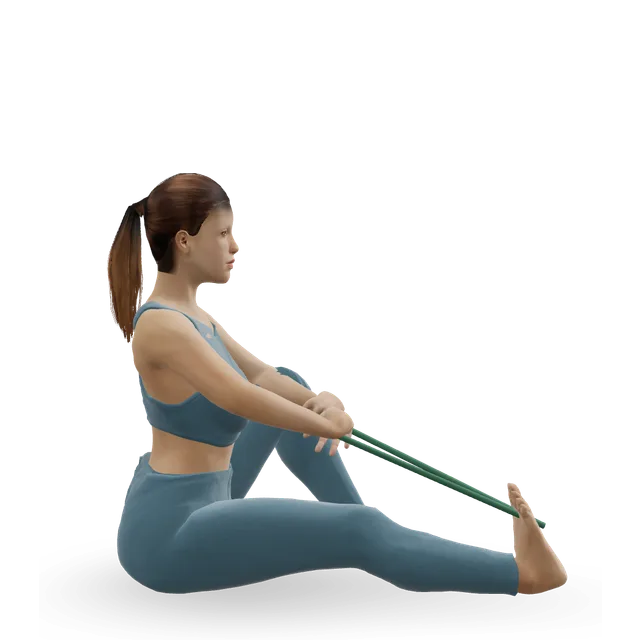
Seated calf stretch with a towel demonstrated on the 3D figure3D demoSeated calf stretch with a towelBeginner · Other / check instructions

Hold 20 to 30 s, 2 to 3 sets, 2 to 3 times a day · NHS inform's stretch dose

Harder: Wall calf stretch (gastrocnemius)

Knee-to-wall ankle rock demonstrated on the 3D figure3D demoKnee-to-wall ankle rockBeginner · A wall

10 slow rocks per side, daily, holding a counter, in a smaller range if it pinches at the front · The move page's dose

Treadmill walking demonstrated on the 3D figure3D demoTreadmill walkingBeginner · Cardio machine

10 minutes at a comfortable pace most days, outdoors or indoors, in fastened shoes · An editorial start, building towards the NHS's 150 minutes a week for older adults. Cycling is a gentler option if walking flares arthritis (editorial)

Harder: Treadmill jogging

Move on when: The moves feel comfortable within the pain rule, and the ankle is no worse the next morning (NHS inform's check).

Follow along: a timer, a cue and the next move, one step at a time.
Stage 2

Ankle and calf strength, and balance

About weeks 2 to 8: strength 2 or 3 times a week and balance at least twice a week, as the NHS asks. Do standing moves next to a kitchen counter, a sturdy chair or a wall.

Slow calf raise demonstrated on the 3D figure3D demoSlow calf raiseBeginner · A wall

Lift for a slow count of 3 and lower for a count of 5, 10 times, building to 20, holding support · The Otago booklet's calf raise; the NHS strength version starts at 5. Stop short of full tiptoe with ball-of-foot or big toe pain, as the move page says

Easier: Seated bent-knee calf raise (soleus raise) · Harder: Standing dumbbell calf raise

Tibialis raise demonstrated on the 3D figure3D demoTibialis raiseBeginner · No equipment

Lift your toes and hold for a slow count of 5, 5 times each foot · The Otago booklet's toe raise, done sitting in the booklet; standing near support is the move page's version (editorial)

Harder: Single-leg tibialis raise

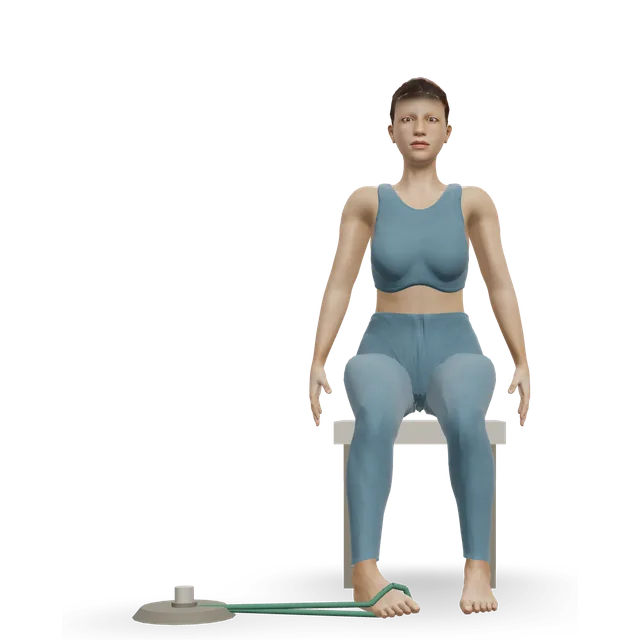
Band ankle inversion demonstrated on the 3D figure3D demoBand ankle inversionBeginner · A band + A bench or box

For pain along the inner ankle and arch: 3 sets of 15, twice a day, with a slow return, starting with a lighter band · The move page's dose, from a tibialis posterior trial in people in their 50s, which worked up to a band you can only just manage; starting lighter is editorial, as the move page says

Harder: Single-leg calf raise from a step

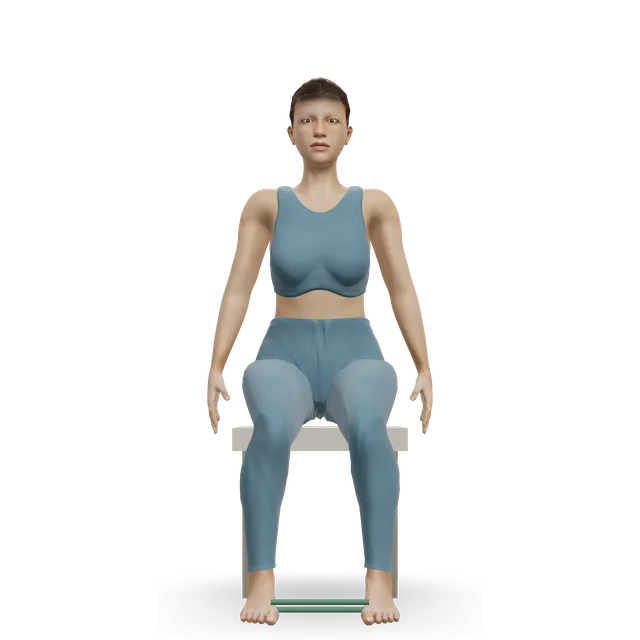
Band ankle eversion demonstrated on the 3D figure3D demoBand ankle eversionBeginner · A band + A bench or box

2 to 3 sets of 10 · Editorial, as in our ankle arthritis guide

Easier: Isometric ankle eversion against a wall · Harder: Single-leg stand

Side-stepping (sideways walking) demonstrated on the 3D figure3D demoSide-stepping (sideways walking)Beginner · A wall

10 steps each way, next to a counter · The move page's dose, from the NHS balance exercises

Harder: Lateral band walk

Tandem stance and heel-to-toe walk demonstrated on the 3D figure3D demoTandem stance and heel-to-toe walkBeginner · A wall

At least 5 heel-to-toe steps beside a wall, moving away from the wall as you improve · The NHS balance exercises' dose. With numb feet, keep a hand on the wall, as the move page says

Easier: Semi-tandem stance · Harder: Single-leg stand

Move on when: Ten slow calf raises and 5 heel-to-toe steps by a wall are steady, with no pain during the moves and no soreness the next day (the podiatry falls trial's rule for moving up).

Follow along: a timer, a cue and the next move, one step at a time.
Stage 3

Stronger, steadier, and out and about

From about week 8, 2 or 3 sessions a week, then keep going. Longer walks, shopping, gardening, bowls, dancing and holidays come back one at a time, a little more each week (our suggestion), in fastened shoes. A local falls service, strength and balance class or walking group helps many people keep it up.

Sit to stand from a chair demonstrated on the 3D figure3D demoSit to stand from a chairBeginner · A bench or box

5 slow repetitions from a firm chair, building to 10 · The NHS strength exercises ("The slower the repetitions, the better") and the Otago booklet (up to 10)

Easier: Sit to stand, pushing on the thighs · Harder: Bodyweight squat

Slow calf raise demonstrated on the 3D figure3D demoSlow calf raiseBeginner · A wall

From 20 on both feet, add a few each week, then a few on one leg near support · The Otago start; the build is editorial

Easier: Seated bent-knee calf raise (soleus raise) · Harder: Standing dumbbell calf raise

Single-leg stand demonstrated on the 3D figure3D demoSingle-leg standBeginner · A wall

Hold 5 to 10 s, 3 times each side, fingertips on a counter, building towards 30 s · The NHS balance exercises' start; the build is editorial. With dizziness or a recent fall, stay within reach of support with someone nearby, as the move page says

Easier: Tandem stance and heel-to-toe walk · Harder: Single-leg reach matrix

Low step-up demonstrated on the 3D figure3D demoLow step-upBeginner · A step

Up to 5 steps with each leg on the bottom stair, holding the rail · The NHS balance exercises' dose

Harder: Step-up

Get up and down from the floor demonstrated on the 3D figure3D demoGet up and down from the floorBeginner · No equipment

5 to 8 slow cycles down and up · The move page's dose (editorial). Have someone with you and a sturdy chair close by the first few times, as the move page says

Easier: Sit to stand from a chair · Harder: Bodyweight get-up

Treadmill walking demonstrated on the 3D figure3D demoTreadmill walkingBeginner · Cardio machine

Build towards 150 minutes a week of moderate walking, with slopes and kerbs · The NHS activity guideline for older adults; how it builds is editorial

Harder: Treadmill jogging

Move on when: Our suggestion: a normal week of walking and getting out passes the pain rule. Then keep the strength and balance work going at least twice a week, as the NHS asks for older adults.

Follow along: a timer, a cue and the next move, one step at a time.

What to change for now

Swollen ankles (written steps)

Our 3D figure can't show these. They come from the NHS and NICE, except where marked as our suggestion.

  • 1. Raise your legs on a chair or pillows when you can, and get some gentle exercise, like walking, to keep the blood moving (the NHS).
  • 2. Don't sit or stand still for long: get up and move around every hour or so, and do the sitting ankle stretches in between (the NHS).
  • 3. Avoid clothes, socks or shoes that are too tight (the NHS).
  • 4. Ask your GP or pharmacist whether a medicine could be causing the swelling, and don't stop it on your own (our suggestion; lower doses caused less swelling in trials).
  • 5. Compression stockings only after a check of your circulation (NICE).

Sources 11, 19, 59, 35, 13

Shoes, sticks and stairs (written steps)

These come from the NHS, NHS inform, Arthritis UK, Age UK and an NHS Lothian leaflet.

  • 1. Wide, comfortable shoes with a low heel and a soft sole, or soft insoles; not high heels or tight, pointy shoes (the NHS).
  • 2. For an arthritic ankle, a light but stiff walking boot, or a rocker added to your shoes by a podiatrist (Arthritis UK).
  • 3. For the inner ankle tendon, supportive trainers or boots, not slip-on or backless shoes (NHS Lothian).
  • 4. Around the house, shoes or slippers that fit, stay on and grip, never bare feet, socks or tights (the NHS; Age UK).
  • 5. If you limp, use a walking stick on the opposite side to the sore ankle; go upstairs leading with your good leg, downstairs leading with the sore one, using the handrail (NHS inform).
  • 6. With poor circulation or numb skin, don't use ice or heat (NHS inform).

Sources 54, 5, 9, 55, 56, 40

Falls and gout (written steps)

These come from the NHS and NICE.

  • 1. If you fall and aren't hurt: roll onto your side, get onto your hands and knees, crawl to something stable, put one foot flat on the floor and stand up slowly. If you can't get up, call for help, keep warm and change position about every 30 minutes (the NHS).
  • 2. Ask about a falls assessment after a fall that hurt you, 2 or more falls, or not being able to get up; it includes your feet and shoes (NICE).
  • 3. Ask a GP or pharmacist if your medicines could be affecting your balance, and get your eyes and hearing checked (the NHS).
  • 4. In a gout attack, take your treatment as soon as possible, rest and raise the leg, keep the joint cool for up to 20 minutes at a time, drink plenty of water unless a GP says otherwise, and keep the bedclothes off it (the NHS).

Sources 55, 45, 29

Positions to swap, and why

Habit or positionWhy it mattersInstead
Sitting for hours with your feet downSwelling collects, and long spells of sitting still raise the risk of a clot, the NHS says.Up and moving every hour, the legs raised on a stool, and the seated ankle moves.Try: Ankle circles
Putting one swollen, painful leg down to ageIt can be a blood clot.Same-day help: an urgent GP appointment or NHS 111.
Putting breathlessness with swollen ankles down to ageIt can be heart failure, which treatment helps.An urgent GP appointment or NHS 111.
Stopping a blood pressure tablet because of swollen anklesThe swelling is a known side effect, but stopping the tablet can do harm (our reasoning).Ask your GP or pharmacist about a different dose or tablet.
Compression socks from the chemist with leg ache on walkingNICE checks for narrowed arteries before compression.See a GP first; then stop-start walking if it's claudication.Try: Treadmill walking
Resting an arthritic ankle completelyNICE makes exercise a core treatment for osteoarthritis at any age.The first stage's moves and short walks.Try: Knee-to-wall ankle rock
Forcing a stretch of a painful inner ankleThe tendon trials strengthened it rather than stretching it, and holding the ankle at the end of its range may squeeze it (our reasoning).Band work in a comfortable range.Try: Band ankle inversion
Walking it off after a twist when you can't take four stepsBroken ankles are common in later life, especially in women, and you can have a break and still walk.Get it checked the same day.
Slip-on or backless shoes and loose slippersThey give poor support and go with more falls.Fastened shoes or slippers that grip.
Balance work with numb feet and nothing to holdNumb feet and dizziness raise the risk of a fall.Fingertips on a counter, as the move page says, or the heel-to-toe stance by a wall.Try: Tandem stance and heel-to-toe walk

Routines to follow

More moves for this area

Questions people ask

Is ankle pain just part of getting older?

No: about 1 in 9 people over 50 have ankle pain, but most of it has a cause that can be helped, such as an old injury, a tendon, swelling or gout. Exercise, good shoes and a few changes at home help at any age.

What causes ankle pain in older people without an injury?

Most often arthritis after an old sprain or break, the tibialis posterior tendon along the inner ankle, or gout. A sudden hot, swollen ankle needs the same day, because it can be an infection.

Why are my ankles swollen, and when should I worry?

Swelling of both ankles that is worse by the evening is common, from sitting or standing still, warm weather, salt, weight, the veins or medicines, and it often settles. See a GP if it doesn't settle in a few days or you have a heart, kidney or vein condition. Get help the same day for one swollen leg or sudden, painful, red swelling, and call 999 if you're also short of breath or have chest pain.

Why is only one ankle swollen?

After a twist it is usually the injury, but one swollen, throbbing leg with red or darker skin can be a blood clot and needs help the same day. Being over 60, recent surgery or a hospital stay, a long journey or heart failure make a clot more likely.

Can blood pressure tablets cause swollen ankles?

Yes: amlodipine and similar tablets caused ankle swelling in about 1 in 8 people taking them in trials, more often at higher doses. Don't stop them on your own; a GP or pharmacist can suggest a different dose or tablet.

I twisted my ankle. Do I need an X-ray?

Get it checked the same day if you couldn't take four steps afterwards, or pressing on the back edge or tip of either ankle bone hurts. Clinicians use these points to decide who needs an X-ray, and you can have a break and still walk.

Can you get flat feet as you get older?

Yes: the tibialis posterior tendon can weaken, so the arch drops on one side and rising onto tiptoe gets hard; it is most common in women from middle age. See a GP, physiotherapist or podiatrist early, as insoles, supportive shoes and exercises work best before the foot stiffens.

Is walking good for an arthritic ankle?

Yes, within the pain rule: NICE recommends exercise and general fitness for osteoarthritis at any age. A light, stiff walking boot or a rocker sole can ease walking, and cycling or swimming are gentler if walking flares it.

What shoes are best for older ankles?

Wide, low-heeled shoes with a fastening and a non-slip sole, a supportive trainer or boot for an inner ankle tendon problem, and never bare feet or socks around the house. No trial has tested shoes for ankle pain in later life, so go by comfort and grip.

Can gout affect the ankle?

Yes: gout can affect the ankle and midfoot as well as the big toe, and it becomes more common with age, especially with kidney problems or water tablets. A hot, red, swollen ankle needs the same day, as it can also be an infection.

Will ankle exercises help my balance?

Foot and ankle exercises improve balance and ankle movement a little, and strength and balance programmes cut falls by about a quarter. Do them at least twice a week, near a counter, and ask about a falls service after a fall.

Should I wear compression socks for swollen ankles?

Only after a GP or nurse has checked your circulation, because narrowed arteries need ruling out first. Raising your legs and walking help in the meantime.

Related exercise guides

Other pain guides

Sources

  1. Murray 2018 · Ankle pain and ankle arthritis in UK adults aged 50 and over (population survey, PLoS One)
  2. Thomas 2011 · Foot and ankle pain in middle and old age (systematic review, Pain)
  3. Saltzman 2005 · What causes ankle arthritis: 639 patients at a US specialist centre (case series, Iowa Orthop J)
  4. Valderrabano 2009 · What causes ankle arthritis: 406 painful end-stage ankles (case series, Clin Orthop Relat Res)
  5. Arthritis UK · Osteoarthritis of the foot and ankle
  6. NICE NG226 · Osteoarthritis in over 16s: diagnosis and management (2022)
  7. Kohls-Gatzoulis 2009 · Tibialis posterior tendon dysfunction in women over 40 in England (survey and examination, Foot Ankle Surg)
  8. Kohls-Gatzoulis 2004 · Tibialis posterior dysfunction: a common and treatable cause of adult acquired flatfoot (clinical review, BMJ)
  9. NHS Lothian · Posterior tibialis tendon dysfunction: what do I need to know? (patient information, 2026)
  10. NHS · Flat feet
  11. NHS · Swollen ankles, feet and legs (oedema)
  12. Ely 2006 · Leg swelling with no clear cause (clinical review, J Am Board Fam Med)
  13. Makani 2011 · Ankle swelling with calcium channel blockers such as amlodipine: 106 trials (meta-analysis, J Hypertens)
  14. NHS · Side effects of amlodipine
  15. NHS · Varicose veins
  16. NHS · Lymphoedema (past its review date: reviewed March 2023, review due March 2026)
  17. NHS · Heart failure
  18. NICE NG106 · Chronic heart failure in adults: context (who has it, and at what age)
  19. NHS · DVT (deep vein thrombosis)
  20. Gundtoft 2025 · Broken ankles in Denmark, 1997 to 2018, by age and sex (population cohort study, Acta Orthop)
  21. Seyhan 2024 · The Ottawa ankle rules in 160 people aged 65 and over in one emergency department (diagnostic study, Ulus Travma Acil Cerrahi Derg)
  22. Stiell 1992 · Developing the Ottawa rules for X-rays after ankle injuries in 750 adults (diagnostic study, Ann Emerg Med)
  23. Stiell 1993 · Decision rules for X-rays in acute ankle injuries: refinement and prospective validation (JAMA)
  24. Bachmann 2003 · Accuracy of the Ottawa ankle rules to exclude fractures of the ankle and midfoot (systematic review, BMJ)
  25. NICE NG38 · Fractures (non-complex): assessment and management (2016)
  26. Hjelle 2021 · Weight, osteoporosis and broken ankles in people aged 40 and over (case-control study, BMC Musculoskelet Disord)
  27. Mason 2025 · Management of broken ankles in older people (review, Curr Osteoporos Rep)
  28. Kuo 2015 · Gout in the UK by age and sex, 1997 to 2012 (population study, Ann Rheum Dis)
  29. NHS · Gout (past its review date: reviewed August 2023, review due August 2026)
  30. NICE NG219 · Gout: diagnosis and management (2022)
  31. Zhang 2011 · European League Against Rheumatism (EULAR) recommendations for calcium pyrophosphate deposition, part I: terms and diagnosis (expert recommendations, Ann Rheum Dis)
  32. NHS · Septic arthritis
  33. NICE CG147 · Peripheral arterial disease: context (how common it is)
  34. NHS · Peripheral arterial disease (PAD)
  35. NICE CG147 · Peripheral arterial disease: diagnosis and management
  36. NICE NG19 · Diabetic foot problems: prevention and management (2015, updated 2019)
  37. NICE NG158 · Venous thromboembolic diseases: diagnosis, management and thrombophilia testing (2020, updated 2023)
  38. NICE NG106 · Chronic heart failure in adults: diagnosis and management (last updated September 2025)
  39. NHS · Peripheral arterial disease (PAD): diagnosis
  40. NHS inform · Ankle problems
  41. NHS · Broken ankle
  42. Liu 2009 · Progressive resistance strength training for improving physical function in older adults (Cochrane review)
  43. Sherrington 2019 · Exercise for preventing falls in older people living in the community: 108 trials (Cochrane review)
  44. Schwenk 2013 · Foot and ankle exercise programmes for older adults: 8 trials (systematic review and meta-analysis, J Am Podiatr Med Assoc)
  45. NICE NG249 · Falls: assessment and prevention in older people and in people 50 and over at higher risk (2025)
  46. Menz 2006 · Foot and ankle risk factors for falls in 176 older people (prospective study, J Gerontol A Biol Sci Med Sci)
  47. Spink 2011 · A podiatry package of insoles, shoe advice and foot and ankle exercises to prevent falls in 305 older people with foot pain (RCT, BMJ)
  48. Cockayne 2017 · A podiatry package to prevent falls in 1,010 older people in the UK: the REFORM trial (RCT, PLoS One)
  49. Kulig 2009 · Orthoses and resistance exercise for early tibialis posterior tendon problems: 36 adults (randomised trial, Phys Ther)
  50. Houck 2015 · Adding strengthening to orthoses and stretching for stage II tibialis posterior tendon dysfunction (randomised trial, Foot Ankle Int)
  51. Ross 2018 · Exercise for tibialis posterior tendon dysfunction: 3 trials, 93 people (systematic review, BMJ Open Sport Exerc Med)
  52. Goldberg 2023 · Ankle replacement or fusion for end-stage ankle arthritis in 303 people aged 50 to 85: TARVA (RCT, Health Technol Assess)
  53. Willett 2016 · Close contact casting vs surgery for unstable ankle fractures in adults over 60: AIM (RCT of 620, JAMA)
  54. NHS · Ankle pain
  55. NHS · Falls
  56. Age UK · Falls prevention: how to stay steady on your feet
  57. NHS inform · Exercises for ankle pain
  58. Later Life Training · Otago strength and balance home exercise programme: beginners (booklet, 2018)
  59. NHS · Sitting exercises

Exercise education, not a diagnosis or treatment plan. It is written from the guidelines and studies listed above; review by a clinician is pending. If your pain follows an injury, is severe, is getting worse, or comes with any warning sign listed on this page, get it assessed. Health disclaimer.