Yoga guide

Yoga nidra: what it is, how to do it, and what it can and can't do

Yoga nidra, or yogic sleep, is a guided relaxation you do lying still. A teacher or a recording takes you through a short resolve, a slow tour of the body, the breath, opposite sensations and calm images, then back to the room. Swami Satyananda Saraswati of the Bihar School of Yoga set out the method in a book in 1976, and iRest (Integrative Restoration) and non-sleep deep rest are modern versions.

It may ease stress a little and help some people sleep, but most studies are small and weak, the largest trial found small effects, and no study shows it can replace sleep. It's usually gentle, though guided relaxation can bring up distress for some people, especially after trauma.

This guide covers what yoga nidra is and where it comes from, a script to follow for 10, 20 or 30 minutes, what the trials found for stress, anxiety, sleep and pain, the claim that an hour of it equals four hours of sleep, trauma and post-traumatic stress disorder (PTSD), and when to get help.

The short version

A guided relaxation, lying still

A teacher or recording takes you through a set sequence: a short resolve, moving your attention around the body, watching the breath, opposite sensations, images, the resolve again and a slow return. Swami Satyananda set out its seven parts in 1976; the word itself is much older.

Sources 1, 2

Stress: small effects in the best trial

A 2026 review of 73 studies found large effects on stress, anxiety and low mood, but most studies were weak and the authors say the effects are likely inflated. In the largest trial, 362 adults who listened to an 11 or 30 minute recording for 2 months had small improvements.

Sources 1, 3

Sleep: promising, but very low certainty

Pooled trials of sleep quality and insomnia were very low certainty and didn't reach statistical significance. In 144 people with heart disease, 12 weeks of sessions improved sleep measured with a wrist monitor. For insomnia that lasts, see a GP, who may offer cognitive behavioural therapy (CBT).

Sources 4, 5, 6, 7

It doesn't replace sleep

No study supports the popular claim that an hour of yoga nidra equals about four hours of sleep: a 2022 review traces it to a 2013 handbook. When novices practised in a sleep laboratory, their brain recordings showed them awake throughout.

Sources 8, 9

Gentle, but not right for everyone

Guided relaxation can bring up anxiety or painful memories, and the NHS says mindfulness makes some people feel worse. With PTSD, use yoga nidra alongside trauma-focused therapy, not instead of it.

Sources 10, 11, 12

What yoga nidra is, and where it comes from

What happens in a session

You lie on your back, usually in corpse pose with your eyes closed, and follow spoken instructions. A 2026 review describes a guided practice in seven steps that aims for a state between waking and sleep. Sessions usually last 30 minutes to an hour, a 2022 review says; trials have used 11 to 35 minutes.

The seven parts, as Swami Satyananda set them out:

  • Preparation: lie still in corpse pose.
  • Resolve (sankalpa): a short, positive sentence, repeated three times.
  • Rotation of consciousness: moving your attention from one part of the body to the next in a set order.
  • Breath: watching the breath without changing it, sometimes counting breaths.
  • Feelings and sensations: pairs of opposites, such as heat and cold or heaviness and lightness.
  • Visualisation: images named by the teacher.
  • Ending: the resolve again, then attention back to the body and the room.

Sources 1, 8, 2

An old word, a modern method

In ancient Indian texts, yoganidra meant the god Vishnu's sleep and, later, a deep meditative absorption called samadhi. A history of the texts says Satyananda built his method from older tantric practices, and that its resolve stage looks borrowed from Western relaxation therapies. His book came out in 1976, though one review dates his writings on it to the 1960s.

Sources 2, 1, 8

Teachers differ

Satyananda's version is a guided script that tells you what to notice. In another tradition, yoga nidra means a trained state of deep sleep with awareness kept, reached after years of practice. Researchers warn that many studies use the name for general relaxation and guided imagery.

Sources 13, 14

iRest and non-sleep deep rest

iRest (Integrative Restoration), developed by Richard Miller, calls itself a contemporary adaptation of yoga nidra that combines yogic practice with Western psychology. It has 10 steps, starting with a heartfelt desire, an intention and an inner resource (a place in the body that feels safe), and its site says the first 5 steps are usually enough for beginners. Where classical versions tell you what to perceive, iRest asks you to explore your own experience.

Non-sleep deep rest (NSDR) is a short, secular recording, usually 10 to 20 minutes, that borrows yoga nidra's body scan and breathing but not its resolve or imagery. It's a related but different practice, so we don't count its trials as yoga nidra evidence.

Sources 15, 16, 17, 18

Is it religious?

It comes from yoga's spiritual tradition, as a way of withdrawing the senses, one of yoga's eight limbs. Satyananda's imagery includes temples, saints and other religious symbols, while researchers and iRest have made versions without religious content. Choose a teacher or recording whose language suits you.

Sources 1, 2

Awake, not asleep: what the brain studies showEmerging evidence

In 30 novices, brain recordings showed them awake throughout a session, with patches of slow waves in some areas. In 22 adults with insomnia, 30 minutes of yoga nidra didn't change brain waves, heart rate variability or the time it took to fall asleep compared with lying quietly, though breathing slowed.

Two small brain-scan studies in experienced practitioners, from 1999 and 2002, found changes in blood flow and a rise in dopamine release in one brain area. They're interesting, but they don't show health benefits.

Sources 9, 19, 20, 21

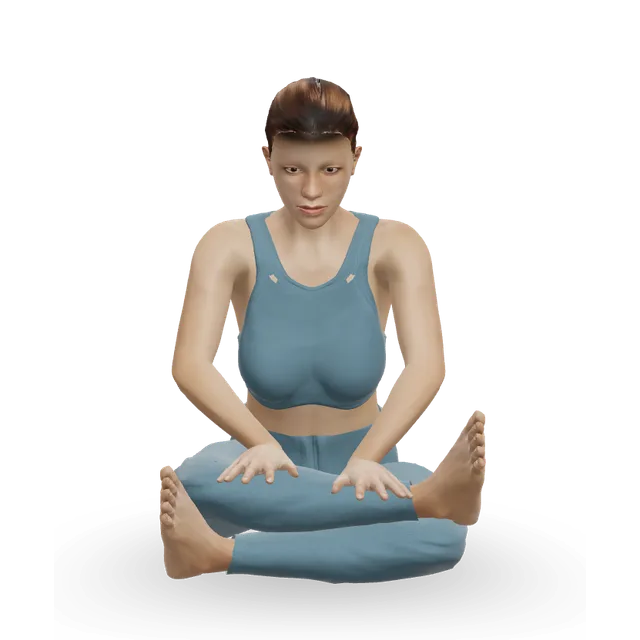
Not the same as yoganidrasana

Yoganidrasana, the yogic sleep pose, is a posture with the legs wrapped behind the neck, named in a 17th-century text. It has nothing to do with the guided relaxation, which is done lying in corpse pose.

Source 2

A yoga nidra script to follow

The steps follow Satyananda's seven parts (Birch and Hargreaves 2015; Pandi-Perumal 2022), with trauma-informed choices from Luu 2024. For 10 minutes, keep steps 3 and 4 short and leave out steps 5 and 6, like the 11-minute recording in Moszeik 2025; for 30 minutes, lengthen steps 3, 4 and 6. The timings and the example order are our editorial suggestion.

  1. Settle, for 1 to 2 minutes. Lie on your back with a cushion under your knees and head, or on your side, or sit if you prefer. Cover yourself, because you'll cool down. Close your eyes, or rest them on one spot, and notice the sounds around you, then where your body touches the floor.
  2. Choose a resolve, for about 30 seconds. Say a short, positive sentence in your own words three times in your head, such as "I am calm and relaxed". If nothing comes, skip it.
  3. Move your attention around your body, for 3 to 10 minutes. Name each part in turn and feel it without moving: for example, the right hand and each finger, the arm and shoulder, down the right side to the toes, then the left side, the back, the front and the whole body.
  4. Watch your breath, for 2 to 5 minutes. Notice it at your nostrils, chest or belly without changing it. You can count breaths backwards, starting again if you lose count.
  5. Feel opposites, for 1 to 3 minutes: heaviness, then lightness; warmth, then coolness. Skip anything that feels unpleasant.
  6. Picture calm images, for 1 to 5 minutes, or one place where you feel safe. Let any image go if it brings up distress.
  7. Repeat your resolve three times.
  8. Come back, for 1 to 2 minutes. Notice your breath, your body, then the sounds in the room. Move your fingers and toes, roll onto one side, pause, and sit up slowly with your head coming up last.

See the movement on the 3D figure: Corpse pose (Savasana)

What the evidence says

Stress, anxiety and low mood: big effects in weak studiesMixed evidence

A 2026 review pooled 73 studies with 5,201 people and found large effects on stress, anxiety and depression. But only 22 studies were randomised trials, and 17 of those were at high risk of bias, mostly because people rated their own symptoms knowing which group they were in. The authors say the effects likely reflect inflated estimates and that yoga nidra should be an add-on to established treatment, not a replacement. Only 2 studies each were in people diagnosed with an anxiety or depressive disorder.

Source 1

The largest trial: small effectsEmerging evidence

In Germany, 362 adults (81% women) listened online to an 11 or 30 minute recording, ideally every day for 2 months, or to music, or waited. Compared with waiting, the effects on stress, anxiety, low mood, rumination and sleep disturbance were small: at most about a fifth of a standard deviation, which researchers count as a small effect (an effect size of 0.19 for stress with the 30-minute recording). Most of the change lasted to the 3-month follow-up. Compared with music, only low mood differed, and the longer recording wasn't clearly better than the shorter one.

Source 3

Sleep: very low certaintyMixed evidence

A 2026 meta-analysis found only 2 trials each on sleep quality and insomnia; neither pooled result was statistically significant, and the certainty was very low. A review of 6 small trials found most reported better sleep, at moderate to high risk of bias.

In 41 people with chronic insomnia, yoga nidra and CBT for insomnia both improved sleep; yoga nidra wasn't shown to be better. In 41 novices, 4 weeks of practice was followed by a little more of the night spent asleep and about 20 minutes less time awake after first falling asleep, in a study without a comparison group.

In 144 people with heart disease (89% men), 35-minute sessions over 12 weeks plus sleep advice were compared with advice alone. At 12 weeks, on a wrist monitor, the yoga nidra group spent 82% of their time in bed asleep, against 64% with advice alone, in an open trial registered after it started. In a sleep laboratory, one 30-minute session didn't help 22 people with insomnia fall asleep faster.

Sources 4, 5, 22, 23, 6, 19

Against music, a body scan or a sham recordingMixed evidence

After hospital care for COVID-19, 30 minutes a day of yoga nidra or music both did better than usual care in 90 people, and music helped sleep quality more. In 23 people with chronic pain, one session of yoga nidra or a body scan eased pain equally. In 50 people with functional seizures, adding a yoga nidra recording did no better than a sham recording at 6 months.

Other small trials, in health workers, students and people having cancer treatment, reported benefits.

Sources 24, 25, 26, 27, 28, 29

Pain and blood pressure: weak evidenceMixed evidence

Across 12 studies of pain (1,176 people), yoga nidra beat no treatment by an implausibly large amount in low-quality studies and made no clear difference against other active treatments. Blood pressure reviews report falls, about 12 mmHg in the top number in one review of 482 people, but from studies at high risk of bias.

The National Institute for Health and Care Excellence (NICE) removed relaxation therapies from its high blood pressure guidance because there was less evidence for them than for other lifestyle changes or medicines, while saying people can still try them. Our exercise for high blood pressure guide covers what helps.

Sources 30, 31, 32, 33

Dopamine and cortisol claimsMixed evidence

One 2002 brain-scan study estimated a 65% rise in dopamine release in one brain area during yoga nidra in experienced practitioners. Cortisol, a stress hormone, changed a little in two trials. Each finding comes from a single study, so they don't show health effects.

Sources 21, 3, 22

Who has been studied

Most trials were in India. In the 73-study review, 1,580 women and 741 men took part among those whose sex was reported (68% women), and more than a quarter of studies didn't say whether an instructor was present. An earlier review of 29 studies found yoga nidra helped in most, but they were too varied to draw firm conclusions.

Sources 1, 34, 4

Can it replace sleep?

Where the four-hours claim comes fromMixed evidence

A 2022 review reports the claim that 1 hour of yoga nidra equals about 4 hours of sleep and traces it to a 2013 handbook. The same review says practitioners themselves don't see it as a substitute for sleep. No study has measured it.

Source 8

Awake, with patches of slow wavesEmerging evidence

In novices, brain recordings showed wakefulness through the session, with slow waves in some areas, sometimes called local sleep. The trials added yoga nidra to normal sleep and measured stress or sleep quality; none tested it as a replacement.

Sources 9, 19

Non-sleep deep rest isn't a nap eitherMixed evidence

In a related but different practice, a 10-minute non-sleep deep rest recording, 60 active young adults were given that recording, a 25-minute nap or neither. Forty minutes later, the nap group felt less tired and more ready to perform, and the recording made no measurable difference. In another trial, the same kind of recording gave 102 young adults small, short-lived gains in how rested they felt.

Sources 35, 18

What to do

Use yoga nidra as rest, not as a replacement for sleep. If you're short of sleep, a short nap did more in the one trial that compared them. If poor sleep lasts for months, see a GP: the NHS route is CBT for insomnia, and GPs now rarely prescribe sleeping pills.

Source 7

Trauma, PTSD and iRest

iRest's claims, and the studies behind themMixed evidence

iRest's own site says it has been shown to resolve symptoms of PTSD, without naming trials, and that the US Army Surgeon General once endorsed it. The published studies are small: a qualitative study of 16 male combat veterans, of whom 11 finished and described less rage and anxiety despite intrusive memories, and a study without a control group in which 10 women veterans with sexual trauma reported fewer PTSD symptoms.

Sources 36, 15, 37, 38

In older adults with low moodMixed evidence

In 30 older adults, an iRest retreat and 6 weeks of home practice improved sleep compared with a holiday-style retreat. A year later, the iRest group was no better off, and the holiday group had better mood and less stress.

Sources 39, 40

What treats PTSDStrong evidence

NICE recommends trauma-focused CBT and eye movement desensitisation and reprocessing (EMDR) for adults with PTSD; yoga isn't among its recommendations. The US National Center for Complementary and Integrative Health (NCCIH) says the evidence for yoga in PTSD is only low quality. Our exercise for PTSD guide covers trauma-sensitive yoga as an add-on.

Sources 12, 41

It can bring up distressEmerging evidence

An expert review warns that yoga nidra can re-traumatise if it isn't delivered with care, with overwhelming flashbacks, emotional distress and long-lasting dissociation reported. The 2026 review adds that because the practice involves images, memories and emotions, poor guidance could do harm.

Sources 10, 1

Trauma-informed yoga nidra

The same expert review lists ten parts of a trauma-informed practice:

  • A safer, comfortable setting.
  • Your own choice and consent throughout.
  • Skilful, gentle attention.
  • A suitable length, with preparation.
  • Time to settle, with attention on the room as well as the body.
  • Permission to fall asleep.
  • An intention you choose yourself.
  • A flexible body scan and breath awareness.
  • Opposite sensations felt in the body.
  • Careful choice of images.

Source 10

If you've experienced trauma

Our suggestion, in line with our trauma-sensitive yoga advice: keep your eyes open or lowered, sit up if lying down feels unsafe, skip any part that doesn't feel right, and stop if distress rises. Use yoga nidra alongside trauma-focused therapy, not instead of it.

Sources 10, 12

Side effects, and who should take care

Meditation side effects aren't rareEmerging evidence

Across 83 studies of meditation, about 8% of people reported an adverse effect, most often anxiety or low mood, sometimes in people with no history of mental health problems. After an 8-week mindfulness course, 6% to 14% had lasting bad effects. In a US survey of 434 people who had meditated, about a third reported an adverse effect, with traumatic memories resurfacing among the commonest, and childhood adversity raised the risk. The NHS says mindfulness isn't right for everyone and can make some people feel worse.

Sources 42, 43, 44, 11

Take care if

These are our suggestions, with the sources named.

  • You have PTSD or a history of trauma: see the trauma section, and practise alongside your therapy.
  • You're pregnant: from the end of the first trimester, lie on your side or propped up rather than flat on your back. The American College of Obstetricians and Gynecologists (ACOG) advises avoiding poses that keep you still or on your back for long periods.
  • You feel light-headed getting up: roll onto your side and sit for a few breaths before standing.
  • You use a sleep recording: never listen while driving or using machinery.

Sources 45, 10

How long, and how often

What the trials used

Trials used sessions of 11 to 35 minutes, daily or on most days, for 2 weeks to 3 months: 11 or 30 minute recordings daily for 2 months; 35-minute sessions about twice a week for 12 weeks, with recordings in between; and 30 minutes a day for 30 days. Across 73 studies, the median total was 750 minutes.

Sources 3, 6, 24, 27, 1

Our editorial starting point

Our editorial starting point is 10 to 20 minutes, lying down or sitting, on 3 or more days a week, for 4 to 8 weeks before deciding whether it helps. That's within the range used in trials. At bedtime, falling asleep is fine, and trauma-informed teachers give permission to sleep; as a daytime practice, the classical aim is to stay awake.

Sources 3, 10, 8

Positions for yoga nidra

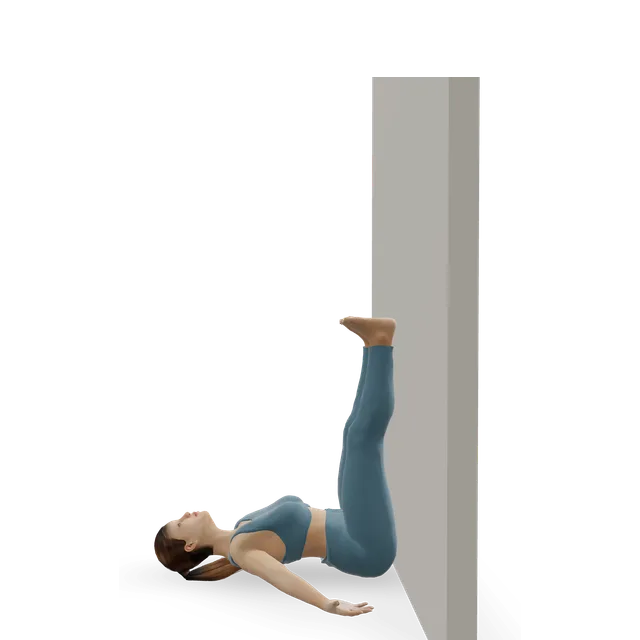
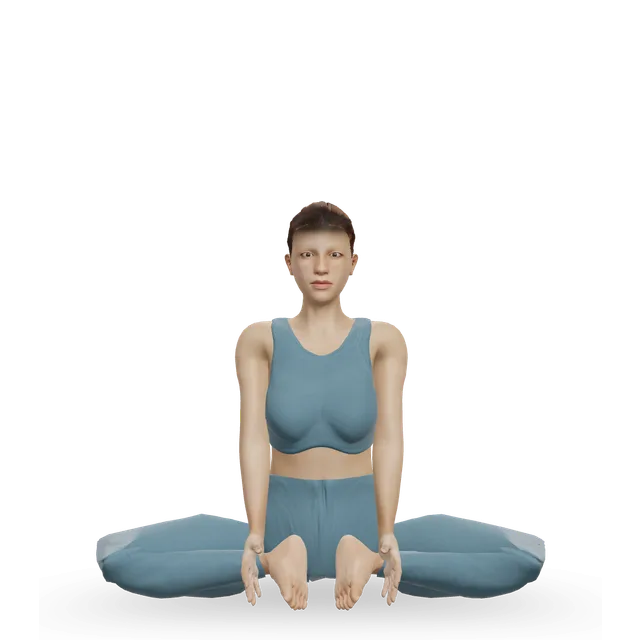
Lie in corpse pose, or rest in reclining bound angle or sit up, for the length of the recording, settling first with a few minutes of slow breathing or legs up the wall if you like (skip legs up the wall in later pregnancy, and with glaucoma ask your eye doctor first).

Routines to pair with it

Gentle routines to do before a session, or instead of one if lying still doesn't suit you. Both yin sessions end with a long rest in corpse pose.

When to stop, and when to get help

Get help straight away

The NHS says a mental health emergency should be taken as seriously as a physical one.

  • Call 999 or go to A&E if your life is at risk, or you feel you can't keep yourself or someone else safe.
  • For urgent help in England, call 111 and select the mental health option, or use 111 online.
  • Call Samaritans on 116 123. It is free, any time, day or night.
  • In the US, call or text 988, the 988 Suicide and Crisis Lifeline, any time. Veterans can dial 988 then press 1, or text 838255.

Sources 46, 47, 48, 49

Stop the practice if

It brings on flashbacks, panic, strong distress, or a feeling of being detached or unreal. Open your eyes, sit up, put your feet on the floor and look around the room, and tell your therapist or GP if it happens again.

Sources 10, 11

See a GP if

You've had trouble sleeping for months, changing your sleep habits hasn't helped, or poor sleep is making it hard to cope with daily life. GPs may offer CBT for insomnia, and now rarely prescribe sleeping pills. See a GP, too, if low mood or anxiety is affecting your daily life.

Source 7

Veterans and service leavers

In England, Op COURAGE is the NHS mental health service for veterans, service leavers and reservists. You can contact it yourself, or ask your GP or a charity to refer you.

Source 50

Myths

"Yoga nidra can replace sleep"Mixed evidence

No study supports it, including the popular claim that an hour equals about four hours of sleep, which a 2022 review traces to a 2013 handbook. Novices stay awake during practice, and the trials added yoga nidra to normal sleep; the largest found small effects.

Sources 8, 9, 3

"Non-sleep deep rest works like a nap"Mixed evidence

In one trial, a 25-minute nap lowered tiredness and a 10-minute recording didn't; in another, a recording gave small, short-lived gains in how rested people felt.

Sources 35, 18

"It's an ancient practice, unchanged for thousands of years"Emerging evidence

The word is ancient, but the seven-part method was set out in 1976, and a history of the texts says its resolve stage looks borrowed from Western relaxation therapies.

Sources 2, 1

"It boosts dopamine by 65%"Mixed evidence

That figure comes from one small 2002 brain-scan study in experienced practitioners. It hasn't been repeated, and it says nothing about health effects.

Source 21

"Studies prove it treats anxiety and insomnia"Mixed evidence

Reviews report large effects from mostly weak studies, the largest trial found small effects, and pooled sleep trials were very low certainty.

Sources 1, 3, 4

"Guided relaxation can't do any harm"Emerging evidence

Meditation practices cause side effects in a minority of people, sometimes lasting, and yoga nidra can bring up flashbacks and distress if it isn't taught with care.

Sources 42, 44, 10, 11

"iRest is a proven treatment for PTSD"Mixed evidence

The studies are a qualitative study of 16 veterans and a study of 10 women without a control group. NICE recommends trauma-focused therapies instead.

Sources 36, 37, 38, 12

Questions people ask

What is yoga nidra?

A guided relaxation, usually done lying on your back, in which a teacher or recording takes you through a resolve, a body scan, breath awareness, opposite sensations, images and a slow return. Swami Satyananda set out its seven parts in a 1976 book; the name, yogic sleep, is much older.

How do you do yoga nidra?

Lie comfortably, choose a short, positive resolve and repeat it three times, then move your attention around your body, watch your breath, notice opposites such as heavy and light, picture calm images, repeat the resolve and come back slowly. Our script has 10, 20 and 30 minute versions.

Does yoga nidra work?

It may lower stress a little. Reviews report big effects, but mostly from weak studies, and the largest trial, of 362 people, found small ones. Treat it as a pleasant, low-risk extra, not a treatment.

Is yoga nidra good for sleep and insomnia?

Small trials suggest better sleep, including in people with heart disease, but pooled results are very low certainty. For insomnia that has lasted months, see a GP: CBT for insomnia is the usual treatment.

Can yoga nidra replace sleep? Does an hour equal four hours of sleep?

No. A 2022 review traces the four-hours claim to a 2013 handbook, not a study, and says practitioners don't see it as a substitute for sleep. People stay awake during practice, and the trials added it to normal sleep.

Is it OK to fall asleep during yoga nidra?

At bedtime, yes. Classical teaching aims to stay aware, and brain recordings show novices usually stay awake, but trauma-informed teachers give permission to sleep.

How long should yoga nidra be, and how often?

Trials used 11 to 35 minutes, daily or on most days, for 2 weeks to 3 months. Our editorial starting point is 10 to 20 minutes on 3 or more days a week.

Is yoga nidra the same as NSDR (non-sleep deep rest)?

No. Non-sleep deep rest is a short, secular recording that borrows yoga nidra's body scan and breathing but drops the resolve and imagery. It's a related but different practice, and its few trials found small or no effects.

What's the difference between yoga nidra, a body scan, meditation and savasana?

Savasana, or corpse pose, is the lying posture; yoga nidra is a guided meditation done in it, and a body scan is one of its steps. In one small study, yoga nidra and a body scan eased pain equally.

Is yoga nidra safe? Can it be dangerous?

It's usually gentle, but guided relaxation and meditation can bring up anxiety, painful memories or a detached feeling for some people. If that happens, open your eyes, sit up and stop, and get support if it keeps happening.

Can yoga nidra help PTSD? What is iRest?

iRest (Integrative Restoration) is a 10-step version developed by Richard Miller. Its PTSD research is small and mostly without control groups, so use it only alongside trauma-focused therapy, which NICE recommends.

Is yoga nidra religious, and can I do it sitting up?

It comes from yoga's spiritual tradition, but secular versions exist, so choose a recording whose language suits you. Trials used lying down, but sitting works if lying still feels uncomfortable or unsafe.

Sources

  1. Ghai 2026 · Yoga nidra for stress, anxiety and depression: 73 studies, 5,201 people (systematic review and meta-analysis, Ann N Y Acad Sci)
  2. Birch and Hargreaves 2015 · Yoganidrā: an understanding of the history and context (history of the yoga texts)
  3. Moszeik 2025 · Online yoga nidra, well-being and cortisol: 362 adults (randomised trial, Stress Health)
  4. Singh 2026 · Yoga nidra for sleep disturbances and insomnia (systematic review and meta-analysis, Sleep Breath)
  5. Dutta 2026 · Yoga nidra for sleep disorders: 6 trials (systematic review, J Integr Complement Med)
  6. Sharma 2027 · Yoga nidra and sleep in coronary artery disease: 144 people (randomised trial, Am J Prev Cardiol)
  7. NHS · Insomnia
  8. Pandi-Perumal 2022 · The origin and clinical relevance of yoga nidra (review, Sleep Vigil)
  9. Datta 2022 · Brain recordings during yoga nidra in 30 novices (sleep laboratory study, Front Neurol)
  10. Luu 2024 · Key components of trauma-informed yoga nidra (expert review, Int J Yoga Therap)
  11. NHS · Mindfulness
  12. NICE NG116 · Post-traumatic stress disorder (recommendations)
  13. Parker 2013 · Defining yoga-nidra: traditional accounts, physiological research and future directions (review, Int J Yoga Therap)
  14. Parker 2019 · Training attention for conscious non-REM sleep: the yogic practice of yoga-nidrā (review, Prog Brain Res)
  15. iRest Institute · About iRest (Integrative Restoration)
  16. iRest Institute · The 10-step iRest protocol
  17. iRest Institute · Yoga nidra and iRest
  18. Boukhris 2026 · One session of non-sleep deep rest: 102 young adults (randomised study, Appl Psychol Health Well Being)
  19. Sharpe 2023 · Yoga nidra in a sleep laboratory: 22 adults with insomnia (randomised study, J Psychosom Res)
  20. Lou 1999 · Brain blood flow during yoga nidra in 9 yoga teachers (brain scan study, Hum Brain Mapp)
  21. Kjaer 2002 · Dopamine release during yoga nidra meditation (brain scan study, Brain Res Cogn Brain Res)
  22. Datta 2021 · Yoga nidra or cognitive behavioural therapy for chronic insomnia: 41 adults (randomised trial, Natl Med J India)
  23. Datta 2023 · Yoga nidra, sleep and memory in 41 novices (study without a control group, PLoS One)
  24. Jain 2026 · Yoga nidra or music after hospital care for COVID-19: 90 adults (randomised trial, Ann Neurosci)
  25. Gibbs 2025 · Yoga nidra or a body scan for chronic pain: 23 people (comparison study, Int J Yoga)
  26. Gomathy 2026 · Yoga nidra or a sham recording for functional seizures: 50 people (pilot randomised trial, Epilepsy Behav)
  27. Gunjiganvi 2023 · Yoga nidra or relaxing music for frontline COVID-19 health workers: 79 people (pilot randomised trial, Int J Yoga Therap)
  28. Pasokchat 2026 · Yoga nidra with Iyengar yoga in college students (randomised trial, Acta Psychol)
  29. Baruah 2026 · Yoga nidra during cancer treatment: 40 people (randomised trial, Complement Ther Med)
  30. Ghai 2025 · Yoga nidra and pain: 12 studies, 1,176 people (meta-analysis, Complement Med Res)
  31. Ghai 2025 · Yoga nidra and heart health markers: 28 studies (systematic review and meta-analysis, Complement Ther Med)
  32. Ahuja 2024 · Yoga nidra for high blood pressure: 482 people (systematic review and meta-analysis, J Ayurveda Integr Med)
  33. NICE NG136 · Hypertension in adults: why the recommendation on relaxation therapies was deleted (rationale, updated February 2026)
  34. Musto 2023 · Exploring the uses of yoga nidra: 29 studies (integrative review, J Nurs Scholarsh)
  35. Boukhris 2026 · A short nap or non-sleep deep rest: 60 active adults (randomised trial, Clocks Sleep)
  36. iRest Institute · Resolve trauma
  37. Stankovic 2011 · iRest for combat-related post-traumatic stress: 16 male veterans (qualitative feasibility study, Int J Yoga Therap)
  38. Pence 2014 · iRest for women veterans with sexual trauma: 10 completers (pilot study without a control group, Int J Yoga Therap)
  39. Wahbeh 2019 · iRest for older adults with depression symptoms: 30 people (pilot randomised trial, Int J Yoga Therap)
  40. Wahbeh 2019 · iRest for older adults: 6-month and 1-year follow-up (Int J Yoga Therap)
  41. NCCIH · Yoga: what you need to know (US National Center for Complementary and Integrative Health, August 2023)
  42. Farias 2020 · Adverse events in meditation practices: 83 studies (systematic review, Acta Psychiatr Scand)
  43. Britton 2021 · Adverse effects of mindfulness programmes: 96 people (study, Clin Psychol Sci)
  44. Goldberg 2022 · Adverse effects of meditation in a US population sample of 434 people (survey, Psychother Res)
  45. ACOG · Exercise during pregnancy (American College of Obstetricians and Gynecologists, FAQ119, reviewed November 2025)
  46. NHS · Where to get urgent help for mental health
  47. Samaritans · Contact a Samaritan: 116 123, free, any time
  48. 988 Suicide and Crisis Lifeline (US): call, text or chat, any time
  49. Veterans Crisis Line (US): dial 988 then press 1, or text 838255
  50. NHS · Op COURAGE: mental health support for veterans, service leavers and reservists

Exercise education, not a personal prescription, and clinical review of these guides is pending. If you are pregnant, have a health condition such as glaucoma, high blood pressure or osteoporosis, or have had recent surgery, check with a doctor, midwife or physiotherapist before starting, and stop for sharp or increasing pain. Health disclaimer.