Regular stretching works
Across 77 studies (3,870 people), stretching for 2 weeks or more clearly increased range of motion compared with not stretching. A review of 189 studies (6,654 adults) found a large effect of regular static stretching.
Training guide
Regular stretching does make you more flexible: across 77 studies, a few weeks of stretching clearly increased how far people could move. Hold each stretch for 30 to 60 seconds, on most days, to a clear pull rather than pain. Strength training through a full range of motion works about as well, and you can do both.
How much is enough is less settled. One meta-regression, an analysis of how results change with the dose, found gains peaked at about 10 minutes of stretching per muscle a week, but it conflicts with other reviews, so treat that as a rough target. Stretching before exercise is optional and doesn't prevent injuries; our warm-up guide covers it.
This guide compares static, dynamic and PNF (proprioceptive neuromuscular facilitation) stretching with strength training, then covers hold times, how often to stretch, how quickly range changes and why, what changes with age, and why very flexible people need strength rather than more stretching, with moves and routines to follow.
Across 77 studies (3,870 people), stretching for 2 weeks or more clearly increased range of motion compared with not stretching. A review of 189 studies (6,654 adults) found a large effect of regular static stretching.
Holding a stretch (static stretching) and contract-relax (PNF) stretching built the most lasting range; moving (dynamic) stretches built about half as much and suit warm-ups. Strength training through a full range, with a weight, improved range about as much as stretching.
Hold each stretch for 30 to 60 seconds, leaning towards 60 if you're over about 65, and stretch most days. The total is less settled: one meta-regression found gains peaked at about 10 minutes per muscle a week, but two other reviews disagree, so treat it as a rough target rather than a rule.
Gentle stretching, below the point of discomfort, gained as much range as hard stretching in two large reviews.
Trials of 4 to 6 weeks gained roughly 10 to 20 degrees of hamstring range. Early on you mostly tolerate more stretch; the muscles themselves change slowly. Range slips back if you stop, but stretching 2 or 3 days a week kept it in a trial.
Age didn't change how much people gained, and adults with an average age of 85 gained range within 6 weeks. If your joints are already very flexible, the NHS advises building muscle strength rather than stretching further.
Flexibility is the capacity to move a joint, or a group of joints, through its available range of motion. Passive range is how far you get when something else moves you, such as gravity, a strap or a partner. Active range is how far your own muscles can take you and hold you there, and it is usually smaller.
Static stretching means holding a position where you feel the stretch. Dynamic stretching means moving through your range repeatedly without holding, such as leg swings; ballistic stretching is the faster, bouncing version. PNF (proprioceptive neuromuscular facilitation) stretching adds muscle contractions: in contract-relax, you tense the stretched muscle against resistance for a few seconds, relax, then ease further into the stretch.
These are the definitions agreed by a panel of 20 stretching researchers, the same ones our warm-up guide uses.
Source 3
Stretch tolerance is how much stretch your nervous system will accept before you call it the end. In programmes of 3 to 8 weeks, most of the extra range comes from this: people accept more stretch, while their muscles and tendons barely change.
Programmes of 3 to 12 weeks moderately reduced muscle stiffness, and high-volume stretching lengthened muscle fibres only very slightly. Nerves count too: the sciatic nerve runs behind the hip and knee, and putting it on tension by bending the spine and neck forward cut hamstring range by 8 degrees with no change in muscle activity.
Some ranges stop where bone meets bone. The expert panel notes that ankle bend is limited by the shape of the bones, and the hip at the end of a split is another example, which our splits guide explains.
One stretching session gives a small increase in range that typically fades within 30 minutes. Stretching regularly for 2 weeks or more gives a moderate to large increase that lasts.
Across 77 controlled studies (3,870 people, average age 27), stretching for 2 weeks or more increased range by a moderate to large amount compared with not stretching. Static and PNF stretching did about equally well, and each built roughly twice the range of dynamic or ballistic stretching. A review of 189 studies (6,654 adults) found a large effect of regular static stretching, and the expert panel advises static or PNF stretching over dynamic for long-term flexibility (95% agreement).
One older review found static stretching ahead of PNF, so treat the two as similar. Both large reviews found signs that small studies with disappointing results may be missing, so the true effect may be a little smaller than reported.
In 11 trials (452 people) that compared them directly, strength training and stretching improved range by similar amounts, and programmes of 5 weeks, twice a week, were enough. Across 55 studies, resistance training improved range by a moderate amount, matching stretching. Training with body weight alone didn't significantly improve range, so use a load. Untrained people gained the most, and strength training plus stretching gained no more than stretching alone.
Training that loads a muscle as it lengthens, such as the lowering half of a Romanian deadlift or a Nordic curl, gave a large increase in leg range across 17 studies (376 people), largest at the ankle, and a moderate increase across 27 trials in adults (911 people). In 69 teenage boys with tight hamstrings, 6 weeks of eccentric hamstring exercise gained 12.8 degrees and static stretching 12.1, against 1.7 for no training.
Across 85 studies, 13 of them on foam rolling, rolling programmes improved range about as much as stretching programmes, except programmes of 4 weeks or less, where stretching did better. Our fascia guide covers rolling technique.
Source 26
In trials of older adults, yoga improved lower-body flexibility compared with doing nothing, and a little compared with other exercise, along with balance and leg strength.
Source 27
Most trials studied young adults (average age about 27) for 4 to 8 weeks. Few included older adults, women on their own or people chasing extreme ranges, and the studies were of middling quality. Treat the doses on this page as starting points.
In younger adults with tight hamstrings, 30-second holds worked as well as 60-second ones and better than 15-second ones. In people aged 65 to 97, 60-second holds gained range about twice as fast as 30-second holds and kept it longer.
The American College of Sports Medicine suggests holds of 10 to 30 seconds, repeated 2 to 4 times to total about 60 seconds per stretch, and the expert panel suggests 30 to 120 seconds for the biggest gains. The NHS's gentle flexibility exercises use short holds of a few seconds: they keep joints moving, but the trials that built range held for 30 seconds or more.
Most days while you're building range. In the largest analysis, the weekly total mattered more than how it was split, and in one trial once a day worked as well as three times a day. Another review found stretching on at least 5 days a week helped. The expert panel suggests daily stretching for the biggest gains; the American College of Sports Medicine's minimum is 2 or 3 days a week.
One large meta-regression, an analysis of how results changed with the dose across 189 studies, found gains peaked at about 10 minutes of static stretching per muscle group a week, and at about 4 minutes per muscle group in a single session.
It conflicts with other reviews: one of 77 studies found no link between time spent stretching and the gains, and another found that at least 5 minutes a week, over at least 5 days, mattered most. The studies behind the 10-minute figure averaged 4 out of 7 for quality, so treat it as a rough target, not a threshold.
Pick 2 to 4 areas that matter to you. For each, do 2 holds of 60 seconds or 4 holds of 30 seconds on 5 days a week, counting each side separately. That adds up to the 10 minutes a week from the meta-regression above, a figure other reviews dispute. A routine covering 6 to 8 areas at this dose takes about 15 to 20 minutes a day, which is why most people prioritise.
Source 2
Stretch to a clear pull you can breathe through, below pain. Gentle stretching gained as much range as hard stretching in two large reviews, and in a trial of dance students, gentle stretching improved active range more than moderate-to-hard stretching.
Any time of day works, but stretching is most effective when the muscle is warm, so after exercise or a few minutes of movement suits it well. Before exercise, stretching is optional: keep it under 60 seconds per muscle and keep moving afterwards, as our warm-up guide explains.
Take the stretch to a mild limit, then push gently against a strap or your hands for a few seconds, relax, take up the slack and hold. A review of how PNF works found a contraction of about 3 seconds at no more than 20% of your maximum is enough, and most of the extra range comes in the first round. It works by raising your tolerance to the stretch, not by switching off reflexes.
Our move page uses 3 rounds of a 6-second push at about a quarter effort and a 20-second hold.
Source 32
Lift through the full range you can control, with a weight, lowering slowly, at least twice a week for 5 weeks or more, as in the trials. Romanian deadlifts, deep split squats, Cossack squats and goblet squats load the hips and legs in long positions.
The expert panel suggests 2 to 3 sets of 30 to 120 seconds per muscle every day for the biggest ranges, and strength work in the stretched position helps you use the range. The reviews behind this guide rarely included people chasing extreme ranges, and their authors warn the results may not apply to them. Our splits guide has the detail.
In trials, 2 holds of 30 seconds a day on 5 days a week added about 9 degrees of hamstring range in 6 weeks; 6 weeks of stretching or eccentric training added about 12 degrees; daily hamstring stretching for 4 weeks added 19 to 20 degrees of hip bend; and 30 sessions of calf stretching added 31% to ankle bend. The typical programme in the largest review ran for 6 weeks at 5 sessions a week.
In programmes of 3 to 8 weeks, range rises mainly because people tolerate more stretch, while muscle and tendon properties barely change. Over 3 to 12 weeks, static stretching moderately reduced muscle stiffness, though the stiffness of the muscle and tendon together fell only slightly. Muscle fibres lengthened only trivially, and only with high volumes or intensities. What changes beyond 8 weeks is still debated.
This is our estimate, not a trial result: if you stretch an area on most days, the same stretch should start to feel easier within a few weeks, with a clear gain by 4 to 6 weeks, as in the trials. Big changes, such as the splits, take months of regular practice.
Across 13 studies (556 people), range stayed above where people started 2 to 6 weeks after they stopped stretching, but slipped back from its peak, and only people who stayed active kept their gains. In a trial of 32 adults, those who stopped after 4 weeks of daily stretching lost about a third of their gain within 4 weeks, while those who kept stretching 2 or 3 days a week lost none. In a smaller study, a 9-degree gain had gone 4 weeks after stopping.
Our suggestion: once you're happy with your range, keep stretching it 2 or 3 days a week.
Flexibility improved more in people who started with poor flexibility than in those who started average, and untrained people gained more from strength training than trained people.
In 6,000 people aged 5 to 92, overall flexibility fell about 0.6% a year in women and 0.8% in men, most at the shoulders and trunk and least at the elbows and knees. In 436 adults aged 55 to 86, shoulder and hip movement fell by about 5 to 7 degrees a decade. In a US survey of adults aged 25 to 74, most hip and knee movements were only 3 to 5 degrees smaller in the oldest group; only hip extension, taking the leg behind you, fell by more than a fifth.
Age didn't change how much people gained from stretching in two large reviews. In a trial of 62 adults aged 65 to 97 (average 85) with tight hamstrings, stretching 5 days a week gained range within 6 weeks, and 60-second holds worked best.
The UK guidelines for adults aged 65 and over say to do activities that improve strength, balance and flexibility on at least 2 days a week. Flexibility programmes improve range in older adults, but their effect on everyday tasks is inconsistent; yoga improved flexibility, balance and leg strength. Our older adults guide covers the strength and balance work that matters most for staying steady.
Women were more flexible than men at every age, in nearly all joints, in large samples. Whether women also gain more from stretching is unsettled: one large review found bigger gains in women, another found no difference.
Some people have very flexible joints, sometimes described as being double-jointed. The NHS describes joint hypermobility syndrome as very flexible joints with symptoms such as ongoing joint pain and stiffness, frequent sprains or dislocations, tiredness even after rest and poor balance, though some people have no symptoms. Specialists now place it on a spectrum, using the term hypermobility spectrum disorders.
A GP may use the 9-point Beighton score: bending each little finger back past 90 degrees, each thumb to the forearm, each elbow and knee backwards by more than 10 degrees, and placing your palms flat on the floor with straight knees. A score of 5 or more counts in adults, 6 in children before puberty and 4 over 50, though evidence on how reliable the test is remains limited.
The NHS says the main treatment for joint hypermobility syndrome is "improving muscle strength and fitness so your joints are better protected". It suggests starting with low-impact exercise such as swimming or cycling if you're new to exercise, taking regular breaks from repetitive activities, and not overextending your joints just because you can.
Source 14
The trial evidence is thin: people improve with exercise, but no type of exercise clearly beat the comparison in reviews of 4 and 10 studies. In the best trial so far, 100 adults with hypermobile shoulders and pain or instability did 16 weeks of heavy, full-range shoulder strengthening or light, mid-range exercise, 3 times a week.
Heavy training improved shoulder function more at 16 weeks, though by less than the change people usually notice, and caused more temporary soreness (56% vs 37%) and headaches (40% vs 20%). By 1 year the difference was no longer clear.
If you're already very flexible, put your time into strength and control through the range you have. Stretch only areas that feel genuinely tight, and only to a mild pull, and avoid hanging at the end of your range or pushing joints back past straight. The strength and control moves below are a place to start.
Source 14
In 44 rhythmic gymnasts followed for 14 weeks, both too little and too much flexibility in particular areas went with more complaints. It is one small observational study, but it fits the practical point: range you can't control isn't an advantage.
Source 48
Across 25 trials (26,610 people), stretching programmes didn't lower sports injury rates, while strength training cut injuries to under a third. The expert panel doesn't recommend stretching for injury prevention in general. Our warm-up guide covers the warm-ups that do prevent injuries in sport.
The expert panel agreed unanimously that stretching doesn't change posture. Our posture guides cover what helps instead.
Source 3
The expert panel doesn't recommend stretching as a main way to build muscle or strength. The small gains seen needed 15 minutes or more of stretching per muscle a day, on at least 5 days a week, for 6 weeks or more; strength training is the main tool.
Source 3
In 3,139 adults aged 46 to 65 followed for about 13 years, those with the least overall flexibility were more likely to die, and in another study poor trunk flexibility went with stiffer arteries. These are associations: the authors call for studies of whether gaining flexibility changes survival. The expert panel says regular stretching may help blood vessels, but more research is needed.
Hold each for 30 to 60 seconds and repeat on most days; for contract-relax, 3 rounds of a gentle 6-second push and a 20-second hold (our starting points, from the trials above and each move's page).
 3D demoSupine hamstring stretch with a strapBeginner · No equipment
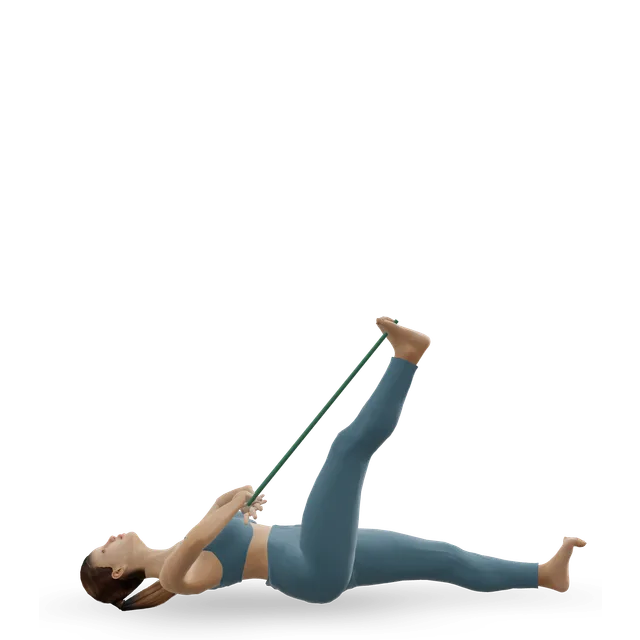 3D demoContract-relax hamstring stretch (PNF)Intermediate · No equipment
 3D demoHalf-kneeling hip flexor stretchBeginner · No equipment
 3D demoStanding Quad StretchBeginner · A wall
 3D demoWall calf stretch (gastrocnemius)Beginner · A wall
 3D demoSoleus wall stretchBeginner · A wall
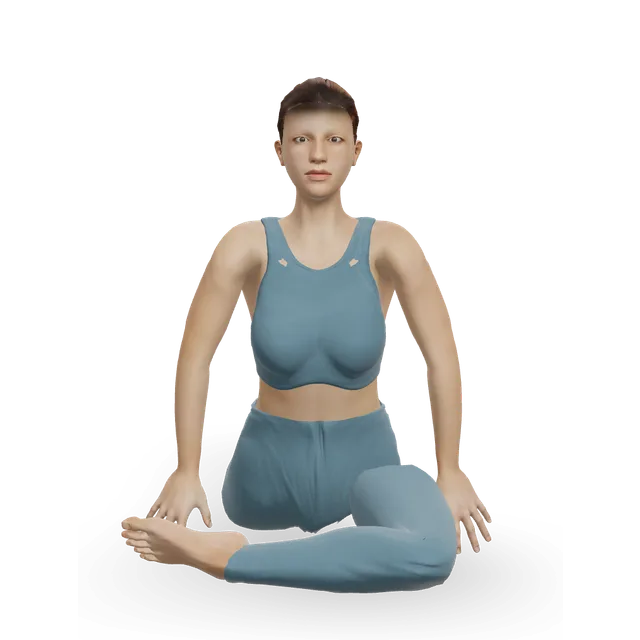
 3D demoReclined figure four (eye of the needle, Sucirandhrasana)Beginner · No equipment
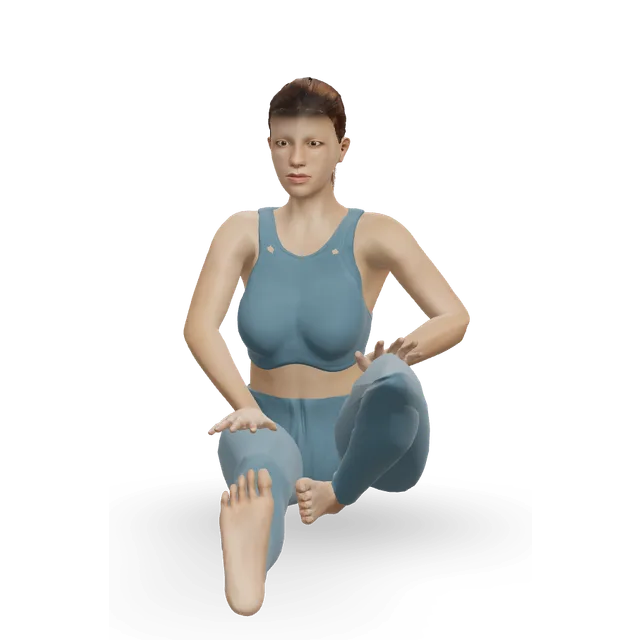
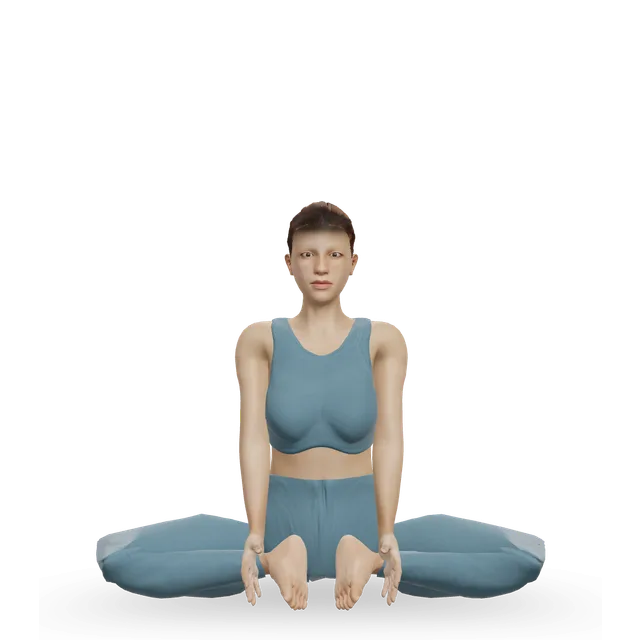 3D demoBound angle pose (Baddha Konasana)Beginner · No equipment
 3D demoDoorway chest openerBeginner · A wall
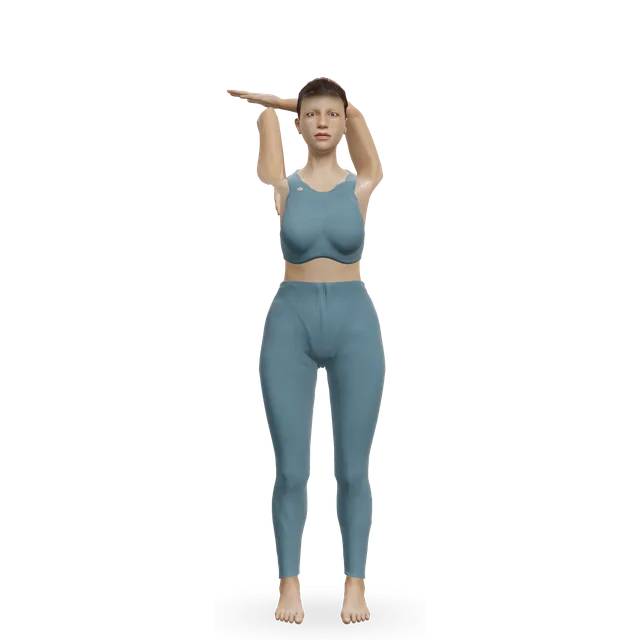
 3D demoCross-body shoulder stretchBeginner · No equipment
Lower slowly, through the full range you can control, with a weight, at least twice a week: in trials this built as much range as stretching. Start with 2 to 3 sets of 8 to 10, or 3 to 5 slow lowers for the Nordic curl (doses from each move's page).
 3D demoDumbbell Romanian deadliftIntermediate · A dumbbell
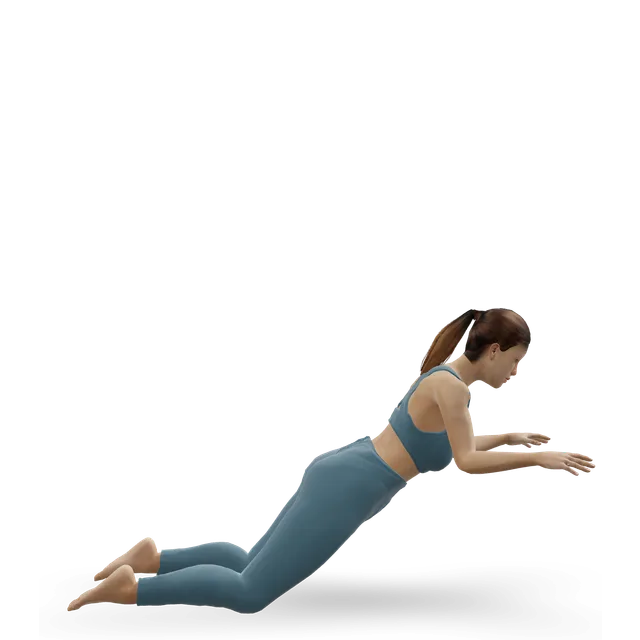 3D demoNordic curlAdvanced · An anchor point
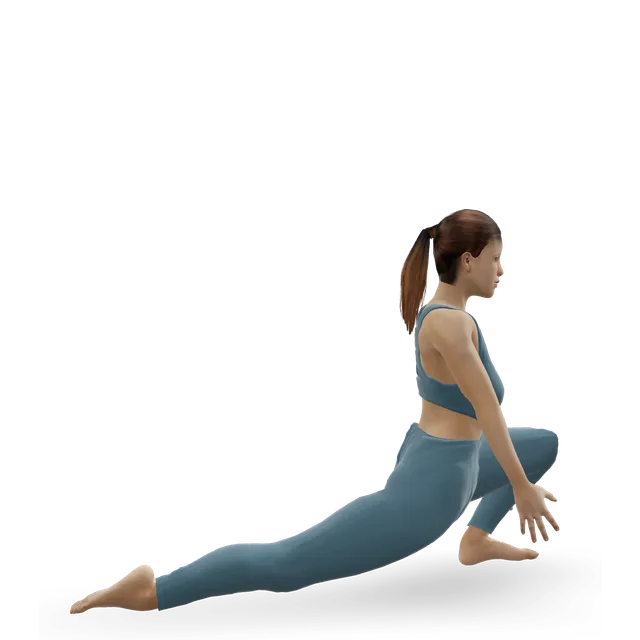 3D demoATG split squatAdvanced · No equipment
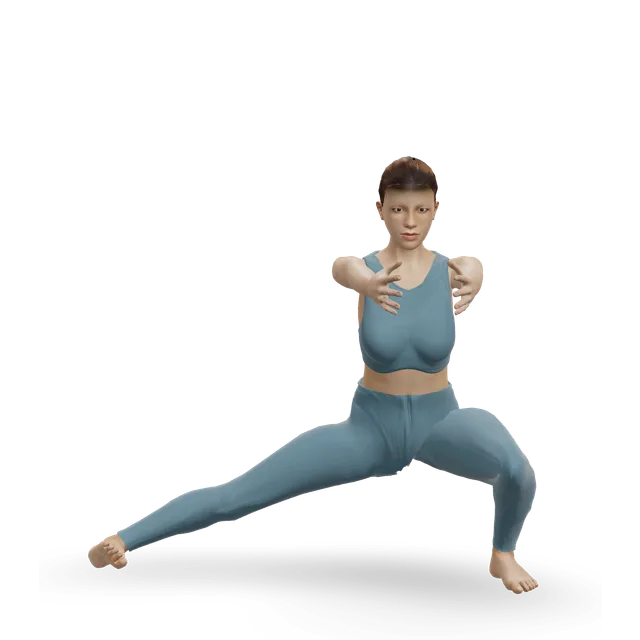 3D demoCossack squatIntermediate · No equipment
 3D demoDumbbell goblet squatIntermediate · A dumbbell
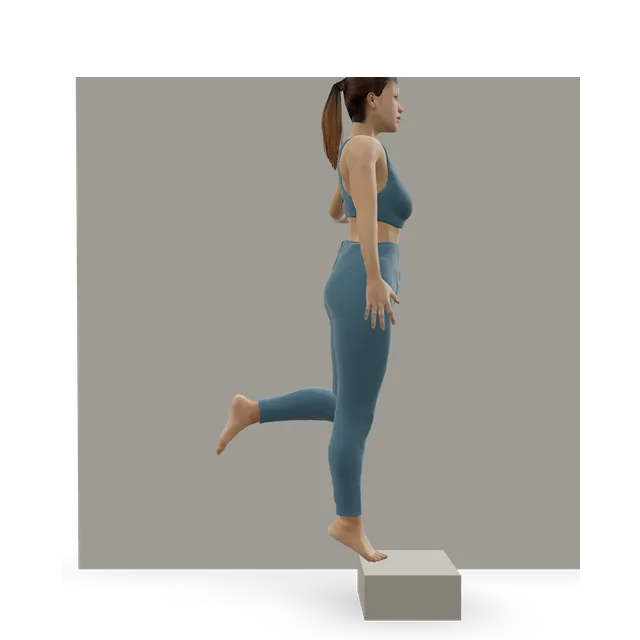 3D demoEccentric heel dropIntermediate · A step
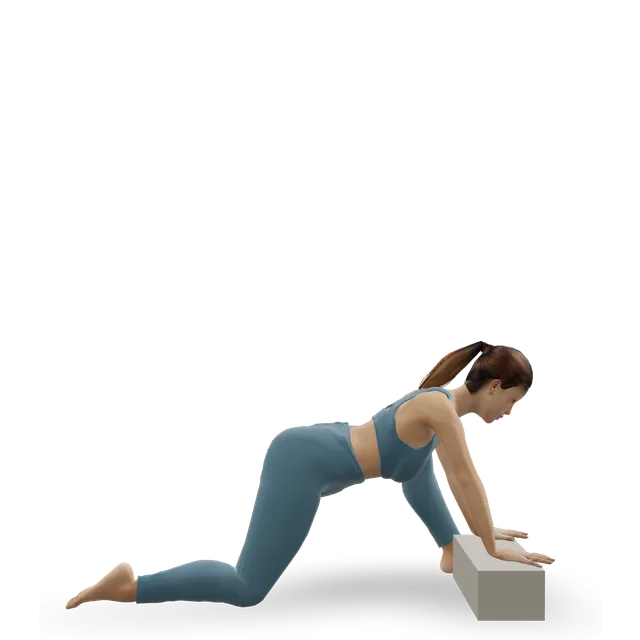
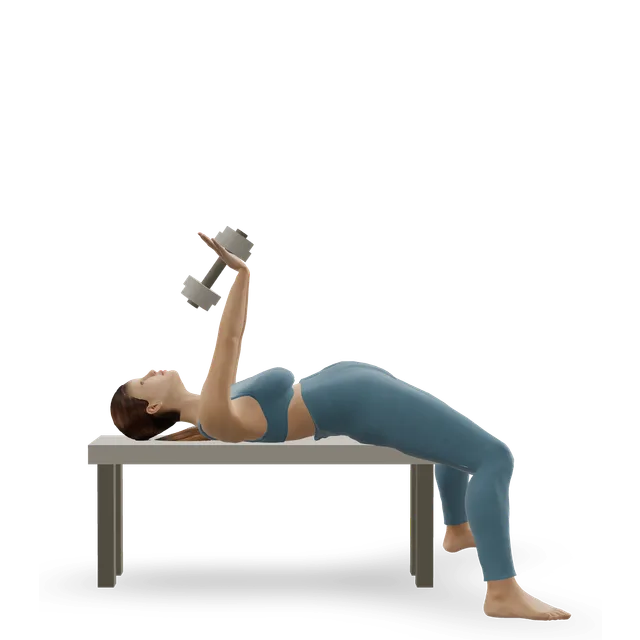 3D demoDumbbell PulloverIntermediate · A dumbbell + A bench or box
Build strength through the range you have, without hanging at the end of it or locking joints back past straight, following the NHS advice. Our starting point: 2 to 3 sets, 2 or 3 days a week.
The full-body stretch routine covers every major area; for flexibility gains, do 2 rounds of each stretch on most days (our suggestion). The splits, toe-touch and mobility routines go with our guides on each.
A 15-minute head-to-toe stretch for the neck, shoulders, back, hips, hamstrings and calves.
15 minBeginner11 movesA wallA 12-minute routine to loosen tight hamstrings with strap stretches, PNF, folds and hinges.
12 minBeginner7 movesNo equipmentA 15-minute hip opener: 90/90 switches, windshield wipers, CARs, Cossack squats, frog and pigeon.
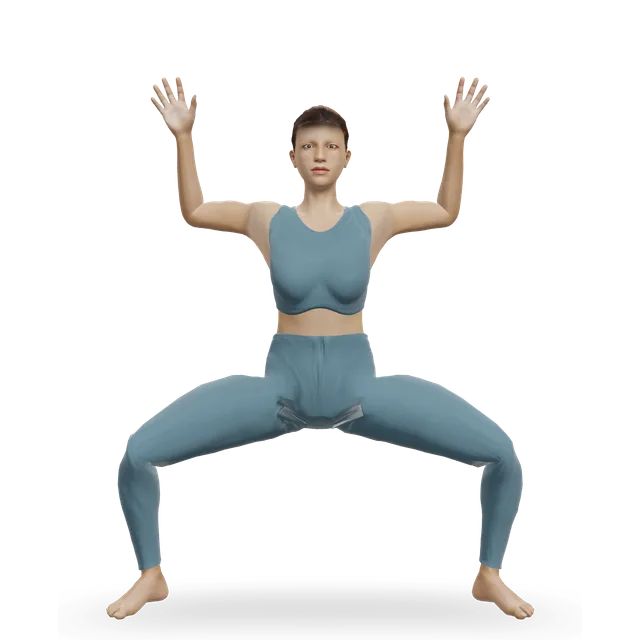
15 minIntermediate8 movesA wallA hip-opening yoga sequence: low lunge, lizard, goddess, pigeon, bound angle and happy baby.
20 minBeginner7 movesNo equipmentA gentle, no-equipment stretch routine to wake up the spine, hips and shoulders in ten minutes.
10 minBeginner10 movesNo equipmentFront-split and middle-split days: hip flexor, hamstring and inner-thigh stretches, then strength in the stretched position. Alternate them 3 to 4 times a week.
25 minIntermediate16 movesA wall, An anchor pointA 12-minute routine to bring your fingertips to your toes: test, nerve glide, hamstring and calf stretches, a slow hinge for strength at length, then retest.
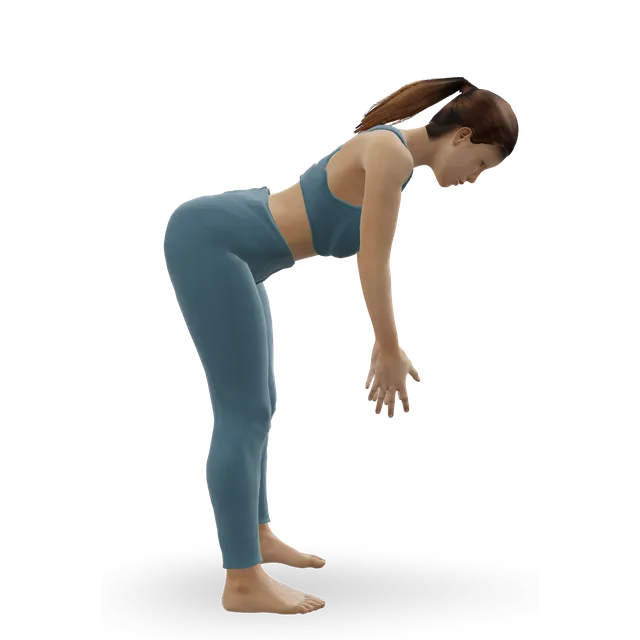
12 minBeginner7 movesA bench or box, A wallA 12-minute routine to move every joint through its range under control: slow neck, shoulder, hip and ankle circles, spine and hip rotation, and deep squats.
12 minBeginner10 movesA wallAfter an injury, if you heard a crack, the limb has changed shape or is pointing at an odd angle, it is numb, tingling or has pins and needles, or the skin has turned blue or grey or feels cold.
Source 52
If a stretch brings on a sudden sharp pain, a snap or a pop, and it's very painful or getting worse, there's a lot of swelling or bruising, or it hurts to walk or stand on the leg. In the US, contact your doctor or urgent care.
Burning, tingling, numbness or pins and needles down an arm or leg while stretching usually means a nerve is under tension, so ease off to a position without it. A pinch at the front of the hip or ankle at the end of a stretch is the joint, so work below it. See a GP or physiotherapist if either keeps happening (our suggestion).
See a GP if you think you or your child have joint hypermobility syndrome, for example joints that keep dislocating, ongoing joint or muscle pain and stiffness, frequent sprains, tiredness even after rest, poor balance or thin, stretchy skin. A GP may check your Beighton score, arrange tests to rule out other conditions and refer you to a physiotherapist.
A shoulder or kneecap that keeps slipping out needs a strengthening plan: see our shoulder dislocation guide.
Source 14
Follow your surgical team's movement limits. After a hip replacement, the NHS advice during recovery includes not bending your hip more than 90 degrees and not sitting with your legs crossed.
Source 54
Come up slowly from forward folds and head-down positions, and keep them brief if you have glaucoma or high blood pressure that isn't under control, as each move's page advises.
In younger adults, 30-second holds worked as well as 60-second ones. Within one session, gains peaked at about 4 minutes per muscle in total in one meta-regression, and over weeks the total time mattered more than any single hold. Older adults may do better with 60-second holds.
Gentle stretching, below the point of discomfort, gained as much range as hard stretching in two large reviews. Stretching into pain is unnecessary.
In programmes of 3 to 8 weeks, people mainly tolerate more stretch, and muscle and tendon properties barely change. Muscle fibres lengthened only trivially, and only with high volumes or intensities.
Resistance training increased range of motion across 55 studies and matched stretching in head-to-head trials. Lifting through a full range is flexibility training in its own right.
Moving stretches built about half the lasting range of static or PNF stretching, and the expert panel advises static or PNF stretching for long-term flexibility. Dynamic stretching belongs in a warm-up.
Range improved with training across 77 studies, and the least flexible gained the most. Bone does set limits at some joints, such as the ankle and the hip at the end of a split.
The NHS says the main treatment for joint hypermobility syndrome is improving muscle strength and fitness, and advises against overextending your joints just because you can.
Source 14
Range slipped back from its peak within 2 to 6 weeks of stopping, though it stayed above where people started. Stretching 2 or 3 days a week kept the gains in a trial.
Stretch the muscles you want to loosen on most days, holding each stretch for 30 to 60 seconds. Static stretching and contract-relax stretching build the most lasting range, and strength training through a full range works about as well. In trials, range improved within 4 to 6 weeks.
30 to 60 seconds. In younger adults with tight hamstrings, 30-second holds worked as well as 60-second ones and better than 15; in people over 65, 60-second holds gained range faster. Repeat the stretch so each muscle gets 1 to 2 minutes a session.
Most days while you're building range. One meta-regression found the weekly total mattered more than how it was split, with gains peaking at about 10 minutes per muscle a week, but it conflicts with other reviews, so treat that as a rough guide. Once you've built range, 2 or 3 days a week kept it in a trial.
Trials of 4 to 6 weeks added roughly 10 to 20 degrees of hamstring range, so our estimate is a few weeks to notice a change. The first change is that the same stretch feels easier, because you tolerate more stretch; changes in the muscles themselves take longer.
Static stretching, where you hold the position, builds more lasting range: about twice the effect of dynamic (moving) stretching in a review of 77 studies. Dynamic stretching suits a warm-up before exercise, where long holds aren't needed.
PNF (proprioceptive neuromuscular facilitation) stretching means gently tensing the stretched muscle for a few seconds, relaxing, then easing further into the stretch. It built at least as much lasting range as ordinary static stretching, and the push only needs to be light, about a quarter of your effort.
Yes. Lifting through a full range of motion improved flexibility about as much as stretching in pooled trials, and exercises with a slow lowering phase, such as Romanian deadlifts, had large effects. Training with body weight alone didn't significantly improve range, so use a load.
No. Gentle stretches below the point of discomfort gained as much range as hard ones in two large reviews. Aim for a clear pull you can breathe through, and stop for sharp pain, tingling or numbness.
Yes. Flexibility falls with age, especially at the shoulders and trunk, but age didn't change how much people gained from stretching, and adults with an average age of 85 gained range in 6 weeks. If you're over about 65, hold each stretch for up to 60 seconds.
Some of it. In pooled studies, range was still above where people started 2 to 6 weeks after stopping, but had slipped back from its peak, and people who stayed active kept more. In one trial, stretching 2 or 3 days a week was enough to keep the gains.
Range you can't control isn't an advantage. If you have very flexible joints with pain, frequent sprains or joints that slip out, the NHS advises building muscle strength and fitness rather than stretching more, and not pushing joints further than they need to go. See a GP if you think you have joint hypermobility syndrome.
Not on its own: stretching programmes didn't lower sports injury rates in 25 trials, while strength training cut them to under a third. Stretching before exercise is optional, as our warm-up guide explains. Stretch for the range you need, and strength train to protect yourself.
Exercise education, not a personal prescription, and clinical review of these guides is pending. Check with a GP before starting hard training if you have a heart condition, chest pain, dizziness or breathlessness when active, and stop for sharp or increasing pain. Health disclaimer.