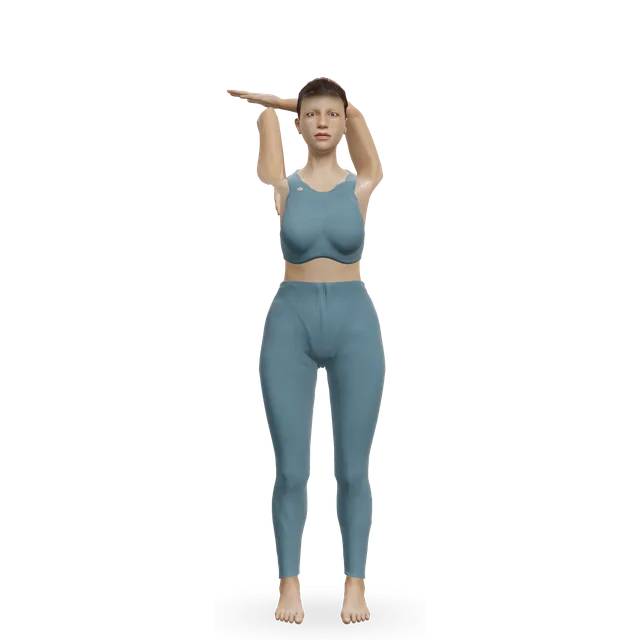
Training guide

How to warm up before a workout: what works, and what to skip

A good warm-up takes 5 to 10 minutes: easy movement that gets you warm, a few moving stretches, and 1 or 2 lighter sets of your first exercise. It helps the session go better. Long static stretches aren't needed, and stretching doesn't prevent injuries.

What does prevent injuries is a structured warm-up with strength, balance, jumping and landing drills, mainly in team sports. This guide covers what a warm-up does, how much stretching is fine, warm-up sets, warming up for running and sport, and whether you need a cool-down, with a 10-minute routine to follow.

The short version

What a warm-up is for

A warm-up raises your body and muscle temperature, rehearses the movements you're about to do and eases you into effort. In short efforts, performance rises about 2 to 5% for every 1°C rise in muscle temperature, and across 32 studies a warm-up improved performance in most of the tests used.

Sources 1, 2

5 to 10 minutes is enough

For most gym or home workouts, our plans use 3 to 5 minutes of easy movement, a few moving stretches, then 1 or 2 lighter sets of your first exercise. The NHS warm-up routine takes at least 6 minutes.

Sources 3, 4

Stretching before exercise: optional, and short

Holding a stretch for under a minute per muscle costs about 1 to 2% of strength or power at most, and nothing measurable once you move afterwards; a minute or more costs more. You don't need to stretch at all: other warm-up activities, such as cycling or jogging, raise your range of movement just as much.

Sources 5, 6, 7, 8, 9

Lighter sets of your first lift

Before heavy lifting, lighter sets of the exercise you're about to do are the most useful part of a warm-up. With lighter, high-rep sets, the first few reps of the set do most of the warming up.

Sources 4, 10

Preventing injuries

Stretching before exercise doesn't prevent injuries. Structured warm-ups with strength, balance, jumping and landing drills do, in team sports: the FIFA 11+ warm-up cut football injuries by about a third, and similar programmes halve injuries to the ACL (anterior cruciate ligament, a key knee ligament). Most of that evidence comes from female athletes.

Sources 11, 12, 13

Cool-downs are optional

Easing off lets your heart rate and breathing settle, but cool-downs and stretching afterwards don't prevent soreness or injury or improve the next day's performance. Stretch afterwards if you want more flexibility.

Sources 14, 15, 16

What a warm-up does, and the words people use

Warmer muscles work better

Most of a warm-up's effects come from warmer muscles: they are less stiff, nerves carry signals faster and energy is released more quickly. In short efforts, performance rises about 2 to 5% for every 1°C rise in muscle temperature. An active warm-up also gets your breathing and circulation going and can leave you feeling more ready.

Sources 17, 1, 18

Range of movement

Any warm-up activity loosens you up for a while, and stretching and foam rolling do it no better than cycling, jogging or strength exercises. The extra range typically lasts less than 30 minutes.

Sources 9, 8, 6

General and specific warm-ups

A general warm-up is easy whole-body movement, such as walking, marching or cycling, that raises your heart rate and temperature; one review describes 5 to 15 minutes of light to moderate activity. A specific warm-up is a lighter rehearsal of the exact movement you're about to do, such as lighter sets of your first lift.

Source 4

Static, dynamic and ballistic stretching

Static stretching means holding a position where you feel the stretch. Dynamic stretching means moving through your range repeatedly without holding, such as leg swings or walking lunges. Ballistic stretching is faster, less controlled bouncing at the end of your range. These are the definitions agreed by a panel of 20 stretching researchers.

Source 8

What the evidence says about stretching and warming up

Warm-ups improve performanceEmerging evidence

Across 32 high-quality studies, a warm-up improved performance in 79% of the tests used, with little sign of harm. Few of these were true randomised trials. Most of the gain is thought to come from warmer muscles.

Sources 2, 1, 17

Short static stretches cost little; long ones cost moreStrong evidence

In a review of 106 studies, stretches held for under 30 seconds made no meaningful difference to maximal strength or power (about 1.1% lower on average), and 30 to 45 seconds made no significant difference either (1.9%). Losses became likely at 60 seconds or more per muscle. Two other reviews put the cost at about 1 to 2% for short stretches, against about 4 to 7.5% for a minute or more.

Sources 5, 6, 7

Moving afterwards seems to cancel the small costEmerging evidence

Most studies tested performance 3 to 5 minutes after stretching, with nothing in between. When dynamic movement followed the stretching, as it does in a real warm-up, no clear loss was seen.

Sources 6, 7

What the experts agreeStrong evidence

In a recommendation with 95% agreement, a panel of 20 stretching researchers advises against holding a stretch for more than 60 seconds per muscle before maximal or explosive efforts, and says short static stretches inside a dynamic warm-up, and dynamic stretching, don't cause those losses. Each of the panel's recommendations needed at least 80% agreement.

Source 8

Dynamic stretching helps a littleEmerging evidence

Moving through your range without holding gave a small performance gain, about 1.3%, when done within minutes of the activity.

Source 6

Stretching is optionalEmerging evidence

Across 38 studies (1,134 people), stretching and foam rolling gave no more short-term range or loosening than other warm-up activities. The expert panel lists cycling, jogging, strength exercises, heat and vibration among them, and calls stretching in a warm-up "not essential", though a viable option.

Sources 9, 8

When stretching does helpEmerging evidence

Static stretching gave a small benefit (about 2.2%) for performance at long muscle lengths, which matters in activities that need big ranges, such as dance, gymnastics or high kicks. For a quick gain in range, the expert panel suggests at least 2 holds of 5 to 30 seconds.

Sources 6, 8

How to warm up

Doses name the NHS or our plans, or say they are our suggestion. Moves and a follow-along routine are further down the page.

1. Raise your heart rate: 2 to 5 minutes

March, step jacks or jumping jacks, or easy cycling, rowing or walking. The NHS routine starts with 3 minutes of marching; our plans use 3 to 5 minutes of easy movement. You should feel warm and breathe a little faster, not tired.

Sources 3, 4

2. Move through your range: 2 to 3 minutes

Moving stretches for the joints you're about to use: leg swings, hip and shoulder circles, the world's greatest stretch, inchworms. Our editorial starting point is 3 to 5 moves, a few slow reps each.

Sources 6, 8

3. Rehearse the movements: 1 to 2 minutes

Light reps of the patterns you're about to load: bodyweight squats, lunges and hip hinges before a lower-body session; band pull-aparts and scapular push-ups before pressing or pulling.

Sources 4, 10

4. Ramp up to your first lift

Then 1 or 2 lighter sets of your first exercise before your work sets. The next section shows how.

Source 4

Static stretches, if you want them

If a muscle feels tight, or your sport needs big ranges, our editorial starting point is 2 holds of 15 to 30 seconds, keeping the total under a minute per muscle, then keep moving. (The expert panel's minimum for a quick gain in range is 2 holds of 5 to 30 seconds.) Avoid longer holds before sprinting, jumping or a heavy lift.

Sources 8, 5

Before running

Our suggestion: walk briskly for a few minutes, then jog easily. Before faster runs, add moving drills such as walking lunges, skips and gentle hops: our runner's warm-up takes about 8 minutes. Warm-ups haven't been shown to prevent running injuries, so this is about starting comfortably and running well.

Sources 19, 20

Before team sport

Use a neuromuscular warm-up as the warm-up itself: 10 to 30 minutes of jumping and landing, strength, balance, mobility and agility drills, 2 to 3 times a week (Exercise and Sport Science Australia). Our knee control warm-up uses the same parts.

Sources 21, 22

Foam rolling

Optional. Rolling before exercise doesn't hurt performance, but it gives no more range than other warm-up activities. If you like it, use the doses on our fascia page: 1 to 3 rounds of 30 to 120 seconds per area, at a moderate pressure.

Sources 9, 23

New to exercise, or a health condition

The NHS routine of marching, heel digs, knee lifts, shoulder rolls and shallow knee bends suits all levels. Get advice first if you have a health problem, an injury or symptoms, or are pregnant or have recently given birth. If new symptoms appear as you do more, see a healthcare professional.

Sources 3, 24

Warm-up sets before lifting

Why they helpEmerging evidence

A review of time-efficient training found exercise-specific warm-ups most useful before heavy lifting, above about 80% of your maximum. A review of 31 trials found strong evidence that warm-ups with heavier loads improve upper-body strength and power. In one study, neither a general nor a specific warm-up changed how many reps people managed in sets at 80% of their maximum taken to failure.

Sources 4, 10

A simple ramp

Our editorial starting point: about half your working weight for 8 reps, then about three-quarters for 3, then your work sets. Before heavy sets of 5 reps or fewer, add a third, heavier ramp-up set. This mirrors the warm-up used before strength tests in a small study (8 reps at about 50% of maximum, then 3 at about 70%). With lighter, high-rep sets, the first few reps of the set warm you up.

Sources 25, 4

A general warm-up before a maximum liftEmerging evidence

In 13 trained people, adding 20 minutes of easy cycling before the specific warm-up raised their leg-press maximum by 8.4%. It is one small study, and most sessions don't test a maximum.

Source 25

Preventing injuries

Stretching doesn't prevent injuriesStrong evidence

In a review of 25 trials (26,610 people), stretching programmes did not lower injury rates, while strength training cut injuries to under a third. Stretching before training didn't reduce injuries in 1,538 army recruits over 12 weeks, and a Cochrane review found no evidence that stretching prevents running injuries.

Sources 11, 26, 27

Stretching and muscle strainsMixed evidence

Early evidence suggests static stretching may reduce muscle strains in sports with sprinting and changes of direction, but in the same studies bone and joint injuries went up. The expert panel doesn't recommend stretching for injury prevention in general.

Sources 8, 7, 6

Neuromuscular warm-ups work in team sportsStrong evidence

In a trial of 1,892 girls aged 13 to 17 playing football, teams using the FIFA 11+ warm-up for a season had 32% fewer injuries overall, 45% fewer severe injuries and 53% fewer overuse injuries; the main outcome, leg injuries, fell 29% but not significantly. Across 4 trials, FIFA 11+ cut football injuries by 39%. In youth sport, neuromuscular training cut leg injuries by about a third (25 studies).

Sources 22, 12, 28

ACL injuriesStrong evidence

ACL prevention programmes halve ACL injuries and cut non-contact ACL injuries in female athletes by two-thirds. The effective ones combine jumping, strength, balance, mobility and agility work for 10 to 30 minutes, 2 to 3 times a week. There is too little data on men to judge.

Sources 13, 21

What FIFA 11+ involves

About 20 minutes once learnt: 8 minutes of running drills at an easy pace, 10 minutes of planks, side planks, Nordic hamstring lowers, single-leg balance, squats and jumps at one of three levels, then 2 minutes of faster running with changes of direction. In the trial, the players who did it most often had 35% fewer injuries than those who did it a moderate amount.

Source 22

RunnersEmerging evidence

Across 9 trials (1,904 runners), exercise-based prevention programmes didn't reduce running injuries, though supervised ones might. A programme of warm-up, cool-down and stretching education didn't reduce injuries in a 16-week trial of 421 male runners either. Most of the trials are of low quality, so the honest answer is that we don't know.

Sources 20, 19

Cool-downs and stretching afterwards

What a cool-down does, and doesn't doEmerging evidence

A review found active cool-downs largely ineffective for performance later the same day or the next day, not shown to prevent injuries, and mostly no help for soreness. They clear lactate from the blood faster, may help your heart rate and breathing return to normal, and don't hold back your long-term progress.

Source 14

Stretching afterwards doesn't reduce sorenessStrong evidence

Across 12 studies, stretching before or after exercise reduced next-day soreness by about 1 point or less on a 100-point scale. Across 10 pooled trials (229 people), stretching after exercise didn't speed the recovery of strength either. The expert panel, with 100% agreement, does not recommend stretching as a recovery routine.

Sources 15, 16, 8

How to cool down

Our editorial starting point: 3 to 5 minutes of easy movement after hard cardio. If flexibility is your goal, stretch afterwards while you're warm, when stretching works best: the NHS cool-down holds each stretch for 15 to 20 seconds, and the American College of Sports Medicine suggests 10 to 30 seconds, repeated 2 to 4 times, on 2 or 3 days a week.

Sources 29, 30, 31

Raise your heart rate

Do 2 to 5 minutes of any of these at an easy pace, enough to feel warm but not tired: step jacks have no impact, and the bike and rower suit the gym.

Moving stretches

Pick 3 to 5 for the joints you're about to use and do a few slow reps of each, for example 8 leg swings each leg, 2 slow hip circles each leg or 3 world's greatest stretches each side (our suggestion, from the site's warm-ups).

Rehearse the movements

Do light reps of the patterns you're about to load, such as 10 squats, 8 hinges or 15 band pull-aparts (doses from our plans), then your ramp-up sets.

Warm-up moves for sport

These are the ingredients of FIFA 11+ and ACL prevention warm-ups, for example 3 planks of 20 to 30 seconds, 3 to 5 Nordic lowers (expect sore hamstrings at first) and 2 single-leg holds of 30 seconds on each leg (FIFA 11+ level 1).

Short stretches (optional)

Before a session, use 2 holds of 15 to 30 seconds and keep it under a minute in total per muscle (our suggestion, within the expert panel's advice); after a session, hold longer if you're working on flexibility.

Warm-ups and cool-downs to follow

Use the 10-minute dynamic warm-up before gym or home workouts, the runner's warm-up before runs and the knee control warm-up 2 to 3 times a week if your sport involves sprinting, cutting and landing; the stretch routines are optional cool-downs.

Warning signs

Call 999

Stop exercising and call 999 (911 in the US) if:

  • You have chest pain that feels tight or like squeezing, or that spreads to your arms, neck or jaw.
  • You have severe difficulty breathing: gasping, choking or not able to get words out.
  • Your lips or skin are pale, blue or grey, or someone has passed out and is not responding normally.

Source 32

Call NHS 111

  • You're suddenly more short of breath than usual.
  • You have chest pain and feel sick, or chest pain with a racing, slow or skipping heartbeat.
  • You're not sure whether you need to call 999.

Sources 32, 33

Stop and swap

The NHS says to stop exercising straight away if you feel any pain or become unwell, and to contact NHS 111 if symptoms worry you or don't go away. If a joint pain is sharp, gets worse during a set or lingers into the next day, use the move's easier option, and see a clinician if it persists (our plans' rule).

Source 3

Get advice first

Get advice from a healthcare professional, such as a GP, before you start if:

  • You have a health problem, an injury or any symptoms, or have recently had a heart attack or an operation.
  • You are pregnant or have recently given birth.
  • You have a heart condition: follow the warm-up your GP or cardiac rehabilitation team gives you (our suggestion).
  • New symptoms appear as you do more.

Sources 3, 24

Myths

"Stretching before exercise prevents injuries"Strong evidence

In a review of 25 trials, stretching programmes didn't lower injury rates, and stretching before training didn't reduce injuries in 1,538 army recruits. What prevents injuries in sport is a structured warm-up with strength, balance, jumping and landing work.

Sources 11, 26, 27, 8

"Any stretching before lifting kills your strength"Strong evidence

Holds under 60 seconds per muscle cost about 1 to 2% at most, and nothing measurable when you move afterwards. The bigger losses come with a minute or more.

Sources 5, 6, 7

"Static stretching before exercise is dangerous"Strong evidence

No trial shows it. Trials found no effect on overall injury risk either way, and the expert panel says short static stretches inside a warm-up are very unlikely to cause problems.

Sources 11, 26, 8

"You have to stretch to warm up"Emerging evidence

Other warm-up activities raise your range just as much, and the expert panel calls stretching "not essential" in a warm-up.

Sources 9, 8

"You don't need to warm up for weights"Emerging evidence

Partly true for light, high-rep sets, where the first reps warm you up. Before heavy lifting, lighter sets of the exercise help strength and power and let you practise the movement.

Sources 4, 10

"A cool-down stops you being sore tomorrow"Emerging evidence

Active cool-downs mostly don't reduce soreness, and stretching afterwards reduced it by about 1 point or less on a 100-point scale.

Sources 14, 15, 16

Questions people ask

How do I warm up before a workout?

Start with 2 to 5 minutes of easy movement that gets you warm, such as marching, step jacks or an easy bike. Then do a few moving stretches for the joints you're about to use, rehearse the main movements without weight, and finish with 1 or 2 lighter sets of your first exercise. Our 10-minute dynamic warm-up does all of this.

How long should a warm-up be?

For most gym or home workouts, 5 to 10 minutes is enough; the NHS routine takes at least 6 minutes. Warm-ups designed to prevent injuries in team sports take longer, about 10 to 30 minutes, and are done as the warm-up 2 to 3 times a week.

Should I stretch before exercise?

You don't need to: stretching gives no more short-term range than other warm-up activities and doesn't prevent injuries. If a muscle feels tight, a short stretch is fine. Keep it under a minute per muscle and follow it with some moving exercises.

Is static stretching before a workout bad?

Not in short doses. Holding a stretch for under 60 seconds per muscle costs about 1 to 2% of strength or power at most, and nothing measurable once you do some dynamic movement afterwards. Longer holds, a minute or more per muscle, can reduce strength and power by around 4 to 7%, so save those for after the session.

What is dynamic stretching, and is it better than static stretching?

Dynamic stretching means moving a joint through its range repeatedly without holding, such as leg swings or walking lunges. Before exercise it gave a small performance boost in studies, while long static holds can reduce strength and power, so dynamic moves suit a warm-up better. Static stretching is the better tool for building flexibility over weeks, ideally after exercise when you're warm.

Do I need warm-up sets before lifting weights?

For heavy lifting, yes: lighter sets of the exercise you're about to do are the most useful part of a warm-up. A simple ramp is about half your working weight for 8 reps, then about three-quarters for 3. With lighter, high-rep sets, the first few reps of the set do most of the warming up.

Does warming up prevent injuries?

A general warm-up hasn't been shown to prevent injuries in the gym or in running, and stretching before exercise doesn't. Structured warm-ups with strength, balance, jumping and landing drills do work in team sports: the FIFA 11+ cut football injuries by about a third, and similar programmes halve ACL knee injuries, mostly studied in female athletes.

How should I warm up before running?

Walk briskly for a few minutes, then jog easily for a few more. Before faster running, add some moving drills such as walking lunges, skips and gentle hops: our runner's warm-up takes about 8 minutes. Research hasn't shown that warm-ups prevent running injuries, so think of it as a way to start comfortably and run better.

Is a cool-down necessary?

No. Easing off for a few minutes after hard cardio lets your heart rate and breathing settle gradually, but cool-downs don't prevent soreness or injury, or improve how you perform the next day. If you have time, use it for stretching if you want more flexibility.

Should I stretch after a workout?

After a workout is a good time to work on flexibility, because your muscles are warm. It won't reduce next-day soreness or speed your recovery. The NHS cool-down holds each stretch for 15 to 20 seconds; for flexibility, the American College of Sports Medicine suggests holding each stretch for 10 to 30 seconds and repeating it 2 to 4 times.

Should I foam roll before a workout?

You can, but you don't need to. Rolling loosens you up for a short while and doesn't hurt performance, but it does no more than any other warm-up activity. If you like it, 30 to 120 seconds per area at a moderate pressure is enough.

What is the FIFA 11+?

It is a 20-minute warm-up for football with three parts: running drills at an easy pace, then strength, balance and jumping exercises such as planks, Nordic hamstring lowers and single-leg balance, then faster running with changes of direction. In a trial of nearly 1,900 young female players, teams using it had about a third fewer injuries. Our knee control warm-up uses the same ingredients.


Sources

  1. Racinais 2010 · Temperature and neuromuscular function (review, Scand J Med Sci Sports)
  2. Fradkin 2010 · Effects of warming up on physical performance: 32 studies (systematic review and meta-analysis, JSCR)
  3. NHS · How to warm up before exercising
  4. Iversen 2021 · No time to lift? Designing time-efficient training for strength and muscle (narrative review, Sports Medicine)
  5. Kay 2012 · Acute static stretching and maximal muscle performance: 106 studies (systematic review, MSSE)
  6. Behm 2016 · Acute effects of muscle stretching on performance, range of motion and injury (systematic review, Appl Physiol Nutr Metab)
  7. Chaabene 2019 · Acute effects of static stretching on muscle strength and power (review, Frontiers in Physiology)
  8. Warneke 2025 · Practical recommendations on stretching (Delphi consensus of 20 experts, J Sport Health Sci)
  9. Warneke 2024 · Foam rolling and stretching are no better than other warm-ups for acute flexibility: 38 studies (meta-analysis, J Sport Health Sci)
  10. McCrary 2015 · Upper-body warm-ups, performance and injury: 31 trials (systematic review, BJSM)
  11. Lauersen 2014 · Exercise to prevent sports injuries: strength training vs stretching, 25 trials (meta-analysis, BJSM)
  12. Thorborg 2017 · The FIFA 11 and 11+ programmes and football injury rates (meta-analysis, BJSM)
  13. Webster 2018 · ACL injury prevention programmes (meta-analysis of 8 meta-analyses, J Orthop Res)
  14. Van Hooren 2018 · Do we need a cool-down after exercise? (narrative review, Sports Medicine)
  15. Herbert 2011 · Stretching to prevent or reduce muscle soreness after exercise (Cochrane review)
  16. Afonso 2021 · Stretching after exercise and recovery of strength, range and soreness: 11 trials (systematic review and meta-analysis, Frontiers in Physiology)
  17. Bishop 2003 · Warm up I: potential mechanisms and the effects of passive warm-up on performance (review, Sports Medicine)
  18. McGowan 2015 · Warm-up strategies for sport and exercise: mechanisms and applications (review, Sports Medicine)
  19. van Mechelen 1993 · Warm-up, cool-down and stretching education and running injuries in 421 male runners (RCT, Am J Sports Med)
  20. Wu 2024 · Exercise-based programmes to prevent injury in endurance runners: 9 trials (meta-analysis, Sports Medicine)
  21. Collings 2026 · Reducing the risk of ACL injury (Exercise and Sport Science Australia position statement, Sports Medicine)
  22. Soligard 2008 · The FIFA 11+ warm-up and injuries in 1,892 young female footballers (cluster RCT, BMJ)
  23. Wiewelhove 2019 · Foam rolling, performance and recovery (meta-analysis, Frontiers in Physiology)
  24. Bull 2020 · World Health Organization 2020 guidelines on physical activity and sedentary behaviour (BJSM)
  25. Abad 2011 · A general plus a specific warm-up and leg-press maximum in 13 trained people (crossover study, JSCR)
  26. Pope 2000 · Stretching before exercise and lower-limb injury in 1,538 army recruits (RCT, MSSE)
  27. Yeung 2011 · Interventions for preventing lower-limb soft-tissue running injuries (Cochrane review)
  28. Emery 2015 · Neuromuscular training to prevent injuries in youth sport (systematic review and meta-analysis, BJSM)
  29. NHS · How to stretch after exercising
  30. American College of Sports Medicine 2011 · New recommendations on the quantity and quality of exercise (press release, reprinted by Medical News Today)
  31. Garber 2011 · Quantity and quality of exercise for healthy adults (ACSM position stand, MSSE)
  32. NHS · Heart attack: symptoms
  33. NHS · When to call 999

Exercise education, not a personal prescription, and clinical review of these guides is pending. Check with a GP before starting hard training if you have a heart condition, chest pain, dizziness or breathlessness when active, and stop for sharp or increasing pain. Health disclaimer.