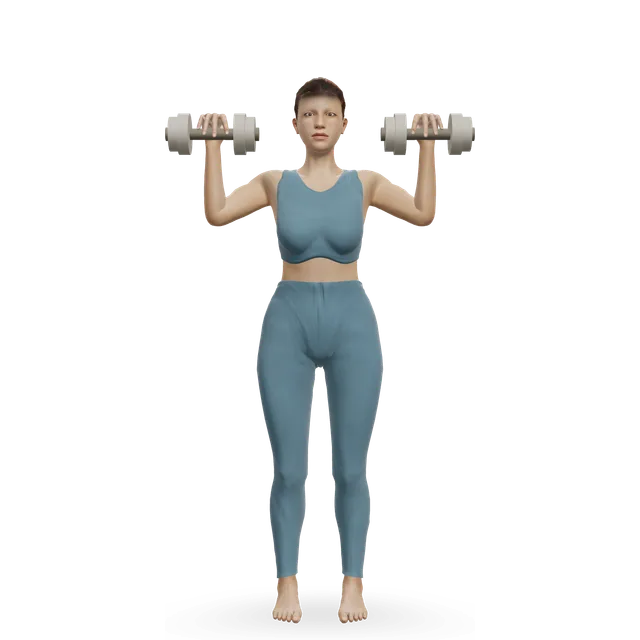
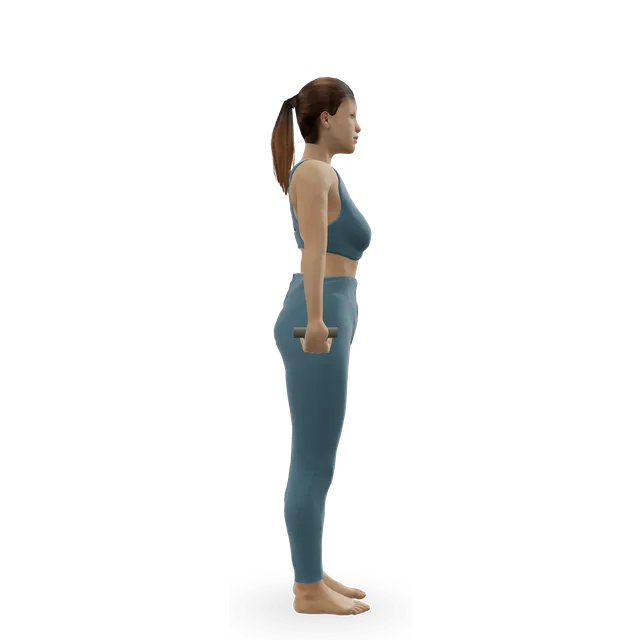
Training guide

How to train: the principles that build strength and muscle

Strength training makes you stronger and builds muscle at any age, and it helps balance, walking and everyday tasks. In trials with more than 38,000 people it did not raise the risk of serious harm. The guidelines ask for strength work for all your major muscles on at least 2 days a week, plus about 150 minutes of brisk activity, and any strength work is better than none.

The principles behind a good plan are few: do enough hard sets, stop a couple of reps short of failure, add reps or weight over time, rest long enough to keep your reps up, and keep going for months. This page grades each principle by the evidence, shows how to start, and links to a guide for each question and to weekly plans that put it all together. Check with a GP first if you have a heart condition, or get chest pain, dizziness or breathlessness when you are active.

The short version

Strength training works at any age

Compared with not training, it builds strength, muscle, power, balance, walking speed and the ability to do everyday tasks. That is the finding of an American College of Sports Medicine (ACSM) review of 137 reviews covering more than 30,000 people, which also found that training did not raise the risk of serious harm.

Source 1

How much the guidelines ask for

Strength work for all your major muscles (legs, hips, back, tummy, chest, shoulders and arms) on at least 2 days a week, plus 150 minutes of moderate activity such as brisk walking. The World Health Organization (WHO) says some activity is better than none, and the UK Chief Medical Officers say any strength work is better than none.

Sources 2, 3, 4

The principles in one breath

Do enough hard sets. Stop 2 or 3 reps short of failure. Add reps or weight over time. Rest long enough to repeat your reps. Train each muscle about twice a week, or spread the sets however suits you. Recover with sleep, protein and enough food. Keep going.

Sources 5, 6, 7, 8, 9, 10

Many details matter less than you'd think

Machines or free weights, fast or slow reps, fancy periodisation schemes, and full-body or split routines all gave similar results in pooled trials. Pick the version you will keep doing.

Sources 1, 11

Starting, and keeping going, matters most

In 14,690 gym members training once a week, strength rose by about 30 to 50% in the first year. The ACSM now says fitting training to the person matters more than following set rules.

Sources 12, 1

How to start working out

Your first month

Start small and build up: health guidelines say some activity is better than none. A sensible first month, as in our beginner plans (our editorial starting point):

  • Two short strength sessions a week, with a day between, each with a squat, a hip hinge, a push, a pull and a core or carry move.
  • For the first two weeks, stop every set with 3 or 4 reps to spare while you learn the moves. Most people misjudge how many reps they have left by about one.
  • Then stop 2 or 3 reps short, and add reps or weight as you get stronger.
  • Walk on other days, building towards 150 minutes of brisk activity a week.
  • Write down your weights and reps, so you know what to beat next time.

Sources 2, 3, 13, 1

Adding reps, then weight

Each move has a rep range, such as 8 to 12. Keep the weight the same and add reps until every set reaches the top of the range, then add the smallest weight step and start again at the bottom. This is called double progression, and both halves of it work: adding reps built about as much muscle and strength as adding weight in trials.

Sources 14, 7, 15

Gym or home?

Bands, bodyweight and home training all improve strength, and machines and free weights give similar results. A gym is a convenience, not a requirement.

Source 1

Do you need to see a GP first?

Most people don't. WHO says medical clearance is generally unnecessary before light or moderate activity if you have no reason to avoid it. The NHS advises speaking to a GP first if you haven't exercised for some time, or have medical conditions or concerns. Check with a GP before hard training if you have a heart condition, or get chest pain, dizziness or breathlessness when you are active.

Sources 2, 4

The training guides

One guide for each question about how to train, from sets and reps to rest days, each graded by the evidence.

Progressive overload

Progressive overload: how to keep getting stronger

Progressive overload explained: add reps, then weight, with double progression. What the trials show, how much to add, bodyweight options and plateaus.

Sets and reps

How many sets and reps? Weekly sets, rep ranges and effort

How many sets per muscle a week, which rep range builds muscle or strength, and whether to train to failure: what the meta-analyses show, in plain English.

Rest between sets

How long to rest between sets

How long to rest between sets: about 1 to 2 minutes for most sets and 2 to 3 for heavy lifts. What the trials show, and how supersets save time safely.

How often to work out

How many days a week should you work out?

How many days a week to work out and how often to train each muscle: the guidelines, minimum doses, full body vs split, and free plans for 2 to 7 days.

How to build muscle

How to build muscle: training, protein, sleep and patience

How to build muscle: the training dose, how much protein (about 1.6 g per kg), sleep, eating enough, and how long it really takes at any age, with plans.

Zone 2 cardio

Zone 2 training: what it is, how to find it and what it really does

What zone 2 really means, how to find yours with the talk test, why heart rate formulas mislead, and what trials show about fat burning and mitochondria.

HIIT

HIIT: what it does, how it compares with steady cardio, and how often to do it

What HIIT does for fitness, fat loss and your heart compared with steady cardio, how often to do it, who should check first, and the afterburn sized honestly.

Warming up

How to warm up before a workout: what works, and what to skip

How to warm up before a workout, with the evidence: what a warm-up does, static vs dynamic stretching, warm-up sets, injury-prevention warm-ups and cool-downs.

Muscle soreness

Sore muscles after a workout (DOMS): why it happens and what helps

Sore after a workout? What DOMS is, how long it lasts, what eases it and what doesn't, training while sore, and the signs that soreness is something serious.

Rest days

Rest days, deloads and overtraining: how much recovery you need

How many rest days you need, what active recovery and deload weeks are for, the real signs of overtraining, and how sleep affects training, graded by evidence.

VO2 max

VO2 max: what it means, what's good for your age, and how to raise it

What VO2 max is, typical scores by age and sex, how closely it tracks a longer life, how accurate watch estimates are, and the training that raises it most.

Flexibility

How to improve flexibility: what works, how long to hold a stretch and how often

How to improve flexibility, from the evidence: static, PNF and strength training compared, how long to hold a stretch, how often, and when you'll see gains.

The splits

How to do the splits: front and middle splits, a realistic timeline and the limits of hip shape

How to do the front and middle splits: the stretches and strength work that help, how long it takes, why hip shape limits some people, and how to avoid strains.

Touching your toes

How to touch your toes: why you can't yet, and what helps

Can't touch your toes? What limits you (hamstrings, back, nerves or body shape), what the sit-and-reach test shows, a 12-minute routine and back pain red flags.

Mobility

Mobility training: what it is, how it differs from flexibility, and what works

Mobility vs flexibility explained: what mobility training is, what CARs, end-range strength and loaded stretching really do, and a 12-minute daily routine.

What the evidence says: the principles, graded

Each principle has its own guide with the detail.

Progressive overload: needed to keep improvingEmerging evidence

You don't need it for your first gains: beginners improve with almost any hard training. To keep improving over months and years, you do. Adding reps and adding weight both worked in trials, in trained people and in beginners.

Sources 1, 7, 15

Effort: hard sets, not failureStrong evidence

Stopping 2 or 3 reps short of failure (2 to 3 RIR, reps in reserve: how many more reps you could have done) built about as much muscle and strength as going to failure, in two pooled analyses of 15 studies each. The ACSM says failure is not necessary.

Sources 1, 6, 16

Volume: more hard sets, more muscle, up to a pointStrong evidence

More hard sets per muscle a week build more muscle. About 4 a week is a reasonable floor when time is short and 10 or more builds more. Beyond about 10 sets a week each extra set adds less, and past about 20 the extra gain is small. Strength needs fewer sets than size.

Sources 5, 1, 17, 18

Load: light or heavy, if the sets are hardStrong evidence

Muscle grew about as much with light weights as with heavy ones when the sets were hard. Heavier weights, around 80% of your maximum or more, built more strength.

Sources 19, 20, 1

Rest between sets: enough to keep your reps upEmerging evidence

About 1 to 2 minutes for most sets, and 2 to 3 minutes for heavy lifts. Resting more than a minute gave a small advantage for muscle growth, with no clear extra gain past about 90 seconds. For strength the evidence is mixed.

Sources 8, 21, 1

Frequency: at least twice a weekStrong evidence

Strength work on 2 or more days a week meets the guidelines. For muscle, how you spread your weekly sets matters little: once or three times a week per muscle, and full-body or split routines, gave similar growth when the weekly sets were the same.

Sources 2, 9, 11

Recovery: sleep, food and lighter weeksEmerging evidence

Adults need 7 to 9 hours of sleep. In trials, extra protein stopped adding muscle at about 1.6 g per kg of body weight a day, and eating well under your needs stopped muscle gain. A lighter week now and then is optional; the evidence for it is thin.

Sources 22, 10, 23, 24

Consistency: the plan you keepEmerging evidence

Simple training kept up for a year brought large strength gains in 14,690 adults. The UK Chief Medical Officers say lasting change is most likely when activity is enjoyable, useful or part of your routine. If you have to stop for a while, most of the strength you built is kept for months.

Sources 12, 3, 25, 26

Cardio and weights togetherStrong evidence

In 43 studies, adding cardio did not reduce muscle growth or maximal strength. It blunted explosive strength, such as jumping, mainly when both were done in the same session rather than at least 3 hours apart.

Source 27

Weekly plans

Every plan puts these principles into a week: sets, reps, rest and an 8-week progression. New to training? Start with the beginner plan at home or the 2-day plan.

2 days a week

Beginner workout plan: your first 4 weeks

Your first four weeks: two, then three short strength sessions a week at home plus walks, building gently to a full routine.

2 training days20 minBeginner
2 days a week

2-day full-body workout plan

Two full-body strength sessions a week: the minimum that meets health guidelines, with every set, rep and rest, and an 8-week progression.

2 training days45 minBeginner
3 days a week

3-day full-body workout plan

A beginner gym plan: three full-body sessions a week, alternating workouts A and B, with sets, reps, rest and an 8-week progression.

3 training days45 minBeginner
3 days a week

3-day home workout plan

Three full-body home workouts a week with dumbbells or no equipment at all, plus walks and an 8-week plan to keep progressing.

3 training days35 minBeginner
4 days a week

4-day upper/lower workout split

A 4-day upper/lower split: two upper body and two lower body gym days, each muscle trained twice a week, with sets, reps and progression.

4 training days50 minIntermediate
5 days a week

5-day workout split

A 5-day gym split that trains every muscle twice a week: upper, lower, push, pull and legs, with an honest look at the bro split.

5 training days50 minIntermediate
6 days a week

Push pull legs split (6 days a week)

A 6-day push/pull/legs plan for experienced lifters: two push, two pull and two leg days, with sets, reps, rest and lighter weeks.

6 training days55 minAdvanced
5 days a week

5-day body-part split (bro split)

The classic chest, back, legs, shoulders and arms week, built from our gym workouts, with what research says about training each muscle once.

5 training days45 minIntermediate
7 days a week

7-day workout plan

A full week that mixes intensities: three strength days, two cardio days, a mobility day and an easy day, never seven hard days.

3 training days45 minBeginner
3 days a week

Workout plan for women

A weekly workout plan for women: three strength days, cardio and pelvic floor training, with the evidence on periods, pregnancy and menopause.

3 training days45 minBeginner
3 days a week

Workout plan for women over 50

A weekly plan for women over 50: strength, bone-loading and balance on 3 days plus walking, built on UK osteoporosis consensus advice.

3 training days45 minBeginner
4 days a week

Workout plan for men

A 4-day gym workout routine for men: upper and lower days, each muscle trained twice a week, with sets, reps, progression and the evidence.

4 training days50 minIntermediate
3 days a week

Workout plan for men over 40

A 3-day strength plan for men over 40 with power and bone work, two cardio days and mobility, built on research on ageing muscle.

3 training days45 minBeginner

The six movement patterns

A squat, a hip hinge, a push, a pull, a carry and a core move train every major muscle. In your first two weeks do 2 sets of 8 to 12 of each with 3 or 4 reps to spare, then 3 sets with 2 or 3 to spare, as in our full-body workouts. Start with the sit-to-stand or band row if you need an easier version.

First sessions

Pick one and do it twice a week. The beginner sessions need no equipment beyond a chair, a wall and a band; the full-body workouts use dumbbells or a gym.

Warning signs, and when to see someone

Call 999 now (911 in the US)

Stop exercising and call 999 for:

  • Chest pain that feels tight, heavy or like squeezing, or spreads to your arms, neck, jaw, stomach or back.
  • Chest pain with sweating, feeling sick, light-headedness or breathlessness, or with a racing, slow or fluttering heartbeat.
  • Someone fainting while exercising.
  • A headache that starts suddenly and is extremely painful, or comes with numbness or weakness, trouble speaking or walking, or confusion.

Sources 28, 29, 30, 31

Get help the same day

Call NHS 111 (in the US, your doctor or urgent care) for:

  • A headache brought on or made worse by exercise, coughing, sneezing or bending down.
  • An injury that is very painful or getting worse, with large or growing swelling, or that you can't put weight on.
  • Severe muscle pain and weakness with dark (cola-coloured) or reduced urine after unusually hard exercise. This can be rhabdomyolysis, a breakdown of muscle that can harm the kidneys and needs prompt care.

Sources 31, 32, 33

See a GP

  • If you have fainted at any time.
  • Chest pain that comes and goes.
  • A sprain or strain that isn't getting better.
  • Before you start, if you haven't exercised for some time or have a medical condition or concerns.

Sources 30, 29, 32, 4

When a joint hurts

Feeling your muscles work, and some soreness a day or two after a new exercise, is normal. Joint pain that is sharp, gets worse during a set or lingers into the next day is a reason to switch to the move's easier option, and to see a GP or physiotherapist if it persists (our suggestion). In many areas you can refer yourself to NHS physiotherapy without seeing a GP.

Source 32

Myths

"You need the perfect programme"Strong evidence

Equipment, rep speed, periodisation and how you split the week made little consistent difference in pooled trials. The programme you keep doing for months matters more.

Sources 1, 11, 12

"Lifting is dangerous for older people"Strong evidence

In trials with more than 38,000 people, over 11,000 of them older adults, exercise did not raise the risk of serious harm. Adults over 50 gained about a quarter to a third in strength, and about 1.1 kg of lean mass, in pooled trials.

Sources 1, 34, 35

"Strength training only matters if you want big muscles"Emerging evidence

It improves walking speed, balance and everyday tasks, and the UK Chief Medical Officers say it matters as much as the 150 minutes of aerobic activity. People who do it have a 10 to 17% lower risk of early death, heart disease, cancer and diabetes, though these studies show a link, not proof of cause.

Sources 1, 3, 36

"No pain, no gain"Emerging evidence

Soreness is not a measure of progress. Early in training, the extra muscle building mostly repairs damage, and it tracks growth only once that settles, within about 3 weeks. Sets taken to failure gave no clear extra growth. Our muscle soreness guide has more.

Sources 37, 6

Questions people ask

How do I start working out?

Start small: two short strength sessions a week covering a squat, a hinge, a push and a pull, plus walks on other days. Stop every set with a few reps to spare while you learn the moves, then build up. Health guidelines say some activity is better than none, and our beginner and 2-day plans set it out week by week.

How many days a week should a beginner work out?

Two or three full-body strength sessions, with a day between, meet the guidelines and give each muscle plenty of practice. Add walking towards 150 minutes of moderate activity a week. You can build to more days later if you enjoy it.

What are the main principles of training?

Do enough hard sets, stop a couple of reps short of failure, and add reps or weight over time. Rest long enough to keep your reps up, train each muscle about twice a week, recover with sleep and food, and keep going for months. Each principle has its own guide.

Do I need a gym to get stronger?

No. Bands, bodyweight and home training all improve strength, and machines and free weights give similar results. A pair of adjustable dumbbells makes adding weight easy at home.

How hard should a workout feel?

Each set should end with about 2 or 3 reps left that you could have done. The NHS puts it as working until you need a short rest before repeating. You don't need to train to failure.

Is strength training safe?

For healthy adults of all ages, yes: in trials with more than 38,000 people, exercise did not raise the risk of serious harm. Build up gradually with good technique. Speak to a GP first if you haven't exercised for some time or have a medical condition or concerns.

Should I do cardio or weights?

Both: the guidelines ask for strength work on 2 or more days and 150 minutes of moderate activity a week. Adding cardio doesn't reduce muscle growth or maximal strength, though it can blunt jumping and sprinting power when done in the same session. Our zone 2 and HIIT guides cover the cardio side.

How long until I see results?

In trials of six weeks or more, beginners gain measurable strength and muscle size, and scans can pick up growth after about 3 to 4 weeks. Strength rises fastest: even simple training raised it by about a third or more in the first year. You'll notice the change in your log before the mirror.

What if I miss a session?

Do the next one in your plan rather than doubling up. Most of the strength you have built is kept for weeks and months even after stopping, so one missed session changes little.

Do I need to warm up and stretch?

A short warm-up specific to the exercise is enough: a few minutes of easy movement, then a lighter set of your first lift. Stretching is only a priority if flexibility is your goal. Our warm-up guide has the detail.

Sources

  1. Currier 2026 · Resistance training for muscle function, size and performance in healthy adults: 137 reviews (ACSM position stand, MSSE)
  2. Bull 2020 · World Health Organization 2020 guidelines on physical activity and sedentary behaviour (BJSM)
  3. UK Chief Medical Officers 2019 · Physical activity guidelines (updated July 2026, with the 2026 evidence review, GOV.UK)
  4. NHS · Physical activity guidelines for adults aged 19 to 64
  5. Schoenfeld 2017 · Dose-response relationship between weekly resistance training volume and muscle growth (meta-analysis, J Sports Sci)
  6. Refalo 2023 · Training close to failure and muscle growth: 15 studies (meta-analysis, Sports Medicine)
  7. Plotkin 2022 · Progressive overload without progressing load? Adding weight vs adding reps in 43 trained people (RCT, PeerJ)
  8. Singer 2024 · Rest between sets and muscle growth: 9 studies (Bayesian meta-analysis, Frontiers in Sports and Active Living)
  9. Schoenfeld 2019 · How many times a week to train a muscle for growth: 25 studies (meta-analysis, J Sports Sci)
  10. Morton 2018 · Protein supplements and gains from resistance training: 49 trials (meta-regression, BJSM)
  11. Ramos-Campo 2024 · Split vs full-body resistance training for strength and muscle growth: 14 studies (meta-analysis, JSCR)
  12. Steele 2023 · Strength over up to 6.8 years of once-weekly minimal-dose training in 14,690 adults (retrospective cohort, Research Quarterly for Exercise and Sport)
  13. Halperin 2022 · How accurately people predict the reps they have left: 12 studies (scoping review and meta-analysis, Sports Medicine)
  14. ACSM 2009 · Progression models in resistance training for healthy adults (position stand, MSSE)
  15. Chaves 2024 · Adding weight or adding reps in 39 beginners (within-person RCT, International Journal of Sports Medicine)
  16. Grgic 2022 · Training to failure or not: strength and muscle growth, 15 studies (meta-analysis, Journal of Sport and Health Science)
  17. Pelland 2026 · The resistance training dose response: weekly volume and frequency, muscle growth and strength, 67 studies (meta-regressions, Sports Medicine)
  18. Iversen 2021 · No time to lift? Designing time-efficient training for strength and muscle (narrative review, Sports Medicine)
  19. Schoenfeld 2017 · Low- vs high-load resistance training: strength and muscle growth (meta-analysis, JSCR)
  20. Lopez 2021 · Training load, muscle growth and strength gain: 28 studies (network meta-analysis, MSSE)
  21. Grgic 2018 · Rest between sets and muscle strength: 23 studies (systematic review, Sports Medicine)
  22. NHS · Insomnia (how much sleep adults need)
  23. Murphy 2022 · Eating too little, lean mass and strength gains from resistance training (meta-analysis, Scand J Med Sci Sports)
  24. Bell 2023 · Integrating deloading into strength and physique training (international Delphi consensus, Sports Medicine Open)
  25. Garber 2011 · Quantity and quality of exercise for healthy adults (ACSM position stand, MSSE)
  26. Bickel 2011 · Exercise dosing to keep strength training gains in young and older adults (RCT, MSSE)
  27. Schumann 2022 · Cardio and strength training together: muscle size and function, 43 studies (meta-analysis, Sports Medicine)
  28. NHS · Heart attack: symptoms
  29. NHS · Chest pain
  30. NHS · Fainting
  31. NHS · Headaches
  32. NHS · Sprains and strains
  33. MedlinePlus (US National Library of Medicine) · Rhabdomyolysis
  34. Peterson 2010 · Resistance exercise and strength in adults over 50: 47 studies (meta-analysis, Ageing Research Reviews)
  35. Peterson 2011 · Resistance exercise and lean body mass in adults over 50: 49 studies (meta-analysis, MSSE)
  36. Momma 2022 · Muscle-strengthening activity and the risk of disease and death: 16 cohort studies (meta-analysis, BJSM)
  37. Damas 2016 · Muscle protein building tracks growth only after muscle damage settles, in 10 men (trial, Journal of Physiology)

Exercise education, not a personal prescription, and clinical review of these guides is pending. Check with a GP before starting hard training if you have a heart condition, chest pain, dizziness or breathlessness when active, and stop for sharp or increasing pain. Health disclaimer.