The guidelines
Strength work for all your major muscles on at least 2 days a week, plus 150 minutes of moderate activity spread through the week. Any strength work is better than none.
Training guide
Strength training on at least 2 days a week for all your major muscles, plus about 150 minutes of brisk activity spread through the week, meets the guidelines. Even once or twice a week is far better than none, and one session a week keeps the strength you have built.
For building muscle, the number of hard sets you do each week matters more than how you spread them: train each muscle once, twice or three times a week and you grow about the same, so pick the schedule you can keep. This guide covers the guidelines, how often to train each muscle, full body versus splits, the minimum that works, and plans from 2 to 7 days.
Strength work for all your major muscles on at least 2 days a week, plus 150 minutes of moderate activity spread through the week. Any strength work is better than none.
The NHS says exercising just once or twice a week can reduce the risk of heart disease or stroke. The UK's 2026 evidence review supports 1 to 2 strength sessions a week.
With the same weekly sets, training a muscle once, twice or three times a week built similar muscle, and full-body and split routines matched too.
Training a lift more often builds more strength, mostly because it adds sets, with smaller returns as you add days.
About 4 hard sets per muscle a week, or one hard set per exercise 2 to 3 times a week. Three 13-minute sessions a week raised strength as much as far longer ones in one trial.
One session a week, with the weights kept heavy, kept strength for months in younger adults. Older adults may need two to keep their muscle.
The NHS and the World Health Organization (WHO) ask adults to work all the major muscle groups (legs, hips, back, tummy, chest, shoulders and arms) on at least 2 days a week, to the point where you need a short rest before repeating. The UK Chief Medical Officers say strength work matters as much as the 150 minutes of aerobic activity.
WHO advises 150 to 300 minutes of moderate activity or 75 to 150 minutes of vigorous activity a week. The NHS suggests spreading it over 4 to 5 days, or every day. Strength work can be on the same days or different ones.
The UK Chief Medical Officers: "any strengthening activity is better than none". Their 2026 evidence review adds that the evidence supports strength sessions 1 to 2 times a week, with measurable health benefits from about 30 up to 120 minutes a week, and that the 150 minutes of aerobic activity still helps when done in 1 or 2 sessions.
WHO asks older adults for varied activity that builds balance and strength on 3 or more days a week, to help prevent falls. Our guide for older adults has the detail.
Source 1
In 25 studies, training a muscle once, twice or three or more times a week built similar muscle when the weekly sets were the same. The largest analysis since, of 67 studies, found the effect of frequency on growth was small enough to be negligible, and the American College of Sports Medicine (ACSM) found the same comparing 1 day with more than 5.
A 2016 analysis of 10 studies found training each muscle twice a week grew it more than once. The larger 2019 analysis found no meaningful difference with the weekly sets matched. Twice a week is still a practical default, because it makes enough weekly sets easier to fit in.
In 22 studies, strength gains rose from training a lift once a week to 4 or more times, but not when the weekly sets were matched. In the largest analysis, strength rose by about 3% for each extra weekly session, with diminishing returns (preprint figures).
In 14 studies with 392 people, split routines and full-body routines gave similar strength and muscle gains when the weekly sets matched. Choose by your schedule and what you enjoy.
Source 5
People who did muscle-strengthening activity had a 10 to 17% lower risk of early death, heart disease, cancer and diabetes in 16 cohort studies, with the biggest drop at about 30 to 60 minutes a week. In 147,374 adults followed for up to 30 years, 90 to 119 minutes a week was linked with 13% lower mortality, with no extra benefit above about 120 minutes. These studies show a link, not proof of cause.
In 18 publications, people who did their 150 minutes in 1 or 2 days had a similar drop in mortality to those who spread it out (24% against 29% lower risk than inactive people). These are observational studies; the NHS still suggests spreading activity through the week.
In trained men, one hard set of 6 to 12 reps, 2 to 3 times a week, raised squat and bench-press strength. In 34 trained men, three 13-minute sessions a week gave strength gains similar to far longer ones, though more sets built more muscle. Once-weekly single sets raised strength by about 30 to 50% in a year in 14,690 gym members. Short, frequent bursts (exercise snacks) improve strength and function too.
Strength, and muscle size in younger adults, held for up to 32 weeks on one session a week with 1 set per exercise, as long as the weights stayed heavy. In a 70-person trial, a third or a ninth of the original training kept muscle size in adults aged 20 to 35 but not 60 to 75, and strength was largely kept even after stopping.
Each muscle about twice a week, at whatever schedule you can keep (our plans' default). Twice a week spreads your sets so no single session gets too long.
The 2009 ACSM position stand suggested 2 to 3 days a week for beginners, 3 to 4 once you have trained for about 6 months, and 4 to 5 for advanced lifters. The 2026 stand notes the beginner advice rested on 3 small studies, and favours fitting the plan to you.
All work when the weekly sets match. With full body or upper and lower days, each muscle comes round about twice a week, so a missed session costs less than in a split that trains each muscle once (our suggestion).
Source 5
As long as your sets take: about 20 minutes for two supersets, and 35 to 55 minutes for our full plans. In trained men, three 13-minute sessions a week raised strength as much as longer ones, and supersets cut session time without losing gains.
Moving every day is good. Lifting hard every day isn't needed, because weekly sets matter more than days. Our rest days guide and 7-day plan show how to mix easy and hard days.
About 4 hard sets per muscle a week, with weights you can lift 6 to 15 times, built around a squat or leg press, an upper-body pull and an upper-body push. In the largest analysis, 4 weekly sets was the smallest dose with measurable growth (preprint figures).
One hard set per exercise, 1 to 3 times a week, builds strength, even in trained people. It's slower than more sets, but far better than none.
Brief, frequent bursts, such as a minute of sit-to-stands or a flight of stairs a few times a day, improve strength and function and break up sitting. Our 3-minute desk movement break is one way to start.
In busy weeks, one session with your usual heavy weights keeps your strength. Older adults may need two sessions a week, with 2 to 3 sets per exercise, to keep their muscle.
Two supersets: goblet squats with dumbbell rows, then Romanian deadlifts with push-ups, twice through. Done twice a week it gives each movement 4 hard sets (our editorial session, built on these reviews).
The 20-minute workout is the minimum dose for busy weeks. The 10-minute starter and desk break suit low-energy days and long days at a desk; the full-body workouts take 35 to 50 minutes.
A 20-minute full-body dumbbell workout: two supersets of squats, rows, Romanian deadlifts and push-ups. Twice a week covers the minimum dose.
20 minBeginner8 movesA dumbbell, A bench or boxA 10-minute session for low-energy days: marching, sit-to-stands, wall push-ups, step-ups and bridges, then a short walk. Doing a little counts.
10 minBeginner7 movesA bench or box, A wallA 3-minute standing break to repeat every 30 to 60 minutes at your desk: sit-to-stands, calf raises, marching, an upper-back turn and chin tucks.
3 minBeginner5 movesA bench or box, A wallA 35-minute full-body strength workout with dumbbells: goblet squats, presses, rows, Romanian deadlifts and carries.
35 minIntermediate9 movesA band, A dumbbellA beginner full-body gym workout: goblet squats, dumbbell bench press, lat pulldowns, Romanian deadlifts and dead bugs, with sets, reps and rest.
45 minBeginner12 movesCardio machine, A bandFor the minimum dose, do 2 hard sets of 8 to 12 of a squat, a pull, a push and a hinge, twice a week. For exercise snacks, 40 seconds of sit-to-stands or calf raises, or 8 wall push-ups, a few times a day (as in our desk break and starter workout), and take the stairs when you can.
 3D demoDumbbell goblet squatIntermediate · A dumbbell
 3D demoLeg pressBeginner · Strength machine
 3D demoSupported single-arm dumbbell rowIntermediate · A dumbbell + A bench or box
 3D demoPush-upIntermediate · No equipment
 3D demoDumbbell Romanian deadliftIntermediate · A dumbbell
 3D demoSit to stand from a chairBeginner · A bench or box
 3D demoWall push-upBeginner · A wall
 3D demoSlow calf raiseBeginner · A wall
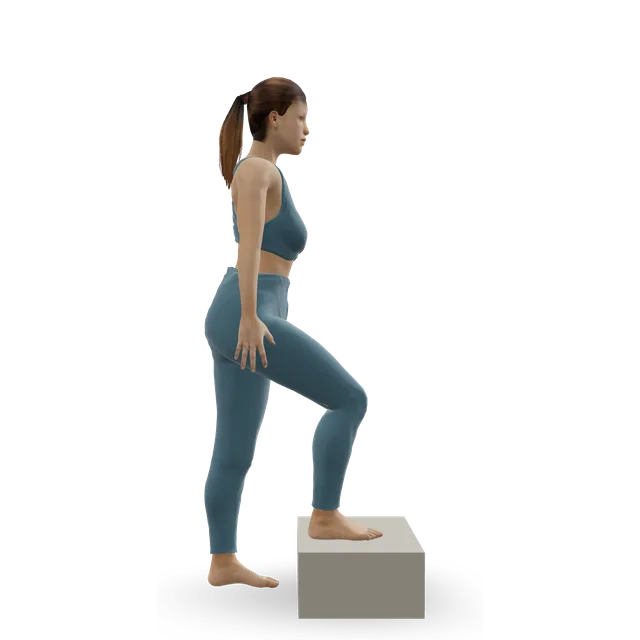 3D demoStair climbingIntermediate · A step
From 2 to 7 days. Each plan page shows how many hard sets per muscle a week it gives, so you can see what an extra day buys.
Two full-body strength sessions a week: the minimum that meets health guidelines, with every set, rep and rest, and an 8-week progression.
2 training days45 minBeginner2 days a weekYour first four weeks: two, then three short strength sessions a week at home plus walks, building gently to a full routine.
2 training days20 minBeginner3 days a weekA beginner gym plan: three full-body sessions a week, alternating workouts A and B, with sets, reps, rest and an 8-week progression.
3 training days45 minBeginner3 days a weekThree full-body home workouts a week with dumbbells or no equipment at all, plus walks and an 8-week plan to keep progressing.
3 training days35 minBeginner4 days a weekA 4-day upper/lower split: two upper body and two lower body gym days, each muscle trained twice a week, with sets, reps and progression.
4 training days50 minIntermediate5 days a weekA 5-day gym split that trains every muscle twice a week: upper, lower, push, pull and legs, with an honest look at the bro split.
5 training days50 minIntermediate5 days a weekThe classic chest, back, legs, shoulders and arms week, built from our gym workouts, with what research says about training each muscle once.
5 training days45 minIntermediate6 days a weekA 6-day push/pull/legs plan for experienced lifters: two push, two pull and two leg days, with sets, reps, rest and lighter weeks.
6 training days55 minAdvanced7 days a weekA full week that mixes intensities: three strength days, two cardio days, a mobility day and an easy day, never seven hard days.
3 training days45 minBeginnerIf you haven't exercised for some time, or have a medical condition or concerns (NHS). Medical clearance is generally unnecessary before light or moderate activity otherwise, but anyone who develops new symptoms as they do more should see a doctor (WHO).
Stop and call 999 for:
Falling performance for a week or two, with tiredness, poor sleep or low mood, is a sign to drop to fewer or lighter sessions for a week (our suggestion). If it doesn't lift, see a GP.
The strength guideline is 2 or more days a week, and for muscle your weekly sets matter more than how many days you spread them over. Move every day if you like; lift hard on 2 to 4.
With the weekly sets matched, frequency hardly changed growth. Choose what fits your week.
Once-weekly single sets raised strength by about 30 to 50% in a year, and the UK's evidence review supports 1 to 2 strength sessions a week. More builds more, but one is far better than none.
Strength was largely kept for months after stopping, and one session a week maintained it. Pick up where you left off, or a little lighter.
At least 2 days of strength training for all your major muscles, plus 150 minutes of moderate activity spread through the week. For building muscle, 2 to 4 strength days suit most people.
For health, yes: it meets the strength guideline. For muscle, more weekly sets build more, so 3 or 4 days builds faster, but two hard full-body sessions bring real gains.
It's much better than none: once-weekly single sets raised strength by about 30 to 50% in a year in one large study. The UK's evidence review supports 1 to 2 strength sessions a week, and one session also keeps the strength you've built.
Twice a week is a sensible default, but with the same weekly sets, once or three times a week grows muscle about the same. Practising a lift more often helps strength.
Neither: they give similar strength and muscle gains when the weekly sets match. Choose by your schedule. With a full-body plan, a missed day costs less.
Moving every day is good, but lifting hard every day isn't needed. Mix strength days with walks, cardio or rest; our rest days guide and 7-day plan show how.
As long as your sets take: about 20 minutes for a two-superset session, 35 to 55 minutes for our full plans. In trained men, three 13-minute sessions a week raised strength as much as much longer ones.
About 4 hard sets per muscle a week, or one hard set per exercise 2 to 3 times a week. Short, frequent exercise snacks also improve strength and function.
One session a week, with the weights kept heavy, kept strength and, in younger adults, muscle for up to 32 weeks. Older adults may need two sessions a week to keep their muscle.
In observational studies, people who fitted their 150 minutes into 1 or 2 days had similar health benefits to those who spread it out. Spreading it through the week is still the NHS advice, and it makes each session shorter.
Balance and strength work on 3 or more days a week, plus 150 minutes of moderate activity, as WHO advises. Our guide for older adults has the detail.
Exercise education, not a personal prescription, and clinical review of these guides is pending. Check with a GP before starting hard training if you have a heart condition, chest pain, dizziness or breathlessness when active, and stop for sharp or increasing pain. Health disclaimer.







