Exercise guide

Exercise with heart disease: cardiac rehab, after a heart attack, and staying safe

Exercise is one of the best things you can do after a heart attack, a stent or bypass surgery, or with heart failure, and cardiac rehabilitation is the place to start. In 107 trials, rehab cut heart attacks in the following year by about a quarter and hospital admissions by about a third, and improved quality of life; in heart failure, it cut hospital stays. Yet fewer than half of the people who could go start it.

The basics are the same for most heart conditions: build up gradually, work at a level where you can still talk, warm up and cool down for longer than usual, and never hold your breath when you lift. If your cardiac team has told you something different, follow them.

This guide covers what rehab involves and how to ask for it, the first weeks at home, how hard to exercise (including on beta blockers), strength training, stents and bypass surgery, heart failure, atrial fibrillation and implantable cardioverter defibrillators (ICDs), and the warning signs that mean stop.

The short version

Start with cardiac rehab

Cardiac rehabilitation is a programme of exercise, education and support. NICE (the National Institute for Health and Care Excellence) says everyone should be offered it after a heart attack, whatever their age, starting within 10 days of leaving hospital, and that everyone with heart failure should be offered an exercise-based programme. If you haven't been offered it, ask your GP or cardiologist.

Sources 1, 2, 3

It works, but most people miss out

In 107 trials with nearly 27,000 people with coronary heart disease, rehab cut heart attacks over the next year by about a quarter and hospital admissions by about a third, and improved quality of life. In heart failure, it reduced hospital admissions. Even so, in England in 2024 only 44.5% of people started rehab after a heart attack, and 16.4% of people with heart failure.

Sources 4, 5, 6

Build up gently in the first weeks

Start with getting up, washing and dressing, walking around the house and marching on the spot for a minute, then take short walks, building towards 20 to 30 minutes a day to the point of slight breathlessness. Avoid heavy lifting for about a week after a planned stent. After bypass surgery, the NHS says not to do any heavy lifting for 3 months.

Sources 7, 2, 8, 9

Work at a level where you can still talk

Aim to feel warm and breathe a little harder while still talking comfortably: 11 to 14 on the 6 to 20 Borg scale of effort. Beta blockers slow the heart, so heart rate formulas don't fit; go by how it feels. Warm up for at least 15 minutes and cool down for at least 10.

Sources 10, 11, 12

Strength training helps, done carefully

Use light to moderate weights for 8 to 10 repetitions, 2 to 3 times a week, breathing out on the effort and never holding your breath. Check with your doctor or rehab team first. With heart failure, avoid heavy weights, full press-ups and planks.

Sources 13, 11, 10, 14

Know when to stop

Stop for chest pain, palpitations, dizziness or light-headedness, and get urgent advice if it doesn't settle quickly with rest or your glyceryl trinitrate (GTN) spray. Call 999 for chest pain that feels tight or like squeezing, or spreads to your arms, neck or jaw, for severe difficulty breathing, or if someone passes out and isn't responding normally.

Sources 15, 16, 17

Heart disease and cardiac rehab

Coronary heart disease, angina and heart attacks

Coronary heart disease is a narrowing of the heart's arteries by a build-up of fatty material. It can cause angina: a pain or tightness, usually in your chest, that is often brought on by exercise, stress, emotion or cold weather and stops with rest or angina medicine. A heart attack happens when the blood flow to your heart is blocked, usually by a blood clot.

Sources 18, 17, 16

Stents and bypass surgery

A stent opens a narrowed artery from the inside (coronary angioplasty); after a planned procedure, most people go home the same day or the next. Bypass surgery uses a blood vessel from elsewhere in the body to carry blood around a blockage, usually through a cut down the breastbone.

Sources 8, 19, 20

Heart failure

Heart failure is when your heart cannot pump blood around your body properly. It does not mean your heart has stopped working. Breathlessness and tiredness are the main symptoms, and they can vary from day to day and week to week.

Source 21

Atrial fibrillation and ICDs

Atrial fibrillation (AF) is an irregular heartbeat. It can cause palpitations and tiredness and make it harder to exercise, though some people have no symptoms. An ICD sits under the skin near the collarbone, watches the heart's rhythm, and can pace the heart or give it a shock to stop a dangerous rhythm.

Sources 22, 23

How common it is

In the UK, more than 8 million people live with heart and circulatory disease, about as many women as men. About 2.3 million have coronary heart disease, more than 1 million have heart failure, and about 1.7 million have been diagnosed with AF. More than 7 in 10 people now survive a heart attack.

Source 18

What cardiac rehab is

Cardiac rehab is an individual programme of exercise, education and support. It starts with an assessment, then a core programme of exercise sessions, information and emotional support, and ends with a final assessment and a plan for the long term. The British Association for Cardiovascular Prevention and Rehabilitation (BACPR) sets out what it covers: changing health habits, physical activity, healthy eating and stopping smoking, psychological health, medicines and other medical care, and long-term support. It can be in person, remote (online, by app, by phone or with a manual) or a mix of the two.

Sources 1, 24, 25

What the evidence says

Fewer heart attacks and hospital staysStrong evidence

A 2026 Cochrane review of 107 trials (26,886 people with coronary heart disease, mostly followed for 6 to 12 months) found that rehab cut heart attacks by about a quarter (high-certainty evidence) and hospital admissions by about a third, and gave meaningful gains in quality of life. It probably reduced deaths from any cause slightly. The previous version of the review, with 85 trials, found the same pattern, and fewer deaths from heart disease in the longer term.

Sources 4, 26

Heart failureStrong evidence

In a 2024 Cochrane review of 60 trials (8,728 people with heart failure), rehab probably reduced hospital admissions for any cause (15.9% against 23.8%) and improved quality of life by a meaningful amount. It made no clear difference to deaths in the first year (low-certainty evidence). In the largest trial, HF-ACTION (2,331 people), the drop in deaths or hospital stays was small and borderline, and people exercised less as time went on. A UK home programme, REACH-HF, improved quality of life over a year in 216 people.

Sources 5, 27, 28

Home or hospitalEmerging evidence

Across 24 trials (3,046 people), home-based rehab, including digital programmes, gave similar results to centre-based classes for fitness, quality of life and deaths up to 12 months, though the certainty of the evidence is low. NICE says you should be offered a choice of setting. In England in 2024, 81.7% of people finished group programmes and 75.9% finished home-based ones.

Sources 29, 2, 6

Very safe when supervisedStrong evidence

In a French registry of 25,420 rehab patients, there was 1 serious heart event for every 49,565 hours of exercise training, and no deaths. In 4,846 Norwegian people with coronary heart disease, there was 1 cardiac arrest per 129,456 hours of moderate exercise and 1 per 23,182 hours of high-intensity exercise, with no heart attacks.

Sources 30, 31

Strength trainingStrong evidence

The American Heart Association calls resistance training safe and effective for people with heart disease; signs of a shortage of blood to the heart and abnormal rhythms are less common during it than during aerobic exercise. In coronary heart disease (34 trials, 1,940 people), resistance training built strength and improved fitness about as much as aerobic training, and combining the two did better than aerobic training alone. In heart failure, it improved strength, fitness and walking distance without harming heart function.

Sources 13, 32, 33, 34

Interval trainingEmerging evidence

In a UK trial of 382 people with coronary heart disease in rehab, short bursts of hard exercise (ten 1-minute bursts, twice a week for 8 weeks) improved fitness more than steady moderate exercise, with one serious adverse event that may have been related. BACPR's exercise professionals now support this high-intensity interval training (HIIT) for suitable people with stable coronary heart disease, within rehab. It rests on one large trial, so the evidence is still emerging.

Sources 35, 36

Atrial fibrillationEmerging evidence

In a 2024 Cochrane review of 20 trials (2,039 people), exercise-based rehab probably reduced AF coming back, by about 30% (4 trials, 378 people), and eased symptoms; its effect on deaths and serious problems is uncertain. In the ACTIVE-AF trial of 120 people, 40% of those given 6 months of exercise were free of AF a year later, against 20% of those without it.

A 2025 review reports that the 2024 European Society of Cardiology guideline gives a tailored exercise programme for AF its strongest recommendation (class I). We couldn't read the guideline itself, so we give it as the review reports it.

Sources 37, 38, 39

Who misses outStrong evidence

In England in 2024, only 44.5% of people started rehab after a heart attack, and 16.4% with heart failure. Across 26 studies (297,719 people), women were about a third less likely to enrol than men (38.5% against 45.0%), and women made up only 17% of the people in the coronary rehab trials. Uptake of rehab for AF is described as remarkably low: 0 to 5%.

Sources 6, 40, 4, 39

Women and menEmerging evidence

After rehab, women had lower fitness and quality of life than men on average, but similar rates of death, heart attack and readmission (22 mostly observational studies). Nothing in the evidence we read suggests that women and men should exercise differently after a heart event. NICE asks services to offer single-sex classes where there is demand.

Sources 41, 2

Cardiac rehab: what happens and how to get it

Who it's for

Everyone after a heart attack, whatever their age, and everyone with heart failure. People are also referred after heart procedures such as a stent, and BACPR adds people with an ICD, stable angina, congenital heart disease or a heart transplant. A condition that could get worse with exercise is treated first, and the exercise part is adapted.

Sources 2, 3, 8, 24

When it should start

NICE says the programme should start within 10 days of leaving hospital after a heart attack. BACPR's standard is to start within 2 weeks of leaving hospital or being diagnosed, with an assessment within 10 working days of referral. In practice, waiting time is the standard that services most often miss.

Sources 2, 24, 6

Class, home, online or a mix

Rehab can be in hospital, at a community centre or at home, and in person, online, by phone, through an app or a mix. Home and centre programmes give similar results, so choose the one you'll finish. Whichever you choose, a face-to-face check of your fitness should come before your exercise is planned, and the home exercise videos from the British Heart Foundation (BHF) are for people who have had a rehab assessment.

Sources 2, 25, 29, 24, 42

What a session looks like

After your assessment, sessions have a long warm-up, a conditioning part that mixes cardio with light strength work, and a cool-down, alongside information sessions and emotional support. The exercise is moderate, 11 to 14 on the Borg scale, with aerobic exercise on 3 days a week.

Sources 1, 11

If you haven't been offered it

Ask your GP, cardiologist or heart failure nurse to refer you. NICE asks services to remind people about rehab and to offer it again to people who didn't take it up. The BHF has a cardiac rehab finder and a Heart Helpline on 0808 802 1234.

Sources 2, 1

After rehab: keep going

When you're stable, can exercise at a moderate level and can judge your own effort, you can move on to long-term exercise, such as a community class. Aim for 150 minutes of moderate activity a week, spread through the week with rest days. Start low and slow: sessions can be as short as 5 or 10 minutes.

Sources 43, 10

The first weeks after leaving hospital

The first days

The BHF's advice is to build up gradually. Even if you don't feel like it, getting up, washing and dressing is a positive first step. Then light jobs around the house, walking around the house, or standing up from your chair and marching on the spot for a minute.

Source 7

A walking build-up

NICE advises building up step by step to being active for 20 to 30 minutes a day, to the point of slight breathlessness, starting at a level that feels comfortable. For people with low fitness, the UK's cardiac physiotherapy standards suggest 5 to 10-minute bouts at an easy level, building to 30 minutes a day.

Our editorial starting point, if your hospital hasn't given you a plan: in the first week at home, 2 to 3 short walks a day of 5 to 10 minutes, at an easy pace where you can talk easily. In week 2, add a few minutes to each walk every day or two if you feel well. By weeks 3 to 4, aim for 20 to 30 minutes a day, on the flat at first. Your hospital's or rehab team's advice comes first.

Sources 2, 11

After a stent

After a planned stent, avoid heavy lifting and strenuous activity for about a week, or until the wound has healed. Recovery takes longer after an emergency stent for a heart attack, and cardiac rehab will help you build up.

Sources 8, 19

After bypass surgery

You'll usually sit in a chair after a day, walk after 3 days and use stairs after 5 or 6. The NHS says to start being active, such as going for walks, as soon as you feel well enough, and not to do any heavy lifting for 3 months. Most people are back to most normal activities after about 6 weeks, and full recovery takes 2 to 3 months.

Advice on using your arms while your breastbone heals differs between hospitals, and in trials, less strict limits didn't lead to more wound or breastbone problems. Follow your surgeon's and rehab team's advice on pushing, pulling and lifting with your arms.

Sources 20, 9, 44, 45

Sex

After an uncomplicated heart attack, most people can have sex again after about 4 weeks, when they feel comfortable. NICE says it is no more likely to trigger a heart attack than in someone who has never had one.

Source 2

Feelings

Anxiety and low mood are common after a heart attack. Talk to your GP or rehab team: rehab includes emotional support, and our guides to exercise for anxiety and depression have more.

Sources 16, 1

How hard and how often

The talk test

You're at the right level if you feel warm, are breathing a little more heavily than normal, and can still talk comfortably. It might not take much movement to get there, and it doesn't matter if someone else can do more. In heart patients, the point where talking stops being comfortable matches a real change in breathing, and in 50 people after a stent or bypass surgery it put 88% in their ideal training zone. Our zone 2 guide explains the test step by step.

Sources 10, 15, 46, 47

The Borg scale

The Borg scale rates effort from 6 (no effort at all) to 20 (the hardest you could manage). Rehab works at 11 to 14: start near 11 if you're unfit and work up towards 14. In our words, from the scale's descriptions: 11 is light and easy to talk; 13 is somewhat hard, breathing harder but still able to talk in sentences; 15 is hard, and talking is difficult. Rate your effort while you exercise, not afterwards; it takes 3 or 4 sessions to learn.

Sources 11, 48

Heart rate and beta blockers

Beta blockers slow your heart. In a small study of 10 healthy men, heart rate was clearly lower on a beta blocker at the same effort, while the effort felt the same, and in heart patients on beta blockers, standard heart rate formulas put many people outside the right zone. With AF, the pulse is irregular, so heart rate can't measure your effort either. Go by how it feels, or use a training heart rate your rehab team works out from an exercise test; heart rate monitors aren't always accurate.

Sources 49, 12, 50, 51, 15

Warm up for 15 minutes, cool down for 10

With a heart condition, the BHF advises a warm-up of at least 15 minutes and a cool-down of at least 10, and older adults may need 15 to 20 minutes. A gradual warm-up may raise the point at which angina comes on. Drops in blood pressure, a shortage of blood to the heart muscle and abnormal rhythms can happen in the first 30 minutes after stopping, so slow down gradually, keep your feet moving, and don't lie down straight after exercise.

Sources 10, 11, 14

Each week

Rehab programmes use aerobic exercise such as walking or cycling on 3 days a week, for 20 to 60 minutes plus the warm-up and cool-down, and strength work on 2 to 3 days. Once 20 minutes feels comfortable, the effort goes up gradually towards 14 on the Borg scale. In the long term, aim for 150 minutes of moderate activity a week.

Sources 11, 10

Interval training

Short bursts of hard exercise are now an option in UK rehab for suitable people with stable coronary heart disease. Do them within rehab or with your cardiac team's agreement; our HIIT guide covers the safety evidence.

Sources 36, 35

Strength training with heart disease

Is it safe?

For most people, yes, when it's done carefully. The American Heart Association calls resistance training safe and effective for people with heart disease, and even very light weights, about a fifth of the most you could lift once, improved strength after a heart attack.

Source 13

The dose

Rehab programmes use 2 to 3 sessions a week, 48 hours apart: 1 set of 8 to 10 repetitions to start, building to 3 sets, with at least a minute's rest between sets. Weights start at 30 to 40% of the most you could lift once for the arms and 50 to 60% for the legs, and go up when you can do more than 10 repetitions.

In plain terms (our suggestion): choose a weight you could lift at least 15 times, and stop at 8 to 10, with plenty left in reserve.

Source 11

How to do it

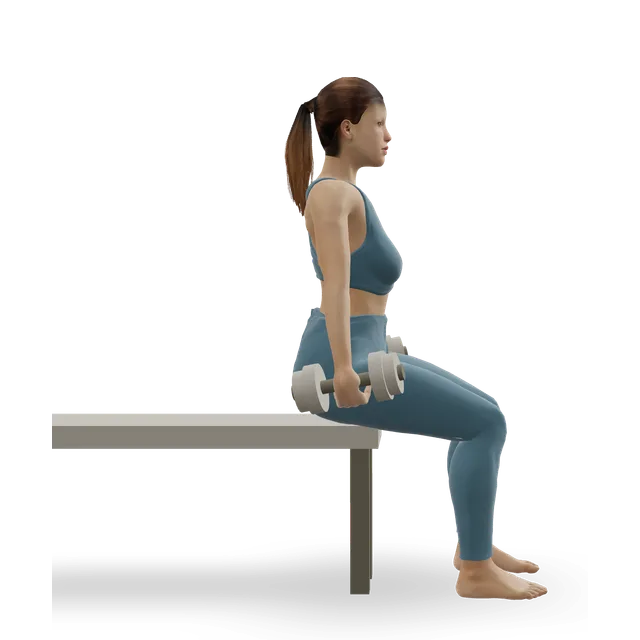
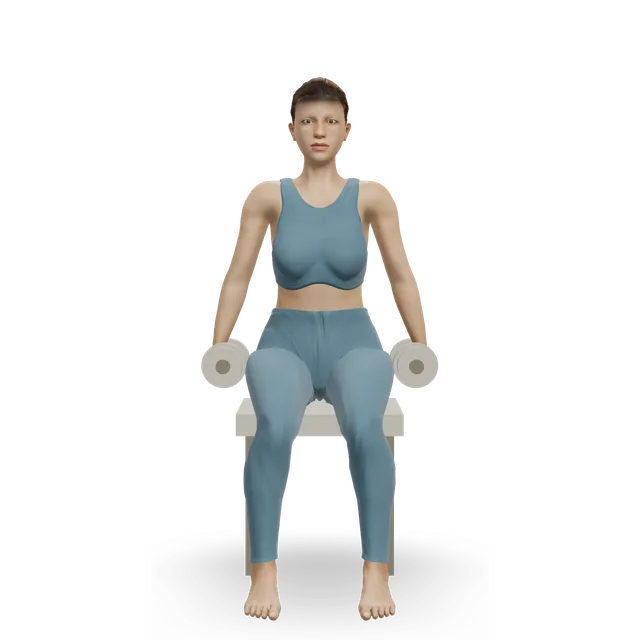
Breathe out on the effort and never hold your breath. Move slowly and with control. Bands, light dumbbells, tins or water bottles all work. Rehab classes do strength work after the cardio and part of the cool-down.

Sources 11, 14, 13

Check first

The BHF says to check with your doctor before you start strength training, which may not suit some people with heart conditions. With heart failure, avoid heavy weights, holding your breath, and using your whole body as a weight, such as press-ups or planks. With a pacemaker or ICD, ask before upper-body strength training, as repeated arm movements can damage the leads.

Sources 10, 14, 13

Long holds and the wall sit

Rehab avoids long holds such as planks and the wall sit, which invite breath-holding. Our high blood pressure guide covers wall sits; with coronary heart disease, ask your cardiac team before you do them.

Source 11

Heart failure, atrial fibrillation, ICDs and medicines

Heart failure

People with heart failure used to be told to rest; now keeping active is known to improve symptoms and quality of life. Speak to your doctor first, then aim for moderate exercise, where you're out of breath but can hold a conversation, plus light strength work. Little and often works: 5 to 10-minute sessions are fine. Take care in the pool, where you can work harder than you realise.

Skip exercise on days you feel unwell or more tired or breathless than normal. Weigh yourself regularly: sudden weight gain needs an urgent GP appointment or a call to NHS 111. Heart failure can't be reversed with exercise, but exercise improves symptoms.

Sources 14, 21

Atrial fibrillation

The BHF says it's unlikely that exercise will make your AF worse. The NHS suggests at least 150 minutes of moderate exercise a week, like walking, cycling or gardening, but not exercising too much or too hard, which can trigger AF. If your AF comes and goes, exercise when you're not in AF; if it's persistent, exercise when your heart rate is controlled, you're stable on treatment and you feel well. On blood thinners, avoid contact sports.

Sources 51, 22

ICDs and pacemakers

Most people with an ICD or pacemaker can exercise. Your doctor will set any limits, which often means moderate exercise such as walking and gardening, and avoiding contact sports such as rugby. Always check with your cardiac team before starting a new or harder activity, and consider rehab first. Trials of rehab for people with an ICD are few and low quality, so your team's advice comes first.

Sources 10, 52, 23, 53

Beta blockers

Beta blockers slow your heartbeat and may make you feel more tired or less energetic. Use the talk test or the Borg scale rather than heart rate. If a beta blocker makes you dizzy, the NHS says not to drive, ride a bike or use machinery until the dizziness stops. Talk to your doctor if you want to change your exercise routine, and don't change your dose yourself.

Sources 49, 10, 51

GTN for angina

Carry your GTN spray or tablets. To prevent angina when you exercise, you can take 1 tablet or 1 to 2 sprays under your tongue before you start; it works in 1 to 3 minutes. Sit down to take it and stand up slowly. Ask your doctor or pharmacist how to use it around exercise.

Sources 17, 54, 10

Keep taking your medicines

Exercise works alongside your medicines, not instead of them. The NHS warns that stopping blood-thinning medicines early after a stent greatly increases your risk of a heart attack.

Sources 16, 8

Cardio moves

Walk or cycle on at least 3 days a week at a level where you can still talk (11 to 14 on the Borg scale), starting with 5 to 10 minutes. March or step at home on bad-weather days, and use the seated march on low-energy days.

Strength moves

2 to 3 times a week: 1 set of 8 to 10 slow repetitions with a light weight, building to 3 sets, breathing out on the effort (UK cardiac rehab standards). After heart surgery through the breastbone, leave out the arm moves until your surgeon or rehab team says they're fine.

Warm-up and cool-down

Mix the mobility move and short stretches with marching in a 15-minute warm-up, and hold each stretch for 30 seconds in the cool-down. Finish with slow breathing, sitting rather than lying down.

Workouts to follow

The cardiac rehab-style session is for after your rehab assessment, with your team's agreement. Whichever workout you follow, warm up for at least 15 minutes and cool down for at least 10. The chair workout suits low-energy days and heart failure.

Warning signs: when to stop and when to get help

Call 999 now

Call 999 (911 in the US) if:

  • You have chest pain that feels tight or like squeezing on your chest.
  • You have chest pain that spreads to your arms, neck or jaw.
  • You're having severe difficulty breathing: you're gasping, choking or not able to get words out.
  • Your lips or skin are pale, blue or grey. On brown or black skin, this may be easier to see on the palms of the hands.
  • Someone has passed out and is not responding normally.

Source 16

While you wait for help

Don't drive yourself to A&E. Sit and rest on the floor with your knees bent and your back supported. Take a 300 mg aspirin if you have one and aren't allergic to aspirin, and use your GTN if you have angina. If someone stops responding and stops breathing, start CPR (cardiopulmonary resuscitation).

Source 16

If you have angina

Stop what you're doing and rest. Use your GTN as prescribed, and take another dose after 5 minutes if the first doesn't help. If you still have symptoms 5 minutes after the second dose, call 999. If you don't have your GTN with you, rest, stay calm and call 999.

Sources 17, 55

A fast or irregular heartbeat

Call 999 or go to A&E if palpitations don't go away, or come with chest pain, shortness of breath, feeling faint or fainting. With a fast or irregular heartbeat, the NHS also lists sweating, feeling or being sick, dizziness, a severe headache, weakness or numbness on one side, blurred vision, and confusion or difficulty speaking as reasons to call 999. If palpitations have stopped, ask for an urgent GP appointment or call NHS 111.

Sources 56, 22

After a stent

Call 999 for bleeding from the wound that doesn't stop after 10 minutes of pressure, severe chest pain that doesn't ease (try your angina medicine first), or if the leg or arm used for the procedure becomes discoloured, cold or numb.

Source 8

Call NHS 111 or ask for an urgent GP appointment

  • You're suddenly more short of breath than usual.
  • You have chest pain and feel sick or are being sick.
  • You have chest pain and your heart feels like it's racing, going too slowly, skipping a beat or fluttering.
  • Your angina feels worse than before, is happening more often, lasts longer or happens when you're resting.
  • You have heart failure and feel breathless when lying down or from everyday activity, cough up frothy pink phlegm, or have suddenly gained weight.

Sources 16, 17, 21

Stop exercising

Stop if you get chest pain, palpitations, dizziness or light-headedness. If it doesn't go away quickly with rest, or with your GTN if you use it, get urgent medical advice.

Stop, sit down and don't exercise again that day if you feel dizzy, get chest pain or your heartbeat becomes very irregular, and tell your rehab team before your next session. With heart failure, also stop for extreme shortness of breath.

Sources 15, 55, 14

Slow down if

Slow down and make your movements smaller if your breathing feels uncomfortable, you feel very tired, you're sweating a lot, or the effort is higher than your team suggested. If that doesn't settle it, walk slowly on the spot, then sit down.

Source 55

Don't start a session if

  • Your heartbeat feels irregular and this isn't normal for you.
  • You have a temperature or feel generally unwell.
  • You have chest pain at rest.
  • You have heart failure and feel more tired or breathless than normal.

Sources 55, 14

Check with your cardiac team first

Before harder exercise, such as interval training, heavy lifting, competitive sport, or sports with sudden bursts of effort such as squash.

Sources 2, 55, 36

Myths

"After a heart attack or with heart failure, you should rest"Strong evidence

That was the old advice. The BHF says people with heart failure used to be told to rest, but keeping active is now known to improve symptoms and quality of life. NICE wants rehab to start within 10 days of leaving hospital after a heart attack, and rehab cuts heart attacks and hospital admissions.

Sources 14, 2, 4, 5

"Cardiac rehab is for younger men"Strong evidence

NICE says rehab is for everyone after a heart attack, whatever their age, and for everyone with heart failure. Women have similar rates of death, heart attack and readmission to men after rehab, but are less likely to enrol.

Sources 2, 3, 41, 40

"Exercise might set off another heart attack, so it's safer to do nothing"Strong evidence

The BHF says doing some activity can be safer and better for your health than doing nothing. In supervised rehab, serious heart events are rare: 1 for every 49,565 hours of exercise in a registry of 25,420 patients. Build up gradually and stop for the warning signs above.

Sources 15, 30

"You need to hit a heart rate target, such as 220 minus your age"Emerging evidence

Formulas don't fit people on beta blockers, whose heart rate runs lower at the same effort, or people with AF, whose pulse is irregular, and heart rate monitors aren't always accurate. Use the talk test or the Borg scale, or a training heart rate your rehab team sets from an exercise test.

Sources 12, 50, 51, 15, 11

"Lifting weights is dangerous with heart disease"Strong evidence

The American Heart Association calls resistance training safe and effective for people with heart disease, and in coronary heart disease, adding it to aerobic training did better than aerobic training alone. The conditions: light to moderate weights, 8 to 10 repetitions, no breath-holding, your team's agreement, and no heavy weights, full press-ups or planks with heart failure.

Sources 13, 32, 33, 11, 14

"Hard exercise is off-limits for ever after a heart attack"Emerging evidence

Short bursts of hard exercise improved fitness more than steady moderate exercise in 382 people with stable coronary heart disease in UK rehab, and BACPR's exercise professionals now support it for suitable people. Build up to it within rehab or with your team's agreement.

Sources 35, 36

"Exercise reverses heart disease, so I can cut down my tablets"Strong evidence

The BHF says heart failure can't be cured and isn't reversible with exercise, though exercise improves symptoms. Exercise works alongside your medicines: keep taking them, because stopping blood-thinning medicines early after a stent greatly increases the risk of a heart attack.

Sources 14, 8

"Exercise will make my AF worse"Emerging evidence

The BHF says this is unlikely, and exercise-based rehab reduced AF coming back and eased symptoms in trials. What is linked with AF is very large amounts of endurance or mixed sport: in pooled observational studies, athletes had about two and a half times the odds of AF, which is why the NHS advises against exercising too much or too hard.

Sources 51, 37, 38, 57, 22

"After bypass surgery you can't use your arms for 3 months"Emerging evidence

The NHS says no heavy lifting for 3 months, but walking starts within days and most people are back to most normal activities after about 6 weeks. In trials, less strict arm limits didn't lead to more breastbone or wound problems, but advice differs between hospitals: follow your surgeon's.

Sources 9, 45, 44

Questions people ask

How soon after a heart attack can I exercise?

Start moving straight away: get up, wash, dress and walk around the house in the first days at home, then take short walks that build up over a few weeks. Cardiac rehab should start within 10 days of leaving hospital, and the team will tell you how much to do. Avoid heavy lifting and hard exercise until they say otherwise; after a planned stent, that is usually about a week.

What is the best exercise after a heart attack?

Walking is the best place to start, building towards 20 to 30 minutes a day to the point of slight breathlessness. Cycling and light strength exercises follow in cardiac rehab, at a level where you're breathing harder but can still talk. Whatever you do, warm up for at least 15 minutes and cool down for at least 10.

What is cardiac rehab?

Cardiac rehabilitation is a programme of exercise, education and support after a heart attack, heart surgery or a stent, or with heart failure. It starts with an assessment and can be a group class, a home programme with online or written support, or a mix. NICE recommends it for everyone after a heart attack, whatever their age, and for everyone with heart failure.

Does cardiac rehab work?

Yes. In 107 trials with nearly 27,000 people with coronary heart disease, rehab cut heart attacks over the following year by about a quarter and hospital admissions by about a third, improved quality of life, and probably reduced deaths a little. In heart failure, it reduced hospital admissions and improved quality of life. Yet fewer than half of eligible people in England start it after a heart attack, so ask for a referral.

Can I do cardiac rehab at home?

Yes. Home programmes, including online and app-based ones, worked about as well as hospital classes in trials, and NICE says you should be offered a choice. You'll still have an assessment first, which should include a face-to-face check of your fitness before your exercise is planned. Our cardiac rehab-style home workout is for after that assessment.

How hard should I exercise with heart disease?

Aim for moderate effort: you feel warm and are breathing a little harder, but can still talk comfortably. On the 6 to 20 Borg scale, that's 11 to 14. It might not take much movement to get there, and that's fine: what matters is how it feels to you.

What should my heart rate be when I exercise on beta blockers?

There isn't a reliable formula. Beta blockers slow your heart, so targets based on 220 minus your age put many people in the wrong zone. Go by how it feels, using the talk test or the Borg scale, or use a training heart rate your rehab team works out from an exercise test.

Can I lift weights after a heart attack?

For most people, yes, once your team agrees. Strength training is safe and builds strength and fitness in people with heart disease; rehab teams use light to moderate weights for 8 to 10 repetitions, 2 to 3 times a week, breathing out on the effort and never holding the breath. With heart failure, avoid heavy weights, full press-ups and planks.

When can I exercise after a stent?

After a planned stent, you can usually walk straight away, but avoid heavy lifting and strenuous activity for about a week, or until the wound has healed. After an emergency stent for a heart attack, recovery takes longer. Cardiac rehab will help you build up safely.

When can I exercise after bypass surgery?

Walking starts within a few days of the operation and carries on at home as soon as you feel well enough; most people are back to most normal activities after about 6 weeks, and full recovery takes 2 to 3 months. The NHS says not to do any heavy lifting for 3 months. Advice on using your arms while your breastbone heals varies between hospitals, so follow your surgeon's and rehab team's advice.

Is it safe to exercise with atrial fibrillation?

Usually, yes. The British Heart Foundation says it's unlikely that exercise will make AF worse, and exercise-based rehab reduced how often AF came back in trials. Aim for 150 minutes of moderate exercise a week, judge your effort by how you feel rather than your pulse, and don't exercise too much or too hard, which the NHS says can trigger AF.

When should I stop exercising and get help?

Stop if you get chest pain, palpitations, dizziness or light-headedness, and get urgent advice if it doesn't settle quickly with rest or your GTN. Call 999 for chest pain that feels tight or like squeezing, or spreads to your arms, neck or jaw, for severe difficulty breathing, or if someone passes out. With angina, take a second GTN dose after 5 minutes, and call 999 if the pain is still there 5 minutes after that.


Sources

  1. British Heart Foundation · What is cardiac rehabilitation?
  2. NICE NG185 · Acute coronary syndromes, including cardiac rehabilitation after a heart attack (2020)
  3. NICE NG106 · Chronic heart failure in adults: diagnosis and management (last updated September 2025)
  4. Dibben 2026 · Exercise-based cardiac rehabilitation for coronary heart disease: 107 trials (Cochrane review)
  5. Molloy 2024 · Exercise-based cardiac rehabilitation for adults with heart failure: 60 trials (Cochrane review)
  6. National Audit of Cardiac Rehabilitation 2025 · Quality and outcomes report (2024 data)
  7. British Heart Foundation · Heart attack
  8. NHS · Coronary angioplasty and stent insertion: recovery
  9. NHS · Recovering from a coronary artery bypass graft
  10. British Heart Foundation 2025 · Staying active
  11. ACPICR 2023 · Standards for physical activity and exercise in the cardiovascular population (Association of Chartered Physiotherapists in Cardiovascular Rehabilitation)
  12. Wonisch 2003 · Beta blockers and heart rate targets for exercise: 10 healthy men (randomised crossover trial, European Journal of Cardiovascular Prevention and Rehabilitation)
  13. Paluch 2024 · Resistance exercise training with and without cardiovascular disease: 2023 update (AHA scientific statement, Circulation)
  14. British Heart Foundation 2026 · Exercise for heart failure: tips for exercising safely
  15. Cowie 2024 · Exercising with a heart condition: finding a safe level for you (British Heart Foundation)
  16. NHS · Heart attack
  17. NHS · Angina
  18. British Heart Foundation 2026 · UK cardiovascular disease factsheet
  19. British Heart Foundation · Coronary angioplasty and stents
  20. British Heart Foundation · Coronary artery bypass surgery (CABG)
  21. NHS · Heart failure
  22. NHS · Atrial fibrillation
  23. British Heart Foundation 2025 · Implantable cardioverter defibrillator (ICD)
  24. BACPR 2023 · Standards and core components for cardiovascular disease prevention and rehabilitation (British Association for Cardiovascular Prevention and Rehabilitation)
  25. BACPR · Cardiac rehabilitation: consensus of key terminology
  26. Dibben 2021 · Exercise-based cardiac rehabilitation for coronary heart disease: 85 trials, the previous version (Cochrane review)
  27. O'Connor 2009 · Exercise training in chronic heart failure: the HF-ACTION trial of 2,331 people (RCT, JAMA)
  28. Dalal 2019 · Home-based rehabilitation for heart failure: the REACH-HF trial (RCT, European Journal of Preventive Cardiology)
  29. McDonagh 2023 · Home-based versus centre-based cardiac rehabilitation: 24 trials (Cochrane review)
  30. Pavy 2006 · Safety of exercise training in cardiac rehabilitation: a French registry of 25,420 patients (Archives of Internal Medicine)
  31. Rognmo 2012 · Cardiovascular risk of high- versus moderate-intensity exercise in 4,846 people in cardiac rehabilitation (multicentre study, Circulation)
  32. Hollings 2017 · Progressive resistance training in coronary heart disease: 34 trials (meta-analysis, European Journal of Preventive Cardiology)
  33. Gois 2026 · Combined aerobic and resistance training in coronary heart disease (meta-analysis, Sports Medicine Open)
  34. Fisher 2022 · Resistance training in heart failure (systematic review and meta-analysis, Heart Failure Reviews)
  35. McGregor 2023 · High-intensity interval training in cardiac rehabilitation: the HIIT or MISS UK trial of 382 people (RCT, European Journal of Preventive Cardiology)
  36. Powell 2026 · Low-volume high-intensity interval training in UK cardiac rehabilitation (BACPR joint statement)
  37. Buckley 2024 · Exercise-based cardiac rehabilitation for adults with atrial fibrillation: 20 trials (Cochrane review)
  38. Elliott 2023 · An exercise programme for atrial fibrillation: the ACTIVE-AF trial of 120 people (RCT, JACC Clinical Electrophysiology)
  39. Buckley 2025 · Exercise-based cardiac rehabilitation for patients with atrial fibrillation (narrative review, European Heart Journal Open)
  40. Samayoa 2014 · Sex differences in cardiac rehabilitation enrolment: 26 studies (meta-analysis, Canadian Journal of Cardiology)
  41. Guo 2026 · Sex differences in outcomes after cardiac rehabilitation: 22 studies (meta-analysis, Applied Physiology, Nutrition, and Metabolism)
  42. British Heart Foundation · At-home cardiac rehab exercise videos
  43. BACPR 2023 · Moving from cardiac rehabilitation to long-term exercise (protocol)
  44. Blakoe 2026 · Sternal precautions after heart surgery: 12 studies (scoping review, Journal of Cardiopulmonary Rehabilitation and Prevention)
  45. Katijjahbe 2018 · Standard versus modified sternal precautions after heart surgery: the SMART trial of 72 people (RCT, Journal of Physiotherapy)
  46. Vieira 2022 · The talk test in people with heart and lung disease: 10 studies (systematic review, Reviews in Cardiovascular Medicine)
  47. Zanettini 2013 · The talk test for exercise after a stent or bypass surgery: 50 people (validation study, European Journal of Preventive Cardiology)
  48. British Heart Foundation · The Borg scale of perceived exertion (handout)
  49. NHS · Beta blockers
  50. Díaz-Buschmann 2014 · Setting exercise intensity in heart patients on beta blockers (comparative study, European Journal of Preventive Cardiology)
  51. British Heart Foundation 2023 · How to exercise when you have atrial fibrillation
  52. British Heart Foundation 2026 · Implantable cardioverter defibrillators: tips on daily life
  53. Nielsen 2019 · Exercise-based cardiac rehabilitation for people with an implantable cardioverter defibrillator (Cochrane review)
  54. NHS · How and when to take glyceryl trinitrate (GTN)
  55. British Heart Foundation 2016 · My personal trainer: your step-by-step home exercise guide
  56. NHS · Heart palpitations
  57. Newman 2021 · Risk of atrial fibrillation in athletes (systematic review and meta-analysis, BJSM)

Exercise education, not a diagnosis or treatment plan, and clinical review of these guides is pending. Stop and get advice for chest pain, unusual breathlessness, dizziness or fainting, or new pain, and check with your doctor or midwife first if they have told you to limit activity. Health disclaimer.