Exercise guide

Exercise for COPD: pulmonary rehab, breathing techniques and moving with breathlessness

Exercise is one of the most effective treatments for COPD (chronic obstructive pulmonary disease), even though it makes you breathless. Pulmonary rehabilitation, a course of exercise and education, eased breathlessness and tiredness and added about 44 metres to a 6-minute walk across 65 trials, and starting it soon after a hospital stay roughly halved readmissions. Getting a little out of breath while you're active is not dangerous.

Breathing techniques such as pursed-lip breathing help you stay in control, but they work alongside exercise rather than instead of it. If you use oxygen, follow your prescription.

This guide covers how to get pulmonary rehab, the breathing techniques it teaches and what they can and can't do, how much walking and strength work to aim for, using oxygen, exercising around flare-ups, and the warning signs that mean stop.

The short version

Pulmonary rehab comes first

Pulmonary rehabilitation (PR) is a course of exercise and education, usually with two supervised sessions a week for at least 6 weeks. Across 65 trials, it eased breathlessness and fatigue by more than people notice, improved quality of life and added about 44 metres to how far people could walk in 6 minutes. NICE (the National Institute for Health and Care Excellence) says it should be offered to everyone who feels disabled by their COPD.

Sources 1, 2, 3, 4

After a hospital stay, start soon

Starting PR within 3 weeks of leaving hospital after a flare-up roughly halved readmissions in trials, with no harm from the rehab itself. The British Thoracic Society's standard is to start within 30 days.

Sources 5, 6

Getting out of breath is OK

The NHS says exercising until you're a little breathless is not dangerous, but not to push yourself too far. Avoiding breathlessness makes your muscles weaker, and weaker muscles leave you more breathless: Asthma + Lung UK calls this the cycle of inactivity.

Sources 7, 8

Breathing techniques help you stay in control

Pursed-lip breathing, blow as you go, paced breathing and recovery positions help you manage breathlessness. Pursed-lip breathing slows your breathing during exercise, but on their own, breathing exercises don't consistently reduce breathlessness, so use them alongside exercise, not instead of it.

Sources 9, 10, 11

Walk and get stronger

PR combines walking or cycling with strength exercises for the arms and legs. Harder or easier, steady or interval training gave similar gains, so choose what you'll keep doing. Resistance bands work about as well as gym machines, and breathing-muscle trainers add nothing on top of PR.

Sources 12, 13, 14, 15

Oxygen: follow your prescription

If you use oxygen when you move, use it on your usual setting when you exercise. NICE offers portable oxygen only after a specialist assessment, and in people whose oxygen level dropped during exercise, training with oxygen did no better than training with air.

Sources 8, 3, 16

COPD and breathlessness

What COPD is

COPD is the name for a group of lung conditions that cause breathing difficulties, including emphysema (damage to the air sacs in the lungs) and chronic bronchitis (long-term inflammation of the airways). The main symptoms are shortness of breath, especially when you're active, a lasting chesty cough with phlegm, frequent chest infections and wheezing. Symptoms usually get worse slowly, with spells when they suddenly get worse, called flare-ups or exacerbations, often in winter.

Sources 17, 18

Causes and how common it is

About 9 in 10 cases are linked to smoking; long-term exposure to fumes or dust, and a rare genetic condition, cause some others. About 1.7 million people in the UK have COPD, and about 600,000 more may have it without knowing. Worldwide, about 1 in 10 people aged 30 to 79 had COPD in 2019, and it caused 3.4 million deaths in 2023, making it the third leading cause of death.

Sources 19, 17, 2, 20

How breathlessness is graded

NICE uses the MRC (Medical Research Council) breathlessness scale, and grade 3 or above is its usual threshold for offering PR:

  • Grade 1: not troubled by breathlessness except on strenuous exercise.
  • Grade 2: short of breath when hurrying or walking up a slight hill.
  • Grade 3: walks slower than people of the same age on the flat, or has to stop for breath when walking at their own pace.
  • Grade 4: stops for breath after walking about 100 metres or after a few minutes on the flat.
  • Grade 5: too breathless to leave the house, or breathless when dressing.

Source 3

The cycle of inactivity

If you avoid things that make you breathless, your muscles get weaker. Weaker muscles need more oxygen to work, so over time you feel more and more breathless. Exercise breaks the cycle by training your leg and arm muscles: the lung damage itself is permanent, but stronger muscles need less oxygen for the same task.

Sources 8, 17

Breathlessness isn't only about your lungs

Lung tests don't always show how breathless you feel. Fast, upper-chest breathing, worry about breathlessness and being inactive all add to it, which is why breathing techniques and calm recovery help. If breathlessness frightens you, NICE suggests a cognitive behavioural approach as part of your self-management plan.

Sources 9, 3

Women and men

COPD used to be more common in men; in richer countries it is now almost as common in women, probably reflecting smoking patterns. Some studies suggest women may be more affected by smoking, but this is debated. In England and Wales in 2024 to 2025, 55% of hospital admissions for COPD were women, yet the PR trials included about two men for every woman.

Sources 2, 21, 1

What the evidence says

Pulmonary rehab worksStrong evidence

In a Cochrane review of 65 trials (3,822 people), PR improved breathlessness, fatigue, mood and people's sense of control over their condition by more than the smallest change people notice, improved quality of life, and added about 44 metres to the 6-minute walk. Most programmes lasted 8 or 12 weeks. The authors concluded that more trials comparing PR with usual care aren't needed.

The American Thoracic Society strongly recommends PR, and the Global Initiative for Chronic Obstructive Lung Disease (GOLD) calls it the most effective treatment for breathlessness, health status and exercise tolerance, at every level of severity.

Sources 1, 12, 2

After a flare-upStrong evidence

Across 17 studies, PR started within 3 weeks of leaving hospital after a flare-up roughly halved readmissions, improved walking by about 57 metres, and improved quality of life and breathlessness, with no harm from the rehab itself. A Cochrane review found similar results. Whether starting during the hospital stay helps is less clear.

Sources 5, 22, 2

Breathing exercises on their ownMixed evidence

In 16 trials (1,233 people), breathing exercises practised for 4 to 15 weeks improved walking distance in single small studies, but had no consistent effect on breathlessness or quality of life. Pursed-lip breathing during exercise slows breathing, but across 8 studies it didn't consistently increase walking distance, and some people benefit much more than others. In one study of people who didn't use it naturally, it added about 35 metres to a 6-minute walk.

Sources 11, 10, 23, 24

Recovery positionsEmerging evidence

In a study of 16 people with COPD, sitting leaning forward reduced the work of the breathing muscles more than other positions. In another study of 16 people with advanced COPD, the position each person found most comfortable eased the work of breathing. Both studies are small, but the positions are low risk.

Sources 25, 26

Breathing trainersEmerging evidence

Added to PR, inspiratory muscle training (breathing in against resistance with a handheld device) didn't improve breathlessness, walking or quality of life (22 trials, 1,446 people). On its own, it may help a little.

Source 15

Steady or intervals, harder or easierEmerging evidence

Higher- and lower-intensity training, and interval and steady training, gave similar gains in 11 trials. Strength training improves leg strength and is recommended alongside endurance training, and elastic bands gave similar strength, walking and quality-of-life gains to weight machines (8 trials, 332 people).

Sources 13, 27, 14

Oxygen during exerciseEmerging evidence

In 111 people whose oxygen level fell below 90% during a walking test, 8 weeks of training with oxygen gave no more benefit than training with air. In people whose oxygen was normal or only slightly low at rest, oxygen eased breathlessness during exercise tests a little (about 0.7 points on a 0 to 10 scale; low to moderate quality evidence), and oxygen taken just before exercise did nothing.

Sources 16, 28

Tai chi, yoga and singingMixed evidence

Compared with or added to PR, tai chi, qigong and yoga gave inconclusive results in 10 low-quality trials, and trials of singing groups are small and low quality. They're fine if you enjoy them, but they aren't a substitute for PR.

Sources 29, 30

Who gets PRStrong evidence

Fewer than 5% of people with COPD who could benefit get PR. In England and Wales in 2024 to 2025, people with stable COPD waited an average of 100 days from referral to starting, and fewer than half were offered a start date within 90 days. Older people, women and people in deprived areas appear less likely to be referred.

Sources 12, 21, 2

Pulmonary rehab: what it is and how to get it

What happens

PR is a programme of exercise and education for people with long-term lung conditions, run by a team of health professionals. It includes exercise classes, information about your condition, techniques to manage breathlessness, and support with eating and emotional wellbeing. About half of each session is exercise: walking, cycling, and strength work for your arms and legs.

Sources 3, 31

Who it's for

NICE says PR should be offered to everyone who feels disabled by their COPD, usually MRC grade 3 or above, including after a recent hospital stay for a flare-up. The British Thoracic Society includes people at grade 5. PR isn't suitable if you can't walk, or have unstable angina or a recent heart attack. People who use oxygen can take part.

Sources 3, 6, 31

How long

Usually 6 to 8 weeks, with 2 group sessions of about 2 hours a week. NICE's quality standard is at least 6 weeks with at least 2 supervised sessions a week, and GOLD found no extra benefit from 12 weeks over 6 to 8.

Sources 31, 32, 4, 2

How to get it

Ask your GP, practice nurse or respiratory team to refer you, and ask early: in England and Wales the average wait is 100 days. If you're in hospital with a flare-up, ask before you leave: referral to PR is part of NICE's standard for leaving hospital, and the British Thoracic Society expects you to start within 30 days.

Sources 31, 21, 4, 6

If you can't get to a class

The American Thoracic Society recommends offering a choice of PR in a centre or online (telerehabilitation). The British Thoracic Society keeps classes as the main offer, with home programmes such as the SPACE for COPD manual for people who can't attend. Asthma + Lung UK's free Keep Active programme has videos at three levels and a handbook.

Sources 12, 6, 33

Keep it going

The benefits fade if you stop exercising. You should leave PR with a written plan to keep going. Supervised maintenance classes are optional; the evidence for them is low quality.

Sources 2, 6, 12

Why exercise helps when you're breathless

Breathless is expected, not harmful

Asthma + Lung UK: "Getting out of breath when you're active is completely normal and can help improve the symptoms of your lung condition." Stronger muscles need less oxygen to work, so everyday tasks leave you less breathless.

Sources 8, 7

Find your level with the talk test

While you exercise, say a sentence such as "this activity is going to do me good". If you can say it without stopping for breath, you can work harder if you want to. If you need to stop for breath while saying it, you're at the right level. If you can't speak, or can only say one word at a time, slow down.

Source 8

Recover calmly

When you're breathless, stop in a recovery position and use pursed-lip breathing until it settles. Knowing you can recover makes breathlessness less frightening. If it still frightens you, ask about a cognitive behavioural approach, which NICE suggests as part of your self-management plan; our anxiety guide has more.

Sources 9, 3

A fan can help

GOLD lists a fan blowing air onto your face as one way to relieve breathlessness.

Source 2

Breathing techniques

Breathing control

Breathing gently, using the least effort, with your shoulders relaxed and supported. Practise it sitting, when you're calm, so it comes naturally when you're breathless: put one hand on your chest and one on your tummy, breathe in slowly through your nose, counting to five if you can, let your tummy move out, then breathe out through your mouth for longer than you breathed in.

Sources 9, 7

Pursed-lip breathing

Breathe in gently through your nose. Purse your lips as if you're going to blow out a candle, and breathe out through them for as long as is comfortable, without forcing your lungs to empty. Use it when you're breathless and as you walk, climb stairs or lift.

Sources 9, 7

Blow as you go

Breathe in before an effort, such as standing up or lifting a bag, and breathe out during it, through pursed lips if that helps.

Sources 9, 7

Paced breathing

On walks and stairs, breathe in time with your steps: in for 1 step and out for 2, building to out for 3. It stops you holding your breath.

Sources 9, 7

Recovery positions

When you're breathless, rest in one of these positions and use pursed-lip breathing until your breathing settles:

  • Sitting leaning forward, with your elbows resting on your knees.
  • Sitting leaning forward at a table, with your head and arms resting on a pillow.
  • Standing leaning back or sideways against a wall, feet slightly apart and hands loose.
  • Lying on your side, propped up on pillows.

Source 9

What the evidence showsMixed evidence

These techniques help you stay in control and recover, and pursed-lip breathing slows your breathing during exercise. On their own they don't consistently reduce breathlessness or improve quality of life, and pursed-lip breathing helps some people much more than others: try it, and keep what helps you.

Sources 11, 10, 23

If you bring up a lot of phlegm

Ask a physiotherapist to teach you a way to clear it, such as the active cycle of breathing techniques, or a device that makes you breathe out against gentle pressure.

Sources 3, 7

Breathing moves

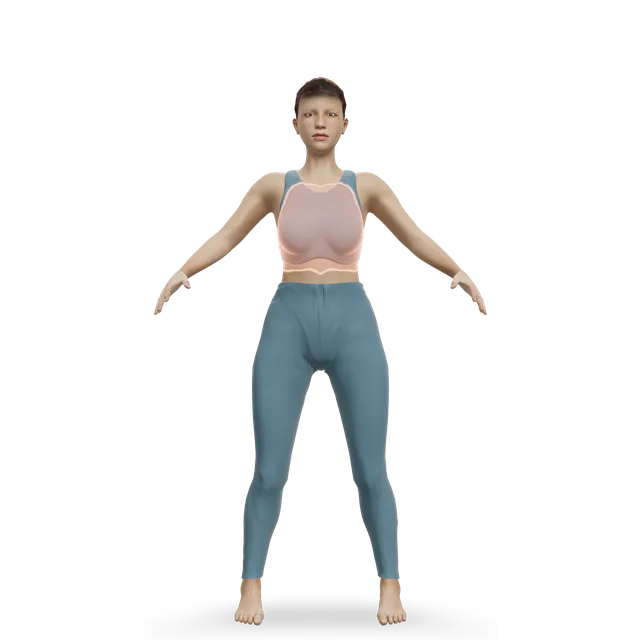
Practise them sitting when you're calm, then use them when you're active or breathless. Pursed-lip breathing has no 3D demo, because the figure can't show the lips: follow the written steps. Slow breathing is the closest move to breathing control: keep it gentle, with no holds.

How much exercise

Walking or cycling

Asthma + Lung UK's target is 150 minutes of moderate activity a week, about 20 minutes a day. Our editorial starting point: begin with what you can manage, even 5 minutes, and build towards 20 to 30 minutes on most days, at the talk-test level where you need to stop for breath partway through a sentence. Steady walking and intervals of walking and resting work about equally well.

Sources 8, 13

Strength

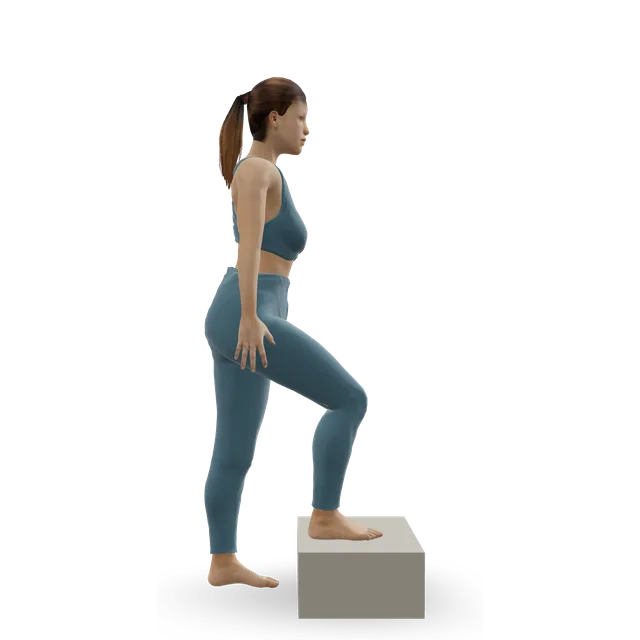
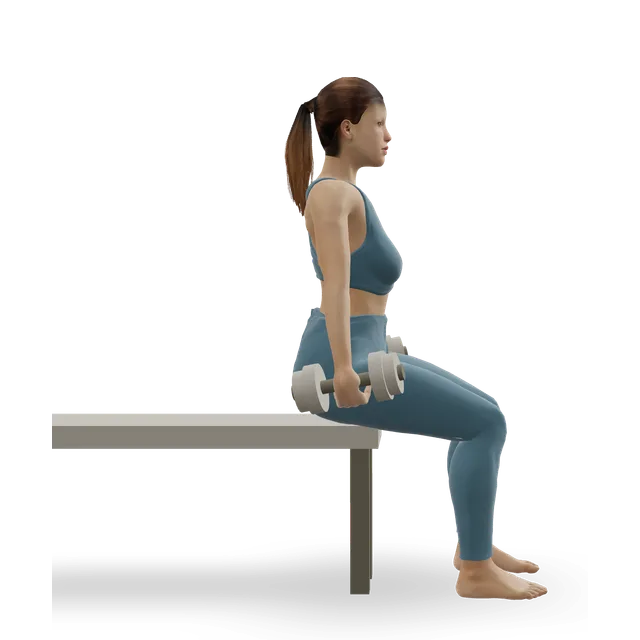
At least 2 days a week. Our editorial starting point: 1 to 2 sets of 8 to 12 slow repetitions of 4 to 6 exercises, such as sit-to-stands, step-ups, knee extensions, rows and arm raises, breathing out on the effort and resting until your breathing settles between sets. Tins or water bottles work as weights.

Sources 8, 9, 27

Arms

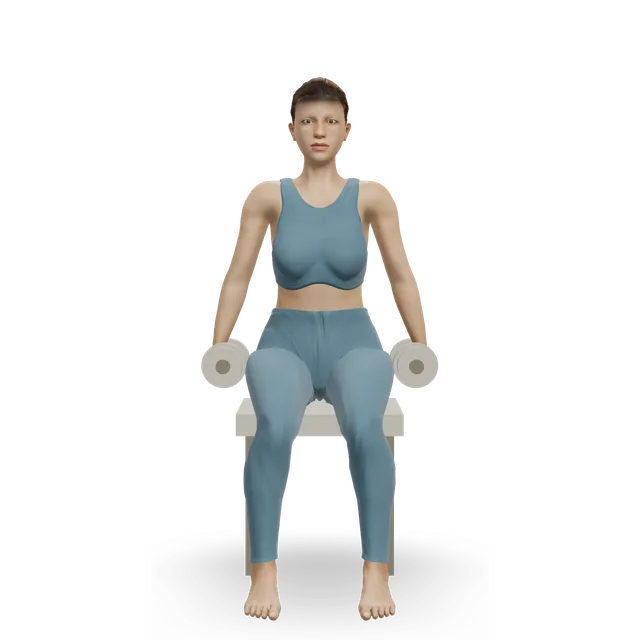
Lifting your arms makes many people with COPD breathless, which is why PR includes arm exercises. Use light weights or none, breathe out as you lift, and go slowly.

Sources 31, 2

Stairs and hills

Use paced breathing, in for 1 step and out for 2, and blow as you go, and pause at the top to recover.

Source 9

Before each session

Wait 1 to 2 hours after a meal, or 30 minutes after a snack. Carry your reliever inhaler, keep water to hand, and start slowly, building up gradually.

Source 8

Walking and cardio

Walk or cycle on most days, using paced breathing as you go. March seated or standing at home, and practise a low step before real stairs.

Strength for legs and arms

At least 2 days a week, 1 to 2 sets of 8 to 12 slow repetitions (our editorial starting point). Breathe out on the effort (blow as you go), and rest in a recovery position between sets.

Oxygen and exercise

Use what you're prescribed

If you normally use oxygen when you move, use it on your usual setting when you exercise and make sure you have enough. People who use oxygen can do PR. Your team may set a different flow rate for activity: don't change it yourself, and speak to your oxygen team if you have any concerns.

Sources 8, 31, 34

Who gets portable oxygen

NICE doesn't offer portable oxygen for breathlessness if your oxygen level is normal or only slightly low at rest. It may be considered if your oxygen level falls when you exercise and oxygen is shown to help you do more, after a specialist assessment. Long-term oxygen at home is for people with a low oxygen level at rest, and the NHS says it isn't a treatment for breathlessness.

Sources 3, 32

Safety

Never smoke, or let anyone smoke, near your oxygen. Keep it at least 3 metres from open flames and 1.5 metres from electrical appliances, and don't use oil-based creams such as petroleum jelly. Don't exercise if you've run out of oxygen.

Sources 35, 34

Exercising around flare-ups

Know the signs

Being more breathless than usual, coughing more, bringing up more phlegm or a change in its colour, more wheezing, feeling more tired, or finding it harder to be active.

Source 36

Follow your plan

Everyone at risk of flare-ups should have a self-management plan, and some people keep a rescue pack of steroid and antibiotic tablets at home. Start it as your plan says, and tell your GP or nurse. If you need three or more courses in a year, ask for a review.

Sources 3, 36

Restarting exercise

Our editorial starting point, because no trial has tested a schedule for getting back to exercise: during a flare-up, rest from structured exercise and follow your plan, but keep moving gently around the house. Restart with shorter, easier sessions once your symptoms are back near your usual, and build up over a few weeks. Flare-ups usually last 7 to 10 days and most people recover within 4 to 6 weeks, though 1 in 5 still have symptoms at 8 weeks.

Source 36

After a hospital stay

Ask about PR before you leave hospital. The British Thoracic Society's standard is to start within 30 days, and to offer it again if you say no at first; starting within 3 weeks roughly halved readmissions in trials.

Sources 6, 5

Too unwell to exercise

If a bad flare-up leaves you unable to exercise, the NHS says you may be offered electrical muscle stimulation instead.

Source 32

Workouts to follow

Breathe and move is built around PR's breathing techniques, with rests whenever you need them. Use the chair workout on very breathless days, and add pursed-lip breathing and pauses to the low-impact circuit. In the breathing routine, the slow breathing suits; the breath holds are optional.

Warning signs: when to stop and when to get help

Call 999 or go to A&E

Call 999 (911 in the US) or go to A&E if any of these happen. Don't drive yourself: ask someone to drive you or call an ambulance, and take your medicines with you.

  • You have severe difficulty breathing: you're gasping, choking or not able to get words out.
  • Your chest feels tight or heavy.
  • You have pain that spreads to your arms, back, neck and jaw.
  • Your lips or skin are turning very pale, blue or grey. On brown or black skin, this may be easier to see on the palms of the hands.
  • You feel suddenly confused.
  • Your breathing doesn't go back to normal after exercise.

Sources 37, 36, 8

Contact NHS 111

  • You have difficulty breathing and may be more short of breath than usual.
  • You feel sick or are being sick.
  • You're coughing up blood.
  • You have pain or swelling in one of your legs.
  • You have palpitations: your heart feels like it's racing, going too slowly or skipping a beat, or fluttering.

Source 37

Stop exercising and get advice

Stop and get advice from your healthcare professional if:

  • You have chest pain or chest tightness.
  • You're more breathless than you usually are when you're active.
  • You feel dizzy.
  • You feel sick.
  • You feel clammy or really cold.
  • You start wheezing.
  • You have sore joints or muscle weakness.

Source 8

Don't exercise if

  • You have a fever or an infection.
  • You feel sick.
  • You have chest pain.
  • You've run out of oxygen.
  • You're more breathless than usual, or have more of your other symptoms.
  • You feel dizzy, weak or unsteady.

Source 34

See a GP

  • Your breathlessness gets worse when you're doing your normal activities, or when you lie down.
  • You're short of breath and have swollen ankles.
  • You've been coughing for 3 weeks or more.

Source 37

Myths

"Getting out of breath is damaging my lungs"Strong evidence

The NHS says exercising until you're a little breathless is not dangerous, and Asthma + Lung UK says getting out of breath when you're active is normal and can improve your symptoms. Pushing yourself too far isn't the aim: use the talk test.

Sources 7, 8

"Exercise can't help, because the damage is permanent"Strong evidence

The lung damage is permanent, but PR still improves breathlessness, fatigue, quality of life and walking, by strengthening your muscles and teaching you to manage your breathing.

Sources 17, 1, 8

"Breathing exercises are the main treatment"Mixed evidence

On their own, breathing exercises have no consistent effect on breathlessness or quality of life, and breathing-muscle trainers add nothing on top of PR. Exercise training is the core of treatment; breathing techniques help you do it.

Sources 11, 15, 1

"Oxygen during exercise will make my training work better"Emerging evidence

In people whose oxygen dropped during exercise, training with oxygen gave no more benefit than training with air. NICE doesn't offer portable oxygen for breathlessness when your oxygen level is normal or only slightly low at rest. Use what you're prescribed, as prescribed.

Sources 16, 3, 8

"I'm too breathless, too old or too ill for rehab"Strong evidence

PR is aimed at people who are breathless: NICE's usual threshold is MRC grade 3 or above, the British Thoracic Society includes grade 5, and GOLD reports benefits at every level of severity.

Sources 3, 6, 2

"I'll wait until I've fully recovered from my hospital stay"Strong evidence

PR started within 3 weeks of leaving hospital roughly halved readmissions in trials, and the British Thoracic Society's standard is to start within 30 days.

Sources 5, 6

"One course of PR fixes it"Strong evidence

The benefits fade if you stop exercising, which is why you should leave PR with a written plan to keep going.

Sources 2, 6

"Pursed-lip breathing works for everyone"Mixed evidence

It slows your breathing during exercise, but its effect on walking distance and breathlessness varies widely between people. Try it, and keep what helps you.

Sources 10, 23

Questions people ask

What is the best exercise for COPD?

Walking or cycling, combined with strength exercises for your legs and arms: they are the core of pulmonary rehabilitation. Steady and interval training gave similar results in trials, so choose what you'll keep doing. Aim for a level where you need to stop for breath partway through a sentence, but can still say more than one word at a time.

What is pulmonary rehabilitation?

Pulmonary rehabilitation (PR) is a course of exercise and education for people with lung conditions, usually two group sessions a week for 6 to 8 weeks. NICE says it should be offered to everyone who feels disabled by their COPD, usually those at MRC breathlessness grade 3 or above. Ask your GP, practice nurse or respiratory team to refer you, and ask early, as there are often waiting lists.

Can exercise improve COPD if the lung damage is permanent?

Yes. The damage can't be reversed, but exercise strengthens the muscles you use to move, so they need less oxygen and everyday tasks leave you less breathless. In 65 trials, pulmonary rehab eased breathlessness and fatigue, improved quality of life and added about 44 metres to a 6-minute walk.

Is it OK to get out of breath when exercising with COPD?

Yes. The NHS says exercising until you're a little breathless is not dangerous, though you shouldn't push yourself too far. Avoiding breathlessness weakens your muscles, which makes you more breathless over time. If you can only say one word at a time, slow down and recover with pursed-lip breathing.

How do I do pursed-lip breathing?

Breathe in gently through your nose, then purse your lips as if blowing out a candle and breathe out slowly through them, for as long as is comfortable and without forcing. Use it when you're breathless, and as you walk or climb stairs. It slows your breathing during exercise, though how much it helps varies from person to person.

What are the best breathing exercises for COPD?

Pulmonary rehab teaches breathing control (gentle breathing with relaxed shoulders), pursed-lip breathing, blow as you go (breathing out during an effort) and paced breathing in time with your steps. They help you stay in control, but on their own they don't consistently reduce breathlessness, so use them alongside exercise.

What position helps with shortness of breath?

Try sitting and leaning forward with your elbows on your knees, leaning forward at a table with your head and arms on a pillow, leaning back or sideways against a wall, or lying on your side propped up on pillows. In a small study, sitting leaning forward reduced the work of the breathing muscles more than other positions. Use pursed-lip breathing in the position until you recover.

Should I use oxygen when I exercise?

If you've been prescribed oxygen for when you're active, use it on your usual setting when you exercise and make sure you have enough. Portable oxygen is prescribed only after a specialist assessment shows it helps you. Don't change the flow yourself: talk to your oxygen team, and never smoke near oxygen.

Can I exercise during a COPD flare-up?

Follow your action plan and rest from structured exercise while you're unwell, but keep moving gently around the house (our suggestion). Flare-ups usually last 7 to 10 days and most people recover in 4 to 6 weeks, so restart with shorter, easier sessions. If you were in hospital, ask about pulmonary rehab: starting within a few weeks of leaving cut readmissions in trials.

How much exercise should I do with COPD?

Build towards about 150 minutes of moderate activity a week, around 20 minutes a day, and strength exercises on at least 2 days. Start with whatever you can manage, even 5 minutes, and add a little each week (our suggestion). Pulmonary rehab uses at least two supervised sessions a week for at least 6 weeks.

Do breathing trainers help with COPD?

Added to pulmonary rehab, breathing-muscle trainers (inspiratory muscle training) made no difference to breathlessness, walking or quality of life in 22 trials. On their own they may help a little, but they're not a substitute for walking and strength training.

When should I stop exercising and get help?

Stop and get advice if you have chest pain or tightness, feel more breathless than usual, dizzy, sick, clammy or very cold, or start wheezing. Call 999 if you have severe difficulty breathing, your chest feels tight or heavy, your lips or skin turn very pale, blue or grey, or you feel suddenly confused.

Sources

  1. McCarthy 2015 · Pulmonary rehabilitation for COPD: 65 trials (Cochrane review)
  2. GOLD 2026 · Global strategy for prevention, diagnosis and management of COPD (Global Initiative for Chronic Obstructive Lung Disease)
  3. NICE NG115 · Chronic obstructive pulmonary disease in over 16s: diagnosis and management
  4. NICE QS10 · Chronic obstructive pulmonary disease in adults (quality standard, last updated 2023)
  5. Jenkins 2024 · Pulmonary rehabilitation after a hospital stay for a COPD flare-up (systematic review and meta-analysis, Thorax)
  6. Singh 2026 · British Thoracic Society quality standard for pulmonary rehabilitation (BMJ Open Respiratory Research)
  7. NHS · Living with COPD
  8. Asthma + Lung UK · Physical activity and your lungs
  9. Asthma + Lung UK · How can I manage my breathlessness?
  10. Mayer 2018 · Pursed-lips breathing during exercise in COPD: 8 studies (systematic review and meta-analysis, Physiotherapy)
  11. Holland 2012 · Breathing exercises for COPD: 16 trials (Cochrane review)
  12. Rochester 2023 · Pulmonary rehabilitation for adults with chronic respiratory disease (American Thoracic Society guideline, AJRCCM)
  13. Zainuldin 2011 · Intensity and type of leg exercise training for COPD (Cochrane review)
  14. de Lima 2020 · Elastic band versus conventional resistance training in COPD: 8 trials (meta-analysis, Physical Therapy)
  15. Ammous 2023 · Inspiratory muscle training for COPD: 22 trials and more (Cochrane review)
  16. Alison 2019 · Oxygen compared with air during exercise training in COPD: 111 people (RCT, European Respiratory Journal)
  17. NHS · Chronic obstructive pulmonary disease (COPD)
  18. NHS · COPD: symptoms
  19. Asthma + Lung UK · What is COPD?
  20. World Health Organization · Chronic obstructive pulmonary disease (fact sheet)
  21. National Respiratory Audit Programme 2026 · Room to breathe: COPD and asthma care in England and Wales, 2024 to 2025 (Royal College of Physicians)
  22. Puhan 2016 · Pulmonary rehabilitation after COPD flare-ups (Cochrane review)
  23. Cabral 2015 · Pursed-lip breathing and exercise tolerance in 40 people with COPD (randomised crossover study, European Journal of Physical and Rehabilitation Medicine)
  24. Bhatt 2013 · Pursed-lip breathing and the 6-minute walk in people with COPD who don't use it naturally (randomised crossover study, Chronic Respiratory Disease)
  25. Topcuoglu 2024 · Breathing muscle activity in positions that relieve breathlessness: 16 people with COPD (cross-sectional study, Respiratory Care)
  26. Elbehairy 2026 · How body position relieves breathlessness in 16 people with advanced COPD (physiology study, European Respiratory Journal)
  27. Ferté 2022 · Resistance training and the 6-minute walk in COPD (systematic review and meta-analysis, Annals of Physical and Rehabilitation Medicine)
  28. Ekström 2016 · Oxygen for breathlessness in COPD without low oxygen at rest (Cochrane review)
  29. Gendron 2018 · Tai chi, yoga and other mind-body movement therapies for COPD (Cochrane review)
  30. McNamara 2017 · Singing for adults with COPD (Cochrane review)
  31. Asthma + Lung UK · Pulmonary rehabilitation
  32. NHS · COPD: treatment
  33. Asthma + Lung UK · Keep Active programme
  34. American Lung Association 2026 · Physical activity and COPD
  35. NHS · Home oxygen therapy
  36. Asthma + Lung UK · COPD flare-ups
  37. NHS · Shortness of breath

Exercise education, not a diagnosis or treatment plan, and clinical review of these guides is pending. Stop and get advice for chest pain, unusual breathlessness, dizziness or fainting, or new pain, and check with your doctor or midwife first if they have told you to limit activity. Health disclaimer.