Cross-body shoulder stretch
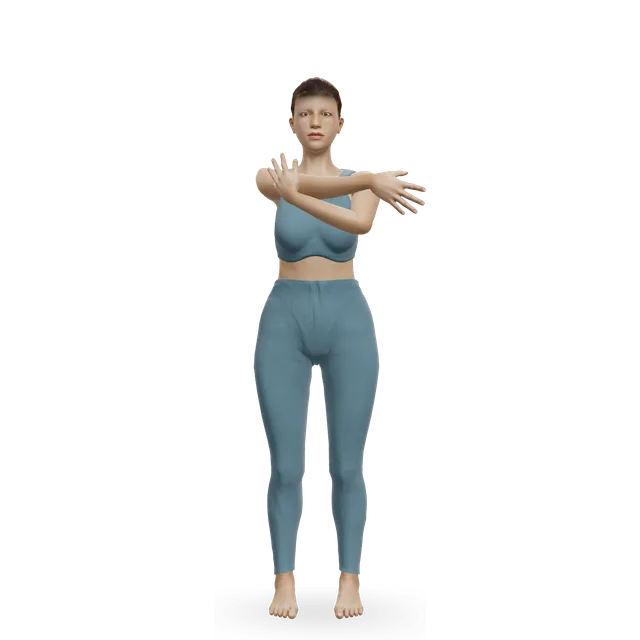
The arm drawn straight across the chest at shoulder height by the other hand above the elbow: a stretch for the back of the shoulder, and in a randomised trial the one whose gain in inward rotation beat no stretching.
Posterior shoulder stretch family
Cross-body shoulder stretch
Loading the 3D figure…
Source-researched guide.
How to move
- Stand tall with the shoulders relaxed and lift one arm straight across the chest to about shoulder height.
- Hold it with the other hand just above the elbow, not on the joint, and draw it gently closer until the back of the shoulder pulls.
- Keep that shoulder down away from the ear; hold about 30 seconds, ease off, and change sides.
Form cues
- Feel it at the back of the shoulder, not the front.
- Drop the arm toward chest height if the front of the shoulder pinches.
Practice and cautions
No universal dose is assigned. Choose a manageable amount for your current capacity, leave room for controlled repetitions, and allow recovery. A clinician’s individual plan takes priority.
If the pain is on the very top of the shoulder, at the end of the collarbone (the AC joint), this stretch presses on it: skip it while that is sore. If your shoulder feels loose or has dislocated, skip this stretch and keep to the strength work. A pinch at the front of the shoulder means the arm is too high; drop it toward chest height and pull less. Keep the assisting hand above the elbow, not on the joint itself. This is movement education, not an assessment or treatment prescription. Stop for sharp or increasing pain, dizziness, numbness or tingling; seek individual guidance for symptoms, injury or restrictions.
Sources and review status
Sources support the educational description; they do not establish that this exercise is suitable for you.
- AAOS OrthoInfo · Rotator cuff and shoulder conditioning program (the crossover arm stretch, and the sleeper stretch lying on the shoulder, the head on a pillow) ↗
- McClure 2007 · Sleeper vs cross-body stretch, randomised trial (only the cross-body group's 20° gain in internal rotation beat no stretching; the sleeper group gained 12°; PEDro record) ↗
- Manske 2013 · Glenohumeral motion deficits (the cross-body stretch for the back of the shoulder; the sleeper stretch can pinch the shoulder, so roll the trunk back or lower the arm; IJSPT) ↗
- Liaghat 2021 · Joint hypermobility and shoulder injuries in athletes, systematic review and meta-analysis (6 studies, 2,335 athletes: those with hypermobile or unstable shoulders had about 8 times the odds of shoulder injury; low-quality evidence; BMC Musculoskelet Disord) ↗
No variation is labeled clinically validated.
What it works
Muscles
Main: Shoulders. Also: Back.
Anatomy: Deltoid, Rotator cuff, Supraspinatus, Infraspinatus, Subscapularis, Teres minor.
Equipment
None: body weight and floor space.
Level
Beginner. See the easier and harder options above.
Workouts that use it
- Full-body stretch routine · 15 min
- Neck and shoulder stretches · 10 min
- Full-body gym workout B · 50 min
- Upper body gym workout · 50 min
- Upper body gym workout B · 50 min
- Upper body workout at home · 30 min
- Pull day workout · 55 min
- Pull day workout B · 50 min
Show all 46 workoutsShow fewer workouts
- Cardiac rehab exercises at home: a 45-minute session · 45 min
- Dumbbell upper body workout B · 45 min
- Full-body calisthenics workout · 45 min
- Kettlebell workout B: get-ups, squats and presses · 40 min
- Shoulder mobility and rotator cuff routine (with a band) · 25 min
- Shoulder care routine for swimmers · 20 min
- Learn the Turkish get-up, stage by stage · 25 min
- Boxing fitness workout: shadow boxing and bag rounds · 35 min
- Wheelchair workout: seated cardio and shoulder-protecting strength · 30 min
- Drop-set workout: shoulders and arms · 20 min
- Cool-down routine: 10 minutes after any workout · 10 min
- CrossFit-style workout for beginners: learn the lifts, then a short scaled workout · 45 min
- Baseball arm care warm-up · 12 min
- Table tennis strength and footwork workout · 40 min
- Range of movement exercises for MND: a daily routine on your own or with a helper · 20 min
- Swim workout for beginners: lengths, rests and a steady continuous swim · 35 min
- Back workout at home: dumbbells, a band and an optional bar · 40 min
- Shoulders and arms workout: presses, raises, curls and extensions (gym) · 45 min
- Cable machine workout: a full-body session on one cable station · 40 min
- Arm supersets: push-up steps with rows, curls with triceps · 20 min
- Step-by-step Pilates for a sore shoulder: a 20-minute class · 20 min
- Back and biceps workout: pulldowns, T-bar rows, rear delts and curls · 55 min
- Cable chest workout: one cable station, four angles · 40 min
- Learn the kettlebell clean and press · 35 min
- Landmine workout: presses, rows and rotations with one barbell · 40 min
- Handstand push-up progression: pike push-ups to the wall · 30 min
- Yoga for swimmers: a 25-minute dryland class for the upper back, shoulder blades and hips · 25 min
- Battle rope workout for beginners: 30-second waves, building to 10 rounds · 25 min
- Shoulder-safe Pilates for swimmers: a 25-minute dryland class for shoulder blades, trunk and hips · 25 min
- Human flag strength workout: the pulling, pressing and side-trunk strength behind the flag · 35 min
- Cable arm workout: curls and triceps on one cable station · 35 min
- Cable shoulder workout: presses, lateral raises and rear-shoulder work on one cable station · 35 min
- Machine shoulder workout: the shoulder press machine, lateral raises and rear-shoulder work · 35 min
- V taper workout: lats, side shoulders and rear shoulders (gym) · 45 min
- Yoga for frozen shoulder: a 20-minute gentle class, with a 10-minute version for the painful stage · 20 min
- More push-ups workout: harder sets, quick practice sets and a pull · 30 min
- Pilates for frozen shoulder: a 20-minute arms-low class, with a 10-minute shoulder block for the painful stage · 20 min
- Shoulder release routine: roll, stretch, strengthen · 14 min
Pain guides that use it
Part of a staged plan, with when to get help first.
- Shoulder pain: exercises that help, and when to get it checked
- Shoulder impingement and rotator cuff pain: the exercises that help, and what surgery trials found
- Frozen shoulder: exercises matched to how sore it is, and what really helps
- Shoulder arthritis: exercises, honest evidence, and when to see a surgeon
- SLAP tear: why most don't need surgery, exercises that help, and getting back to throwing
- Calcific tendonitis of the shoulder: the painful phase, what helps, and whether you need barbotage
- Little League elbow: inner elbow pain in young throwers, how long to rest, and the way back to throwing
- Little League shoulder: growth plate pain in young throwers, how long to rest, and getting back to throwing
Show all 16 pain guidesShow fewer pain guides
- Back of shoulder pain: the rotator cuff, the joint, the neck, a trapped nerve and how to build back
- Shoulder pain in women: rotator cuff, frozen shoulder, the menopause, babies and heart attack signs
- Shoulder pain in menopause and perimenopause: frozen shoulder, rotator cuff, neck and heart signs
- Shoulder pain when reaching behind your back: the rotator cuff, frozen shoulder, the front, dressing
- Shoulder pain when throwing: the rotator cuff, the labrum, instability, throwing load and what helps
- Shoulder pain from golf: the lead shoulder, backswing, rotator cuff, AC joint and what helps
- Shoulder pain from tennis: the serve, rotator cuff, labrum, racket and strings, and what helps
- Shoulder pain from bowling: fast and spin bowling, throwing in the field, ten-pin, and what helps
Guides that use it
- Pilates for shoulder pain guide
- Pilates for swimmers guide
- Pilates for frozen shoulder guide
- Pilates for shoulder impingement guide
- Pilates for surfers guide
- Pilates for baseball players guide
- Pilates for badminton players guide
- Chair yoga guide
Show all 40 guidesShow fewer guides
- Yoga for golfers guide
- Yoga for swimmers guide
- Yoga for frozen shoulder guide
- Yoga for tennis players guide
- Yoga for surfers guide
- Yoga for baseball players guide
- Yoga for shoulder impingement guide
- Yoga for triathletes guide
- Yoga for cricketers guide
- Yoga for badminton players guide
- Yoga for shoulder mobility guide
- Shoulder joint guide
- Shoulders guide
- Exercise with heart disease
- Exercise for wheelchair users
- Exercise with a pacemaker or ICD
- Exercise with motor neurone disease (MND, ALS)
- Exercise with blood cancer
- Exercise with hypertrophic cardiomyopathy (HCM)
- Exercise after a spinal cord injury
- Flexibility guide
- Cooling down guide
- Pec deck guide
- Cable crossovers guide
- Battle ropes guide
- External rotations guide
- Bench dips guide
- Overhead carry guide
- Shoulder mobility guide
- Swimming guide
- Baseball and softball guide
- Table tennis guide
Similar moves
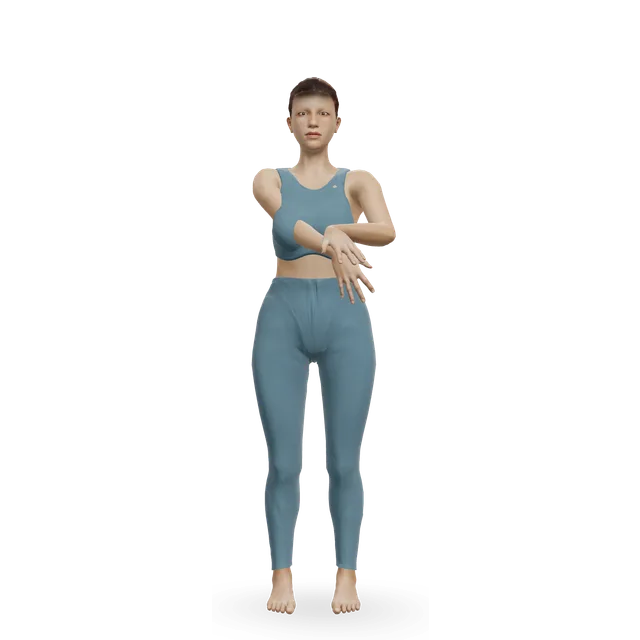 3D demoSide wrist pull (cross-body upper-back stretch)Beginner · No equipment
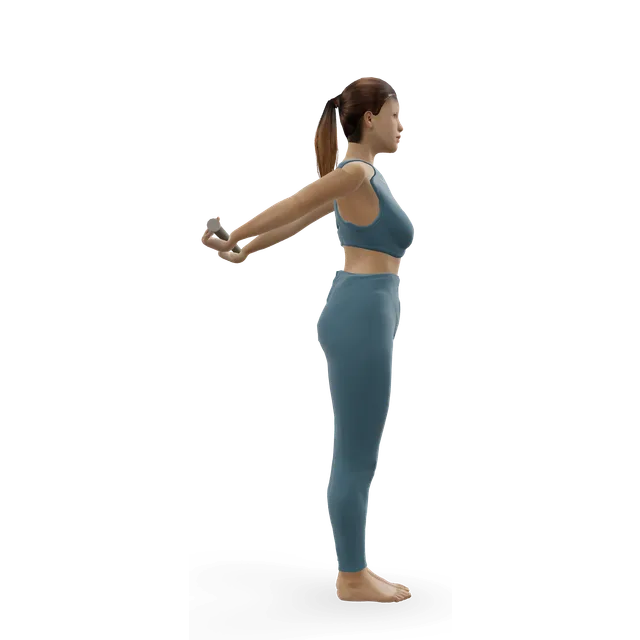 3D demoBehind-the-back stick shoulder stretchBeginner · Other / check instructions
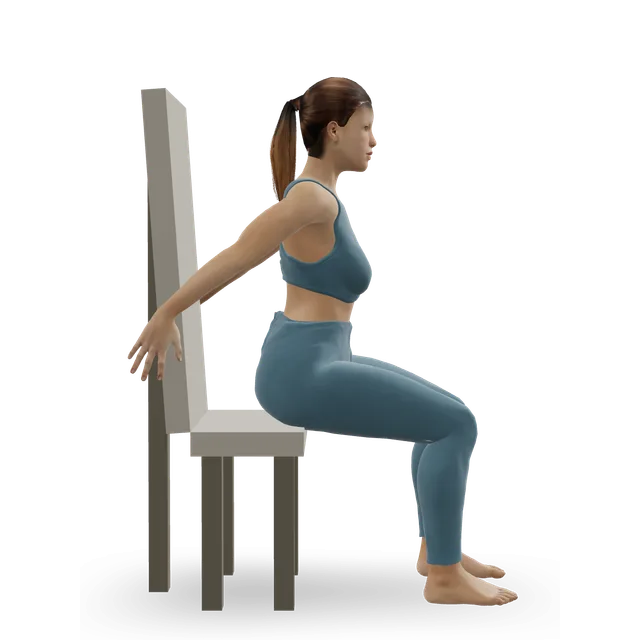 3D demoChair chest and shoulder stretchBeginner · A bench or box
 3D demoShoulder CARs (controlled articular rotations)Beginner · No equipment
 3D demoShoulder rollsBeginner · No equipment
 3D demoUpward stretch, hands pressing backBeginner · No equipment
Browse more
Questions people ask
What muscles does the Cross-body shoulder stretch work?
Mainly the shoulders, with help from the back.
What equipment do I need for the Cross-body shoulder stretch?
No equipment: your body weight and a little floor space.
Is the Cross-body shoulder stretch good for beginners?
It is graded beginner, so it suits most people starting out. When it feels easy, try the Sleeper stretch.
How do I make the Cross-body shoulder stretch harder?
Progress to the Sleeper stretch. Follow that guide’s technique and any stated timing.