Set it up in a minute
Strap your feet in so the strap crosses the ball of each foot, set the damper on the side of the fan to 3 to 5, and start rowing to wake the monitor. Show pace and stroke rate on the screen.
Training guide
On a rowing machine, strap your feet so the strap crosses the ball of each foot, set the damper to 3 to 5, and row legs, then body, then arms, then back in reverse: arms, body, legs. Take about twice as long coming forward as driving back, at 24 to 30 strokes a minute. Start with 3 rounds of 4 to 5 minutes at a pace you can talk at.
The damper isn't a difficulty dial: you make the workout harder by pulling harder, and a low setting is kinder to your back. Rowing is mostly a leg exercise, mostly cardio and low impact. This guide covers the set-up and the stroke step by step on the 3D figure, the monitor, how hard and how long to row, what it works, and how to look after your lower back.
Strap your feet in so the strap crosses the ball of each foot, set the damper on the side of the fan to 3 to 5, and start rowing to wake the monitor. Show pace and stroke rate on the screen.
Push with your legs first, then swing your back through upright from the hips, then pull the handle to just below your ribs; come back in reverse, taking about twice as long. The legs and trunk produce most of the power, so it's mainly a leg exercise, not an arm one.
It changes how each stroke feels, like gears on a bike: you set the intensity by how hard you pull, and the monitor measures your real work at any setting. In club rowers, two quite different drag settings gave the same heart rate and oxygen use, and British Rowing says a low setting puts less force through the spine.
Start with 3 rounds of 4 to 5 minutes at a pace you can talk at (our move page's editorial dose) and build towards 20, then 30 minutes, three times a week. Easy rowing under about 100 watts is moderate exercise; above that it's vigorous. Keep single sessions under about 30 minutes while you learn.
Tiredness rounds the lower back at the start of the stroke, more on the machine than on the water, and a previous episode of back pain is the strongest predictor of the next. Hinge from your hips, keep the damper low, build up gradually and ease off when your posture goes.
British Rowing calls indoor rowing low risk but not risk free: stop if it hurts, and don't push others to overdo it. It reported three indoor rowers in five months whose hearts went into dangerous rhythms; one died.
A seat slides along a rail towards a flywheel; your feet are strapped into foot stretchers; a handle on a chain spins the flywheel. On an air rower, the kind most gyms have, a damper lever numbered 1 to 10 controls how much air flows into the fan. On a water rower the resistance comes from water in a tank. The monitor shows time, distance, pace, watts, calories and stroke rate.
Most gym machines are fixed; some move on slides or have a floating head. A review found too little evidence to recommend one type over the other to avoid back pain.
Source 12
The maker says the stroke uses every large muscle group: the legs start the drive, the back and hips swing the body, and the shoulders, arms and forearms finish it, with the abdominals holding the trunk. In 11 trained rowers, an all-out 6-minute row worked the calves, front of the thighs, lats and biceps harder than a steady one. The legs and trunk produce most of the power.
Even a flat-out 2,000 m row was about 83% aerobic in 18 trained junior rowers. Steady rowing under about 100 watts counts as moderate activity; above that it's vigorous.
British Rowing: rowing is whole-body, non-weight bearing and low impact, but it loads the spine in a seated position, many times a minute, and the risk is highest early in the drive, when the load is heaviest. Good posture and control of the pelvis and spine protect it.
Source 8
Leg length and flexibility change where your feet sit in the straps, but moving the foot stretcher changed the stroke far less than stroke rate did. The monitor's calories assume a 79.5 kg person. If your knees don't bend fully, Concept2 notes you can use only part of the slide.
Concept2's guides to getting comfortable, the damper, the monitor and common errors.
Loading the 3D figure…
The movement on the figure: Indoor rowing (rowing machine)
Steps 1 to 6 follow our move page and Concept2's technique guide; step 7 follows Concept2's guide to rowing harder. Don't pull hard until the order feels natural.
Loading the 3D figure…
The movement on the figure: Indoor rowing (rowing machine)
Row 10 strokes with your arms only, 10 with your arms and body, 10 at half slide, then full strokes, as our beginner rowing workout does. Concept2's arms-and-body drill teaches the order, and pausing mid-stroke checks it.
Source 22
Concept2's rhythm drill finishes the drive on a count of 1 and recovers on 2 to 4. Rowing at a slower stroke rate is a way to practise the timing of the trunk; higher rates raised power in high-level rowers.
Concept2 advises not pulling too hard until you're comfortable with the basics, and having someone watch you row.
Source 4
The maker says the damper "affects how it feels but does not directly affect the resistance": higher settings let more air in, so the flywheel slows faster and each stroke feels heavier and slower, like a slow boat; lower settings feel like a sleek racing boat. You set the intensity by how hard you pull. Start at 3 to 5, and resist setting it too high, which can tire your muscles before your heart and lungs get the full benefit.
Source 2
The monitor measures how fast the flywheel slows between strokes, the drag factor, and uses it to calculate your work at any setting. A new machine reads about 90 or less at setting 1 and 200 or more at 10. The same number can feel different on another machine, so match the drag factor rather than the lever.
In 14 club rowers, drag factors of 100 and 150 gave the same oxygen use, heart rate and lactate at every steady stage of a step test. In 12 others, the lower setting brought a faster stroke rate and higher heart rate, and the higher setting slightly better economy.
In 30 young competitive rowers, maximal sprint power rose with drag factor and stroke rate. That matters for racing, not for building fitness.
Source 26
British Rowing advises keeping the drag low for all rowers, especially beginners and young people: a low drag "significantly decreases the force across the spine". On a water rower, keep the water level low.
Source 8
The time it would take to row 500 m at your current speed: a smaller number is faster, so 2:00 is quicker than 2:08. Compare it with your own past rows.
Your power, which rises steeply as your pace falls (watts = 2.8 ÷ (pace in seconds per metre) cubed). Worked from that formula: 2:30 per 500 m is about 104 watts, 2:15 about 142, 2:00 about 202 and 1:50 about 263.
Source 27
Putting the formula beside the Compendium of Physical Activities (our arithmetic): slower than about 2:32 per 500 m (under 100 watts) is moderate; about 2:32 to 2:01 (100 to 199 watts) is vigorous; about 2:00 or faster is very vigorous. Your breathing is the simpler guide.
An estimate for a 79.5 kg (175 lb) person, so a lighter person burns fewer and a heavier person more at the same pace. Using Concept2's correction, 600 calories an hour on the monitor is about 508 for a 55 kg person and about 678 for a 100 kg person. As a rough guide, 30 minutes of easy rowing is about 150 kcal at 60 kg and 200 kcal at 80 kg.
Stroke rate, shown top right, is strokes per minute: 24 to 30 for most workouts. Drag factor is on a menu (More Options, then Display Drag Factor) and appears after a few seconds of rowing.
On a motorised test rig, the monitor read power within 0.2 to 1.9% once the flywheel was spinning, but under-read the first five strokes by 10 to 70%, and uneven rowing made it less accurate. Judge a piece after it settles, and row evenly.
Source 28
Drive with the legs, then the back, then the arms, and reverse it on the way forward: the maker's technique, which British Rowing's safety guidance points to and our rowing guide teaches.
An expert paper on rowing technique says the legs and trunk produce most of the power in the stroke. Across 11 studies of rowers, leg press or squat strength (and bench pull strength) went closely with faster times on the machine. These are links, not proof that one causes the other.
In 11 trained rowers, an all-out 6-minute row worked the calf, front of the thigh, lats and biceps harder than a steady 6 minutes; the authors named the leg and shoulder extensors and the arm flexors as the most involved.
Source 17
In 18 trained junior rowers, 17.3% of the energy for an all-out 2,000 m row came from anaerobic sources, so about 83% was aerobic.
Source 18
The Compendium of Physical Activities rates the rowing machine in METs (multiples of the energy you use sitting still): 5.0 under 100 watts (moderate), 7.5 at 100 to 149, 11.0 at 150 to 199 and 14.0 at 200 watts or more. One MET is defined as 1 kcal per kg of body weight per hour.
Source 9
In post-menopausal women aged about 66, 30 minutes three times a week at 60 to 80% of peak heart rate for 10 weeks raised peak oxygen uptake from 18.1 to 21.8 mL/kg/min; 13 of the 22 who started finished. In 38 older adults with mild knee osteoarthritis, 12 weeks of computer-guided rowing improved symptoms, hip and knee strength and reach more than usual resistance exercise.
In 40 moderately trained men (running), four 4-minute hard intervals raised VO2 max (the most oxygen your body can use) by 7.2%, more than steady training of the same total work. Our HIIT guide covers intervals on any machine.
Source 31
Of 1,632 former college rowers, 526 developed back pain while rowing at college; machine sessions over 30 minutes were among the linked factors (an association, not proof of cause). Across 22 studies, tiredness increased lower-back bending at the start of the stroke, more on the machine. Across 10 studies, a previous episode was the one consistent risk factor (about 2.7 times the odds), while age, sex, body size and training volume weren't. Rowers with back pain used their back muscles more in a maximal 500 m.
An international consensus advises education on risk factors, technique and training load, and, if treatment is needed, cutting back the activity that aggravates it early, controlling pain and exercise therapy, then a graded return.
Source 33
In 6 elite rowers, a fixed machine gave 53 mm longer strokes and about 12% more force per stroke than a floating one, which the authors suggest might matter for injuries; that's untested. A review found too little evidence to choose between them.
In 11 college rowers, moving the foot stretcher changed only the ankle and hip angles, much less than stroke rate did. Set your feet for comfort.
British Rowing calls indoor rowing usually low risk but not risk free, warns about overexertion and poor technique, and asks everyone to stop if it hurts and not to push others too hard. Its 2020 alert reported three indoor rowers with dangerous heart rhythms in five months; all needed CPR and a defibrillator, and one died.
Adults need at least 150 minutes of moderate activity a week or 75 minutes of vigorous activity, plus strength work on 2 days, and rowing counts. Moderate means you can talk but not sing; vigorous means you can't say more than a few words without pausing. Our zone 2 guide covers the fuller weekly range.
Source 35
3 rounds of 4 to 5 minutes at a pace you can talk at, 1 minute of easy rowing between, three times a week (our move page's editorial dose and our beginner rowing workout). Keep single sessions under about 30 minutes while the stroke is new: in former college rowers, longer machine sessions were linked with back pain.
Source 11
After 2 to 3 weeks, build towards 20 and then 30 minutes of steady rowing, as our beginner workout suggests. In women aged about 66, 30 minutes three times a week raised fitness in 10 weeks.
Source 10
Once the stroke is automatic, add one or two harder sessions a week with easier days between. Concept2's first step is short pushes: 20 seconds a little harder, about 5 seconds per 500 m faster than your steady pace, then 1 minute 40 easy, as in our rowing machine interval workout. Then try 1 minute hard and 2 easy, or the Norwegian 4x4.
British Rowing's guidance suggests a heart rate strap linked to the monitor, keeping split times even, not chasing personal bests, keeping most rows aerobic, stopping at once if it becomes painful, and rowing when someone else is in the house.
Source 14
The legs and trunk produce most of the power, and leg strength goes with faster times. The arms finish the stroke.
The biceps and back work at the finish, but against a light load many times. The maker says a higher damper makes rowing more of a strength workout, but for building muscle, strength training does more (our view).
Legs, then body, then arms. The arms-and-body drill teaches the order.
Source 36
Reaching too far rounds your back and weakens the leg drive. Set your body position early and hinge at the hips; tiredness makes this worse.
Stop the slide with your shins about vertical, never past it.
Lean back only slightly, with your trunk muscles holding you.
Source 36
Your hands clear your knees, then your knees bend.
Source 36
Take about twice as long coming forward as driving back.
Source 5
Fingers round the handle, thumbs underneath, wrists flat and relaxed.
Source 36
Set it to 3 to 5 and pull harder instead.
Source 2
Rowers without back pain kept their pelvis neutral or tilted forward at the start of the stroke. Tight hips can make the lower back round instead: the catch needs about 130° of hip bend, so our rowing workouts finish with hip flexor and hamstring stretches.
A low drag factor puts less force through the spine, and long machine sessions were linked with back pain in college rowers.
Tiredness rounds the lower back at the catch, so slow down or stop the piece when it happens.
Source 12
A previous episode is the strongest predictor of the next, so build up more gradually (our suggestion).
Source 13
The rowers' consensus advises cutting back the rowing that aggravates it early, controlling pain and exercise therapy, then a graded return. The NHS says stay active and stop any exercise that makes the pain worse. Check the warning signs below first. No trial has tested rowing as a treatment for back pain in people who aren't rowers.
Indoor rowing at its move page's 3 rounds of 4 to 5 minutes to start (editorial); the leg press, 3 sets of 8 to 12 (our machine leg workout); dumbbell Romanian deadlifts, 3 sets of 8 to 10, hip-hinge practice, 8 reps, side planks, 2 holds of 20 to 40 seconds each side, and bird dogs, 5 each side (our strength workout for rowers); seated cable rows, 3 sets of 8 to 12 (our back and biceps workout); the hip flexor and hamstring stretches for 30 seconds each side and cat-cow for 6 slow waves after rowing (our beginner rowing workout).
 3D demoIndoor rowing (rowing machine)Beginner · Cardio machine
 3D demoLeg pressBeginner · Strength machine
 3D demoDumbbell Romanian deadliftIntermediate · A dumbbell
 3D demoHip-hinge practiceBeginner · No equipment
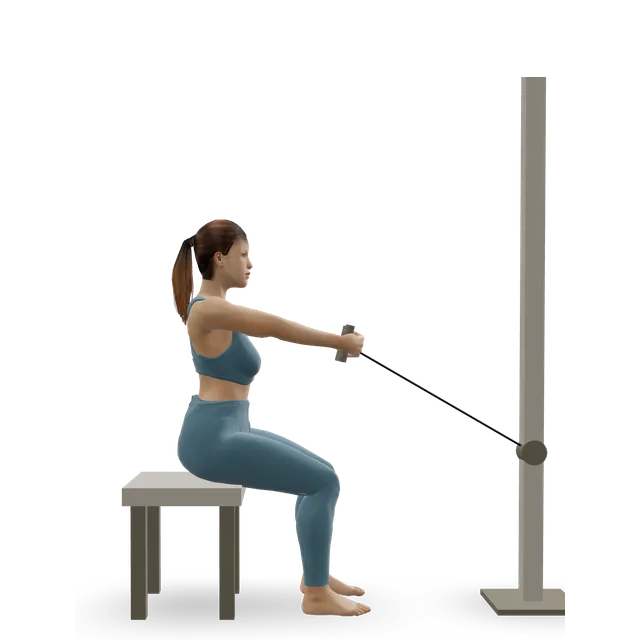 3D demoSeated cable rowBeginner · A cable machine
 3D demoSide plankIntermediate · No equipment
 3D demoBird dogBeginner · No equipment
 3D demoHalf-kneeling hip flexor stretchBeginner · No equipment
 3D demoSupine hamstring stretch with a strapBeginner · No equipment
 3D demoCat-cowBeginner · No equipment
If you have a heart condition, or chest pain, faintness or unusual breathlessness when active, see your GP before hard rowing. If your blood pressure is 140/90 or higher and not yet controlled, keep to moderate effort until it is.
Rowing suits older adults: start gently, build gradually, and follow British Rowing's tips above for harder rows.
Use only as much of the slide as is comfortable; Concept2 notes you can even fix the seat. In older adults with mild knee osteoarthritis, rowing improved symptoms and leg strength.
The UK consensus advises avoiding postures with a lot of spinal bending, so hinge at your hips and keep your back long; ask a physiotherapist if you've had a spinal fracture. Rowing isn't impact exercise, so it doesn't replace the impact work our osteoporosis guide describes.
If you already row, you can usually carry on at a comfortable effort; it isn't the time to start new vigorous training. Stop if you feel faint, too hot or unwell. As your bump grows, a shorter slide may feel easier (our suggestion).
Start with the beginner rowing workout; the rowing machine interval workout is your first step into harder rowing; the cardio intervals and Norwegian 4x4 workouts work on a rower too; the cardio machines tour tries the rower beside the others; the strength workout for rowers trains the legs, hinge and trunk.
A 25-minute beginner rowing machine workout: set the damper, learn the stroke one part at a time, row three easy rounds of 4 to 5 minutes, then stretch.
25 minBeginner4 movesCardio machineA 25-minute first interval session on the rowing machine: a warm-up with two accelerations, then 20 seconds hard and 1 minute 40 easy, 6 rounds building to 8.
25 minBeginner3 movesCardio machineA 25-minute interval session on a bike or rower: one-minute hard efforts with two minutes easy, building from 4 to 8 rounds.
25 minIntermediate1 movesCardio machineThe Norwegian 4x4, a well-studied interval session for raising VO2 max: four 4-minute hard efforts with 3 easy minutes between, on a bike, rower or treadmill.
40 minIntermediate3 movesCardio machine, A wallA first tour of the gym's cardio machines: a few minutes each on the bike, treadmill, cross-trainer and rower, set up safely, at a talk-but-not-sing pace.
40 minBeginner7 movesCardio machine, A wallA 50-minute strength session for rowers: back squats, Romanian deadlifts, chest-supported rows, push-ups, side planks, bird dogs and Pallof presses.
50 minIntermediate15 movesCardio machine, A bandThe beginner gym plan tries the rowing machine on its cardio day; the others have an interval day that works on a rower.
A first gym plan for beginners: 3 days a week, starting on the machines, adding free weights and cardio, with what changes by week 12 and what comes next.
3 training days50 minBeginner4 days a weekA 4-day upper/lower split: two upper body and two lower body gym days, each muscle trained twice a week, with sets, reps and progression.
4 training days50 minIntermediate7 days a weekA full week that mixes intensities: three strength days, two cardio days, a mobility day and an easy day, never seven hard days.
3 training days45 minBeginner3 days a weekA 12-week workout plan for men over 50: three strength days with power and balance work, cardio and recovery, at the gym or at home, with a 4-day option.
3 training days45 minBeginnerIf you get chest pain or pressure, feel faint or dizzy, are unusually breathless, or your heart races or beats irregularly while rowing, stop. The American Heart Association says these need immediate medical evaluation, and British Rowing says if something makes you feel unwell, stop doing it.
For chest pain that feels tight or like squeezing, or spreads to your arms, neck or jaw; someone who faints while exercising; palpitations that don't go away, or come with chest pain, breathlessness or feeling faint; severe difficulty breathing; or a headache that starts suddenly and is extremely painful. Don't drive yourself to A&E.
Pain, tingling, weakness or numbness in both legs; loss of feeling around the genitals or bottom; new problems peeing or controlling your bladder or bowels; or changes in sensation or function during sex. These are signs of cauda equina syndrome, which needs treating in hospital urgently, as our back pain guide says. Back pain with chest pain, or after a serious accident, is a 999 call too.
Source 37
Ask for an urgent GP appointment or call NHS 111 for back pain with a high temperature or feeling hot, cold or shivery, or severe pain that started suddenly or is getting worse quickly. See a GP if it hasn't improved after a few weeks of looking after it yourself, stops your daily activities or is worse at night.
Source 37
With no injury, see a GP: it may be a rib stress fracture, as our rib injury guide explains.
See a GP after any faint, and for dizziness that won't go away or keeps coming back.
The damper changes the feel, not directly the work: the monitor measures your effort at any setting, and two quite different drag settings gave the same heart rate and oxygen use in club rowers. High settings tire your muscles first, and a low setting is easier on your spine.
The stroke starts with the legs, the legs and trunk produce most of the power, and leg strength goes with faster times. The arms finish the stroke.
In competitive rowers, back pain was linked with long machine sessions, tiredness rounding the back and, most of all, a previous episode. British Rowing calls indoor rowing low risk. Technique, a low damper and a gradual build-up matter more than avoiding the machine.
It's an estimate for a 79.5 kg person, and the maker gives a correction for your weight.
Source 20
Concept2 says working harder doesn't necessarily mean a faster stroke rate: keep 24 to 30 strokes a minute and push harder with your legs.
Source 5
No exercise takes fat off one place. Rowing helps through the energy it uses, like any cardio.
Three to five. The damper changes how each stroke feels, like gears on a bike; you make the workout harder by pulling harder. A low setting also puts less force through your spine.
Start with 3 rounds of 4 to 5 minutes at a pace you can talk at, three times a week, and build towards 20 and then 30 minutes over a few weeks. Keep single sessions under about 30 minutes while the stroke is new.
About 24 to 30 strokes a minute for most workouts. Working harder means pushing harder with your legs, not rushing up the slide, and the way forward should take about twice as long as the drive.
It's your pace: the time it would take to row 500 m at your current speed, so a smaller number is faster. There's no single good split for everyone, so compare it with your own past rows.
They're an estimate for a 79.5 kg person, so the monitor under-counts for heavier people and over-counts for lighter ones; Concept2's calculator corrects it. As a rough guide, 30 minutes of easy rowing is about 150 kcal for a 60 kg person and 200 kcal at 80 kg.
Mostly your legs and trunk, which produce most of the power; leg strength goes with faster times. Your back swings the body and your arms finish the stroke.
Not for most people: British Rowing calls indoor rowing low risk. In competitive rowers, back pain was linked with long machine sessions, tiredness rounding the back and a previous episode, so keep the damper low, hinge from your hips and build up gradually.
All count towards your weekly activity, and the best one is the one you'll keep using. Rowing is low impact and works your legs, back and arms, which suits people who find running hard on their joints.
Easy rowing most days is usually fine once you've built up to it and your back feels good, but that's our suggestion rather than a tested rule. Keep hard interval sessions to once or twice a week with easier days between, and add time gradually.
It's a good way to use energy without impact, like any cardio, and it counts towards your weekly activity. It won't take fat off one area, and the monitor's calories are estimates.
If you already row, you can usually carry on at a comfortable effort; it isn't the time to start new vigorous training. Stop if you feel unwell, faint or too hot, and a shorter slide may feel easier as your bump grows.
Often, because it's low impact and you can use part of the slide to limit how far your knees bend. In older adults with mild knee osteoarthritis, 12 weeks of rowing improved symptoms and leg strength more than usual exercise.
Exercise education, not a personal prescription, and clinical review of these guides is pending. Check with a GP before starting hard training if you have a heart condition, chest pain, dizziness or breathlessness when active, and stop for sharp or increasing pain. Health disclaimer.






