Two joints, four ligaments, two menisci
The thigh bone meets the shin bone in the main joint and the kneecap in the front one. Two cruciate ligaments cross inside the joint, two collateral ligaments brace the sides, and two menisci spread the load.
Joint guide
The knee is two joints in one: the thigh bone rolling and gliding on the shin bone, and the kneecap sliding in a groove at the front. Four main ligaments hold it together, two C-shaped menisci spread the load, and the thigh muscles do much of the steadying. It bends to about 140 degrees and takes about three and a half times your body weight going downstairs.
Knee noises are common and usually harmless, and squats suit healthy knees well. Knees travelling past your toes is normal, though the evidence on it comes from small lab studies. Strong thigh muscles are the best-supported way to look after your knees: weak ones predicted knee arthritis in long-term studies.
This guide explains how the knee is built and moves, what the evidence says about cracking, squats and knees over toes, and the strength moves to do, from first steps to full range. If your knee hurts, is swollen or gives way, start with our knee pain guides.
The thigh bone meets the shin bone in the main joint and the kneecap in the front one. Two cruciate ligaments cross inside the joint, two collateral ligaments brace the sides, and two menisci spread the load.
Healthy adults bend the knee about 133 to 142 degrees. Walking needs less than 90, and stairs and chairs 90 to 120.
About 4 in 10 people have noisy knees, including about a third of people whose knees don't hurt. The NHS says painless clicking is normal.
Reviews of the biomechanics found no evidence that squats harm healthy knees, a body-weight knee bend loads the knee about as much as walking, and knee-loading exercise didn't harm cartilage in trials.
Letting the knees travel forward probably works the thigh muscles harder, and blocking it shifted load to the hips and back. The evidence comes from small lab studies.
Weak thigh muscles predicted knee arthritis, and injury-prevention warm-ups halve injuries to the anterior cruciate ligament (ACL) in sport.
The knee is the largest joint in the body. In the tibiofemoral joint, the two rounded ends of the thigh bone (femur) sit on the flatter top of the shin bone (tibia). In the patellofemoral joint, the kneecap (patella) glides in a groove at the front of the femur. The fibula, the thin bone on the outside of the shin, isn't part of the knee joint.
The kneecap, the largest sesamoid bone in the body, sits inside the quadriceps tendon. It increases the thigh muscles' leverage and shields the joint. The knee is mainly a hinge, with small amounts of rotation and gliding.
Two cross inside the joint and two brace its sides.
Two C-shaped wedges of fibrocartilage sit on top of the shin bone, about 65% to 70% water. The inner (medial) one covers about 60% of its side and is tethered to the MCL, so it moves less and tears more often; the outer (lateral) one is almost circular, covers about 80% and moves more.
They carry about half the load on the inner side of the knee and 70% on the outer side, absorb shock and steady the joint. Only the outer 10% to 30% has a blood supply; the rest is fed by the joint fluid.
The quadriceps tendon and the patellar tendon run over the front, and the capsule and ligaments wrap the back. At least 12 bursae, small fluid-filled cushions, protect the knee, including in front of and below the kneecap and on the inner side just below the joint. The quadriceps are the knee's main muscular stabilisers.
The quadriceps straighten the knee; the hamstrings, gastrocnemius, sartorius and gracilis (one of the adductors) bend it; the popliteus unlocks the straight knee so it can bend; and the tensor fasciae latae supports the outer knee through the IT band.
In the CDC (US Centers for Disease Control and Prevention) study of 674 healthy people, adults bent the knee about 133 to 142 degrees lying on their backs. Straightening goes to zero, and on average about 2 degrees past it; a few people went 17 to 19 degrees past straight.
The shin can turn a little on the thigh, more easily with the knee bent, and the soft tissues limit it. As a fully straight knee starts to bend, the popliteus muscle unlocks it with a small twist.
Source 1
In 20 healthy adults averaging 67, walking and slopes needed less than 90 degrees of bend, stairs and chairs 90 to 120, and getting out of a bath about 135. Squatting with the heels up needed about 157 degrees.
Knee bend was about 5 degrees smaller at 45 to 69 than at 20 to 44 in the CDC data, and a US national survey found most knee movements only 3 to 5 degrees smaller at 65 to 74. A big loss of knee movement isn't just age and is worth getting checked.
A few people's knees bend well back past straight. If your joints are very flexible and painful, our hypermobility guide covers the strength work that helps.
Source 24
A 2025 review of 103 studies (36,439 people) estimated knee crepitus, the clicking, cracking or grinding you hear or feel, in 41% of people overall, 36% of people whose knees don't hurt and 81% of knees with osteoarthritis, all at very low certainty. In 214 runners checked by a clinician, two-thirds of those who'd never had knee surgery had it.
The gas-bubble explanation comes from MRI (magnetic resonance imaging) films of finger joints, where a crack came with a gas cavity forming in the joint fluid, not from studies of knees. In the knee, noises may also come from soft tissue moving over bone, and grinding can come with cartilage changes. These explanations are inference for the knee.
The NHS says painless clicking is normal. It lists a knee that locks, gives way or clicks painfully as a reason to get advice.
Source 7
Crepitus was strongly linked with arthritis on X-ray (about 3.8 times the odds), with low to very low certainty. In 888 women aged 45 to 60 without arthritis, it went with early changes behind the kneecap on MRI, not in the main joint.
In 3,495 middle-aged and older adults at risk of knee arthritis, more frequent crepitus predicted later painful arthritis, up to about 3 times the odds for knees that were always noisy. But more than 75% of the new cases were in people who already had arthritis on X-ray without symptoms.
In 112 young adults a year after ACL reconstruction, crepitus went with cartilage damage behind the kneecap but didn't predict it getting worse over 5 years.
In 4,566 people from the same large study, crepitus didn't predict who had a knee replacement over 3 years.
Source 32
Painless cracking needs no treatment. If your knees crunch and you're over about 45, treat it as a reason to keep your thighs strong, not to stop using your knees. Get advice if the noise comes with pain, swelling, locking or the knee giving way.
A review of more than 164 articles judged worries that deep squats damage cartilage or cause arthritis unfounded, and warned that very heavy half and quarter squats might be worse for the knee in the long run than deep squats with sensible loads. Another review called the parallel squat not harmful to healthy knees, but preferred it to deep squats for athletes. The reviews disagree on depth, and there are no long-term trials.
In 5 people with instrumented knee replacements, a body-weight knee bend loaded the knee about 2.5 times body weight, against 2.6 for walking and 3.2 to 3.5 for stairs.
Source 9
In 9 trials of people at risk of, or with, knee arthritis, knee-loading exercise wasn't harmful to cartilage, though the evidence was low quality. In healthy animals, moderate daily exercise had no effect or a good effect on cartilage; only very high doses harmed it.
Across 44 trials, exercise reduced knee arthritis pain by about 12 points out of 100 and improved function by about 10. NICE (the National Institute for Health and Care Excellence) makes exercise a core treatment.
Stress behind the kneecap rises as you bend from straight towards 90 degrees, so shallow to medium squats suit a sore kneecap at first. Deeper than that, the tendon wraps onto the thigh bone and the contact area grows, which lowers the stress.
Physically demanding jobs were linked with knee arthritis across 80 studies, and the odds rose by about 26% for every 5,000 hours of kneeling or squatting at work. That's about two and a half years of full-time work spent kneeling or squatting, not a few sets a week.
Squats are one of the best knee-strengthening exercises. Choose a depth you can control without pain, build load gradually, and squat shallower for a while if the front of your knee hurts.
In 7 weight-trained men squatting to parallel with a bar equal to their body weight, blocking the knees from passing the toes cut knee torque by about a fifth, but raised hip torque about tenfold and made the trunk lean further forward. In 30 people, restricted squats changed how the trunk moved and curved, and the authors advise against strict coaching to keep the knees back. These are small lab studies of one exercise.
Moving the shin forward increases the bending force at the knee and the work the quadriceps must do; leaning the trunk forward does the opposite and loads the hips and back. Raising the heels lets the shin travel further. This part reasons from mechanics rather than from measured outcomes such as injuries.
Source 12
Knees travelling past the toes is normal, and you need it for deep squats and stairs. It probably works the thigh muscles harder, which is the point when you want stronger knees. If the front of your knee is sore, limit how far it travels forward for now, then build it back.
In 5 cohort studies (5,707 people), people with weaker knee extensors (the quadriceps) had about 1.65 times the odds of developing knee arthritis. That's an association, but it fits the trials showing that strengthening eases knee arthritis.
Source 13
Combining 8 meta-analyses, injury-prevention programmes cut all ACL injuries by about half in athletes, and non-contact ACL injuries in women by about two-thirds. There wasn't enough data on men alone.
Source 14
In 991 people aged 50 to 90, a torn or damaged meniscus showed on MRI in 19% of women in their 50s and up to 56% of men aged 70 to 90, and 61% of those with a tear had had no knee pain, aching or stiffness in the past month.
Source 41
Recreational runners had less knee or hip arthritis than people who didn't run, in 17 observational studies. Our joints hub covers running and knees in more detail.
Source 42
For people with osteoarthritis who are living with overweight or obesity, NICE says weight loss will improve quality of life and physical function and reduce pain, and that any amount helps, though losing 10% of body weight is likely to be better than 5%.
Source 36
Our editorial starting point: 2 or 3 days a week, with 2 to 3 sets of 8 to 12 of a squat pattern (sit-to-stands, then goblet squats), a single-leg move such as step-ups, and a hamstring move, adding load before adding sets. Doses come from each move's page and our workouts.
Add range gradually: split squats with the front knee travelling forward, then heel-elevated squats. If the kneecap complains into the next day, go shallower or lighter next time.
Our knee pain guide uses the pain-monitoring rule from knee trials: rate pain from 0 to 10 during and after exercise, aim for 0 to 3, and treat up to 5 as acceptable if the knee is back to its usual level by the next morning. If it isn't, drop back a step, not to nothing.
If your sport involves jumping, cutting or landing, an injury-prevention warm-up such as our knee control warm-up is the best-supported way to protect your ACL.
Source 14
Walking, cycling and recreational running all suit healthy knees. With knee arthritis, NICE pairs strengthening with general aerobic fitness.
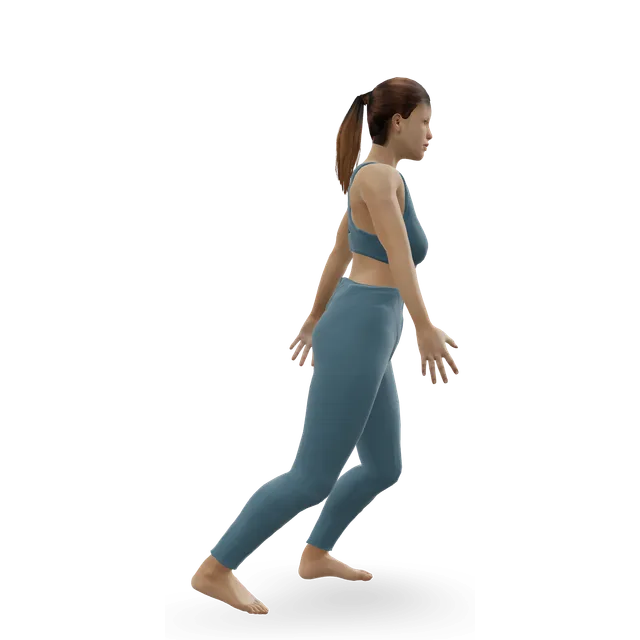
Gentle range work for warm-ups and stiff knees. Starting doses from each move's page and our workouts: 10 slow heel slides each side, 5 to 10 knee circles each way, and 30-second quad and hamstring stretches.
 3D demoSupine heel slideBeginner · No equipment
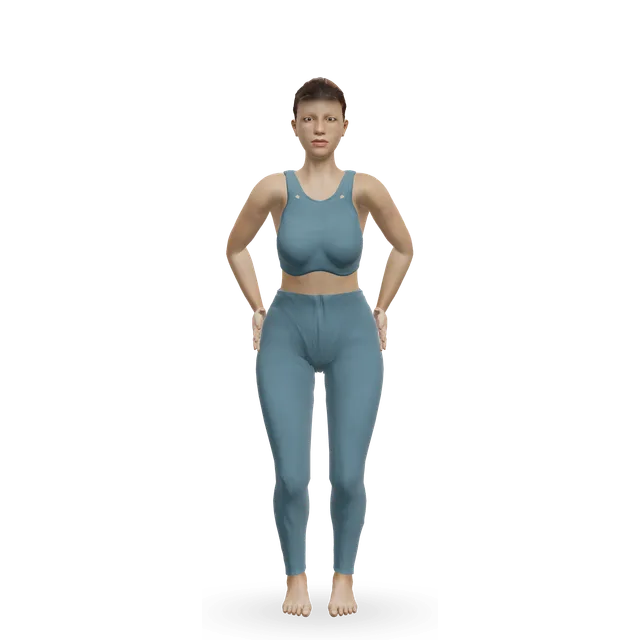 3D demoKnee circlesBeginner · No equipment
 3D demoStanding Quad StretchBeginner · A wall
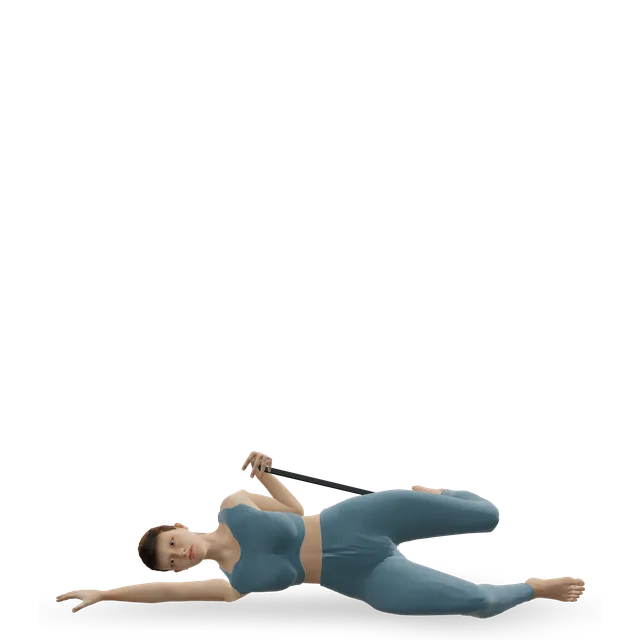 3D demoSide-lying quad stretchBeginner · No equipment
 3D demoSupine hamstring stretch with a strapBeginner · No equipment
 3D demoStationary cyclingBeginner · Cardio machine
 3D demoKnee-to-wall ankle rockBeginner · A wall
Start near the top of the list and move down as moves get easy, 2 or 3 days a week, 2 to 3 sets of 8 to 12 (our editorial starting point; doses on each move's page). Build depth and forward knee travel over weeks; if the kneecap complains into the next day, go shallower or lighter.
 3D demoQuad set (static quads)Beginner · No equipment
 3D demoStraight-leg raiseBeginner · No equipment
 3D demoSeated knee extension (chair)Beginner · A bench or box + Something with weight
 3D demoSit to stand from a chairBeginner · A bench or box
 3D demoWall sitBeginner · A wall
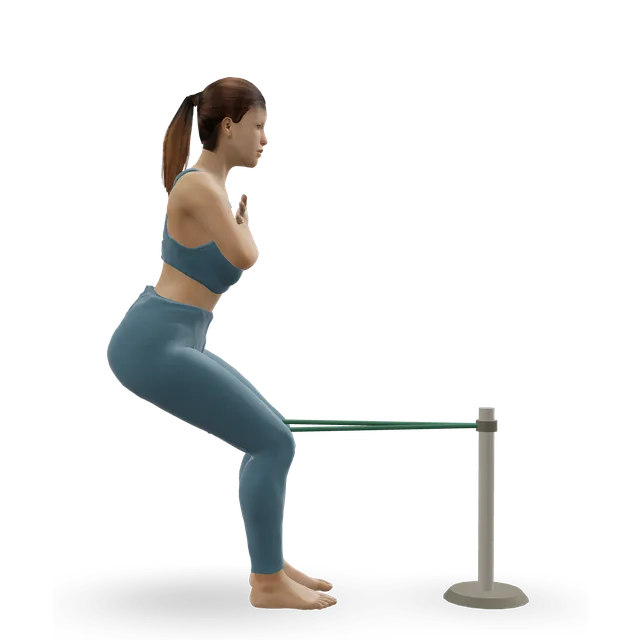 3D demoSpanish squat (band squat hold)Intermediate · A band + An anchor point
 3D demoBodyweight squatBeginner · No equipment
 3D demoDumbbell goblet squatIntermediate · A dumbbell
 3D demoStep-upBeginner · A step
 3D demoSplit squatIntermediate · No equipment
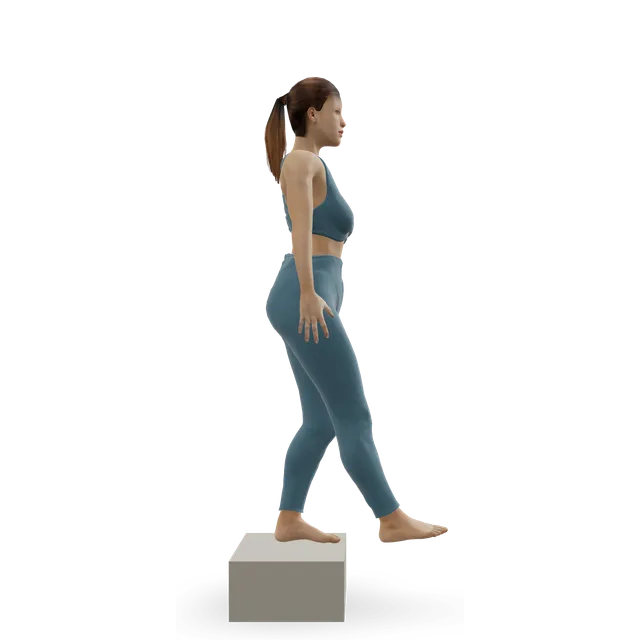 3D demoPatrick step-downIntermediate · A step
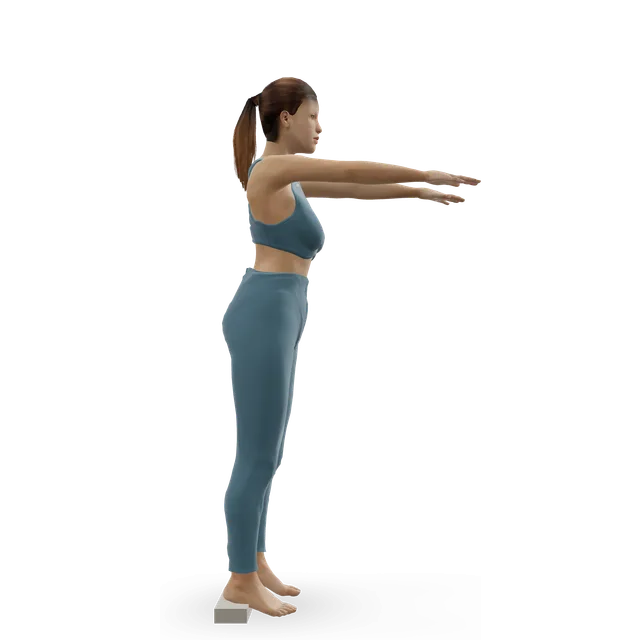 3D demoHeel-elevated deep squat (slant board squat)Intermediate · A step
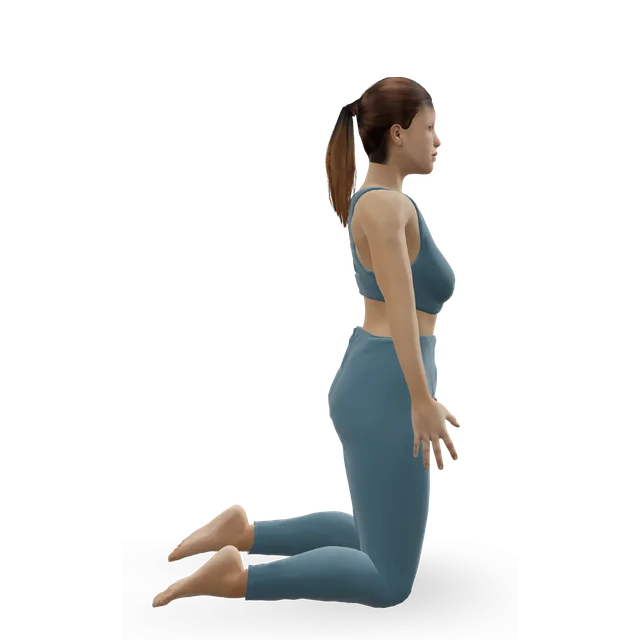 3D demoReverse NordicAdvanced · No equipment
 3D demoLeg pressBeginner · Strength machine
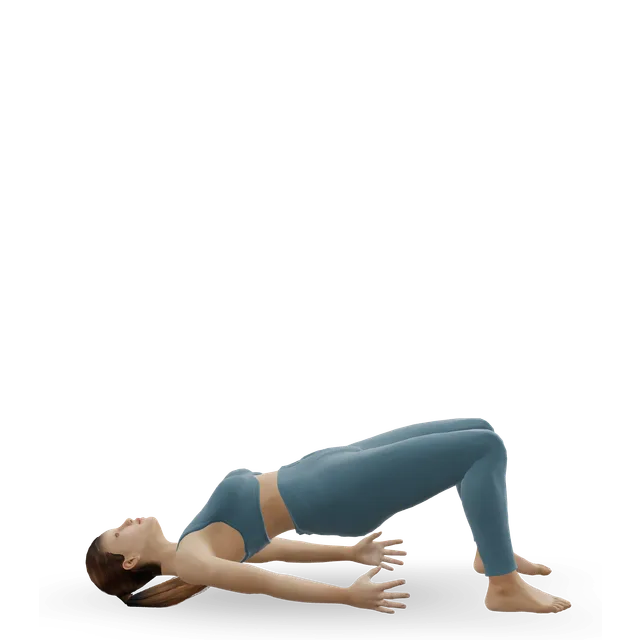 3D demoSlider hamstring curlIntermediate · No equipment
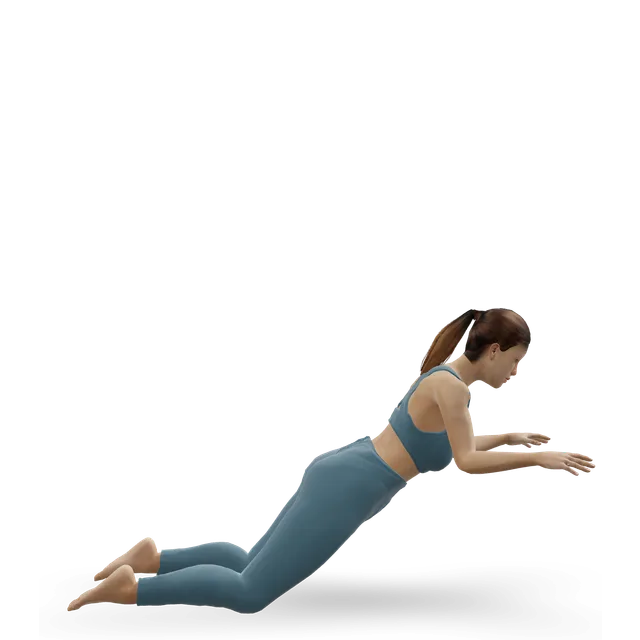 3D demoNordic curlAdvanced · An anchor point
 3D demoTibialis raiseBeginner · No equipment
 3D demoSingle-leg standBeginner · A wall
 3D demoSnapdown to athletic landingBeginner · No equipment
The knee strengthening workout is for knees that don't currently hurt; for a painful, swollen or unstable knee, use the staged plans in our knee pain guides.
A 25-minute session for knees that don't currently hurt: thigh and hamstring strength, single-leg control, then an optional full-range block with knees over toes.
25 minBeginner13 movesA bench or box, A wallA gentle leg strength routine with no jumping: sit-to-stands, step-ups, wall sits, bridges and calf raises.
20 minBeginner7 movesA bench or box, A stepA 20-minute warm-up that trains your knees to track over your toes: side-hip strength, squats and lunges with alignment practice, balance and quiet landings.
20 minBeginner10 movesA wall, A bandA 30-minute joint-friendly circuit built like the GLA:D and ESCAPE-pain programmes: a gentle warm-up, chair, step and band strength moves, balance, then stretches.
30 minBeginner14 movesA bench or box, A stepLearn to squat, hinge and lunge: a 25-minute beginner lower body workout with bridges, clamshells and calf raises.
25 minBeginner11 movesA wall, A bench or boxA lower body workout at home: split squats, slider hamstring curls, single-leg bridges, step-ups, band walks and calf raises, with dumbbell options.
30 minIntermediate12 movesA wall, A stepA 40-minute strength workout for runners at home: hops, Bulgarian split squats, single-leg deadlifts, step-ups, calf raises and side planks.
40 minIntermediate15 movesA wall, A bench or boxA 12-week strength plan for runners: two sessions a week of heavy lifts, single-leg work, calf raises and hops, fitted around your runs.
2 training days45 minBeginner2 days a weekYour first four weeks: two, then three short strength sessions a week at home plus walks, building gently to a full routine.
2 training days20 minBeginnerA one-line orientation for each; the guides below have the detail, a staged plan and the warning signs.
Our knee pain guide covers when to see a doctor, how much pain is fine while you train, and a staged plan.
Runner's knee is pain around or behind the kneecap, jumper's knee is pain in the tendon just below it, and Osgood-Schlatter is a painful bump below the knee in active teenagers.
Exercise is the first treatment for knee arthritis, and our knee replacement guide covers recovery stage by stage.
ACL tears, MCL sprains and meniscus tears each have a guide covering rehab, recovery times and where surgery fits in.
IT band syndrome causes outer knee pain in runners. A Baker's cyst is a swelling behind the knee, and a burst one can look like a blood clot.
Knees that bend back past straight can be part of hypermobility, and our knock knees guide covers what's normal and what exercise can change.
If your knee is very painful; you can't move it or put any weight on it; it's badly swollen or has changed shape; it locks, gives way or painfully clicks (painless clicking is normal); or you have a very high temperature, or feel hot, cold or shivery, and there's redness or heat around your knee, which can be a sign of infection. In the US, contact your doctor or urgent care.
Source 7
If knee pain doesn't improve within a few weeks.
Source 7
Throbbing pain in one leg, usually in the calf or thigh, with swelling, red, blue or darkened skin around the painful area, or swollen veins: ask for an urgent GP appointment or get help from 111. If you also feel short of breath or have chest pain, call 999 (911 in the US). A burst Baker's cyst can look similar, so get it checked either way.
Source 43
Stop a move that causes sharp pain, makes the knee give way or leaves it swollen afterwards, and drop back a step if pain hasn't settled by the next morning (our editorial advice, as in our knee pain guide).
Crepitus is common in knees that don't hurt and isn't a diagnosis. It is more common with arthritis, especially behind the kneecap.
Not supported for healthy knees, and squats are a standard part of knee rehabilitation.
In small lab studies, blocking forward knee travel shifted load to the hips and back. With a sore kneecap, limit it for a while, then build it back.
Reviews of the biomechanics found no evidence of harm to healthy knees, though they disagree on the best depth for athletes.
Recreational runners had less knee and hip arthritis than people who didn't run, in observational studies.
Source 42
Tears are common in people over 50 without symptoms: most people with a tear in one large study had no knee pain in the past month.
Source 41
Exercise reduces knee arthritis pain. It may hurt a little at first, which NICE says to expect.
Knee noises (crepitus) are very common: about 4 in 10 people have them, including about a third of people with no knee pain. The gas-bubble explanation comes from MRI films of finger joints; in knees, sounds may also come from tissues moving over bone. The NHS says painless clicking is normal.
Not on its own. Crepitus is more common in knees with arthritis, especially behind the kneecap, and in older adults at risk it predicted later symptoms, mostly in people who already had arthritis on X-ray. It didn't predict who needed a knee replacement.
If they don't hurt, nothing special: keep your thigh and hip muscles strong and stay active. See a GP or call 111 if the noise comes with pain, swelling, locking or the knee giving way.
Not for healthy knees. A body-weight squat loads the knee about as much as walking, knee-loading exercise didn't harm cartilage in trials, and squats are a standard knee-strengthening exercise. Very long hours of kneeling or squatting at work are linked with knee arthritis, but that's thousands of hours, not a workout.
Reviews of the biomechanics found no evidence that deep squats harm healthy knees, though they disagree on the best depth for athletes. Stress behind the kneecap rises up to about 90 degrees, so if the front of your knee hurts, squat shallower for now and build depth gradually.
It's normal, and you need it for deep squats and stairs. In small lab studies, stopping the knees moving forward cut knee load a little but multiplied the load on the hips and lower back. Letting them travel forward probably works the thigh muscles harder, though that rests partly on mechanics. With kneecap pain, limit it for a while, then build it back.
The anterior and posterior cruciate ligaments (ACL and PCL) cross inside the joint and stop the shin sliding forwards and backwards. The medial collateral ligament (MCL) on the inner side and the lateral collateral ligament (LCL) on the outer side stop the knee bending inwards and outwards. The PCL is the strongest.
These two C-shaped cartilage pads sit on top of the shin bone and spread the load: about half of it on the inner side of the knee and 70% on the outer side. They also absorb shock and steady the knee. Tears are common in people over 50, even without symptoms.
Healthy adults bend about 133 to 142 degrees and straighten to zero, often a couple of degrees past. Walking needs less than 90 degrees, stairs and chairs 90 to 120, and getting out of a bath about 135.
Not for recreational runners, who had less knee and hip arthritis than inactive people in observational studies. Our joints hub covers running and knees in more detail.
Keep your thigh muscles strong: weaker quadriceps predicted knee arthritis. Stay active, keep to a healthy weight, and if you play sport, use an injury-prevention warm-up, which halves ACL injuries.
For osteoarthritis, NICE says not to routinely offer braces, insoles or supports unless the joint is unstable or abnormally loaded and exercise alone isn't enough. For healthy knees, there's no reason to wear one; strength work is the better investment.
Education about how your joints work, not a diagnosis, and clinical review of these guides is pending. For a painful, swollen or injured joint, see the pain guide for that area and a doctor or physiotherapist, and stop any exercise that causes sharp or increasing pain. Health disclaimer.