Exercises after a hip replacement, and what hip precautions mean
A hip replacement swaps the worn ball and socket of the hip for metal, ceramic or plastic parts. You'll be up on the day of surgery or the next day, and walking and simple exercises carry you from there. Most people get back to their usual activities, on average to the level of sport they managed before the operation.
This guide sets out the usual stages, with the exercises and doses NHS and American Academy of Orthopaedic Surgeons (AAOS) leaflets use and a 3D demo of each move. Hip precautions, the movements to avoid while the hip heals, differ between operations and hospitals: some teams give several for up to 12 weeks, others few or none. Always follow the precautions your team gives you; this page explains why they differ and what the trials found.
Exercise is for pain that has been checked or is clearly mild and settling.
Get urgent medical help if
Pain and swelling in your hip or leg with breathlessness or chest pain: call 999 or go to A&E, and do not drive yourself. It can be a blood clot that has reached the lungs.
Signs of a dislocated hip: severe hip pain, a leg that looks shorter or is turned unusually far in or out, a new bulge at the side of the hip, unusual hip movement or a change in its shape, or walking that is suddenly difficult or painful. Don't walk on it; go to A&E straight away.
Severe hip pain after a fall or injury, or you cannot stand, walk or put weight on the leg.
Throbbing or cramping pain in your hip or leg: ask for an urgent GP appointment or get help from NHS 111. It could be a blood clot.
A high temperature, or feeling hot, cold or shivery; oozing or pus from the wound; or redness, tenderness, swelling or pain in your hip or leg that is not getting better or is getting worse: ask for an urgent GP appointment or get help from NHS 111. These can be signs of an infection. If you feel unwell or feverish and the wound looks infected, go to A&E.
Cold, pale or blue toes, or new pins and needles, numbness or weakness in the leg or foot: get medical help straight away.
See a doctor or physiotherapist if
Swelling that looks excessive, or doesn't go down overnight or when you raise the leg: contact your GP for advice.
Pain, swelling, or clicking or popping from the joint that worries you: contact your GP or care team.
New or worsening pain, a limp or loss of function months or years after the operation: see your GP, who should refer you back to the orthopaedic team.
Understand it
The operation and the approach
In a total hip replacement, the ball at the top of the thigh bone and the socket in the pelvis are replaced with metal, ceramic or plastic parts. A partial replacement replaces only the ball and is mainly for people who are frail or have had a serious hip injury. The surgeon reaches the joint through one or more cuts at the back or side of the hip.
NICE (the National Institute for Health and Care Excellence) found no surgical approach more beneficial than another. 97% of hip replacements in the 2017 National Joint Registry used a back (posterior) or side (anterolateral) approach, and NICE recommends considering one of those two.
A dislocation is when the ball comes out of the socket. It is uncommon, the risk is greatest in the first few months while the tissues heal, and it can usually be put back without more surgery; it can also happen years later. Dislocation has been reported after 2% to 4% of hip replacements. In recent trials early dislocation ran at about 1%, though those trials recruited mostly lower-risk patients.
The signs are severe hip pain, a leg that looks shorter or is turned unusually far in or out, a bulge at the side of the hip, unusual movement or a change in its shape, or walking that is suddenly difficult or painful. If you think your hip has dislocated, don't walk on it; go to A&E straight away.
Hip precautions are movements to avoid for a set time after surgery, to lower the risk of dislocation while the tissues heal. Which ones, and for how long, depend on the surgical approach, how stable your hip was in the operation and your own risk, and your surgeon and therapist give you yours. They usually last about 6 weeks, and up to 12. Follow the precautions your team gives you. These are common examples, not rules for everyone:
After a posterior (back) approach, for example: don't bend the hip past a right angle (90°), don't cross your legs, don't turn the operated foot or knee inwards or twist on that leg, and avoid low chairs and low toilets.
After an anterior (front) approach, for example: don't turn the operated foot or knee outwards, don't pivot on the operated leg, don't take the leg back behind you past straight, and step back with the other leg first.
Some hospitals give few or none. One NHS trust asks only that you don't cross your legs for 6 weeks. A specialist NHS orthopaedic hospital tells most people with a normally shaped hip to carry on with everyday activities guided by pain, and keeps precautions for people at higher risk, such as those with hip dysplasia, weak muscles around the hip, revision surgery or a past dislocation.
One NHS trust gives these timings; your own team's come first. The NHS says recovery takes several months, depending on your age and general health. Swelling in the leg can last 3 months or more. In the best-quality studies, 9% or more of people had an unfavourable pain outcome years after a hip replacement.
Day of surgery: up and moving with a frame, then crutches. Home once you're safe on crutches and stairs, usually 1 to 3 days after the operation, and sometimes the same day.
2 to 3 weeks: some people manage without walking aids indoors.
4 to 6 weeks: an exercise bike, and swimming once the wound has fully healed, avoiding breaststroke until 6 weeks.
6 to 8 weeks: walking without aids, driving if you meet the criteria, a desk job and, in that trust, crossing your legs again.
3 to 6 months: golf, road cycling, doubles tennis, dancing and gardening, including light digging.
6 months: full activity except high-impact sport. A year: fully recovered.
Start moving on the day of surgery or the next dayStrong evidence
NICE says a physiotherapist or occupational therapist should offer rehab, including getting up and walking and a home exercise programme, on the day of surgery if possible and no more than 24 hours after. In 5 trials (622 people), getting up early shortened the hospital stay by about 1.8 days, with no increase in complications.
Exercising before surgery helps modestlyEmerging evidence
In a 2023 meta-analysis, exercise before a hip replacement improved hip strength and quality of life before surgery (moderate certainty, from few trials), and pain and function a little (low certainty). After surgery, function was slightly better at 3 and 12 months (low certainty). An earlier review judged the gains small and short-lived.
The NHS suggests muscle-strengthening exercises before and after surgery, starting while you wait, and NICE says everyone should be given advice on exercises to do. The hip arthritis plan is a good place to start.
Home exercise works about as well as supervised sessionsEmerging evidence
In 7 trials (389 people), supervised exercise after a hip replacement was not clearly better than home exercise for function, pain, quality of life or physical performance (moderate quality). In 5 studies (234 people), exercise directed by a physiotherapist after discharge improved hip strength, walking speed and step rate, whether it was done at home or in a clinic. NICE recommends a home programme with support, and supervised rehab for people who struggle.
Routine precautions haven't been shown to reduce dislocationEmerging evidence
After a posterior approach, dislocation was rare whether or not people followed precautions. In 4 randomised trials (1,616 people), 1.2% dislocated with precautions and 0.6% without, a difference that could be chance, and a review of 7 studies (6,900 people) found 2.2% against 2.0%. In a 2026 trial of 1,133 people there were 6 dislocations with restrictions and 4 without. Some people without precautions got back to daily activities, driving and sleeping on their side sooner, though in one trial they scored slightly lower on a hip questionnaire at 2 weeks, with no difference later. After a side (anterolateral) approach, a review of 2 studies found precautions added nothing, and in a trial of 81 people there were no dislocations with or without them.
The certainty is low. Dislocations are rare, the trials were small for an outcome this rare, and they recruited mostly lower-risk patients: early dislocation ran at about 0.8% in the trials, against 3.5% in a national register. A Cochrane review called the evidence very low quality. In a Dutch before-and-after study of 10,357 patients, dislocations were 1.46% with the usual restrictions and 1.93% with minimal ones, a difference that was not statistically significant.
That is why many teams now give fewer precautions to people at ordinary risk. It is not a reason to drop yours: follow the precautions your team gives you.
Most people get back to sport and workEmerging evidence
In 37 studies, people returned on average to the level of sport they managed just before the operation, 16 to 28 weeks after it, and 69% returned to work. Surgeons give more liberal activity advice after a hip than after a knee replacement.
One NHS trust recommends low-impact activities such as walking, swimming, a static bike, golf and dancing, and running or jumping only if you did them before the operation; it notes that most people find running uncomfortable and rarely keep it up.
An ache that settles is fine; night pain means you did too muchEmerging evidence
One NHS trust puts it like this: a moderate ache that settles quickly is acceptable; severe pain that takes hours to settle is not. Stop for a sharp pain, and contact your GP if it persists.
Pain at night is a sign you've overdone things. If you're sore at the end of the day, don't increase your activity the next day until it has settled. Short walks more often are better than one long walk.
Never push into a movement your precautions rule out, however comfortable it feels. This is practical advice from an NHS team rather than a tested rule.
Start at the first stage. Each move opens a full guide with a 3D demo.
Stage 1
In hospital and the first days at home: move within your precautions
As your team allows. Get up on the day of surgery or the next day. Every exercise stays inside the precautions your team gave you. Start with about 5 of each once or twice a day and build to 10 of each, 3 to 4 times a day, if pain and swelling don't increase (one NHS trust's doses; the AAOS uses 10 repetitions, 3 to 4 times a day).
Pump the feet up and down every 5 to 10 minutes while resting; circle each ankle 5 times each way, 3 to 4 times a day · In bed or sitting; keeps the blood moving in your calves
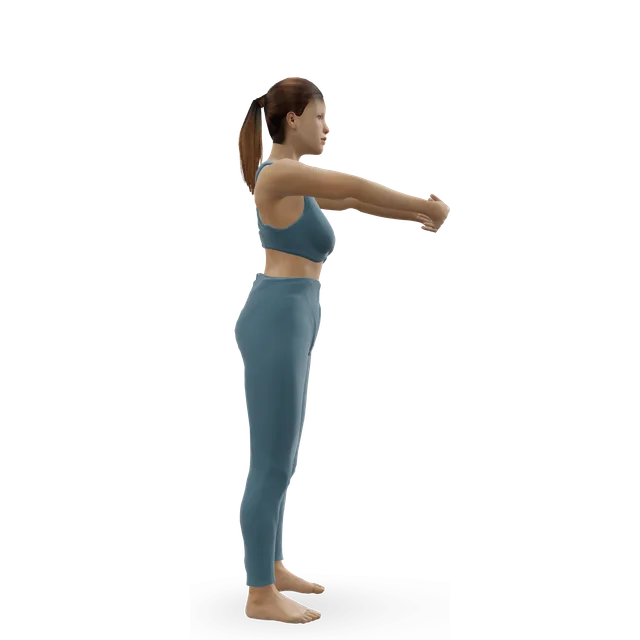
3 to 5 holds of 5 to 10 s at a light effort, twice a day (this move's starting dose) · In bed, knees bent: press the knees gently out into a belt and hold, the hips not moving. Keep it within your team's hip precautions
Move on when: You walk safely with your aid, manage stairs if you need them at home, and these exercises feel easy.
Follow along: a timer, a cue and the next move, one step at a time.
Stage 2
Home to about 6 weeks: standing exercises and more walking
As your team allows. Start the standing exercises once you're confident on your feet, always holding a worktop. Walk often: short walks several times a day are better than one long one. Stay inside your precautions. Doses are the AAOS's and one NHS trust's.
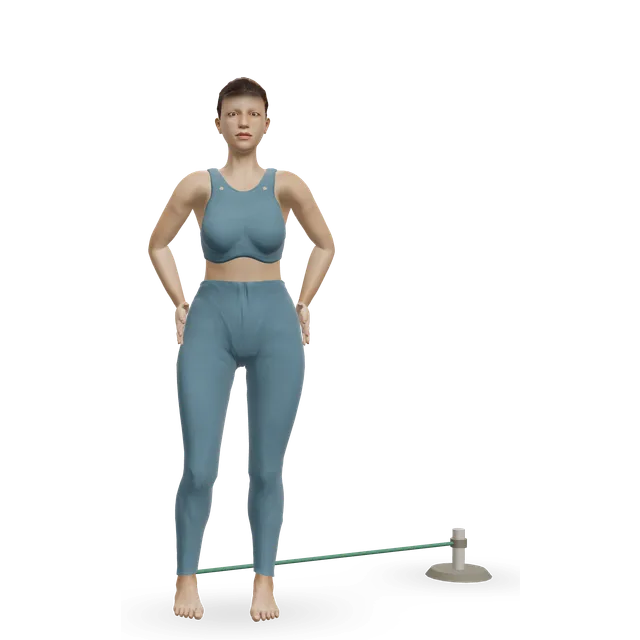
10 times each side, 3 to 4 times a day · Holding a worktop: the standing hip abduction in NHS leaflets. Toes forward, trunk upright, and keep it within your team's hip precautions
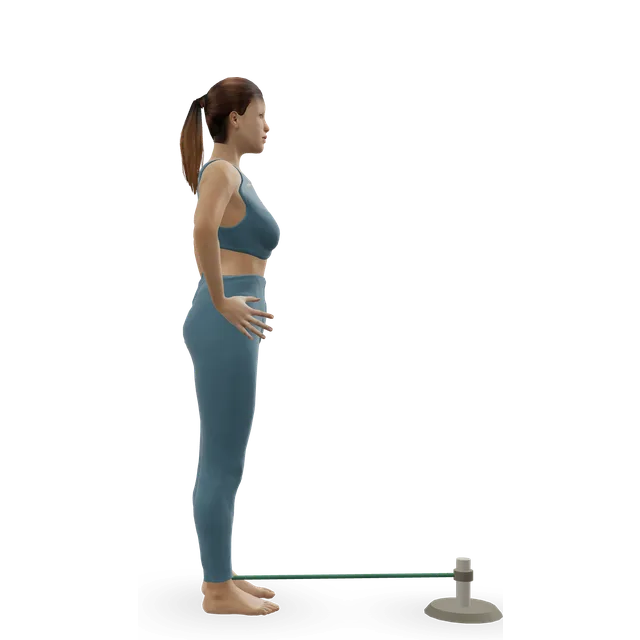
Hold 2 to 3 s; 10 times, 3 to 4 times a day · No band at first: holding a worktop, take the straight leg back without leaning forward. Skip it if your team limits taking the leg behind you, as some front-approach protocols do
Move on when: You're walking further each day, on one stick or none indoors, and getting in and out of a chair comfortably within your precautions.
Follow along: a timer, a cue and the next move, one step at a time.
Stage 3
Weeks 6 to 12: strength and balance
As your team allows. Most people walk without aids by about 6 to 8 weeks, and many teams lift or relax precautions around now: check yours before any exercise that needs a movement you were told to avoid. Doses are one NHS trust's.
Move on when: You walk without aids or a limp, stairs are getting easier, and your team has confirmed which precautions, if any, still apply.
Follow along: a timer, a cue and the next move, one step at a time.
Stage 4
After 3 months: strength for the long term
By 3 to 6 months many people are back to golf, road cycling, doubles tennis, dancing and gardening, and by 6 months to full activity apart from high-impact sport (one NHS trust's timeline). Two strength days a week; these doses are editorial.
Move on when: Add a little load or a harder option every week or two while the hip stays settled. Practise getting down to the floor, and deep positions, only once your team says those positions are allowed.
Follow along: a timer, a cue and the next move, one step at a time.
What to change for now
Standing exercises: hold on, and stay within your precautions
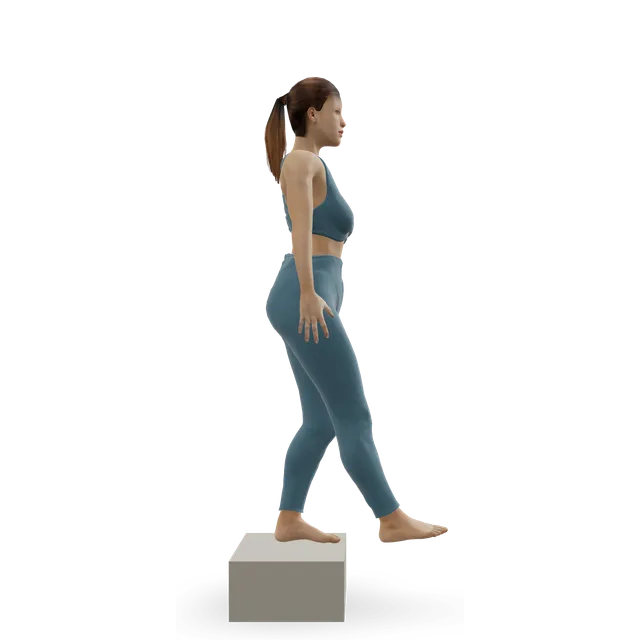
Hold a worktop or a sturdy chair for every standing exercise. In the AAOS guide, standing knee raises go no higher than the waist, and the side leg lift keeps the hip, knee and foot pointing straight forward with the body upright; an NHS trust adds keeping the trunk upright, without leaning forward, when you take the leg back. If an exercise needs a movement your team has ruled out, leave it out.
Walking builds alongside: the AAOS suggests 5 to 10 minutes, 3 to 4 times a day at first, building to 20 to 30 minutes, 2 to 3 times a day, and later walks of 20 to 30 minutes 3 to 4 times a week to keep your strength.
Use a firm, upright chair with arms, high enough that your knees are lower than your hips, and a raised toilet seat if you've been given one. A sock aid, a long-handled shoehorn and a grabber save bending to your feet or the floor. Get up and walk regularly rather than sitting still for long, which helps with swelling.
While the hip recovers, avoid jumping, sudden turns and anything with a high risk of falling, and don't lift heavy things until you're told it's safe.
These come from the NHS and one NHS trust. Your own team's advice comes first.
Home 1 to 3 days after the operation; stitches or clips out after about 10 days; a follow-up 6 to 12 weeks after.
Driving: at least 6 weeks, once you're nearly pain-free, no longer need walking aids, can do an emergency stop and your doctor agrees you're fit to drive. Some people with an automatic car and a left hip replacement drive sooner. Tell the DVLA (the Driver and Vehicle Licensing Agency) and your insurer if you're still not driving at 3 months.
Work: usually about 6 weeks, depending on the job; one trust says 4 to 8 weeks for a desk job and 3 months for a physical one.
Sex: the NHS suggests avoiding it for 6 to 8 weeks.
Flying: one NHS trust advises against flying within 6 weeks, because of the risk of a blood clot, then short-haul flights at first and long-haul after 3 months.
They are movements to avoid while the hip heals, to lower the risk of it dislocating. Whether you need them depends on the surgical approach, how stable your hip was in the operation and your own risk; some teams give several for up to 12 weeks, others one or none. Follow the ones your team gives you.
How long do hip precautions last?
Usually about 6 weeks, and sometimes up to 12, until your team tells you otherwise. Ask at your follow-up appointment before you stop.
Are the precautions different after an anterior hip replacement?
Often. After a posterior approach, the usual examples limit bending, crossing your legs and turning the leg in; after an anterior approach, they're about turning the leg out and taking it behind you. Some surgeons give none, so follow yours.
Do hip precautions actually prevent dislocation?
Routine precautions haven't been shown to reduce dislocation, but the evidence is low certainty: the trials were small and recruited mostly lower-risk patients. Some people without precautions got back to daily activities sooner. Follow the precautions your team gives you.
What does a dislocated hip replacement feel like?
Signs include severe hip pain, walking that is suddenly difficult or painful, a leg that looks shorter or is turned unusually far in or out, and a bulge at the side of the hip. The NHS adds swelling, and clicking or popping from the joint. If you think your hip has dislocated, don't walk on it; go to A&E straight away.
How long does it take to recover from a hip replacement?
Several months. One NHS trust expects walking without aids by about 6 to 8 weeks, golf, cycling and doubles tennis by 3 to 6 months, full activity apart from high-impact sport by 6 months, and full recovery by a year. Your own team's timings come first.
When can I drive after a hip replacement?
The NHS says wait at least 6 weeks and check with your doctor that you're fit to drive. You need to be nearly pain-free, no longer dependent on walking aids, and able to do an emergency stop.
How should I sleep after a hip replacement?
Follow your team, because it depends on your precautions. For example, one NHS hospital advises sleeping on your back for the first month, then on the operated side if it isn't tender. A pillow between the knees stops the legs crossing.
What exercises should I avoid after a hip replacement?
Anything outside your precautions, and, while the hip heals, jumping, sudden turns and activities with a high risk of falling. Running and other high-impact sport are usually discouraged unless you did them before the operation.
What exercises should I do before a hip replacement?
NICE says everyone should be given advice on exercises before and after surgery, and in trials exercise before surgery improved hip strength and quality of life. Use the hip arthritis plan, and practise the first exercises you'll do after the operation.
Can I go back to sport after a hip replacement?
Most people do: on average to their pre-surgery level, 16 to 28 weeks after the operation. Low-impact sport is recommended, and high-impact sport only if you did it before.
Do I need physio sessions?
In 7 trials, home exercise worked about as well as supervised sessions. NICE recommends a home programme with support, and supervised rehab if you're struggling.
Exercise education, not a diagnosis or treatment plan. It is written from the guidelines and studies listed above; review by a clinician is pending. If your pain follows an injury, is severe, is getting worse, or comes with any warning sign listed on this page, get it assessed. Health disclaimer.