A deep ball and socket
The socket covers about 40% of the ball, and the labrum, a ring of cartilage around its rim, deepens it further and seals the joint. The fit of the bones makes the hip very stable.
Joint guide
The hip is a deep ball and socket: the top of the thigh bone sits in a cup in the pelvis, deepened and sealed by a rim of cartilage called the labrum and wrapped in some of the body's strongest ligaments. It moves in every direction and carries about two and a half times your body weight with every step and stair.
Hips keep most of their range well into later life, except for taking the leg behind you, which is worth protecting. Strength and balance matter most: exercise programmes cut falls in older adults by about a quarter. For hip arthritis, exercise is still the first treatment, though the average benefit in trials is modest.
This guide explains how the hip is built and moves, its normal ranges by age and sex, what keeps it healthy, and the moves to do. If your hip hurts, start with our hip pain guides.
The socket covers about 40% of the ball, and the labrum, a ring of cartilage around its rim, deepens it further and seals the joint. The fit of the bones makes the hip very stable.
The gluteus maximus straightens the hip, the gluteus medius and minimus keep your pelvis level when you stand on one leg, and the iliopsoas lifts the thigh.
Adults bend the hip about 127 to 134 degrees and take the leg back about 13 to 18. It turns out about 39 to 42 degrees and in about 30 to 35; textbooks give about 45 degrees out to the side.
In a US survey, most hip movements were only 3 to 5 degrees smaller at 65 to 74 than at 25 to 39. Taking the leg behind you fell by more than a fifth.
Source 8
About 2.4 times body weight when walking and 2.5 to 2.6 times on stairs, measured in 4 people with instrumented hip replacements.
Source 9
Exercise programmes cut falls in older adults by 23%, and NICE (the National Institute for Health and Care Excellence) makes exercise a core treatment for hip arthritis.
The ball is the head of the femur (thigh bone), the longest, heaviest and strongest bone in the body. The socket (acetabulum) forms where the three bones of each side of the pelvis meet, and the growth cartilage there fuses by about 20 to 25.
It's a synovial ball-and-socket joint that moves around three axes: forward and back, out and in, and turning in and out. The fit of the bones makes the joint inherently stable: the socket covers about 40% of the ball throughout its motion. When a hip does dislocate, it goes backwards 90% of the time.
A ring of tough fibrocartilage around the rim of the socket. It adds about 22% to the joint surface and about a third to the socket's volume, limits extreme movement, and seals the joint, holding a thin layer of pressurised fluid that lubricates it and helps it share the load.
The capsule's ligaments spiral around the neck of the femur, tightening as the hip straightens and slackening as it bends.
Smooth (hyaline) cartilage covers the ball and socket, thickest where the load is greatest. Bursae, small fluid-filled cushions, sit where tendons pass over bone: on the outer hip over the bony point (greater trochanter), at the sitting bone, and at the front under the iliopsoas tendon. Pain on the outer hip is now mostly put down to the gluteal tendons, with or without an irritated bursa.
Three of the four parts of the hamstrings run from the sitting bone to below the knee, so they straighten the hip and bend the knee at the same time; the fourth, the short head of the biceps femoris, starts on the thigh bone and crosses only the knee. The rectus femoris, one of the quadriceps, crosses the front of both joints and helps lift the thigh.
The gluteus maximus straightens the hip for standing up and climbing but does little on flat ground; the gluteus medius and minimus hold your pelvis level every time you stand on one leg; the iliopsoas lifts the thigh; the adductors pull it in; the hamstrings help straighten it; and small deep rotators, including the piriformis, turn it out.
In the CDC (US Centers for Disease Control and Prevention) study of 674 healthy people, measured by physical therapists with a hand-held angle gauge, adults bent the hip (knee towards chest) about 127 to 134 degrees. Lying on their side with the knee straight, they took the leg behind them about 13.5 to 18 degrees.
In 120 adults aged 20 to 60, the hip turned out about 39 degrees lying on the back and 42 lying face down, and turned in about 30 and 35. Range varies a lot between people: in 151 students, men turned out further and women turned in further.
Textbook values are about 45 degrees out to the side (abduction) and about 25 degrees across the body (adduction). We couldn't find a study measuring these in healthy adults to check them against, so treat them as rough.
Source 1
StatPearls lists lower "functional" values (bending 120 degrees, extension 10, inward rotation 15 and outward rotation 35), and a US national survey found population values differed from textbook figures by up to 18 degrees.
Squatting with your heels flat needed about 95 degrees of hip bend on average in 30 healthy adults, with a wide spread between people.
Source 18
In 1,683 US adults, most hip movements were only 3 to 5 degrees smaller at 65 to 74 than at 25 to 39. Only extension, taking the leg behind you, fell by more than a fifth. The authors conclude that a big loss of hip movement before about 75 shouldn't be put down to age alone.
Women had more hip bend than men at every adult age in the CDC data, and were more mobile in nearly all joints.
Across 108 trials (23,407 people living at home, average age 76), exercise cut the rate of falls by 23%, with high-certainty evidence, and the number of people who fell by 15%. It may also reduce fractures from falls, though that evidence is less certain.
Source 10
NICE says to offer everyone with osteoarthritis exercise tailored to them, such as local muscle strengthening and general aerobic fitness. It warns that joint pain may increase at first, but that regular, consistent exercise will be good for the joints.
Source 11
The 2014 Cochrane review found exercise lowered hip arthritis pain by about 8 points on a 100-point scale and improved function by about 7. The 2026 update (18 studies, 1,368 people) found that, compared with no treatment, exercise probably reduces pain slightly, by about 7 points, and improves function by about 9, changes its authors judge unlikely to matter much on average. Against a sham or attention control, it may make little or no difference to pain.
Averages hide a wide spread, and some people improve a lot. Exercise is still the core treatment.
In 17 studies (114,829 people), recreational runners had less hip or knee arthritis (3.5%) than people who didn't run (10.2%); elite runners had the most (13.3%). These are observational studies, so they can't prove cause and effect.
Source 22
Measured with instrumented hip replacements in 4 people, the hip carried about 2.4 times body weight walking at about 4 km an hour, 2.5 times climbing stairs and 2.6 times going down them.
Source 9
Across 29 studies, labral tears showed on scans in 54% of people without hip pain and 62% of people with it. The labrum matters for sealing the joint, but a tear on a scan isn't the whole story.
Our editorial starting point: 2 or 3 days a week of hip strength work, such as 2 to 3 sets of 10 to 15 glute bridges, 2 sets of 12 to 15 clamshells each side and 2 to 3 sets of 8 to 12 sit-to-stands, adding load as they get easy (doses from our workouts). For arthritis, NICE's advice is the same in principle: local muscle strengthening plus general fitness.
Stand on one leg next to a counter, 2 holds of 20 to 30 seconds each side (the dose in our strength and balance workout), and make it harder over the weeks. The gluteus medius and minimus do this job with every step, and balance and strength training together prevented falls in trials.
Taking the leg behind you is the hip movement most lost with age. Our editorial suggestion: a half-kneeling hip flexor stretch, 30 to 45 seconds each side on most days, plus glute bridges, which work the hip through extension.
Source 8
Regular walking, running or cycling suits healthy hips: recreational running went with less arthritis, not more. With hip arthritis, NICE pairs strengthening with general aerobic fitness.
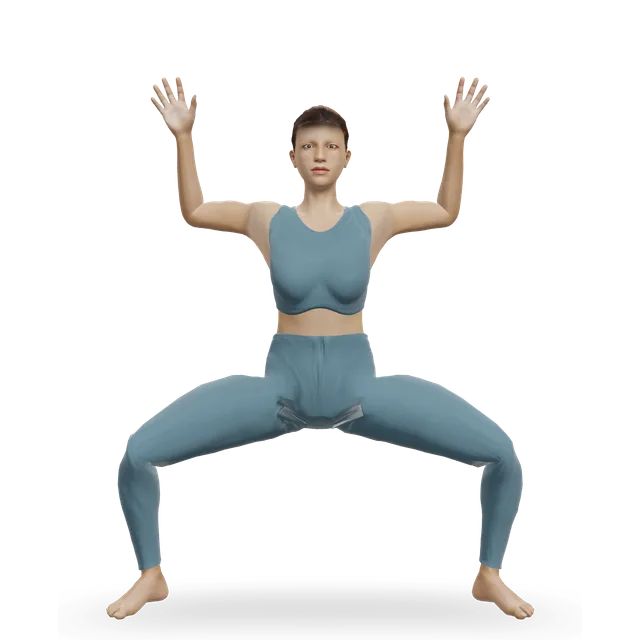
Use a smaller range in deep squats, Cossack squats and the frog rock, and expect some extra discomfort at first, as NICE warns. Our hip arthritis guide has a staged plan. After a hip replacement, follow your surgical team's movement limits.
Source 11
Move slowly and stop short of a pinch at the front of the hip. Starting doses from each move's page and our workouts: 3 slow circles each way for hip CARs (controlled articular rotations), 8 to 10 slow 90/90 switches, and 30 to 45 seconds each side for the hip flexor stretch.
 3D demoStanding hip CARsBeginner · A wall
 3D demo90/90 switchIntermediate · No equipment
 3D demoHip Windshield WipersBeginner · No equipment
 3D demoHalf-kneeling hip flexor stretchBeginner · No equipment
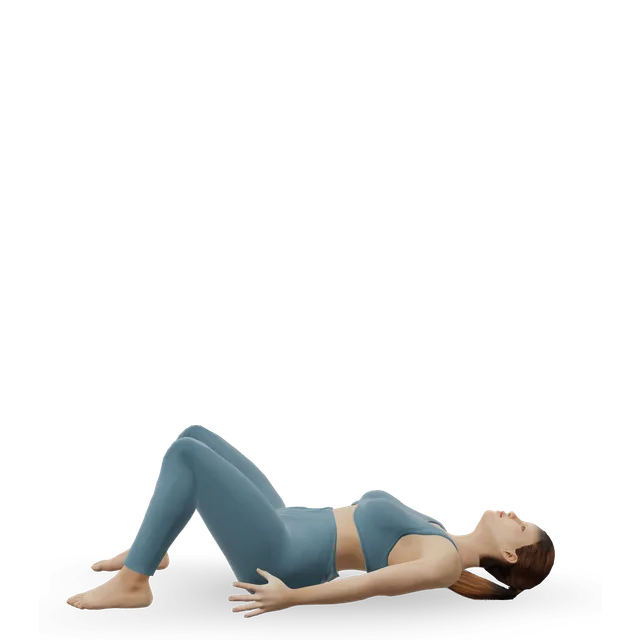 3D demoReclined figure four (eye of the needle, Sucirandhrasana)Beginner · No equipment
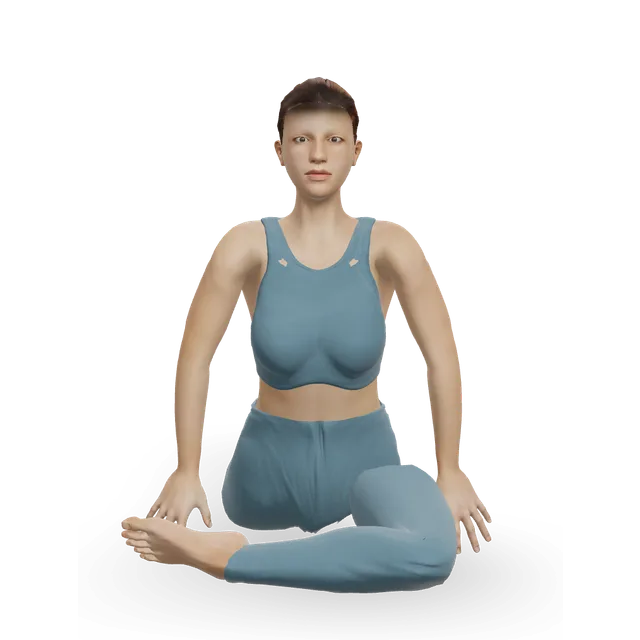 3D demoPigeon preparation (Eka Pada Rajakapotasana prep)Intermediate · No equipment
 3D demoSupine hamstring stretch with a strapBeginner · No equipment
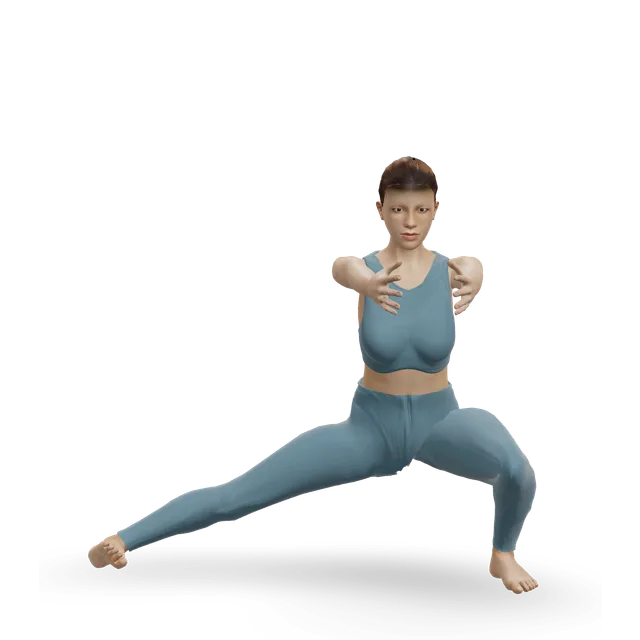 3D demoCossack squatIntermediate · No equipment
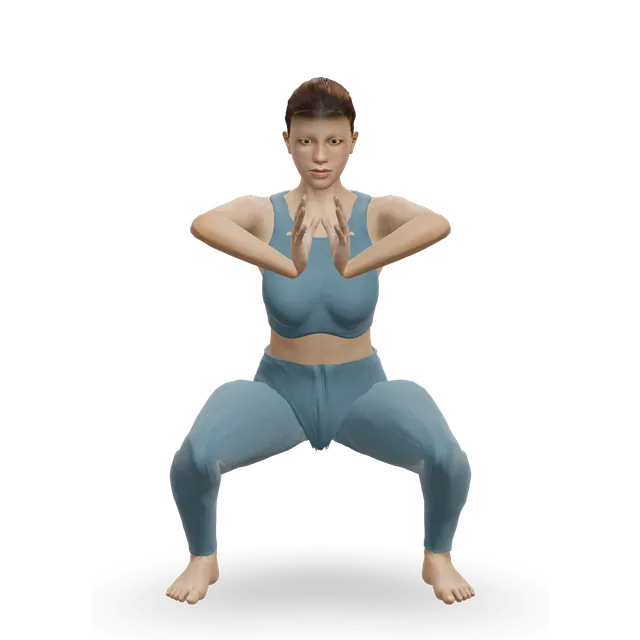 3D demoDeep squat holdIntermediate · No equipment
 3D demoSupine heel slideBeginner · No equipment
2 or 3 days a week, 2 to 3 sets of 8 to 15, adding load as it gets easy (our editorial starting point; doses on each move's page). Work from the floor moves to standing ones, then to loaded and single-leg versions.
 3D demoGlute bridgeBeginner · No equipment
 3D demoSingle-leg glute bridgeIntermediate · No equipment
 3D demoClamshellBeginner · No equipment
 3D demoSide-lying leg raiseBeginner · No equipment
 3D demoStanding wall-press hip abductionBeginner · A wall
 3D demoLateral band walkBeginner · A band
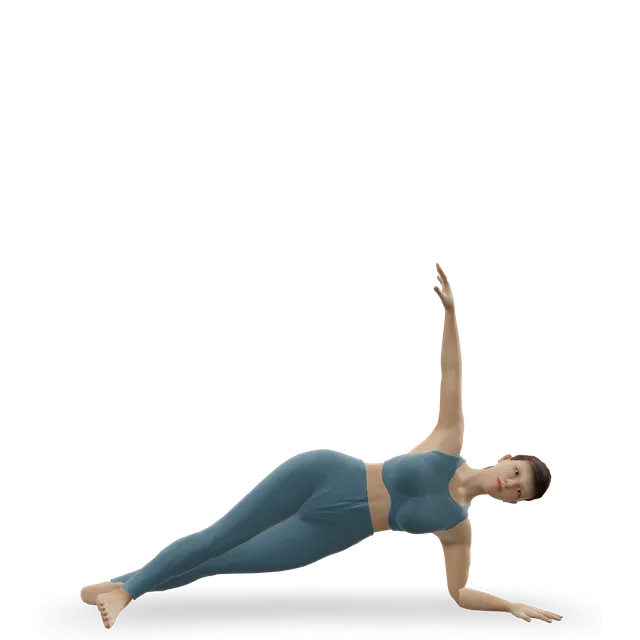 3D demoSide plank with leg liftAdvanced · No equipment
 3D demoSit to stand from a chairBeginner · A bench or box
 3D demoStep-upBeginner · A step
 3D demoSplit squatIntermediate · No equipment
 3D demoDumbbell goblet squatIntermediate · A dumbbell
 3D demoDumbbell Romanian deadliftIntermediate · A dumbbell
 3D demoSingle-leg Romanian deadliftAdvanced · A dumbbell
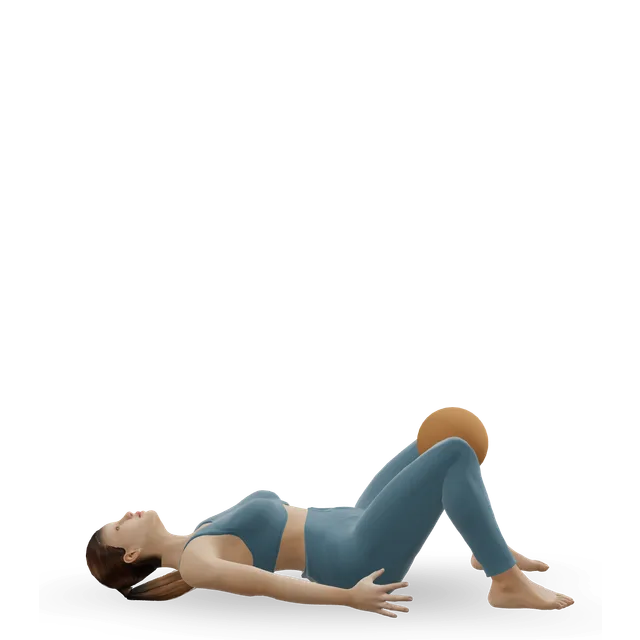 3D demoLying adductor ball squeezeBeginner · Other / check instructions
 3D demoCopenhagen plankAdvanced · A bench or box
 3D demoStanding marchBeginner · No equipment
 3D demoSingle-leg standBeginner · A wall
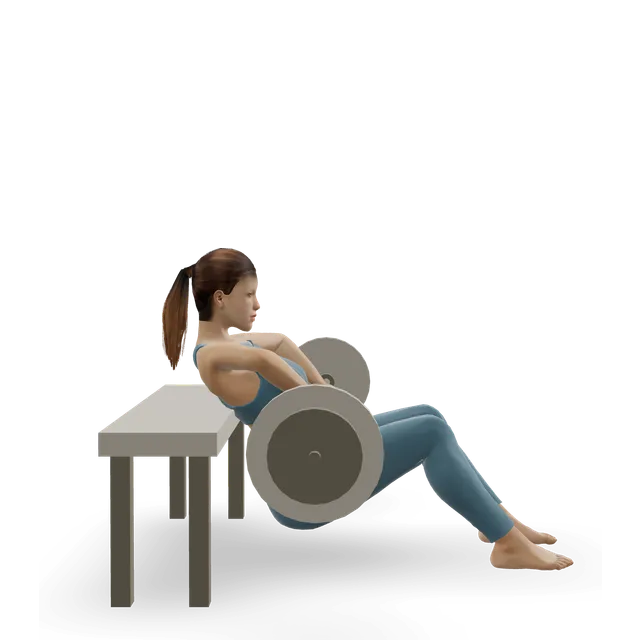 3D demoBarbell hip thrustIntermediate · A barbell + A bench or box
With hip arthritis or impingement, take the deep squat hold, Cossack squat and frog rock in the hip mobility routine to a smaller range.
A 15-minute hip opener: 90/90 switches, windshield wipers, CARs, Cossack squats, frog and pigeon.
15 minIntermediate8 movesA wallA hip-opening yoga sequence: low lunge, lizard, goddess, pigeon, bound angle and happy baby.
20 minBeginner7 movesNo equipmentA 25-minute glute workout with bodyweight and a mini band: bridges, clamshells, band walks, kickbacks and lunges.
25 minBeginner9 movesA wall, A bandA 50-minute gym glute workout: hip thrusts, deep squats, Bulgarian split squats, back extensions and hip abduction, with sets, reps and rest.
50 minIntermediate11 movesA band, A barbellLearn to squat, hinge and lunge: a 25-minute beginner lower body workout with bridges, clamshells and calf raises.
25 minBeginner11 movesA wall, A bench or boxA 40-minute strength and balance session for over-65s, built from the Otago home programme and NHS exercises, using a chair, a counter and a step.
40 minBeginner18 movesA bench or box, Something with weightBalance practice in 10 minutes: tandem stance, single-leg stands, marches, heel walks, tree pose and floor transfers.
10 minBeginner7 movesA wall, A bench or boxA 30-minute joint-friendly circuit built like the GLA:D and ESCAPE-pain programmes: a gentle warm-up, chair, step and band strength moves, balance, then stretches.
30 minBeginner14 movesA bench or box, A stepAn 8-week glute workout plan: two glute days and two upper-body days a week, with hip thrusts, squats, hinges and side-hip work, plus a home option.
4 training days50 minIntermediate3 days a weekA 12-week exercise plan for over-65s: strength and balance three times a week, short balance sessions and daily walks, based on falls-prevention trials.
3 training days40 minBeginnerA one-line orientation for each; the guides below have the detail, a staged plan and the warning signs.
Our hip pain guide sorts it by where it hurts: the groin, the outer hip or the buttock.
Exercise is the first treatment for hip arthritis. Our hip replacement guide covers recovery stage by stage, the movement precautions and the signs of a dislocation.
Outer hip pain, often called bursitis, usually involves the gluteal tendons rather than just a bursa.
Hip impingement shapes and labral tears are common on scans of hips that don't hurt, so exercise usually comes first.
Hip flexor pain, groin strains, high hamstring tendinopathy and piriformis syndrome each have a guide; most buttock pain isn't the piriformis.
Pain felt in the buttock can come from the lower back or the sacroiliac joint; see our sciatica and SI joint guides.
If you have severe hip pain after a fall or injury, you're unable to walk or put weight on your leg, or you have any tingling or loss of feeling in your hip or leg after an injury.
Source 24
If you have severe hip pain that started suddenly but you've not had a fall or injured your hip; your hip is swollen and feels hot; the skin around your hip has changed colour; or you have hip pain, feel generally unwell and have a high temperature (or feel hot, cold or shivery). In the US, contact your doctor or urgent care.
Source 24
If hip pain is stopping you doing normal activities or affecting your sleep, is getting worse or keeps coming back, hasn't improved after treating it at home for 2 weeks, or you have hip stiffness for more than 30 minutes after waking up.
Source 24
The NHS has separate advice on hip pain in children. Our editorial advice: a child with hip pain or a limp should see a doctor rather than exercise through it.
Source 24
Stop a move that causes a sharp pinch at the front of the hip, pain that builds through the session, or pain, tingling or numbness down the leg. After a hip replacement, follow your surgical team's movement limits (our editorial advice, as in our hip pain guides).
Snapping can come from a tendon sliding over the bony point on the side of the hip, from the iliopsoas tendon at the front, or from inside the joint. Clicking that comes with pain, catching or locking deserves a check.
Source 5
Tears show on scans of more than half of people without hip pain. Our labral tear guide covers when exercise comes first.
Source 23
Recreational runners had less hip and knee arthritis than people who didn't run, in observational studies.
Source 22
Most hip range changes by only 3 to 5 degrees up to the age of 74. Taking the leg behind you is the exception, and a big loss deserves attention.
Source 8
NICE recommends exercise for everyone with osteoarthritis. Pain may rise a little at first, but regular exercise is good for the joint.
Source 11
A ball-and-socket synovial joint: the ball at the top of the thigh bone sits deep in a socket in the pelvis and can move in every direction. The socket covers about 40% of the ball, and a rim of cartilage, the labrum, deepens it further, so the joint is very stable.
A ring of tough fibrocartilage around the rim of the socket. It deepens the socket, seals the joint so a thin layer of pressurised fluid can lubricate it and share the load, and limits extreme movement. Tears show up on scans in more than half of people without hip pain, so a tear isn't always the cause of pain.
Three ligaments thicken the joint capsule: the iliofemoral at the front, the pubofemoral below it and the ischiofemoral at the back. They spiral around the neck of the thigh bone and tighten as the hip straightens, which helps you stand with little muscle effort. A small ligament inside the joint, the ligamentum teres, carries an artery in children.
In adults, bending about 127 to 134 degrees and taking the leg back about 13 to 18 degrees (CDC data), turning out about 39 to 42 degrees and in about 30 to 35. Textbook values for taking the leg out to the side and across the body are about 45 and 25 degrees. Women are more mobile than men in most directions.
Only a little for most movements: 3 to 5 degrees between the late 20s and early 70s in a US survey. Taking the leg behind you is the exception, falling by more than a fifth, so it's worth stretching. A big loss of range isn't just ageing and is worth getting checked.
The gluteus maximus straightens it, for standing up and climbing; the gluteus medius and minimus hold your pelvis level on one leg; the iliopsoas lifts the thigh; and the adductors pull it in. The hamstrings help straighten it, and small deep muscles turn it out. Each has its own guide.
About 2.4 times your body weight when walking and 2.5 to 2.6 times on stairs, measured in people with instrumented hip replacements. Your hip is built for this, and strong muscles help it cope.
Not for recreational runners: they had less hip and knee arthritis (3.5%) than people who didn't run (10.2%). Elite runners had a little more (13.3%), and these studies can't prove cause and effect.
Yes: NICE says to offer exercise to everyone with osteoarthritis, and it may hurt a little at first. The average improvement in trials is modest, about 7 to 8 points on a 100-point pain scale, and some people improve a lot more. Our hip arthritis guide has a staged plan.
A tendon can snap over the bony point on the side of the hip or at the front of the joint, or the click can come from inside the joint. Clicking with pain, catching or locking deserves a check; our labral tear and impingement guides cover the causes inside the joint.
Keep them strong, keep the range (especially taking the leg back), stay active, and practise balance on one leg. Exercise programmes cut falls in older people by about a quarter.
Education about how your joints work, not a diagnosis, and clinical review of these guides is pending. For a painful, swollen or injured joint, see the pain guide for that area and a doctor or physiotherapist, and stop any exercise that causes sharp or increasing pain. Health disclaimer.