Joint guide

The spine: how your neck and back are built, how they move, and how to look after them

Your spine is a stack of 33 vertebrae in the usual count, cushioned by 23 discs, with four gentle curves. Each region moves differently: the neck turns the most, the upper back twists, and the lower back bends forward and back. Discs and joints change with age in almost everyone, usually without causing pain.

It is built to bend, lift and twist. Rounding your back while lifting hasn't been shown to cause back pain, and exercise lowers the chance of a new episode. What discs need is less certain: people who run or walk briskly tend to have healthier-looking discs, but those studies can't show cause and effect.

This guide covers how the spine is built and how far each region moves, what discs need, the evidence on bending, lifting and cracking, and the moves that keep every region moving and strong. If your back or neck hurts, start with our pain guides.

The short version

33 vertebrae and 23 discs, in the usual count

7 in the neck, 12 in the upper back, 5 in the lower back, 5 fused into the sacrum and about 4 fused into the tailbone, with 23 discs between them. Variations are common: about a quarter of young adults in one X-ray study had a transitional vertebra where the lower back meets the sacrum.

Sources 1, 2, 3

Four natural curves

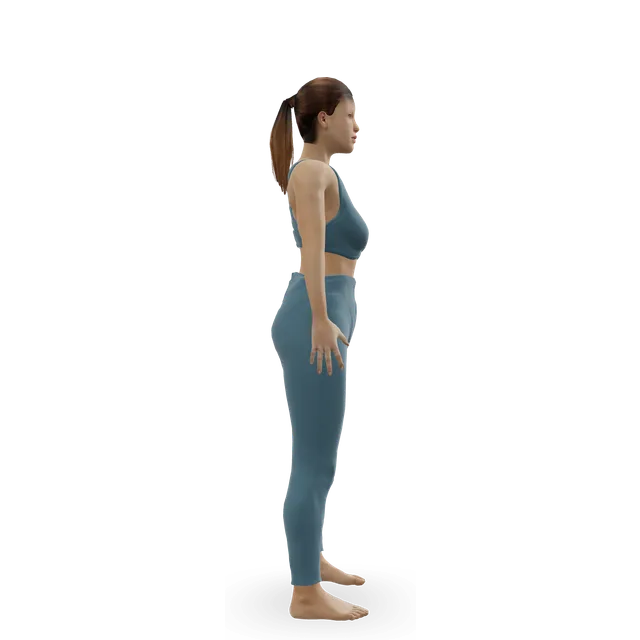
From the side, the neck and lower back curve inward and the upper back and sacrum curve outward. Normal values vary a lot, and people with back pain have the same lower-back curve, on average, as people without.

Sources 1, 4, 5

Each region moves differently

The neck turns about 75 to 80 degrees each way. The upper back is the twisting region. The lower back bends forward and back but twists only 1 to 2 degrees per level.

Sources 6, 7, 8, 9

Changes on scans are normal

Disc degeneration shows on scans of 37% of 20-year-olds without back pain, rising to 96% at 80. A scan report doesn't explain pain on its own.

Source 10

Bending and lifting are normal jobs

Rounding your lower back while lifting hasn't been linked with back pain, and lifting-technique training didn't prevent it. Exercise combined with education cut the chance of a new episode of low back pain by about 45% in trials.

Sources 11, 12, 13

Cracking is gas, not bones

In finger joints filmed with MRI (magnetic resonance imaging), the crack came from a gas bubble forming in the joint fluid. Pain relief after manipulation is the same with or without a pop, and forcing your own neck to crack has caused rare but serious harm.

Sources 14, 15, 16

How your spine is built

The vertebrae, region by region

In the usual count there are 33 vertebrae, and the 24 above the sacrum move separately.

  • Neck (cervical): 7, the smallest and most mobile. The top one (C1, the atlas) pivots around a peg on the second (C2, the axis), which gives most of the neck's turning.
  • Upper back (thoracic): 12, each carrying a pair of ribs. The angle of their small joints favours twisting and limits bending.
  • Lower back (lumbar): 5, the largest, built to carry the weight of the trunk. Their joints allow bending forward, back and sideways but restrict twisting.
  • Sacrum: 5 fused vertebrae forming the back of the pelvis.
  • Tailbone (coccyx): about 4 fused vertebrae; sources give 3 to 5.

Sources 1, 17, 3, 18, 19

How often the count varies

Thirty-three is the textbook count, not a rule. In one X-ray study of young adults without symptoms, 26.4% had a transitional vertebra where the lower back meets the sacrum, a variant StatPearls puts at 35% of the general population. In a CT (computed tomography) study, 3.4% of people had 11 pairs of ribs rather than 12.

Sources 3, 2

The discs

There are 23 discs: 6 in the neck, 12 in the upper back and 5 in the lower back. There's none between the skull and the first vertebra, or between the first two. Each has a gel centre (the nucleus pulposus), 66% to 86% water, inside 15 to 25 layers of tough fibres (the annulus) that alternate in direction, like a radial tyre. Together the discs make up about a quarter to a third of the spine's length.

Sources 2, 20, 21, 1

Facet and sacroiliac joints

Behind each pair of vertebrae sit two small facet joints, with cartilage and joint fluid like any other synovial joint. They guide and limit movement, and their angle is why the upper back twists and the lower back doesn't. At the base, the two sacroiliac (SI) joints link the sacrum to the pelvis. They move only 2 to 4 mm and are held by some of the strongest ligaments in the body.

Sources 22, 3, 18, 23

Ligaments and the spinal canal

Long ligaments run down the front and back of the vertebral bodies, and shorter ones link the arches and bony points behind them. At the top, strong ligaments hold the first two vertebrae together. The spinal cord runs through the canal and usually ends at the first or second lumbar vertebra, below which the nerve roots continue down; 31 pairs of spinal nerves leave between the vertebrae.

Sources 2, 24, 17, 1

The four curves

From the side, the neck and lower back curve inward (lordosis) and the upper back and sacrum curve outward (kyphosis). The outward curves are there at birth; the neck curve forms as babies hold up their heads, and the lower-back curve as they stand. On standing X-rays of 300 adults, the lower-back curve averaged 60 degrees, give or take 10.

An upper-back curve of more than 40 degrees is often called hyperkyphosis, and the curve grows with age. StatPearls notes that in a review of 7,633 healthy adults the curve was above 40 degrees in 65%, so a fixed cut-off over-labels older people. Our posture guides cover it in detail.

Sources 1, 4, 19, 3

The muscles that move and support your spine

The erector spinae and multifidus straighten the spine and control each level; the quadratus lumborum bends it sideways; the abdominal muscles bend and twist the trunk; the psoas joins the lower spine to the thigh; and the sternocleidomastoid and scalenes turn and tilt the neck. Each guide covers one muscle.

How each region moves

How to read the numbers

Range depends on how it's measured (X-ray, motion capture or a hand-held angle gauge), on whether you move yourself or are moved, and on your position, so figures from different studies don't line up exactly. Treat them as typical, not as targets.

Sources 25, 26, 27

The neck

With motion capture, young adults turned the head about 75 to 80 degrees each way, nodded through about 130 degrees from chest to ceiling, and tilted ear towards shoulder about 38 to 45 degrees each way. Most nodding happens where the skull meets the top vertebra, and most turning between the top two vertebrae.

On X-rays of 1,230 people without symptoms, the lower neck's range from bending forward to bending back fell from 68 degrees in people in their 20s to 45 in their 70s.

Sources 6, 28, 17, 29

The upper back

The upper back is the spine's twisting region: about 25 degrees each way from top to bottom in a CT study of maximal trunk rotation, most of it in the middle and lower segments. The ribs and the angle of the facet joints limit bending.

Sources 7, 3

The lower back

On X-rays of 627 adults, the lower back bent about 31 to 35 degrees forward and 19 to 20 degrees back, about 52 degrees in all, with more in women. It twists very little: 1 to 2 degrees per level during a 45-degree turn of the trunk.

Side bending has been measured in only one small, preliminary X-ray study (82 people). Range there fell steadily from the 40s, to about half the young-adult figure in the 70s and about a third in the 80s, with most movement in the middle of the lower back and least at the lowest level.

Sources 8, 9, 30

What everyday life uses

In 60 adults, 15 everyday tasks needed a median of about 20 degrees of neck bending and 18 degrees of turning, a small part of the full range. Reversing a car was the exception: it used 92% of full turning range.

Source 31

How range changes with ageStrong evidence

Across 16 studies, bending forward, bending back and side bending in the lower back fell with age, particularly from 40 to 50 and after 60, while twisting changed very little. In both the neck and the lower back, bending back falls more than bending forward. The decline isn't steady, and women are generally more mobile.

Sources 25, 29, 8, 26, 27

What the evidence says

Exercise prevents episodes of back painStrong evidence

In 21 prevention trials (30,850 people), exercise combined with education cut the risk of a new episode of low back pain by about 45%, with moderate-quality evidence; exercise alone may help too, with lower-quality evidence. Education alone, back belts and shoe insoles didn't prevent it.

In 701 adults who had just recovered from back pain, a 6-month walking and education programme with six physiotherapy sessions nearly doubled the time before the next episode that limited activity (208 days against 112 with no treatment). The walkers did report more leg and foot complaints.

Sources 13, 32

Changes on scans are common without painStrong evidence

Across 33 studies of 3,110 people without back pain, disc degeneration showed on scans of 37% of 20-year-olds and 96% of 80-year-olds, and disc bulges in 30% and 84%. Findings like these are often part of normal ageing.

Source 10

Your curves don't decide whether your back hurtsMixed evidence

People with low back pain have the same lower-back curve on average as people without (8 studies), and an umbrella review of 41 reviews found no consensus that posture or physical exposures cause back pain. People with back pain do tend to move their lower back less and more slowly, but it isn't known whether that comes before or after the pain.

Sources 5, 33

With osteoporosis: extension work, no deep roundingStrong evidence

The UK consensus on exercise for osteoporosis recommends resistance and impact exercise, strength and balance training, and spinal extension exercise, and advises avoiding postures with a lot of spinal rounding in exercise and daily life. After a spinal fracture, impact should usually go no higher than brisk walking.

Source 34

Heavy, supervised lifting can strengthen spinal boneEmerging evidence

In a trial of 101 postmenopausal women with low bone mass, 8 months of twice-weekly, closely supervised heavy lifting and impact training raised lower-spine bone density by 2.9%, while it fell 1.2% with gentle home exercise. There was one minor back spasm. The women were screened and supervised, so this isn't a reason to lift heavy alone with osteoporosis.

Source 35

What your discs need

Discs have no blood supplyStrong evidence

The disc is the body's largest structure without a blood supply. Oxygen and glucose seep in (diffuse) from tiny blood vessels in the bone above and below and around the outer rim, so the centre of the disc gets the least. In a healthy disc, nerves reach only the outer two-thirds of the tough outer ring, not the centre.

Sources 2, 36, 37

Discs lose water by day and regain it at nightStrong evidence

Under the day's load, disc height falls by 10% to 20%, and it recovers overnight when you lie down. That's why you're about 1.5 to 2 cm shorter by the evening.

Sources 2, 20

Does movement pump nutrients into discs? Only partlyMixed evidence

Loading squeezes water out of discs, and it soaks back in when you rest, so movement does change the disc's water. But small nutrients such as oxygen and glucose arrive almost entirely by diffusion, and this fluid flow has virtually no direct effect on them, though it may help larger molecules. The popular idea that movement pumps food into your discs is only partly true.

Sources 36, 38, 2

Runners and brisk walkers tend to have healthier-looking discsEmerging evidence

In 79 adults aged 25 to 35, regular joggers (20 to 40 km a week) had about 9% better disc hydration on MRI than inactive people, and movement at the pace of brisk walking or slow jogging went with the healthiest discs. A 2026 meta-analysis of 39 studies (4,152 people) linked upright loading, mostly running, with better disc health.

But these studies compare groups at one point in time, the certainty is very low, and they can't show that running caused the difference. Discs also shrink briefly straight after a run, as water is squeezed out.

Sources 39, 40, 41

Exercise trials haven't changed disc structureMixed evidence

In the one 6-month trial, 40 adults with chronic back pain did progressive upright aerobic and strength exercise, and their discs didn't change compared with the control group. A 12-week run-walk trial found more favourable disc changes in some subgroups, which its authors call a hypothesis to test, not a result.

Sources 42, 43

The kind of load discs seem to likeEmerging evidence

A review of mostly animal and lab studies concluded that repeated upright loading at slow to moderate speeds, like walking and jogging, is likely good for discs, while long static loads, twisting under heavy load, high-impact or explosive loading and inactivity are likely bad. It's a reasonable guide, not proof in people.

Source 44

Our precaution for disc-sensitive backs

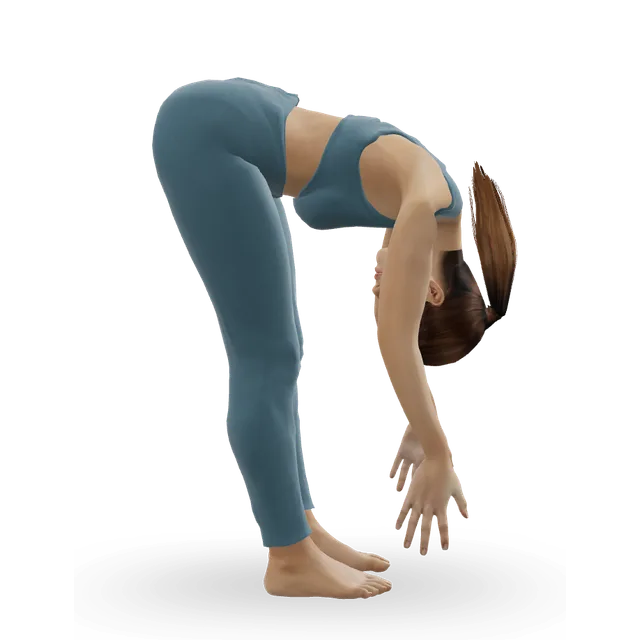
Discs are fullest of water after a night lying down. If bending forward flares your back, our editorial precaution, not a tested rule, is to leave heavy or repeated loaded bending until later in the day, as our segmental roll-down page also advises.

Source 2

Bending, lifting and your back

Rounding your back while lifting hasn't been shown to cause back painMixed evidence

In 9 of 11 studies, there was no difference in how much people with and without back pain bent their lower back when lifting; where there was a difference, people with back pain bent less, not more. The one study that followed people over time found no link with back pain starting or lasting. The evidence is low quality.

Source 11

Lifting-technique training doesn't prevent back painStrong evidence

In 7 trials of 19,317 workers, training and advice on how to lift, with or without lifting aids, didn't prevent back pain.

Source 12

Very heavy or frequent lifting is a different matterMixed evidence

In 8 studies that followed workers, the odds of back pain rose by about 11% for every extra 10 kg lifted and about 9% for every extra 10 lifts a day. Reviews that applied stricter tests of cause and effect found the evidence conflicting, and an umbrella review found no consensus that lifting causes back pain.

Sources 45, 46, 47, 33

Where reviews disagreeMixed evidence

A 2026 review of 10 mostly lab-based studies found that round-back lifting put more shearing force on the lowest lumbar joint, and called the direction the spine moves a risk factor worth changing. Another 2026 review, of deadlifting, argued that trained lifters often round a little without clear evidence of more injury, and that sudden jumps in training load were the more consistent risk. Neither settles it.

Sources 48, 49

Our take

Bending and lifting are normal jobs for a healthy spine. Lift in whatever way feels strong and controlled, keep the load close, and build weight and volume gradually. Treat very heavy, very frequent or sudden loading with more respect, and with osteoporosis avoid deep, loaded rounding.

Sources 11, 12, 45, 34

Cracking your back or neck

What the sound isEmerging evidence

When a finger joint was filmed cracking with real-time MRI, the sound came with a gas-filled cavity suddenly forming in the joint fluid as the surfaces separated, not with a bone going back into place. The spine's small joints are assumed to work the same way, but that comes from finger-joint imaging.

During manipulation, the pops don't come from one targeted joint: a lower-back thrust gave about 5 pops on average, as often on the opposite side as the target side, and 92% of upper-neck manipulations gave pops on both sides.

Sources 14, 50, 51

The pop doesn't decide whether it helpsMixed evidence

In 5 studies, pain after manipulation was no better when there was a pop, and in 70 people with low back pain, outcomes were the same with or without one. Even so, in a survey of 478 adults, many believed the pop meant realignment and was needed for success.

Sources 15, 52, 53

Cracking your own back: no evidence either wayMixed evidence

We found no study that has followed people who crack their own mid or lower back, so there's no evidence of harm or of benefit. For the neck, a 2026 review found 24 published cases of harm after people manipulated their own necks: 9 severe and 4 catastrophic, including 2 deaths, almost all within 2 days. The authors found no evidence that such harm is common, with very low certainty.

Source 16

Manipulation for chronic low back painStrong evidence

Across 47 trials (9,211 people), spinal manipulation for chronic low back pain worked about as well as other recommended treatments, and its side effects were mostly mild and short-lived.

Source 54

Chiropractic and strokeMixed evidence

In a study of 818 strokes, the link between chiropractic visits and stroke was no stronger than for GP visits, most likely because people with an early tear in a neck artery seek care for neck pain and headache.

Source 55

Who should avoid manipulationStrong evidence

The NHS says chiropractic or osteopathy may not be safe if you take blood thinners or have a raised risk of stroke, have very weak or damaged bones or joints, or have a nerve condition such as peripheral neuropathy. Practitioners in the UK must be registered with the General Chiropractic Council or the General Osteopathic Council.

Source 56

Our take

Painless cracking that happens as you move needs no treatment. You don't need to force it: if you feel the urge many times a day, move your back through its range and strengthen it instead. Don't force your neck, and don't self-manipulate with osteoporosis or after an injury.

Sources 15, 16, 56

What helps: our starting points

Move every region, most days

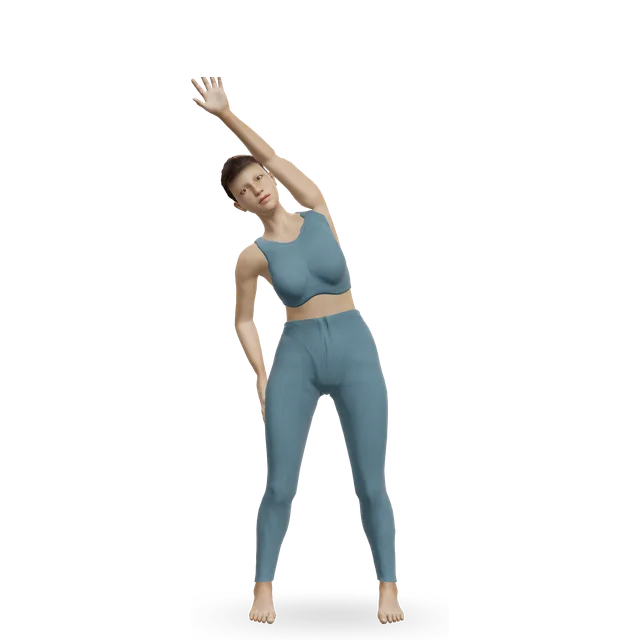
Our editorial starting point: a 10 to 15 minute routine that takes your neck, upper back and lower back through bending, arching, side bending and twisting, on most days. Lower-back range falls from about 40, and exercise is what prevented back pain in trials, though no trial has tested a routine like this one on its own.

Sources 25, 13

Strengthen your back, trunk and hips

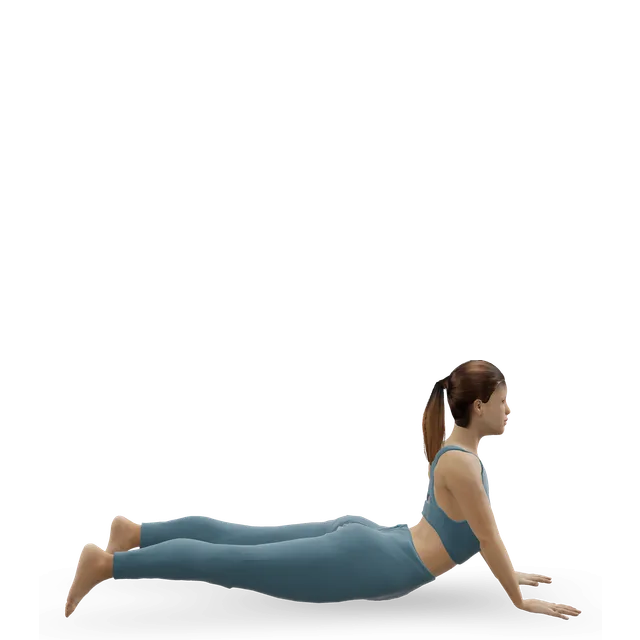
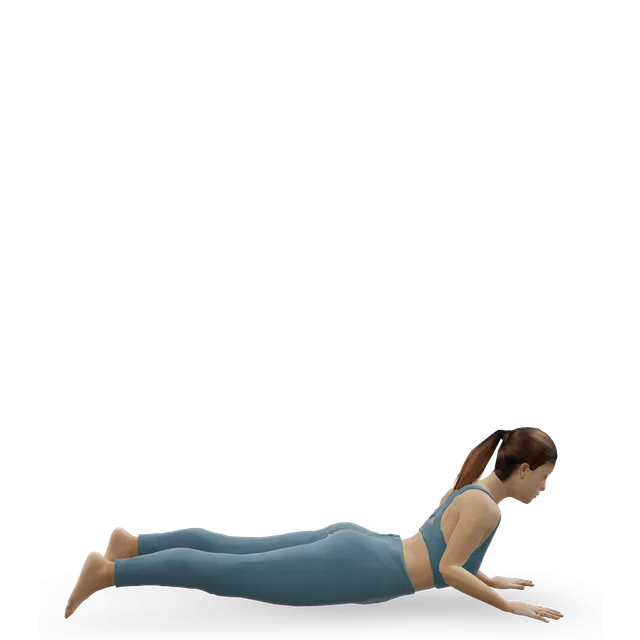
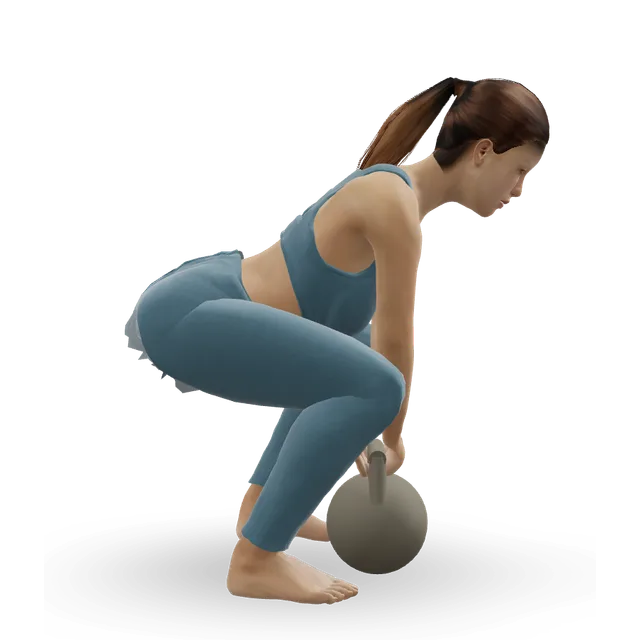
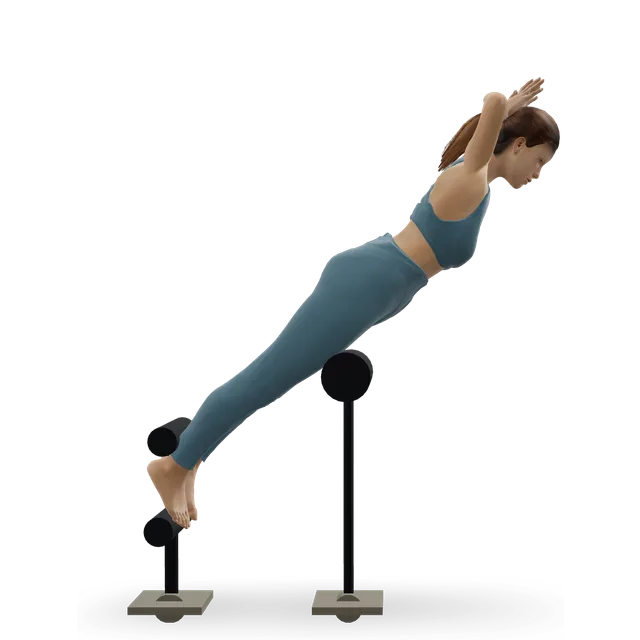
Our editorial starting point: 2 or 3 days a week of back-extension, trunk and hip work, building the load gradually. Our back pain plan's doses are a good guide: 2 to 3 sets of 6 to 8 bird dogs each side, holding each for 3 to 5 seconds, and 3 sets of 8 to 10 kettlebell deadlifts, light to start. With osteoporosis, include back-extension exercises such as the low cobra, as the UK consensus recommends.

Sources 13, 34

Walk

Walking built up gradually over months delayed the next episode of back pain in the WalkBack trial, and brisk walking and slow jogging went with the healthiest-looking discs. Build up steadily, as the walkers there reported more leg and foot complaints.

Sources 32, 39

Train lifting itself

Start light, keep the load close and add weight in small steps. In the deadlifting review, sudden jumps in training load were a more consistent risk than the shape of the back, and technique training alone didn't prevent back pain.

Sources 49, 12

Mobility: every region, every direction

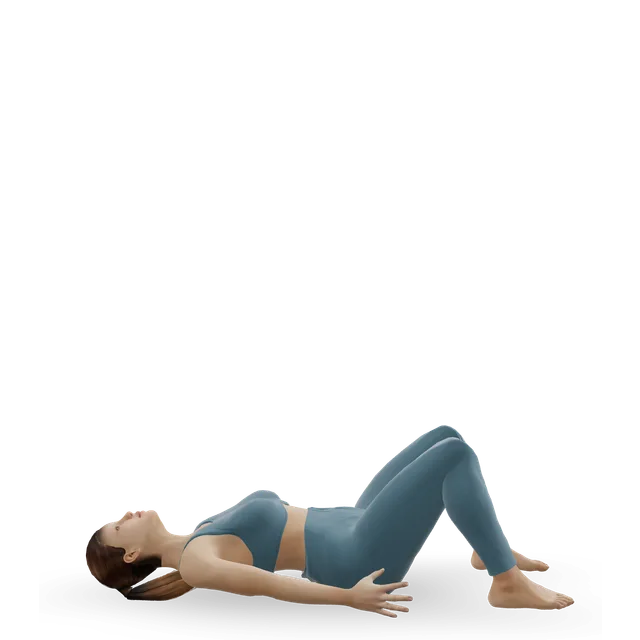
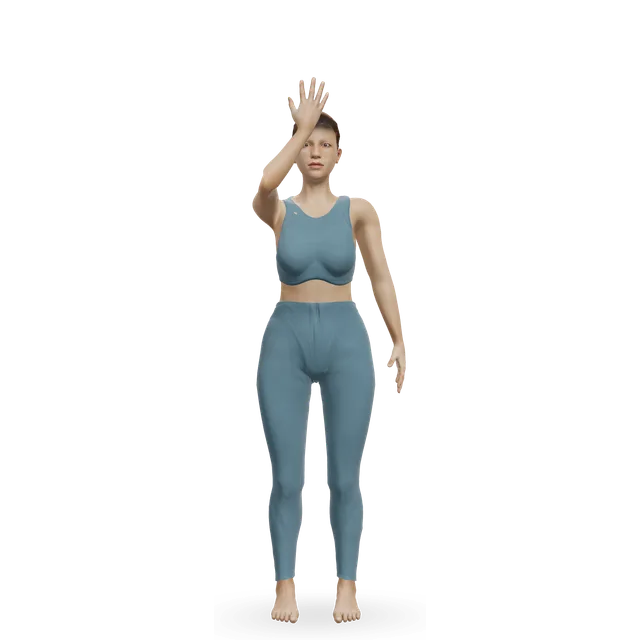
Move slowly, within comfort, and skip any move that sends pain, pins and needles or numbness down an arm or leg. Starting doses from each move's page and our workouts: 8 slow chin tucks, 6 thoracic rotations each side, 8 slow cat-cow waves and 2 to 4 holds of 20 to 30 seconds for the knee hug.

Strength: back extensors, trunk and hips

2 or 3 days a week, building the load gradually (our editorial starting point; each move's page has its dose). With osteoporosis, favour the extension moves, skip deep rounding, and keep the curl-up small.

Routines to follow

The spine mobility routine takes every region through every direction in 15 minutes. The others focus on one region, or on strength and bone.

Spine mobility routine: neck to pelvis, every direction

A 15-minute routine that moves your neck, upper back and lower back through bending, arching, side bending and twisting, then holds the spine steady.

15 minBeginner12 movesNo equipment

Lower back stretch routine

Seven gentle stretches and mobility moves for a stiff lower back, done lying and kneeling.

12 minBeginner7 movesA wall

Upper back mobility routine

A 12-minute routine for a stiff upper back and rounded shoulders: chin tucks, wall angels, Y-T-W raises and open books.

12 minBeginner8 movesA foam roller, A wall

Neck and shoulder stretches

Eight gentle neck and shoulder stretches for desk stiffness, done standing or seated in ten minutes.

10 minBeginner8 movesA wall

Daily mobility routine

A 12-minute routine to move every joint through its range under control: slow neck, shoulder, hip and ankle circles, spine and hip rotation, and deep squats.

12 minBeginner10 movesA wall

Kyphosis exercises for seniors: a spine-strengthening routine

A 30-minute routine for a rounded upper back in later life, built from the SHEAF trial: floor back-strengthening, posture practice and gentle mobility.

30 minBeginner13 movesA bench or box, A wall

Pilates for back pain (gentle routine)

A gentle 15-minute Pilates-based routine for ongoing low back pain, built from neutral-spine moves with options for backs that dislike bending or arching.

15 minBeginner10 movesNo equipment

Yoga for back pain (gentle beginner sequence)

A gentle 20-minute yoga sequence for back pain, based on the first weeks of a 12-week trial programme: lying, all-fours and standing poses, then rest.

20 minBeginner12 movesNo equipment

Beginner core workout

A 15-minute beginner core workout on the floor: dead bugs, bird dogs, knee planks, side planks and curl-ups.

15 minBeginner6 movesNo equipment

Bone-strengthening workout

Impact, strength and balance for stronger bones, following UK osteoporosis consensus advice, with options for every level.

40 minBeginner14 movesA kettlebell, Other / check instructions

Common problems

A one-line orientation for each; the guides below have the detail, a staged plan and the warning signs.

Low back pain and back spasm

Usually not a sign of serious damage. Our back pain guide sorts it by where it hurts and what eases it, and our long-term back pain guide covers pain that lasts.

Discs and nerves

A herniated (slipped) disc, sciatica and spinal stenosis can all send pain down a leg. Disc bulges are common on scans of people without pain, and leg pain from stenosis typically eases when you sit or bend forward.

The neck

Neck pain, a stiff neck and tech neck usually settle with movement. Arm pain, tingling or numbness can come from a pinched nerve, and whiplash, headaches from the neck and neck arthritis each have their own guide.

The pelvis and upper back

Sacroiliac joint pain is felt low and to one side of the back; upper back pain sits between the shoulder blades, and some causes there need a doctor.

Bones and inflammation

Osteoporosis changes how you exercise the spine. Ankylosing spondylitis is an inflammatory back pain that usually starts before 45 and responds to daily mobility and strength work.

Posture shapes

Kyphosis, swayback, scoliosis and forward head posture: our posture guides cover what's normal variation and what exercise can and can't change.

Guides to these problems

Warning signs

Call 999 (911 in the US) or go to A&E

If you have back pain and pain, tingling, weakness or numbness in both legs; a loss of feeling around your genitals or anus; changes in your bladder or bowels, such as difficulty peeing, or peeing or pooing yourself; changes in how your penis or vagina feels during sex, or not being able to get or keep an erection or to orgasm; chest pain; or if it started after a serious accident, such as a car accident. Do not drive yourself to A&E.

Source 57

Get an urgent GP appointment or call NHS 111

If you have back pain and feel hot, cold, shivery or generally unwell, or it's severe pain that starts suddenly or is getting worse quickly. In the US, contact your doctor or urgent care.

Source 57

See a GP about back pain

If it doesn't improve after treating it at home for a few weeks or stops you doing day-to-day activities; you've lost weight without trying to; there's a lump or swelling in your back, or your back has changed shape; it doesn't improve after resting or is worse at night; it's worse when sneezing, coughing or pooing; or it's coming from the top of your back, between your shoulders, rather than your lower back.

Source 57

Neck: contact your GP practice urgently

If you feel clumsiness in your hands, or numbness, pins and needles or weakness that is getting worse in one or both arms; you've had problems with your balance or walking since your neck pain started; or your neck pain comes with a severe headache. Phone 111 if your practice is closed.

Source 58

Neck: contact your GP

If you have neck pain and feel generally unwell, if it started when you were ill with other problems such as rheumatoid arthritis or cancer, or if it comes with blurred vision, ringing in your ears or dizziness. The NHS also advises seeing a GP for pins and needles or a cold arm.

Sources 58, 59

While you exercise

Stop or shrink any move that sends pain, pins and needles or numbness down an arm or leg. Dizziness or changes in your vision during neck movements are a stop sign. With osteoporosis or a past spinal fracture, avoid deep, loaded rounding.

Source 34

Myths

"Everyone has 33 vertebrae"

It's the usual count. A transitional vertebra at the base of the spine shows up in about a quarter to a third of people, and a few have 11 pairs of ribs rather than 12.

Sources 3, 2

"Your spine should be straight"

From the side it has four natural curves, and normal values vary widely.

Sources 1, 4

"Bad posture or a big curve causes back pain"Mixed evidence

People with back pain have the same lower-back curve on average as people without, and reviews found no consensus that posture causes back pain. Our posture guides cover it.

Sources 5, 33

"Never lift with a rounded back"Mixed evidence

Rounding while lifting hasn't been shown to cause back pain, and technique training didn't prevent it. Build loads gradually instead.

Sources 11, 12

"Degeneration on my scan explains my pain"Strong evidence

These findings are common in people without pain and rise with age: degeneration shows in 96% of 80-year-olds without back pain.

Source 10

"Movement pumps nutrients into your discs"Mixed evidence

Only partly. Loading moves water in and out of discs, but oxygen and glucose arrive almost entirely by diffusion.

Sources 36, 38

"Cracking means something was out of place"Emerging evidence

In finger joints filmed with MRI, the sound was gas forming in joint fluid. During manipulation, pops come from either side of the spine, and they don't predict who gets better.

Sources 14, 15, 50, 51

"Discs slip out"

A "slipped disc" is a herniation: some of the gel centre pushes out through the outer fibres. The whole disc doesn't move.

Source 2

"With low bone density, never lift heavy"Emerging evidence

Supervised, progressive heavy training raised spine bone density in a trial, and the UK consensus recommends resistance and impact exercise, with care to avoid deep spinal rounding.

Sources 35, 34

Questions people ask

How many vertebrae are in the human spine?

Usually 33: 7 in the neck, 12 in the upper back, 5 in the lower back, 5 fused into the sacrum and about 4 fused into the tailbone. The 24 above the sacrum move separately. Variations are common: about a quarter of people have a transitional vertebra where the lower back meets the sacrum.

How many discs are in the spine?

23: 6 in the neck, 12 in the upper back and 5 in the lower back. There's no disc between the skull and the first vertebra, or between the first two. Together the discs make up about a quarter to a third of the spine's length.

Is cracking your back bad for you?

Occasional, painless cracking as you move has no known harm, though no study has followed people who do it habitually. The sound is a gas bubble forming in joint fluid, not a bone slipping back into place, and pain improves just as much after manipulation with or without a pop. Don't force your neck, and don't self-manipulate with osteoporosis or after an injury.

Why does my back crack so much when I twist?

Twisting can pull the surfaces of the small facet joints apart. In finger joints filmed with MRI, a quick separation like this formed a gas bubble with a pop, and the spine is thought to work the same way. If it doesn't hurt, it doesn't need treatment.

Is it bad to crack your neck every day?

Moving your neck gently every day is good; forcing it to crack is not recommended. A 2026 review found 24 published cases of harm after people manipulated their own necks, some serious, though there's no evidence that such harm is common. New or unusual neck pain or headache needs checking, not cracking.

Is lifting with a rounded back bad?

Studies haven't found that people who round their lower back more when lifting are more likely to get back pain, and lifting-technique training didn't prevent back pain in 19,317 workers. Very heavy or very frequent lifting at work is linked with a little more back pain, so build up gradually. With osteoporosis, avoid deep rounding under load.

Are deadlifts bad for your back?

Not when the load is built up gradually. In a supervised trial, heavy lifting raised spine bone density in women with low bone mass, and our back pain plans bring deadlifts back on purpose. Sudden jumps in training load look like a more consistent risk than the shape of your back.

Is bending forward bad for your back?

No. The lower back is built to bend, about 31 to 35 degrees forward on X-ray, and reviews found no consensus that bending causes back pain. If bending flares current pain, favour the direction that eases it for now, and with osteoporosis avoid deep rounding.

What do spinal discs need to stay healthy?

Probably regular, varied movement and moderate upright loading, like walking and jogging. Discs have no blood supply, so nutrients seep in from the bone above and below. Runners and brisk walkers tend to have healthier-looking discs, but those studies compare groups at one point in time, at very low certainty, and the one 6-month exercise trial found no change in the discs.

Is disc degeneration normal?

Yes. On scans of people with no back pain, disc degeneration shows in 37% at 20 and 96% at 80, and bulges in 30% and 84%. These findings often have nothing to do with pain.

How far should my neck turn?

Young adults turn about 75 to 80 degrees each way and nod through about 130 degrees from chest to ceiling, and range falls gradually with age. Everyday tasks use only a small part of it, but reversing a car uses nearly all of your turning.

What are the natural curves of the spine?

From the side, the neck and lower back curve inward (lordosis) and the upper back and sacrum curve outward (kyphosis). Babies have the outward curves at birth; the neck curve forms as they hold up their heads and the lower-back curve as they stand. Normal values vary widely, and people with back pain have the same lower-back curve on average as people without.


Sources

  1. DeSai 2023 · Anatomy of the vertebral column (reference chapter, StatPearls)

  2. Waxenbaum 2026 · Anatomy of the intervertebral discs (reference chapter, StatPearls)
  3. Waxenbaum 2026 · Anatomy of the thoracic vertebrae (reference chapter, StatPearls)
  4. Vialle 2005 · The spine's curves on standing X-rays of 300 adults without symptoms (study, J Bone Joint Surg Am)
  5. Laird 2014 · Lower-back and pelvis movement in people with and without back pain (systematic review and meta-analysis, BMC Musculoskelet Disord)
  6. Ferrario 2002 · Head and neck range of motion in 60 healthy young adults (3D motion study, J Orthop Res)
  7. Fujimori 2012 · Upper-back movement in trunk rotation: 3D CT scans of 13 volunteers (study, Spine)
  8. Yukawa 2019 · Lower-back curve and range of motion on X-rays of 627 adults without symptoms (study, Asian Spine J)
  9. Fujii 2007 · Lower-back movement in trunk rotation: 3D MRI of 10 volunteers (study, Eur Spine J)
  10. Brinjikji 2015 · Spine degeneration on scans of people without back pain: 33 studies, 3,110 people (systematic review, AJNR)
  11. Saraceni 2020 · Lower-back bending while lifting and back pain (systematic review and meta-analysis, JOSPT)
  12. Verbeek 2011 · Lifting advice, training and aids to prevent back pain: 7 trials, 19,317 workers (Cochrane review)
  13. Steffens 2016 · Preventing low back pain: 21 trials, 30,850 people (systematic review and meta-analysis, JAMA Intern Med)
  14. Kawchuk 2015 · Real-time MRI of a finger joint cracking (imaging study, PLoS One)
  15. Moorman 2022 · Does the pop during spinal manipulation matter for pain? 5 studies (systematic review, Chiropr Man Therap)
  16. Meyer 2026 · Harms after cracking your own neck: 24 published cases (systematic review, PM&R)
  17. Waxenbaum 2026 · Anatomy of the cervical vertebrae (reference chapter, StatPearls)
  18. Waxenbaum 2026 · Anatomy of the lumbar vertebrae (reference chapter, StatPearls)
  19. Lam 2023 · Kyphosis (reference chapter, StatPearls)
  20. IQWiG 2025 · How does the spine work? (patient information, InformedHealth.org)
  21. Nedresky 2023 · Anatomy of the nucleus pulposus (reference chapter, StatPearls)
  22. Curtis 2025 · Facet joint disease (reference chapter, StatPearls)
  23. Wong 2023 · Anatomy of the sacroiliac joint (reference chapter, StatPearls)
  24. Sassack 2023 · Anatomy of the lumbar spine (reference chapter, StatPearls)
  25. Intolo 2009 · The effect of age on lower-back range of motion: 16 studies (systematic review, Manual Therapy)
  26. Pan 2018 · Age, sex and neck range of motion (systematic review and meta-analysis, J Biomech)
  27. Arshad 2019 · Age, sex, the lower-back curve and range of motion (systematic review and meta-analysis, J Biomech)
  28. Sforza 2002 · Head and neck range of motion and age in 70 healthy men (3D motion study, Clin Biomech)
  29. Yukawa 2012 · Age-related changes in the neck on X-rays of 1,230 people without symptoms (study, Eur Spine J)
  30. Nakanishi 2024 · Lower-back side bending by age and sex on X-rays of 82 healthy people (preliminary study, Fukushima J Med Sci)
  31. Bible 2010 · How much neck movement 15 everyday tasks use, in 60 adults (study, J Spinal Disord Tech)
  32. Pocovi 2024 · Walking to stop back pain coming back in 701 adults (WalkBack randomised trial, Lancet)
  33. Swain 2020 · Spine posture, physical exposure and low back pain: 41 reviews (umbrella review, J Biomech)
  34. Brooke-Wavell 2022 · Strong, steady and straight: UK consensus on physical activity and exercise for osteoporosis (BJSM)
  35. Watson 2018 · Heavy resistance and impact training in 101 women with low bone mass (LIFTMOR randomised trial, J Bone Miner Res)
  36. Urban 2004 · Nutrition of the intervertebral disc (review, Spine)
  37. Grunhagen 2006 · Nutrient supply and disc cell metabolism (review, J Bone Joint Surg Am)
  38. Urban 1982 · Fluid flow and how nutrients reach the intervertebral disc (lab study, Clin Orthop Relat Res)
  39. Belavý 2017 · Running and disc health in 79 adults (cross-sectional MRI study, Sci Rep)
  40. Samanna 2026 · Exercise and disc health: 39 studies, 4,152 people (systematic review and meta-analysis, Sports Medicine)
  41. Shu 2024 · Running and the intervertebral disc (systematic review, Sports Health)
  42. Owen 2020 · Exercise and disc structure in 40 adults with chronic back pain over 6 months (randomised trial, Eur Spine J)
  43. Samanna 2026 · Running and disc changes in 40 adults with back pain (secondary analysis of the ASTEROID randomised trial, Eur Spine J)
  44. Belavý 2016 · Can exercise positively influence the intervertebral disc? (narrative review, Sports Medicine)
  45. Coenen 2014 · Lifting at work and low back pain: 8 cohort studies (meta-analysis, Occup Environ Med)
  46. Wai 2010 · Does lifting at work cause low back pain? (systematic review, Spine J)
  47. Kwon 2011 · Physical work and low back pain (systematic review, Occup Med)
  48. Liu 2026 · Lifting style, spine direction and back pain risk: 10 studies (systematic review, Int J Occup Med Environ Health)
  49. Cherni 2026 · Beyond the neutral spine: preventing back injury in deadlifting (narrative review, Sports)
  50. Mourad 2019 · Pops from both sides during lower-back manipulation in 34 people (study, J Manipulative Physiol Ther)
  51. Dunning 2013 · Pops from both sides during upper-neck manipulation in 19 people (study, BMC Musculoskelet Disord)
  52. Flynn 2006 · The pop during manipulation and outcomes in 70 people with low back pain (study, J Manipulative Physiol Ther)
  53. Bergamino 2022 · What 478 adults believe about the pop during manipulation (online survey, J Manipulative Physiol Ther)
  54. Rubinstein 2019 · Spinal manipulation for chronic low back pain: 47 trials, 9,211 people (systematic review and meta-analysis, BMJ)
  55. Cassidy 2008 · Stroke after chiropractic and GP visits: 818 strokes (case-control study, Spine)
  56. NHS · Herbal medicines and complementary therapies (including chiropractic and osteopathy)
  57. NHS · Back pain
  58. NHS inform · Neck problems
  59. NHS · Neck pain and stiff neck

Education about how your joints work, not a diagnosis, and clinical review of these guides is pending. For a painful, swollen or injured joint, see the pain guide for that area and a doctor or physiotherapist, and stop any exercise that causes sharp or increasing pain. Health disclaimer.