Posture guide

Kyphosis and a hunched back: exercises, causes and when to get checked

Kyphosis is the forward curve of your upper back. Everyone has some; when it's bigger than usual, the upper back looks rounded or hunched. In teenagers it's usually a flexible slouch, sometimes a stiff curve called Scheuermann's kyphosis; in later life it can come from disc wear, weaker back muscles or spinal fractures from osteoporosis.

Exercise can reduce an age-related curve a little: in the best trial, 6 months of classes cut it by about 3 degrees on X-ray. It can't reshape vertebrae that have fractured or grown wedge-shaped. This guide covers the different kinds of curve, the moves from the trials with 3D demos, how to exercise safely with osteoporosis, and why a new hunch or height loss needs a GP.

The short version

Everyone has some curve

Most people's upper-back curve measures 20 to 45 degrees. It grows after about 40, faster in women: on average about 43 degrees at 55 to 60 and 52 degrees at 76 to 80. Depending on the definition, 20% to 40% of older adults have a bigger-than-usual curve (hyperkyphosis).

Sources 1, 2, 3, 4

Three kinds matter

Postural kyphosis is a flexible slouch, mostly in teenagers, that doesn't get worse. Scheuermann's kyphosis is a stiff curve from wedge-shaped vertebrae that forms during the early-teen growth spurt. Age-related kyphosis comes from disc wear, weaker back muscles and sometimes spinal fractures.

Sources 5, 6, 7, 3

A new hunch needs a GP

A hunch isn't always osteoporosis: only about a third of older adults with the most curved backs had spinal fractures. But a curved upper back, height loss and unexplained back pain can be signs of spinal fractures, and UK guidance is to check for them. See a GP if your back has changed shape.

Sources 8, 9, 10, 11

Exercise reduces an age-related curve a little

Across 24 studies, exercise reduced kyphosis by a small amount. In the best trial, 6 months of physiotherapist-led classes three times a week cut the curve by 3 degrees on X-ray, though physical function didn't change and some of the gain was lost after the classes stopped.

Sources 12, 13

Fractured or wedge-shaped bones don't reshape

Spinal bones that break from osteoporosis heal in a compressed shape, and the NHS says exercises help pain and stiffness but won't improve a structural curve or stop it getting worse.

Sources 14, 5

With osteoporosis: strengthen your back, don't load the rounding

Avoid sustained, repeated, deep or loaded bending forward, and do back-muscle exercises: 3 to 5 repetitions held 3 to 5 seconds, at least twice a week (UK osteoporosis consensus).

Source 15

Three kinds of curve, and some rarer ones

Postural kyphosis

A flexible rounding that straightens when you stand up straight or lie down; the bones are normal. It's the commonest type, usually seen in teenagers and more often in girls. It's rarely painful and doesn't get worse over time.

Sources 5, 6, 2

Scheuermann's kyphosis

A stiff curve that forms when the front of some vertebrae grows more slowly than the back, making them wedge-shaped. It shows up around ages 12 to 15 in boys and a few years earlier in girls, is more common in boys, and affects up to 8% of children, by US estimates.

The curve is sharp, is easiest to see when bending forward, and doesn't straighten when you stand tall. Many curves stay mild and need only check-ups, but it can get worse until growth stops.

Sources 7, 2, 16, 6

Age-related kyphosis

In later life the curve can grow from disc wear, weaker back muscles and spinal (vertebral) fractures from osteoporosis. It usually progresses slowly, on average by less than 1 degree a year, and a new spinal fracture adds about 4 degrees.

Sources 3, 8, 13

Rarer kinds

Congenital kyphosis, where the spine doesn't form properly before birth, is rare and often needs surgery. Kyphosis can also follow an injury or earlier spine surgery, and in older people calcified spinal ligaments (diffuse idiopathic skeletal hyperostosis, or DISH) can stiffen the upper back. These need specialist care.

Sources 5, 1, 13

How a curve is measured, and what's normal

The X-ray angle

The reference measure is the Cobb angle on a standing X-ray taken from the side. Measurement error is 3 to 5 degrees, so small changes can be noise.

Sources 3, 4

Where "too much" starts

Definitions vary: more than 40 degrees (the top 5% of young adults), more than 45 degrees (Scoliosis Research Society), or more than 50 degrees (American Academy of Orthopaedic Surgeons). For older adults, whose average is 35 to 42 degrees, 50 degrees or more has been proposed.

Sources 1, 2, 3, 4

How it changes with age

The curve averages 20 to 29 degrees through childhood and the 20s and grows after 40, faster in women: from about 43 degrees at 55 to 60 to 52 degrees at 76 to 80.

Sources 3, 17

Measures without an X-ray

Clinicians use a kyphometer, a bendy ruler (flexicurve) or the number of blocks needed under your head when you lie on your back. These agree moderately with the X-ray angle. The gap between the back of your head and a wall when you stand against it also tracks the curve, though it reflects your neck too.

Sources 3, 18, 19, 4

Flexible or fixed?

A postural curve straightens when you stand tall or lie down; a structural one doesn't. That's one reason a stiff or sharp curve needs a GP.

Sources 6, 2

Two self-checks

Stand with your heels and back against a wall. If the back of your head can't reach the wall without tipping your chin up, note the gap and recheck in a few months. In one study, a gap of 6.5 cm or more picked out about 7 in 10 people with a bigger-than-usual curve, but also flagged about 1 in 4 without one.

Measure your height once a year: UK guidance counts 4 cm or more of height loss as a reason to check for spinal fractures. Neither check is a diagnosis.

Sources 19, 10

When a hunch is a spinal fracture

A hunch isn't always osteoporosisStrong evidence

In 1,407 adults aged 50 to 96, only about 36% of those with the most curved backs had spinal fractures; disc wear was the commonest finding. The authors still advised checking people with a marked curve for fractures.

Sources 8, 3

How spinal fractures change the shapeStrong evidence

Osteoporotic spinal bones squash down rather than breaking apart, and heal in 6 to 12 weeks in their compressed shape. Several fractures cause height loss and an outward curve at the top of the spine. Some spinal fractures don't cause the pain you'd expect, and the pain can be mistaken for arthritis.

Sources 14, 9

Most spinal fractures aren't picked upStrong evidence

The UK osteoporosis guideline says most spinal fractures don't come to medical attention. It recommends checking for them in women after the menopause and men aged 50 or over who have lost 4 cm or more in height, have a curved upper back, have taken steroid tablets long term, or have sudden back pain with risk factors for osteoporosis.

Source 10

What to do

If you notice a new or increasing hunch, height loss or back pain you can't explain, speak to your GP. Osteoporosis medicines reduce the risk of further fractures. Our exercise for osteoporosis guide covers exercise after a spinal fracture.

Sources 9, 10

What the evidence says

Exercise reduces age-related kyphosis a littleEmerging evidence

A review of 24 studies in adults aged 45 and over found exercise reduced kyphosis by a small amount (moderate certainty), improved quality of life a little, and may have eased pain a little; there were no serious side effects, and effects on falls were uncertain. Earlier reviews point the same way, with strengthening likely to matter more than stretching.

Another review, which grouped the trials differently, found programmes of 3 months or less helped older people but judged longer ones ineffective, so how much exercise helps, and over what time, isn't settled.

Sources 12, 20, 21, 22, 23

The SHEAF trial: about 3 degrees in 6 monthsEmerging evidence

In the Study of Hyperkyphosis, Exercise and Function (SHEAF), 99 adults aged 60 to 88 did hour-long, physiotherapist-led group classes three times a week for 6 months: back-strengthening, spinal mobility and posture training, plus posture practice at home.

Their X-ray curve fell by 3 degrees compared with a health-education group, roughly the size of the increase one new spinal fracture causes. Their self-image improved, but walking speed and other tests of physical function didn't change, and there were no serious side effects. In the 6 months after the classes stopped, the curve crept back up by 1.6 degrees.

Sources 13, 24

Shorter programmes may change lessEmerging evidence

Three months of twice-weekly classes in 101 adults reduced kyphosis measured with a kyphometer by about 5 degrees, but the X-ray change of 1.7 degrees wasn't statistically significant. An earlier pilot in 21 women, with no comparison group, reported a 6-degree reduction and better physical performance after 12 weeks.

Sources 25, 26

Back-strengthening and later fracturesMixed evidence

In 60 healthy women aged 49 to 65, 2 years of back-strengthening exercise didn't change kyphosis compared with no exercise. Eight years after the programme ended, the exercise group had fewer spinal fractures (1.6% of vertebrae against 4.3%), in a small follow-up of 50 women.

Sources 27, 28

Yoga and supervised heavy liftingEmerging evidence

In 118 adults over 60, yoga three times a week for 24 weeks improved one measure of kyphosis by about 5% but not physical performance.

In closely supervised trials of heavy lifting in people with low bone mass, women's standing posture improved more than the comparison group's (6.7 against 1.6 degrees), and men in the heavy-lifting group improved by 3.5 degrees on X-ray, with no new spinal fractures in those groups.

Sources 29, 30, 31

Linked with falls, everyday function and earlier deathEmerging evidence

In cohort studies, older people with more kyphosis fell more often, found everyday tasks such as standing up from a chair harder, and died earlier on average. These are associations: other health problems could explain them, and we found no trial showing that reducing the curve changes falls or survival.

Sources 32, 33, 34, 35, 36, 37, 38, 39

Breathing with a severe curveStrong evidence

A severe curve can cause back pain and make breathing difficult. After spinal fractures, a curved spine can cause breathlessness and a squashed, bloated feeling in the stomach. The UK osteoporosis consensus recommends breathing exercises for symptoms made worse by a marked curve.

Sources 5, 2, 14, 15
What helps, and how much to do

Strengthen the back muscles

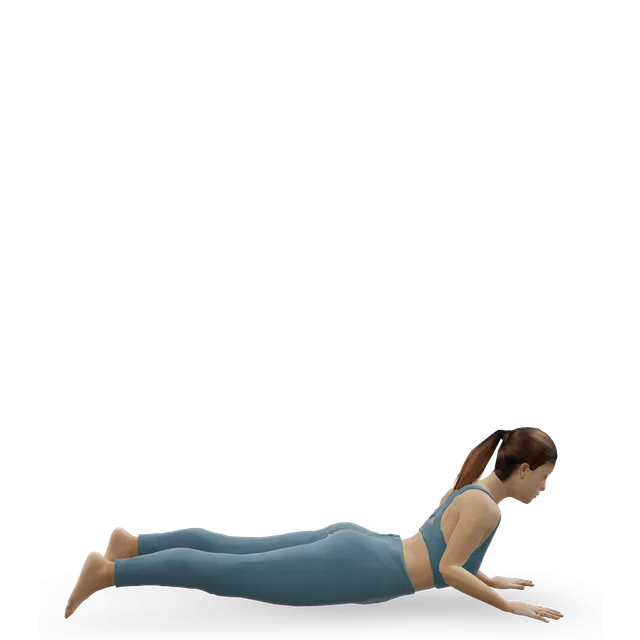
The UK osteoporosis consensus recommends exercises that strengthen the back muscles: 3 to 5 repetitions, each held 3 to 5 seconds, at least twice a week. The low cobra and the seated upper-back lift are examples. Without osteoporosis or past spinal fractures, build towards the SHEAF trial's 2 sets of 8 at a "somewhat hard" effort over about 6 weeks.

Sources 15, 24, 13

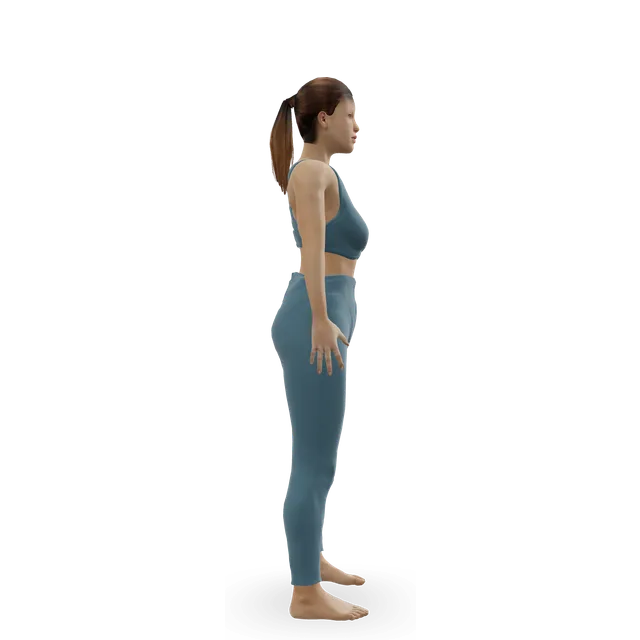
Practise standing and sitting tall

SHEAF asked people to practise good posture at least three times a day at home. The Royal Osteoporosis Society's posture exercises (sitting and standing tall, chin tucks, shoulders back) use 3 to 5 repetitions or up to 10 holds of 3 to 5 seconds, 2 or 3 days a week.

Sources 13, 40

Keep your upper back moving

SHEAF used side-lying and standing back rotations and extensions, and a cool-down that stretched the neck, chest and limbs. Our editorial starting point: open-book rotations, 8 each side; a doorway chest stretch, 2 holds of 30 seconds each side with the elbow at or below shoulder height; breath reaches, 5 breaths, since the consensus recommends breathing exercises for a marked curve.

Sources 24, 15

Three times a week, for months

The trial that reduced the X-ray curve ran three classes a week for 6 months; 3 months twice a week didn't significantly change the X-ray angle. Keep going: some of the gain faded after the classes stopped.

Sources 13, 25

Add strength and balance for bones and falls

The UK consensus recommends strength exercise, building to 8 to 12 repetitions and up to 3 sets, and balance training to reduce falls. Sit-to-stands, goblet squats and hip-hinge practice suit most people; the older adults and osteoporosis guides have the full plans.

Source 15

Back-muscle strength

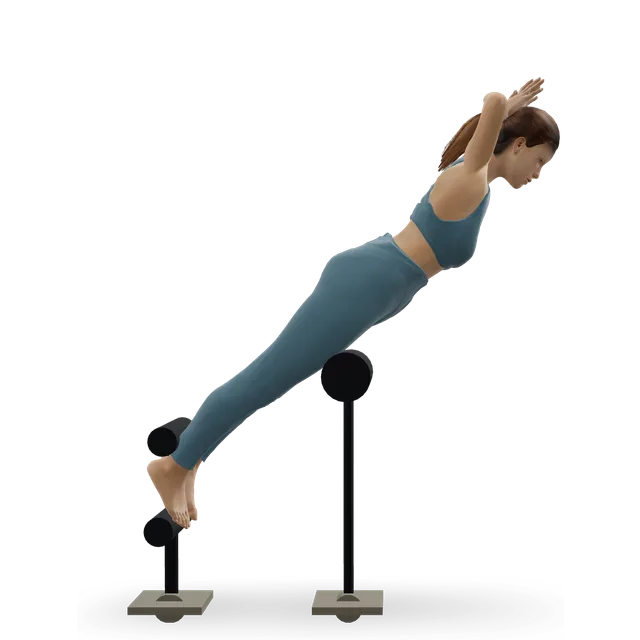
Low cobra and locust: 3 to 5 lifts held 3 to 5 seconds, at least twice a week (UK osteoporosis consensus), building towards 2 sets of 8 if you have no osteoporosis or fractures (SHEAF trial). Bird dog, 2 sets of 8 each side (SHEAF). Y-T-W raises, 5 of each letter for 2 rounds, and the 45-degree back extension, 2 sets of 8 to 12, only without spinal fractures (our editorial starting points).

Posture practice, standing or seated

No floor needed. Chin tucks and seated upper-back lifts, 3 to 5 holds of 3 to 5 seconds, at least twice a week, and daily at low effort after a spinal fracture (Royal Osteoporosis Society and UK consensus); band rows, 8 to 12, building to 3 sets (UK consensus); wall angels, 8 slow slides, with a small range if your back is very curved (our editorial starting point).

Mobility and chest opening

Open books, 8 each side, and seated rotations, 5 each side with arms crossed; breath reaches, 5 breaths; doorway stretch, 2 holds of 30 seconds with the elbow at or below shoulder height; sphinx, 3 holds of 3 to 5 breaths (our editorial starting points, from the SHEAF programme's mobility work and cool-down).

With osteoporosis or a past spinal fracture

Strengthen your back; don't load the roundingStrong evidence

The UK consensus asks people with osteoporosis to avoid sustained, repeated, end-range or loaded bending forward, such as sit-ups, toe touches, roll-downs and lifting with a rounded back. Bend from the hips instead.

Back-muscle exercises are recommended: 3 to 5 repetitions held 3 to 5 seconds, at least twice a week, and daily at low effort after a spinal fracture. The research behind these limits is thin, so they're a precaution as much as a proven rule.

Sources 15, 40

Why bending forward is the concernMixed evidence

In a small 1984 study, women with spinal osteoporosis who were taught bending-forward exercises had far more new spinal fractures than those taught back-extension exercises (89% of 9 women against 16% of 25). The groups weren't randomised, so treat it as a warning rather than proof.

Source 41

After a spinal fractureMixed evidence

Stay as active as you can: movement doesn't affect healing. Do gentle back exercises daily at low effort, keep impact to brisk-walking level, and ask for a physiotherapy referral.

In trials after a spinal fracture, exercise made the Timed Up and Go test (standing up from a chair, walking 3 metres, turning and sitting back down) about 1 second faster; effects on fractures, falls and pain are uncertain.

Sources 14, 15, 42

More in the osteoporosis guide

Our exercise for osteoporosis guide covers the back exercises (its "Straight" section), what to modify when bending, lifting and twisting, and exercise after a spinal fracture in more detail.

Swaps for sit-ups and toe touches

With osteoporosis, these train the trunk with the spine still: the dead bug or knee plank in place of sit-ups and crunches, and hip-hinge practice in place of toe touches (the swaps our osteoporosis guide uses).

Teenagers: a slouch or Scheuermann's?

A teenage slouchEmerging evidence

Postural kyphosis rarely hurts and doesn't progress. Back and core strengthening and posture awareness are the main treatment if it causes symptoms. A review of 9 trials in teenagers and young adults found exercise programmes improved the curve angle.

Sources 2, 1, 43, 23

Scheuermann's: exercise and bracingEmerging evidence

Exercise and physiotherapy help pain and stiffness, but there's no conclusive evidence that exercise alone changes the curve for good. For teenagers who are still growing, a specialist may prescribe a brace, usually worn until growth stops: in a long-term study of 110 people who wore one consistently, 76 improved.

Sources 16, 5, 2, 44

Scheuermann's: surgery and specialist exerciseEmerging evidence

Surgery is considered for large curves, roughly over 70 to 80 degrees, with pain, or for curves that keep getting worse. One trial in 50 young adults found a specialist exercise method taught by trained therapists (Schroth therapy) improved the curve more than standard exercises over a year.

Sources 2, 7, 45, 46

Braces, taping, medicines and surgery

Braces in older adultsMixed evidence

In one trial, women with osteoporotic spinal fractures who wore a spinal brace for 6 months had 11% less kyphosis, stronger back muscles and less pain. Pooled trials of bracing for 3 months or more in older adults were low quality, and the UK guideline doesn't recommend routine bracing for a new spinal fracture.

Sources 47, 23, 10

Taping and posture correctorsMixed evidence

Taping reduced kyphosis during standing tasks in a small study, but a review judged it ineffective in older adults. We found no trial of off-the-shelf posture correctors for kyphosis.

Sources 3, 23

Medicines and proceduresEmerging evidence

No medicine improves the curve itself, but osteoporosis medicines reduce the risk of more fractures. Vertebroplasty and kyphoplasty, which inject bone cement into a broken vertebra, are for a few people with severe, ongoing fracture pain, and they don't strengthen bone.

Sources 3, 10, 14

Workouts to follow

Start with the kyphosis routine, built from the SHEAF trial, three times a week. Use the chair workout if getting down to the floor is hard, the balance routine for falls, and the strength and bone workouts if you have no recent spinal fractures. The upper-back posture routine suits younger people; with osteoporosis, check its foam roller with a physiotherapist first.

Weekly plans

For people without recent spinal fractures who are steady on their feet.

Warning signs

Call 999 or go to A&E (911 in the US)

Get emergency help for back pain with any of these:

  • Pain, tingling, weakness or numbness in both legs.
  • Numbness or loss of feeling around your genitals or bottom.
  • Changes in bladder or bowel control, or in sexual sensation or function.
  • Chest pain.
  • Pain after a serious accident.

Source 11

Get an urgent GP appointment or call NHS 111

Get advice soon (in the US, your doctor or urgent care) for back pain with any of these:

  • You feel hot, cold, shivery or generally unwell.
  • Severe pain that starts suddenly or gets worse quickly.

Source 11

See a GP soon

Book a GP appointment for any of these:

  • Your back has changed shape, or there's a lump or swelling.
  • A new or increasing hunch, or height loss.
  • New back pain after a minor fall, bend, lift or cough: it can be a spinal fracture from osteoporosis, and not every spinal fracture hurts.
  • Pain between your shoulders, pain that's worse at night, or back pain with weight loss you can't explain.

Sources 11, 9, 10

Children and teenagers

See a GP if you think your child might have kyphosis. A curve can get worse until growth stops, and a stiff, sharp or painful curve that doesn't straighten when standing tall isn't a simple slouch. Rarely, a curve that keeps growing causes weakness, numbness or tingling in the legs, bladder or bowel changes, or difficulty breathing.

Sources 5, 6, 2

Myths

"Kyphosis exercises can straighten any curved back."Emerging evidence

A postural slouch straightens when you stand tall. An age-related curve improved by about 3 degrees in 6 months of classes, and fractured or wedge-shaped bones don't reshape.

Sources 1, 13, 14, 5

"A hunched back always means osteoporosis."Strong evidence

Only about a third of the most curved older backs had spinal fractures. But a new hunch or height loss still needs checking.

Sources 8, 10

"A teenage slouch turns into a hunchback."Strong evidence

Postural kyphosis rarely hurts and doesn't progress. A stiff, sharp curve is different and needs a GP.

Sources 2, 6

"You can't exercise with osteoporosis and kyphosis."Strong evidence

Exercise is recommended: back-muscle work, strength and balance. What changes is avoiding loaded, repeated or deep rounding.

Sources 15, 12

"A posture brace will straighten an older back."Mixed evidence

One trial of a spinal brace reduced kyphosis by 11%, but the pooled evidence is low quality, and routine bracing after a new spinal fracture isn't recommended.

Sources 47, 23, 10

Questions people ask

What is kyphosis?

It's the natural forward curve of your upper back; most people's measures 20 to 45 degrees. In everyday use it means a bigger curve that makes the back look hunched. The main kinds are postural (a flexible slouch), Scheuermann's (wedge-shaped vertebrae in teenagers) and age-related.

Can kyphosis be reversed?

It depends on the kind. A postural curve straightens when you stand tall, but bones that heal compressed after a spinal fracture don't go back, and the NHS says exercises won't improve a structural curve. For an age-related curve, 6 months of classes reduced it by about 3 degrees on X-ray.

What exercises help kyphosis?

Back-strengthening (small face-down chest lifts and the bird dog), posture practice and upper-back mobility: the mix used in the SHEAF trial. Across 24 studies in adults aged 45 and over, exercise reduced kyphosis a little and improved quality of life a little. The kyphosis routine on this page follows that mix.

Which exercises should I avoid with kyphosis and osteoporosis?

Avoid deep, repeated or loaded rounding: sit-ups, toe touches, roll-downs and lifting with a rounded back. In a small 1984 study, women with spinal osteoporosis doing bending-forward exercises had far more new spinal fractures than those doing back-extension exercises. Bend from the hips instead.

Is a hunched back a sign of osteoporosis?

Sometimes. A curved spine, height loss and unexplained back pain can be signs of spinal fractures, and the Royal Osteoporosis Society advises speaking to your doctor. But in 1,407 older adults, only about a third of those with the most curved backs had spinal fractures.

When should I see a GP about a hunched back?

If the curve is new or increasing, you've lost height, your back has changed shape, or you have new back pain after a minor fall, bend, lift or cough. A child or teenager with a rounded back should see a GP too. Call 999 for weakness or numbness in both legs, or for bladder or bowel changes.

Does kyphosis affect breathing?

A severe curve can make breathing difficult, and after spinal fractures a curved spine can cause breathlessness and a squashed, bloated feeling. Breathing exercises are recommended for these symptoms. New or worsening breathlessness needs a GP.

Do kyphosis braces work?

For teenagers with Scheuermann's who are still growing, a specialist may prescribe one, and in a long-term study most consistent wearers improved. In older adults, low-quality evidence suggests braces worn for 3 months or more reduce the curve, but routine bracing after a new spinal fracture isn't recommended.

What is Scheuermann's kyphosis?

A stiff curve that develops in the early teens when the front of some vertebrae grows more slowly, making them wedge-shaped; it doesn't straighten when you stand tall. It affects up to 8% of children, by US estimates. Exercise helps pain, and bracing during growth or surgery for large, painful curves are specialist options.

My teenager slouches. Is it kyphosis?

A flexible slouch is usually postural kyphosis: it straightens when they stand tall or lie down, rarely hurts and doesn't get worse. Strengthening and posture awareness help if it causes symptoms. See a GP if the curve is stiff, sharp, painful or getting worse.

Does kyphosis cause falls?

Older people with more kyphosis fall more often in cohort studies, but that doesn't show the curve causes the falls. Whether reducing the curve prevents falls is unknown; balance and strength training is what cuts falls, as the older adults guide explains.

Are yoga and Pilates good for kyphosis?

In 118 older adults, 6 months of yoga three times a week improved one measure of kyphosis by about 5% but not physical performance. With osteoporosis, choose classes that avoid deep forward folds and roll-downs.

Sources

  1. Scoliosis Research Society · Kyphosis
  2. American Academy of Orthopaedic Surgeons (OrthoInfo) · Kyphosis (roundback) of the spine
  3. Katzman 2010 · Age-related hyperkyphosis: causes, consequences and management (review, Journal of Orthopaedic & Sports Physical Therapy)
  4. Koelé 2020 · The clinical relevance of hyperkyphosis (narrative review, Frontiers in Endocrinology)
  5. NHS · Kyphosis
  6. Scoliosis Research Society · Developmental kyphosis
  7. Scoliosis Research Society · Scheuermann's kyphosis
  8. Schneider 2004 · Kyphosis does not equal vertebral fractures: the Rancho Bernardo study (Journal of Rheumatology)
  9. Royal Osteoporosis Society · Osteoporosis symptoms
  10. Gregson 2022 · UK clinical guideline for the prevention and treatment of osteoporosis (NOGG, Archives of Osteoporosis)
  11. NHS · Back pain
  12. Ponzano 2021 · Exercise for age-related hyperkyphosis (systematic review and meta-analysis, Archives of Osteoporosis)
  13. Katzman 2017 · Spine strengthening and posture training to reduce hyperkyphosis in older adults: the SHEAF trial (RCT, Osteoporosis International)
  14. Royal Osteoporosis Society · Spinal fractures (vertebral fractures)
  15. Brooke-Wavell 2022 · Strong, steady and straight: UK consensus statement on physical activity and exercise for osteoporosis (British Journal of Sports Medicine)
  16. O'Donnell 2023 · Scheuermann kyphosis: current concepts and management (review, Current Reviews in Musculoskeletal Medicine)
  17. Fon 1980 · Thoracic kyphosis: range in normal people (X-ray study, American Journal of Roentgenology)
  18. Tran 2016 · Four measures of thoracic kyphosis in older adults compared (Osteoporosis International)
  19. Wiyanad 2018 · Is the gap between the back of the head and the wall a valid measure of hyperkyphosis? (Musculoskeletal Science and Practice)
  20. González-Gálvez 2019 · Exercise programmes for kyphosis and lordosis (systematic review and meta-analysis, PLoS One)
  21. Withers 2023 · Stretching, alone or with strengthening, for hyperkyphosis in adults (systematic review and meta-analysis, Journal of Frailty, Sarcopenia and Falls)
  22. Bansal 2014 · Exercise for age-related hyperkyphotic posture (systematic review, Archives of Physical Medicine and Rehabilitation)
  23. Jenkins 2021 · Which treatments reduce thoracic hyperkyphosis? (systematic review and meta-analysis, Musculoskeletal Science and Practice)
  24. Katzman 2016 · The SHEAF trial protocol: spine-strengthening exercise for older adults with hyperkyphosis (Physical Therapy)
  25. Katzman 2017 · Sex differences in response to kyphosis exercise and posture training (RCT, BMC Musculoskeletal Disorders)
  26. Katzman 2007 · Flexed posture and physical performance after group exercise in older women (uncontrolled study, Archives of Physical Medicine and Rehabilitation)
  27. Itoi 1994 · Back-strengthening exercise and posture in women aged 49 to 65 (RCT, Mayo Clinic Proceedings)
  28. Sinaki 2002 · Stronger back muscles reduce the incidence of vertebral fractures: a 10-year follow-up of postmenopausal women (Bone)
  29. Greendale 2009 · Yoga for adult-onset hyperkyphosis in older women and men (RCT, Journal of the American Geriatrics Society)
  30. Watson 2019 · High-intensity exercise did not cause vertebral fractures and improved thoracic kyphosis: the LIFTMOR trial (Osteoporosis International)
  31. Harding 2021 · Thoracic kyphosis and incident fracture with high-intensity exercise in men: a LIFTMOR-M secondary analysis (Osteoporosis International)
  32. McDaniels-Davidson 2018 · Kyphosis and falls in older adults (cohort study, Osteoporosis International)
  33. McDaniels-Davidson 2020 · Kyphosis and 3-year fall risk in older men (cohort study, Osteoporosis International)
  34. Kado 2007 · Hyperkyphotic posture and injurious falls in older people (cohort study, Journals of Gerontology)
  35. Kado 2005 · Hyperkyphotic posture and physical function in older adults: the Rancho Bernardo study (Journals of Gerontology)
  36. Antonelli-Incalzi 2007 · The gap between the back of the head and the wall, and physical performance in older people (cross-sectional study, Aging Clinical and Experimental Research)
  37. Kado 2004 · Hyperkyphotic posture predicts mortality in older men and women (cohort study, Journal of the American Geriatrics Society)
  38. Kado 2009 · Hyperkyphosis predicts mortality independent of spinal osteoporosis in older women (cohort study, Annals of Internal Medicine)
  39. Cours 2023 · Hyperkyphosis and mortality in older men (cohort study, Journal of the American Geriatrics Society)
  40. Royal Osteoporosis Society · Exercises to help with posture
  41. Sinaki 1984 · Postmenopausal spinal osteoporosis: flexion versus extension exercises (Archives of Physical Medicine and Rehabilitation)
  42. Gibbs 2019 · Exercise for improving outcomes after osteoporotic vertebral fracture (Cochrane review)
  43. Fernández 2025 · Exercise for hyperkyphosis in teenagers and young adults (systematic review, Physiotherapy Research International)
  44. Sachs 1987 · Scheuermann kyphosis: follow-up of Milwaukee-brace treatment (Journal of Bone and Joint Surgery)
  45. Huq 2020 · Treatments for Scheuermann kyphosis, past and present (systematic review, Journal of Neurosurgery: Spine)
  46. Bezalel 2019 · Schroth therapy for Scheuermann's kyphosis (RCT, Asian Spine Journal)
  47. Pfeifer 2004 · A spinal brace for women with osteoporosis: posture, trunk strength and quality of life (RCT, American Journal of Physical Medicine & Rehabilitation)

Exercise education, not a diagnosis or treatment plan, and clinical review of these guides is pending. Get a curve or hunch that is new or getting worse checked, above all in a growing child or after a fall, and get urgent help for numbness or weakness in the legs or a change in bladder or bowel control. Health disclaimer.