Lateral line
Overhead side bend
Movement guide
Overhead side bend
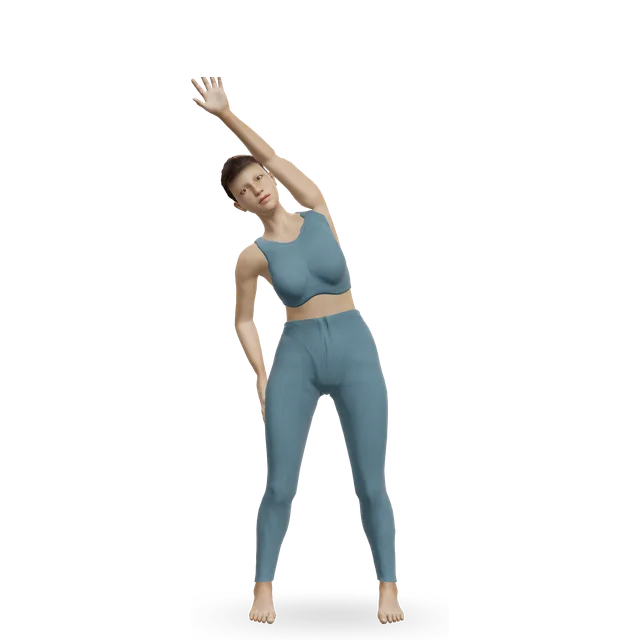
Loading the 3D figure…
Existing guide · editorial review pending. Clinical review is pending.
Sources and review status
Sources support the educational description; they do not establish that this exercise is suitable for you.
- Wilke 2016 · myofascial chains
No variation is labeled clinically validated.
Reach one arm overhead and bend away from it, keeping both feet heavy. You are opening the long seam that runs from ankle to armpit, one of the most under-stretched lines in a chair-shaped life.
Make it easier or harder
Choose a version that fits your control and comfort.
Easier option
 3D demoSeated overhead side bendBeginner · A bench or box
Suggested next step, beginner grade.
Harder option
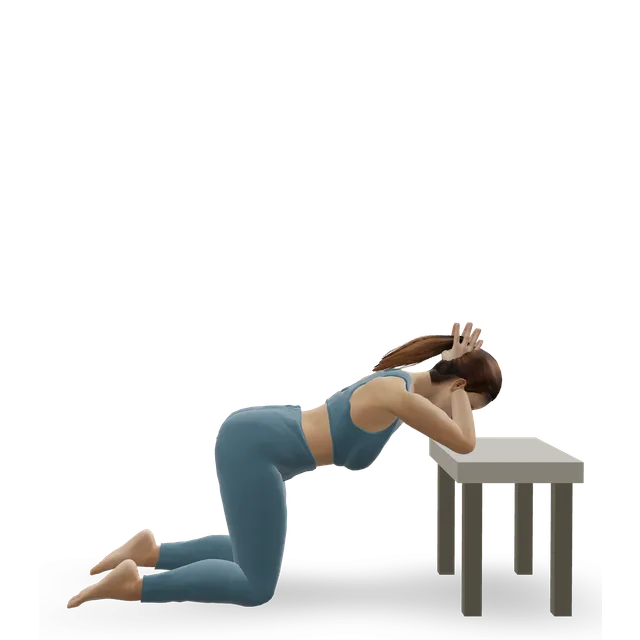 3D demoOverhead lat stretch at a bench (elbows on the bench)Intermediate · A bench or box
Similar move, intermediate grade.
How to do it
- 01Stand tall, feet hip-width, both feet pressing evenly into the floor.
- 02Reach one arm overhead and let the other rest on your hip or slide down your thigh.
- 03Exhale and bend sideways away from the raised arm, reaching long rather than collapsing.
- 04Breathe into the open ribs for a slow breath or two, then rise on an inhale and switch sides.
Mistakes that waste your reps
- Twisting forward or backward instead of bending purely sideways.
- Letting the opposite foot peel off the floor, which shortens the very line you are stretching.
- Crunching the bottom ribs down instead of reaching the top arm long.
Where this comes from
Discomfort that eases as you move is normal; pain that sharpens is a stop sign. If this area is injured or persistently painful, a clinician outranks this page.
Written by Kyle Jenkin · updated August 31, 2026 · how we grade evidence
Pairs well with
What it works
Muscles
Works the mid back, shoulders and core. Individual muscles are not yet classified.
Equipment
None: body weight and floor space.
Level
Beginner. See the easier and harder options above.
Workouts that use it
- 10-minute morning stretch · 10 min
- 5-minute desk stretches · 5 min
- Fascia stretching routine · 12 min
- Fascial fitness workout · 15 min
- Daily exercises for ankylosing spondylitis · 20 min
- Hot yoga sequence without the heat (26-posture style) · 50 min
- Spine mobility routine: neck to pelvis, every direction · 15 min
- Golf warm-up · 10 min
Show all 16 workoutsShow fewer workouts
- Exercises after lung surgery: breathing, shoulders and walking · 15 min
- Hatha yoga class: a 45-minute beginner session · 45 min
- 15-minute morning yoga: a gentle routine to start the day · 15 min
- Yoga for heart health: a 35-minute gentle class with no breath holds · 35 min
- Yoga for acid reflux: a 20-minute head-up class with belly breathing · 20 min
- Yoga for ankylosing spondylitis: a 25-minute breathing, extension and rotation class · 25 min
- Yoga for fascia release: a 27-minute flow-then-hold class · 27 min
- Yoga for psoriasis: a 25-minute class at room temperature with nothing on your hands or knees, and a long rest to finish · 25 min
Pain guides that use it
Part of a staged plan, with when to get help first.
- Costochondritis: chest wall pain, why the heart comes first, and what helps
- Broken, bruised or pulled rib: breathing, exercises and how long it takes
- Rib pain: a bruised or broken rib, costochondritis, a strain, a nerve, and the heart and lungs
- Rib pain in pregnancy: the bump, kicks and heartburn, what helps, and the pain to check the same day
- Lower back pain from golf: the swing, which side, discs and nerves, range practice and what helps
- Hip pain from golf: the lead and trail hip, impingement, labral tears, walking and what helps
Guides that use it
- Pilates for endometriosis guide
- Pilates for office workers guide
- Pilates for the prostate guide
- Pilates for spine health guide
- Pilates for the waist guide
- Hot yoga guide
- Hatha yoga guide
- Morning yoga guide
Show all 34 guidesShow fewer guides
- Yoga for energy guide
- Yoga for heart health guide
- Yoga for acid reflux guide
- Yoga for ankylosing spondylitis guide
- Yoga for psoriasis guide
- Yoga for allergies and hay fever guide
- Yoga for atrial fibrillation guide
- Yoga for heart failure guide
- Yoga for spine health guide
- Spine guide
- Fascia exercises guide
- Fascia stretching guide
- Fascial fitness guide
- Fascia hydration guide
- Stomach guide
- Fibromyalgia guide
- Ribs guide
- Tight fascia guide
- Yoga for fascia guide
- Exercise for fibromyalgia
- Exercises for ankylosing spondylitis
- Exercise with lung cancer
- Sitting posture guide
- Lateral pelvic tilt guide
- Kettlebell windmill guide
- Golf guide
Browse more
Questions people ask
What muscles does the Overhead side bend work?
It works the mid back, shoulders and core.
What equipment do I need for the Overhead side bend?
No equipment: your body weight and a little floor space.
Is the Overhead side bend good for beginners?
It is graded beginner, so it suits most people starting out. When it feels easy, try the Overhead lat stretch at a bench (elbows on the bench).
What is an easier alternative to the Overhead side bend?
Try the Seated overhead side bend. It is the suggested step down from this move.
How do I make the Overhead side bend harder?
Progress to the Overhead lat stretch at a bench (elbows on the bench). Follow that guide’s technique and any stated timing.
One move is a start. A thread is better.
When you want it built for you daily: The Daily Thread membership · $12/mo or $89/yr · not yet open