Pain guide · Neck pain

Neck and shoulder pain: the neck, a trapped nerve or the shoulder, desk and sleep, and the heart

Pain in the neck and the top of the shoulder together usually comes from the neck and the muscles that join it to the shoulder blade, especially after long days at a desk, a bad night's sleep or a stressful week. A trapped nerve in the neck can hurt around the shoulder blade before it reaches the arm, and the shoulder joint itself can hurt at the same time, so where the pain goes and which movements bring it on are the best clues. Most of it settles, and strength work has the best evidence for pain that lasts.

Call 999 for chest pain that feels tight or squeezing, or spreads to your arms, neck or jaw, and call 999 or go to accident and emergency (A&E) for new trouble walking, loss of bladder or bowel control, or a stiff neck with a fever, a very painful headache or a rash that doesn't fade. Get help the same day, through an urgent general practitioner (GP) appointment or the National Health Service's 111 line (NHS 111), for weakness or clumsiness in the arms that is getting worse, and see a GP if you're over 50 and both shoulders are newly stiff every morning. This guide covers how clinicians tell the neck from the shoulder, what helps at the desk and in bed, and a three-stage strength plan with 3D demos built on trials in office workers.

When to get help first

Exercise is for pain that has been checked or is clearly mild and settling.

Get urgent medical help if

  • Call 999: shoulder or arm pain with chest pain that feels tight or squeezing, or chest pain that spreads to your arms, neck or jaw, especially with shortness of breath, sweating or feeling sick. It could be a heart attack.
  • Get help from NHS 111: pain or tightness in your chest, neck, shoulders, jaw or arms that comes and goes, often brought on by exercise, stress, emotion or cold and easing after a few minutes' rest. It can be angina, a sign of a heart problem.
  • Call 999 or go to A&E: new problems walking, loss of bladder or bowel control, or a sudden loss of coordination, such as difficulty doing up buttons. These can be signs of pressure on the spinal cord.
  • Call 999 or go to A&E: a stiff neck and you can't look at bright lights; a very painful headache; a very high or very low temperature, feeling hot or cold to the touch, or shivering; confusion, slurred speech or not making sense; a rash that does not fade when you press a glass on it; or a first seizure (fit). These can be signs of meningitis.
  • Call 999 or go to A&E: a headache that came on suddenly and is extremely painful; numbness or weakness in the face or body; a drooping face, or being unable to lift both arms and keep them up; difficulty speaking, swallowing, balancing, walking or remembering; double vision or loss of vision; drowsiness or confusion. A torn neck artery often starts with headache and neck pain, sometimes with dizziness or tingling, so head or neck pain unlike any you have had before needs checking.
  • Call 999 or go to A&E after a neck injury if the person is unresponsive, has severe neck pain or cannot move their head, or fell from a height such as 5 or more stairs. Do not drive yourself. Being 65 or over, a dangerous fall or crash (from more than 1 metre or 5 steps, diving, a high-speed or rollover crash, being thrown from a vehicle, or a bike or horse-riding accident), or tingling in the arms or legs after an injury puts you at high risk of a broken neck: get checked.
  • Call 999 or go to A&E: after a fall or injury, your shoulder looks out of place or has changed shape, or you cannot move your arm. Do not drive yourself, and do not try to put it back in yourself.
  • Call 999 or go to A&E: if you are or could be pregnant, shoulder tip pain (where the shoulder ends and the arm begins) with sudden severe tummy pain, dizziness or fainting. It can mean bleeding from an ectopic pregnancy.
  • Call 999 or go to A&E: you have sudden, severe pain in your tummy; pain that spreads from your tummy to your back, and you're being sick; your temperature is very high, or you feel hot, cold or shivery; or your skin or the white part of your eyes looks yellow. These can be signs of a problem with gallstones.
  • Same day (urgent GP appointment or NHS 111): pain in your tummy that lasts longer than 30 minutes, often in the middle or just under the ribs on the right. With an inflamed gallbladder, the pain spreads towards your right shoulder. It can be a gallbladder problem.
  • Same day (urgent GP appointment or NHS 111): severe neck pain that starts suddenly or gets worse quickly; heaviness or weakness in the arms or legs; pins and needles in an arm along with neck or arm pain; or pain between the shoulder blades.
  • Same day: clumsiness, numbness, pins and needles or weakness in one or both arms that is getting worse; problems with balance or walking since the neck pain started; or neck pain with a severe headache.
  • Same day (GP or NHS 111): sudden or very bad shoulder pain; you cannot move your arm; the arm or shoulder is badly swollen or has changed shape; pins and needles that do not go away; no feeling in the arm; the arm is hot or cold to the touch; pain that started after an injury such as a fall; or severe pain in both shoulders.
  • Same day (GP or NHS 111): the shoulder or arm is hot, swollen or red, or you have a high temperature or feel unwell. A joint infection needs same-day care.
  • Same day: a headache with jaw pain when eating, a sore, tender scalp, or problems with your vision. In people over 50 especially, this can be giant cell arteritis. If you suddenly can't see from 1 or both eyes, call 999 or go to A&E.
  • If you think you had signs of a stroke that passed (a mini stroke) and didn't get advice at the time, make an urgent appointment with a GP.
  • Get urgent medical help: you're pregnant or have given birth in the last few weeks and have symptoms of pre-eclampsia, such as pain below the ribs, a severe headache that does not go away with simple painkillers, vision problems such as blurred vision or seeing flashing lights, or sudden swelling of the face, hands or feet. If you're pregnant, call your maternity unit if you have the number; if you've recently given birth or cannot call your maternity unit, call 111.

See a doctor or physiotherapist if

  • Neck pain or stiffness that has not eased after a few weeks, or after 8 weeks of looking after it yourself; painkillers are not helping; or you are worried. In many areas you can refer yourself to NHS physiotherapy.
  • Pain that is getting worse or has not improved after 2 weeks of looking after it yourself, or it is very hard to move your arm. In many areas you can refer yourself to physiotherapy.
  • See a GP if you have pain and stiffness for more than a week, especially if you're over 50, it's in both shoulders (often the neck and hips too) and the stiffness lasts longer than 45 minutes in the morning. It can be polymyalgia rheumatica.
  • Pins and needles or a cold arm alongside neck pain, or a new loss of strength or feeling in the arm that you cannot explain (a possible nerve problem).
  • Pins and needles that can wake you at night, an arm that gets tired easily, pain and swelling in the arm, a cold hand and arm, or a hand that turns blue, grey or pale: see a GP. It can be thoracic outlet syndrome.
  • Pins and needles that you have all the time, or that keep coming back: see a GP.
  • Neck pain with feeling generally unwell, or that started while you were ill with another condition such as rheumatoid arthritis or cancer; or neck pain with blurred vision, ringing in the ears or dizziness.
  • Severe pain that is constant or disturbs your sleep, a fever or unexplained weight loss, or a history of cancer, inflammatory arthritis, tuberculosis (TB), a weakened immune system, neck surgery or a violent injury. Serious causes are very rare, but these need checking.
  • A past history of cancer, an unexplained lump or swelling, weight loss, or pain that is constant and does not ease when you change position.
  • You smoke or used to, and have shoulder pain with a cough that will not go away, breathlessness or weight loss. See a GP if you've had a cough for longer than 3 weeks; if you've coughed up blood, ask for an urgent GP appointment or get help from NHS 111.
  • Severe shoulder or neck pain, often at night and needing strong painkillers, followed days or weeks later by weakness or winging: see a GP promptly and mention neuralgic amyotrophy, as early treatment may help. Breathlessness that gets worse when you lie down is a reason to see a GP too.

Where does it hurt?

Location narrows the likely causes; it does not diagnose.

The muscles from the neck to the top of the shoulder, often both sides, after long desk days, a bad night or a stressful week

Usually the neck muscles and joints. Our tech neck guide covers the desk, breaks and the phone.

Read: Tech neck →
One side of the neck into the top of the shoulder

Usually the muscles and small joints on that side. Our side neck pain guide covers it, including the glands.

Read: Side neck pain →
The neck and the inner edge of the shoulder blade, then down one arm, with tingling, numbness or burning

Often a trapped nerve in the neck, which can hurt around the shoulder blade weeks before the arm.

Read: Pinched nerve in the neck →
The outside of the upper arm, not past the elbow, worse lifting, reaching or lying on it

Usually the rotator cuff, the tendons around the shoulder joint.

Read: Shoulder impingement (rotator cuff pain) →
Deep in the shoulder, stiff in every direction, especially turning the arm out

Possibly a frozen shoulder, most often between 40 and 65 and commoner with diabetes.

Read: Frozen shoulder →
Between or under the shoulder blades

Our shoulder blade guide maps the causes, including the ones that need a 999 call.

Read: Pain under the shoulder blade →
A stiff, achy neck that comes and goes, over 40

Often age-related change in the neck (cervical spondylosis), which many people have without pain.

Read: Neck arthritis →
Waking with a stiff neck and sore shoulders

Our neck pain from sleeping guide covers pillows and positions.

Read: Neck pain from sleeping →
Arm and hand pins and needles, with a tired, cold or pale arm, worse with your arms raised or carrying

Rarely, thoracic outlet syndrome. An arm that swells, throbs and turns red and warm needs help the same day.

Read: Thoracic outlet syndrome →
A pressing headache on both sides, with tender neck and shoulder muscles

Usually a tension headache.

Read: Tension headaches →
Both shoulders, often the neck and hips, stiff for more than 45 minutes each morning, over 50

Possibly polymyalgia rheumatica: see a GP. A new headache, jaw pain when eating or problems with your sight with it needs help the same day.

The neck and both arms, with clumsy hands or unsteady walking

Possibly pressure on the spinal cord: get help the same day, and call 999 for new trouble walking or loss of bladder or bowel control.

Chest pain or tightness spreading to an arm, the neck, the jaw or the back

Possibly the heart: call 999.

Under the right ribs, spreading towards the right shoulder

Possibly the gallbladder: get an urgent GP appointment or help from NHS 111, and call 999 for sudden, severe pain, a very high temperature or yellow skin.

Shoulder tip pain with tummy pain, if you are or could be pregnant

It can mean bleeding from an ectopic pregnancy: call 999 or go to A&E.

Understand it

What usually causes itStrong evidence

'Neck and shoulder pain' usually means pain in the band of muscle from the neck to the top of the shoulder (the upper trapezius and levator scapulae), around or between the shoulder blades, or in the shoulder joint itself, alone or together. The NHS lists the neck locking in an awkward position while sleeping, long spells at a desk, a pinched nerve and injuries as the commonest causes of neck pain, and describes age-related change in the neck (cervical spondylosis) as 'a common condition that can cause neck and shoulder pain, often in people over 40'. NHS inform says neck problems can cause pain in the shoulders, arms and upper back, and headaches.

In general practice, pain referred from the neck is one of the four commonest causes of shoulder pain, alongside the rotator cuff, a frozen shoulder and the joint at the top of the shoulder (the acromioclavicular joint), a primary care review says. In office workers, new neck pain was predicted by little variety in their tasks, a keyboard close to the body, low satisfaction with the workplace and, most strongly, feeling tense.

Sources 1, 2, 3, 4, 5

A trapped nerve often hurts around the shoulder blade firstEmerging evidence

A trapped nerve in the neck (cervical radiculopathy) causes neck pain with pain, tingling or numbness down one arm, and often pain around the shoulder blade: of 81 studies that described where it hurt, 72% mentioned the shoulder blade, which can come weeks before the arm pain. Which spot hurts depends on the nerve: in 25 people, the fifth neck nerve root referred pain above the shoulder blade, the sixth from there to the back of the shoulder, the seventh between the shoulder blades and the eighth between and over them. In another clinical study, the small joints where the neck meets the upper back referred pain above the shoulder blade and over its top and middle.

In Rochester, Minnesota, 83.2 people per 100,000 a year were diagnosed with a trapped nerve in the neck, most often at 50 to 54; only 14.8% followed exertion or an injury, and 90% had no symptoms or only mild ones at follow-up. NHS inform expects it to start improving within 12 weeks, sometimes taking up to a year.

Sources 6, 7, 8, 9, 10

The neck and the shoulder often hurt togetherEmerging evidence

An international consensus of shoulder physiotherapists agreed that neck and shoulder problems often coexist and can affect each other. In a shoulder surgeon's review, about 1 in 4 people with a trapped neck nerve also had painful shoulder impingement on examination. Shoulder pain with neck pain lasts longer: of 349 new episodes of shoulder pain in Dutch general practice, 23% had recovered at a month and 59% at a year, and having neck pain as well predicted symptoms that lasted or came back.

Sources 11, 12, 13, 4

Other causes to knowStrong evidence

Pressure on the spinal cord in the neck (degenerative cervical myelopathy) causes clumsy hands, numbness in both arms and unsteady walking. It is mostly diagnosed in people in their 50s, after an average delay of 2.2 years, and 43% were first treated as carpal tunnel syndrome. Thoracic outlet syndrome usually affects one arm and hand, and the NHS lists gaining a lot of muscle, for example in bodybuilding, and repetitive arm movements among its causes. Over 50, new pain and stiffness in both shoulders, often the neck and hips too, lasting more than 45 minutes in the morning can be polymyalgia rheumatica, which the NHS says is very rare under 50.

Some causes aren't in the muscles or joints at all. Heart pain can spread to either arm, the neck, jaw, shoulder, stomach or back, the NHS angina page says, and in a registry of 1,143,513 people having a heart attack, 42.0% of women and 30.7% of men had no chest pain. An inflamed gallbladder causes pain under the right ribs that spreads towards the right shoulder; shoulder tip pain with tummy pain can mean bleeding from an ectopic pregnancy; lung cancer can cause chest or shoulder pain; and a stiff neck with a fever and a very painful headache can be meningitis.

Sources 14, 15, 16, 17, 18, 19, 20, 21, 22, 23, 24, 25

How clinicians tell the neck from the shoulder, and when a scan helpsEmerging evidence

Clinicians separate the two by where the pain goes and what brings it on. Pain above the shoulder blade or spreading past the elbow, pain that changes when you move your neck, and pins and needles, burning or numbness point to the neck; pain on the outside of the upper arm that is worse lifting, reaching or lying on it points to the shoulder. NHS inform says problems felt in the shoulder can come from the neck even without neck pain. No single test settles it: a positive Spurling's test, pressing down on the tilted head, makes a trapped nerve likely, but how often it picks one up varied widely between studies, and in one study of 82 people a cluster of four findings made it much more likely, with wide uncertainty.

X-rays and magnetic resonance imaging (MRI) scans usually aren't needed for a trapped nerve, NHS inform says, and findings are common without pain: disc bulges in 87.6% of 1,211 adults with no neck symptoms, and rotator cuff changes in up to 62% of people over 80 without symptoms. An MRI matters urgently when pressure on the spinal cord is suspected, because treatment within 6 months does best, and blood tests for inflammation support a diagnosis of polymyalgia rheumatica.

Sources 11, 4, 26, 27, 28, 10, 29, 30, 14, 18

How it usually goesStrong evidence

Most new neck problems settle within 8 weeks, with the biggest change in the first couple of weeks, NHS inform says, and the Chartered Society of Physiotherapy (CSP) says most first episodes get a lot better within 3 months. But neck pain often comes back: half to three-quarters of people with neck pain report it again 1 to 5 years later. A trapped nerve usually starts to improve within 12 weeks and can take up to a year, and shoulder pain with neck pain tends to last longer. No one can promise a timescale.

Sources 3, 31, 32, 10, 13

What helps, and how strong the evidence is

Strength training has the best evidenceStrong evidence

In a Cochrane review of exercise for neck pain that lasts, strengthening the neck, shoulders and upper back improved pain by a moderate to large amount straight after treatment (moderate quality evidence, 27 trials), while stretching on its own had less support. In a network meta-analysis of 40 trials, motor control exercise, yoga, Pilates, tai chi and qigong, and strengthening all helped, at very low certainty. The CSP says exercise is the most effective treatment once neck pain has lasted more than 3 months, and that the type matters less than keeping at it.

Sources 33, 34, 31

Office workers: a few minutes a day of band training helpedEmerging evidence

In a trial of 198 office workers with frequent neck and shoulder pain (Andersen 2011; 174 were women), 2 minutes a day of progressive training with elastic tubing, 5 days a week for 10 weeks, cut pain by 1.4 points out of 10 compared with weekly health information, and 12 minutes a day by 1.9 points. In a trial of 48 women in monotonous jobs, such as computer work, with long-lasting trapezius pain (Andersen 2008), 10 weeks of strength training for the painful neck and shoulder muscles cut their worst pain by about 79%, while leg cycling gave only a small, short-lived drop.

The abstracts we read don't name the exercises. The ones in this plan (band lateral raises, shrugs, rows and reverse flys) are the choice our other neck guides make, which is editorial.

Sources 35, 36

The desk: breaks and set-up help a littleEmerging evidence

In 10 cohort studies and 2 trials of office workers, new neck pain was predicted by little task variety, a keyboard close to the body, low satisfaction with the workplace and, most strongly, feeling tense. In a Cochrane review of 15 trials (2,165 workers), an arm support with an alternative mouse halved new neck or shoulder problems in 2 trials (moderate quality evidence), extra breaks may have eased discomfort a little (very low quality), and adjusting the workstation or a sit-stand desk made no difference in single trials. The Health and Safety Executive (HSE) advises short, frequent breaks, such as 5 to 10 minutes every hour rather than 20 minutes every 2 hours.

Sources 5, 37, 38, 39

Posture matters less than people thinkMixed evidence

Adults with neck pain had slightly more forward head posture on average across 10 studies, but in 150 young adults, the neck posture people used while texting wasn't linked with neck pain. Posture is one factor among many, alongside tension, task variety and sleep, so this guide uses position changes for comfort rather than as a fix.

Sources 40, 41, 5

Pillows and sleeping positionEmerging evidence

The NHS suggests a low, firm pillow with your head level with your body, a firm mattress, not sleeping on your front and not twisting your neck in bed. In a meta-analysis (9 studies, 555 people), latex pillows eased neck pain a little without improving sleep quality, and when 106 side sleepers tried six pillows, including their own, for a week each, a latex (rubber) pillow scored best and feather worst.

With shoulder pain, lying on your back may take pressure off the sore shoulder: in 20 volunteers, the pressure under the bony tip of the shoulder (the acromion) was lower lying on the back than on the side or front. That was a lab study, so applying it to sleep is our inference.

Sources 1, 42, 43, 44

The shoulder itself: advice may be enough, and injections help littleStrong evidence

In the GRASP trial of 708 people with rotator cuff problems, a progressive exercise programme did no better than a single session of best-practice advice from a physiotherapist over 12 months, and a steroid injection gave no long-term benefit; a primary care review describes at most a small, short-term effect of injections on pain. So shoulder exercise in this plan is one reasonable option, not a must.

Sources 45, 4

A trapped nerve: waiting, physiotherapy or a collarEmerging evidence

In 205 people with a recent trapped nerve in the neck, arm pain fell by 19 points out of 100 over 6 weeks with wait and see, and a semi-hard collar with rest, or physiotherapy with home exercises, each added about 12 points more. A review found substantial improvement within 4 to 6 months for most people. The NHS advises against a collar for ordinary neck pain unless a doctor suggests one, so a short spell in a collar for a trapped nerve is a clinician's choice, not a self-help step.

Sources 46, 47, 1

How much pain is OK while you exercise?

Up to 5 out of 10, settling quickly, no worse the next morning; arm symptoms that spread or last more than an hour mean a smaller movementEmerging evidence

NHS inform's neck exercise advice: rate your pain from 0 to 10. During exercise, 0 to 3 is minimal and 4 to 5 is acceptable; 6 or more is too much. If it goes higher, do fewer repetitions, move more slowly or rest longer between movements. Soreness from a new exercise should ease quickly, and your neck should be no worse the next morning.

During shoulder strengthening, pain up to about 5 out of 10 is acceptable, and by your next session it should be back to where it was before; if it isn't, use a lighter band or weight or a smaller range, not nothing. That is the rule our shoulder guides use, and NHS inform's shoulder exercises use the same 0 to 10 scale.

Arm symptoms are the exception: if an exercise sends pain, tingling or numbness further down your arm, or the extra symptoms last more than an hour afterwards, make the movement smaller or leave it out. An NHS hand therapy leaflet on nerve glides allows a short-lived rise in tingling but not one lasting over an hour; the rest of this rule is the site's suggestion. In trials of long-lasting muscle and joint pain, exercise that allowed some pain did no worse than pain-free exercise. Dizziness, double vision, slurred speech, trouble swallowing, chest pain, clumsy hands or unsteady walking are warning signs, not pain-rule questions.

Sources 48, 49, 50, 51

The exercise plan: 3 stages

Start at the first stage. Each move opens a full guide with a 3D demo.

Stage 1

Settle: keep it moving, little and often

About the first 1 to 2 weeks. Keep the neck and shoulders moving through the day with breaks from the desk, and calm the muscles without stirring them up. The NHS suggests paracetamol or ibuprofen, and a cold pack for 5 minutes 3 times a day or a hot water bottle for 20 minutes 2 to 3 times a day. With a known trapped nerve, frozen shoulder or rotator cuff problem, that guide's plan comes first.

Neck CARs (controlled articular rotations) demonstrated on the 3D figure3D demoNeck CARs (controlled articular rotations)Beginner · No equipment

Separate turns, tilts and nods first: as far as is comfortable, hold 2 s and return; 2 or 3 each way at a time, every hour or so, adding 1 or 2 every few days towards about 10 · NHS inform's dose and pacing, as our side neck pain guide uses them. Full circles wait until the last stage, as the move page says

Harder: Rabbit pose (Sasangasana)

Lying chin tuck demonstrated on the 3D figure3D demoLying chin tuckBeginner · No equipment

5 to 10 gentle holds of up to 10 s, once or twice a day · As in our neck pain, stiff neck and side neck pain guides (editorial)

Harder: Chin tuck

Shoulder rolls demonstrated on the 3D figure3D demoShoulder rollsBeginner · No equipment

10 to 15 slow circles each way, once or twice through · The move page's dose, an editorial starting point

Harder: Shoulder CARs (controlled articular rotations)

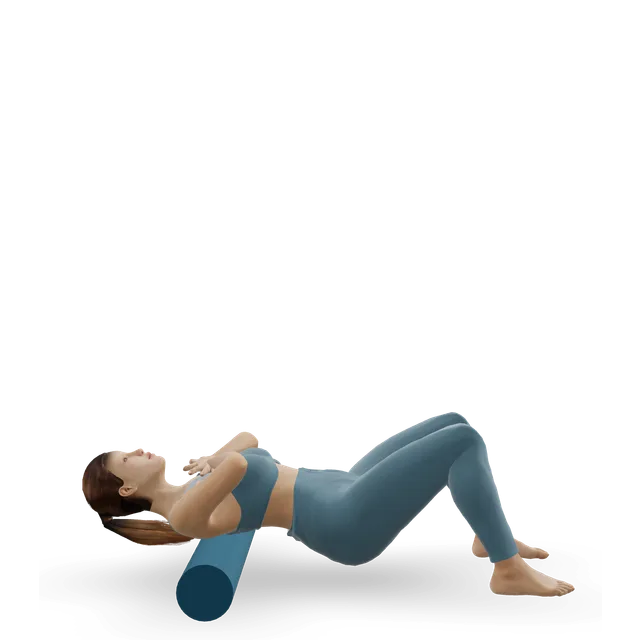
Thoracic rotation demonstrated on the 3D figure3D demoThoracic rotationBeginner · No equipment

6 rotations each side, moving with the breath · The move page's dose; turning through the upper back takes some of the turn off the neck

Easier: Side-lying open book · Harder: World's greatest stretch

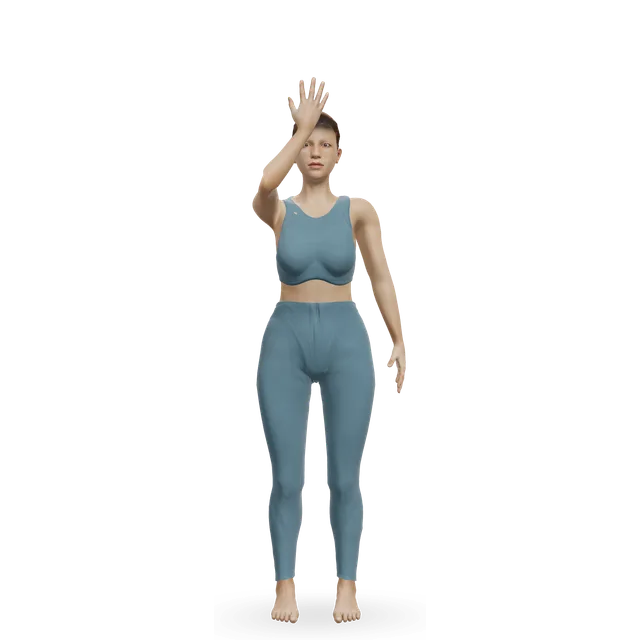
Upper trap release demonstrated on the 3D figure3D demoUpper trap releaseBeginner · No equipment

2 slow holds of 30 s each side · The move page's dose. Only if it eases, with the weight of your hand alone and no pulling, and not if it brings on tingling in the arm, as our side neck pain guide says

Easier: Side neck stretch

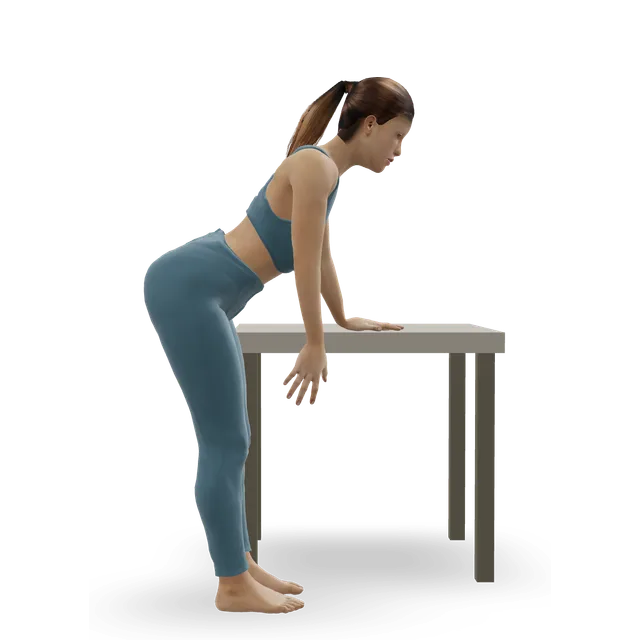
Pendulum exercise (Codman's pendulum) demonstrated on the 3D figure3D demoPendulum exercise (Codman's pendulum)Beginner · A bench or box

About 1 minute (10 small circles each way), 2 to 3 times a day · The move page's dose, an editorial starting point. Only if the shoulder itself is sore

Harder: Table slide (seated forward reach)

Move on when: Your neck turns, tilts and nods comfortably most of the way, the pain mostly stays within the rule, and any arm symptoms aren't spreading (editorial).

Follow along: a timer, a cue and the next move, one step at a time.
Stage 2

Build: holds, then shoulder and upper back strength

About weeks 2 to 6: neck work daily, shoulder work 3 days a week (our suggestion). Endurance in the neck muscles and strength around the shoulder blades, which has the best evidence for neck and shoulder pain that lasts.

Isometric neck holds (four-way) demonstrated on the 3D figure3D demoIsometric neck holds (four-way)Beginner · No equipment

3 to 5 holds of 5 to 10 s in each direction at a light effort, building to 5 holds of 10 s at about half effort · As in our neck pain guide (editorial)

Easier: Chin tuck · Harder: Chin tuck with head lift

Chin tuck with head lift demonstrated on the 3D figure3D demoChin tuck with head liftIntermediate · No equipment

3 to 5 holds of 5 s, building to 10 holds of 10 s · As in our neck pain guide (editorial)

Easier: Chin tuck

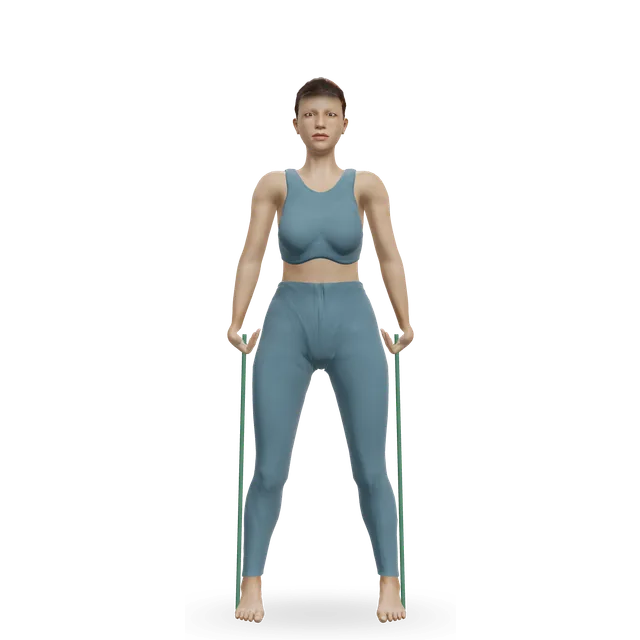
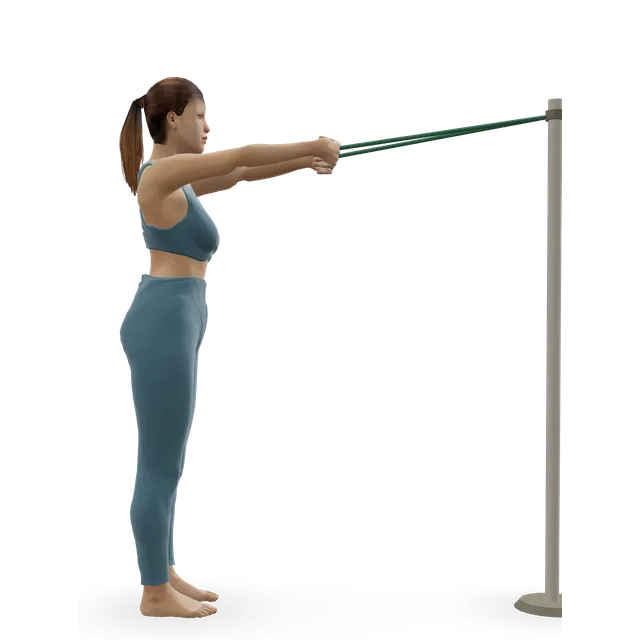
Band lateral raise demonstrated on the 3D figure3D demoBand lateral raiseBeginner · A band

2 minutes a day, 5 days a week, progressing the band · The daily dose from Andersen 2011, a trial in 198 office workers with neck and shoulder pain, which used elastic tubing. The trial's abstract doesn't name the exercises; this one is our neck guides' choice (editorial)

Harder: Dumbbell lateral raise

Band row demonstrated on the 3D figure3D demoBand rowBeginner · A band + An anchor point

3 sets of 10 to 15, stopping 2 to 3 reps short of failure · The move page's dose, an editorial starting point

Harder: Supported single-arm dumbbell row

Standing band external rotation demonstrated on the 3D figure3D demoStanding band external rotationBeginner · A band + An anchor point

2 sets of 10 to 15 with a light band, elbow at your side · As in our shoulder pain guide (editorial). Only if the shoulder itself is sore, within the shoulder strengthening rule

Easier: Stick-assisted external rotation (lying) · Harder: Side-lying external rotation

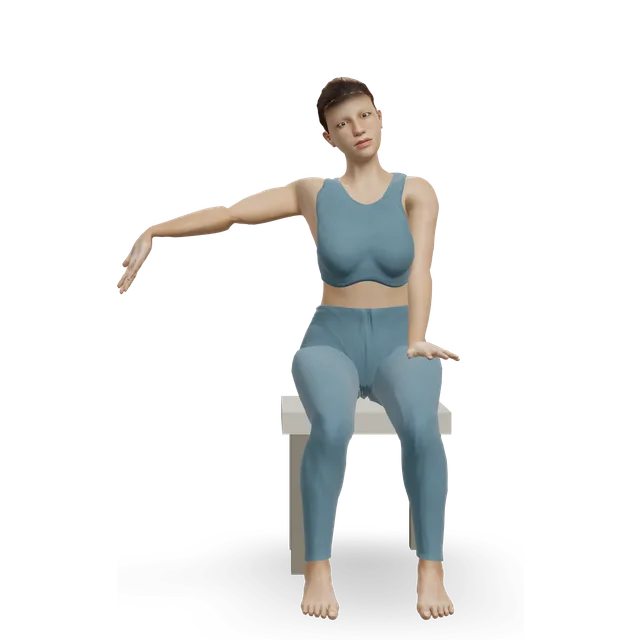
Median nerve slider (neck-to-arm nerve glide) demonstrated on the 3D figure3D demoMedian nerve slider (neck-to-arm nerve glide)Beginner · A bench or box

10 slow reps, 2 to 3 times a day · The move page's dose (editorial). Only if pain or tingling goes down the arm, and not in the first, most painful days; any extra tingling should settle within an hour

Harder: Median nerve glide (six hand positions, for carpal tunnel)

Move on when: The holds and band work pass the pain rule for 2 weeks, and any arm symptoms are settling (editorial).

Follow along: a timer, a cue and the next move, one step at a time.
Stage 3

Strengthen, and back to everything

From about week 6: 2 or 3 days a week, then twice a week for the long term. Heavier shoulder and upper back strength, in the style of the trapezius trial as our neck guides use it, while screens, driving, sleep and the gym come back by the written steps below.

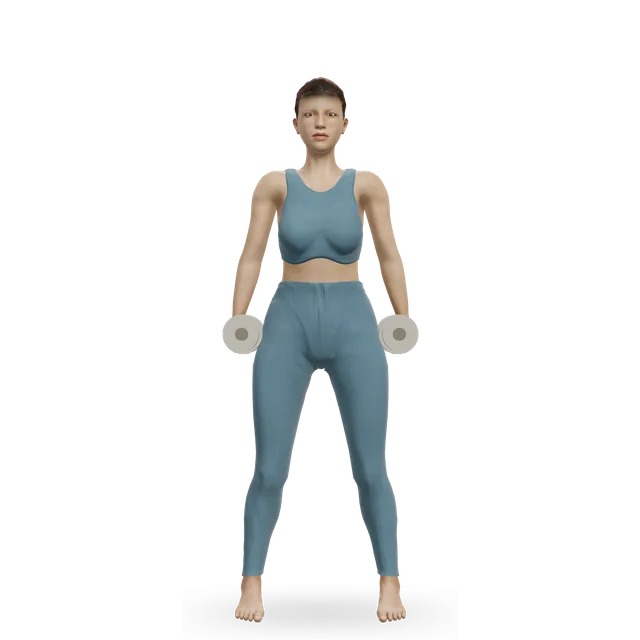
Dumbbell shrug demonstrated on the 3D figure3D demoDumbbell shrugBeginner · A dumbbell

2 to 3 sets of 8 to 12, stopping with 2 or 3 reps in reserve, pausing a second at the top · The move page's dose (editorial). Lighten it if it brings on headaches or arm tingling, and get that checked if it persists, as the move page says

Harder: Snatch shrug

Supported single-arm dumbbell row demonstrated on the 3D figure3D demoSupported single-arm dumbbell rowIntermediate · A dumbbell + A bench or box

3 sets of 8 to 12 each side · As in our neck pain and tech neck guides (editorial)

Easier: Incline ring row · Harder: Bent-over barbell row

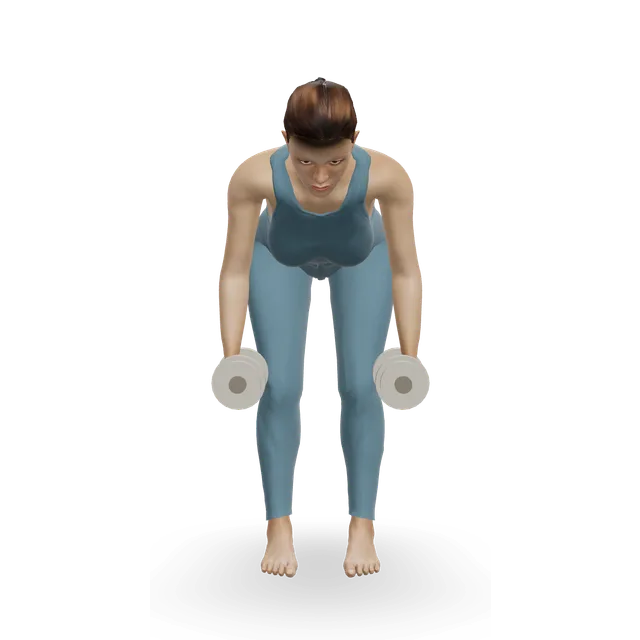
Bent-over reverse fly demonstrated on the 3D figure3D demoBent-over reverse flyIntermediate · A dumbbell

3 sets of 10 to 12 · As in our neck pain and tech neck guides (editorial)

Easier: Prone Y-T-W raises · Harder: Barbell rear-delt row

Face pull demonstrated on the 3D figure3D demoFace pullIntermediate · A band

2 to 3 sets of 12 to 15 · As in our pinched nerve guide (editorial)

Easier: Prone Y-T-W raises · Harder: Tuck back lever

Isometric neck holds (four-way) demonstrated on the 3D figure3D demoIsometric neck holds (four-way)Beginner · No equipment

3 holds of 10 s in each direction at a moderate effort · As in our neck pain guide's later stage (editorial)

Easier: Chin tuck · Harder: Chin tuck with head lift

Neck CARs (controlled articular rotations) demonstrated on the 3D figure3D demoNeck CARs (controlled articular rotations)Beginner · No equipment

3 slow circles each way, once or twice a day · The move page's dose, an editorial starting point

Harder: Rabbit pose (Sasangasana)

Move on when: Our suggestion: screens, driving, sleep and your usual training are back without a flare for 2 weeks. Keep the strength work going twice a week: neck pain comes back in half to three-quarters of people within 1 to 5 years, and strength work is the best-supported treatment.

Follow along: a timer, a cue and the next move, one step at a time.

What to change for now

The desk and the phone (written steps)

Our 3D figure can't show these. They come from the HSE's display screen advice and studies of office workers, or are our suggestion.

  • 1. Put the top of the screen level with your eyes, about an arm's length away, and the keyboard just below elbow height with the mouse in line with your elbow; keep your shoulders relaxed, sitting high enough that you don't shrug (the HSE).
  • 2. Keep the screen and keyboard straight in front of you; with a laptop, use a separate keyboard and mouse and raise the screen (the HSE).
  • 3. Leave room in front of the keyboard to rest your forearms: a keyboard close to the body predicted new neck pain, and an arm support with a different mouse halved new neck or shoulder problems in 2 trials.
  • 4. Take short, frequent breaks: 5 to 10 minutes every hour is better than 20 minutes every 2 hours (the HSE). Vary your tasks, as little task variety predicted new neck pain.
  • 5. Hold your phone up nearer eye level and take breaks (our suggestion). In young adults, texting posture wasn't linked with neck pain, so this is about comfort, not avoiding damage.

Sources 39, 38, 5, 37, 41

Sleep, heat, painkillers and driving (written steps)

These come from the NHS, except where a step is our suggestion.

  • 1. Use one low, firm pillow with your head level with your body, and a firm mattress; don't sleep on your front or twist your neck in bed (the NHS). A latex pillow may help a little.
  • 2. With a sore shoulder, lie on your back, or on the other side hugging a pillow (our suggestion: the pressure under the tip of the shoulder was lowest lying on the back in volunteers).
  • 3. A pack of frozen peas wrapped in a tea towel for 5 minutes, 3 times a day, or a hot water bottle wrapped in a tea towel for 20 minutes, 2 to 3 times a day.
  • 4. Paracetamol or ibuprofen, or ibuprofen gel on your neck. Don't wear a neck collar unless a doctor tells you to: it's better to keep your neck moving.
  • 5. Don't drive or cycle, or do anything else that could be dangerous, until you can turn your head freely.

Sources 1, 42, 44

In the gym (written steps)

These are the site's suggestions, from the move pages and our training guides, except where a source is named.

  • 1. Keep training. Lighten shrugs if they bring on headaches or arm tingling, and get it checked if that persists (the dumbbell shrug's move page); do the same with upright rows and overhead presses (our suggestion).
  • 2. Press in front of your head rather than behind it for now: the site's overhead press guide notes that no study has counted injuries from pressing behind the neck.
  • 3. In squats, carry the bar on the upper back muscle, not on the bony bump at the base of your neck.
  • 4. With arm tingling, leave heavy carries, heavy bags on one shoulder and arms-overhead holds until it settles; the NHS lists repetitive arm movements, and gaining a lot of muscle, for example in bodybuilding, among the causes of thoracic outlet syndrome.

Source 16

Medicines, injections and surgery

For neck pain that lasts, a GP may offer other medicines, and surgery is considered when a nerve or the spinal cord is being squeezed, where it may stop symptoms getting worse rather than cure them, the NHS says. A steroid injection gave no long-term benefit for rotator cuff problems in a large trial. Polymyalgia rheumatica is treated with steroid tablets (prednisolone), usually for 12 months to 2 years.

Sources 2, 17, 45, 4

Positions to swap, and why

Habit or positionWhy it mattersInstead
Hours at the screen without a breakThe HSE advises short, frequent breaks, and little task variety predicted new neck pain in office workers.A break or a change of task every hour, with a few neck and shoulder movements.Try: Neck CARs (controlled articular rotations)
A laptop on the desk, or a screen below eye levelThe HSE's set-up puts the top of the screen at eye level.Raise the screen and use a separate keyboard and mouse.
A keyboard right at the edge of the deskA keyboard close to the body predicted new neck pain in office workers.Room in front of the keyboard to rest your forearms; consider an arm support with a different mouse.
Looking down at the phone for long spellsTexting posture wasn't linked with neck pain in young adults, but the NHS says don't keep your neck in the same position for a long time.Hold it higher and take breaks.Try: Chin tuck
A stack of pillows, sleeping on your front, or twisting your neck in bedThe NHS's neck pain advice.One low, firm pillow with your head level with your body, and a firm mattress.
Lying on the painful shoulderThe pressure under the tip of the shoulder was higher lying on the side than on the back in volunteers.Your back, or the other side hugging a pillow (our suggestion).
A soft collar for ordinary neck painThe NHS says it's better to keep your neck moving, unless a doctor tells you otherwise.Gentle movement; a clinician may offer a short spell in a collar for a trapped nerve.Try: Neck CARs (controlled articular rotations)
Driving or cycling before you can turn your headThe NHS says don't do anything that could be dangerous because you can't move your neck.Wait until you can look round freely.
Heavy shrugs that bring on headaches or arm tinglingThe dumbbell shrug's move page says lighten it, and get it checked if that persists.Lighter loads and band rows until it settles.Try: Band row
Pressing behind the neckThe evidence on it is limited and no study has counted injuries, the site's overhead press guide says (our suggestion).Press in front of your head.Try: Dumbbell shoulder press (kick-up start)
Stretching the upper traps hard and often as the main treatmentStretching alone has less support than strengthening for neck pain that lasts.Gentle holds for comfort, plus the strength stages.Try: Band row
Heavy bags on one shoulder, or arms-overhead holds, while your arm tinglesOur suggestion; the NHS lists repetitive arm movements among the causes of thoracic outlet syndrome.Lighter loads, carried in both hands or a rucksack.Try: Farmer's carry

Routines to follow

More moves for this area

Questions people ask

Why do my neck and shoulder hurt at the same time?

Usually because the neck and the muscles that join it to the shoulder blade are the source: the NHS describes age-related neck changes as a common cause of neck and shoulder pain, and NHS inform says neck problems can cause pain in the shoulders, arms and upper back. A trapped nerve in the neck and the shoulder joint itself can also hurt together.

Is it my neck or my shoulder?

Pain above the shoulder blade, pain that changes when you move your neck, and tingling, burning or pain spreading past the elbow point to the neck. Pain round the outside of the upper arm that's worse lifting, reaching or lying on it points to the shoulder. They often coexist, so a physiotherapist checks both.

Could neck and shoulder pain be my heart?

Call 999 for chest pain that feels tight or squeezing, or spreads to your arms, neck or jaw, especially with breathlessness, sweating or feeling sick. Pain or tightness in the chest, neck, shoulders, jaw or arms that comes on with exertion and eases with rest can be angina, and needs NHS 111. Women more often have heart attacks without chest pain.

What helps neck and shoulder pain from a desk job?

Short, frequent breaks (5 to 10 minutes every hour), the top of the screen at eye level, the keyboard just below elbow height and relaxed shoulders. In a trial in office workers, 2 minutes a day of band exercises, 5 days a week, eased neck and shoulder pain a little. Varying your tasks matters too.

Why do I wake up with neck and shoulder pain?

The NHS says the neck locking in an awkward position while sleeping is a common cause. Use one low, firm pillow with your head level with your body, avoid sleeping on your front or twisting your neck, and use a firm mattress; a latex pillow may help a little. With a sore shoulder, lie on your back or the other side.

Can stress cause neck and shoulder pain?

Yes: feeling tense was the strongest predictor of new neck pain in office workers, and NHS inform lists anxiety and depression among the causes of neck problems. Movement, breaks and help for stress all belong in the plan.

What does a trapped nerve in the neck feel like?

Neck pain with pain around the shoulder blade, often first, and pain, tingling, numbness or weakness down one arm. It usually starts to improve within 12 weeks, though it can take up to a year, and in a trial of recent trapped nerves, physiotherapy or a short spell in a semi-hard collar each eased arm pain a little more than waiting. Weakness that is new or getting worse needs an urgent GP appointment.

Why do my neck and shoulders hurt after the gym?

Heavy shrugs, deadlifts, overhead presses and a bar resting on the neck all load the upper trapezius (our reading), and soreness for a day or two after a new or harder session is normal. Lighten anything that brings on headaches or arm tingling, carry the squat bar on the muscle rather than the neck bones, and check the warning signs if the pain is unusual.

What causes right-sided neck and shoulder pain?

Usually the same muscle, joint and nerve causes as on the left. Pain under the right ribs spreading towards the right shoulder can be the gallbladder, and in pregnancy, or in the weeks after a birth, pain below the ribs with a severe headache, problems with your vision or sudden swelling needs urgent help for pre-eclampsia.

How long does neck and shoulder pain last?

Most new neck problems settle within 8 weeks, with the biggest change in the first couple of weeks, and most first episodes are much better within 3 months. It often comes back, in half to three-quarters of people within 1 to 5 years, which is why strength work is worth keeping.

I'm over 50 and both shoulders are stiff every morning. What could it be?

New pain and stiffness in both shoulders, often the neck and hips too, lasting more than 45 minutes in the morning can be polymyalgia rheumatica: the NHS says see a GP if pain and stiffness last more than a week. A new headache, pain in your jaw when eating or problems with your sight with it needs a GP immediately or NHS 111, because giant cell arteritis can cause sight loss.

When is neck and shoulder pain serious?

Call 999 for chest pain spreading to the arms, neck or jaw, new trouble walking or loss of bladder or bowel control, a stiff neck with a fever, a very painful headache or a rash, a sudden, extremely painful headache, or a drooping face or a weak arm. Get help the same day for weakness or clumsiness in the arms that is getting worse, or severe neck pain that came on suddenly.

Related exercise guides

Other pain guides

Sources

  1. NHS · Neck pain (past its review date: reviewed April 2023, review due April 2026)
  2. NHS · Cervical spondylosis (past its review date: reviewed August 2023, review due August 2026)
  3. NHS inform · Neck problems
  4. Mitchell 2005 · Shoulder pain: diagnosis and management in primary care (clinical review, BMJ)
  5. Jun 2017 · Physical risk factors for new neck pain in office workers (systematic review and meta-analysis, Int Arch Occup Environ Health)
  6. Carmichael 2025 · Shoulder blade pain in a trapped neck nerve (scoping review of 86 studies, N Am Spine Soc J)
  7. Mizutamari 2010 · Where the shoulder blade hurts with each trapped neck nerve root in 25 people (clinical study, J Orthop Surg)
  8. Fukui 1997 · Pain patterns from the small joints of the upper back (clinical study, Reg Anesth)
  9. Radhakrishnan 1994 · Trapped nerves in the neck in Rochester, Minnesota, 1976 to 1990 (population study of 561 people, Brain)
  10. NHS inform · Cervical radiculopathy
  11. Requejo-Salinas 2025 · Neck or shoulder? Screening the neck in shoulder pain (international Delphi consensus, Phys Ther)
  12. Sprowls 2026 · Shoulder pain that isn't the shoulder: neck and rotator cuff disease together (surgeon's review, JSES Rev Rep Tech)
  13. van der Windt 1996 · Shoulder problems in Dutch general practice: what predicts recovery (cohort of 349 episodes, Br J Gen Pract)
  14. Davies 2018 · Degenerative cervical myelopathy (clinical review, BMJ)
  15. NHS inform · Degenerative cervical myelopathy
  16. NHS · Thoracic outlet syndrome
  17. NHS · Polymyalgia rheumatica (past its review date: reviewed April 2023, review due April 2026)
  18. Toyoda 2026 · The British Society for Rheumatology guideline for treating polymyalgia rheumatica (guideline, Rheumatology)
  19. NHS · Angina
  20. British Heart Foundation · Signs and symptoms of heart attacks in women
  21. Canto 2012 · Heart attacks without chest pain in 1,143,513 people, by age and sex (registry study, JAMA)
  22. NHS · Acute cholecystitis (past its review date: reviewed February 2023, review due February 2026)
  23. NHS · Ectopic pregnancy: symptoms (past its review date: reviewed August 2022, review due August 2025)
  24. NHS · Symptoms of lung cancer
  25. NHS · Meningitis
  26. NHS inform · Shoulder problems
  27. Thoomes 2018 · Physical tests for a trapped nerve in the neck (systematic review, Spine J)
  28. Wainner 2003 · Examination tests for a trapped nerve in the neck in 82 people (diagnostic study, Spine)
  29. Nakashima 2015 · MRI findings in the necks of 1,211 people without symptoms (cross-sectional study, Spine)
  30. Teunis 2014 · Rotator cuff changes with age, with and without symptoms (systematic review, J Shoulder Elbow Surg)
  31. Chartered Society of Physiotherapy · Treatment for neck pain
  32. Carroll 2009 · The course of neck pain in the general population (best-evidence synthesis, J Manipulative Physiol Ther)
  33. Gross 2015 · Exercises for mechanical neck disorders (Cochrane review)
  34. de Zoete 2020 · Exercise for chronic neck pain compared (network meta-analysis of 40 trials, Br J Sports Med)
  35. Andersen 2011 · Small daily amounts of resistance training for neck and shoulder pain in 198 office workers (randomised trial, Pain)
  36. Andersen 2008 · Two types of exercise for chronic neck muscle pain in 48 working women (randomised trial, Arthritis Rheum)
  37. Hoe 2018 · Workstation and break changes for neck and arm problems in office workers (Cochrane review of 15 trials)
  38. Health and Safety Executive · Display screen equipment: work routine and breaks
  39. Health and Safety Executive · Good posture when using display screen equipment
  40. Mahmoud 2019 · Forward head posture and neck pain (systematic review and meta-analysis, Curr Rev Musculoskelet Med)
  41. Damasceno 2018 · Texting posture and neck pain in 150 young adults (cross-sectional study, Eur Spine J)
  42. Chun-Yiu 2021 · Pillow designs, neck pain and sleep (systematic review and meta-analysis, Clin Biomech)
  43. Gordon 2009 · Six pillows tried for a week each by 106 side sleepers (randomised field study, Man Ther)
  44. Werner 2010 · Pressure under the tip of the shoulder in sleeping positions in 20 volunteers (lab study, J Shoulder Elbow Surg)
  45. Hopewell 2021 · Progressive exercise or best-practice advice, with or without a steroid injection, for rotator cuff problems: GRASP (randomised trial of 708 people, Lancet)
  46. Kuijper 2009 · A collar or physiotherapy against wait and see for a recent trapped nerve in the neck (randomised trial of 205 people, BMJ)
  47. Wong 2014 · The course of a trapped nerve from a neck disc (systematic review, Spine J)
  48. NHS inform · Exercises for neck problems
  49. NHS inform · Exercises for shoulder problems
  50. St George's University Hospitals NHS · Median nerve gliding (hand therapy leaflet, 2024)
  51. Smith 2017 · Should exercises be painful in chronic musculoskeletal pain? (systematic review and meta-analysis, Br J Sports Med)
  52. NHS · Heart attack
  53. NHS · Subarachnoid haemorrhage
  54. NHS · Symptoms of a stroke
  55. NHS · Shoulder pain (past its review date: reviewed May 2023, review due May 2026)
  56. NHS · Septic arthritis
  57. NHS · Gallstones
  58. NHS · Temporal arteritis (giant cell arteritis) (past its review date: reviewed August 2023, review due August 2026)
  59. NHS · Pre-eclampsia
  60. NHS · Pins and needles

Exercise education, not a diagnosis or treatment plan. It is written from the guidelines and studies listed above; review by a clinician is pending. If your pain follows an injury, is severe, is getting worse, or comes with any warning sign listed on this page, get it assessed. Health disclaimer.