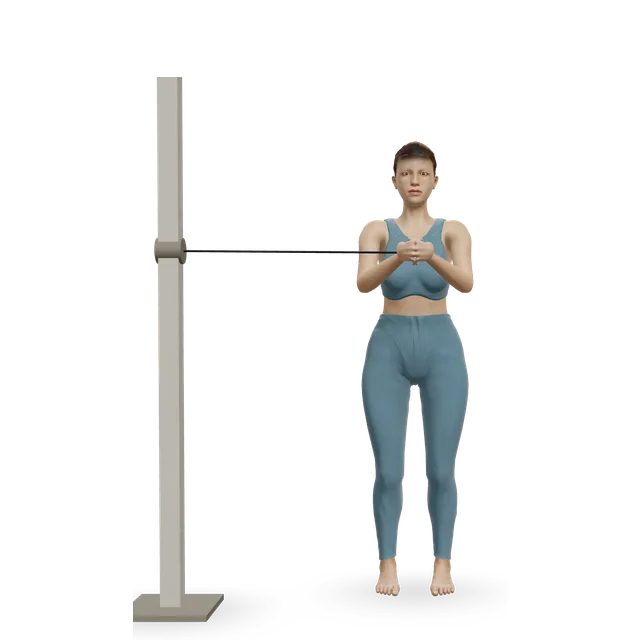
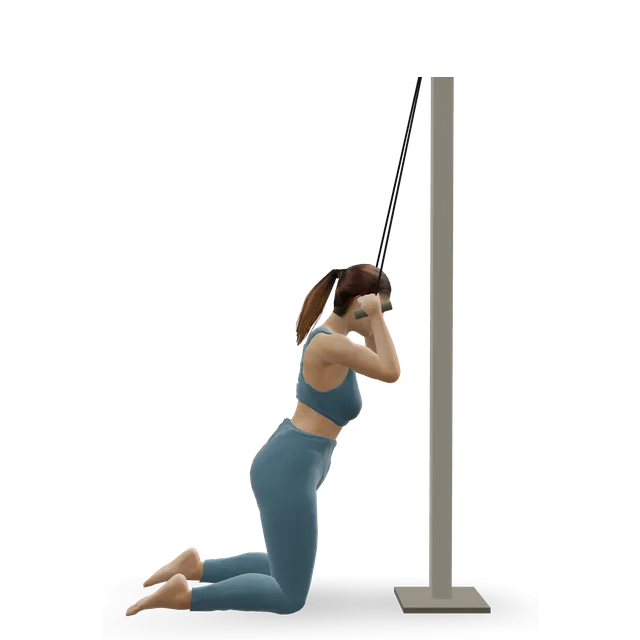
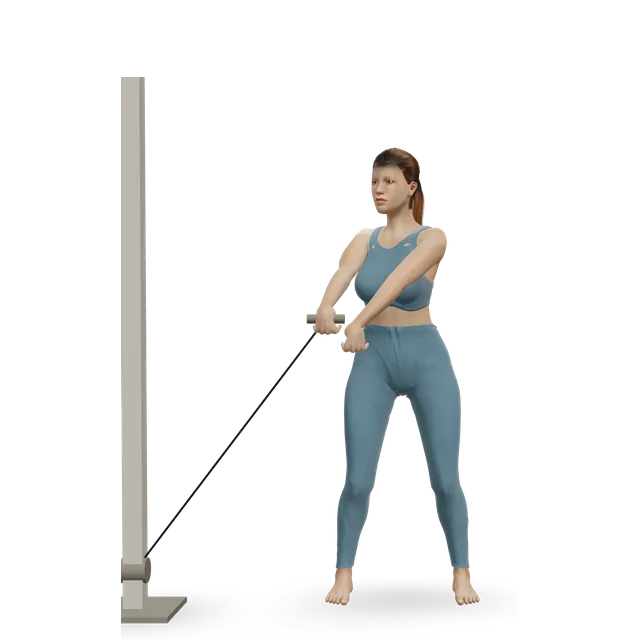
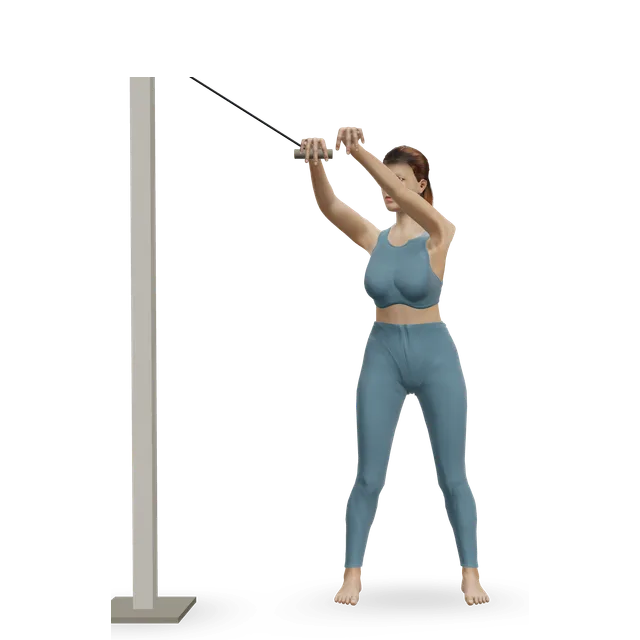
How to use a cable machine: pulleys, attachments, weight stack numbers and the best exercises
A cable machine is a weight stack connected by a cable over pulleys to a handle you can set at almost any height. Slide the pulley to the right height, clip on the attachment, set the pin, and step away until the plates lift off the stack before you start. The number on the stack is only part of the story: on a 2:1 machine you lift about half of it, and on a 4:1 machine about a quarter.
Cables don't keep your muscles under constant tension, whatever gym posters say: the load on the muscle changes with the angle of the cable, which is why where you stand matters. They do build muscle as well as dumbbells and barbells in the trials so far. This guide covers the parts, pulley ratios, set-up, one exercise for each body part, how cables compare with free weights, common faults and a full-body cable workout, with a 3D demo of every step.
A pin selects the weight on the stack; a cable runs over pulleys to a carriage you slide up or down the column; an attachment clips to the cable. One maker's dual pulley has 22 heights, from near the floor to above head height.
On a 2:1 machine you lift about half the number on the stack and the handle travels twice as far; on a 4:1 machine about a quarter. One maker's 4:1 dual pulley has a 402 lb stack per side but 2.5 to 100.5 lb at the handle. Compare numbers only on the same machine.
The cable pulls with about the same force through a rep, but how hard your muscle works depends on the angle between the cable and your arm or leg, and on the machine's pulleys or cam. Every cable exercise has a hardest point; where you stand and where you set the pulley move it.
Cable and dumbbell lateral raises grew the shoulder equally in 24 trained adults, and cable and barbell preacher curls grew the biceps equally. In adults over 65, standing cable training improved everyday function as much as seated machines.
Pulley height, attachment, weight, then step away until the plates lift off at the start of the rep. Move under control and let the plates touch down only when the set ends (coaching practice).
Flyes, raises, curls, pushdowns and kickbacks: 2 to 3 sets of 10 to 15, the last set ending 0 to 2 reps short of failure, 60 to 90 seconds' rest. Rows, presses and pull-throughs: 3 sets of 8 to 12, stopping 2 or 3 reps short (our editorial starting points, within our plans' rules).
A column of plates with a hole through each. The pin goes into the plate you want, and every plate above it lifts. The top plate is usually the lightest setting.
The cable, pulleys and carriage
The cable runs from the stack over a set of pulleys to a carriage that slides up and down the column and locks with a pop-pin. One maker's machine has 22 positions, from 17 cm to 2 m off the floor, and 3.7 m of cable travel.
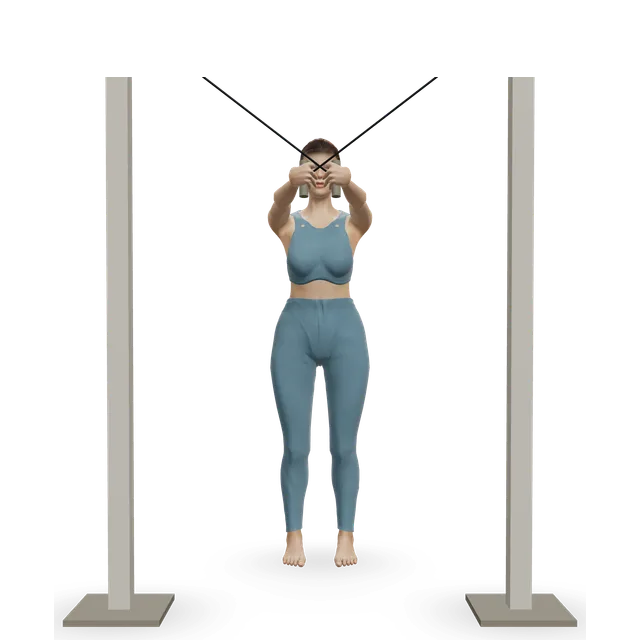
An adjustable cable column or dual adjustable pulley (often called a functional trainer) has one or two stacks with carriages you can move. A cable crossover is two tall columns joined by a frame. The lat pulldown and seated cable row are fixed cable stations with their own guides.
An old idea
Cable-pulley systems turned up in 15% of the 551 US patents for strength training equipment filed before 1980, and weight stacks in 8%.
In a pulley system, the force you need falls as more lengths of cable share the load, and you pull further in return: to raise a load 1 metre with 2 lengths, you pull 2 metres of cable at about half the force. No real machine reaches the ideal, because friction turns some of the work into heat.
On a 1:1 machine the handle moves as far as the stack and you lift the number on the stack. On a 2:1 machine the stack moves half as far as the handle and you lift about half the number; on a 4:1 machine, about a quarter. Higher ratios give smaller steps between plates and a longer, faster cable. One maker's 4:1 dual pulley has a 402 lb (182 kg) stack per side and 2.5 to 100.5 lb at the handle.
Why two machines feel different at the same numberEmerging evidence
Besides the ratio, friction in the pulleys and the shape of any cam change what you feel. In a test of 8 knee extension machines from 6 makers, the cams' resistance curves differed widely. So log the machine with your numbers and compare yourself only with yourself.
If the pin sits at 40 kg on a 4:1 machine, you're moving about 10 kg at the handle, plus a little for friction. The same 40 kg on a 2:1 machine is about 20 kg, and on a 1:1 machine 40 kg. Makers may quote the weight on the stack or the weight at the handle (this maker's specification lists both), so check the label or ask the staff.
A single (D) handle for one-arm presses, rows, raises and flyes; a rope for pushdowns, face pulls, kneeling crunches and pull-throughs; a straight or curl bar for curls and pushdowns; a V-bar for pushdowns and close rows; an ankle cuff for kickbacks and other leg work. They clip to the cable with a carabiner: close it fully before you pull.
Handles change your grip, not the loadEmerging evidence
In a pushdown study, the shape of the handle changed how the forearm muscles worked but not how hard the triceps worked. Pick the one that's comfortable for your wrists and elbows.
Coaching practice and our move page; no study has tested a set-up routine.
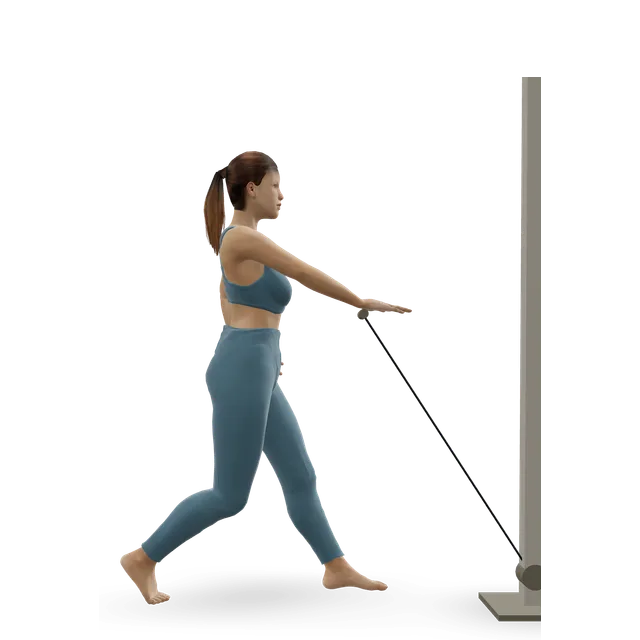
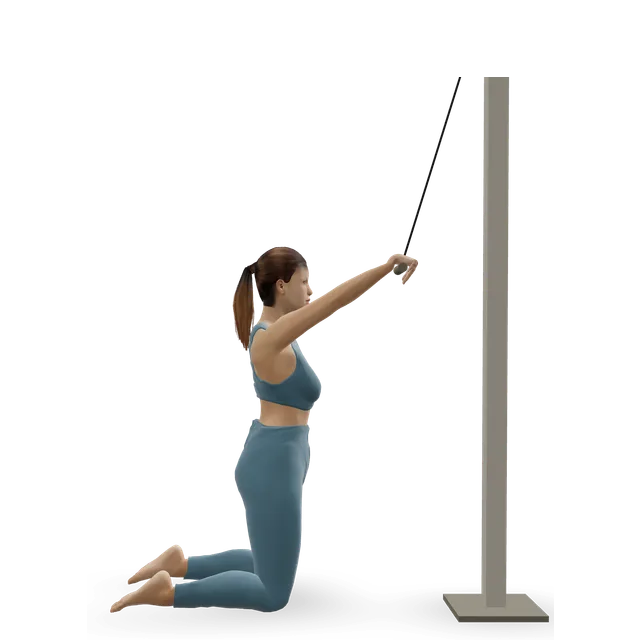
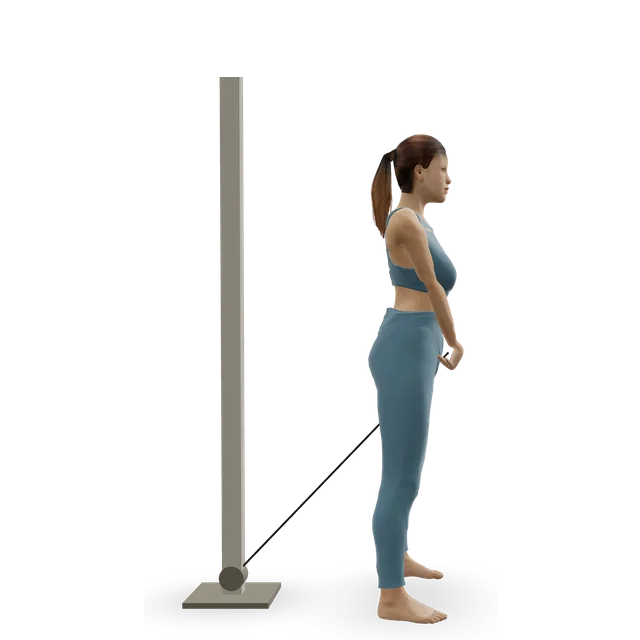
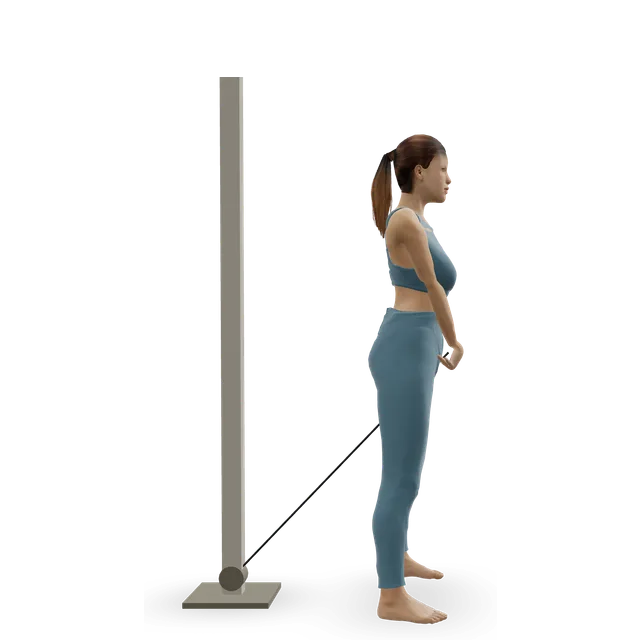
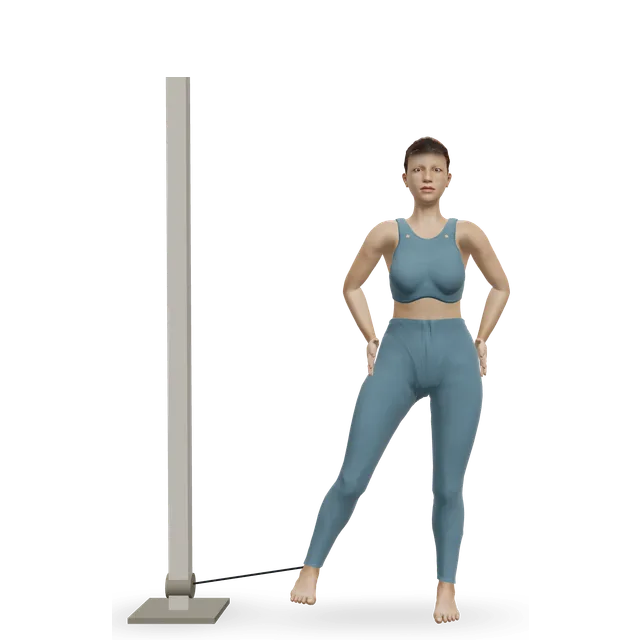
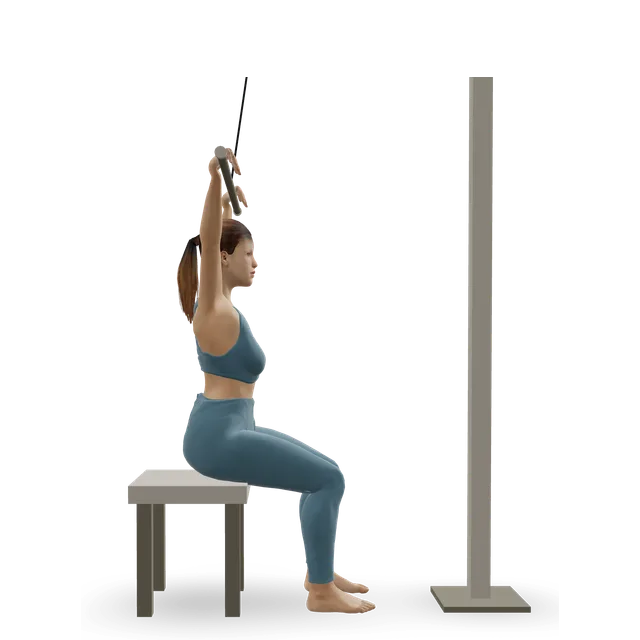
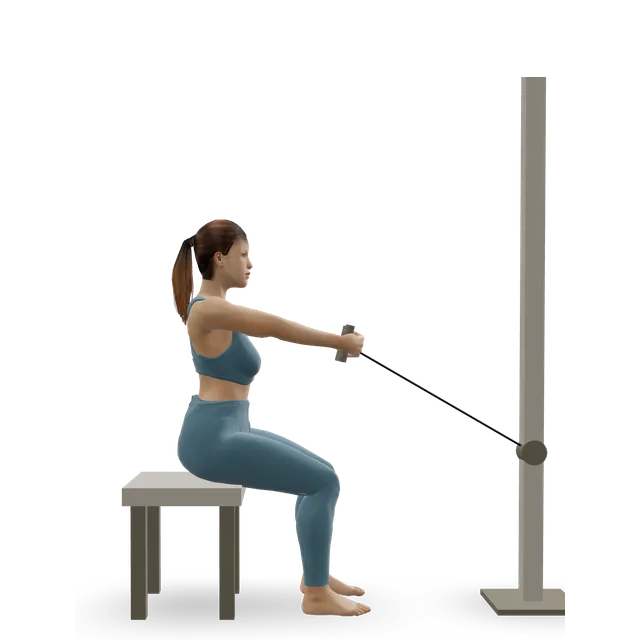
Set the pulley height for the exercise: low for curls, lateral raises, pull-throughs and kickbacks; about chest height for presses, flyes, rows and the Pallof press; high for pushdowns, kneeling crunches and face pulls. Pull the pop-pin, slide the carriage and let the pin click home.
Clip on the attachment and close the carabiner fully.
Set the weight by moving the pin in the stack, starting light. Check the ratio label if the machine has one.
Take the handle and step away until the plates lift off the stack: that's your starting position. If the plates touch down at the stretched end of the rep, step further away.
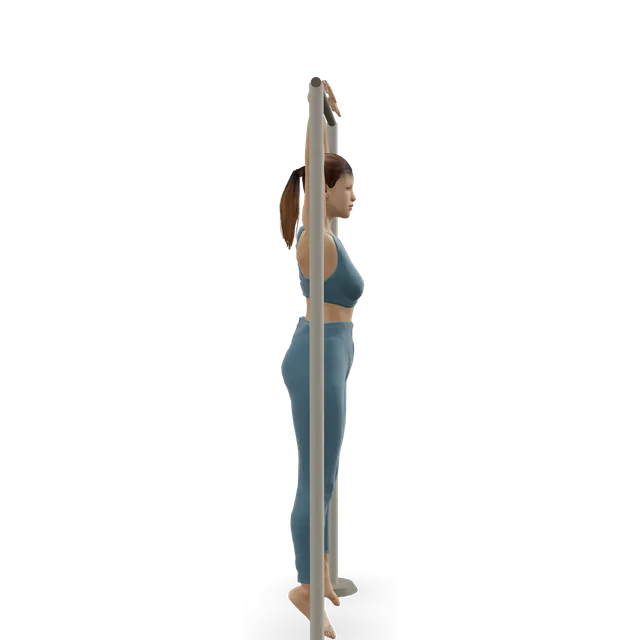
Set your stance: feet hip-width apart or split, knees soft, trunk braced.
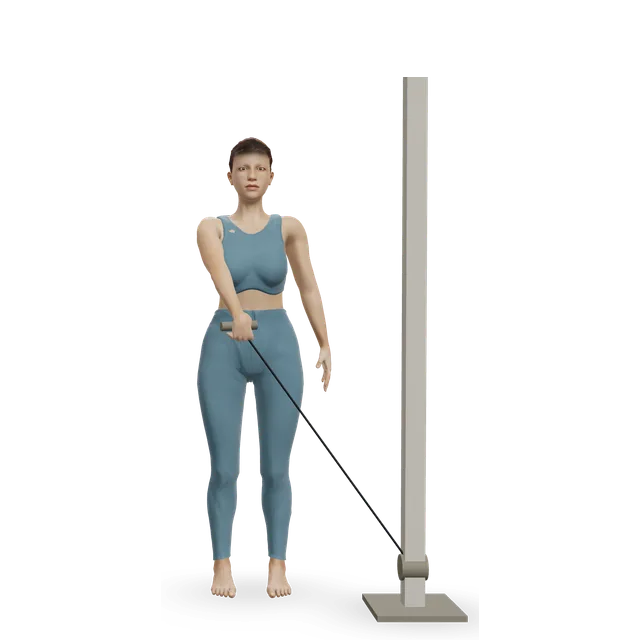
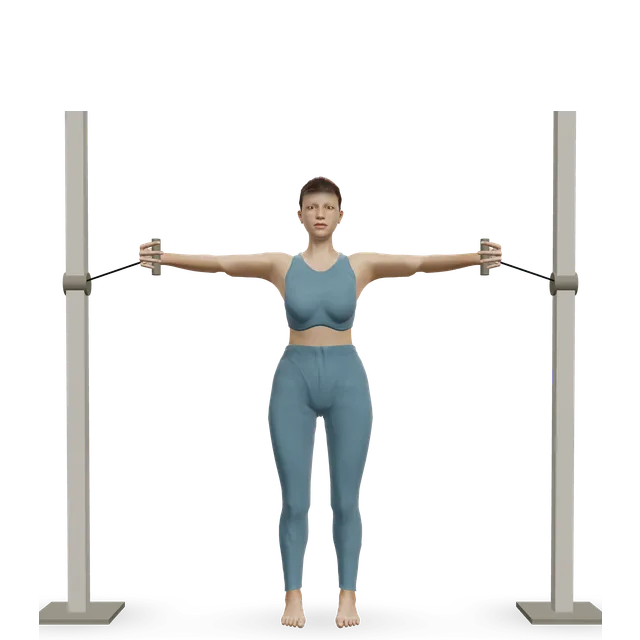
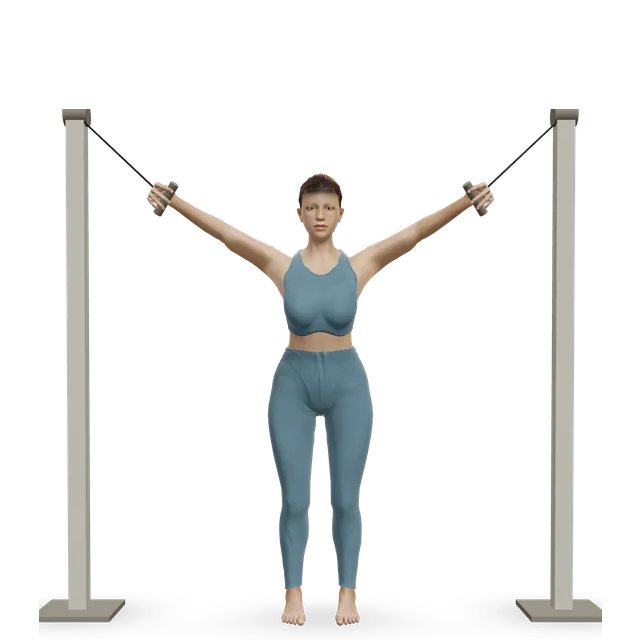
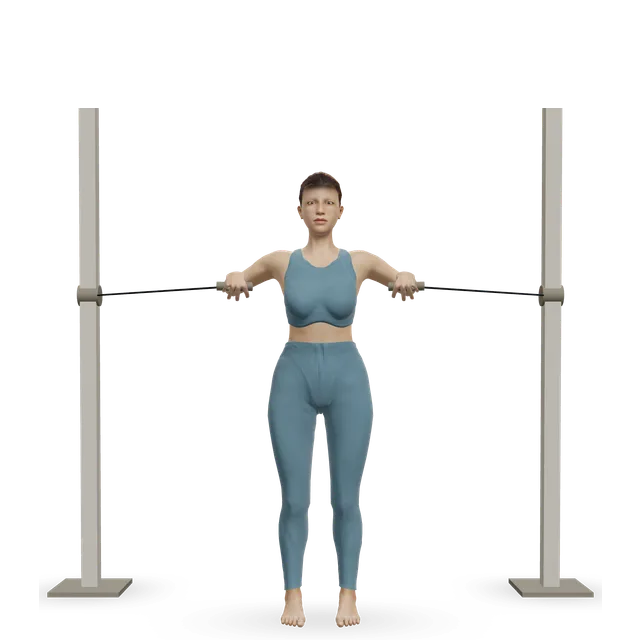
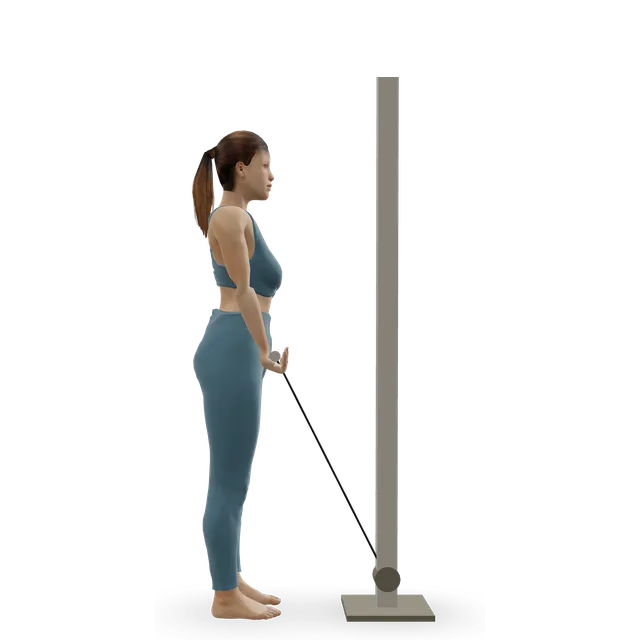
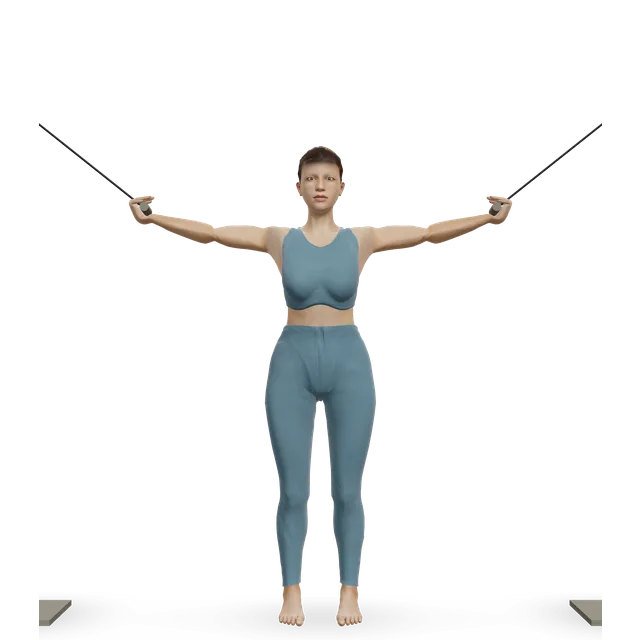
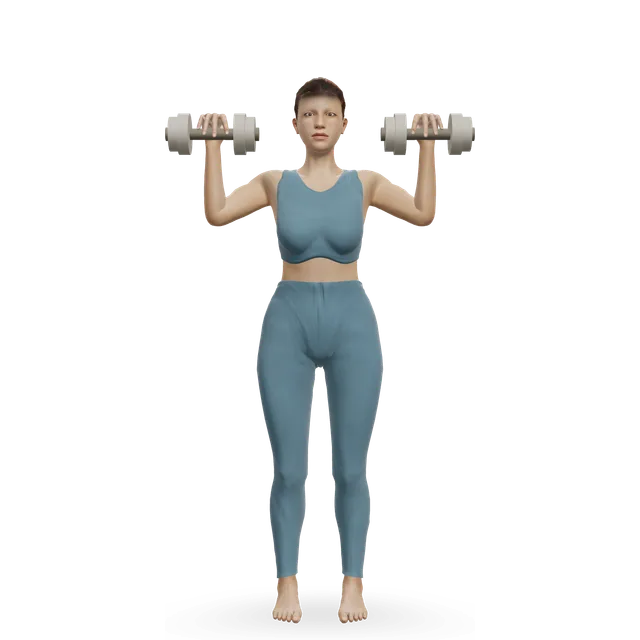
Move through the range under control, breathing out on the effort; for this lateral raise, lift your arm out to the side to shoulder height.
Return under control, keeping the plates just off the stack between reps.
At the end of the set, walk back in and let the plates come down gently before you unclip.
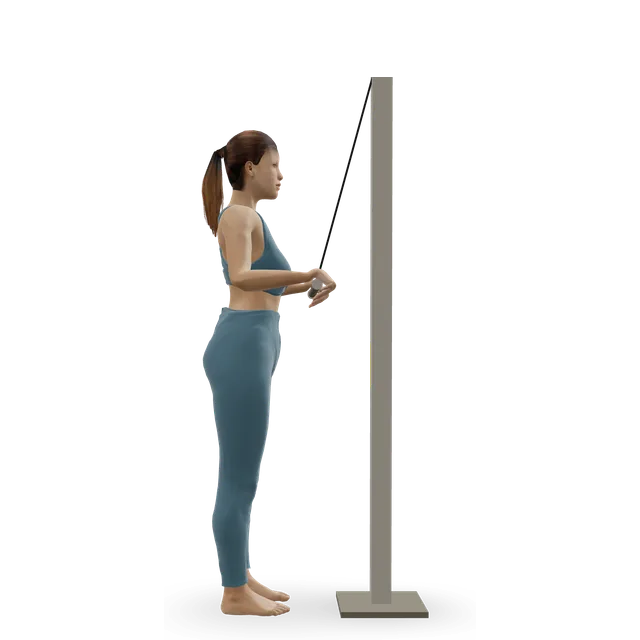
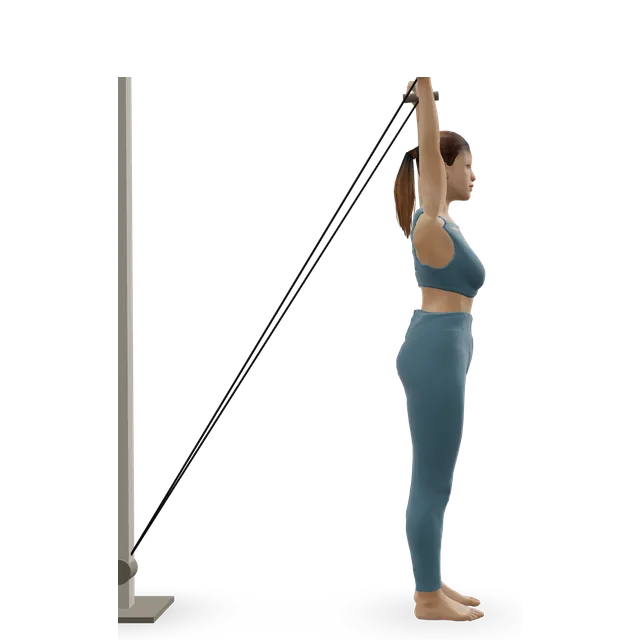
Loading the 3D figure…
Drag to turn
Gets into position, then repeats the movement. Technical checks passed; qualified exercise review is pending.
The constant-tension myth, and choosing the hard part of the rep
Tension on the muscle changes through the repEmerging evidence
The cable pulls with roughly the same force all the way, apart from friction and speeding up or slowing down. But the load on your muscle depends on the angle between the cable and your limb, which changes as you move, and on the machine's pulleys or cam. Researchers call this the resistance profile: every cable exercise has a hardest and an easiest point.
You choose where the hard part fallsEmerging evidence
A dumbbell lateral raise is hardest with your arm out level; a cable raise from a low pulley can be set to be harder lower down, where the muscle is longer. A cable preacher curl is hardest near the top, a barbell preacher curl near the bottom. Moving the pulley or where you stand moves the hardest point.
Cables and dumbbells grew the shoulder equallyEmerging evidence
24 trained men and women did cable raises with one arm and dumbbell raises with the other, 5 sets to failure twice a week for 8 weeks, through the same range. The side of the shoulder grew 3.3 to 4.6%, with no difference between arms.
Cable and barbell curls grew the biceps equallyEmerging evidence
In 35 young adults, cable and barbell preacher curls (3 sets of 8 to 12, three times a week for 10 weeks) grew the biceps 7% and 8%; the barbell built more strength near the stretched end. Changing the shoulder angle of cable curls didn't change biceps growth when the resistance profile was matched, in 15 young men and in 24 untrained men.
Overhead cable extensions grew the triceps moreEmerging evidence
21 adults trained one arm with an overhead cable triceps extension and the other with the arm at the side, 5 sets of 10 at 70% of maximum, twice a week for 12 weeks. The whole triceps grew 19.9% against 13.9%, even though the overhead arm lifted 34 to 39% less weight.
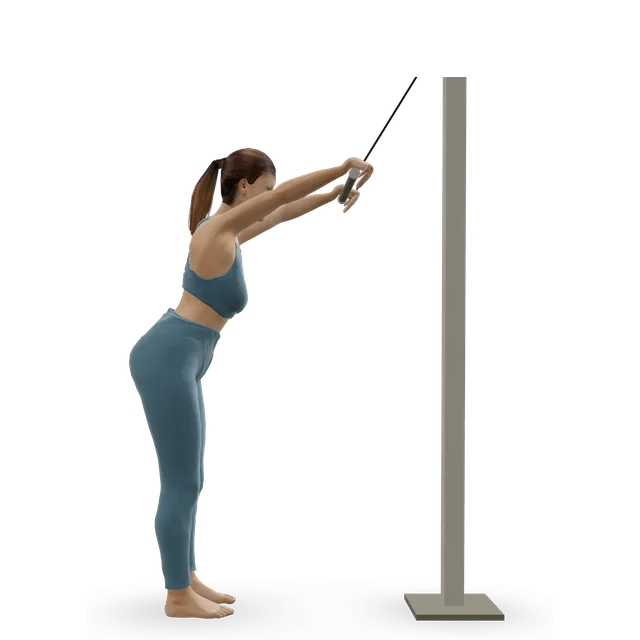
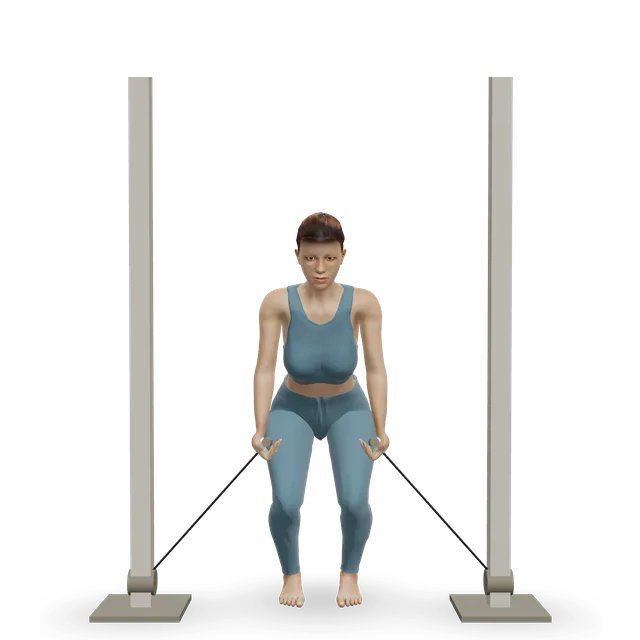
Our editorial starting points, within our plans' rules: flyes, raises, curls and pushdowns 2 to 3 sets of 10 to 15; presses and rows 3 sets of 8 to 12. The bent-forward crossover, kneeling high row and high curl take their move pages' 2 to 3 sets (10 to 15 for the crossover, 8 to 12 for the others). The seated cable row, lat pulldown, face pull, chest fly and triceps guides cover those moves in detail.
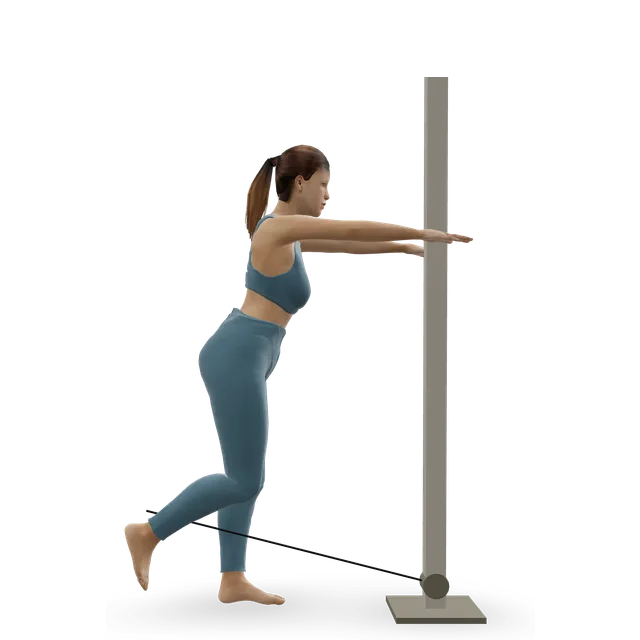
Pallof presses and crunches 2 to 3 sets of 8 to 15 (our suggestion); the wood chop 2 sets of 8 each side once the standing cable lift is easy; pull-throughs 3 sets of 10 to 12 (our suggestion); cable deadlifts, kickbacks and the wide-stance pull-through take their move pages' 2 to 3 sets of 8 to 12. There's no 3D demo of a cable leg curl or cable leg extension: the standing leg curl and leg extension machines show the same knee movements.
In 15 men and women, cable versions of the curl, chest press and overhead press used more range and more activity in some arm, shoulder and trunk muscles than fixed machine versions. In 29 adults over 65, 12 weeks of standing cable or seated machine training both improved everyday function, with no difference on the main measure; chair stands and carrying favoured cables, chest press strength the machines. A correction notice was later published for that trial.
Standing cable work trains your trunkEmerging evidence
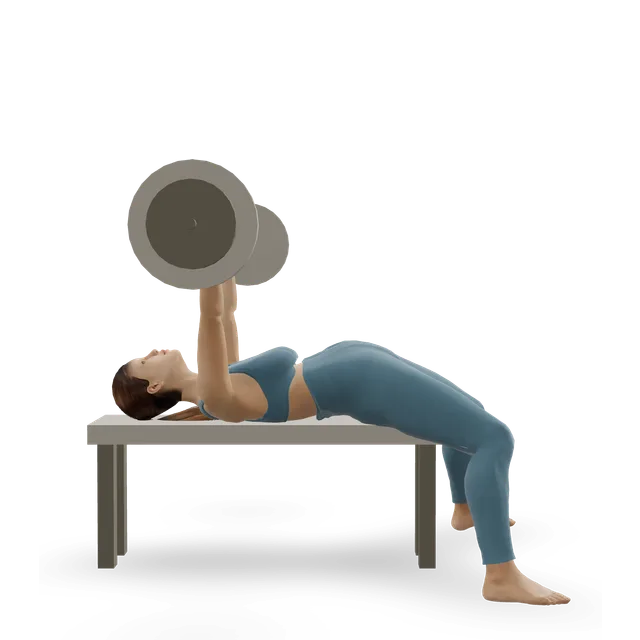
14 recreationally trained men lifted 74.2 kg on the bench press but 26.0 kg on a one-arm standing cable press, limited by balance and trunk muscles rather than the chest. The Pallof press was harder standing than kneeling, and much harder on an unstable surface. Free-weight rows worked the lower-back muscles more than cable and machine rows in 15 trained men.
The pull-through against the Romanian deadliftEmerging evidence
At half of each lift's maximum, the cable pull-through worked the lower back and hamstrings less than the Romanian deadlift. It's a gentler hip hinge to learn with, not a straight swap.
Bands, machines and dumbbells built strength equallyEmerging evidence
Across 8 studies, elastic bands built strength as well as machines and dumbbells, and machine and free-weight training gave similar strength and growth in a meta-analysis of 13 studies, with strength specific to what was trained.
Chest activity in cable crossoversEmerging evidence
In 14 trained men, in a study funded by ACE (the American Council on Exercise), a bent-forward cable crossover drew 93% of the bench press's chest activity. Activity in one session isn't a validated guide to growth, but it shows the crossover works the chest hard.
Flyes, raises, rear-delt flyes, curls, pushdowns, overhead extensions, kickbacks and crunches: 2 to 3 sets of 10 to 15, the last set ending 0 to 2 reps short, with 60 to 90 seconds' rest (our editorial starting point, within our plans' rules).
Rows, presses, pull-throughs and cable deadlifts: 3 sets of 8 to 12, stopping 2 or 3 reps short, with about 90 seconds to 2 minutes' rest. About 10 hard sets a week per muscle builds more muscle; 4 is a workable minimum.
Add reps first, then the next plate. If that's too big a jump, use a half-step or add-on weight if there is one, or a machine with a higher ratio, which has smaller steps. The American Heart Association (AHA) suggests steps of 2 to 10%.
5 sets to failure twice a week; 3 sets of 8 to 12 three times a week; 3 to 5 sets of 8 to 12 twice a week; and 5 sets of 10 at 70% of maximum twice a week. These are study doses, not starting points.
Keep the plates just off the stack between reps, and walk in to finish the set.
The wrong pulley height
Reset it so the cable lines up with the movement you want.
Standing too close or too far away
If the plates touch down at the stretch, step away; if the stack tops out before the end of the rep, step in.
Leaning or swinging to move the weight
Use a lighter weight and a split stance, and keep your trunk still.
Shrugging in rows, pulldowns and raises
Keep your shoulders down and lighten the weight.
Uneven arms on a two-handle exercise
Set both carriages to the same hole number and slow down.
Who should change it
Shoulder pain
Use a range that stays comfortable in raises, flyes and presses, and see our shoulder pain guides. See a GP if shoulder pain doesn't improve after 2 weeks.
Try a rope or a different handle for curls and pushdowns, lighten the weight, and see our elbow pain guides. See a GP if elbow or arm pain doesn't go after a few weeks.
Moderate weights, breathing out on every effort, suit most people with controlled blood pressure. The AHA lists pulley weights among the gentler options for people who need lighter training.
Cables suit pregnancy if you already train: Tommy's suggests a standing chest press as one swap for a flat bench press after the first trimester. Don't hold your breath, and stop if you feel faint, overheated or in pain.
The cable machine workout trains your whole body on one dual cable station; the others use cables for chest, shoulders, triceps, abs and glutes alongside free weights.
For chest pain that feels tight or like squeezing, or spreads to your arms, neck or jaw; arm pain that comes on suddenly with pressure, heaviness or squeezing across your chest; a headache that starts suddenly and is extremely painful, especially while straining; someone who faints while exercising or can't be woken within a minute; or palpitations that don't go away or come with chest pain, breathlessness or feeling faint. Don't drive yourself to A&E.
Ask for an urgent GP appointment or get help from NHS 111
For sudden or very bad shoulder pain, an arm you can't move, or pins and needles that don't go away; an arm that hurts when you exercise but settles when you rest; a headache triggered or made worse by exercise; or back pain with feeling hot, cold, shivery or unwell. In the US, contact your doctor or urgent care.
If shoulder pain doesn't improve after 2 weeks, elbow or arm pain doesn't go after a few weeks, after any faint, or for dizziness that keeps coming back.
Look at the cable, clips and pin before you start. A frayed cable or a carabiner that won't close means use another station and tell the staff, as our free weights vs machines guide advises checking pins and cables.
Myths
"Cables keep constant tension through the whole range"Emerging evidence
The cable's pull stays roughly the same, but the load on your muscle changes with the angle between the cable and your limb, and with the pulleys or cam, so the tension isn't constant through the whole rep. What cables give you is a choice of where the hardest point falls. When it was tested, cable and dumbbell lateral raises grew the shoulder equally.
"Machines and cables don't build real-world strength"Emerging evidence
In adults over 65, standing cable and seated machine training improved everyday function equally, and a meta-analysis found machines and free weights improved jumping equally. Strength is always most specific to what you train.
Why does the cable machine feel lighter or heavier than the number on the stack?
Because of the pulley ratio. On a 2:1 machine you lift about half the number and the handle moves twice as far as the stack; on a 4:1 machine about a quarter. Friction and the machine's design change the feel too, so compare numbers only on the same machine.
What are the cable machine attachments for?
A single handle for one-arm presses, rows, raises and flyes; a rope for pushdowns, face pulls, crunches and pull-throughs; a straight or curl bar for curls and pushdowns; an ankle cuff for kickbacks and leg work. They change your grip and the path of your hands, not the load.
Are cable machines as good as free weights?
For building muscle, yes in the trials so far: cable and dumbbell lateral raises grew the shoulder equally, and cable and barbell preacher curls grew the biceps equally. For strength, you get best at what you train.
Do cables keep constant tension on the muscle?
No. The cable's pull stays about the same, but the load on your muscle changes as the angle between the cable and your arm or leg changes, so every exercise has a hardest point. You can move it by changing the pulley height and where you stand.
What height should I set the pulley?
Low for curls, lateral raises, pull-throughs and kickbacks; about chest height for presses, flyes, rows and the Pallof press; high for pushdowns, crunches and face pulls. Then adjust so the cable lines up with the movement.
Cable or dumbbell lateral raises?
Either: they grew the side of the shoulder equally in a trial. Cables let you start with the arm across your body and make the lower part of the lift harder.
What are the best cable exercises for each muscle?
A fly or press for the chest, a row for the back, a lateral raise for the shoulders, a pushdown or overhead extension for the triceps, a curl for the biceps, a Pallof press for the trunk and a pull-through for the hips. Overhead extensions grew the triceps more than pushdowns in one trial.
How do I go up in small steps on a cable machine?
Add reps first, then the next plate. If that's too big a jump, use a half-step or add-on weight if the machine has one, or a station with a higher pulley ratio, which has smaller steps.
Can you train legs on a cable machine?
Yes: pull-throughs and cable deadlifts for your hips and thighs, kickbacks for your glutes and cable adduction for your inner thighs. For leg curls and extensions, the leg curl and leg extension machines are the closer fit.
Is the cable machine good for beginners?
Yes: you can start light and change the weight in small steps, and adults over 65 improved everyday function as much with standing cable training as with seated machines. Start with seated or two-handed versions before one-arm and twisting moves.
What does 2:1 mean on a cable machine?
It's the pulley ratio: two lengths of cable share the load, so you lift about half the weight on the stack and the handle travels twice as far as the plates. A 4:1 machine halves it again.
Exercise education, not a personal prescription, and clinical review of these guides is pending. Check with a GP before starting hard training if you have a heart condition, chest pain, dizziness or breathlessness when active, and stop for sharp or increasing pain. Health disclaimer.