How to do lateral raises: form, how heavy, cable and band versions, and your shoulders
A lateral raise is lifting light dumbbells out to your sides, elbows slightly bent and leading, until your arms are level with your shoulders, then lowering slowly. It targets the side deltoid, the part of the shoulder that gives it width. Raise slightly in front of your body, keep your thumbs level or slightly up, and stop at shoulder height.
In the one training trial, cable and dumbbell raises grew the side delt equally, by about 3 to 5% in 8 weeks in trained lifters. Use a weight you can lift 12 to 20 times without swinging.
This guide covers the steps on the 3D figure, how heavy, thumbs up or down, dumbbell, cable and band versions, sets and reps, and how to keep your shoulders comfortable.
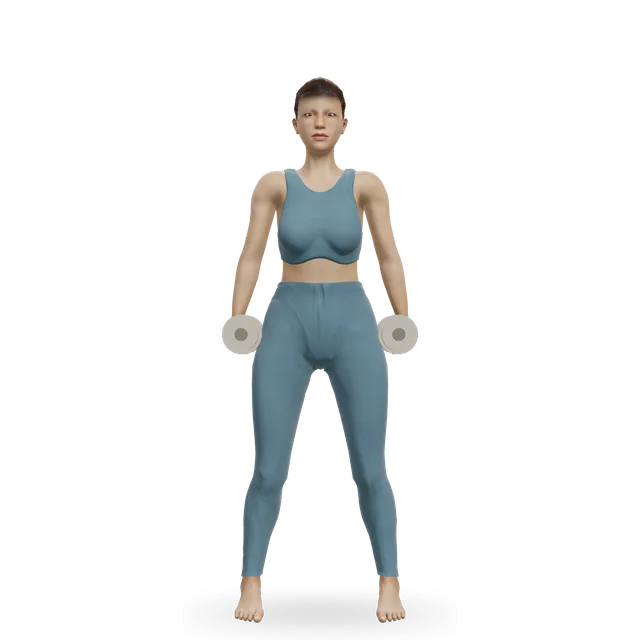
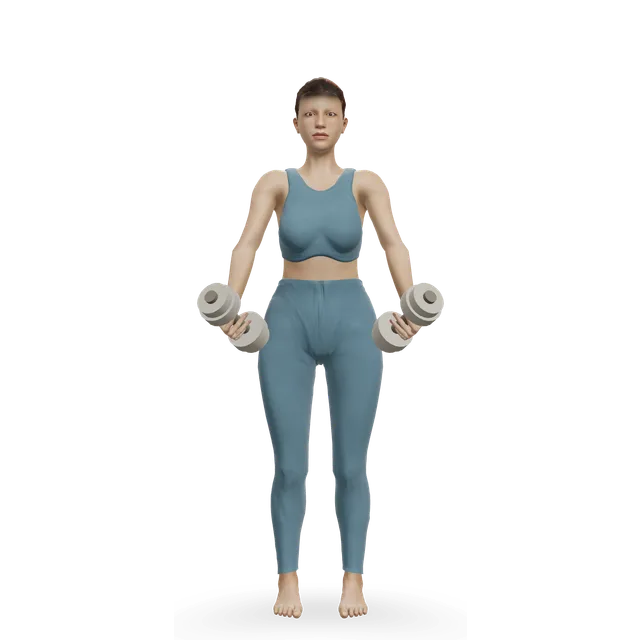
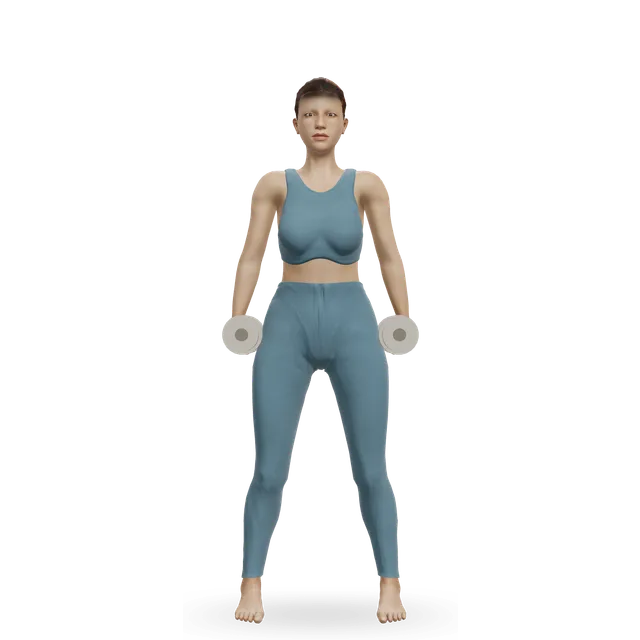
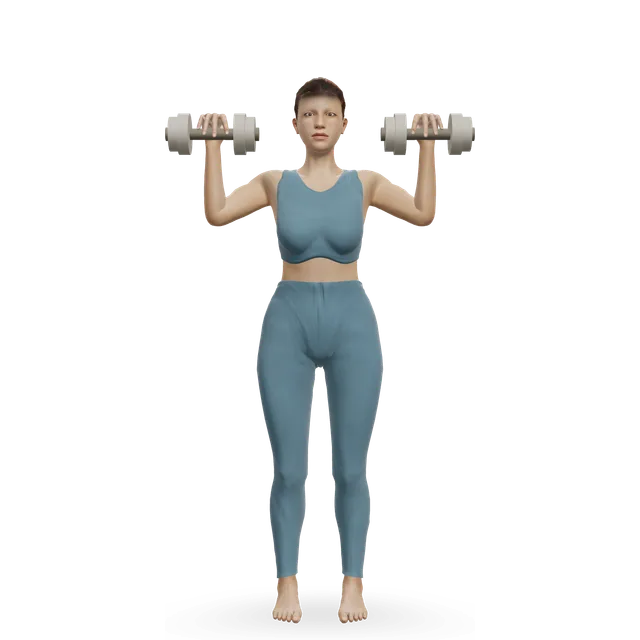
Stand tall with a light dumbbell in each hand, palms facing in, elbows slightly bent. Breathe out and raise your arms out to the sides, elbows leading, until they're level with your shoulders, then lower slowly. Our move page raises the arms a little in front of your body.
In weight trainers, signs of shoulder impingement went with lateral raises and upright rows taken above 90 degrees. It's a snapshot study, so it can't show cause, but it's a good reason to stop at shoulder height.
The American Council on Exercise (ACE) tilts the front of the dumbbell slightly up as your arms pass 60 to 70 degrees, saying it may reduce impingement. Turning the thumb down shifted work to the rear shoulder and upper trapezius in 10 bodybuilders, and in lab studies it squeezed the space under the shoulder's roof.
2 or 3 sets of 12 to 20, with the last set 0 to 2 reps short of failure, as in our workouts. For growth, our reading of the American College of Sports Medicine (ACSM) guidance and the dose meta-analysis is about 10 hard sets a week for the side delts, counting each set of overhead presses as half a set; the trial that grew them used 10 sets of raises a week.
In 24 trained lifters, cable and dumbbell raises grew the side delt equally, by 3.3 to 4.6% in 8 weeks. Elastic bands drew similar muscle activity to dumbbells and built strength like weights.
Go lighter, lower and slightly forward, keeping pain to about 5 out of 10 or less, as our shoulder guides advise. A 2010 patient handout from Mass General Sports Medicine suggests bent-over or face-down raises instead of standing ones. See a GP if shoulder pain isn't better after 2 weeks.
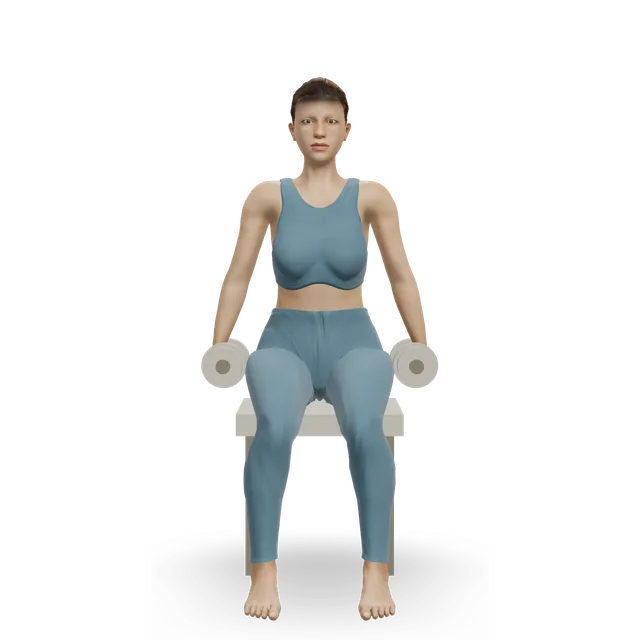
Standing or seated with a dumbbell in each hand, you lift your arms out to the sides, elbows slightly bent, until they're level with your shoulders, and lower them slowly. Our move page raises them out and slightly forward, in the plane of the shoulder blade. ACE rates it a beginner exercise.
The side (medial) deltoid worked at about 55% of its maximum with the arm in neutral, in 10 bodybuilders using loads they could lift 8 times, and at 30% of its maximum in 13 trained men lifting 60% of their best.
The front and rear deltoids, the supraspinatus (a rotator cuff muscle on top of the shoulder) and the upper trapezius help. Turning your arm out shifts work to the front delt; turning it in shifts it to the rear delt, with the upper trapezius and triceps working harder too.
In 13 trained men, the shoulder press drew nearly as much side-delt activity as the lateral raise (28% against 30% of maximum), and the bench press very little (5%).
These numbers come from EMG (electromyography: electrodes measuring how hard a muscle works). EMG shows effort in a few reps, not what a muscle builds over months.
One training trial: cable and dumbbell equalEmerging evidence
In 24 trained men and women, one arm did cable raises and the other dumbbell raises: 5 sets to failure twice a week for 8 weeks, 12 to 16 reps, with the weight moved in 0.25 kg steps. The side delt grew 3.3 to 4.6%, with no difference between the two. It's one short trial, and the ultrasound error was close to the size of the change.
In 10 bodybuilders, turning the arm in didn't raise side-delt activity as they lifted (it did while lowering), but it did raise rear-delt and upper-trapezius activity. A fine-wire study found more middle-deltoid activity with the thumb down (77% against 52% of maximum). But the thumb-down position tipped the shoulder blade forward in 20 people, which the authors say narrows the space the rotator cuff tendon passes through, and in 13 adults the force under the shoulder's roof was about 21 newtons with the arm turned fully in, against 3 or less with it neutral or turned out.
In 77 men, 46 of them weight trainers, signs of shoulder impingement went with lateral raises and upright rows above 90 degrees, and less often with training the muscles that turn the arm out. A snapshot like this can't show cause.
Each extra weekly set added about 0.4% growth across 15 studies, and the ACSM's overview of 137 reviews found growth enhanced with 10 or more sets per muscle a week. The latest dose meta-analysis found diminishing returns as the sets go up.
In the latest dose meta-analysis, of 67 studies and 2,058 people, counting indirect sets as half sets predicted growth best, and the shoulder press works the side delt nearly as hard as the raise. So counting a set of presses as half a set for the side delts is our reading, not a tested rule.
Failure isn't needed, and light loads workStrong evidence
Training to failure gave a trivial growth advantage at most across 15 studies, and light loads built as much muscle as heavy ones when sets were hard, across 28 studies of 747 adults.
At each person's 3-rep maximum, elastic tubing and dumbbells drew similar activity in the main muscles (64 to 86% against 59 to 87% of maximum) in 16 women with neck and shoulder pain, in exercises including the lateral raise. Across 8 studies, band training built strength like machines and dumbbells.
In 198 adults who worked at least 30 hours a week and had frequent neck and shoulder pain, resistance training with elastic tubing for 2 or 12 minutes a day, 5 days a week for 10 weeks, cut pain by 1.4 and 1.9 points on a 0 to 10 scale against people given health information. For a new episode of rotator cuff pain, a progressive exercise programme built on resisted outward rotation and lifting the arm forwards and to the side did no better over 12 months than one advice session with a physiotherapist, in 708 people.
Steps from ACE's lateral raise and our move page. Stopping at shoulder height and keeping your thumbs level or slightly up follow the shoulder studies on this page.
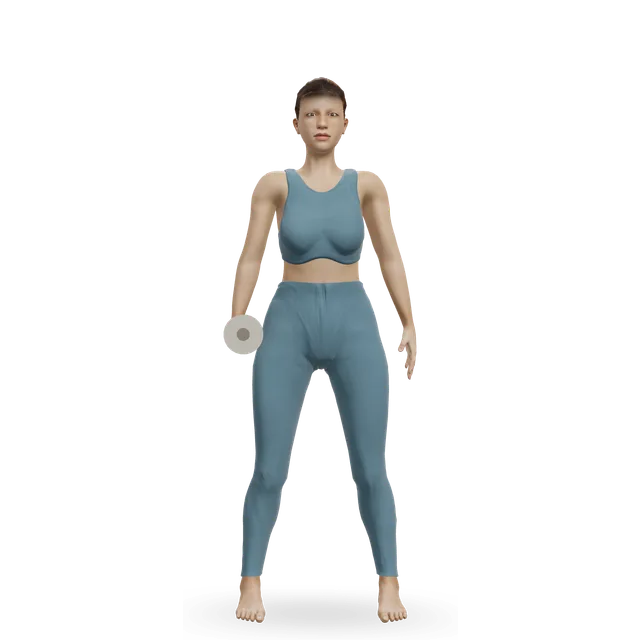
Stand tall with your feet slightly wider than hip-width, or one foot slightly in front, a light dumbbell in each hand at your sides, palms facing in and elbows slightly bent.
Gently brace and keep your shoulders down, away from your ears; your trunk stays still.
Breathe out and raise your arms out to the sides and slightly forward, elbows leading, so your upper arms rise a little ahead of the dumbbells.
As your arms pass about 60 to 70 degrees, tilt the front of each dumbbell slightly up rather than down.
Stop when your arms are level with your shoulders, or just below if your shoulder complains.
Breathe in and lower slowly over 2 to 3 seconds, without swinging.
Loading the 3D figure…
Drag to turn
Gets into position, then repeats the movement. Technical checks passed; qualified exercise review is pending.
To shoulder height, with your arms about parallel with the floor, as ACE describes, or just below if your shoulder complains. Signs of impingement went with raises above 90 degrees in weight trainers.
Level or slightly up. ACE tilts the front of the dumbbell slightly up past 60 to 70 degrees; the thumb-down pour shifted work to the rear delt and upper trapezius and, in lab studies, squeezed the space under the shoulder's roof.
Raising slightly forward puts your arm in the plane of the shoulder blade, the path our move page and the scaption raise use. In the cable-against-dumbbell trial, people whose shoulders hurt in a strict side raise were allowed to raise partway towards that plane.
A weight you can raise 12 to 20 times without swinging, shrugging or leaning back. That's our editorial starting point, within our sets and reps guide's range for small moves.
Small steps
Add reps before weight. The trial moved people up in 0.25 kg steps; with fixed dumbbells, reach the top of your rep range before moving up, as our plans' double progression does.
If you swing, shrug, lean back or can't lower slowly, go lighter, as our move page advises.
Dumbbell, cable, band and seated versions
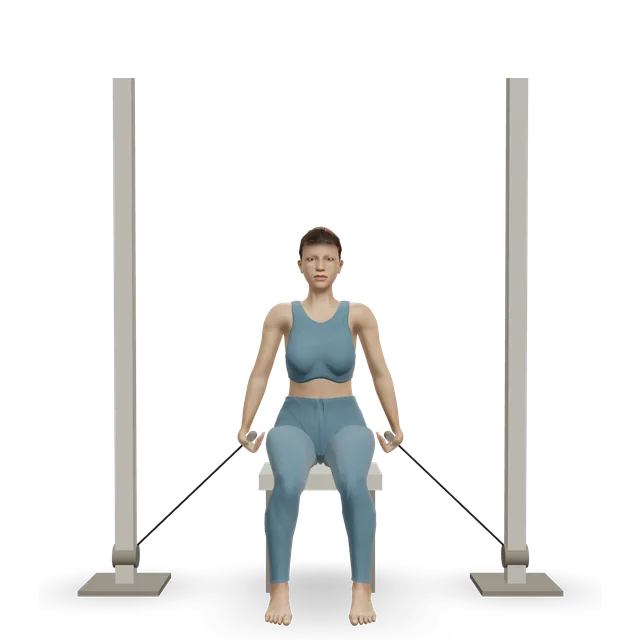
The dumbbell raise is the default at 2 or 3 sets of 12 to 20; seated versions stop your legs and trunk helping, cables and bands add load in small steps, and the scaption raise (thumbs up, 30 degrees forward, 3 sets of 15 in our shoulder impingement guide) suits a sore shoulder.
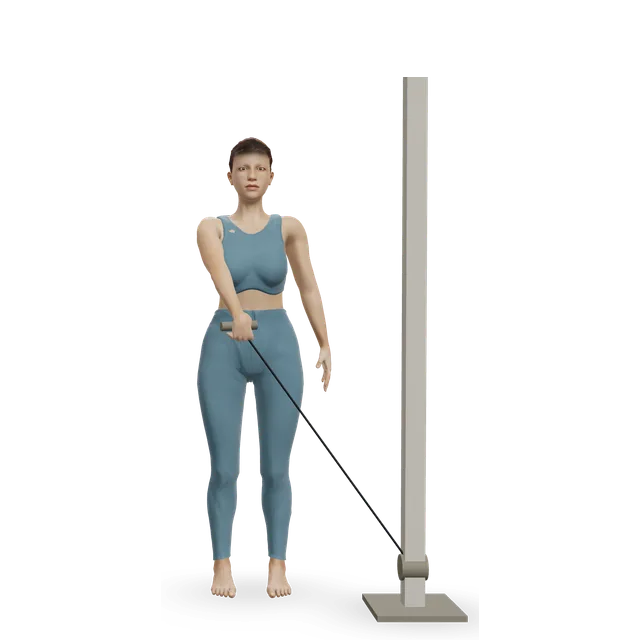
In the one training trial, cable and dumbbell raises grew the side delt equally in trained lifters. A cable lets you add weight in small steps; a dumbbell needs no machine.
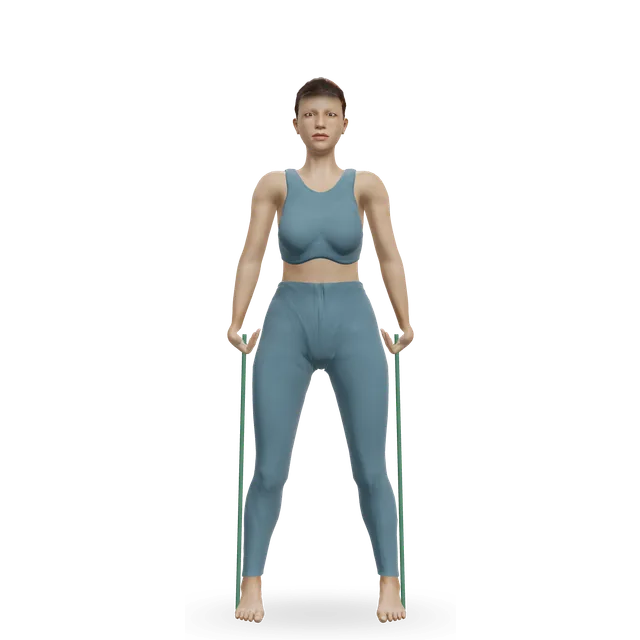
Elastic tubing drew similar muscle activity to dumbbells at matched effort, and band training built strength like weights across 8 studies. Stand on the band and raise your arms to shoulder height.
We found no study of lateral raise machines; use one if it fits you and lets you stop at shoulder height (our view).
Choosing
Choose by preference and equipment. A cable or band lets you add load in small steps (our view).
Sets, reps and how often
Sets and reps
2 or 3 sets of 12 to 20, about 60 seconds' rest, with the last set 0 to 2 reps short of failure, as in our upper body gym and push day workouts and our plans' effort note for small moves.
Weekly sets for the side delts
Our reading of the ACSM guidance and the dose meta-analysis: build towards about 10 hard sets a week for your side delts across 2 sessions, counting each set of overhead presses as half a set, for example 8 sets of raises and 4 sets of presses.
Log weight and reps with the same range and tempo; a cleaner, slower rep at the same weight is progress too (our suggestion, in line with our progressive overload guide).
What to expect
Trained lifters grew about 3 to 5% in 8 weeks; beginners usually gain faster, and strength rises before visible size, as our progressive overload guide and plans explain.
Your trunk stays still; if you lean, go lighter, as our move page advises.
Dropping the weights
Lower slowly rather than letting them fall, as our move page cues.
Lateral raises and your shoulders
A pinch at the top
A pinching pain at the top or front of your shoulder as your arm rises means: lighter, lower (stop just below shoulder height), slightly in front of your body, thumbs level or slightly up. See our shoulder impingement guide.
Keep pain to about 5 out of 10 or less during the exercise, back to its usual level by your next session, as our shoulder guides advise.
Where advice differs
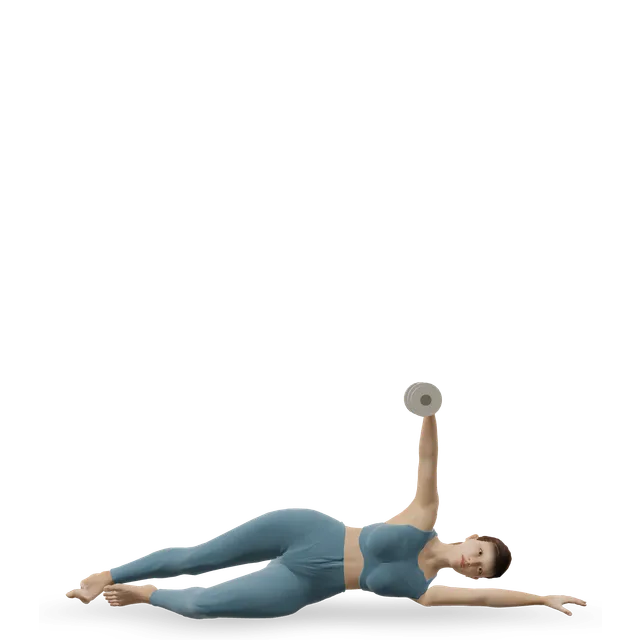
A 2010 patient handout from Mass General Sports Medicine lists standing lateral raises among the exercises to avoid, because of their impinging effect on the rotator cuff, and suggests bent-over or face-down raises instead. That's a cautious line in a handout for patients; the research links signs of impingement to raises above shoulder height, and rehabilitation programmes use resisted lifting to the side.
For a new episode of rotator cuff pain, up to six physiotherapy sessions of progressive exercise, including resisted lifting to the side, did no better over 12 months than one good advice session with a home programme, in 708 people. Our shoulder impingement and rotator cuff guides have the plans.
Overhead presses (our overhead press guide), reverse flys at 3 sets of 12 to 15 (our shoulder workout), face pulls at 3 sets of 12 to 20 (our upper body gym workout B), and band outward rotations and Y-T-W raises as in our shoulder impingement guide.
Lighter, lower, slightly forward, thumbs level or slightly up, within the pain rule; or the scaption raise, 3 sets of 15 with your thumbs up to shoulder height, lowering over 3 seconds, as our shoulder impingement guide uses.
After a dislocation or a rotator cuff repair
Follow your team's limits and our shoulder guides before you add raises.
After breast or heart surgery
Follow your team's limits for lifting your arm, as our move page's cautions explain.
Neck pain with arm symptoms
Pins and needles or a cold arm with neck pain needs a GP's view before you train through it; see our neck pain guide.
The NHS says you can carry on strength training at the gym if you already do it, and to stop if you feel uncomfortable, too hot or unwell. Lateral raises are done standing or seated.
The upper body gym and push day workouts use dumbbell raises at 3 sets of 12 to 20, push day B one-arm cable raises, the machine workout seated cable raises, and the band and neck and shoulder routines band raises at home.
During any exercise, stop and get medical help for chest pain or pressure, unusual breathlessness, dizziness or fainting, as our plans advise.
Ask for an urgent GP appointment or get help from NHS 111
For sudden or very bad shoulder pain; not being able to move your arm; a shoulder or arm that has changed shape or is badly swollen; pins and needles that don't go away; no feeling in your arm or shoulder; an arm or shoulder that's hot or cold to touch; pain that started after an injury or fall; severe pain in both shoulders; or feeling feverish or unwell. In the US, contact your doctor or urgent care.
If shoulder pain is getting worse or hasn't improved after 2 weeks, or it's very difficult to move your arm or shoulder; or if neck pain comes with pins and needles or a cold arm, or hasn't gone after a few weeks.
Tired, burning side delts are normal. A sharp pinch at the top or front of your shoulder, pain that's worse after the session, or pain, tingling or numbness down your arm isn't: go lighter and lower, or stop, and see our shoulder guides.
Myths
"Pour the jug: thumbs down is best for the side delts"Mixed evidence
In 10 bodybuilders, turning the arm in didn't raise side-delt activity as they lifted, though it did while lowering, and it raised rear-delt and upper-trapezius activity. One fine-wire study found more middle-deltoid activity thumbs down, but activity isn't growth, and the turned-in arm squeezed the space under the shoulder's roof in lab studies. ACE tilts the dumbbell slightly up instead.
"Lateral raises are bad for your shoulders"Mixed evidence
A 2010 patient handout advises avoiding standing raises, but the evidence links signs of impingement to raises taken above 90 degrees, and rehabilitation programmes use resisted lifting to the side.
Light weights build muscle when sets are hard, and no study shows that momentum adds growth (our reading). Strict reps with a weight you can lift 12 to 20 times is our advice.
"Overhead presses don't train the side delts"Emerging evidence
The shoulder press drew nearly as much side-delt activity as the raise (28% against 30% of maximum). Count presses as part of your side-delt sets, perhaps as half sets.
Stand tall with light dumbbells at your sides, palms in, elbows slightly bent. Raise your arms out to the sides and slightly forward, elbows leading, to shoulder height, then lower slowly over 2 to 3 seconds.
How heavy should lateral raises be?
Lighter than most people think: a weight you can raise 12 to 20 times without swinging, shrugging or leaning. Add reps before adding weight; in a trial, people moved up in 0.25 kg steps.
How many sets and reps of lateral raises?
Two or three sets of 12 to 20, resting about 60 seconds, with the last set 0 to 2 reps short of failure, as in our upper body workouts. For growth, our reading of the evidence is about 10 hard sets a week for your side delts, counting each set of overhead presses as half a set.
What muscles do lateral raises work?
Mainly the side (medial) deltoid, which gives your shoulders their width, with the front and rear deltoids, the supraspinatus and the upper trapezius helping. Turning your arm out shifts work to the front delt, and turning it in shifts it to the rear delt and traps.
Lateral raises: thumbs up or thumbs down?
Level or slightly up. ACE tilts the front of the dumbbell slightly up as your arms pass 60 to 70 degrees, and turning the thumb down moved work to the rear shoulder and traps and squeezed the space under the shoulder's roof in lab studies.
How high should I raise my arms?
To shoulder height, or just below if your shoulder complains. Raises above 90 degrees went with signs of impingement in weight trainers.
Why do lateral raises hurt my shoulder?
Usually the weight is too heavy, the raise too high or your thumbs are down. Go lighter, stop at or below shoulder height, raise slightly in front of your body and keep your thumbs level, keeping pain to about 5 out of 10 or less and settled by your next session. See a GP if it isn't better after 2 weeks.
Cable or dumbbell lateral raises?
Either: in a trial, the two grew the side delt equally. Cables make small weight steps easier, and dumbbells need no machine.
Can I do lateral raises at home with bands?
Yes. Elastic tubing drew muscle activity similar to dumbbells in a study that included the lateral raise, and band training built strength like weights across 8 studies. Stand on the band and raise your arms to shoulder height.
Lateral raise or shoulder press?
Both work the side delts: the press drew nearly as much side-delt activity as the raise in one study. The press also trains the front delts and triceps, while the raise isolates the side delt with light weights, so many programmes use both.
How do I stop my traps taking over in lateral raises?
Keep your shoulders down away from your ears, lead with your elbows, stop at shoulder height and use a lighter weight. Turning the arm in raised upper-trapezius activity, so keep your thumbs level or slightly up.
Can I do lateral raises every day?
You can do light sets often, but hard sets need recovery, and the trial that grew side delts used two sessions a week. Two or three days a week suits most people.
Exercise education, not a personal prescription, and clinical review of these guides is pending. Check with a GP before starting hard training if you have a heart condition, chest pain, dizziness or breathlessness when active, and stop for sharp or increasing pain. Health disclaimer.