Pain guide · Knee pain

Knee pain when squatting: what's likely, what to change today and how to build back to depth

The squat asks a lot of the knee, and pain often starts after a jump in weight, depth or volume (our reading of the injury reports). Where it hurts is the best clue: around the kneecap, one point just below or above it, or the joint line. Squatting isn't bad for healthy knees, deep squats included, and the usual fix is to change the squat for a while rather than stop it.

Some knee pain needs checking first: a pop followed by a knee you can't straighten, a knee that locks, gives way or is badly swollen, or a hot, red knee with a fever. This guide covers those signs, a map of where it hurts, what to change in the squat today, and a staged plan back to full depth and load, with a 3D demo of every move.

When to get help first

Exercise is for pain that has been checked or is clearly mild and settling.

Get urgent medical help if

  • Same day: a pop or tearing feeling at the front of the knee after a fall, stumble, jump, landing or a heavy squat, then you can't straighten the knee or lift the straight leg off the bed, there's a dent above or below the kneecap, or the kneecap sits higher or lower than on the other side. Go to A&E or an urgent treatment centre, or get help from NHS 111. A torn quadriceps or patellar tendon does best when it's repaired soon.
  • You cannot move the knee or put any weight on it, or it is very painful, badly swollen or has changed shape.
  • The knee locks, gives way or clicks painfully. Painless clicking is normal.
  • A hot, red or swollen knee with sudden severe pain, a very high temperature, or feeling hot, cold or shivery. This can be a joint infection.
  • You hurt your knee and cannot take 4 steps, or you are 55 or over and hurt it in a fall: get it checked the same day for a broken bone.
  • Leg pain or swelling with breathlessness or chest pain: call 999 or go to A&E, and do not drive yourself. It can be a blood clot that has reached the lungs.
  • Back or leg symptoms with numbness around the genitals or bottom, new trouble controlling your bladder or bowels, or severe or worsening weakness or numbness in both legs.

See a doctor or physiotherapist if

  • Knee pain that has not improved within a few weeks of looking after it at home. Many areas offer NHS physiotherapy without a GP referral.
  • Numbness, tingling or weakness that travels down the leg from the back. That points to a nerve (sciatica) rather than the knee.
  • Tendon pain above or below the kneecap and you take steroid tablets or have steroid injections, use anabolic steroids, have kidney disease, gout, rheumatoid arthritis, lupus or diabetes, or have recently taken a fluoroquinolone antibiotic: tell your GP or physiotherapist and build up more gradually. These can weaken the tendon.
  • A child or teenager with pain at a bump just below the kneecap or at its lower tip, worse with squats, jumps and kneeling: see our Osgood-Schlatter and Sinding-Larsen-Johansson guides, and get it checked if it is getting worse.

Where does it hurt?

Location narrows the likely causes; it does not diagnose.

Around or behind the kneecap, hard to point to

Worse in the middle to deep part of the squat, on stairs and after long sits with your knees bent: usually kneecap pain (patellofemoral pain). Painless clicking is normal.

Read: Runner's knee →
One point at the lower tip of the kneecap

Worse with loaded deep bending, jumping and landing, and it builds with how hard the thigh muscles work: patellar tendon pain (jumper's knee).

Read: Jumper's knee →
One point at the top edge of the kneecap

Worse at the deepest part of the squat, in lunges and kneeling, building over weeks: quadriceps tendon pain. A pop with a dent and a knee you can't straighten is a tear: see the warning signs.

Read: Quadriceps tendinopathy →
The joint line, on the inner or outer side

At the bottom of a deep squat or twisting there, with catching, locking, swelling later that day or a knee that won't fully straighten: often a meniscus tear.

Read: Meniscus tear →
Both knees, a stiff ache, from your mid-40s

Worse getting going, at the bottom of the squat and after a long session, with morning stiffness of 30 minutes or less: often knee arthritis, which is diagnosed without an X-ray.

Read: Knee arthritis →
Below the kneecap, either side of the tendon

Worse at the top of the squat as you snap into lockout, or standing with your knees pushed back, sometimes with puffiness there: possibly fat pad impingement.

Read: Fat pad impingement →
A tender band on the inner edge of the kneecap, with a click

Partway down the squat, and diagnosed once other causes are ruled out: plica syndrome.

Read: Plica syndrome →
Behind the knee

A squeezed feeling where the calf presses on the thigh at full depth, with no lump, swelling or catching, is common (editorial). A lump points to a Baker's cyst, and catching or locking to the back of a meniscus.

Read: Baker's cyst →
The outer knee, building during running or cycling

More often a runner's or cyclist's pain than a squatter's: often iliotibial (IT) band syndrome.

Read: IT band syndrome →
A teenager with a tender bump just below the kneecap

Worse with squats, jumps and kneeling in a growing child: Osgood-Schlatter disease.

Read: Osgood-Schlatter →
A teenager with pain at the lower tip of the kneecap

The same kind of growth-area pain one step higher up: Sinding-Larsen-Johansson syndrome.

Read: Sinding-Larsen-Johansson →

Understand it

Who gets it, and what usually lies behind itEmerging evidence

Lifting sports record about 1 to 4 injuries per 1,000 hours of training, from mostly low-quality studies, and the knee is one of the three commonest sites, with the spine and the shoulder. In 6 years of training records from elite US weightlifters, 85% of knee injuries were tendon pain (tendinitis), and 90.5% of all injuries cost a day or less of training. Those were elite lifters: no study has followed ordinary gym-goers in the same way.

No trial has tested what causes knee pain in the squat. In 38 published powerlifting injury reports, only 3 blamed technique, and those named heavy loads or fatigue as well. We look first for a recent jump in weight, depth, volume or frequency, or a return to an old working weight after a break (our suggestion; no study has tested it).

Sources 1, 2, 3, 4

How the common causes differ

Kneecap pain (patellofemoral pain) is a common knee problem in teenagers and young adults. It hurts around or behind the kneecap, and squatting, stairs and long sits with the knees bent bring it on. Patellar tendon pain sits at one point at the lower tip of the kneecap and rises with the demand on the thigh muscles, especially jumping and landing. A worn (degenerative) meniscus tear is a problem from about the mid-30s, and knee arthritis from about 45.

Weak thigh muscles predicted later kneecap pain in military recruits, but weak hips did not, in a meta-analysis of 18 prospective studies. Hip exercise still helps kneecap pain, so do the hip work without assuming weak hips caused it.

Sources 5, 6, 7, 8, 9

Are deep squats bad for your knees?Mixed evidence

A review of more than 164 articles concluded that worries about deep squats harming healthy knees were unfounded: stress behind the kneecap peaks around 90° of bend and falls as you go deeper, as the contact area grows. An older review preferred the parallel squat for healthy athletes, because forces on the ligaments and menisci "may increase" deeper. They disagree on the best depth, not on harm, and no trial has counted injuries by depth.

In 117 former elite athletes, 31% of the weightlifters had knee arthritis on X-ray against 3% of the shooters, with the most arthritis behind the kneecap, partly explained by the lifters' high body weight. That doesn't show that ordinary squatting causes arthritis, and the National Institute for Health and Care Excellence (NICE) recommends exercise as a core treatment for knee arthritis.

Sources 10, 11, 12, 8

Is it the squat, or how it's loaded?Emerging evidence

In lab studies of healthy people, the load on the knee rises as it bends and peaks near the deepest point, while the stress behind the kneecap peaks around 90°. Tipping the shins forward, as raised heels do, gives the knee more of the work, and leaning the trunk forward and sitting back shifts it to the hips.

In 7 weight-trained men squatting their body weight, blocking the knees from passing the toes cut the turning load at the knee by about 22% but raised it at the hip about tenfold and tipped the trunk forward. Turning the feet out about 30° roughly halved the inward (valgus) load on the knee, and a wide stance raised it by about 23%. These are lab measures, mostly in healthy people, not injury outcomes: no trial has counted injuries by depth, stance or knee travel.

Sources 11, 10, 13, 14

Knees caving inMixed evidence

We found no study linking knees drifting in during a barbell squat with injury. In landing tests, knees moving in (valgus) didn't predict a torn anterior cruciate ligament (ACL) across 9 prospective studies, and it was a poor screening test in 710 elite female footballers and handball players. In small groups of adolescent girls, more valgus on landing went with later kneecap pain. So it's worth coaching, often by lightening the bar for now, but it isn't a reason for alarm.

Sources 15, 16, 17, 18

When a scan helps, and what it can't tell youStrong evidence

Kneecap and tendon pain are diagnosed from the story and an examination: tendon changes on scans also turn up in people whose pain comes from somewhere else. After an injury, a short checklist called the Ottawa knee rule decides whether you need an X-ray; it missed almost no fractures (sensitivity 98.5%). A suspected tendon tear needs same-day assessment, and an X-ray from the side often shows a complete tear. Knee arthritis is diagnosed without an X-ray from 45.

Scans of knees without pain often show changes: cartilage defects in 11% of people under 40 and 43% from 40, meniscal tears in 4% and 19%, and bone marrow changes in 30% of young athletes in weight-bearing sports. In 991 adults aged 50 to 90, 61% of those with a meniscal tear had no knee pain, aching or stiffness in the previous month. A report has to match your symptoms before it explains them.

Sources 6, 19, 20, 8, 21, 22
What helps, and how strong the evidence is

Exercise reduces kneecap pain, and hip plus knee work does moreStrong evidence

In a Cochrane review of 31 trials (1,690 people), exercise reduced pain during activity by about 1.5 points out of 10 in the short term compared with no exercise, and improved function. Each trial was small and low quality, but the results were consistent. Hip and knee exercises together reduced pain during activity by a further 2.2 points compared with knee exercises alone (3 trials, 104 people).

The 2018 international consensus recommends exercise, especially hip- and knee-focused work combined. An NHS leaflet uses 3 sets of 8 to 12 and mini squats of less than 30° of bend to start.

Sources 5, 23, 24

A staged programme helps patellar tendon painEmerging evidence

In the largest trial (76 athletes), a staged programme of holds, then slow heavy strength work, then springy loading and sport, keeping pain at 3 out of 10 or less, improved a tendon score by 28 points against 18 with painful eccentric squats at 24 weeks. More returned to sport (43% against 27%), though that difference could be chance, and only 40 to 49% stuck to their programme.

In 39 men, heavy slow resistance kept its gains at 6 months, while a steroid injection's faded. A review warns that tendon rehab can be slow and sometimes frustrating.

Sources 25, 26, 6

Some pain during exercise is acceptableEmerging evidence

In a meta-analysis of 7 trials (385 people) with long-lasting muscle and joint pain, exercise that allowed some pain did slightly better in the short term than pain-free exercise, and no worse later. People with Achilles tendon pain who kept running under a pain-monitoring model did as well as those who rested for 6 weeks. In a kneecap pain trial that used pain monitoring, 85% of 40 young women were back in sport without pain at 12 months, though there was no untreated group.

Sources 27, 28, 29

Changing the squat: what lab studies showEmerging evidence

No trial has tested squat changes for knee pain in lifters. In a lab model of 10 healthy people, stress behind the kneecap was lowest in squats from about 45° of bend to straight, and in leg extensions from 90° to 45°; in the last 30° of straightening, the leg extension loaded the kneecap more than the squat. That is why the plan starts with a high box and part-range leg extensions.

Turning the toes out and avoiding extremes of stance lower the load on the knee in lab studies: in 42 squatters, very wide stances with the toes forward and narrow stances with the toes turned far out gave the largest knee and hip loads. Bouncing out of the bottom raised the shearing load at the knee in studies a powerlifting review cites.

Sources 30, 14, 31, 4

How much pain is OK while you exercise?

0 to 2 is safe, up to 5 is acceptableEmerging evidence

Rate your knee pain from 0 to 10 during and after training. In the pain-monitoring model used in knee programmes, 0 to 2 counts as safe, up to 5 as acceptable and above 5 as too much. Aim for 0 to 3 most of the time.

For pain at one point just below or above the kneecap (a tendon), keep it to 3 out of 10 or less, the limit the largest patellar tendon trial used. Use one single-leg squat as your test: move on when it hurts 3 or less after at least a week at a stage.

By the next morning your knee should be back to its usual level. If it isn't, drop back one step next time (less weight, a higher box, fewer sets), not to nothing.

Some programmes say you should feel no pain at all. The trials allowed some, a meta-analysis found exercising into some pain did no worse than pain-free exercise, and an NHS leaflet says mild discomfort is usually nothing to worry about. Sharp, catching or giving-way pain, or new swelling, is a reason to stop and get it checked.

Sources 32, 29, 25, 27, 24

The exercise plan: 3 stages

Start at the first stage. Each move opens a full guide with a 3D demo.

Stage 1

Keep squatting, change the squat

About weeks 0 to 2, 2 or 3 sessions a week. Find the depth, stance and load that pass the pain rule (written steps below), and start the tendon holds if the pain is at one point just above or below the kneecap. Doses are editorial unless a source is named.

Dumbbell squat to a bench demonstrated on the 3D figure3D demoDumbbell squat to a benchIntermediate · A dumbbell + A bench or box

2 to 3 sets of 8 to 12, stopping with 2 or 3 reps in reserve · The move page's dose. With kneecap pain, start at about 45° of knee bend (a high bench), where a lab study found kneecap stress lowest; toes out about 15 to 30°

Easier: Bodyweight squat · Harder: Back squat with bands

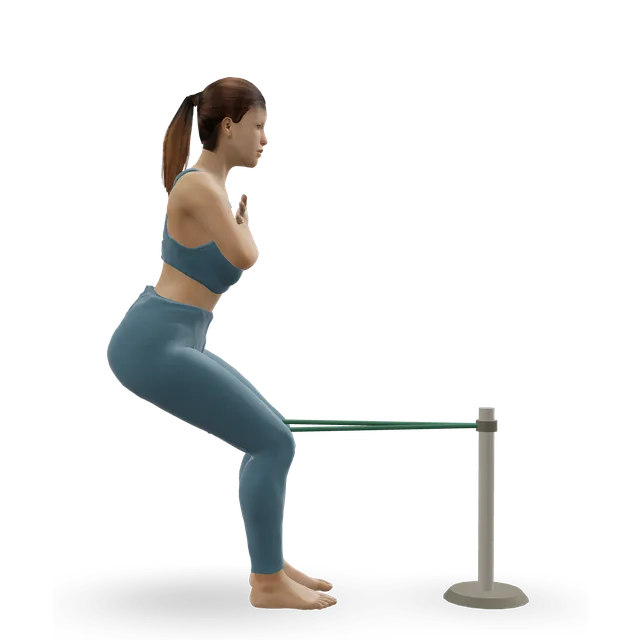
Spanish squat (band squat hold) demonstrated on the 3D figure3D demoSpanish squat (band squat hold)Intermediate · A band + An anchor point

4 to 5 holds of 30 to 45 s, 1 to 2 min rest, once a day · For tendon pain, and optional for kneecap pain. The move page's dose, modelled on the tendon trial's holds

Easier: Straight-leg raise · Harder: Pistol squat

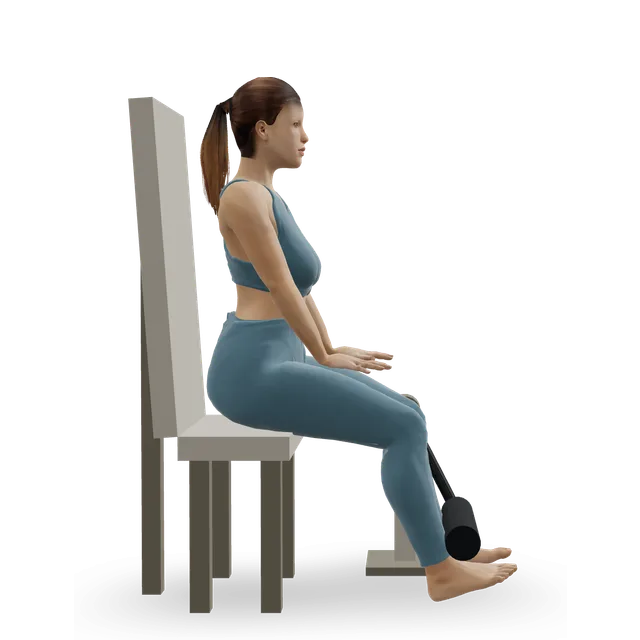
Leg extension demonstrated on the 3D figure3D demoLeg extensionBeginner · Strength machine

Kneecap pain: 3 sets of 10 to 15 from 90° to about 45° of bend only. Tendon pain: 5 holds of 45 s at about 70% effort, knee bent about 60° · The range comes from a lab study; the holds are the tendon trial's dose

Easier: Straight-leg raise · Harder: Barbell box squat

Glute bridge demonstrated on the 3D figure3D demoGlute bridgeBeginner · No equipment

3 sets of 12 · Hip work alongside knee work, as the consensus recommends

Easier: Pelvic tilt into bridge · Harder: Single-leg glute bridge

Move on when: Box squats at your chosen height pass the pain rule, and the knee is back to normal by the next morning, for a week. With tendon pain, one single-leg squat hurts 3 out of 10 or less after at least a week at this stage, the tendon trial's test.

Follow along: a timer, a cue and the next move, one step at a time.
Stage 2

Build strength through more of the range

About weeks 2 to 6. Single-leg and machine strength, lowering the box a notch at a time as the pain rule allows. With tendon pain, do the slow heavy leg press on alternate days and the holds on the days between, as the tendon trial did.

Split squat demonstrated on the 3D figure3D demoSplit squatIntermediate · No equipment

3 sets of 8 to 10 each leg · Short range first

Easier: Bodyweight squat · Harder: Reverse lunge

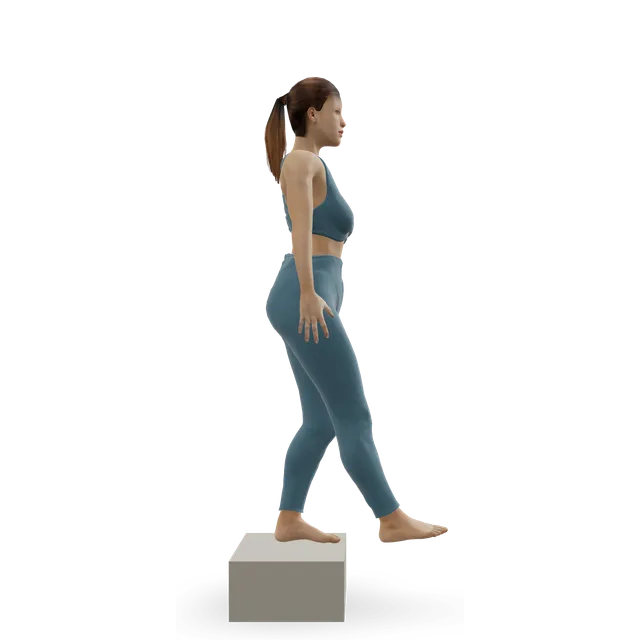
Step-up demonstrated on the 3D figure3D demoStep-upBeginner · A step

3 sets of 8 to 10 each leg · Low step first

Easier: Low step-up · Harder: Dumbbell step-up

Leg press demonstrated on the 3D figure3D demoLeg pressBeginner · Strength machine

Kneecap pain: 3 sets of 10 to 12. Tendon pain: 4 sets of 15, building over the weeks to 4 sets of 6 with more load · Depth limited at first, lowering over about 3 s. The tendon trial's dose went from nearly straight to about 90° of bend

Harder: Bodyweight squat

Single-leg Romanian deadlift demonstrated on the 3D figure3D demoSingle-leg Romanian deadliftAdvanced · A dumbbell

3 sets of 8 each leg · Fingertips on a wall at first

Easier: Dumbbell Romanian deadlift

Move on when: A box or goblet squat to your usual depth passes the pain rule for 3 sets of 10, and the step-downs are controlled. With tendon pain, the single-leg squat test is 3 out of 10 or less after at least a week.

Follow along: a timer, a cue and the next move, one step at a time.
Stage 3

Back to the barbell: depth first, then load

From about week 6, often later for tendon pain. Go back to the barbell at about half your old working weight, lower the box over the weeks, then add load (written steps below). These steps are our suggestion: no trial has tested them.

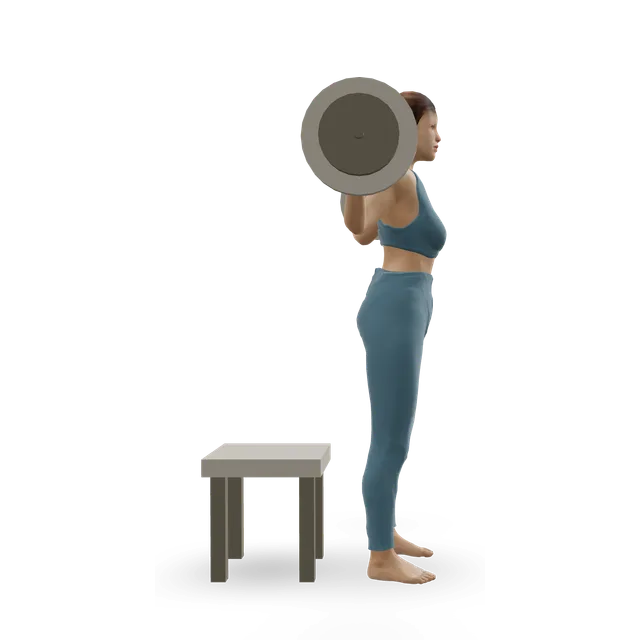
Barbell squat to a bench demonstrated on the 3D figure3D demoBarbell squat to a benchAdvanced · A barbell + A bench or box

2 to 3 sets of 8 to 12, stopping with 2 or 3 reps in reserve · The move page's dose. Start at about half your old working weight (our suggestion) and lower the bench a notch at a time

Easier: Barbell box squat

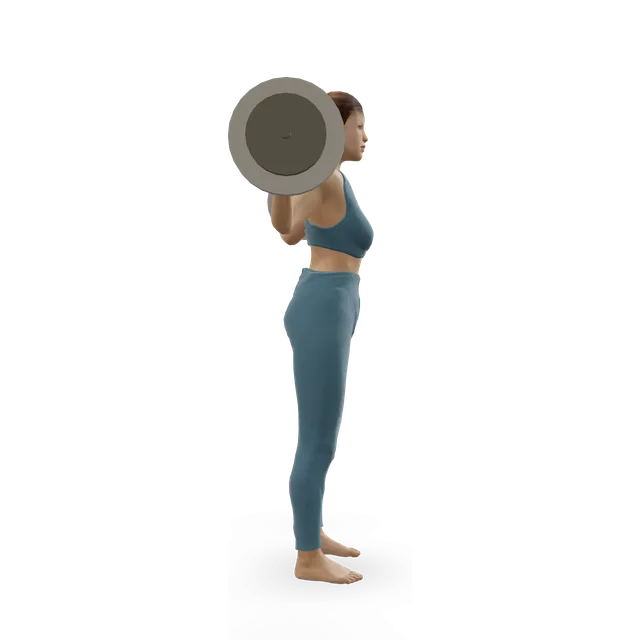
Barbell back squat demonstrated on the 3D figure3D demoBarbell back squatAdvanced · A barbell

3 sets of 5 to 8 with 2 or 3 reps in reserve · At your usual depth. Add about 2.5 to 5 kg when every set has reps to spare and the knee is fine the next morning (our suggestion, within the 2 to 10% steps the American College of Sports Medicine gives healthy adults)

Easier: Bodyweight squat · Harder: Overhead squat

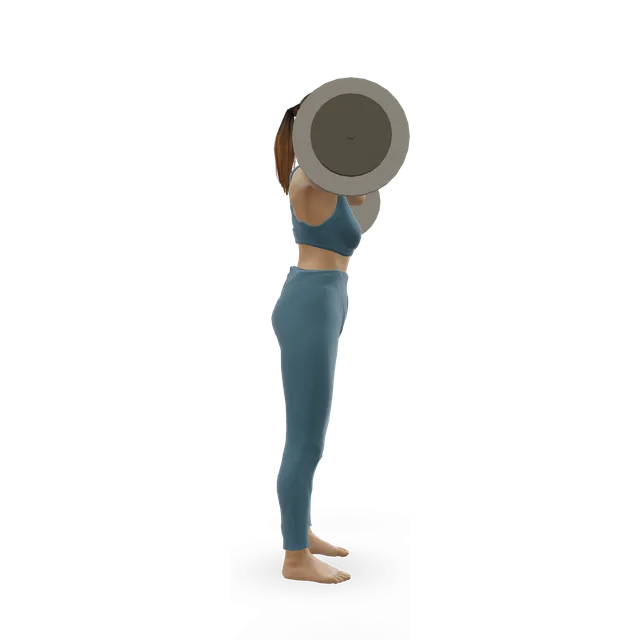
Barbell front squat demonstrated on the 3D figure3D demoBarbell front squatAdvanced · A barbell

3 sets of 5 to 8 · Once the back squat feels normal: the knee does more of the work as the shins tip forward

Easier: Bodyweight squat · Harder: Overhead squat

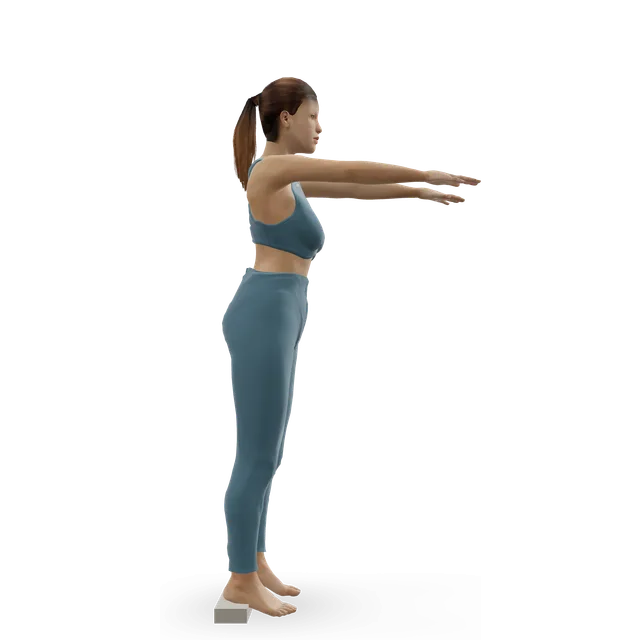
Heel-elevated deep squat (slant board squat) demonstrated on the 3D figure3D demoHeel-elevated deep squat (slant board squat)Intermediate · A step

3 sets of 6 to 10 · Last, as deep as the pain rule allows. The quadriceps tendinopathy guide's dose

Easier: Bodyweight squat · Harder: Deep squat hold

Leg extension demonstrated on the 3D figure3D demoLeg extensionBeginner · Strength machine

Twice a week: 5 holds of 45 s (tendon pain) or 3 sets of 10 to 15 (kneecap pain) · Kept up, as the tendon trial did after the return to sport

Easier: Straight-leg raise · Harder: Barbell box squat

Move on when: Your usual squat sessions pass the pain rule for 2 weeks. Keep two strength sessions a week with knee work. For jumping sports, the jumper's knee guide's springy stage comes next.

Follow along: a timer, a cue and the next move, one step at a time.

What to change for now

What to change in the squat today (written steps)

Our 3D figure can't show these changes. No trial has tested them for knee pain in lifters: they come from lab studies in mostly healthy people, the condition trials and expert advice, so keep what passes the pain rule.

  • 1. Load: drop to a weight you can lift for 8 to 12 reps with 2 or 3 to spare, inside the pain rule. Around half your usual working weight is a common starting point (our suggestion).
  • 2. Depth: squat to a box or bench at the deepest height that keeps pain within the rule. With kneecap pain, start at about 45° of knee bend (a high box) and lower it a notch at a time. With pain above the kneecap, keep away from the deepest bend early.
  • 3. Stance and toes: feet about shoulder width or a little wider, toes turned out about 15 to 30°, knees following the toes. Avoid the extremes: very wide with the toes pointing forward, or narrow with the toes turned far out.
  • 4. Trunk and shins: early on, sit back a little more to the box, with the shins nearer upright. Later, go back to your normal squat.
  • 5. Heels: leave heel wedges and lifting shoes out while the kneecap or the tendon above it is sore, and bring them back last if they help your depth.
  • 6. Tempo: pause on the box rather than bouncing out of the bottom, and lower over about 3 seconds (the 3 seconds is our suggestion).
  • 7. Volume: fewer squat sets for 2 to 4 weeks, keeping the rest of your training going (our suggestion). The tendon trial cut painful loading for at least 4 weeks.

Sources 30, 14, 31, 4, 25, 24

Back to the barbell: the load steps

No trial has tested how fast to bring the bar back after knee pain. Our suggestion borrows the step sizes the American College of Sports Medicine gives healthy lifters: add about 2 to 10% when you can do 1 or 2 more reps than planned. The squat technique workout suits this last stage; it includes the heel-elevated deep squat and the deep squat hold.

  • 1. Go back to a barbell squat to a box or bench at the deepest height that passed the pain rule in stage 2, at about half your old working weight.
  • 2. Lower the box a notch at a time over the weeks until you reach your usual depth, keeping the weight the same.
  • 3. Then add load: about 2.5 to 5 kg at a time when every set finishes with 2 or 3 reps to spare and the knee is back to normal the next morning.
  • 4. Change one thing at a time: depth, then load, then volume, then heel wedges or lifting shoes if you use them.
  • 5. With tendon pain, keep the holds or slow heavy work twice a week, as the largest tendon trial did after the return to sport.

Sources 33, 25

Sleeves, wraps, injections and surgery

Knee sleeves and wraps: the studies we found measured performance, not pain. In 15 trained men, sleeve density didn't change squat force or power, and we found no trial of sleeves for knee pain in lifters; the 2018 consensus was uncertain about kneecap taping and bracing. They're fine for comfort, but they aren't a treatment (editorial).

Injections: for patellar tendon pain, a steroid injection's early gains had faded by 6 months, unlike slow heavy strength work, and the American Academy of Orthopaedic Surgeons (AAOS) links steroid use with weaker tendons. For knee arthritis, NICE says a steroid injection into the joint gives short-term relief of 2 to 10 weeks, and can be used to support exercise.

Surgery: for a worn meniscus or knee arthritis, a guideline panel strongly recommends against keyhole surgery, except for a knee that is truly locked, and in 140 adults with a worn meniscus tear, 12 weeks of supervised exercise did as well as keyhole surgery at 2 years. A complete tear of the quadriceps or patellar tendon is different: it almost always needs repair.

Sources 34, 23, 26, 20, 8, 35, 7, 36

Positions to swap, and why

Habit or positionWhy it mattersInstead
Heavy back squats to full depth while it's soreThe load on the knee rises with depth and peaks near the bottom, and loaded deep bending provokes kneecap and tendon pain.Squat to a bench at the deepest height within the pain rule, lowering it over the weeks.Try: Barbell squat to a bench
Bouncing out of the bottomBouncing raised the shearing load at the knee in studies cited by a powerlifting review.Lower over about 3 seconds and pause on a box.Try: Barbell box squat
Heel-elevated squats, heel wedges or lifting shoes with a sore kneecap or quadriceps tendonRaised heels tip the shins forward and give the knee more of the work.Flat feet, a slightly wider stance and the toes turned out; raised heels come back last.Try: Dumbbell goblet squat
Very wide squats with the toes forward, or narrow ones with the toes turned far outIn a lab study of 42 squatters, these extreme combinations gave the largest knee and hip loads.About shoulder width or a little wider, toes turned out about 15 to 30°.Try: Dumbbell goblet squat
Jump squats and box jumps during a tendon flareThe largest tendon trial cut painful loading for at least 4 weeks and brought springy work back in its third stage.Holds, then slow heavy strength work.Try: Spanish squat (band squat hold)
Deep Bulgarian split squats early onDeep loaded knee bending (editorial).A split squat in a short range.Try: Split squat
Full-range leg extensions with kneecap painIn a lab model, the leg extension loaded the kneecap more than the squat in the last 30° of straightening.The same machine from 90° to about 45° of bend only.
Grinding reps to failure, or testing a maximum while it's soreNo trial has tested this (editorial); heavy loads and fatigue were named in some powerlifting injury reports.Stop with 2 or 3 reps in reserve, and leave maximum attempts until full sessions pass the pain rule.
The couch stretch and other deep thigh stretches, with pain above the kneecapA full knee bend presses on the painful area (the quadriceps tendinopathy guide's reasoning), and stretching wasn't the treatment in any tendon trial.A gentle side-lying thigh stretch, short of pain.Try: Side-lying quad stretch

Routines to follow

More moves for this area

Questions people ask

Why do my knees hurt when I squat?

Where it hurts is the best clue: around the kneecap is often kneecap pain, one point just below or above it a tendon, and the joint line with catching a meniscus. Pain often starts after a jump in weight, depth or volume (our reading of the injury reports, which come mostly from elite lifters). Change the squat and build back, and get it checked if it locks, gives way or is badly swollen.

Is it normal for my knees to hurt after squats?

Achy thigh muscles a day or two after a hard session are normal muscle soreness, which peaks at 1 to 3 days and goes within a week. Pain in the knee itself that lasts into the next morning means the session was too much for it for now. Drop back a step next time rather than stopping.

Should I stop squatting with knee pain?

Usually not. Lighten the bar and squat to a box at the deepest height that keeps pain at 5 out of 10 or less (3 or less for tendon pain), settling by the next morning. In trials, exercising into some pain did no worse than pain-free exercise.

Is it bad if my knees go past my toes?

No. In a lab study, stopping the knees moving forward cut the load at the knee by about a fifth but raised it at the hip about tenfold. Our suggestion: let your knees travel as far as your ankles allow, pointing the same way as your toes.

How deep should I squat with knee pain?

As deep as stays within the pain rule. With pain around the kneecap, start at about 45° of knee bend, where a lab study found kneecap stress lowest, and lower the box over the weeks. Deep squats haven't been shown to harm healthy knees, so full depth is the goal, not the enemy.

Why does my knee hurt at the bottom of the squat?

The load on the kneecap and tendons rises as you go deeper, so pain often shows up at the bottom. Pain on the inner or outer joint line with catching or swelling points to a meniscus. A squeezed feeling behind the knee at full depth, with no lump or swelling, is usually the calf pressing on the thigh (editorial), but a knee that locks needs checking.

What's the difference between pain above, below and around the kneecap?

Around or behind the kneecap is usually kneecap (patellofemoral) pain. One point just below the kneecap is the patellar tendon (jumper's knee), and one point just above it is the quadriceps tendon. They're managed a little differently, so each has its own guide.

Do knees caving in during a squat cause injuries?

We found no study linking knees drifting in during a barbell squat with injury. In landing tests, knees moving in didn't predict torn knee ligaments across 9 prospective studies. Our suggestion is still to coach it, often by lightening the bar for now.

Should I wear knee sleeves or wraps?

In our view they're fine if they make the knee feel better. The studies we found measured performance, not pain, and we found no trial of sleeves for knee pain in lifters. The strength work in the plan is the treatment.

Do I need a scan?

Usually not: the story and an examination make the diagnosis. After an injury, a short checklist called the Ottawa knee rule decides whether you need an X-ray. Scans of pain-free knees often show cartilage changes and meniscal tears, so a report has to match your symptoms.

Do squats wear out your knees?

Former elite weightlifters had more knee arthritis on X-ray than former shooters, partly explained by their high body weight. That doesn't show that ordinary squatting causes arthritis, and UK guidelines recommend exercise as a core treatment for knee arthritis.

How long until I can squat heavy again?

It depends on the cause, and no one can promise a date. In the largest tendon trial the quickest possible return to sport was 4 weeks, and a tendon review calls rehab slow and sometimes frustrating. Our suggestion is to bring depth back first, then load.

Related exercise guides

Other pain guides

Sources

  1. Aasa 2017 · Injuries among weightlifters and powerlifters (systematic review of 9 studies, BJSM)
  2. Keogh 2017 · The epidemiology of injuries across the weight-training sports (systematic review, Sports Medicine)
  3. Calhoon 1999 · Injury rates and profiles of elite US weightlifters over 6 years (training records, Journal of Athletic Training)
  4. Bengtsson 2018 · Injuries in powerlifting and their links with the squat, bench press and deadlift (narrative review, BMJ Open Sport & Exercise Medicine)
  5. van der Heijden 2015 · Exercise for treating patellofemoral pain syndrome (Cochrane review of 31 trials)
  6. Malliaras 2015 · Patellar tendinopathy: clinical diagnosis, load management and difficult cases (review, JOSPT)
  7. Kise 2016 · Exercise therapy vs keyhole surgery for degenerative meniscal tears (RCT of 140, BMJ)
  8. NICE NG226 · Osteoarthritis in over 16s: diagnosis and management (2022)
  9. Neal 2019 · Risk factors for patellofemoral pain (meta-analysis of 18 prospective studies, BJSM)
  10. Hartmann 2013 · Squat depth and the load on the knee and spine (review, Sports Medicine)
  11. Escamilla 2001 · Knee biomechanics of the dynamic squat (review, MSSE)
  12. Kujala 1995 · Knee osteoarthritis in former elite runners, footballers, weightlifters and shooters (cross-sectional study, Arthritis & Rheumatism)
  13. Fry 2003 · Knee position and hip and knee torques in the barbell squat (lab study of 7 men, JSCR)
  14. Straub 2024 · A biomechanical review of the squat exercise: implications for clinical practice (clinical commentary, International Journal of Sports Physical Therapy)
  15. Cronström 2020 · Does knee valgus predict ACL injury? (meta-analysis of 9 prospective studies, BMC Musculoskeletal Disorders)
  16. Krosshaug 2016 · The drop jump as a screening test for ACL injury in 710 elite female athletes (cohort, AJSM)
  17. Holden 2017 · Knee valgus on landing and later kneecap pain in 76 adolescent girls (cohort, Scandinavian Journal of Medicine & Science in Sports)
  18. Myer 2015 · Knee load on landing, kneecap pain and ACL injury in girls (two cohorts, BJSM)
  19. Bachmann 2004 · Accuracy of the Ottawa knee rule (systematic review, Annals of Internal Medicine)
  20. AAOS OrthoInfo · Quadriceps tendon tear
  21. Culvenor 2019 · Osteoarthritis features on MRI in knees without symptoms (meta-analysis of 63 studies, BJSM)
  22. Englund 2008 · Meniscal tears on MRI in 991 adults aged 50 to 90 (community cohort, NEJM)
  23. Collins 2018 · Consensus statement on exercise therapy and physical interventions for patellofemoral pain (BJSM)
  24. Sherwood Forest Hospitals NHS · Patellofemoral pain syndrome (patient leaflet, 2025)
  25. Breda 2021 · Progressive tendon-loading exercise vs eccentric exercise for patellar tendinopathy (RCT of 76, BJSM)
  26. Kongsgaard 2009 · Steroid injection, eccentric decline squats or heavy slow resistance for patellar tendinopathy (RCT of 39, Scandinavian Journal of Medicine & Science in Sports)
  27. Smith 2017 · Should exercises be painful in chronic musculoskeletal pain? (meta-analysis of 7 trials, BJSM)
  28. Silbernagel 2007 · Continued sport with a pain-monitoring model in Achilles tendinopathy (RCT of 38, AJSM)
  29. Thomeé 1997 · Treating kneecap pain in 40 young women with a pain-monitoring model (RCT, Physical Therapy)
  30. Powers 2014 · Kneecap joint stress in squats and knee extensions (lab study of 10 people, JOSPT)
  31. Lorenzetti 2018 · Stance width, foot angle and experience in the squat (lab study of 42 squatters, BMC Sports Science, Medicine and Rehabilitation)
  32. Ageberg 2010 · The NEMEX-TJR neuromuscular training programme for severe hip or knee osteoarthritis, and its pain scale (BMC Musculoskeletal Disorders)
  33. American College of Sports Medicine 2009 · Progression models in resistance training for healthy adults (position stand, MSSE)
  34. Leschot-Gatica 2026 · Knee sleeve density and back squat performance in 15 trained men (crossover study, Journal of Functional Morphology and Kinesiology)
  35. Siemieniuk 2017 · Arthroscopic surgery for degenerative knee arthritis and meniscal tears (BMJ Rapid Recommendations guideline)
  36. AAOS OrthoInfo · Patellar tendon tear
  37. NHS · Knee pain

Exercise education, not a diagnosis or treatment plan. It is written from the guidelines and studies listed above; review by a clinician is pending. If your pain follows an injury, is severe, is getting worse, or comes with any warning sign listed on this page, get it assessed. Health disclaimer.