Quadriceps tendinopathy (quad tendonitis): pain above the kneecap, and a tendon loading plan
Quadriceps tendinopathy is pain in the tendon that joins your thigh muscles to the top of the kneecap. It builds up over weeks and is worst with deep squats and lunges, jumping and landing, kneeling, stairs and cycling with a low saddle. You may see it called quadriceps tendonitis. It's less common than jumper's knee, which hurts at the bottom of the kneecap instead.
A pop, then a dent above the kneecap and a knee you can't straighten, is a different injury, a tendon tear, and needs checking the same day. For the overuse problem, no trial has tested a treatment, so this guide borrows from trials in the tendon below the kneecap: load the tendon gradually, with holds, then slow strength, then springy work and sport. On expert advice, the plan, with 3D demos, brings deep knee bends back last.
Exercise is for pain that has been checked or is clearly mild and settling.
Get urgent medical help if
Same day: a pop or tearing feeling at the front of the knee after a fall, stumble, jump or landing, then you can't straighten the knee or lift the straight leg off the bed, there's a dent above or below the kneecap, or the kneecap sits higher or lower than on the other side. Go to A&E or an urgent treatment centre, or get help from NHS 111. A torn quadriceps or patellar tendon does best when it's repaired soon.
A hot, red or swollen knee with sudden severe pain, a very high temperature, or feeling hot, cold or shivery. This can be a joint infection.
You cannot move the knee or put any weight on it, or it is very painful, badly swollen or has changed shape.
Leg pain or swelling with breathlessness or chest pain: call 999 or go to A&E, and do not drive yourself. It can be a blood clot that has reached the lungs.
See a doctor or physiotherapist if
Knee pain that has not improved within a few weeks of looking after it at home. Many areas offer NHS physiotherapy without a GP referral.
The thigh feels weak or gives way, or you can't straighten the knee fully against resistance: get it checked for a partial tear.
Tendon pain above the kneecap and you have kidney disease, gout, rheumatoid arthritis, lupus or diabetes, or you take steroids or have recently taken a fluoroquinolone antibiotic: tell your GP or physiotherapist, because these can weaken the tendon.
A child or teenager with pain at the top of the kneecap: get it checked, because a growth-area problem or a kneecap that formed in two parts (bipartite patella) can hurt there too.
Understand it
What it is
The four quadriceps muscles at the front of the thigh join above the kneecap as the quadriceps tendon, which attaches to the top edge of the kneecap. Through the kneecap and the patellar tendon below it, they straighten the knee. Quadriceps tendinopathy is pain where the tendon meets the kneecap, when the tendon is asked to take more load than it can currently tolerate.
It isn't the same as jumper's knee (patellar tendinopathy), which hurts at the lower tip of the kneecap. The quadriceps tendon joins muscle to bone rather than bone to bone, is built in layers from different muscles that pull in slightly different directions, and is loaded differently, so an expert viewpoint argues it should be treated as its own condition. 'Jumper's knee' was long used for both, and research has mixed the names up.
It's less common than jumper's knee, a 2011 systematic review concluded, and it's linked with repeated squatting and long spells with the knee bent. It's seen most in running and jumping sports such as volleyball, basketball and football. In 61 professional beach volleyball players, ultrasound changes in the quadriceps tendon were as common as in the patellar tendon, and only the quadriceps tendon changes went with pain.
Heavy squatting and cycling with a low saddle load the tendon in the same way, so they can bring it on too (our reasoning).
Pain at the top edge of the kneecap that builds up over weeks, worst with deep knee bends (deep squats, lunges, kneeling), jumping and landing, and stairs, often after a burst of heavy training. A clinician looks for tenderness where the tendon meets the kneecap, and pain when you straighten the knee against resistance from a deeply bent position. The story and the examination make the diagnosis, not a scan.
Pain at the lower tip of the kneecap is jumper's knee; sudden pain higher in the thigh muscle while kicking or sprinting is a quad strain; pain around or behind the kneecap with stairs and long sits is runner's knee; and a soft swelling on the front of the kneecap is bursitis. Each has its own guide.
A tear of the quadriceps tendon usually comes with a tearing or popping feeling during a stumble, fall or landing, then swelling, a dent above the kneecap, and a knee that can't be straightened or a straight leg that can't be lifted. That needs checking the same day, and our torn kneecap tendons guide covers it.
Tears happen mostly in tendons that were already worn: in a study of 891 tendons that tore without a big injury, 97% showed wear-and-tear changes, against 34% of matched tendons that hadn't torn. The American Academy of Orthopaedic Surgeons (AAOS) says tendinitis weakens the quadriceps tendon. That's a reason to manage the load, not a prediction: no study gives the chance of a tear for this tendon, and most tendon pain never leads to one (our reading).
What a scan does and doesn't meanEmerging evidence
Ultrasound or MRI (magnetic resonance imaging) can show a thickened, irregular tendon, but such changes are common in knees that don't hurt. In 24 college basketball players without knee pain, MRI showed quadriceps tendon changes in 75% of knees before a season and 90% after it. In 230 knees of inactive adults without symptoms, 7% had moderate and 2% marked quadriceps tendon changes. And in 37 elite fencers followed for 3 years, ultrasound changes in the tendon didn't predict who developed pain.
So a scan report on its own doesn't prove the tendon is the cause. A scan helps most when a partial tear is suspected, for example if the thigh has lost strength.
No study has followed people with quadriceps tendinopathy over time, so nobody can say how long it usually lasts. In the patellar tendon trials this guide borrows from, programmes ran for 12 to 24 weeks, and the quickest return to sport in the staged programme was 4 weeks. An expert review warns that tendon rehab 'can be slow and sometimes frustrating'.
No trial has tested treatment for this tendon, so the plan is borrowedEmerging evidence
A 2011 systematic review found 12 studies, none of which answered how to treat quadriceps tendinopathy: 'There are no clear recommendations'. A two-part 2019 review drew nearly all its treatment evidence from jumper's knee, and an expert viewpoint called for trials on the quadriceps tendon itself.
So this guide borrows the evidence for loading the patellar tendon, below the kneecap, and changes the order of depth on expert advice. Treat the plan as a sensible starting point, not a tested programme.
Borrowed: a staged loading programme did best in the largest patellar tendon trialEmerging evidence
In 76 people with patellar tendinopathy, a staged programme (daily holds, then slow strength, then springy loading, then sport, keeping pain at 3 out of 10 or less) beat painful eccentric squats at 24 weeks: the tendon score improved by 28 points against 18. Return to sport at the previous level was 43% against 27%, which wasn't a clear difference, and only 40% to 49% stuck to the programme.
The trial excluded people whose pain was anywhere other than the lower kneecap and the tendon below it, so for the quadriceps tendon this is a borrowing.
Borrowed: slow, heavy strength work holds its gainsEmerging evidence
In 39 men with patellar tendinopathy, a steroid injection, eccentric squats and heavy slow strength work all helped by 12 weeks, but only the exercise gains held at 6 months, and the heavy slow group was most satisfied. In 44 adults, heavy and moderate loads at the same total volume gave equal improvements that lasted a year. Doing the programme seems to matter more than the exact load.
Isometric holds: quick relief for some, not reliably betterMixed evidence
In 6 volleyball players with patellar tendinopathy, one session of thigh holds cut pain on a single-leg decline squat from 7 out of 10 to almost nothing for at least 45 minutes. But a review of 10 trials across different tendons found holds no better than ordinary lifting, and a network meta-analysis of patellar tendinopathy found them equal for immediate relief. They're easy to do and help some people: an option, not a must.
Deep knee bends last: expert opinionEmerging evidence
An expert viewpoint advises caution with deep knee bending early on, because the quadriceps tendon is loaded most there and the part next to the kneecap can be squashed. So the plan holds and strengthens between about 30° and 90° of bend first, and brings deep squats, lunges and kneeling back in stages 3 and 4.
That order is expert opinion and our adaptation, not a tested programme. It's the reverse of the order for kneecap joint pain, which usually starts with shallow bends and builds depth.
Shockwave: one small series with no comparison groupMixed evidence
In 19 runners treated with shockwave therapy alongside physiotherapy, 7 had quadriceps tendinopathy, and 5 of those 7 reached a meaningful improvement at about 3 months. There was no comparison group. In patellar tendinopathy, two trials found shockwave no better than a sham treatment.
Injections: steroids avoided, little evidence for anything elseEmerging evidence
The AAOS lists steroid use among the causes of quadriceps tendon weakness and tears, so doctors generally avoid steroid injections near this tendon, although the NHS says steroid injections may give short-term relief in severe tendonitis in general. For platelet-rich plasma (PRP) injections we found only a single case report. A 2022 review says injections or surgery may be needed when rehab hasn't worked, without naming a tested option for this tendon.
Surgery: rare, and barely studiedEmerging evidence
In 7 athletes (10 knees) whose long-standing quadriceps tendinopathy hadn't settled with heavy strength training, keyhole surgery found a large fold of joint lining (a plica) above the kneecap in every knee; whether the fold caused the pain is unknown. No surgical series reports results for the quadriceps tendon alone.
Keep tendon pain at 3 out of 10 or less (borrowed)Emerging evidence
No pain rule has been tested for the quadriceps tendon. This one is borrowed from the largest patellar tendon trial, which kept exercise and sport pain at 3 out of 10 or less and excluded people with pain above the kneecap. It's the same rule as our jumper's knee guide's.
An expert viewpoint on quadriceps tendinopathy allows up to 5 out of 10 during or just after exercise, as long as the pain is back to its usual level by the next morning, a pain-monitoring model first tested in Achilles tendon pain. Aim for 3 or less, and treat 5 as the ceiling.
The next morning, the top of the kneecap should be no sorer than usual. If it is, drop back one step (fewer sets or a shallower range) rather than stopping altogether. To move up a stage, use the single-leg squat test in the notes below the plan.
A pop, sudden weakness, or being unable to straighten the knee isn't a pain-rule question: get it checked the same day.
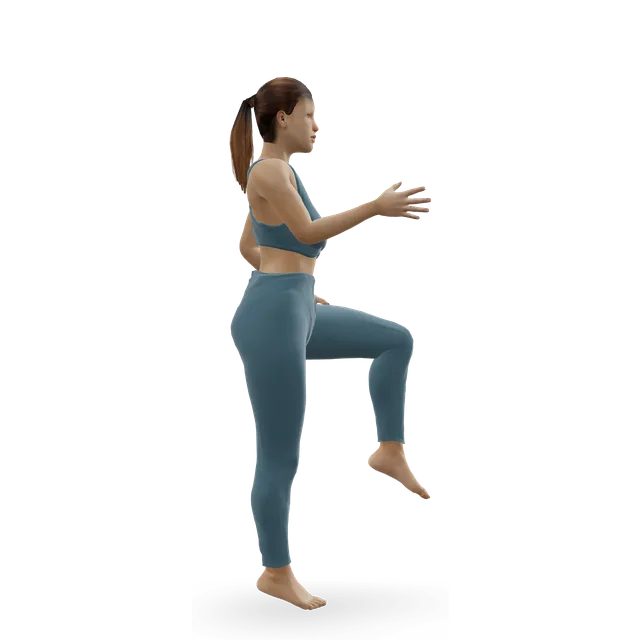
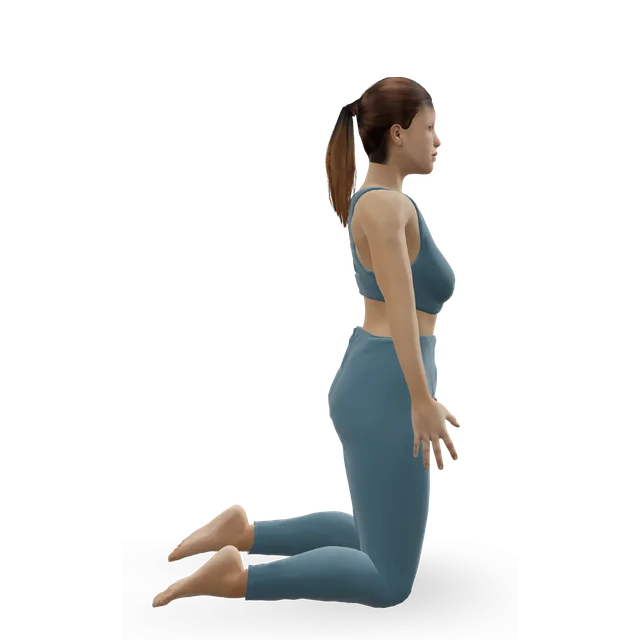
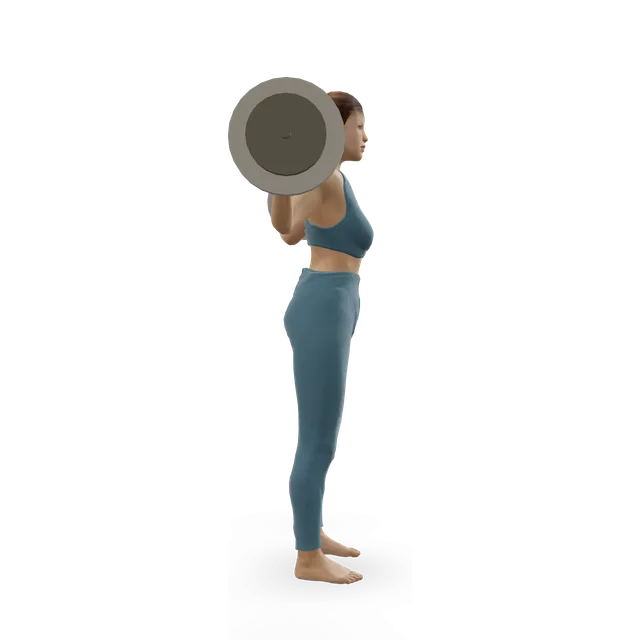
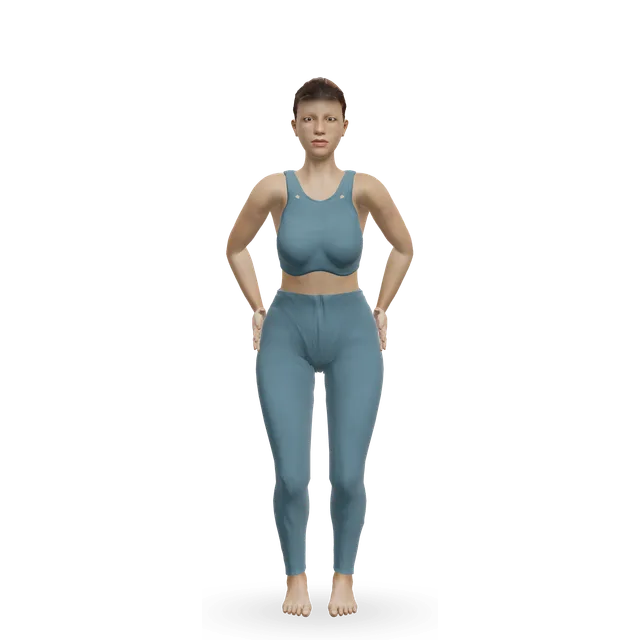
Start at the first stage. Each move opens a full guide with a 3D demo.
Stage 1
Calm it down: daily holds (about weeks 0 to 4)
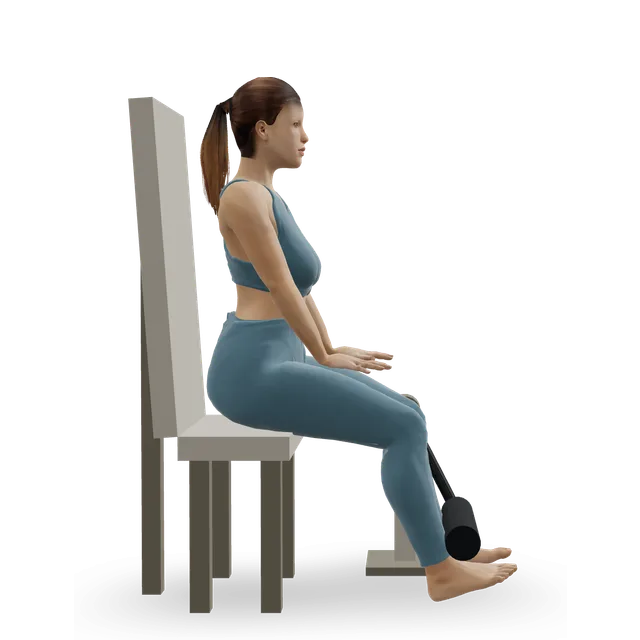
For about 4 weeks, cut back whatever causes considerable tendon pain (deep squats and lunges, kneeling, lots of jumping, cycling with a low saddle) without stopping activity, and keep everything else within 3 out of 10, as the borrowed trial did. Do the holds every day, in the middle of the range. Choose one of the first three moves: the trial used machine holds, and the Spanish squat and wall sit are untested home substitutes.
Move on when: The single-leg squat test (in the notes below) is 3 out of 10 or less, after at least a week at this stage.
Follow along: a timer, a cue and the next move, one step at a time.
Stage 2
Slow strength on alternate days (about weeks 3 to 8)
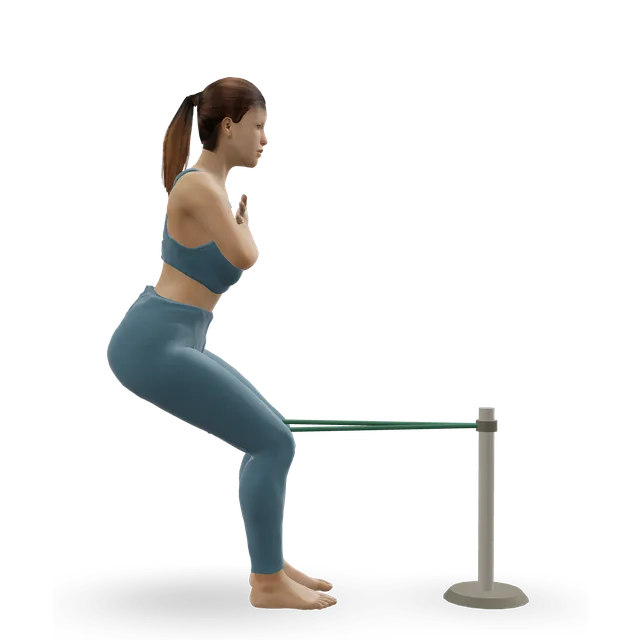
Strength on one day, the stage 1 holds on the next. Lower over about 3 seconds. The trial began slow strength between about 10° and 60° of knee bend and moved on to 90°; start shallow and add depth over the weeks.
4 sets of 15, building over weeks to 4 sets of 6 with more load · Knees to about 60° at first, then towards 90°. The trial's dose; never snap into a hard lockout
Move on when: The single-leg squat test is 3 out of 10 or less, after at least a week at this stage.
Follow along: a timer, a cue and the next move, one step at a time.
Stage 3
Spring and depth, every third day (about weeks 6 to 12)
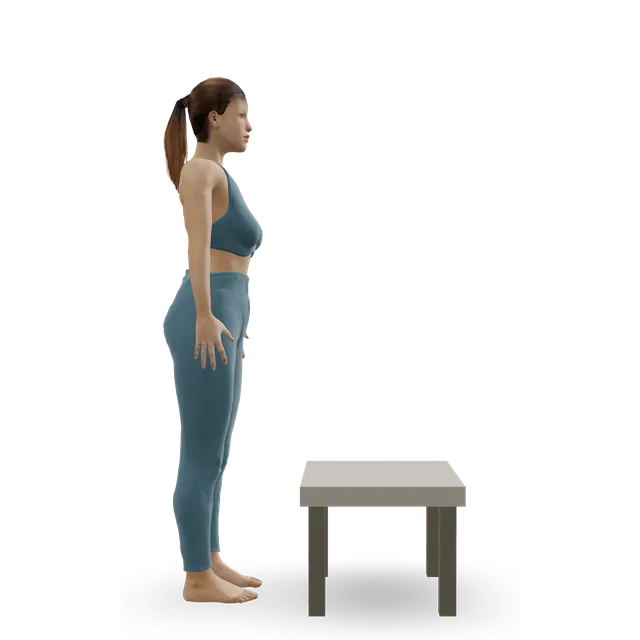
Springy loading every third day, as in the trial, with the holds and slow strength on the other days; the trial built from 3 sets of 10 on two legs towards 6 sets of 10 on one leg. Bring depth back now too: deeper squats and lunges, then kneeling on a pad (expert advice and our adaptation).
Move on when: The single-leg squat test is 3 out of 10 or less, after at least a week at this stage.
Follow along: a timer, a cue and the next move, one step at a time.
Stage 4
Sport, heavy lifting and kneeling
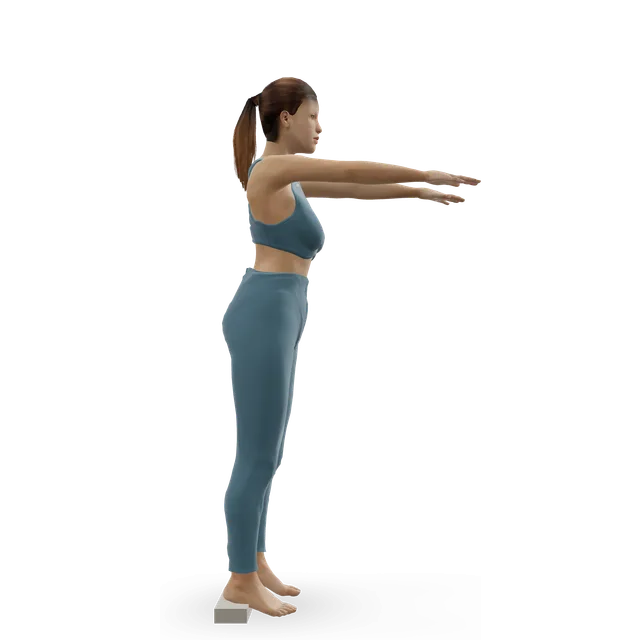
Sport drills every 2 to 3 days, holds on the days between, and strength work twice a week, as in the trial. Squatters build back to heavy, deep squats gradually; people who kneel for sport or work practise kneeling on a pad. The quickest return in the trial's programme was 4 weeks, and many people need months.
2 to 3 sets of 5, a short lean at first · Optional, for athletes who need strength deep in the bend, and only if kneeling is comfortable. Editorial dose
Move on when: Return to competition when sport drills stay at 3 out of 10 or less and settle by the next morning. Keep the strength work going twice a week.
Follow along: a timer, a cue and the next move, one step at a time.
What to change for now
Load first
For about 4 weeks, cut down the activities that cause considerable tendon pain, without stopping everything. For this tendon that usually means fewer and shallower squats and lunges, less kneeling, less jumping and a slightly higher bike saddle (our suggestions). Keep the rest of your activity within 3 out of 10.
The patellar tendon trial used one single-leg squat as its progress test. Here it goes to the depth that brings on your pain above the kneecap, because deeper bending provokes the quadriceps tendon most (our adaptation of the expert advice).
1. Before you exercise, stand on the sore leg with a hand lightly on a wall or chair.
2. Bend the knee slowly to the depth that usually brings on the pain above the kneecap, keeping the knee over the middle of the foot.
3. Straighten up and rate the pain above the kneecap from 0 to 10.
4. Move up a stage when it's 3 or less and you've done at least a week at the current stage. If it's more, stay where you are.
5. Test at the same time of day each time (our suggestion).
Kneel on a thick pad, or on the other knee, for now. Cyclists: raise the saddle a little. Lifters: squat to a box or a comfortable depth with a lighter weight, and build depth back in stage 3; leg presses with a limited range keep you training. These are our suggestions, following the expert advice on depth.
Kidney failure, gout, rheumatoid arthritis, lupus, diabetes, steroid use and a class of antibiotics called fluoroquinolones have been linked with weaker quadriceps tendons and tears. If any applies to you, tell your GP or physiotherapist, and build up more gradually.
Pain in the tendon that joins your thigh muscles to the top of the kneecap, building up with activities that load it, such as deep squats, jumping and kneeling. It's an overuse problem of the tendon, and it's less common than jumper's knee, which hurts below the kneecap.
Is it quadriceps tendonitis or tendinopathy?
The same problem. 'Tendinopathy' is the current term, because the tendon changes come mostly from overload rather than inflammation alone. You'll still see it called quadriceps tendonitis or tendinitis.
How is it different from jumper's knee?
Jumper's knee hurts at the lower tip of the kneecap; quadriceps tendinopathy hurts at its top edge, and deep knee bends provoke it most. They can happen together, and both are treated by loading the tendon gradually.
How do I know it's not a tear?
A tear usually comes with a pop or tearing feeling, then swelling, a dent above the kneecap, and a knee you can't straighten or a straight leg you can't lift. That needs checking the same day. Tendinopathy builds up over weeks, and you can still straighten your knee normally.
What exercises help?
Thigh holds first, then slow strength work, then springy jumps and landings, then sport, keeping tendon pain at 3 out of 10 or less. That staged approach did best in the largest trial in the tendon below the kneecap, and we borrow it because no trial has tested this tendon. On expert advice, deep squats and kneeling come back last.
Which exercises should I avoid?
For now, deep squats and lunges, kneeling, heavy deep leg presses, lots of jumping and long, deep thigh stretches, because deep bending loads and presses on the painful area. Nothing is banned for good: depth comes back in stages.
Should the exercises hurt?
A little is fine: keep it at 3 out of 10 or less, and make sure it has settled by the next morning. An expert group allows up to 5 out of 10 if it's back to normal the next day.
How long does it take to get better?
No study of this tendon can say. The borrowed tendon programmes ran 12 to 24 weeks, and the quickest return to sport in the largest trial was 4 weeks, but many people need months. Keep strength work going twice a week afterwards.
Do I need a scan?
Usually not: the story and a tender spot make the diagnosis. Tendon changes show up in many knees that don't hurt, including 75% to 90% of pain-free college basketball players' knees. A scan is useful if a tear is suspected.
Do injections help?
No trial has tested them for this tendon. Steroids are linked with tendon weakness and tears, so doctors avoid injecting near it, and for platelet-rich plasma we found only a single case report.
Can I keep squatting or cycling?
Usually, at a lower load: squat shallower and lighter, raise your bike saddle a little, and keep pain within the rule. Deep, heavy squats come back in the last stage.
Who gets it?
It's less common than jumper's knee and is linked with repeated squatting and long spells with the knee bent. It's seen most in running and jumping sports such as volleyball, basketball and football.
Exercise education, not a diagnosis or treatment plan. It is written from the guidelines and studies listed above; review by a clinician is pending. If your pain follows an injury, is severe, is getting worse, or comes with any warning sign listed on this page, get it assessed. Health disclaimer.