Back and knee pain lead
In 109 professional road cyclists, 58% had low back pain and 36% pain at the front of the knee in the past year. In recreational riders, the neck, knees, groin and buttocks, hands and back were the commonest complaints.
Sport
Cycling is kind to your joints but leaves gaps: it doesn't load your bones, it holds your back and neck in one position for hours, and the same pedal stroke repeats thousands of times a ride. Back, knee, neck, hand and saddle problems are common, in professionals and in weekend riders alike.
This page covers what cycling asks of your body, the common problems and what helps, the heavy strength training that improved cycling performance in trials, why riders need impact work for their bones, what a bike fit can and can't do, a warm-up, and two new workouts to follow. Each move has a 3D demo.
In 109 professional road cyclists, 58% had low back pain and 36% pain at the front of the knee in the past year. In recreational riders, the neck, knees, groin and buttocks, hands and back were the commonest complaints.
Across 17 studies, heavy strength training improved time trials, efficiency and sprint power without changing VO2 max (the most oxygen your body can use), on low-certainty evidence. In the trials, thigh muscle grew while body mass didn't.
The tested programme: half squats, one-leg leg presses, one-leg hip flexion and calf raises, 3 sets of 4 to 10 reps, twice a week for 10 to 12 weeks, then once a week through the race season.
Road cycling gives no significant bone-building benefit, and low spine bone density is common in elite and club riders. Jumping and strength training are what the evidence supports.
A fit improved comfort and riding pain over 15 days in one trial, but across 18 studies most bike measurements weren't linked with pain, while riding load was.
Wearing a helmet went with about half the odds of a head injury. After a suspected concussion: no riding a bike for 24 hours, and no racing before day 21.
Professional road cyclists ride 30,000 to 35,000 km a year and spend long spells near 90% of their VO2 max in time trials and climbs. A recreational ride is mostly steady aerobic work (our reading).
Source 13
At 80 to 100 revolutions a minute, that's 4,800 to 6,000 pedal strokes an hour (our arithmetic). In 11 cyclists in the lab, hip extension, driving the thigh down, was the main source of power at every intensity, with bending the knee adding more at high power.
Source 14
Cycling supports your weight, and road cycling gives no significant bone-building benefit. That's why riders need impact work off the bike.
Source 6
The front of the knee, the lower back (held bent for hours), the neck (tipped back to look ahead), the hands and wrists (weight on the bars) and the area in contact with the saddle.
Heavy leg strength for power and efficiency, impact work for your bones, back and neck endurance, and hip and upper-back mobility for the riding position. The UK National Health Service (NHS) also asks adults to do strengthening activities that work all the major muscle groups on at least 2 days a week, so add some upper-body work.
Source 16
These are surveys of different groups over different periods, so the figures can't be compared directly:
Across competitive cycling, most injuries come from crashes, with skin wounds and then fractures the commonest types. In road racing, 48% of injuries were to the arms, 14% to the head, neck or face, and about 5% were concussions.
Source 18
Front-of-knee pain: our runner's knee (patellofemoral pain) and knee pain guides. Outside-of-knee pain: IT band (iliotibial band) syndrome. Low back, neck and thumb-side hand numbness: the back pain, neck pain and carpal tunnel guides. We don't yet have guides to the ulnar nerve at the wrist (cyclist's palsy) or to saddle sores.
Across 18 studies, riding load was linked with overuse symptoms (moderate evidence). In amateurs, previous back pain went with about 4 times the odds of back pain, and coached or planned training with about half. Riders with back pain had less back-muscle endurance and bent more through the lower back (associations). In recreational riders, women reported neck and shoulder complaints more often.
We found no trial of a way to prevent overuse injuries in cyclists. Across many sports, strength training cut injuries to about a third, but no cycling trial has tested it. What there is: one bike-fit trial measuring comfort, studies of riding position, and observational studies of saddles and helmets.
Across 18 studies, 3 of them at low risk of bias, riding load was linked with overuse symptoms (moderate evidence), while most of the measurements used in bike fitting weren't. Build distance and hard sessions up gradually, and ease off when something hurts (our suggestion).
Source 10
In 8 studies, riders with back pain had less back-muscle endurance and bent more through the lower back, and lower handlebars added bend (associations). Back endurance work, such as back extensions and bird dogs, and a higher bar are reasonable steps, though no trial has tested them (our suggestion). In amateurs, coached or planned training went with about half the odds of back pain.
That standard bike-fit measurements predict pain: there's moderate evidence that many don't, and conflicting evidence on saddle height. That crank length, handlebar height, the width between the pedals (the Q factor) or cleat position have clear best values. That core training makes pedalling more economical: it cut sideways bike sway but not oxygen cost in 24 female mountain bikers.
Across 17 studies of 262 cyclists (60 of them women), heavy strength training, at 80% of your one-rep max or more, improved time trials and time to exhaustion by a small to moderate amount (effect size 0.46), efficiency by a small amount and sprint power by a moderate one, without changing VO2 max or threshold. The certainty is low: the studies were small, 5 to 25 weeks long, and in trained riders.
Source 3
Half squats, one-leg leg presses, one-leg hip flexion with a cable and calf raises, 3 sets of 4 to 10 reps at the heaviest weight possible, twice a week for 10 to 12 weeks. In 20 well-trained cyclists, thigh muscle, maximal strength, sprint power and 40-minute power all improved, and body mass didn't change. Similar programmes improved economy in 19 well-trained women, and raised all-out 5-minute power at the end of a 3-hour ride by 7 to 8% in two trials.
In a small trial, riders who kept one session a week through 13 weeks of racing kept their strength gains and improved 40-minute power more than riders who only rode (12 riders in all). Most professional road cyclists lift twice a week out of season and once a week in it.
In 16 young elite cyclists over 25 weeks, strength training improved peak power in a ramp test and 40-minute power more than riding alone; VO2 max and economy didn't change.
Source 28
A review favours heavy strength training over explosive training for cycling economy, and in runners, lighter loads didn't improve economy while heavy ones did. A 2026 review of cycling programmes recommends 1 or 2 sessions a week at 60 to 85% of your one-rep max, 2 to 4 sets of 3 to 5 big leg lifts, ending each set well before failure.
The trial riders lifted to failure in every set. Our workouts stop each set 1 to 3 reps short, as the 2026 review also advises, because leftover fatigue costs you rides (our suggestion).
Out of season, twice a week for at least 8 to 12 weeks; in the race season, once a week. Lift after an easy ride or on a rest day, and leave at least a day before intervals or a race (our suggestion, following the 24-hour gap advised for runners).
8 weeks of trunk training, 3 sessions of 30 minutes a week, made the trunk muscles stronger and cut sideways bike sway in 24 female mountain bikers, without changing oxygen cost.
Source 22
In one trial of 162 amateur cyclists, a single 3D bike-fitting session improved comfort and fatigue and lowered riding pain at the groin and back over 15 days, more than a handout of posture advice. It was short and unblinded, with self-rated outcomes. Across 18 studies, most measurements used in bike fitting weren't linked with overuse pain, while riding load was, so the evidence doesn't show that a fit prevents injury.
A 5% change in saddle height altered knee movement by 35% and the forces at the knee by 16%, and the pressure behind the kneecap rises as the saddle drops. A review suggests a knee bend of 25 to 30 degrees with the pedal at the bottom, but there's little injury data behind any target.
Source 32
Experts have agreed how to measure bike set-up and knee angle, such as measuring the knee with the pedal at 6 o'clock, but not what the right values are. Across 47 studies, none of good quality, saddle height, trunk angle and how far forward the saddle sits mattered most; there were no clear rules for crank length, handlebar height, pedal width or cleats.
In 80 recreational cyclists with back pain, tilting the saddle nose down by 10 to 15 degrees went with major improvement in over 70% over 6 months, and 160 mountain bikers reported less knee, hand, neck and back pain 30 days after a fit. Neither study had a comparison group, so improvement with time can't be ruled out.
Get a fit if riding is uncomfortable or something hurts. For pain at the front of the knee, check that your saddle isn't too low, and change one thing at a time (our suggestion).
Across 31 studies, road cycling gave no significant bone-building benefit, and adult road cyclists had low bone density in the lower spine.
Source 6
These studies looked at riders at one point in time, so they show associations:
The UK consensus on exercise for osteoporosis recommends at least 50 moderate impacts, such as 5 sets of 10 jumps, on most days, plus progressive strength training 2 or 3 days a week, and notes that cycling and swimming don't load bone. After a spinal fracture or several fractures, the impact needs tailoring: start with heel drops and ask a physiotherapist.
Source 8
In 36 elite road cyclists, five 5-minute bouts of jumping a week for 18 off-season weeks, each after 15 g of collagen, kept bone density at the top of the thigh bone (the femoral neck) steady while it fell in riders who did neither. There was no difference at the spine or the whole body, and the jumping can't be separated from the collagen. Riders who did weight training had higher spine and hip density in a study of 40 men, and 7 weeks of gym or on-bike power training raised bone mineral content in professionals, with no group that didn't train for comparison.
In 50 competitive male road cyclists at risk of low energy availability, given advice on fuelling and bone-loading exercise, those who improved both habits gained 2.0% in spine bone density over a race season, and those whose habits went the other way lost 2.7%; the results were grouped by behaviour, not by the trial's groups. Low energy availability, eating too little for your training, harms bone in men and women.
Neck complaints were the commonest in a survey of recreational riders (48.8%), and women reported neck and shoulder complaints more often. Moving your hands around the bars, and looking ahead with your eyes as well as your head, may help (our suggestion); the mobility routine below includes chin tucks and neck circles.
Source 2
In 14 riders, a 6-day, 420-mile tour slowed conduction in the deep branch of the ulnar nerve at the wrist, which serves the little-finger side of the hand, and worsened carpal tunnel symptoms in 3 of 28 hands. A review names these hand nerve problems among the non-crash injuries that may have the greatest impact on riders. Change your hand position often, and see a GP if numbness or weakness doesn't settle.
In 3,932 men, cyclists' sexual and urinary function was no worse than that of swimmers or runners, though narrowing of the urethra (urethral stricture) was more common. In 3,118 women, cyclists had several times the odds of genital numbness and saddle sores, and slightly higher odds of urine infections, but no more sexual dysfunction. These are cross-sectional surveys.
Men who stood on the pedals for more than 20% of the ride had less genital numbness, and a handlebar level with or above the saddle went with less numbness and fewer saddle sores. No-nose saddles and recumbent bikes lowered pressure on the area between the legs (the perineum) in studies of healthy men, and standing every 10 minutes has indirect support.
Stand up for a few pedal strokes every 10 minutes or so, set the bars level with or above the saddle if numbness is a problem, and try a different saddle if it lingers. Numbness that doesn't settle after the ride needs checking: see the warning signs below.
Across 40 studies of over 64,000 injured cyclists, wearing a helmet went with about half the odds of a head injury and about a third of the odds of a serious or fatal head injury, with no change in neck injuries. These are observational studies.
Source 11
Under the UK concussion guidelines for grassroots sport, anyone who might have a concussion stops riding at once. No sport, and no riding a bike, for 24 hours; get assessed within 24 hours by a healthcare professional or NHS 111; then return gradually, and not to competition before day 21. See a GP if symptoms last more than 28 days.
Built on the site's warm-up guide (editorial): no warm-up has been tested for preventing cycling injuries. Easy riding counts as a general warm-up, so before an easy ride, start gently and build up.
Loading the 3D figure…
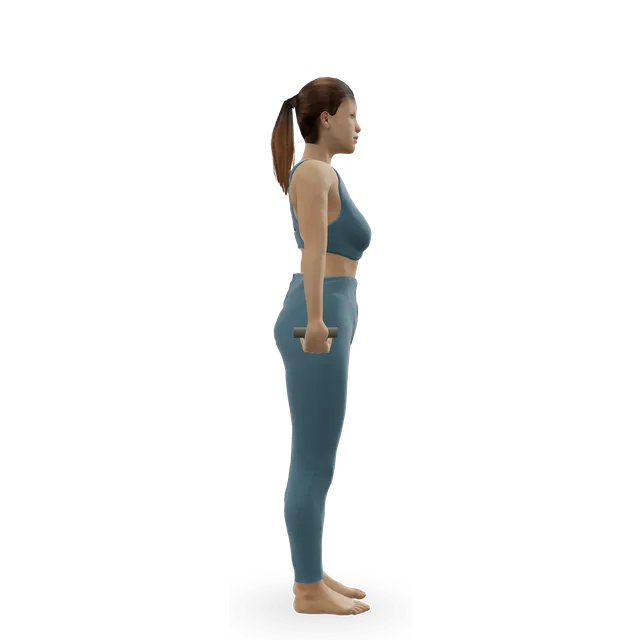
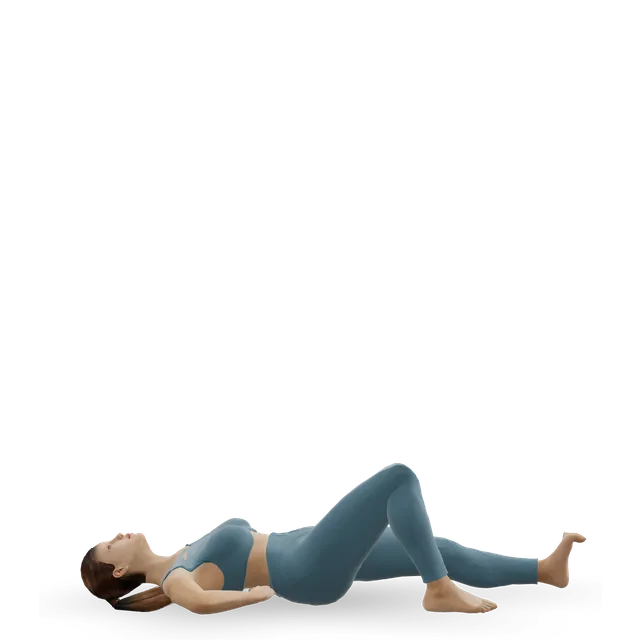
The movement on the figure: Stationary cycling
The four lifts from the cycling trials, jumps for bone, back and side endurance, and stretches for the riding position. Each has a 3D demo.
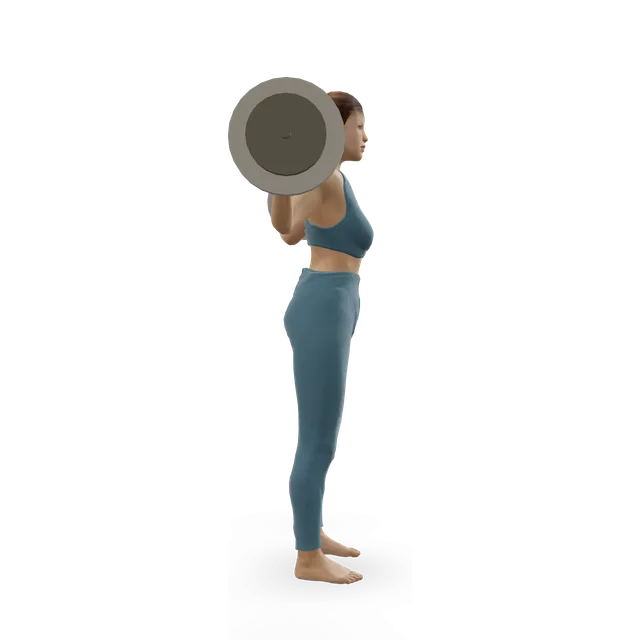 3D demoBarbell back squatAdvanced · A barbell
 3D demoLeg pressBeginner · Strength machine
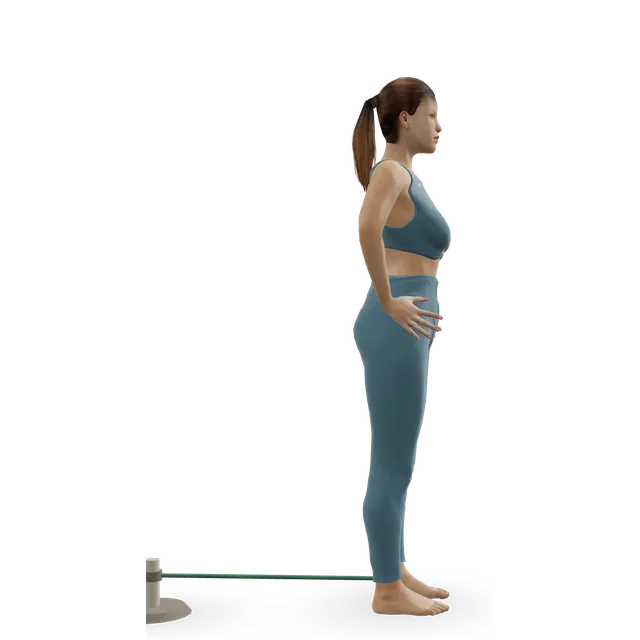 3D demoStanding band hip flexionBeginner · A band + An anchor point
 3D demoSingle-leg calf raise from a stepIntermediate · A step + A wall
 3D demoPogo hopsIntermediate · No equipment
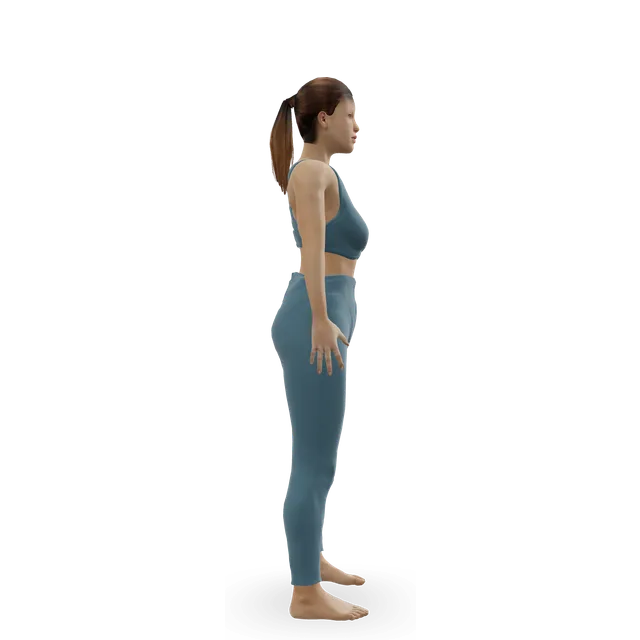 3D demoHeel drop (impact for bone)Beginner · No equipment
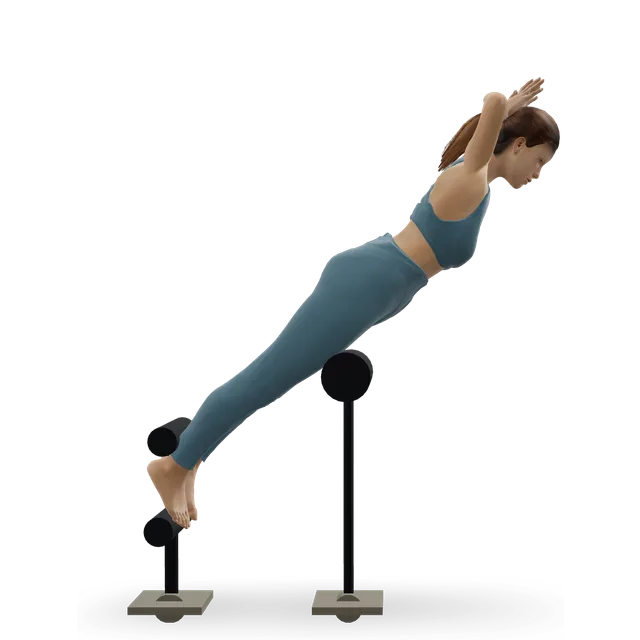 3D demoBack extension on a 45-degree benchIntermediate · A bench or box
 3D demoSide plankIntermediate · No equipment
 3D demoBird dogBeginner · No equipment
 3D demoHalf-kneeling hip flexor stretchBeginner · No equipment
 3D demoFoam Roller Thoracic ExtensionBeginner · A foam roller
 3D demoDoorway chest openerBeginner · A wall
 3D demoChin tuckBeginner · No equipment
 3D demoWrist & forearm flowBeginner · No equipment
The two new workouts come first: the cycling trials' gym session with jumps for bone, and a mobility routine for the riding position. No gym? The runners' home strength workout trains the same muscles with dumbbells and a step. The bone-strengthening workout follows the UK osteoporosis consensus.
A 50-minute gym session for cyclists: heavy squats, one-leg presses, hip flexion and calf raises as in the cycling trials, plus jumps for bone.
50 minIntermediate13 movesCardio machine, A barbellA 15-minute routine for cyclists: hips, upper back, chest, neck and wrists through the ranges riding doesn't use, plus back and neck endurance.
15 minBeginner12 movesA foam roller, A wallA 40-minute strength workout for runners at home: hops, Bulgarian split squats, single-leg deadlifts, step-ups, calf raises and side planks.
40 minIntermediate15 movesA wall, A bench or boxImpact, strength and balance for stronger bones, following UK osteoporosis consensus advice, with options for every level.
40 minBeginner14 movesA kettlebell, Other / check instructionsA gym lower body workout for legs and glutes: trap bar deadlifts, hip thrusts, reverse lunges, leg curls, hip abduction, calf raises and core.
50 minIntermediate13 movesOther / check instructions, A barbellA 12-minute routine for a stiff upper back and rounded shoulders: chin tucks, wall angels, Y-T-W raises and open books.
12 minBeginner8 movesA foam roller, A wallThe McGill big three for the core: curl-ups, side planks and bird dogs, each held for 10 seconds at a time in falling sets of 5, 3 and 1 reps.
12 minBeginner3 movesNo equipmentWe don't have a cyclists' plan yet. These strength plans fit 2 or 3 days a week around riding, and the two for over-40s and over-50s include a bone-loading day.
Two full-body strength sessions a week: the minimum that meets health guidelines, with every set, rep and rest, and an 8-week progression.
2 training days45 minBeginner3 days a weekA 12-week beginner barbell program: squat every session, alternate bench and row with press and deadlift, and add weight each time until it stalls.
3 training days50 minBeginner3 days a weekA 3-day strength plan for men over 40 with power and bone work, two cardio days and mobility, built on research on ageing muscle.
3 training days45 minBeginner3 days a weekA weekly plan for women over 50: strength, bone-loading and balance on 3 days plus walking, built on UK osteoporosis consensus advice.
3 training days45 minBeginnerCheck with your GP or a qualified exercise professional before hard riding or heavy lifting if you answer yes to any question on the Physical Activity Readiness Questionnaire (PAR-Q+): a heart condition or high blood pressure, chest pain, dizziness or fainting, another long-term condition or its medicines, a bone or joint problem, or being told to exercise only under medical supervision.
Source 51
Cycling doesn't load bone, so impact work matters, but after a spinal fracture or several fractures the impact needs tailoring. Start the jumps as heel drops and ask a physiotherapist; our osteoporosis guide sets out the steps.
The NHS advises avoiding sports with a risk of falling or bumping your tummy, such as mountain biking. It doesn't mention road cycling, so ask your midwife.
Source 52
Long rides can irritate the nerves at the wrist. If numbness or weakness lasts after you stop riding, see a GP.
Source 46
Stop and call 999 for sudden chest pain or discomfort that doesn't go away (it can feel like squeezing, pressure or burning), pain that spreads to your arms, neck, jaw, stomach or back, or chest pain with sweating, feeling sick, light-headedness or breathlessness.
Source 53
Call 999 if the rider was knocked out and hasn't woken up, can't stay awake, has a fit, has problems with their vision or hearing, has clear fluid coming from their nose or ears, has new numbness or weakness, or has problems walking, speaking or understanding, or if they hit their head at high speed, as in a road crash.
Source 50
Stop riding at once. Red flags need urgent assessment in A&E, by ambulance if necessary (call 999): worsening drowsiness, increasing confusion, memory loss, a seizure, a severe or increasing headache, repeated vomiting, severe neck pain, or taking blood-thinning medicine. Otherwise, follow the steps under "Crashes, helmets and concussion" above.
Source 12
Genital numbness or tingling that settles soon after the ride is a saddle problem: stand up more, raise the bars or try another saddle. Call 999 or go to A&E for new loss of feeling around your genitals or bottom, changes in bladder or bowel control, or numbness in both legs, especially with back pain.
Heat exhaustion (heavy sweating, pale clammy skin, dizziness, a headache, feeling sick, cramps and thirst) should improve within 30 minutes of moving somewhere cooler, cooling the skin and drinking fluids. Call 999 for heatstroke, where the skin is hot and not sweating and may look red, or if someone is still unwell after 30 minutes.
Source 55
Contact NHS 111 if your knee is very painful, you can't move it or put any weight on it, it's badly swollen or has changed shape, it locks or gives way, or it's hot and red and you have a high temperature.
Source 56
Road cycling gives no significant bone-building benefit, and low spine bone density is common in elite and club riders. It's good for your heart and lungs; add impact for your bones.
A fit improved comfort and riding pain over 15 days in one trial, but across 18 studies most bike measurements weren't linked with overuse pain, while riding load was.
Thigh muscle grew without body mass rising in the trials, and performance improved.
In 3,932 men, cyclists' sexual function was no worse than that of swimmers or runners. Genital numbness and saddle sores were less common in riders who stood for more of the ride and set the handlebar level with or above the saddle. This is a cross-sectional survey.
Source 47
In runners, loads of 40 to 79% of the one-rep max didn't improve economy while heavy loads did, and in cyclists heavy training is the method with evidence.
Trunk training cut sideways bike sway but didn't change oxygen cost in female mountain bikers.
Source 22
Yes: heavy strength training improved time-trial performance and efficiency in trained cyclists, without raising body mass. Along with jumping, it's also how you make up for cycling not loading your bones.
The trials used four leg lifts: a half squat, a one-leg leg press, one-leg hip flexion with a cable, and calf raises, for 3 sets of 4 to 10 reps. Add jumps for bone and some back, side and upper-body work, as our strength workout for cyclists does.
Twice a week for at least 8 to 12 weeks in the off-season, then once a week in the race season, which kept the gains in a small trial. Most professional road cyclists train this way.
It doesn't build them: road cycling gives no significant bone-building benefit, and low spine bone density is common in road cyclists. Jumping and strength training load the bones that riding misses.
Unlikely: in the trials, thigh muscle grew while body mass stayed the same, and power improved. Across 17 trials, heavy strength training improved time trials and efficiency without changing VO2 max.
It can make riding more comfortable: in one trial, a 3D fit eased groin and back pain on the bike over 15 days. Across studies, though, most bike measurements weren't linked with pain while riding load was, so a fit works best alongside sensible training.
Pain at the front of the knee is the commonest, and a saddle that's too low raises the pressure behind the kneecap. Pain on the outside of the knee is often the IT band. Ease the load, check your saddle height and see our knee guides.
Riders with back pain bend more through the lower back and have less back-muscle endurance, and lower handlebars add bend. A higher bar, back endurance exercises and a gradual build-up are reasonable steps, though no trial has tested them. Read the warning signs on our back pain guide.
Pressure on the handlebars can irritate the ulnar nerve at the wrist, affecting the little-finger side, or the median nerve (carpal tunnel), affecting the thumb side. Change your hand position often, and see a GP if numbness or weakness doesn't settle.
Numbness that settles soon after a ride is a saddle problem: stand up more often, raise the bars or try another saddle. New loss of feeling around the genitals or bottom, especially with back pain or bladder or bowel changes, is an emergency: call 999.
Exercise education for people who play sport, not a personal prescription or a diagnosis, and clinical review of these pages is pending. Check with a GP or physiotherapist before hard training if you have a heart condition, chest pain, dizziness or an injury that isn't settling, and stop for sharp or increasing pain. Health disclaimer.