Walking golf is moderate exercise
Walking 18 holes takes about 11,000 to 17,000 steps, against about 6,300 if you ride a cart. Experts suggest at least 150 minutes of activity a week, and walking the course if you can.
Sport
Golf asks for a few seconds of fast, powerful rotation, repeated through hours of walking. Walking 18 holes is moderate exercise, about 11,000 to 17,000 steps, and in trials, strength and power training added a few per cent to clubhead speed, most when gym lifts were combined with fast, golf-like movements. Flexibility on its own didn't predict how fast golfers swing.
Injuries are uncommon per round, but more than half of golfers have one at some point. The low back is the commonest problem; the elbow, shoulder, knee and, in professionals, the lead wrist follow. This guide covers what golf asks of your body, the common injuries and what prevents them, a 10-minute warm-up from the one trial of a golf warm-up, a strength and power workout, golf in later life, and when to check with a doctor first. Every exercise has a 3D demo.
Walking 18 holes takes about 11,000 to 17,000 steps, against about 6,300 if you ride a cart. Experts suggest at least 150 minutes of activity a week, and walking the course if you can.
Where trials found an effect, clubhead speed rose by about 4% to 6%. Gym lifts combined with fast, golf-like movements for 8 weeks worked best.
Leg power and upper-body strength go with a faster swing; flexibility doesn't. Keep hip and upper-back turns for comfort and swing positions (our reading).
A previous episode, older age and higher body mass went with golfers' back pain. Swing style and hip range weren't consistently linked.
Source 7
Easy aerobic exercise, golf mobility, then practice swings. A golf warm-up cut low back pain episodes in one trial in teenagers, and long static stretching before you hit slows your swing.
Leave the course when you hear thunder, keep children well away from swinging clubs, and with osteoporosis keep your swing smooth and comfortable.
Studies put golf at about 4.5 metabolic equivalents (METs) on average, with a range of 2.5 to 8; 1 MET is the energy you use sitting still. Walking 18 holes covers 4 to 8 miles. Our calories calculator uses 4.5 METs for golf when you walk and pull your clubs. Harder exercise builds more fitness than golf does, so golf works best alongside it.
Source 1
Each full swing is a fast rotation through the hips, trunk and shoulders, repeated through a round and on the range. In golfers from juniors to tour players, clubhead speed went with leg power in jump tests, upper-body strength and power, and leg strength.
For a right-handed golfer (swap the sides if you play left-handed):
A hip-hinge posture held over the ball, turning through the hips and upper back, balance through the finish, grip endurance, and walking hills. Carrying your bag went with back pain in one study, so a trolley is worth considering if your back complains (our suggestion).
Source 7
Each study counted injuries its own way, so the figures in different lines aren't comparable.
Injuries are uncommon per round but add up over a golfing life:
The biggest burden in amateurs: 1.26 episodes per golfer a year and about 6 days of golf lost per player a year in the 910 amateurs. It was 18% of injuries in Australian amateurs and 22% to 34% in professionals. In a survey of 1,170 male golfers, 37% had had low back pain in the past week, and their complaints were much the same during golf as in everyday life.
What raised the risk: a previous episode (about 10 times the risk in novice golfers), older age and higher body mass. Less than an hour a week of full-shot practice went with lower risk in one study, and carrying the bag with higher risk in another. Swing style and hip range weren't consistently linked. Our back pain guide has exercises and the warning signs.
In 128 European Tour professionals, 30% had had a wrist problem, two-thirds of them in the lead wrist, most often on the little-finger side, where the extensor carpi ulnaris tendon runs; that tendon slipping out of its groove cost the most tournaments. Professionals had about three times the risk of hand and wrist injury that amateurs had, while the 910 amateurs logged 0.12 wrist injuries per golfer a year. Heavy practice and hitting the ground hard ('fat' shots) are the mechanisms described. Our wrist pain guide covers it.
Elbow and forearm injuries were 17% of injuries in Australian amateurs. A review describes tennis elbow on the lead arm as the leading upper-limb injury in amateur golfers, and most golfer's elbow doesn't come from golf. Practice volume, grip and technique are the suspected causes, from narrative reviews rather than trials. See our tennis elbow and golfer's elbow guides.
In the 910 amateurs, the shoulder cost the second-largest amount of golf and the knee the third. Osteoarthritis roughly doubled the odds of an injury (odds ratio 1.97), and older age and a previous injury raised the risk too. The lead shoulder is hurt most often. See our shoulder pain and knee pain guides.
In 19 golfers with rib stress fractures, 18 were beginners and 16 fractures were on the lead side, after a sudden jump in practice. Two were taken for back strain for 6 to 8 months. We have no rib guide yet: see a GP for rib pain that lasts, or hurts sharply when you breathe or swing (our wording).
Source 16
Rare but serious. Thirteen children aged 10 or under who were hit by a swinging club had depressed skull fractures, and 12 needed brain surgery; none of them was being supervised.
More play went with more injury in Australian amateurs (odds ratio 3.73), and amateurs who played more than 3 or 4 rounds a week had more injuries in 2 studies. Golfers doing 'injury prevention exercises' had more injuries in two studies, probably because injured golfers are the ones who start them.
The Golfers' Low Back Pain Exercise Prevention programme (GLEP) was tested in a double-blind trial against a sham warm-up in 45 high-school golfers from 3 Japanese schools (average age 16; 36 boys and 9 girls). Before every golf session for 12 weeks, they did at least two sets of: a lead-hip stretch, turning the trunk round the lead leg so the lead hip rolls in, 10 times; hip and trunk turns with a club behind the back, feet wider than the shoulders; bending and straightening at the hips holding a club; side bends with the club in both hands; and a forward lunge holding the club level, then a turn each way (5 each side for these four); then 5 squat jumps, bending the knees to about 90 degrees. They moved through their full range without using momentum. A physiotherapist taught it in groups of 1 to 3, with a video on players' phones.
Low back pain episodes fell from 100 to 16, or from 95.1 to 15.8 per 1,000 days of golf (odds ratio 0.157; 95% confidence interval 0.092 to 0.266), in figures corrected in 2026. The number of golfers who had any back pain didn't differ significantly: 5 of 23 against 8 of 22 (odds ratio 0.49; 0.13 to 1.82). Players did the warm-up before 71% of their golf sessions, and no harms were reported.
The episodes clustered in a few sham players (one reported 39), the pain included minor twinges, and the trial lasted 12 weeks. Hip range and trunk endurance improved in both groups, and golf performance didn't differ. Trialled in teenage golfers; untested in adults.
In 522 women club golfers, those who didn't warm up regularly were far more likely to report an injury in the past year, but that survey asked about the past year at one point in time, so it can't show cause. In two larger studies that followed golfers forward, 588 Australians and 910 American and Swiss amateurs, warm-up habits weren't linked with injury. A review called the evidence mixed and inconclusive. Experts still agree you should warm up, and it does help you hit better.
No trial has tested it in adult golfers. Experts agree that strength and conditioning can lower injury risk, and in people generally, our back pain guide reports that exercise with education roughly halved the risk of a new episode of back pain.
Source 2
Less than an hour of full-shot practice a week went with less back pain in one study, playing more than 3 or 4 rounds a week raised the risk in 2 studies, and rib stress fractures followed sudden jumps in practice. Build range sessions up step by step, especially as a beginner or after a break (our suggestion).
In 15 young competitive golfers, a 20-minute stretching routine before hitting cut clubhead speed by about 4%, and accuracy too, for up to 30 minutes. Stretching doesn't prevent injuries in other sports either, as our warm-up guide explains. Keep any stretch short.
Golfers with back pain had less lead-hip inward rotation in two small studies, but pooled studies don't link hip range with back pain, and in the warm-up trial hip range improved in both groups, so the hip doesn't explain the result.
Reviews suggest swing changes, but no study has tested whether they prevent injuries.
Two reviews of 20 and 25 small trials found that strength and power training raised clubhead speed, ball speed and distance by about 4% to 6% where it worked. Programmes combining gym lifts with golf-specific movements averaged 4.1% more speed and 5.2% more distance; general training alone, 1.6% and 4.8%. Eight-week programmes with fast golf-specific movements, 3 to 4 sets of 5 to 15 reps, worked best. On a 90 mph driver swing, 4.1% is about 3.7 mph (our arithmetic).
Most trials were small and in male club and college golfers, so the direction is clear and the size modest.
In two analyses of golfers from juniors to tour players, leg power in jump tests, upper-body strength and power, and squat strength went with clubhead speed, with moderate to strong correlations. Flexibility didn't: its correlation with speed was about zero in both.
In 6 small studies of female golfers, training raised clubhead speed by a moderate amount. In 18 men aged about 71, 8 weeks of flexibility, core, balance and strength training raised driver speed by about 5% (from 127.3 to 133.6 km/h), while the control group didn't change.
Foam rolling and dynamic stretching of the lead hip added lead-hip rotation and carry distance in 22 men, but not clubhead speed. A rotation warm-up didn't change trunk separation (the X-factor) in 36 golfers aged about 64, and 8 weeks of corrective exercise improved an overhead squat but not the swing. Keep hip and upper-back turns in your warm-up, and put most of your training time into strength and power (our reading).
Dynamic and band warm-ups helped performance in a review, and static stretching didn't. Adding band exercises to a dynamic warm-up improved distance and strike, though not clubhead speed, in 15 elite men. In 21 young golfers, a dynamic warm-up plus club swings raised clubhead speed where swings alone didn't. Weighted-club swings added 2.6 mph on the first tee only.
When 1,040 amateurs were watched before play, 54% did any warm-up, mostly air swings, and over 70% of surveyed golfers said they never or seldom warmed up. In a small study of 20 men that wasn't randomised, a golf warm-up programme done 5 times a week for 5 weeks was linked with 24% more clubhead speed, but its exercises aren't described in the summary.
In sedentary men aged 48 to 64, walking golf 2 or 3 times a week for 20 weeks improved fitness, waist size and high-density lipoprotein (HDL) cholesterol, the 'good' kind, against men who didn't play (a controlled trial, not randomised). Harder training builds more fitness; our high-intensity interval training (HIIT) and zone 2 guides cover it.
Our editorial plan, built on the trials:
Back pain is common in golfers, as in everyone, and most of it isn't serious. Keep moving, keep pain mild and settling, and cut back range sessions before rounds while it settles (our suggestion). Our back pain guide has exercises and says nothing is banned.
Source 23
It's the only warm-up shown to cut back pain episodes, though only in teenagers so far. Our golf warm-up workout runs it twice through in about 10 minutes.
Source 8
The UK consensus on osteoporosis says twisting should be safe if it's smooth and comfortable; vertebral fractures mid-swing appear only in a few case studies. Shorten and smooth your swing, and after a spinal fracture ask a physiotherapist, as our osteoporosis guide says.
Source 12
Rib stress fractures in beginners have been mistaken for back strain for months. Pain over the ribs on the lead side after a jump in practice is worth a GP visit.
Source 16
In 300,818 Swedish golfers, death rates were 40% lower than expected for their age, sex and social group, which the authors equate to about 5 extra years of life. It's an association: healthier people may be the ones who play.
Golfers aged 65 to 79 had better grip strength and balance than non-golfers, and golfers over 80 matched non-golfers aged 65 to 79 on grip and standing balance. These are associations. Experts agree golf is likely to help strength and balance in older adults.
In a trial of 106 adults over 65 in Japan, 24 weeks of golf training improved a memory test but not grip strength or walking speed.
Source 48
80% of golfers returned after a hip, knee or shoulder replacement (hip 90%, knee 70%, shoulder 80%), on average 4.4 months after surgery. Our knee replacement guide starts golf with chipping and putting at about 8 to 12 weeks, and our hip replacement guide has golf by 3 to 6 months, both from one hospital trust in the UK's National Health Service (NHS); follow your own surgical team's timeline.
Add strength and balance work on at least 2 days a week, as our older adults guide says; the strength and power workout below has bodyweight and light options.
Steps 2 to 7 are the golf warm-up from the GLEP trial: trialled in teenage golfers; untested in adults. The order, easy aerobic exercise, then golf mobility, then practice swings, follows the 2018 international golf and health consensus; the timings and swing counts are editorial.
Loading the 3D figure…
The movement on the figure: Standing trunk twist
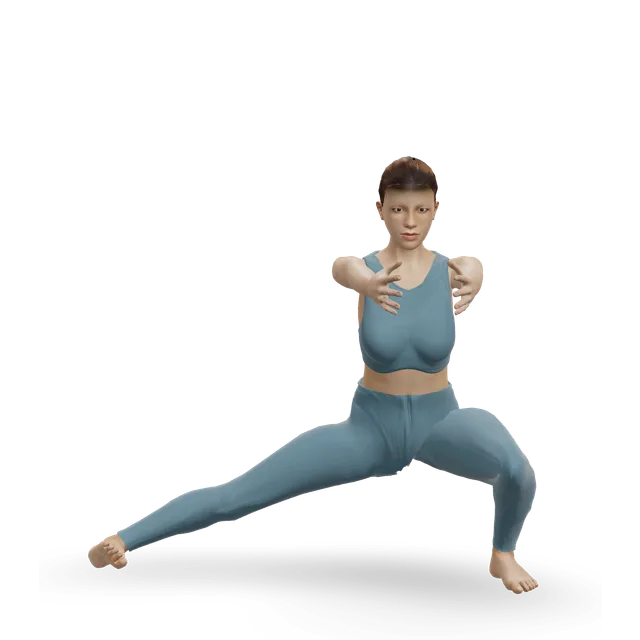
The first six are the warm-up's moves: our trunk twist stands in for the trial's turn with a club behind the back, and the reverse lunge with rotation for its forward lunge and turn. The rest build the strength and power that go with clubhead speed.
 3D demoStanding hip CARsBeginner · A wall
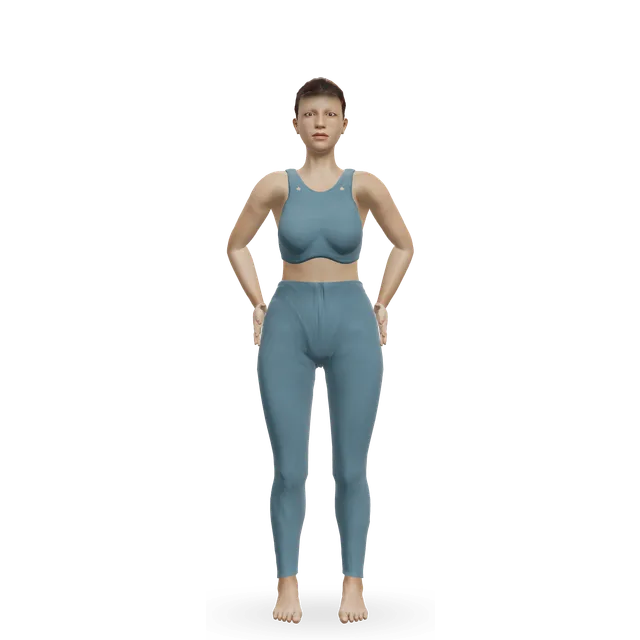 3D demoStanding trunk twistBeginner · No equipment
 3D demoHip-hinge practiceBeginner · No equipment
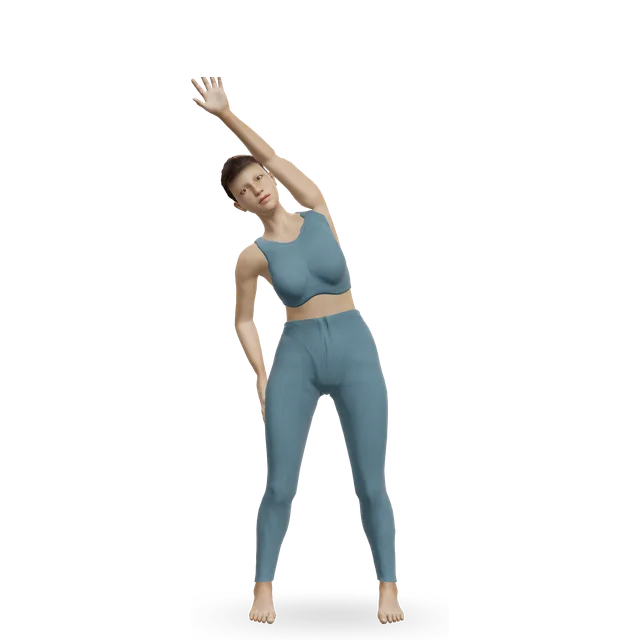 3D demoOverhead side bendBeginner · No equipment
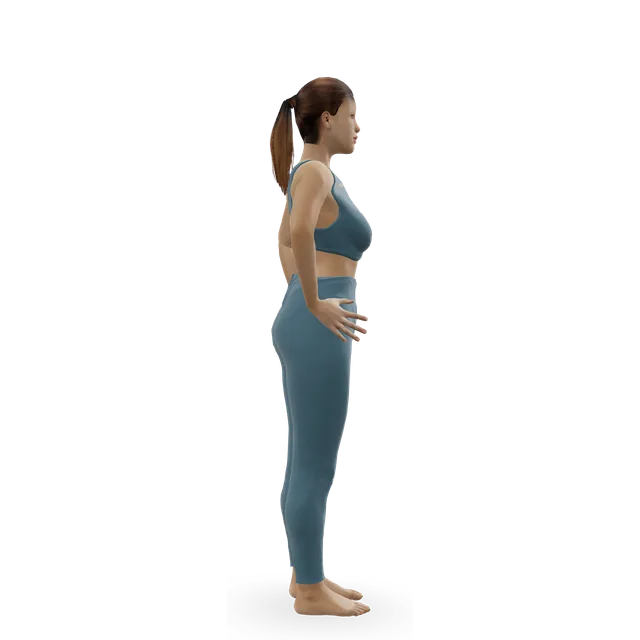 3D demoReverse lunge with rotationIntermediate · No equipment
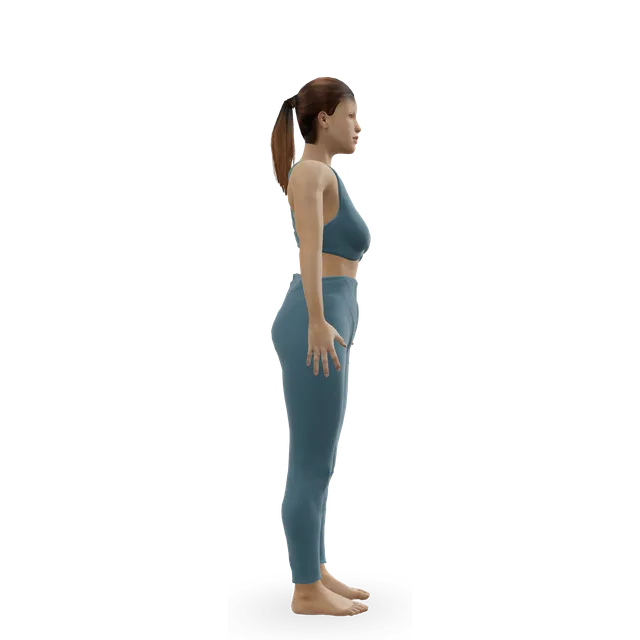 3D demoJump squatIntermediate · No equipment
 3D demoDumbbell goblet squatIntermediate · A dumbbell
 3D demoDumbbell Romanian deadliftIntermediate · A dumbbell
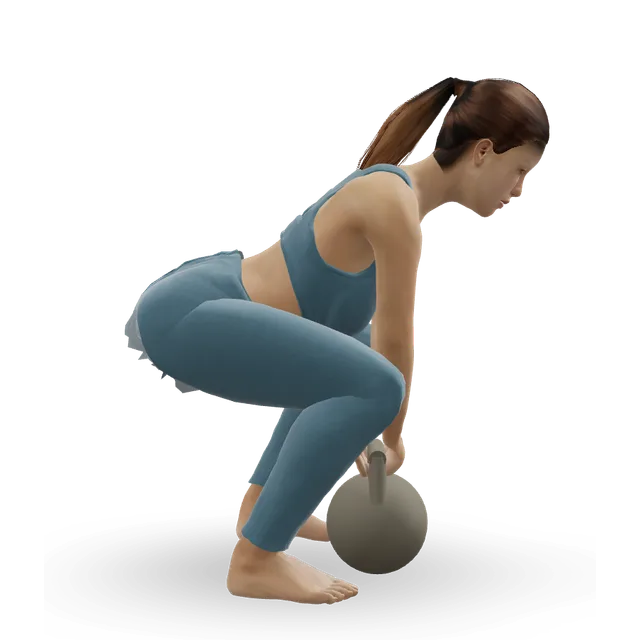
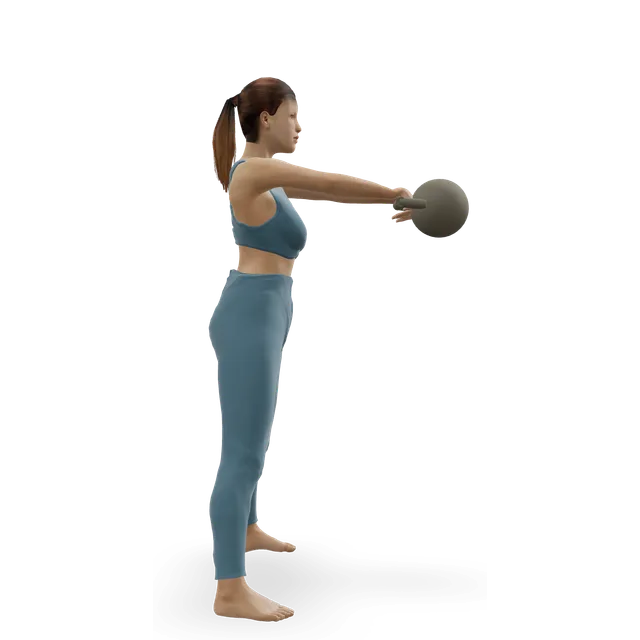 3D demoKettlebell swingIntermediate · A kettlebell
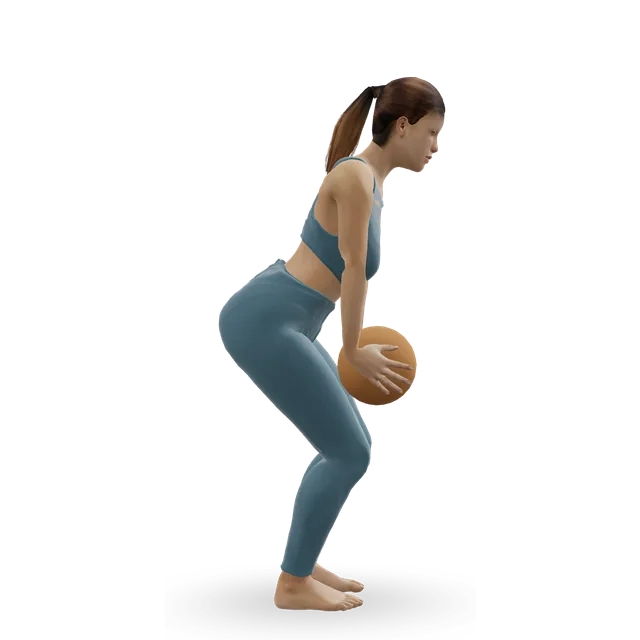 3D demoMedicine-ball scoop throw (backward overhead throw)Beginner · Medicine ball
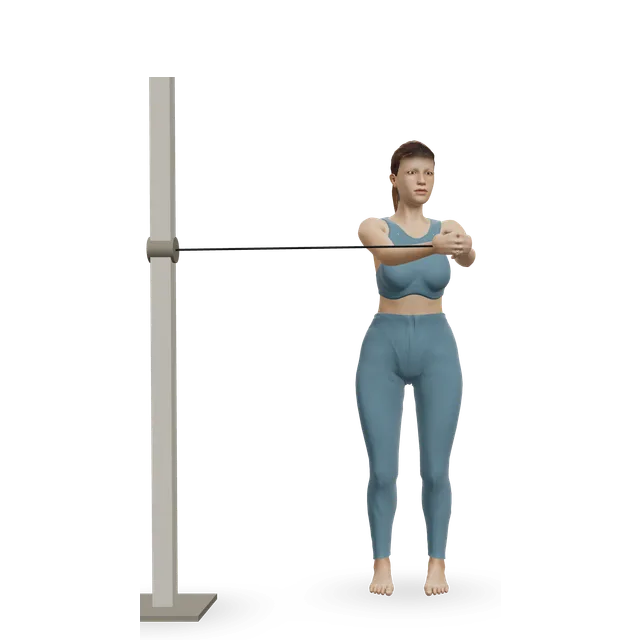 3D demoCable press and rotationIntermediate · A cable machine
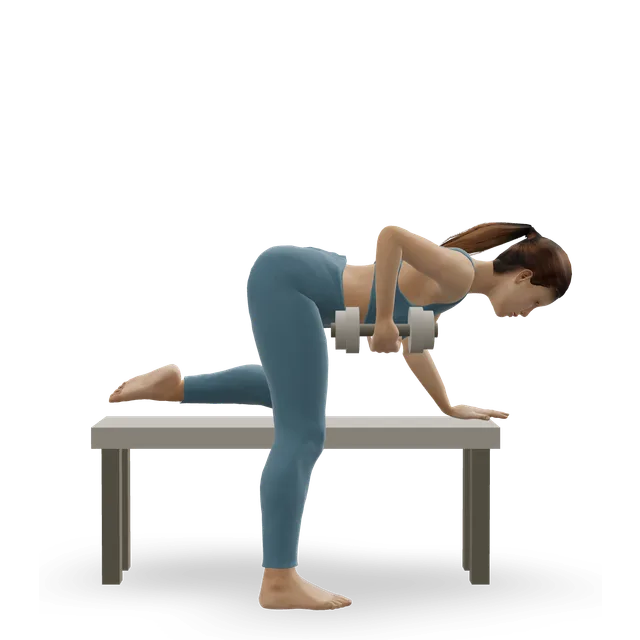 3D demoSupported single-arm dumbbell rowIntermediate · A dumbbell + A bench or box
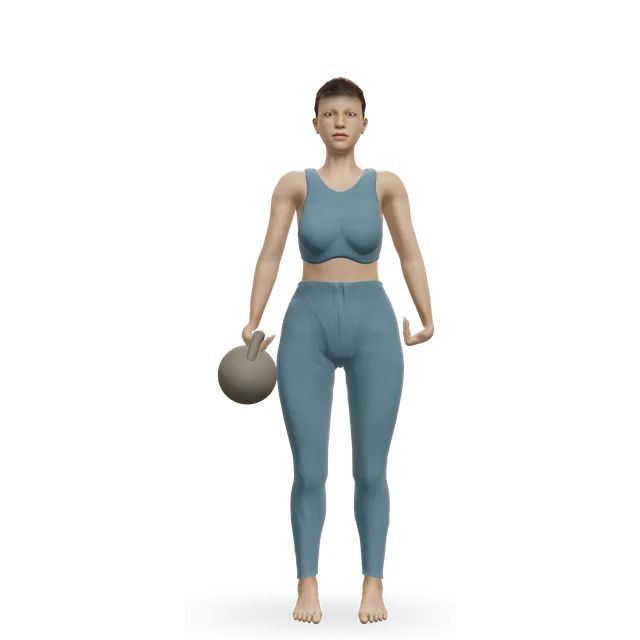 3D demoSuitcase carryIntermediate · A dumbbell + A kettlebell
 3D demoSide-lying Open Book RotationBeginner · No equipment
Do the golf warm-up before every round or range session, and the strength and power workout twice a week to build and once a week in season. The others add mobility, back endurance, kettlebell power, balance and grip.
A 10-minute golf warm-up: brisk marching, then the hip and trunk turns, hinge, side bend, lunge and jump from the one trial of a golf warm-up, twice through.
10 minBeginner9 movesA wallA 45-minute golf gym session: jumps, a medicine-ball throw and kettlebell swings for power, then squats, hinges, rows, push-ups, fast rotation and carries.
45 minIntermediate14 movesMedicine ball, A kettlebellA 15-minute hip opener: 90/90 switches, windshield wipers, CARs, Cossack squats, frog and pigeon.
15 minIntermediate8 movesA wallA 15-minute routine that moves your neck, upper back and lower back through bending, arching, side bending and twisting, then holds the spine steady.
15 minBeginner12 movesNo equipmentThe McGill big three for the core: curl-ups, side planks and bird dogs, each held for 10 seconds at a time in falling sets of 5, 3 and 1 reps.
12 minBeginner3 movesNo equipmentA 20-minute kettlebell swing workout: 30 seconds of swings, 30 seconds of rest, building to the 12 rounds a training trial used, then carries.
20 minIntermediate7 movesA kettlebell, A dumbbellA 30-minute session from the hip hinge to your first deadlift: hinge practice, kettlebell deadlifts, slow Romanian deadlifts, a light bar and a carry.
30 minBeginner9 movesA kettlebell, A dumbbellStrength and balance in one session: squats, Romanian deadlifts, push-ups, rows, step-ups, back extensions, carries and single-leg balance.
45 minBeginner14 movesA wall, A dumbbellWrist mobility and forearm strength for desk work, climbing, push-ups and handstands.
10 minBeginner7 movesA wall, A dumbbellA 20-minute grip session: warm up the wrists and fingers, train the hand and forearm muscles, then carry and hang to load your grip the way everyday life does.
20 minBeginner10 movesOther / check instructions, A bandEach plan gives you two or three strength days a week; add the golf strength workout in place of one session, or alongside a plan's lighter days.
A 3-day strength plan for men over 40 with power and bone work, two cardio days and mobility, built on research on ageing muscle.
3 training days45 minBeginner3 days a weekA weekly plan for women over 50: strength, bone-loading and balance on 3 days plus walking, built on UK osteoporosis consensus advice.
3 training days45 minBeginner3 days a weekA 12-week exercise plan for over-65s: strength and balance three times a week, short balance sessions and daily walks, based on falls-prevention trials.
3 training days40 minBeginner2 days a weekTwo full-body strength sessions a week: the minimum that meets health guidelines, with every set, rep and rest, and an 8-week progression.
2 training days45 minBeginner3 days a weekAn 8-week kettlebell plan for beginners: two strength sessions and a swing-interval day each week, with how to choose a bell and swing safely.
3 training days35 minBeginnerThe PAR-Q+ (Physical Activity Readiness Questionnaire for Everyone) asks about a heart condition or high blood pressure, chest pain, dizziness or fainting, other long-term conditions and their medicines, a bone or joint problem that activity could make worse, and being told to exercise only under supervision. If you answer yes to any, check with your GP or a qualified exercise professional first. If you're over 45 and not used to hard exercise, ask a qualified exercise professional before the strength and power workout, and delay if you're ill.
Source 50
Experts agree that people with heart disease can usually play golf with acceptable safety, but should see a doctor if their symptoms increase or become unstable; sudden heart events during golf have been reported. Walk at your own pace or use a cart, and see our heart disease guide.
Keep your swing smooth, shorter and comfortable, and ask a physiotherapist after a spinal fracture, as our osteoporosis guide says.
Source 12
Most golfers return, on average about 4 months after surgery. Experts advise a graduated return: follow your surgical team's timeline, starting with chipping and putting.
Nothing is banned: keep pain mild and settling, as our back pain guide says, and check the warning signs below.
Rib stress fractures followed sudden jumps in practice, mostly in beginners. Build range sessions up gradually.
Source 16
Supervise children around golf, and keep them well clear of anyone swinging a club.
The PAR-Q+ asks you to talk to your midwife, doctor or a qualified exercise professional before becoming more active in pregnancy. Our pregnancy guide has more.
Source 50
The NHS says to call 999 if:
Source 51
Call 999 if someone hit their head and was knocked out and hasn't woken, can't stay awake, has a fit, has problems with their vision or hearing, has clear fluid coming from their ears or nose, has new numbness or weakness, has problems walking, speaking or understanding, has a dent in their head, or their behaviour has changed.
With suspected concussion, stop playing: 'If in doubt, sit them out'. The UK grassroots guidance says no sport for at least 24 hours, contact NHS 111 within 24 hours, and no return to competition before 21 days.
When you hear thunder, you're already within range. Leave the course, keep away from golf clubs and buggies, and shelter in a car if you can. If you're caught in the open, squat low with as little of you touching the ground as possible, and don't lie down.
Source 10
Heat exhaustion should improve within 30 minutes of resting somewhere cool, cooling down and drinking. Call 999 if it doesn't, or for a very high temperature, hot skin that isn't sweating, fast breathing, confusion, a fit or loss of consciousness.
Source 54
Golfers spend hours in the sun and have a higher risk of skin cancer. Wear a wide-brimmed hat and sunscreen with a sun protection factor (SPF) of 30 or more and at least 4-star protection against UVA (ultraviolet A) light, reapplied every 2 hours, and seek shade from 11am to 3pm between March and October.
Call 999 or go to A&E if back pain comes with pain, tingling, weakness or numbness in both legs, loss of feeling around your genitals or anus, or changes in your bladder or bowels. Ask for an urgent GP appointment or contact NHS 111 if you feel hot, cold, shivery or generally unwell, or the pain is severe and started suddenly or is getting worse quickly.
Source 56
See a GP for rib pain that lasts or is sharp when you breathe or swing, especially after a jump in practice (our wording; the NHS has no golf rib page).
Source 16
Walking 18 holes averages moderate intensity and 11,000 to 17,000 steps, and experts count it towards your 150 minutes a week.
Strength and power training raised clubhead speed and distance in trials, and after an 8-week golf conditioning programme, 15 golfers swung faster and drove further (a study without a control group).
Flexibility didn't go with clubhead speed in pooled studies; strength and power did. Three small studies in women found a link, so it isn't settled for everyone.
Stretching doesn't prevent injuries, as our warm-up guide explains, and a 20-minute stretching routine slowed the swing. Warm-ups that move and activate help you hit.
Pooled studies don't link hip range with back pain; a previous episode, age and body mass do.
Source 7
Most cases don't, as our golfer's elbow guide says, and in amateur golfers, tennis elbow on the lead arm is described as the more common elbow problem.
Source 15
Swedish golfers died 40% less often than expected, which the authors equate to about 5 years, but the study can't show that golf caused it.
Source 45
Strength and power exercises for the legs, hips, trunk and upper body: squats, hinges, rows, push-ups, jumps and fast rotation. In trials, programmes like these raised clubhead speed by about 4% to 6% where they worked, most when gym lifts were combined with fast, golf-like movements for 8 weeks. Add a short warm-up before every round.
A few minutes of brisk walking or marching, then golf mobility (hip and trunk turns, a hinge, a side bend, a lunge with a turn and a few jumps), then practice swings building to full ones. In one trial in teenage golfers, a warm-up like this before every session cut low back pain episodes. Keep any static stretches short.
Not as far as we know. Stretching doesn't prevent injuries in other sports, studies linking golf warm-ups with fewer injuries are mixed, and a 20-minute stretching routine cut clubhead speed by about 4%. Move and activate instead, then swing.
Probably, by a few per cent. Reviews of 20 and 25 small trials found clubhead speed rose by about 4% to 6% where training worked, and combined gym and golf-specific programmes averaged 4.1% more speed and 5.2% more distance. Results vary, and most trials were in men.
Most back pain has no single cause. In golfers, a previous episode, age and body mass are the clearest risk factors, while swing style and hip range aren't consistently linked. Build practice up gradually, stay active and strong, and try the golf warm-up before you play.
Enough to turn comfortably into your backswing and through your finish. Flexibility doesn't predict clubhead speed, and pooled studies don't link hip range with back pain. Keep mobility drills in your warm-up and put most of your training into strength and power.
Yes, especially if you walk: 18 holes is about 11,000 to 17,000 steps of moderate activity. Golfers aged 65 to 79 had better grip and balance than non-golfers, an association, and experts think golf is likely to help strength and balance. Add strength and balance work on at least 2 days a week.
On average, yes: Swedish golfers died 40% less often than expected for their age, sex and social group, which the authors equate to about 5 years. It's an association, and healthier people may be the ones who play.
Usually. With osteoporosis, keep your swing smooth and comfortable; fractures mid-swing appear only in a few case reports, and a physiotherapist can advise after a spinal fracture. After a hip, knee or shoulder replacement, 80% of golfers returned, after about 4 months on average, so follow your surgical team's timeline.
The lead side takes the most load: two-thirds of European Tour players' wrist problems were in the lead wrist, mostly on the little-finger side, and tennis elbow on the lead arm is described as the commonest elbow problem in amateurs. Big practice sessions and hitting the ground hard are common triggers. Our wrist pain and tennis elbow guides cover what to do.
Exercise education for people who play sport, not a personal prescription or a diagnosis, and clinical review of these pages is pending. Check with a GP or physiotherapist before hard training if you have a heart condition, chest pain, dizziness or an injury that isn't settling, and stop for sharp or increasing pain. Health disclaimer.