Shoulder pain is the commonest problem
91% of 80 young elite swimmers had had shoulder pain, and about 1 in 5 female club and masters swimmers in every age group had shoulder pain that limited them. It tracks how much you swim.
Sport
Swimming is pulled along by your arms, so the shoulder does most of the work, thousands of strokes a session. Shoulder pain is the commonest problem, in young elite swimmers and in masters swimmers alike, and it tracks how much you swim. Breaststrokers' knees and butterflyers' backs come next.
This page covers what swimming asks of your body, swimmer's shoulder and the other common injuries, what the trials say about preventing them, the dryland strength and jump training that improved swim times, starts and turns, mobility done safely, water safety, and two new workouts to follow. Each move has a 3D demo.
91% of 80 young elite swimmers had had shoulder pain, and about 1 in 5 female club and masters swimmers in every age group had shoulder pain that limited them. It tracks how much you swim.
69% of the elite swimmers scanned had an overloaded supraspinatus tendon of the rotator cuff (tendinopathy), linked with hours and distance swum. Loose shoulders, rotation range and past shoulder pain are risk factors.
No swimming trial has measured injuries. A 12-week routine kept rotator cuff strength through a season in competitive swimmers, and a warm-up programme cut shoulder problems in handball players in one trial, though pooled handball trials weren't significant.
Adding strength training to swimming improved performance by about 2 to 2.5%, and combined training took about 2 seconds off 100 m. Heavy pulling did best.
Jump height tracked start performance almost perfectly, and jump and strength training improved starts and turns.
Swimmers' bone density was similar to that of people who don't exercise. Add jumps and strength training on land.
Pool races last from about 20 seconds to about 15 minutes, so both aerobic and anaerobic fitness count (our description), and elite swimmers may cover up to 9 miles a day in training.
Source 15
Most of the propulsion comes from pulling the arm down and in and turning it inwards, driven mainly by the big chest and back muscles (pectoralis major and latissimus dorsi). That's why the muscles that turn the arm inwards get strong compared with those that turn it outwards.
Every stroke holds the lower back extended to keep you streamlined, more so in butterfly and breaststroke, which undulate. The breaststroke whip kick loads the inside of the knee.
Pushing off the block or the wall is an explosive leg extension, and start performance tracked jump height almost perfectly.
Source 11
The water supports your weight, so swimming doesn't load bone.
Source 13
Rotator cuff and shoulder-blade endurance, heavy pulling, jumps for starts and turns, a strong trunk, hip rotation range for breaststrokers, and impact work for your bones.
The share with shoulder pain and the rate of injuries are different measures, and the studies defined them differently:
In the young elite swimmers, 84% had a positive impingement sign, and 69% of the 52 scanned had supraspinatus tendinopathy, which tracked the hours and distance they swam; joint looseness was only weakly linked. Our shoulder impingement (rotator cuff pain) and shoulder pain guides cover treatment.
Source 1
Across 29 studies, the risk factors with moderate certainty were joint looseness and instability, shoulder rotation range, previous pain or injury, and competing at a higher level; the rest were low certainty. Athletes with hypermobile joints had about 3 times the odds of shoulder injury. Swimming volume was linked with shoulder pain in teenagers, and elite swimmers training more than 4 times a week had 4 times the risk of a shoulder overuse injury. Our hypermobility and shoulder dislocation guides cover loose shoulders.
Pain on the inside of the knee from the whip kick. 86% of 36 competitive breaststrokers had had it and 47% had it weekly; in 391 competitive swimmers, 73% of breaststroke specialists and 48% of others had knee pain, and in a small film analysis injury rates were much higher when the hips were opened less than 37 or more than 42 degrees at the start of the kick. Among elite swimmers, 200 to 400 m breaststrokers had 5 times the risk of knee pain. These studies are old and small. We don't have a guide to it yet; our knee pain guide covers knee pain in general.
Butterfly went with 2.5 times the risk of low back pain and 4 times the risk of neck injury in elite swimmers. Disc wear on scans was found in 68% of elite swimmers against 29% of recreational ones, but it wasn't linked with back pain. Swimmers with back pain arched the lower back more in the dolphin kick and had a tighter hip flexor (psoas), and in teenage breaststrokers and butterflyers a stress fracture in the spine (spondylolysis) can cause back pain. After the shoulder, the knee and spine are the commonest sites, and few of their risk factors are certain. Our back pain and neck pain guides cover these.
No trial in swimmers has measured injuries, so no programme has been shown to prevent swimmer's shoulder. Here is what has been tested, as it was tested.
30 competitive swimmers aged 16 to 35, swimming at least 8 hours a week with no shoulder pain in the past 6 months, did five exercises twice a week for 12 weeks: turning the arm in and out with the elbow raised to shoulder height, scapular punches, and T and Y raises. They did 2 sets of 10 slow reps, 5 seconds up and 5 down, at about 75% of the most they could lift once, with weights of 1 to 5 kg or bands, checked and progressed by a physiotherapist.
Rotator cuff strength fell in 1 test in the exercise groups against 5 in the control group, who did mobility exercises, and the balance between the muscles stayed closer to normal. No one dropped out. It measured strength, not injuries. Our shoulder care routine for swimmers is built on it.
Source 5
44 college swimmers did band exercises for the shoulder blades and rotator cuff, rows, punches and throwing motions, plus corner and sleeper stretches, 3 times a week for 6 weeks; their strength and shoulder-blade movement didn't differ from controls. An 8-week elastic-band programme in 22 male swimmers and a single session in 23 young swimmers made no significant difference either.
In 660 elite handball players, a warm-up of 15 exercises in five groups (for the range of turning the arm in, the strength to turn it out, shoulder-blade strength, the kinetic chain and upper-back mobility), done 3 times a week through a 7-month season, cut shoulder problems by 28% (17% against 23% at any one time), but not significantly the more serious ones. Teams did it in about half their sessions. Pooled with two other handball trials, the effect wasn't significant. Our shoulder mobility and stability routine is built on its four parts; it's untested in swimmers.
Volume tracked shoulder pain in teenagers and tendon changes in elite swimmers, so increase distance gradually and avoid sudden jumps, especially in young swimmers. With a painful shoulder, an expert review advises against hand paddles and pulling sets; a kickboard held with your elbows bent, or fins, can ease the load on the shoulder.
Knee pain was linked with breaststroke distance, years of training, age, kick technique and a shorter warm-up. Cut breaststroke distance first, build it back gradually early in the season, warm up properly, and ask a coach to check your kick (our reading of these associations).
That any programme prevents swimmer's shoulder in swimmers; that stretching prevents it, when loose shoulders are themselves a risk factor; or that core training speeds up turns, where the evidence is inconclusive.
Across 27 studies of young and experienced competitive swimmers, adding strength training improved performance by about 2 to 2.5%, whether the strength work was in the water, swim-like on land or general gym training, and combined training beat swimming alone.
Source 8
Across 36 trials of 844 competitive swimmers, combining pool and dryland training took about 2 seconds off 100 m against the control groups. Water plus dryland resistance training ranked highest, and core and power training helped 25 m sprints and take-offs.
Source 9
In 17 small controlled studies, dryland lifting of 6 reps or fewer for 3 sets, such as heavy pulldowns, had the largest effect on 50 m times. Another review found that low-volume training at high speed or high force carried over best.
Start performance correlated almost perfectly with vertical jump height, and jump training improved starts, though most studies used older starting blocks. Strength, ballistic and jump training improved turns; core training was inconclusive.
Two dryland sessions a week, after easier pool sessions or on separate days, with the jumps first while you're fresh (our suggestion). Swimming already loads your shoulders heavily, so pull heavy but keep extra overhead pressing to a minimum, and count the shoulder care routine as part of your dryland week: twice a week for 12 weeks kept rotator cuff strength through a season.
One review of these trials left out groups with an average age under 16. Under-16s should have a coach teach and supervise their lifts, with moderate loads (our suggestion).
Source 30
In 54 adults without shoulder pain who could turn one arm inwards less than the other, the cross-body stretch, 5 × 30 seconds once a day for 4 weeks, restored about 20 degrees of inward turning, against 6 in the control group. It's a small trial, and not in swimmers.
Source 29
In the same trial, the sleeper stretch's 12-degree gain wasn't significant, and lying on the shoulder squeezes it, as our shoulder guides note, so we've left it out.
Source 29
Loose joints are a risk factor for shoulder injury, so stretch only a clear stiffness. If your shoulder feels loose or has dislocated, put strength first and leave the stretches out (our reading, as in our shoulder dislocation guide).
Upper-back extension and rotation suit the streamlined position (our suggestion). Breaststrokers with frequent knee pain had less inward hip rotation, so hip rotation work may help them (an association). No trial shows that mobility work improves swim times.
Source 21
Across 64 studies, swimmers' bone density was similar to that of people who don't exercise and lower than in impact sports. The UK consensus on exercise for osteoporosis doesn't count swimming as bone-loading.
The consensus recommends at least 50 moderate impacts, such as 5 sets of 10 jumps, on most days, plus strength training 2 or 3 days a week. The jumps in the dryland workout count; with osteoporosis, start with heel drops and ask a physiotherapist.
Source 14
In water at 15°C or colder, a sudden plunge makes you gasp and breathe up to 10 times faster, with a spike in heart rate and blood pressure that the Royal Society for the Prevention of Accidents (RoSPA) says can cause a heart attack, even in healthy people. If you fall in, tilt your head back with your ears under, relax and breathe, move your hands to stay afloat, and shout for help once it passes.
Source 31
The Royal Life Saving Society UK warns that depth changes and is unpredictable, objects can be hidden under the surface, and currents can sweep you away, and it names jumping from height (tombstoning) as a hazard. Never jump or dive into water whose depth you haven't checked (our suggestion).
Source 32
The UK National Health Service (NHS) advises thinking about safety when swimming. Hot or cold water is a common trigger for seizures, and in open water the Royal Life Saving Society UK advises supervision within arm's reach. Talk to your doctor or epilepsy nurse, and swim where there's a lifeguard, with someone who knows what to do (our suggestion).
Don't swim with an ear infection. Earplugs, or a swimming hat over your ears, help prevent them.
Source 35
Chlorine can trigger asthma in some people. Our asthma guide covers swimming and warming up.
Built on the site's warm-up guide (editorial): no swimming warm-up has been tested for preventing injuries. Do the first steps on the poolside, before you get in.
Loading the 3D figure…
The movement on the figure: Standing band external rotation
Rotator cuff and shoulder-blade work, heavy pulling, jumps for starts and turns, trunk work and the one shoulder stretch with trial support. Each has a 3D demo.
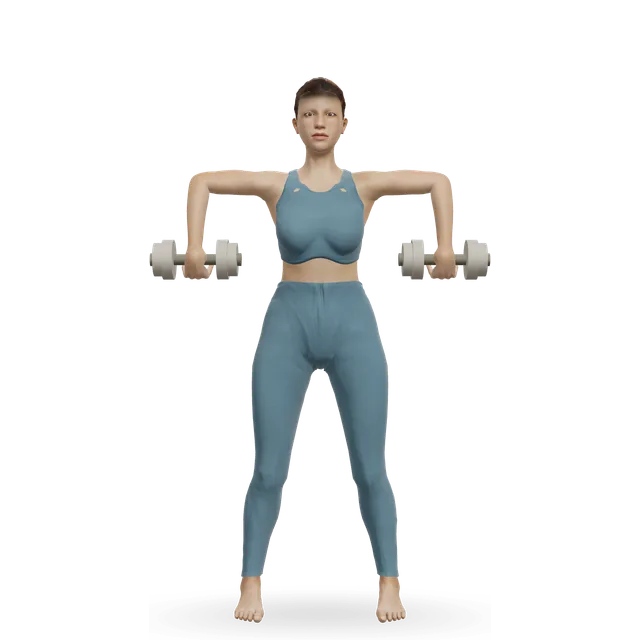 3D demoCuban rotationIntermediate · A dumbbell + A band
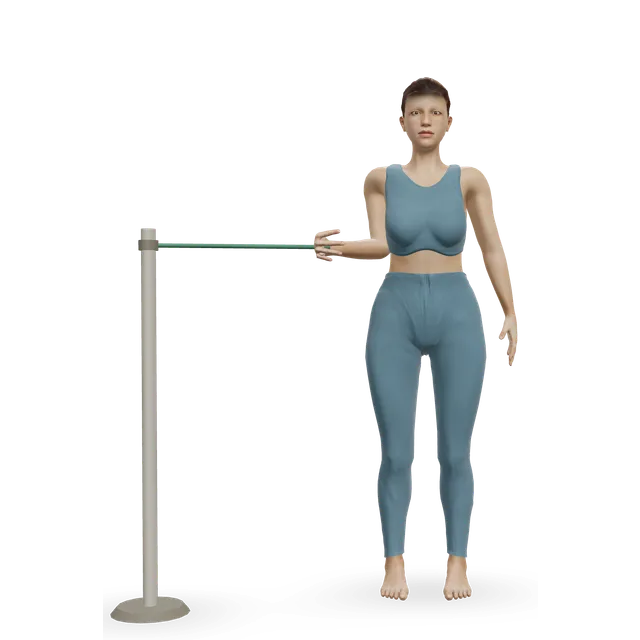 3D demoBand internal rotationBeginner · A band + An anchor point
 3D demoStanding band external rotationBeginner · A band + An anchor point
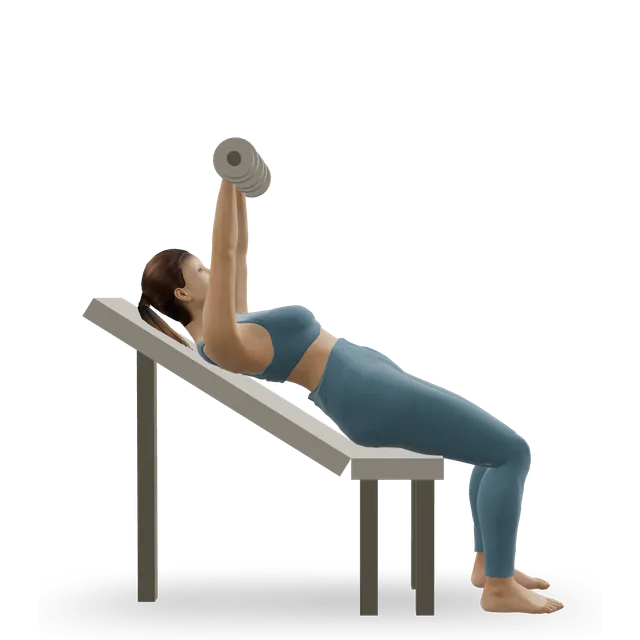 3D demoDumbbell shoulder-blade punchBeginner · A dumbbell + A bench or box
 3D demoProne Y-T-W raisesBeginner · No equipment
 3D demoScapular push-up (push-up plus)Beginner · No equipment
 3D demoBand rowBeginner · A band + An anchor point
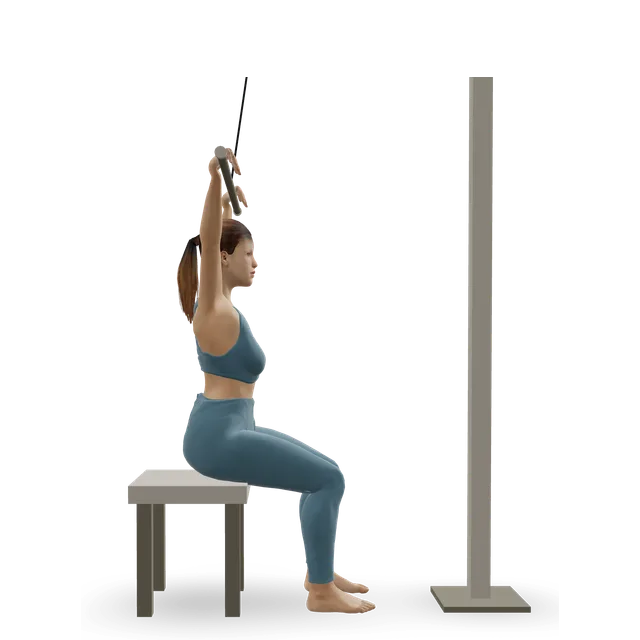 3D demoLat pulldownBeginner · A cable machine
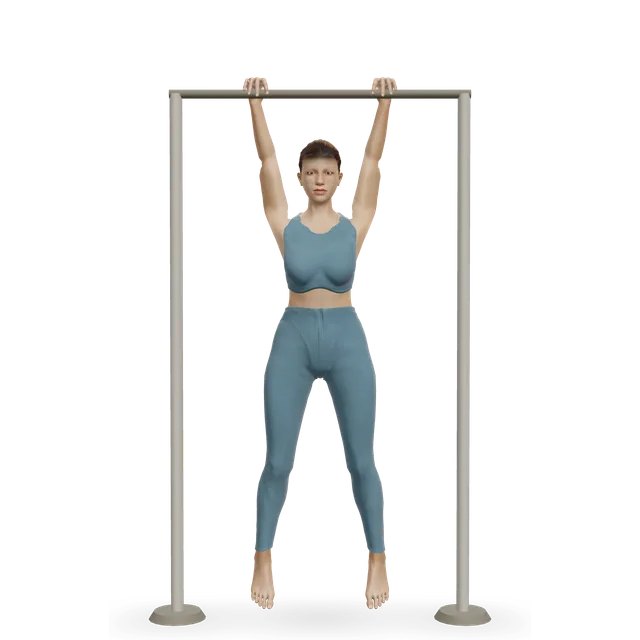
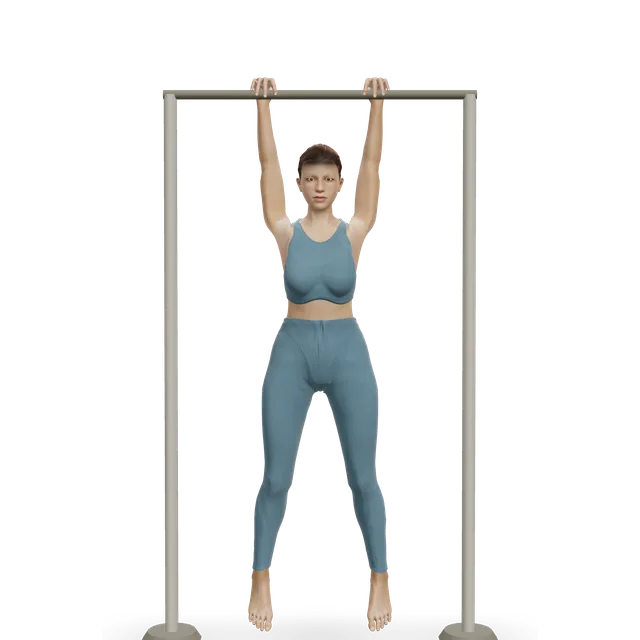 3D demoPull-upAdvanced · Pull-up bar
 3D demoJump squatIntermediate · No equipment
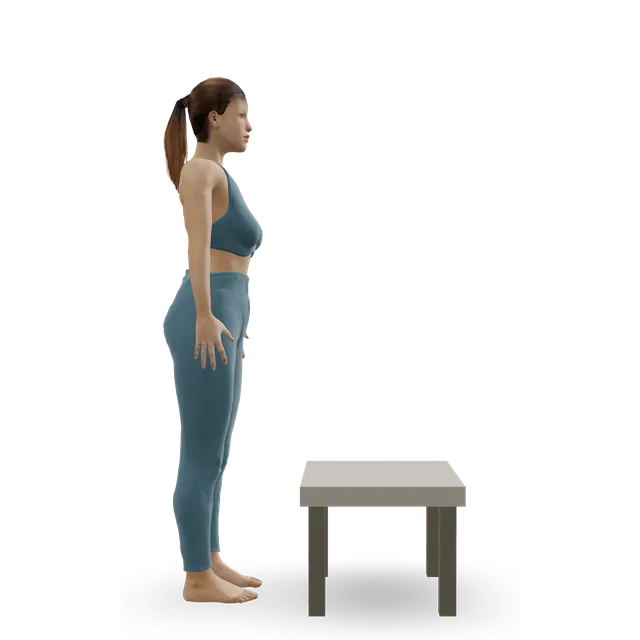 3D demoBox jumpIntermediate · A bench or box
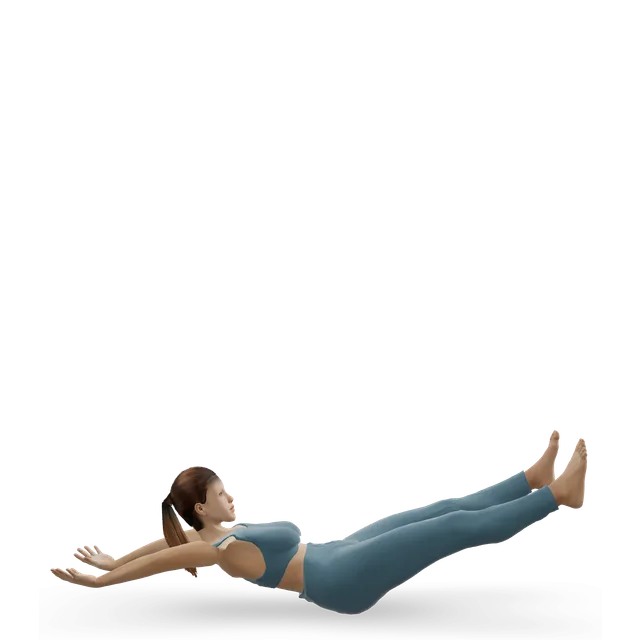 3D demoHollow body holdIntermediate · No equipment
 3D demoDead bugBeginner · No equipment
 3D demoCross-body shoulder stretchBeginner · No equipment
The two new workouts come first: a dryland session for strength and power, and the shoulder routine from the swimmer trial. The others add band work for the shoulder, pulling, trunk work and bone loading.
A 45-minute dryland session for swimmers: jumps for starts and turns, heavy pulls, leg strength and trunk work, twice a week alongside the pool.
45 minIntermediate14 movesA band, A bench or boxA 20-minute rotator cuff and shoulder-blade routine for swimmers, from a 12-week trial in competitive swimmers, plus a daily cross-body stretch.
20 minBeginner9 movesA wall, A dumbbellA 25-minute band routine for healthy shoulders: move the shoulder and upper back through their range, then strengthen the rotator cuff and shoulder blades.
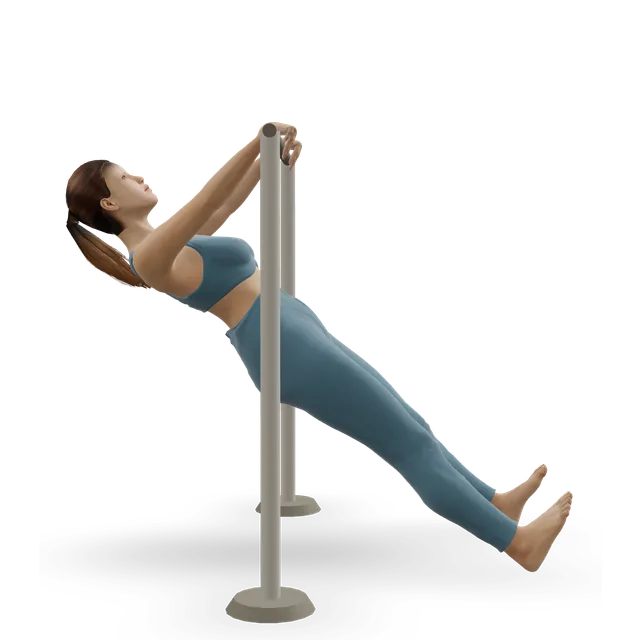
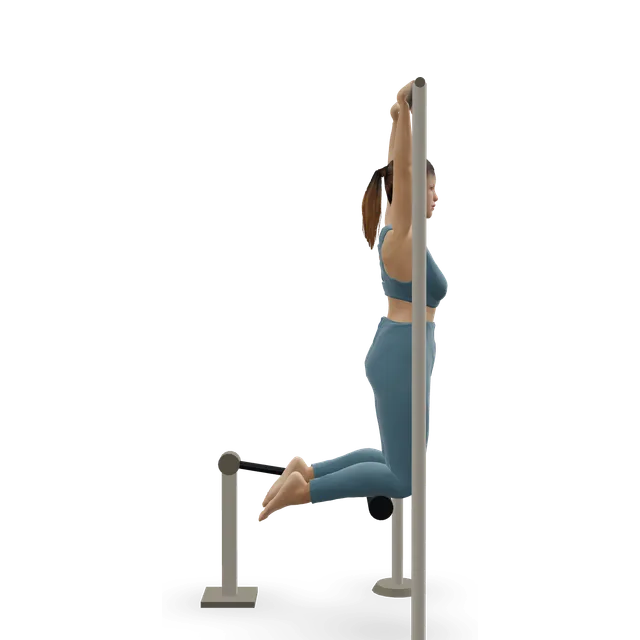
25 minBeginner12 movesA wall, A bandWork up to your first pull-up: dead hangs, scapular pulls, rows, negatives and assisted pull-ups.
25 minBeginner7 movesPull-up bar, A stepA 15-minute beginner core workout on the floor: dead bugs, bird dogs, knee planks, side planks and curl-ups.
15 minBeginner6 movesNo equipmentImpact, strength and balance for stronger bones, following UK osteoporosis consensus advice, with options for every level.
40 minBeginner14 movesA kettlebell, Other / check instructionsWe don't have a swimmers' plan yet. These strength plans fit 2 or 3 days a week around the pool.
Two full-body strength sessions a week: the minimum that meets health guidelines, with every set, rep and rest, and an 8-week progression.
2 training days45 minBeginner3 days a weekA 12-week beginner barbell program: squat every session, alternate bench and row with press and deadlift, and add weight each time until it stalls.
3 training days50 minBeginner3 days a weekA 12-week calisthenics plan for beginners: three bodyweight sessions a week with push-up, pull-up, squat and dip ladders, and a bar if you have one.
3 training days40 minBeginnerCheck with your GP or a qualified exercise professional before hard training if you answer yes to any question on the Physical Activity Readiness Questionnaire (PAR-Q+): a heart condition or high blood pressure, chest pain, dizziness or fainting, another long-term condition or its medicines, a bone or joint problem, or being told to exercise only under medical supervision.
Source 36
Talk to your doctor or epilepsy nurse first, and follow the water safety advice above.
Cold water shock sends heart rate and blood pressure up sharply. Ask your GP or heart team before swimming in cold or open water (our suggestion).
Source 31
Loose shoulders are a risk factor for injury. Put strength before stretching, and see our shoulder dislocation guide.
Wait until it has cleared before you swim.
Source 35
The NHS says swimming can be good exercise in pregnancy, and advises against scuba diving.
Source 37
Get out of the water and call 999 for sudden chest pain or discomfort that doesn't go away (it can feel like squeezing, pressure or burning), pain that spreads to your arms, neck, jaw, stomach or back, or chest pain with sweating, feeling sick, light-headedness or breathlessness.
Source 38
Ask for an urgent GP appointment or contact NHS 111 for sudden or very bad shoulder pain, an arm you can't move, a shoulder that has changed shape or is badly swollen, pins and needles that don't go away, no feeling in the arm, an arm that's hot or cold to touch, pain after a fall or injury, severe pain in both shoulders, or if you feel feverish or unwell. See a GP if shoulder pain is getting worse or isn't better after 2 weeks.
Source 39
Hitting your head on the wall, the floor or another swimmer can cause a concussion. Under the UK concussion guidelines for grassroots sport, if in doubt, stop for the day and get assessed by NHS 111 or a healthcare professional within 24 hours. Call 999 if someone was knocked out and hasn't woken up, can't stay awake, has a fit, or has new numbness or weakness, or problems walking, speaking or understanding.
Call 999 or go to A&E if back pain comes with numbness or loss of feeling around your genitals or bottom, changes in bladder or bowel control, or pain or numbness in both legs.
Source 42
Contact NHS 111 if your knee is very painful, you can't move it or put any weight on it, it's badly swollen or has changed shape, it locks or gives way, or it's hot and red and you have a high temperature.
Source 43
It's common, but it tracks how much you swim and is mostly an overloaded tendon, which responds to managing the load and strengthening.
No trial shows it, and loose shoulders are a risk factor, so strength comes first and stretching is for a clear stiffness, such as less inward turning on one side.
Swimming combined with strength training beat swimming alone in pooled trials.
Swimmers' bone density is similar to that of people who don't exercise, and the UK osteoporosis consensus doesn't count swimming as bone-loading. It's still good for your heart and lungs.
Knee pain is common in competitive breaststrokers and linked with breaststroke distance, years of training and kick technique. It says little about occasional swimmers (our reading).
The NHS lists swimming among the activities that may help back pain, but butterfly went with 2.5 times the risk of low back pain in elite swimmers. Favour freestyle or backstroke while your back settles (our suggestion).
The evidence for core training on turns is inconclusive; leg power training has better support.
Source 12
Pain at the front or top of the shoulder in swimmers, usually from an overloaded supraspinatus tendon of the rotator cuff. In young elite swimmers, 91% had had shoulder pain, and most of those scanned had tendon changes linked with how much they swam. Our shoulder impingement guide covers treatment.
No programme has been proven to prevent it in swimmers. The best-supported steps are building your swimming volume gradually and keeping the rotator cuff and shoulder-blade muscles strong: in a trial, a 12-week routine kept their strength through a season.
Jumps for starts and turns, heavy pulling such as pulldowns or pull-ups, leg strength, trunk work and rotator cuff exercises. Twice a week alongside pool training fits most programmes.
Adding strength training improved swimming performance by about 2 to 2.5% and beat swimming alone; across 36 trials, combined training took about 2 seconds off 100 m. Heavy pulling, and jumps for starts and turns, had the clearest effects.
Only for a clear stiffness: the cross-body stretch restored inward turning in a trial. Loose shoulders are a risk factor for injury, so if yours feels loose or has dislocated, put strength first and skip the stretches.
The whip kick strains the inside of the knee, and pain is linked with breaststroke distance, years of training and kick technique. Cut the breaststroke distance first, build it back gradually, warm up properly and ask a coach to check your kick.
Often: the NHS lists swimming among the activities that may help. Butterfly and breaststroke arch the lower back more, and butterfly went with more back pain in elite swimmers, so favour freestyle or backstroke while your back settles (our suggestion).
No: swimmers' bone density is similar to that of people who don't exercise. Add jumping or other impact work and strength training on land.
Twice a week suits most swimmers, after easier pool sessions or on separate days, with the jumps done while you're fresh. The shoulder routine in the trial was done twice a week for 12 weeks.
A reaction to falling into water at 15°C or colder: you gasp and breathe very fast, and your heart rate and blood pressure spike. Lie back with your ears under, relax and breathe, and shout for help once it passes.
Exercise education for people who play sport, not a personal prescription or a diagnosis, and clinical review of these pages is pending. Check with a GP or physiotherapist before hard training if you have a heart condition, chest pain, dizziness or an injury that isn't settling, and stop for sharp or increasing pain. Health disclaimer.