Foam roller thoracic extension
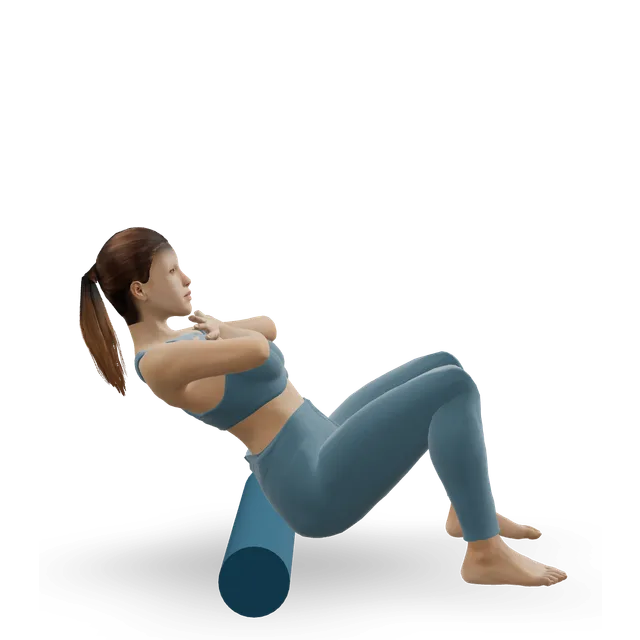
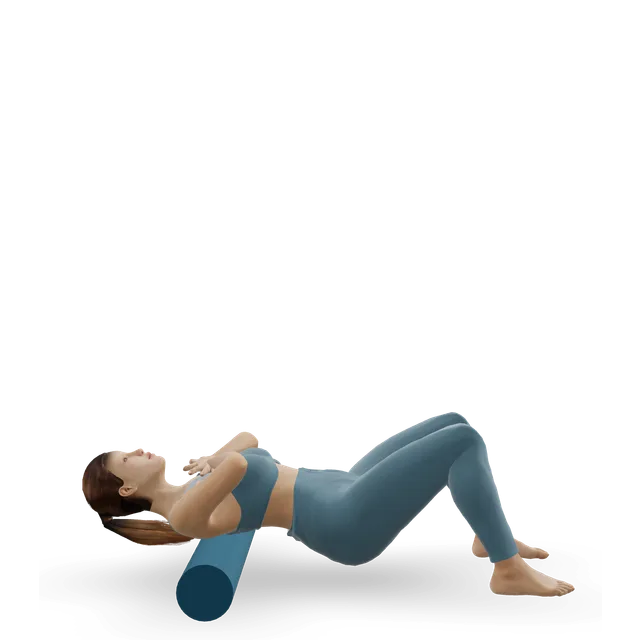
Lying back over a foam roller placed across your upper back, hands cradling your head, you let the upper back bend back over it for a few breaths, then move the roller a few centimetres higher and repeat. Unlike foam rolling, the roller stays put and the spine bends over it. In a 6-week trial in 42 footballers, a programme including this drill improved upper-back rotation, but the upper back's curve did not change.
Movement guide
Foam roller thoracic extension
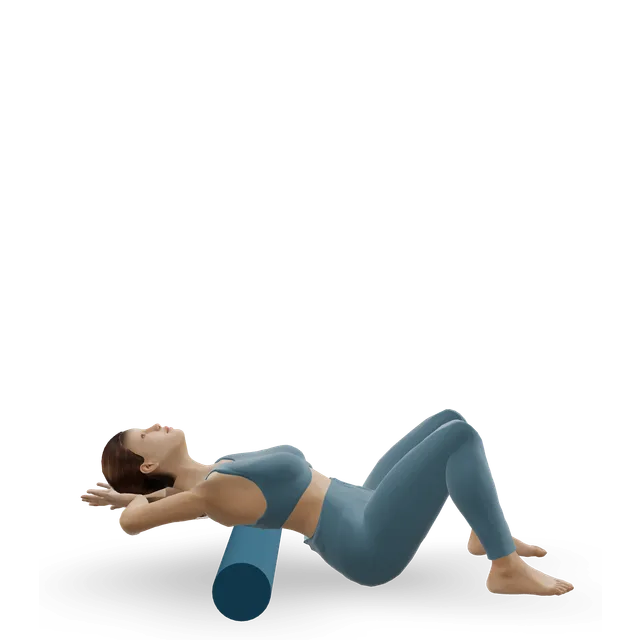
Loading the 3D figure…
Make it easier or harder
Choose a version that fits your control and comfort.
Easier option
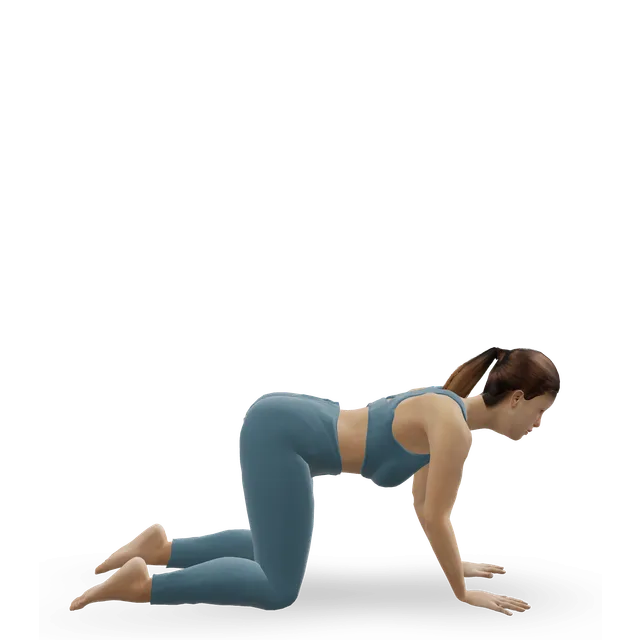 3D demoCat-cowBeginner · No equipment
Suggested next step, beginner grade.
Harder option
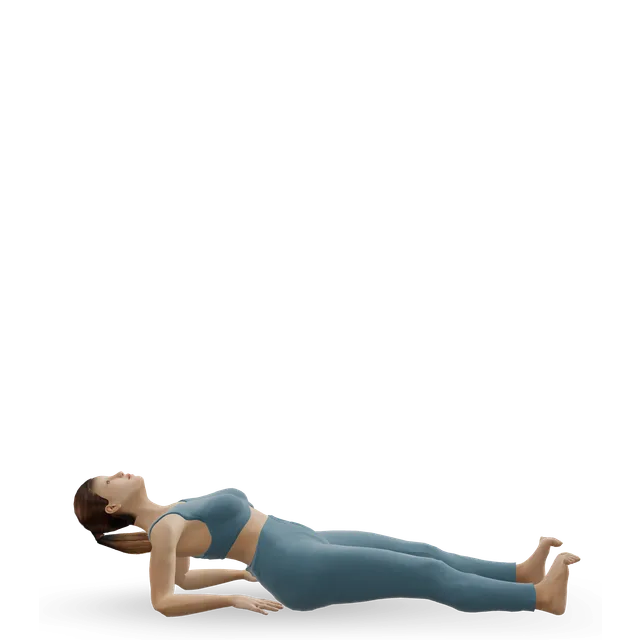 3D demoFish pose (Matsyasana)Intermediate · No equipment
Suggested next step, intermediate grade.
Source-researched guide.
How to move
- Lie on your back with your knees bent and feet flat, a foam roller across your back just below the shoulder blades. Cradle your head in your hands, elbows pointing forwards.
- Brace your belly lightly so your ribs stay down, and keep your hips on the floor.
- Breathe out and let your upper back drape back over the roller, the head lowering into your hands. Stay for a few slow breaths, then curl back up.
- Lift your hips a little and shift so the roller sits a few centimetres higher, and repeat, stopping when it reaches the back of the shoulders.
Form cues
- Bend the upper back over the roller, not the low back.
- Keep your head supported and in line with your spine; don't pull it forwards.
- Avoid: moving the roller under the low back or the neck.
Practice and cautions
5 to 8 slow breaths at each of 3 or 4 spots along the upper back (our editorial starting point); ACE suggests 1 to 5 extensions at each spot.
Keep the low back neutral rather than arching over the roller, and stay off the neck and low back. Clear it first if you have osteoporosis. This is movement education, not an assessment or treatment prescription. Stop for sharp or increasing pain, dizziness, numbness or tingling; seek individual guidance for symptoms, injury or restrictions.
Sources and review status
Sources support the educational description; they do not establish that this exercise is suitable for you.
- ACE · Thoracic mobility exercises to address shoulder pain (the foam roller thoracic extension, 1 to 5 extensions at each spot, and side-lying books; Brian Tabor, 2021) ↗
- Physitrack · Segmental thoracic extension over a foam roll, hands behind the head (relax back over the roll on the out-breath; keep the head in line with the spine) ↗
- Bayram 2026 · Six thoracic exercises, among them foam roller extension and an open book done from a side plank, 3 times a week for 6 weeks: upper-back rotation improved, the upper back's curve did not change (RCT of 42 footballers, BMC Sports Sci Med Rehabil) ↗
No variation is labeled clinically validated.
What it works
Muscles
Main: Back. Also: Chest.
Anatomy: Latissimus dorsi, Teres major, Trapezius, Rhomboids, Erector spinae, Multifidus.
Equipment
A foam roller
Level
Beginner. See the easier and harder options above.
Workouts that use it
- Upper back mobility routine · 12 min
- Full-body foam roller routine · 10 min
- Fascia release for the back · 15 min
- Mobility routine for cyclists · 15 min
- Overhead squat progression: ankle, hip and shoulder mobility, then the dowel and the bar · 25 min
- Pilates with a foam roller: a 28-minute roll-then-flow class · 28 min
- Back bridge progression · 25 min
- Off-day Pilates for CrossFit: a 25-minute class for the pelvic floor, trunk control while you breathe, shoulders for hanging and overhead, wrists and hips for landing · 25 min
Pain guides that use it
Part of a staged plan, with when to get help first.
- Upper back pain: exercises, and the signs it isn't your back
- Costochondritis: chest wall pain, why the heart comes first, and what helps
- Neck pain when cycling: position, reach, looking up from a low position, and exercises that help
- Upper back and shoulder pain when cycling: reach, bar height, the shoulder blades and what helps
- Upper back pain from sitting: the desk, the screen, posture, breaks and what helps
- Chest muscle pain: a strained muscle, the chest wall, the heart and lungs, and how to build back
- Sternum (breastbone) pain: the chest wall, a blow, reflux, the heart and lungs, and what helps
- Upper back pain when breathing: the heart and lungs first, then the rib joints, muscles and a cough
Show all 13 pain guidesShow fewer pain guides
- Shoulder pain when doing overhead presses: the rotator cuff, the AC joint, grip and what helps
- Wrist pain when doing front squats: the front rack, stiff wrists and shoulders, grips and straps
- Upper back pain when bench pressing: between the shoulder blades, the set-up, rib joints and swaps
- Lower back pain when overhead pressing: arching, the ribs and bracing, standing or seated, and swaps
- Neck pain on the treadmill: looking down, the rails, the upper back, headaches and what helps
Guides that use it
- Pilates for rowers guide
- Pilates for kyphosis guide
- Pilates for rounded shoulders guide
- Pilates for sway back guide
- Pilates for weightlifters guide
- Pilates for CrossFit guide
- Yoga for upper back pain guide
- Yoga for weightlifters guide
Show all 35 guidesShow fewer guides
- Yoga for CrossFit guide
- Yoga for opening the chest guide
- Spine guide
- Fascia exercises guide
- Myofascial release guide
- How to foam roll guide
- Upper back guide
- Ribs guide
- Posture guide
- Tight fascia guide
- Pilates for fascia guide
- MELT method guide
- Shoulders guide
- Exercise with cystic fibrosis
- Forward head posture guide
- Swayback posture guide
- Rib flare guide
- How to snatch guide
- How to front squat guide
- How to do a clean and jerk guide
- Overhead squats guide
- Wall angels guide
- Y-T-W raises guide
- Thoracic mobility guide
- Forearm stand guide
- Back bridge guide
- Cycling guide
Similar moves
Browse more
Questions people ask
What muscles does the Foam roller thoracic extension work?
Mainly the back, with help from the chest.
What equipment do I need for the Foam roller thoracic extension?
A foam roller.
Is the Foam roller thoracic extension good for beginners?
It is graded beginner, so it suits most people starting out. When it feels easy, try the Fish pose (Matsyasana).
What is an easier alternative to the Foam roller thoracic extension?
Try the Cat-cow. It is the suggested step down from this move.
How do I make the Foam roller thoracic extension harder?
Progress to the Fish pose (Matsyasana). Follow that guide’s technique and any stated timing.