Training guide

How to do a back bridge (wheel pose): the shoulders, the upper back and the hips, the progressions, coming down safely, and who should wait

A back bridge, also called a backbend or wheel pose, means pressing up from lying on your back until your arms and legs are straight and your body makes an arch. It isn't the glute bridge, which lifts only your hips. The full bridge needs your arms fully overhead, an upper back that can arch and hips that can open, so for most people the shoulders and hips, not the lower back, decide how it looks.

Backbends aren't bad for most backs when you build up to them (yoga trials found it as safe as other exercise, though none tested deep backbends), but deep arching to the limit is where injuries cluster, and a young gymnast or dancer whose back pain is worse arching backwards needs checking. This guide covers the ladder from bridge to wheel with a 3D demo of every step, opening the shoulders and hips, coming down safely, children and young athletes, and who should wait, in line with our lower back pain when bending backwards guide.

The short version

This is the full arch, not the glute bridge

The glute bridge lifts your hips until your shoulders, hips and knees make a straight line, and our glute bridge guide covers it. The back bridge is the gymnastics bridge and the yoga wheel: hands and feet on the floor, arms straight, the whole body arched.

Spread the arch

Your shoulders go fully overhead, your upper back arches and your hips push up. In one study of 50 junior gymnasts, the hips extended only about 5 to 11 degrees in a bridge, so the shoulders and spine make most of the shape. Open those first.

Sources 1, 2

Backbends aren't bad for most backs

Across 94 trials yoga was as safe as usual care and other exercise, and in back pain trials its side effects, mostly brief flares of back pain, matched other exercise. No trial has tested deep backbends on their own, and injuries in clinic case series point to arching to the extreme, so build up step by step.

Sources 3, 4, 5

Young gymnasts and dancers: lasting back pain needs checking

Stress fractures of the spine (spondylolysis) were found in about 11 to 14% of gymnasts, against about 4 to 6% of everyone else. Back pain that is worse arching backwards and lasts more than a couple of weeks needs checking, and the one-leg arching test can't rule it out.

Sources 6, 7, 8, 9

Children: with a coach, never forced

Rare, severe spinal cord injuries have been reported in young children after backbends from standing in dance classes. Floor bridges weren't studied. Our suggestion: children learn backbends with a qualified coach, with no drop-backs from standing.

Sources 10, 11

Come down chin first

Tuck your chin, bend your elbows and lower your upper back to the floor, never the crown of your head. Then rest on your back with your knees bent before you fold forward.

Sources 1, 12

What a back bridge is, and what it asks of you

The move

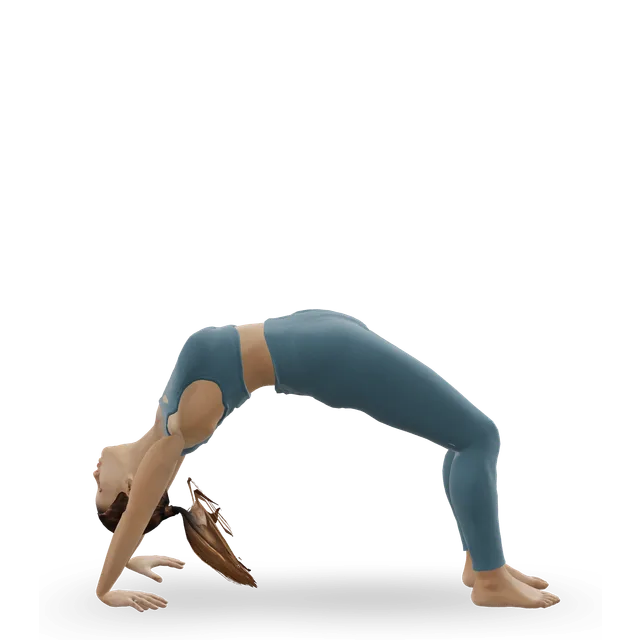
Lying on your back with your feet flat near your seat and your palms by your ears, fingers pointing to your shoulders, you press up until your arms straighten and your body lifts into a full arch, the pelvis highest and your head hanging between your arms. It's the gymnastics bridge, the yoga wheel or upward bow (urdhva dhanurasana), and the backbend that kickovers, walkovers and drop-backs grow from.

Source 1

What it asks

Shoulders that reach fully overhead, an upper back that can arch, hip flexors long enough to let the hips open, wrists that bend back about a right angle under load, and the glutes, hamstrings, thighs and triceps to press up. In junior gymnasts, motion sensors put the shoulders at about 125 to 133 degrees in a static bridge. That's one cross-sectional study of 50 gymnasts, and the values are approximate.

Sources 1, 2

How much the spine bends

In 3 teenage dancers doing a full backbend from standing, the curve from the neck to the lower back reached about 151 degrees and the upper back lengthened by about 49%. Three people is very few; it shows how much a deep backbend asks of the whole spine.

Source 11

Before you start

Our wheel pose page asks for full overhead shoulder range plus an easy bridge and camel. The wall check in our shoulder mobility guide tests the shoulders: slide your arms up a wall behind you, and they should reach it overhead without your lower back lifting off.

How people differ

Some spines arch easily and some don't, and neither is a problem in itself. If you're very flexible, put your time into strength and control rather than more range, as our hypermobility guide says.

How to do a back bridge from the floor, step by step

From Yoga Journal's wheel pose guide and our wheel pose page; the warm-up order follows our lower back pain when bending backwards guide.

  1. Warm up first with the gentler backbends in the ladder below: Yoga Journal places wheel at the end of a session, after gentler backbends.
  2. Lie on your back, knees bent, feet flat, hip-width apart and parallel, heels close to your seat.
  3. Put your palms flat beside your ears, fingers pointing towards your shoulders, elbows pointing up.
  4. Press through your feet to lift your hips, then press through your hands to lift your chest and head, straightening your arms. Don't rest your weight on your head on the way up.
  5. Let your head hang between your arms. Keep your knees and feet from splaying out, and spread the arch through your upper back and shoulders, not just your lower back.
  6. Hold for a few slow breaths: our wheel pose page suggests 3 to 5, 2 or 3 times.
  7. To come down, tuck your chin, bend your elbows and lower your upper back slowly to the floor, never the crown of your head.
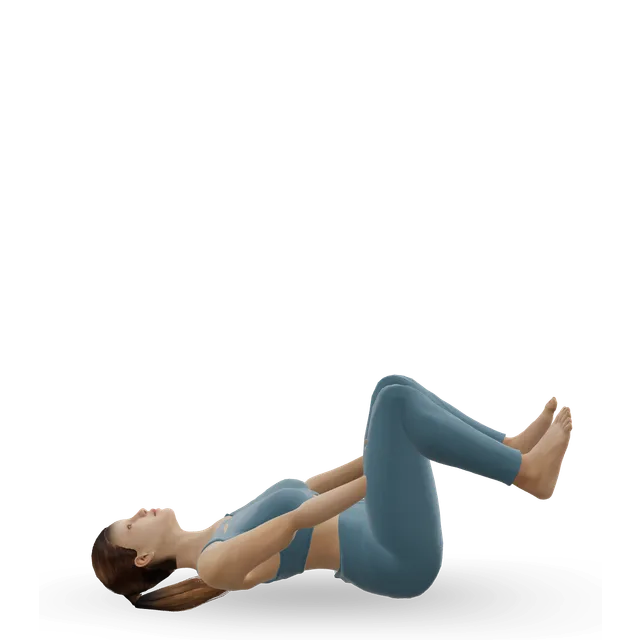
  8. Rest on your back with your knees bent, then hug your knees in.

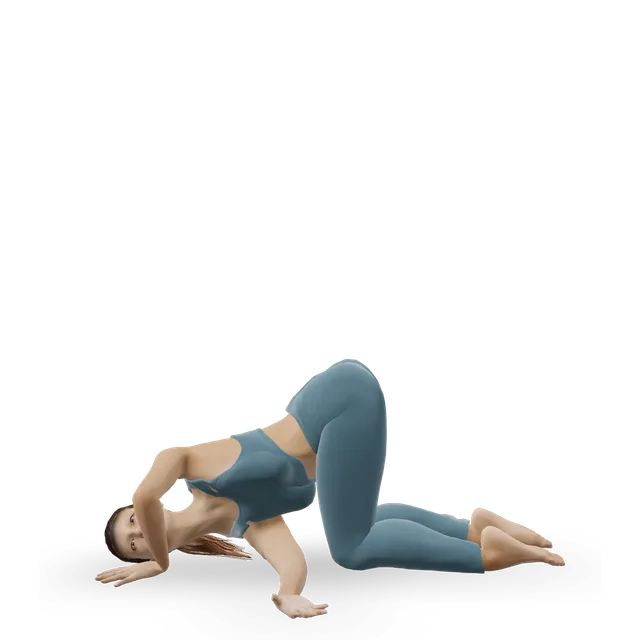
Loading the 3D figure…

Gets into position, then repeats the movement. Technical checks passed; qualified exercise review is pending.

The movement on the figure: Wheel pose (Urdhva Dhanurasana)

The ladder: from bridge to wheel

The order follows our lower back pain when bending backwards guide's ladder. Move on when the last breath of each hold is comfortable and your back is no worse the next morning, that guide's rule.

The steps, with doses

1. Glute bridge

8 to 10 slow lifts, breathing out as you lift, as our yoga for posture session does. It stops at a straight line from shoulders to knees.

2. Supported bridge

The move page's dose: Rest 3 to 5 minutes on the block, the time Yoga Journal suggests, breathing slowly through your nose. A passive arch for the front of the hips and chest.

3. Sphinx and low cobra

Sphinx: 3 holds of 20 seconds, as our spine mobility routine does. Low cobra: 5 lifts held 3 to 5 seconds, as our yoga for posture session does.

4. Locust

2 holds of 15 seconds, a gentle arch, as our gymnastics warm-up does. The back muscles that hold the arch.

5. Camel

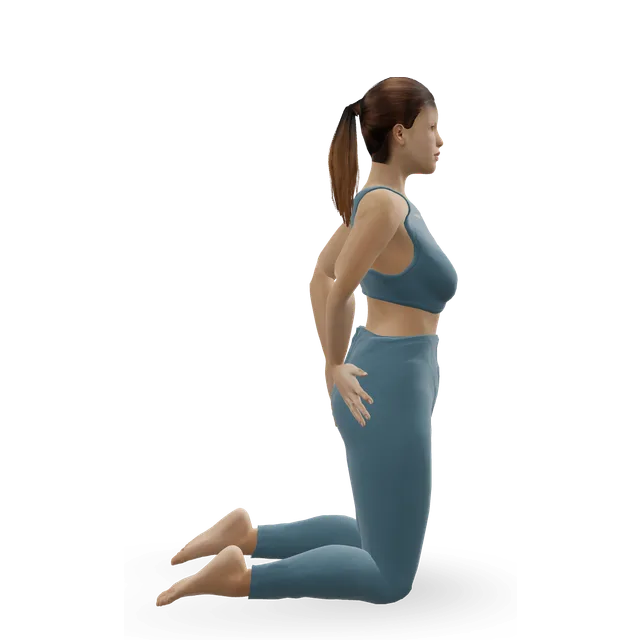
2 holds of 20 seconds with your hands on your pelvis, coming up slowly, as our hot yoga sequence does.

6. Wheel

The move page's dose: Hold 3 to 5 slow breaths, 2 or 3 times, resting fully in between (our editorial starting point). If you can't press up yet, Yoga Journal suggests your hands on blocks braced against a wall, or pressing up from a folding chair.

Source 1

The pain rule

For back bends (our suggestion, built on the same rule): use the step of the ladder (sphinx, small cobra, press-up, full cobra, camel, wheel) where the last breath of the hold stays at 5 out of 10 or less and your back is no worse the next morning. If it isn't, go back one step, not to nothing.

Open the shoulders, upper back, hips and wrists

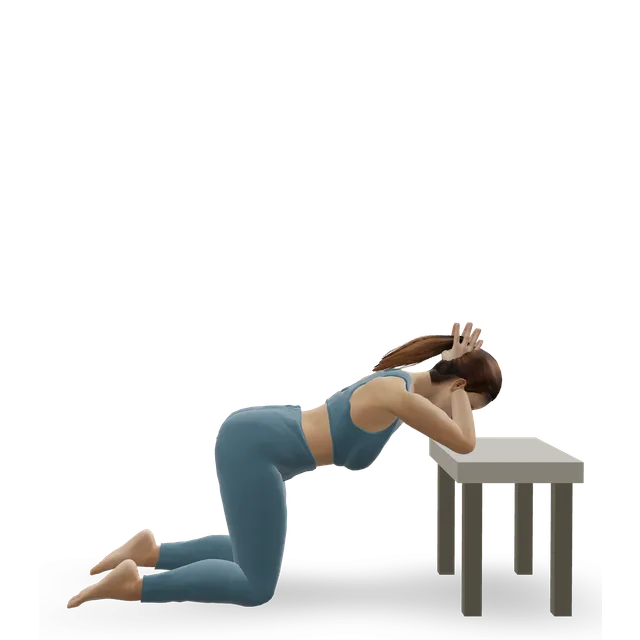
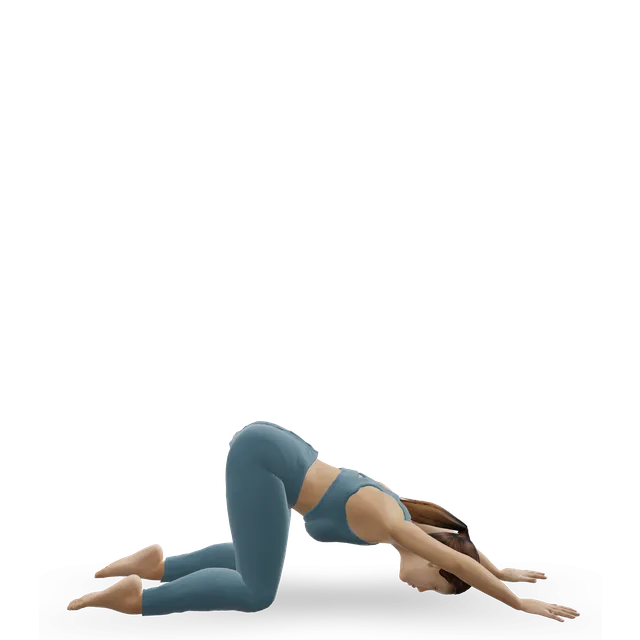
On most days, and before every bridge session. The lat stretch at a bench, the move page's dose: Hold 30 to 45 seconds, 2 to 4 times: the dose ACE gives for its kneeling lat stretch at a bench. Extended puppy pose, 2 holds of 45 seconds (our lifters' yoga session). Foam roller extension, 5 to 8 slow breaths at each of 3 or 4 spots along the upper back (adapted from the move page's dose). The hip flexor stretch, 2 × 15 to 30 seconds each side (our gymnastics warm-up). Wrist rocks, 10 in each hand position (our wrist and forearm routine).

After the bridge

Yoga Journal's advice after deep backbends is to rest on your back with your knees bent before you fold forward. Hug your knees for 20 to 30 seconds, 2 to 4 times (adapted from the move page's dose), twist gently for 30 to 45 seconds each side (our spine mobility routine), then rest in child's pose for 1 to 3 minutes (adapted from the move page's dose).

What the evidence says

No trial has tested a way of learning the back bridge, and no study has measured the load on the spine in a wheel. What exists is a few small movement studies, trial reviews, injury case series and spine fracture studies in young athletes.

How the arch is sharedEmerging evidence

In 50 junior gymnasts holding a bridge for 5 seconds, hip extension was about 11 degrees in those without back pain and 5 in those with it, and the gymnasts with back pain arched less at the lowest part of the back (about 25 against 38 degrees) and more higher up, with more sideways bend. One cross-sectional study: it can't show cause and effect, and the authors say the angles are approximate.

Source 2

Shoulder muscles in wheelEmerging evidence

In 24 women holding wheel pose, the shoulder girdle muscles worked to hold the arms overhead, and the authors describe the pose as needing substantial flexibility and shoulder strength. One small study.

Source 13

Dynamic backbendsEmerging evidence

In young gymnasts doing walkovers and back handsprings, peak arching was similar in those with and without back pain. A small study: how far the spine bends doesn't on its own explain back pain.

Source 14

Is yoga, backbends included, bad for your back?Strong evidence

Across 94 trials (8,430 people), yoga was as safe as usual care and other exercise. In chronic back pain (21 trials), yoga's side effects, mostly more back pain (43 against 9 in 1,000 people with no exercise), were about the same as other exercise's. No trial tested deep backbends. A clinic series of 89 people injured in yoga names poses of extreme bending and arching.

Sources 3, 4, 5

Stress fractures of the spine in young athletesStrong evidence

Spondylolysis is found in about 4 to 6% of people overall, 11% of 100 young female gymnasts (4 times their peers), 13.8% of 1,391 gymnasts across 11 studies, and about 30 to 42% of young athletes with back pain. Repeated arching is the accepted cause, mostly at the lowest lumbar vertebra.

Sources 8, 6, 7, 16, 17

The one-leg arching test can't rule it outStrong evidence

The stork test, standing on one leg and arching back, missed up to half of these fractures in reviews of the clinical tests. A scan decides.

Sources 9, 15

Back pain in gymnastsEmerging evidence

Back pain affects 25% to 50% of competitive gymnasts, more with age and training hours, and core training over 8 to 12 weeks reduced it by 1.5 to 3.1 points out of 10. The American Academy of Pediatrics says gymnasts with back pain for longer than 2 weeks should see a doctor.

Sources 18, 19

Rare, severe injuries in young childrenEmerging evidence

Two case series from China describe spinal cord injury without a fracture after backbends from standing in children's dance classes: 34 of 74 children in one hospital's series, and 42 girls averaging 6 years old in another, three in four with complete paralysis below the injury on admission. There's no rate, the first study couldn't show the backbend was the cause on its own, and floor bridges weren't studied.

Sources 10, 11

Taking the head far backEmerging evidence

Single case reports describe less blood flow to the back of the brain in a woman with an artery disease during yoga backbends with the neck bent back, and a bleed at the back of the eye after a yoga backbend.

Sources 22, 23

Flexibility and injuryMixed evidence

In 44 rhythmic gymnasts, those with back complaints had about 8 cm less backbend range. Hypermobility wasn't a clear injury risk in gymnasts and dancers, but hypermobile athletes had about 3 times the odds of shoulder injury. Being bendy isn't a reason to push deeper.

Sources 21, 24, 25, 26, 27

Common mistakes

Hinging only at your lower back

Usually because your shoulders or hips are tight. Open them first, and spread the arch through your upper back.

Sources 2, 1

Knees and feet splaying out

Yoga Journal says this compresses your lower back. Keep your feet parallel; a strap around your thighs or a block between your feet helps.

Source 1

Resting on your head

Keep the weight off your head on the way up and down.

Source 1

Bent arms

Usually tight shoulders. Stay with the bridge and camel, or put your hands on blocks against a wall, while the shoulder stretches work (our suggestion).

Skipping the warm-up

Yoga Journal places wheel at the end of a session, after gentler backbends.

Source 1

Holding your breath

Straining with a held breath raises pressure in your head and eyes. Breathe slowly through the hold.

Sources 23, 28

Coming down onto your head

Tuck your chin and lower your upper back.

Source 1

How often, and when in a session

How often

Our editorial starting point: 2 or 3 sessions a week, with the shoulder and hip openers on most days.

When

At the end of a session, once you're warm and have done the gentler backbends, as Yoga Journal advises.

Source 1

How long

A few slow breaths at a time: the wheel page's 3 to 5 breaths, 2 or 3 times, resting fully in between. Gymnasts usually hold backbends for only a few seconds.

How long it takes

No study has timed it. Our estimate: weeks to months from an easy bridge and camel to a full wheel with straight arms, depending mostly on your shoulders and hips.

Children and young athletes

What the case series show

Rare spinal cord injuries in young children, mostly girls around 6, after backbends from standing in dance classes, often with severe paralysis. There's no rate, and floor bridges weren't studied.

Lean back only as far as you can control. To come down from wheel instead of rising, tuck the chin and lower the upper back to the floor, never the crown of the head. It is not a move for children: in case series from China, backbends in children's dance classes were the commonest cause of spinal cord injury without a fracture, often with severe paralysis.

Sources 10, 11

Our suggestion for children

Learn backbends with a qualified coach in a gymnastics or dance class, pushing up from the floor, never forced, and never with an adult pulling them into a deeper arch; no drop-backs from standing (our suggestion, from the case series and our drop-back page).

Leave out poses that put weight on the head or neck (headstand, shoulder stand, plough), advanced poses (handstands, forearm stands, wheel and camel) and the lotus position. Legs up the wall, held briefly, gives teenagers an upside-down feeling without weight on the neck (our suggestion).

Young gymnasts and dancers with back pain

A teenager in a sport that arches or twists the back, such as gymnastics, dance, diving, volleyball, cricket fast bowling, baseball pitching, weightlifting, football or rugby, with back pain that lasts more than a couple of weeks, is worse arching back or stops them training: get it checked by a GP or sports physiotherapist. It can be a stress fracture in the spine.

Sources 20, 19

After the bridge

Kickovers, walkovers and drop-backs

These grow from a strong bridge and belong with a coach, as our gymnastics page explains. Our drop-back page's dose is 3 to 5 slow drop-backs at a wall or with a spotter, once or twice a week at most (our editorial starting point), for adults only.

Workouts

The back bridge progression follows the ladder above; the spine and upper back routines and the gymnastics warm-up open the shoulders, spine and hips.

Who should wait

Back pain that hasn't been checked, or a diagnosed back condition

Start with our lower back pain when bending backwards guide, which has a staged plan back to backbends (our suggestion).

Source 31

A shoulder that has dislocated, or very loose shoulders

Choose bridge pose instead of wheel, skip binds and deep shoulder openers, and don't hang in downward dog. Our yoga for swimmers guide gives the same advice for shoulders.

If you're already very flexible, put your time into strength and control through the range you have. Stretch only areas that feel genuinely tight, and only to a mild pull, and avoid hanging at the end of your range or pushing joints back past straight. The strength and control moves below are a place to start, and our hypermobility guide has a full routine, the evidence and the warning signs. If you do Pilates, our Pilates for hypermobility guide covers which moves to adapt.

Slowly and with control, in the middle of your range, stopping short of locking your knees or elbows or hanging at the end of a joint's range. If a joint feels about to slip, stop or make the movement smaller (our editorial rule, the same as in our shoulder dislocation guide).

Sources 27, 30

Wrist injury

Wheel bends your wrists back under load. Leave it until loading your hands is comfortable (our suggestion, as our handstand guide says).

High blood pressure, glaucoma or recent eye surgery

Your head hangs below your heart for a few breaths in wheel. Yoga Journal advises modifying or avoiding it with high or low blood pressure, a heart condition, dizziness or certain eye conditions. Keep to the bridge and camel with your head up until your GP or eye team agrees (our suggestion).

Source 1

Pregnancy

Deep backbends (wheel, camel, bow): keep backbends small, and skip any done lying face down.

Source 29

Check with a GP first

Speak to a GP first if you haven't exercised for some time, or if you have a medical condition or concerns. Get advice first, too, if you have a health problem, an injury or symptoms, have recently had a heart attack or an operation, or are pregnant or have recently given birth.

Osteoporosis

Prone backbends such as the sphinx and locust suit most people with osteoporosis, but a full wheel loads the wrists and shoulders at the end of their range and can end in a fall onto your head: keep to the earlier steps and ask your physiotherapist (our suggestion).

Warning signs

Come down at once

Dizziness, blurred vision or a sudden headache with your head hanging back mean come down at once: case reports link yoga poses that bend the neck far back with reduced blood flow to the back of the brain. Repeatedly arching the low back to its limit is a recognised risk factor for stress fractures in the lower vertebrae of young athletes, so low back pain that lingers after backbends needs checking. With a history of shoulder dislocation, choose bridge pose instead.

Source 22

Call 999 or go to A&E: cauda equina signs

Call 999 or go to A&E: loss of feeling or numbness around the genitals or bottom, new trouble peeing or controlling your bladder or bowels, changes in genital sensation during sex or problems with erections or orgasm, or pain, tingling, weakness or numbness in both legs. These are signs of cauda equina syndrome, which needs treating in hospital urgently. Don't drive yourself.

Source 31

Pain spreading down a leg

See a GP if pain spreading down a leg hasn't improved after a few weeks of home treatment, is getting worse or stops your normal activities. Sciatica on both sides, or weakness or numbness in both legs that's severe or getting worse, is a 999 call or a trip to A&E.

Source 32

During and after practice

Stop straight away if you feel any pain or become unwell, the NHS says, and contact 111 if your symptoms worry you or don't go away.

Pain you'd call mild to moderate, no more than about 5 out of 10, that settles within an hour or so, with your back no worse the next morning, is acceptable; if it is worse, do less next time (fewer reps, a smaller range, a lighter load), not nothing. Stop or shrink any movement that sends pain, pins and needles or numbness further down your leg. That's our back pain guides' rule.

Source 33

A fall onto your back

Same day (NHS 111): back pain after a new, significant injury in the last 7 days, such as a fall from a height (off a trampoline, a wall or a horse) or a direct blow to the back.

Stop and get help: chest pain, faintness, breathlessness or a racing heart

Stop exercising straight away if you feel any pain or become unwell. Call 999 (911 in the US) for chest pain that doesn't go away or spreads to your arm, neck, jaw, stomach or back, chest pain with sweating, feeling sick, light-headed or short of breath, fainting while exercising, or a pounding, fluttering or irregular heartbeat with chest pain, breathlessness or feeling faint.

Sources 33, 34, 35, 36

Call 999: a sudden, severe headache

A headache that starts suddenly and is extremely painful, especially while straining, can be a bleed on the brain. A headache brought on or made worse by exercise, coughing or bending down needs an urgent GP appointment or NHS 111 (in the US, your doctor or urgent care).

Sources 37, 38

NHS 111: your wrist

For severe wrist pain, feeling faint, dizzy or sick from the pain, a snap, grinding or popping noise at the time of an injury, a wrist you can't move or hold things with, a wrist that has changed shape or colour, a very painful, hot or red lump, or lost feeling in your hand (in the US, urgent care). See a GP if wrist pain hasn't improved after 2 weeks.

Source 39

Urgent GP appointment or NHS 111: your shoulder

For sudden or very bad shoulder pain, an arm you can't move, a shoulder that has changed shape or is badly swollen, pins and needles that don't go away, no feeling in your arm, an arm that is hot or cold to touch, or pain that started after a fall or injury. See a GP if shoulder pain gets worse or hasn't improved after 2 weeks.

Source 40
Myths

"Backbends are bad for your back"Mixed evidence

Mostly untrue for adults who build up to them: yoga's side effects matched other exercise's in trials. The real risks are narrower: deep arching to the limit, repeated arching in young gymnasts and dancers, and forced or uncontrolled backbends in young children.

Sources 3, 4, 5, 6, 10

"A bendy lower back is all you need"Emerging evidence

Junior gymnasts with back pain arched more higher up and less at the hips and lowest back. Your shoulders and hips set how much your lower back has to do.

Source 2

"Wheel pose fixes back pain or posture"Mixed evidence

No trial has tested wheel for either. Yoga trials for back pain used gentle programmes, and back strength, not deep backbends, is what changes posture, as our yoga for posture guide says.

Source 4

"If you're hypermobile, deep backbends are fine because you can"Mixed evidence

Hypermobility isn't a clear injury risk in gymnasts, but loose shoulders are a different matter, and control matters more than range. Choose bridge pose instead of wheel if your shoulders feel loose.

Sources 24, 27

"No pain in the stork test means no stress fracture"Strong evidence

The one-leg arching test missed up to half of these fractures. Lasting back pain in a young athlete needs a proper check.

Sources 9, 15

Questions people ask

How do I do a back bridge for beginners?

Lie on your back with your feet close to your seat and your hands by your ears, fingers pointing to your shoulders, then press your hips up and straighten your arms. Warm up with gentler backbends first, and don't rest your weight on your head. If you can't press up yet, the bridge and camel build towards it.

Is a back bridge the same as wheel pose?

Yes: the gymnastics back bridge, wheel pose and upward bow (urdhva dhanurasana) are the same shape. It isn't the glute bridge, which lifts only your hips.

Is a back bridge bad for your back?

Not for most people who build up to it: yoga was as safe as other exercise in trials, and its side effects were mostly brief flares of back pain. Injuries cluster in deep arching to the limit and in young athletes who arch again and again, so spread the arch and get lasting back pain checked.

Why can't I straighten my arms in a bridge?

Usually tight shoulders and lats, a stiff upper back or short hip flexors. Work the lat stretch at a bench, foam roller extension and the hip flexor stretch, and try your hands on blocks braced against a wall.

Why does my lower back hurt in a bridge?

The arch may be hinging at your lower back because your shoulders or hips are tight, or your knees and feet are splaying. Go back a step, and if pain lasts, see our lower back pain when bending backwards guide. A young gymnast or dancer whose back pain is worse arching backwards and lasts more than a couple of weeks needs checking.

How long should I hold a back bridge?

A few breaths: our wheel pose page suggests 3 to 5 slow breaths, 2 or 3 times, resting fully in between. Gymnasts usually hold backbends for only a few seconds.

How do I come out of a bridge safely?

Tuck your chin, bend your elbows and lower your upper back slowly to the floor, never the crown of your head. Then rest on your back with your knees bent before you fold forward.

Should children do backbends?

Bridges are part of children's gymnastics, learned with a coach and never forced. Very rare spinal cord injuries have been reported in young children doing backbends from standing in dance classes, so our suggestion is that children learn backbends with a qualified coach and don't do drop-backs from standing.

How do I do a back bridge from standing?

That's a drop-back, an advanced skill: you need a comfortable wheel pressed up from the floor first, then walk your hands down a wall with a teacher. It isn't a move for children.

Can I do a back bridge if I'm hypermobile?

Our yoga for hypermobility guide suggests bridge pose instead of wheel, because loose shoulders can slip at the end of their range. Build strength in the range you have.

Can I do a back bridge when pregnant?

Keep backbends small, as our pregnancy guide says, and leave out the full wheel.

Sources

  1. Yoga Journal 2025 · Wheel pose: how to practice Urdhva Dhanurasana (teaching guide, with anatomy by Ray Long)
  2. Kinoshita 2025 · Hip and lower back movement in the bridge in 50 junior gymnasts with and without back pain (cross-sectional study, J Hum Kinet)
  3. Cramer 2015 · The safety of yoga in 94 randomised trials (systematic review and meta-analysis, Am J Epidemiol)
  4. Wieland 2022 · Yoga for chronic non-specific low back pain: 21 trials (Cochrane review)
  5. Lee 2019 · Soft tissue and bone injuries attributed to yoga in 89 people (case series, Mayo Clin Proc)
  6. Jackson 1976 · Spondylolysis in 100 young female gymnasts (X-ray study, Clin Orthop Relat Res)
  7. Tawfik 2020 · How common pars defects are in athletes, by sport (review, Global Spine J)
  8. Debnath 2021 · Lumbar spondylolysis: current concepts (review, J Clin Orthop Trauma)
  9. Grødahl 2016 · History and examination to detect spondylolysis in athletes with back pain (systematic review, Man Ther)
  10. Liu 2022 · Spinal cord injury without fracture in 74 children, 34 of them after backbends in dance classes (retrospective study, Front Pediatr)
  11. Guo 2023 · Spinal cord injury from backbend practice in 42 young girls, with spine measurements in 3 teenage dancers (case series, Front Pediatr)
  12. Yoga Journal 2024 · 9 counterposes for intense backbends (teaching guide)
  13. Sheikhzadeh 2026 · Shoulder muscle activity in the forearm stand and wheel pose in 24 female yoga athletes (EMG study, PeerJ)
  14. Pimentel 2020 · Spine movement in walkovers and back handsprings in young gymnasts with and without back pain (motion sensor study, Clin Biomech)
  15. Alqarni 2015 · Clinical tests for spondylolysis and spondylolisthesis: 4 studies (systematic review, Phys Ther Sport)
  16. Li 2023 · Spondylolysis in athletes with low back pain: 9 studies, 835 people (meta-analysis, Medicine)
  17. Selhorst 2019 · Spondylolysis in 1,025 adolescent athletes with low back pain (retrospective study, Clin J Sport Med)
  18. Qin 2026 · Low back pain in competitive gymnasts: 10 studies (systematic review, BMC Sports Sci Med Rehabil)
  19. American Academy of Pediatrics 2024 · Gymnastics: keeping the sport safe and fun for kids (HealthyChildren.org)
  20. NHS · Spondylolisthesis
  21. Nakai 2025 · Flexibility and injury in 44 rhythmic gymnasts over 14 weeks (cohort study, Cureus)
  22. Shenouda 2026 · Dizziness and blurred vision in yoga backbends with the neck bent back, in a woman with an artery disease (case report, Case Rep Ophthalmol)
  23. Parvus 2023 · A bleed in the retina after a yoga backbend (case report, J Vitreoretin Dis)
  24. Armstrong 2021 · Screening tools as predictors of gymnastics injury (systematic review, Sports Med Open)
  25. Bukva 2019 · Hypermobility and injury in a national artistic gymnastics team (study, J Sports Med Phys Fitness)
  26. van Rijn 2021 · Hypermobility and injuries in 185 pre-professional contemporary dancers (cohort study, J Clin Med)
  27. Liaghat 2021 · Joint hypermobility and shoulder injuries in athletes (systematic review and meta-analysis, BMC Musculoskelet Disord)
  28. Hackett 2024 · Eye pressure during resistance exercise: 34 studies (systematic review, JSCR)
  29. NHS · Exercise in pregnancy
  30. NHS · Joint hypermobility syndrome (past its review date: reviewed August 2023, review due August 2026)
  31. NHS · Back pain
  32. NHS · Sciatica
  33. NHS · How to warm up before exercising
  34. NHS · Chest pain (past its review date: reviewed August 2023, review due August 2026)
  35. NHS · Fainting
  36. NHS · Heart palpitations
  37. NHS · Subarachnoid haemorrhage
  38. NHS · Headaches
  39. NHS · Wrist pain
  40. NHS · Shoulder pain (past its review date: reviewed May 2023, review due May 2026)

Exercise education, not a personal prescription, and clinical review of these guides is pending. Check with a GP before starting hard training if you have a heart condition, chest pain, dizziness or breathlessness when active, and stop for sharp or increasing pain. Health disclaimer.