Training guide

How to do a single-leg deadlift: dumbbell, kettlebell and bodyweight, balance, and your lower back

A single-leg deadlift is a hip hinge on one leg: you tip forward from the hip as your free leg reaches back, lower the weight close to your standing leg, then stand tall again. It's also called the single-leg Romanian deadlift (RDL). It works the glutes and hamstrings of your standing leg hard, the side glutes especially, and it trains your balance at the same time.

It's a strength exercise, not just a balance drill: against the two-leg deadlift it drew more side-glute and hamstring activity in trained men. It may improve balance on tasks like itself, but the one study of it for balance was small and had no comparison group, and no trial has tested it for muscle growth on its own.

This guide shows you how to do it with no weight, a dumbbell, a kettlebell or two weights, which hand to hold the weight in, and how to learn it with a wall and the kickstand stance. It covers how heavy and how many, how it compares with the two-leg Romanian deadlift and other single-leg moves, your hamstrings and your lower back, with a 3D demo of every step.

The short version

A hip hinge on one leg

Stand on one leg with a soft knee, tip forward from the hip as your free leg reaches straight back, and lower the weight close to your standing leg until your body and back leg are about level or your hamstrings stop you. Then stand tall and pause before the next rep.

Source 1

A strength exercise for your glutes and hamstrings

Against the two-leg deadlift, it drew more side-glute and hamstring activity and less lower-back activity in 15 trained men, at about half the weight. A model of 14 female footballers put the loaded single-leg RDL in the top group for all three glute muscles.

Sources 2, 3

Learn it at a wall

Balance often runs out before strength: in one study at maximal loads, most lifters were limited by balance. Rest your fingertips on a wall at first, as our move page advises, then let go once you're steady.

Source 4

The weight in the opposite hand

Holding the weight in the hand opposite your standing leg is the usual choice: in 12 trained men it worked the side glutes, big glutes and back muscles harder than holding it on the same side, and the American Council on Exercise (ACE) teaches it that way. Either side works, and two dumbbells are fine.

Sources 5, 1

How many

Start with no weight, then a light dumbbell: 2 to 3 sets of 6 to 10 on each leg, stopping 2 or 3 reps short of failure, with about 90 seconds' rest. That's our editorial range, spanning the doses in our workouts. There's no need to go to failure.

Sources 6, 7

Balance: it may help, on tasks like itself

In one 4-week study with no comparison group, it lengthened reaches on a balance test but didn't change standing balance. Balance training mostly improves the tasks you practise, so for steadier walking our balance guide has the programmes.

Sources 8, 9

What a single-leg deadlift is, and what it works

One lift, two names

"Single-leg deadlift", "single-leg RDL" and "one-leg deadlift" mean the same hinge on one leg. Strictly, the Romanian style starts standing and goes only as far as your hamstrings allow with a flat back, while some studies had strong lifters pick a barbell up from the floor. This guide teaches the Romanian style the 3D demo shows.

Sources 1, 2, 4

What it works

The glutes and hamstrings of your standing leg do the lifting. Your side glutes (gluteus medius and minimus) hold your pelvis level, your back muscles keep your spine still, and your trunk stops your hips twisting open. In 21 active adults it was one of the two exercises with the most big-glute activity of 12.

Sources 2, 10, 3, 5

How it compares with the two-leg RDL

In trained men, the single-leg 8-rep max on a barbell was about 56% of the two-leg deadlift's (62.7 against 112.8 kg). So each leg does similar hip work with much less weight on your back and in your hands.

Source 2

Muscle activity isn't growth

Most studies of this lift use EMG (electromyography: electrodes measuring how hard a muscle works over a few reps). It isn't a validated predictor of which exercise grows a muscle more, so treat the numbers on this page as clues, not verdicts.

Source 11

What the evidence says

More side-glute and hamstring work than the deadliftEmerging evidence

In 15 trained men lifting their 8-rep max on a barbell, the single-leg deadlift drew more gluteus medius activity than the two-leg deadlift (77.6% against 59.3% of a maximal effort) and more hamstring activity (82.1% against 74.2%), with similar big-glute activity and 9.3 to 18.3% less lower-back activity. Taller men showed less glute activity.

Source 2

Among the best for the glutesEmerging evidence

In 21 active adults, the single-limb deadlift and single-limb squat drew the most big-glute activity of 12 rehabilitation exercises. A model built from muscle activity in 14 female footballers put the loaded single-leg RDL in the top group for the forces of all three glute muscles.

Sources 10, 3

The opposite hand works the side glutes harderEmerging evidence

In 12 trained men, holding a dumbbell or a flywheel strap in the hand opposite the standing leg raised gluteus medius, gluteus maximus and back-muscle activity, by moderate to large amounts, compared with the same-side hand. Dumbbell and flywheel versions didn't differ.

Source 5

Balance limits you firstEmerging evidence

In 10 men lifting maximal loads, most were limited by balance rather than strength. Standing on a foam pad roughly doubled ankle sway and shortened the hip and knee movement in 30 young men, and a flexible bar reduced sway in 27 adults. A steadier set-up lets your muscles, not your balance, end the set.

Sources 4, 12, 13

It may improve balance, mostly on tasks like itselfEmerging evidence

In 27 adults aged 40 to 56, four weeks of bodyweight single-leg RDLs twice a week lengthened the backward-and-outward reach of the Y balance test by about 2.4% of leg length, but didn't change standing balance. There was no comparison group. Across 6 trials, balance training improved the tasks people practised but hardly carried over to others.

Sources 8, 9

Single-leg and two-leg training build different strengthEmerging evidence

Pooling 24 trials, single-leg training built more single-leg strength and jumping, and two-leg training more two-leg strength, with similar muscle growth. An earlier review of 14 studies of 392 people aged 16 to 26 agreed.

Sources 14, 15

No trial of it on its ownEmerging evidence

No trial has tested the single-leg deadlift alone for muscle or strength. In 17 young men doing flywheel single-leg RDLs for 6 weeks, jumps, sprints and changes of direction probably improved over the first 3 weeks, but some change-of-direction results got worse by week 6, and there was no comparison group.

Source 16

Hamstring strains: one team, fewer mild onesMixed evidence

In 77 school track athletes, adding 3 sets of 3 bodyweight single-leg RDLs to the warm-up went with about a third of the rate of mild to moderate hamstring strains, but not fewer severe ones, comparing two seasons. It was an observational study, not a trial. The lift does work the hamstrings at long lengths, but the Nordic curl produced higher hamstring forces.

Sources 17, 4

How to do a single-leg deadlift, step by step

From ACE's single-arm, single-leg Romanian deadlift and our move page, which advises learning it at a wall. The breathing cue is from our breathing guide.

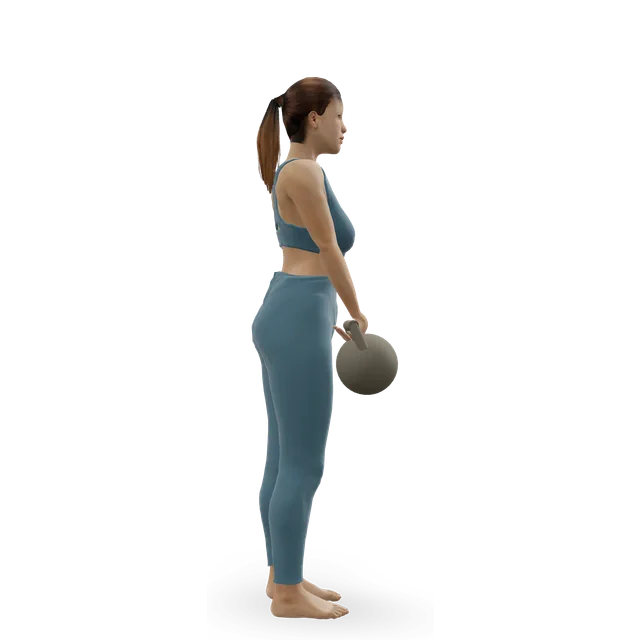
  1. Stand tall beside a wall with the fingertips of one hand resting on it. Hold a light dumbbell in the other hand, so it's in the hand opposite the leg you'll stand on.
  2. Shift onto that leg and bend its knee slightly. Keep that same soft bend all the way down and up.
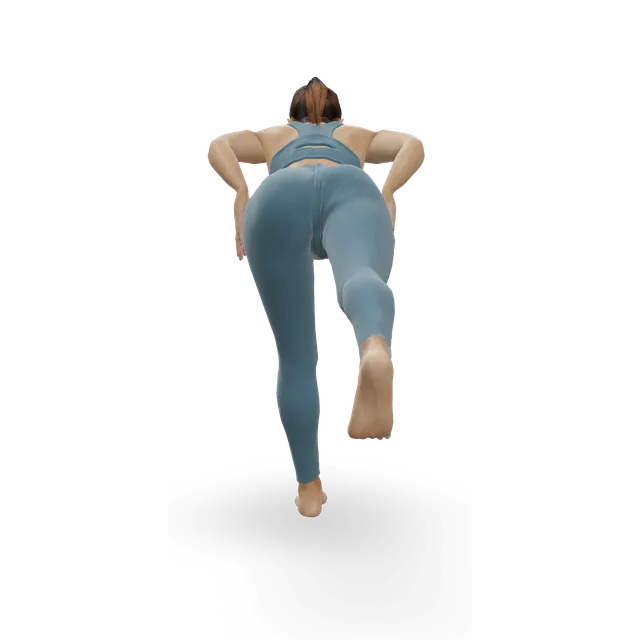
  3. Hinge: push your hips back as your free leg reaches straight back, toes pointing down, so your body and back leg move as one line. Keep your hips square to the floor and your back flat.
  4. Let the weight travel straight down in front of your standing leg, arm long, until your body and back leg are about level with the floor or your hamstrings stop you, whichever comes first.
  5. Breathing out, push your standing foot into the floor and bring your hips forward to stand tall, lowering your back leg. Pause, balanced, before the next rep. Do all your reps, then change legs.

Loading the 3D figure…

Gets into position, then repeats the movement. Technical checks passed; qualified exercise review is pending.

The movement on the figure: Single-leg Romanian deadlift

Which hand, and which weight

The hand opposite your standing leg

This is the usual choice and the one ACE teaches. It worked the side glutes and back harder in one study, because your trunk and hip have to stop the weight pulling you round.

Sources 5, 1

The same side is fine too

Holding it on the same side drew less side-glute activity in that study, but no study has compared the two for results over time. Use it if it lets you keep your hips square.

Source 5

Two dumbbells

One in each hand spreads a heavier load evenly; one study gave 30 young men 5 kg in each hand. Keep them close to your standing leg.

Source 12

A kettlebell or a barbell

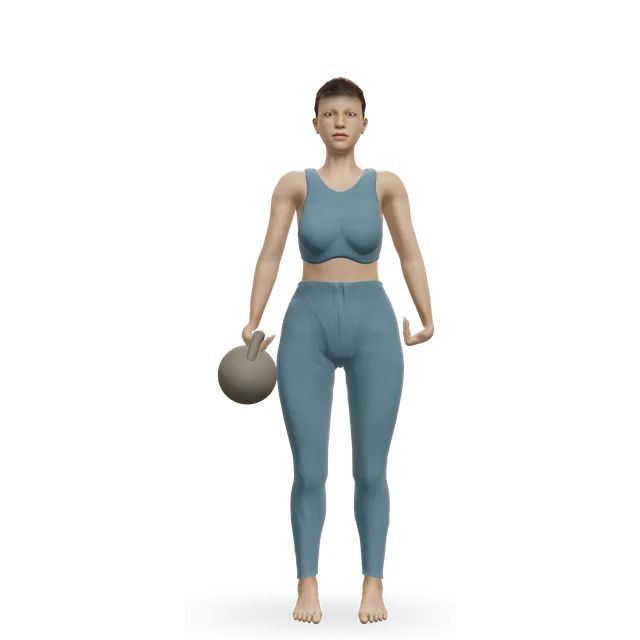
A kettlebell works like a dumbbell, held in the opposite hand as in our kettlebell workout B. The studies above used a barbell for strong, practised lifters; a barbell is harder to balance, so earn it with dumbbells first.

Sources 2, 4

Balance: how to learn it, and what it does for you

Start with a wall

Rest the fingertips of your free hand on a wall or rail. In the school athletes' warm-up above, they kept the hand opposite the standing leg on a wall or handrail. Take the hand away once the reps feel steady.

Source 17

The kickstand stance

A half-way step: most of your weight stays on the front leg while the toes of your back foot rest lightly on the floor a little behind you. It takes some of the balance out while you learn the hinge. No study has compared it with the full lift; it's coaching practice.

Small things that help

Keep the same soft bend in your standing knee, look at a spot on the floor a little ahead, and move slowly. If you lose your balance, set the weight down and step down rather than fighting it, as our move page advises (coaching practice).

What it does for balance

It may improve your balance on tasks like itself: one 4-week study found longer reaches on a balance test and no change in standing balance, with no comparison group. If your aim is steadier walking or fewer falls, our balance guide covers the programmes that have been tested.

Sources 8, 9

If falls are a worry

The NHS suggests seeing a GP if you're worried about your balance or have had a fall. Keep a hand on a wall or a sturdy chair throughout, or use the steadier moves in our balance guide first.

Source 18

The steps up to a loaded single-leg deadlift

Move on when every set reaches the top of its range with your hips square and no touch-downs (our editorial rule). Hip-hinge practice, 2 sets of 8 then a 20 to 30 second hold (our bent-over row technique workout); the dumbbell Romanian deadlift on two legs, 3 sets of 8 to 10 (our Romanian deadlift guide); the one-leg stand, 5 to 10 seconds, 3 times each side near a wall (the NHS exercise our balance guide gives); the single-leg RDL at a wall, 2 sets of 6 to 8 each leg (our balance guide, editorial), then with a dumbbell in the opposite hand, 3 sets of 6 to 8 each side (our dumbbell leg workout B); the kettlebell version, 3 sets of 6 to 8 each side (our kettlebell workout B).

Sets, reps and how often

Sets and reps

2 to 3 sets of 6 to 10 on each leg: our editorial range, spanning our workouts, from 2 sets of 6 to 8 in the balance training workout to 3 sets of 6 to 8 in dumbbell leg workout B and 2 to 3 sets of 8 to 10 in glute session B.

How hard

Stop 2 or 3 reps short of failure: 2 or 3 RIR (reps in reserve: how many more reps you could have done). Leave 3 or 4 in your first two weeks. Going to failure added a trivial amount of growth at most across 15 studies, and people underestimate the reps they have left by about 1. A lost balance ends the set.

Sources 6, 19

Rest

About 90 seconds after both legs, as our dumbbell leg workout B and kettlebell workout B use. A review found a small growth benefit from resting more than about 60 seconds.

Source 7

How heavy

Start with no weight. Then choose a dumbbell you could lift 10 to 12 times with good balance, and add reps before weight, as our plans advise. There are no strength standards; in trained men the single-leg 8-rep max was about 56% of the two-leg one, so expect well under half your two-leg RDL weight at first (our reading).

Source 2

How often, and weekly sets

Once or twice a week, on a leg or full-body day. Each set counts towards the 10 or so hard sets a week that build the hamstrings and glutes, and matched for weekly sets, training a muscle more often made little difference to growth.

Sources 20, 21, 22

Both legs

Do the same reps on each leg. Many coaches start with the weaker or less steady side and match the other to it (coaching practice).

Common mistakes and how to fix them

Your hip opens

The free leg's hip twists up and your body turns sideways. Keep your hips square to the floor, as our move page cues, and go lighter until you can.

Chasing the floor

Rounding your back to touch the weight down. Stop where your hamstrings stop you; our move page says to set the weight down rather than chase the floor with it.

Squatting it

Your standing knee bends more and more on the way down. Keep the same soft bend, as ACE describes.

Source 1

The back leg drops or bends

Keep it straight and in line with your body, toes pointing down; it balances the weight in front of you.

Source 1

The weight drifts forward

Keep your arm long and let the weight travel straight down in front of your standing leg.

Source 1

Rushing

Pause tall and balanced before each rep. Speed makes the wobble worse.

Source 1

Single-leg deadlift or another lift?

Against the two-leg Romanian deadlift

The two-leg RDL lets you lift nearly twice as much and builds two-leg strength best; the single-leg version trains each side on its own and the side glutes more. Most people benefit from both. Our Romanian deadlift guide teaches the two-leg lift.

Sources 14, 15, 2

Against the deadlift

The deadlift is the heavier lift; the single-leg version drew less lower-back and more side-glute activity at an 8-rep max. Our deadlift guide covers the full lift.

Source 2

Against the Bulgarian split squat

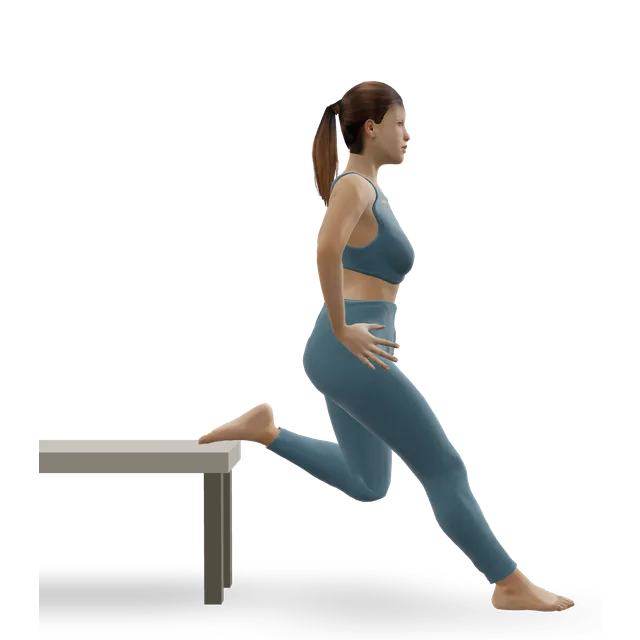
Both are single-leg lifts that build single-leg strength. The split squat is a squat that works the front of the thigh hard; the single-leg deadlift is a hinge for the back of the thigh and the glutes. They pair well in one session, as in our dumbbell leg workout B.

Source 14

Your hamstrings

A long-length hamstring exercise

In 10 men, the hamstring fibres were longest on average in the single-leg deadlift of three exercises, while the Nordic curl lengthened them more and produced the highest forces. Pair it with a knee-bending hamstring exercise, as our Romanian deadlift guide suggests.

Source 4

Injury prevention: thin evidence

One school track team had fewer mild hamstring strains after adding it to the warm-up, but not fewer severe ones, in an observational study. The Nordic curl has more evidence, as our Romanian deadlift guide explains.

Source 17

After a hamstring strain

Follow our hamstring strain guide, which brings bodyweight single-leg RDLs back in weeks 1 to 3 at 3 sets of 6 each leg, every other day, stopping just before pain. A deep ache low in the buttock that's worse with deep hinging and long sitting points to our high hamstring tendinopathy guide.

Your lower back

Less back-muscle work than the deadlift

Lower-back muscle activity was 9.3 to 18.3% lower than in the two-leg deadlift at an 8-rep max, at about half the weight. No study has measured the load on the spine itself, so we don't claim it's easier on your back.

Source 2

Keep it flat

Hinge from your hips, stop where your hamstrings stop you, and set the weight down if you lose your balance rather than twisting to save it (coaching practice).

The back pain rule

Discomfort up to about 5 out of 10 that settles within an hour and is no worse the next morning is acceptable, as our T-bar row and sit-up guides say; pain that spreads down a leg is not. With a sore back, use body weight with a hand on the wall. The NHS advises staying active with back pain and stopping any exercise that makes it worse.

Source 23

Who should change it

Poor balance, numb feet, or after a fall

Keep a hand on a wall or a sturdy chair throughout, or use the staggered-stance bridge and the steadier moves in our balance guide. The NHS suggests seeing a GP if you're worried about your balance or have had a fall.

Source 18

High blood pressure, heart conditions and eye conditions

Breathe out as you stand up and keep the weights moderate, as our breathing guide says. With controlled blood pressure, the American Heart Association considers low- to moderate-intensity strength training with proper breathing safe.

Source 24

Pregnancy

The NHS says strength training at a gym is fine if you already do it, and advises avoiding activities with a risk of falling. Keep a hand on the wall throughout as your bump grows (our reading), and stop if you feel uncomfortable or unwell.

Source 25

Moves that go with it

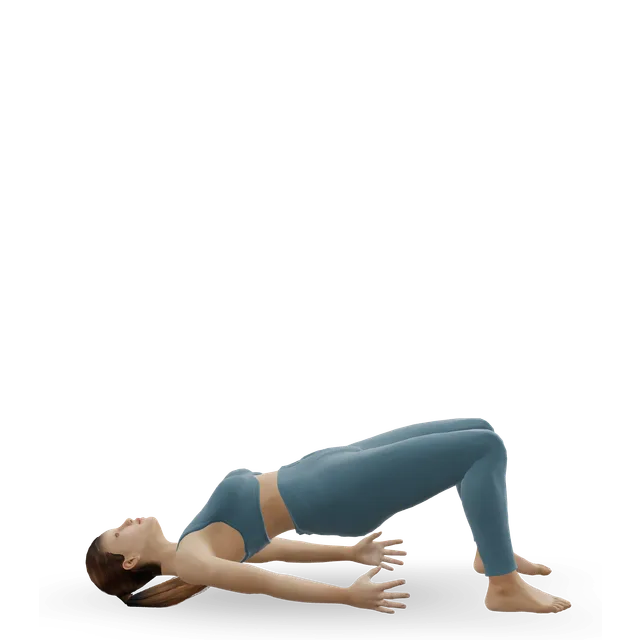
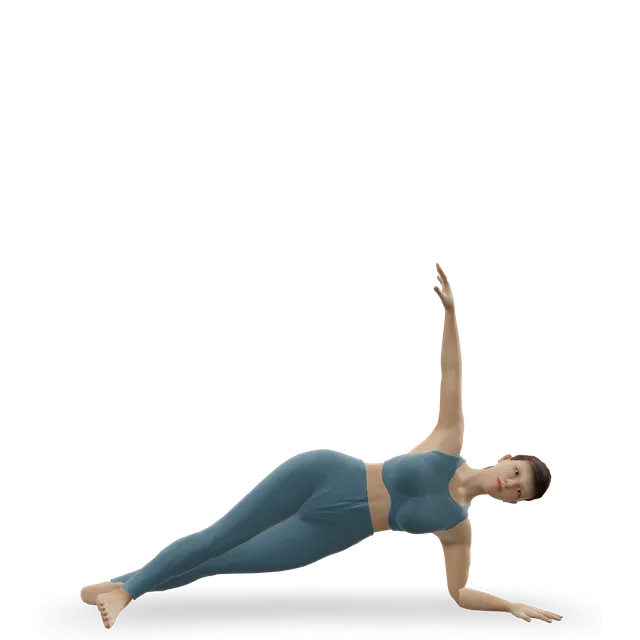
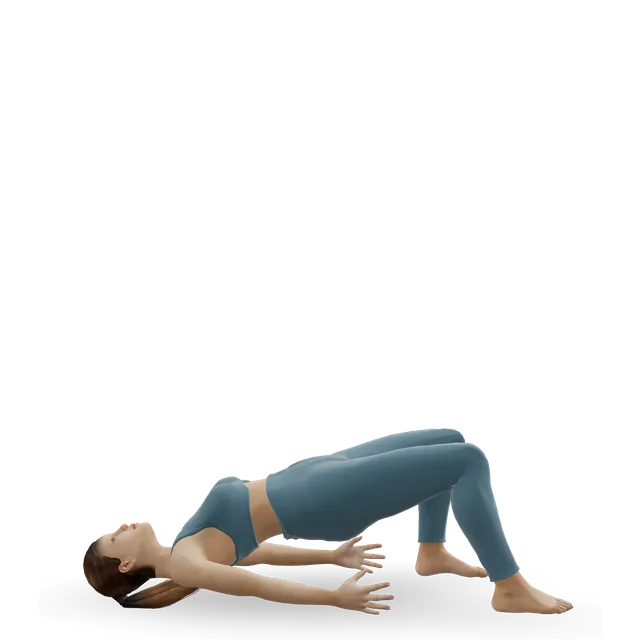
Hip airplanes, 2 sets of 5 slow turns each leg, and the single-leg reach matrix, 3 rounds of 5 reaches in each direction each leg (their move pages' doses, editorial); single-leg glute bridges, 2 sets of 8 to 10 each side (our Pilates strength workout); slider hamstring curls, 3 sets of 6 to 10 (our dumbbell leg workout B); Nordic curls, 2 sets of 3 to 6 slow lowers (our sports workouts); side plank leg lifts, 2 sets of 10 each side (our Pilates for runners workout); suitcase carries, 2 walks of 20 to 30 m each side (our gym ab workout); the staggered-stance bridge at its move page's dose, for days when balance is off.

Workouts to follow

Dumbbell leg workout B loads it on a hinge day; the balance training workout builds up to it; the hamstring workout pairs it with curls and Nordics; glute session B starts it unloaded; kettlebell workout B uses the kettlebell version; the runners' home workout uses it on a strength day.

Plans with single-leg deadlifts in them

Each of these plans uses a workout with the single-leg deadlift.

Warning signs

Stop and get medical help

If you get chest pain or pressure, feel faint or dizzy, are unusually breathless, or your heart races or beats irregularly during exercise, as our plans advise. The American Heart Association says these need immediate medical evaluation.

Source 24

Call 999 (911 in the US)

For chest pain that feels tight, heavy or squeezing, or spreads to your arms, neck, jaw or back; arm pain that comes on suddenly with pressure, heaviness or squeezing across your chest; a headache that starts suddenly and is extremely painful, especially while lifting or straining; someone who faints while exercising; palpitations that don't go away, or come with chest pain, breathlessness or feeling faint; severe difficulty breathing; or angina pain that doesn't stop after rest and your medicine. Don't drive yourself to A&E.

Sources 26, 27, 28, 29, 30, 31, 32, 33, 34

Check before lifting heavy

If you haven't exercised for some time or have a medical condition, speak to your GP first, as the NHS advises. Get advice before heavy lifting if your blood pressure is uncontrolled, or you have heart disease or chest pain when you're active, a pacemaker or defibrillator, diabetic eye disease, glaucoma, a hernia, recent eye or tummy surgery, or you're pregnant, as our breathing guide lists.

Sources 35, 24

After a faint, or dizziness that keeps coming back

See a GP after any faint, and for dizziness that won't go away or keeps coming back.

Sources 31, 36

Call 999 or go to A&E: back pain with these signs

Loss of feeling or numbness around the genitals or bottom, new trouble peeing or controlling your bladder or bowels, changes in genital sensation during sex or problems with erections or orgasm, or pain, tingling, weakness or numbness in both legs. These are signs of cauda equina syndrome, which needs treating in hospital urgently. Don't drive yourself.

Sources 23, 37

Ask for an urgent GP appointment or call NHS 111: your back

For back pain with a high temperature, or if you feel hot, cold, shivery or generally unwell, or the pain came on suddenly and is severe or getting worse quickly. See a GP if back pain isn't improving after a few weeks, stops your daily activities or is worse at night.

Source 23

A hamstring injury

A sudden sharp pain at the back of the thigh, sometimes with a snap or pop: stop. Get help from NHS 111 if it's very painful or getting worse, has a large or growing amount of swelling or bruising, hurts to walk or stand on, feels very stiff, isn't improving with self-care, or comes with a very high temperature or feeling hot and shivery. Get it checked the same day for a pop near the sitting bone, a large bruise high on the back of the thigh, or not being able to put weight on the leg, as our Romanian deadlift guide says.

Source 38

A pulled muscle

A sudden sharp pain in a muscle during a set may be a strain. Get help from NHS 111 or an urgent treatment centre if it's very painful or getting worse, there's a lot of swelling or bruising, you can't put weight on it or use it normally, it's very stiff, or it isn't getting better with self-care.

Source 39

Call 999 after a bad fall

If someone has fallen and may have injured their head, back, neck or hip, or can't get up, as the NHS advises. See a GP after a fall, or if you're worried about your balance.

Source 18

A new lump or bulge in your groin or tummy

See a GP if you think you have a hernia: a bulge that may get bigger when you cough, sneeze or cry and smaller when you lie down. Get help from NHS 111 if you have a hernia and pain in or around it, a bloated tummy, sickness, constipation, a high temperature or sudden confusion. Call 999 or go to A&E only for a femoral hernia (a small lump at the top of the thigh) with very bad tummy pain, sickness, being unable to fart or poo, a high temperature or sudden confusion.

Sources 40, 41

Myths

"Single-leg deadlifts are just a balance exercise"Emerging evidence

Against the two-leg deadlift they drew more side-glute and hamstring activity at about half the load, and a model ranked them in the top group for all three glute muscles. Balance is what limits most people at first, which is why the wall helps.

Sources 2, 3, 10, 4

"Single-leg deadlifts are better than Romanian deadlifts or squats"Emerging evidence

Single-leg training builds single-leg strength and jumping more, and two-leg training builds two-leg strength more, with similar muscle growth. They suit different goals, and most people benefit from both.

Sources 14, 15

"Single-leg deadlifts will fix your balance"Emerging evidence

Four weeks improved a reaching test but not standing balance in one group with no comparison group, and balance gains stay mostly with the tasks you practise. For steadier walking or fewer falls, our balance guide's programmes have the evidence.

Sources 8, 9

"Single-leg deadlifts prevent hamstring injuries"Mixed evidence

In one school team they went with fewer mild strains but not fewer severe ones, in an observational study. As our Romanian deadlift guide says, the Nordic curl has more evidence.

Source 17

"Hold the weight on the same side as your standing leg"Emerging evidence

Either side works. In one study the hand opposite the standing leg worked the side glutes and back harder, and that's how ACE teaches it.

Sources 5, 1

"You have to touch the weight to the floor"Emerging evidence

Go only as far as your hamstrings and a flat back allow; ACE's version stops with your body about level with the floor. Rounding to reach the floor moves the work into your back.

Source 1

"You can't build strength without a barbell"Strong evidence

An overview of 137 reviews found the type of equipment didn't consistently change strength or muscle gains, and the American Heart Association says body weight training can be as effective as machines or free weights. The home trials are small: push-ups matched the bench press in three, and bands matched weights across 8 trials. Dumbbells, kettlebells and your body weight all load this lift.

Sources 20, 24, 42, 43, 44, 45

Questions people ask

What's the difference between a single-leg deadlift and a single-leg RDL?

They are the same hinge on one leg, and most people use the names for the same lift. Strictly, the Romanian version starts standing and goes only as far as your hamstrings allow with a flat back, while some versions lift the weight from the floor. This guide teaches the Romanian style.

Which hand should hold the weight in a single-leg deadlift?

Either works. Holding it in the hand opposite your standing leg is the usual choice: in one study of 12 trained men it worked the side glutes, big glutes and back muscles harder than holding it on the same side, and ACE teaches it that way. Two dumbbells, one in each hand, are fine once you're steady.

What muscles do single-leg deadlifts work?

The glutes and hamstrings of your standing leg, with your back muscles and trunk holding the line. Against the two-leg deadlift they drew more side-glute and hamstring activity and less lower-back activity, and a model ranked them in the top group for all three glute muscles.

Why can't I balance on single-leg deadlifts?

Balance often runs out before strength: in one study at maximal loads, most people were limited by balance. Start with your fingertips on a wall, try the kickstand stance with your back toes resting on the floor, and keep the same soft bend in your knee. The balance this lift needs improves with practice.

Are single-leg deadlifts better than Romanian deadlifts?

Neither is better overall: single-leg training builds single-leg strength more, two-leg training builds two-leg strength more, and muscle growth was similar in pooled trials. The two-leg version lets you lift nearly twice as much, while the single-leg version trains each side alone, so most people benefit from both.

How heavy should single-leg deadlifts be?

Start with no weight, then use a dumbbell you could lift 10 to 12 times with good balance, adding reps before weight. There are no strength standards; in trained men the single-leg 8-rep max was about 56% of their two-leg deadlift 8-rep max.

How many sets and reps of single-leg deadlifts should I do?

2 to 3 sets of 6 to 10 on each leg, stopping 2 or 3 reps short of failure with about 90 seconds' rest, once or twice a week. That spans our workouts, from 2 sets of 6 to 8 in our balance workout to 3 sets of 6 to 8 with a dumbbell in our dumbbell leg workout B.

Do single-leg deadlifts improve balance?

They may improve the balance they use. In 27 adults aged 40 to 56, four weeks of bodyweight single-leg RDLs lengthened reaches on a balance test but didn't change standing balance, and there was no comparison group. For steadier walking, our balance guide has the programmes.

Are single-leg deadlifts bad for your lower back?

No study has measured the load on the spine, and back-muscle activity was lower than in the two-leg deadlift, at about half the weight. Keep your back flat, stop where your hamstrings stop you, and set the weight down if you lose your balance. With back pain, use body weight with a hand on the wall.

Do single-leg deadlifts prevent hamstring injuries?

The evidence is thin. In one school track team, 3 sets of 3 in the warm-up went with fewer mild strains but not fewer severe ones, and it wasn't a randomised trial. The Nordic curl has more evidence, as our Romanian deadlift guide explains.

What is a B-stance or kickstand RDL?

A half-way step: most of your weight stays on the front leg while the toes of the back foot rest lightly on the floor a little behind you. It takes some of the balance out so you can learn the hinge on one leg; no study has compared it with the full version. Move on once it feels steady.

Can I do single-leg deadlifts at home without weights?

Yes: the bodyweight version is a full exercise, and our glute session B starts it unloaded before adding a dumbbell. Once 3 sets of 10 feel steady, hold a weight or slow the lowering.

Sources

  1. ACE · Single-arm, single-leg Romanian deadlift (exercise library, rated advanced, American Council on Exercise)
  2. Diamant 2021 · Single-leg against two-leg deadlift: muscle activity at an 8-rep max in 15 trained men (EMG study, Int J Exerc Sci)
  3. Collings 2023 · Glute muscle forces in hip injury prevention and rehabilitation exercises, in 14 female footballers (modelling study, MSSE)
  4. Van Hooren 2022 · Hamstring forces and fascicle behaviour in the Nordic curl, single-leg Roman chair and single-leg deadlift, in 10 men (lab study, Scand J Med Sci Sports)
  5. Mo 2023 · Holding the weight on the same or the opposite side in the single-leg Romanian deadlift, in 12 trained men (EMG study, Front Physiol)
  6. Refalo 2023 · Training to failure against stopping short, for muscle growth: 15 studies (meta-analysis, Sports Med)
  7. Singer 2024 · Rest between sets and muscle growth: 9 studies (Bayesian meta-analysis, Front Sports Act Living)
  8. Kabalkin 2026 · Four weeks of single-leg Romanian deadlifts and balance in 27 adults aged 40 to 56, with no control group (training study, Int J Exerc Sci)
  9. Kümmel 2016 · How specific balance training is: 6 trials, 102 people (systematic review and meta-analysis, Sports Med)
  10. DiStefano 2009 · Glute muscle activity in 12 common rehabilitation exercises, in 21 active adults (EMG study, JOSPT)
  11. Vigotsky 2022 · Muscle activity measured in one session isn't a validated predictor of muscle growth (review, Sports Med)
  12. Kim 2026 · The single-leg deadlift on a stable floor and an unstable pad, in 30 young men (biomechanics study, Sci Rep)
  13. Jeong 2025 · Single-leg deadlifts with a flexible or a rigid barbell, in 27 adults (EMG and balance study, Sports)
  14. Xin 2026 · Single-leg against two-leg training: 24 trials (systematic review and meta-analysis, BMC Sports Sci Med Rehabil)
  15. Liao 2022 · Single-leg against two-leg resistance training for strength, jumps and speed: 14 studies, 392 people (systematic review and meta-analysis, Biol Sport)
  16. Morencos 2022 · Six weeks of flywheel single-leg Romanian deadlifts in 17 young men, with no control group (training study, IJERPH)
  17. Otani 2025 · Single-leg Romanian deadlifts in the warm-up and hamstring strains in 77 school athletes (cohort study, IJSPT)
  18. NHS · Falls
  19. Halperin 2022 · How accurately people predict the reps they have left: 12 studies (scoping review and meta-analysis, Sports Med)
  20. Currier 2026 · Resistance training for muscle function, size and performance in healthy adults: 137 reviews (ACSM position stand, MSSE)
  21. Schoenfeld 2017 · Dose-response relationship between weekly resistance training volume and muscle growth (meta-analysis, J Sports Sci)
  22. Schoenfeld 2019 · How many times a week to train a muscle for growth: 25 studies (meta-analysis, J Sports Sci)
  23. NHS · Back pain
  24. Paluch 2024 · Resistance exercise training with and without cardiovascular disease: 2023 update (American Heart Association scientific statement, Circulation)
  25. NHS · Exercise in pregnancy
  26. NHS · Heart attack
  27. NHS · Chest pain (past its review date: reviewed August 2023, review due August 2026)
  28. NHS · Elbow and arm pain
  29. NHS · Headaches
  30. NHS · Subarachnoid haemorrhage
  31. NHS · Fainting
  32. NHS · Heart palpitations
  33. NHS · Shortness of breath
  34. NHS · Angina
  35. NHS · Physical activity guidelines for adults aged 19 to 64
  36. NHS · Dizziness (past its review date: reviewed April 2023, review due April 2026)
  37. NHS · Sciatica
  38. NHS · Hamstring injury
  39. NHS · Sprains and strains
  40. NHS · Hernia
  41. NHS · Femoral hernia
  42. Kotarsky 2018 · Progressive push-ups against the bench press for 4 weeks in 23 moderately trained men (randomised trial, J Strength Cond Res)
  43. Kikuchi 2017 · Push-ups against a light bench press for 8 weeks in 18 men (randomised trial, J Exerc Sci Fit)
  44. Calatayud 2015 · Bench press against band push-ups at matched muscle activity, 5 weeks in 30 trained students (randomised trial, J Strength Cond Res)
  45. Lopes 2019 · Elastic bands against weights and machines for strength: 8 studies (systematic review and meta-analysis, SAGE Open Med)

Exercise education, not a personal prescription, and clinical review of these guides is pending. Check with a GP before starting hard training if you have a heart condition, chest pain, dizziness or breathlessness when active, and stop for sharp or increasing pain. Health disclaimer.