Strength at home
Balance training workout: from standing still to moving
Balance is a skill, and it improves when practice is hard enough to make you wobble. Work at the hardest version you can hold for about 30 seconds without grabbing your support, next to a kitchen counter or a wall, and move up a step when it feels easy. Do it three times a week for 12 weeks or more. The doses are our editorial starting point. If you've fallen in the past year, feel unsteady when you walk, or get dizzy, start with our strength and balance exercises for seniors or the vestibular routine instead, and see a GP.
Warm-up
- Standing march60 sBeginner · Hip flexors, Abs, Glutes · 3D demoNext to the counter; pause briefly with each knee upEasier: Seated marchHarder: Standing band hip flexion
- Ankle circles10 slow circles each way with each footBeginner · Calves, Shins · 3D demoThe move page's doseHarder: Ankle CARs (controlled articular rotations)


Stand still (fingertips on the counter, then off)
- Semi-tandem stance1 hold of 20 s each way roundBeginner · Calves, Hip abductors · 3D demoYour warm-up level: one foot half a step ahead of the otherHarder: Tandem stance and heel-to-toe walk
- Tandem stance and heel-to-toe walk2 holds of 30 s each way round, then 10 stepsBeginner · Calves, Hip abductors · 3D demoLook at a point ahead, not at your feetEasier: Semi-tandem stanceHarder: Single-leg stand
- Single-leg stand2 holds of 30 s each legBeginner · Hip abductors, Calves, Glutes · 3D demoWhen 30 s is steady, turn your head slowly from side to side; then try it with your eyes closed and a hand hovering over the counterEasier: Tandem stance and heel-to-toe walkHarder: Single-leg reach matrix



Move (along the counter)
- Side-stepping (sideways walking)10 steps each wayBeginner · Hip abductors, Glutes, Adductors · 3D demoThe move page's dose; keep your hips levelHarder: Lateral band walk
- Backward walking10 steps, 2 or 3 timesBeginner · 3D demoShort steps with a hand near the counter; clear the floor behind you firstHarder: Backward sled drag


One leg, with strength
Rest 30 to 60 s between sets
- Single-leg reach matrix2 rounds of 5 reaches in each direction, each legIntermediate · Quads, Hip abductors, Glutes · 3D demoTouch the floor lightly and come back to tall without putting the foot down; add a third round, as the move page doses it, once it's easyEasier: Standing crossed-leg side reachHarder: Single-leg Romanian deadlift
- Single-leg Romanian deadlift2 sets of 6 to 8 each legAdvanced · Hamstrings, Glutes, Abs · 3D demoFingertips on the wall at first; hold a light dumbbell in the opposite hand once you're steadyEasier: Dumbbell Romanian deadlift
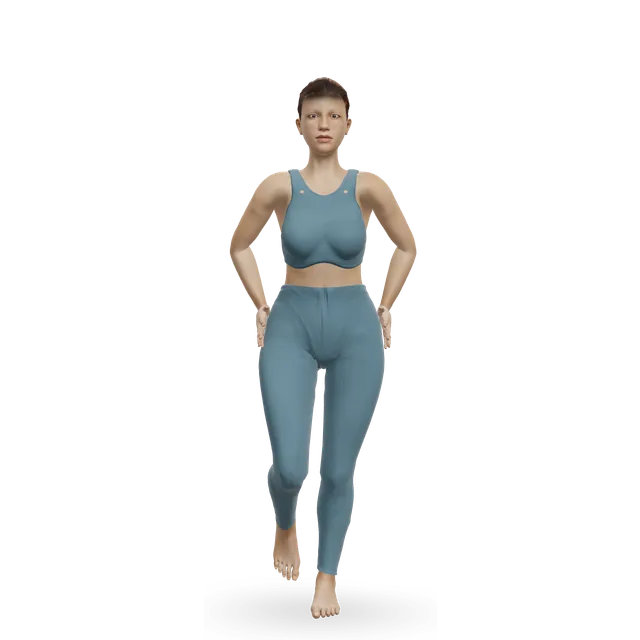
- Step-up2 sets of 8 each legBeginner · Glutes, Quads, Hamstrings · 3D demoStep up slowly without pushing off the back foot; a hand on a rail is fine at firstEasier: Low step-upHarder: Dumbbell step-up


Land (optional, for active people)
- Single-leg hop and stick2 sets of 3 hops forward and 3 sideways, each legIntermediate · Quads, Glutes, Calves · 3D demoSmall hops; hold each landing still for 2 s with your knee over your foot. Leave these out after a recent sprain until you're cleared, or if a stress fracture is suspectedEasier: Standing broad jump with stuck landingHarder: Alternate-leg bounding

Wobble (optional, if you have a board)
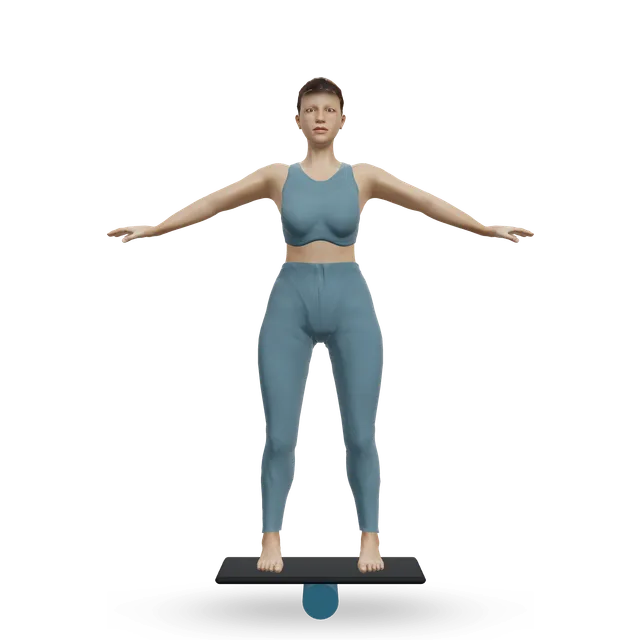
- Balance board standSeveral holds of 20 to 30 sBeginner · Calves, Shins, Hamstrings · 3D demoThe move page's dose; only once one-leg standing on the floor is steady, with a rail or counter in reachEasier: Single-leg stand
Cool-down (optional)
- Wall calf stretch (gastrocnemius)30 s each sideBeginner · Calves · 3D demoEasier: Seated calf stretch with a towelHarder: Heel-on-step calf and hamstring stretch

Tips
- Keep a counter or wall within reach for everything, on a clear floor, in flat shoes or barefoot rather than in socks on a smooth floor.
- Make one thing harder at a time: less hand support, a narrower stance, head turns, eyes closed, or a second task such as counting back in threes.
- Three times a week for at least 12 weeks: balance trials in young adults found the biggest gains with about 11 to 12 weeks of 3 sessions a week, and falls guidelines use 3 or more sessions a week for at least 12 weeks.
- Over 60, keep to eyes open unless one-leg standing is easy: healthy adults over 60 average only 2 to 4 seconds with their eyes closed, as our balance test explains.
- After an ankle sprain, start once you can walk without a limp and your physiotherapist or GP agrees, and add the hops last.
- With numb feet, do the standing work in well-fitting shoes with a hand on the counter, and leave out the hops.
- In pregnancy, avoid anything with a risk of falling, and skip the one-legged moves if you have pelvic girdle pain, as our pregnancy guide advises.
- With Parkinson's, use our Parkinson's routine instead, in an "on" time when your medicines are working, and leave out walking backwards if you often freeze.
- Stop if you feel dizzy or light-headed. If you've fallen in the past year, feel unsteady when you walk or get dizzy, use the strength and balance exercises for seniors or the vestibular routine instead, and see a GP.
The doses are suggested starting points, not a prescription. Choose a range you can control and stop for sharp or increasing pain, numbness or tingling. Get individual advice after an injury or surgery, or if you are pregnant or managing a health condition.
Guides that recommend it
Find more moves like these
More strength at home




Beginner bodyweight workout
A 20-minute full-body workout with no equipment: squats, knee push-ups, bridges, lunges and planks.
20 minBeginner10 movesNo equipment


Full-body bodyweight workout
An intermediate no-equipment workout: push-ups, split squats, single-leg bridges, pike push-ups and core work.
30 minIntermediate11 movesNo equipment


Full-body dumbbell workout
A 35-minute full-body strength workout with dumbbells: goblet squats, presses, rows, Romanian deadlifts and carries.
35 minIntermediate9 movesA band, A dumbbellQuestions people ask
How long does the balance training workout: from standing still to moving take?
About 20 minutes, including any warm-up and cool-down listed. Shorten it by doing fewer rounds; lengthen it by adding one.
What equipment do I need?
You need: A wall, A dumbbell, A step, Other / check instructions. Each move links to its guide, where you can find an alternative if you are missing something.
Is it suitable for me?
It is written at intermediate level. 9 of its 13 moves have an easier option listed beside them; use them freely.
How do I make it easier or harder?
Use the easier or harder option listed under each move, change the number of rounds, or adjust the rest. Progress one change at a time.