Exercise guide

Exercise while breastfeeding: milk supply, feeding first, bras, weight loss and your pelvic floor

You can exercise while breastfeeding. It doesn't reduce your milk supply, change the quality of your milk or slow your baby's growth: the UK Chief Medical Officers say you can be active while breastfeeding, and trials and a 2025 review of 46 studies agree. Only all-out efforts change your milk at all, by briefly raising the lactic acid in it.

Most of what matters is practical: feeding or expressing before you exercise, a supportive bra that doesn't squeeze, eating and drinking enough, and losing weight slowly if you want to. Breastfeeding doesn't change when you can start exercising after the birth; our postpartum guide covers that timeline.

This guide covers milk supply and lactic acid, feeding first, sports bras and blocked ducts, food, drink and weight loss, strength training and your bones, running and your pelvic floor, caffeine and supplements, mastitis, and the warning signs that need your midwife, health visitor or general practitioner (GP).

The short version

Exercise won't harm your milk or your baby's growth

Regular exercise doesn't reduce your milk supply or change its quality, and it doesn't slow your baby's growth. The UK Chief Medical Officers say you can be active while breastfeeding: aim for at least 150 minutes of moderate activity a week, build back up to muscle strengthening twice a week, and do pelvic floor exercises every day.

Sources 1, 2, 3

Feed or express first

Feeding or expressing shortly before you exercise makes it more comfortable, as the American College of Obstetricians and Gynecologists (ACOG) advises, and the UK running guideline suggests planning feeds so your breasts aren't too full when you run. It also sidesteps the question of lactic acid, which rises in milk only after all-out efforts.

Sources 4, 5, 6

Wear a bra that supports without squeezing

Your back and cup size are likely to have changed, so the National Health Service (NHS) suggests getting measured for a new sports bra. Choose support rather than compression: a tight bra, a bag strap or tight clothing pressing on the breast can cause a blocked milk duct.

Sources 7, 5, 8

Eat to your appetite, and drink to thirst

You don't need a special diet. UK reference values add about 330 calories (kcal) a day for the first 6 months of exclusive breastfeeding. Keep a drink beside you when you feed, but drinking extra water beyond your thirst won't make more milk.

Sources 9, 10, 11, 12

Lose weight slowly, with food and exercise together

If you're breastfeeding and overweight, the NHS suggests a healthy, balanced diet and regular, moderate exercise, such as a brisk 30-minute walk each day, and says this won't affect the quality or quantity of your milk. In a trial, losing about 0.5 kg a week from 4 weeks after the birth didn't affect babies' growth. Avoid crash diets.

Sources 7, 13, 11

Mastitis: rest, keep feeding, and get help if it isn't better within 12 to 24 hours

If a breast becomes hot, tender or swollen and you feel achy or as if you have flu, the NHS advice is to carry on breastfeeding, rest, and contact your GP or NHS 111 if you feel worse at any time or are no better within 12 to 24 hours. Go back to exercise once you feel better (our suggestion).

Source 14

Breastfeeding, milk and your body

How your supply works

Milk supply follows demand. The NHS's ways to boost it are feeding your baby as often and for as long as they want, offering both breasts at each feed, and expressing after feeds once breastfeeding is established. The things it lists as affecting supply include poor attachment, not feeding often enough, alcohol, smoking, some medicines, illness, and anxiety, stress or depression. Exercise isn't on the list.

Source 15

The energy breastfeeding takes

UK reference values add 330 kcal a day for the first 6 months of exclusive breastfeeding. Other sources give higher figures: a 2026 sports medicine review says 450 to 500 kcal, and La Leche League GB 500 to 700. The NHS says you don't need a special diet, just a healthy, varied one.

Sources 10, 16, 11, 9

Your bones

Breastfeeding draws calcium into your milk, about 200 mg a day, and bone density at the spine can fall by 3% to 9% over 6 months. It's temporary: across 32 studies, bone recovered once periods returned and after weaning, though in one study a quarter of women hadn't fully regained it by 19 months.

Sources 17, 18, 16

Joints after the birth

The NHS says your ligaments and joints are more supple for a few months after the birth, so take care not to stretch or twist too much. Breastfeeding keeps oestrogen low for longer, but the UK running guideline says the theory that hormones such as relaxin loosen joints enough to cause injury after the birth hasn't been proven.

Sources 7, 5

What the evidence says

Milk supply and qualityStrong evidence

In a trial of 33 breastfeeding women, 45 minutes of aerobic exercise 5 days a week for 12 weeks, starting 6 to 8 weeks after the birth, didn't change milk volume or composition, the babies' weight gain or the milk hormone prolactin, and raised fitness by 25%. In a smaller study, 8 women who exercised hard made milk with the same energy, fat, protein and lactose as 8 inactive women, and ate more.

A 2025 review of 46 studies found milk quality and quantity, babies' growth and development, and injuries no different with exercise. ACOG and the 2025 Canadian guideline say the same.

Sources 1, 19, 2, 4, 20

Babies' growthEmerging evidence

Across 4 small trials with 170 women, mothers' exercise made no difference to breastfed babies' weight gain, though the authors call the evidence limited. In 587 mothers followed for a year in Perth, Australia, exercise wasn't linked with stopping breastfeeding or with the babies' growth.

Sources 21, 22

Lactic acid after all-out effortsEmerging evidence

Lactic acid in milk rose after maximal exercise, and after hard exercise at about 15 out of 20 for effort, but not after moderate exercise. In 26 women, mothers rated their babies as less keen on milk expressed 10 to 30 minutes after a maximal exercise test.

In a later study of 24 women, milk expressed an hour after a maximal test or 30 minutes of moderate exercise was given by bottle, and neither the mothers nor 3 lactation consultants who didn't know which milk was which saw any difference in how the babies took it.

Sources 23, 6, 24, 25

Antibodies in milkEmerging evidence

An antibody in milk, immunoglobulin A (IgA), fell for 10 to 30 minutes after an exhausting treadmill test in 17 women and was back to normal within an hour. In 53 women, this antibody and other immune factors didn't differ with fitness, and 30 minutes of moderate exercise didn't change them.

Sources 26, 27

Other compounds in milkMixed evidence

A study in women and mice linked exercise with more of a milk sugar called 3'-sialyllactose, but a 2025 trial in 20 women found no clear change after one moderate or hard session. In another trial of 20 women, hard intervals briefly raised a compound called adiponectin. What these changes mean for babies, if anything, isn't known.

Sources 28, 29, 30

Losing weight without affecting your babyEmerging evidence

In 40 overweight women who were exclusively breastfeeding, eating 500 kcal a day less and exercising for 45 minutes 4 days a week from 4 weeks after the birth took off 4.8 kg in 10 weeks, against 0.8 kg, with no difference in the babies' weight gain or length. In 67 women, an 11-day cut of 35% in energy, by diet or by diet plus exercise, didn't change milk volume or composition, and with exercise the weight lost was nearly all fat.

Across 12 trials after childbirth, diet plus exercise took off about 1.9 kg more than usual care, while exercise alone made little difference to weight. The trials were small and of mixed quality.

Sources 13, 31, 32

Breastfeeding on its own isn't a reliable way to lose weightMixed evidence

In a review of 45 studies, 63% found little or no link between breastfeeding and weight change, though 4 of the 5 best-quality studies found one. Across 14 cohorts, mothers who breastfed kept on 0.38 kg less on average.

Sources 33, 34

Exercise and bone while breastfeedingEmerging evidence

In 20 women randomised 4 weeks after the birth, weight-bearing aerobic exercise 3 days a week plus strength training 3 days a week for 16 weeks cut bone loss at the spine to 4.8%, against 7.0%. In 27 women, eating 500 kcal a day less plus strength training brought more weight loss with no difference in bone loss. Two trials combined, with 55 women, found the difference at the spine still there a year after the birth. Pooled, exercise saved about 1.6% of bone density at the spine, but the certainty is low.

Sources 17, 35, 36, 37

Drinking extra waterEmerging evidence

A Cochrane review found no good randomised trials of drinking extra to make more milk; in the one old study of 210 women, advice to drink more didn't raise milk production. La Leche League GB says supply isn't linked to how much water you drink.

Sources 12, 11

Loose joints and hormonesMixed evidence

Joints do loosen in pregnancy: in one study, 19 of 35 women had more laxity at the wrist by the third trimester, and in another, laxity rose in 5 of 7 joints through pregnancy and after the birth. But neither study found that the laxity tracked relaxin or other hormone levels, and the UK running guideline says the injury theory hasn't been proven.

Sources 38, 39, 5

Sports brasMixed evidence

We found no study of sports bras in breastfeeding women. In 20 women with large breasts who weren't breastfeeding, a bra that lifted and compressed the breasts reduced discomfort during exercise, while the UK running guideline suggests support rather than compression. The Academy of Breastfeeding Medicine advises a well-fitting, supportive bra, based on lower-level evidence.

Sources 40, 41, 5

Before and after a workout

From ACOG's advice to feed or express first and to drink before you start, the UK running guideline's advice on timing feeds and on support rather than compression, the NHS on what causes a blocked duct, La Leche League GB's advice to take tighter bras off after exercise, and trials in which exercising mothers ate more. Planning long sessions around feeds is our suggestion.

  1. Feed your baby or express shortly before you start, so your breasts aren't full.
  2. Have a drink before you start, then drink to thirst during and after.
  3. Put on a supportive, well-fitted sports bra that doesn't squeeze or dig in, and check that bag or rucksack straps don't press on your breasts.
  4. For a long session, a run or a class, plan it around feeds rather than skipping or delaying one.
  5. Afterwards, take off a tight sports bra and any damp top fairly soon.
  6. Eat to your appetite: women who exercise while breastfeeding tend to eat more.

Sports bras, blocked ducts and comfort

Get measured

"Do not rely on your pre-pregnancy sports bra," says the NHS: your back and cup size are likely to have changed, so get measured for a new one. Choose more support for running and jumping (our suggestion), and see our women's guide on how much a sports bra cuts breast movement.

Source 7

Support, not compression

The UK running guideline suggests a personally fitted sports bra that gives support rather than compression. La Leche League GB says to make sure your chest isn't compressed, and to take tighter bras off soon after exercise. For full, sore breasts (engorgement), the NHS suggests a well-fitting breastfeeding bra that doesn't restrict your breasts.

Sources 5, 11, 14

Pressure can block a duct

A blocked milk duct can be caused by something pressing on the breast, such as a tight bra, a bag strap or tight clothing, as well as by skipping or delaying a feed. You may feel a small, tender lump. The NHS advice is to carry on feeding and to avoid tight clothes or bras so your milk can flow freely.

Sources 8, 14

When to start, and how to build up

After a straightforward birth

The NHS says you can start gentle exercise as soon as you feel up to it: walking, gentle stretches and pelvic floor exercises. Get advice at your 6-week postnatal check before high-impact exercise such as aerobics or running. Breastfeeding doesn't change this timeline.

Source 7

After a caesarean or a more complicated birth

Your recovery will take longer. The NHS says to talk to your midwife, health visitor or GP before starting anything strenuous. Our caesarean guide covers lifting and the first weeks.

Source 7

How much to aim for

The UK Chief Medical Officers suggest at least 150 minutes of moderate activity a week, building back up to muscle strengthening twice a week, and pelvic floor exercises every day. The 2025 Canadian guideline suggests at least 120 minutes of moderate to vigorous activity over 4 or more days a week, and lists breastfeeding among things that may need support, not reasons to avoid activity.

Sources 3, 20

Swimming

The NHS says to wait until 7 days after your postnatal bleeding has stopped.

Source 7

Running and jumping

The UK running guideline suggests waiting until about 3 months after the birth, and passing its checks first: walking, hopping and jogging on the spot without leaking, heaviness or pain. It lists breastfeeding among the things that may mean a slower return. Feed first and wear a supportive bra.

Source 5

Eating, drinking and losing weight

No special diet

The NHS says you don't need a special diet while breastfeeding, just a healthy one with a variety of foods. UK reference values add 330 kcal a day for the first 6 months of exclusive breastfeeding, and our calories per day calculator adds this for you.

Sources 9, 10

Drinking

Have a drink beside you when you settle down to feed (NHS), and drink before you exercise (ACOG). Then drink to your thirst: extra water won't make more milk.

Sources 9, 4, 12, 11

Losing weight safely

The NHS: "If you're breastfeeding and you're overweight, the best way to lose weight is by eating a healthy, balanced diet and taking regular, moderate exercise, such as a brisk walk for 30 minutes each day. This will not affect the quality or quantity of your breast milk."

In a trial, about 0.5 kg a week from 4 weeks after the birth was safe for babies' growth. La Leche League GB suggests around 400 to 500 g a week and at least 1,800 kcal a day, and a 2026 review links eating under 1,500 kcal a day with less milk. No UK guideline sets a minimum, so lose weight gradually and avoid crash diets.

Sources 7, 13, 11, 16

Weight-loss groups

If you join one, the NHS says to tell them you've recently had a baby and that you're breastfeeding, so they can give you the right advice.

Source 7

Breastfeeding won't do it on its own

Breastfeeding uses energy, but most studies find little link between breastfeeding and losing weight. Food and activity together are what work.

Sources 33, 34

Strength training and your bones

Why strength work is worth it

The bone you lose while breastfeeding comes back, and strength work may slow the loss: in one small trial, weight-bearing aerobic exercise plus strength training 3 days a week cut the loss at the spine from 7.0% to 4.8%. The certainty is low, but strength work helps you lift and carry a growing baby too.

Sources 17, 37, 18

How to start

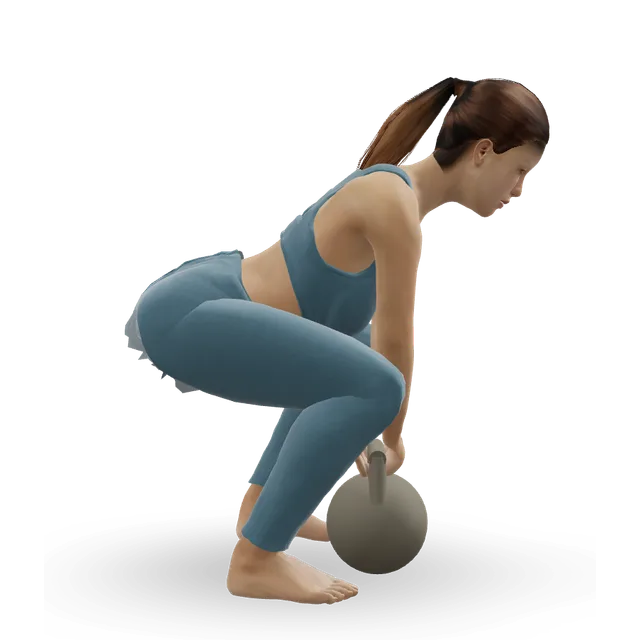
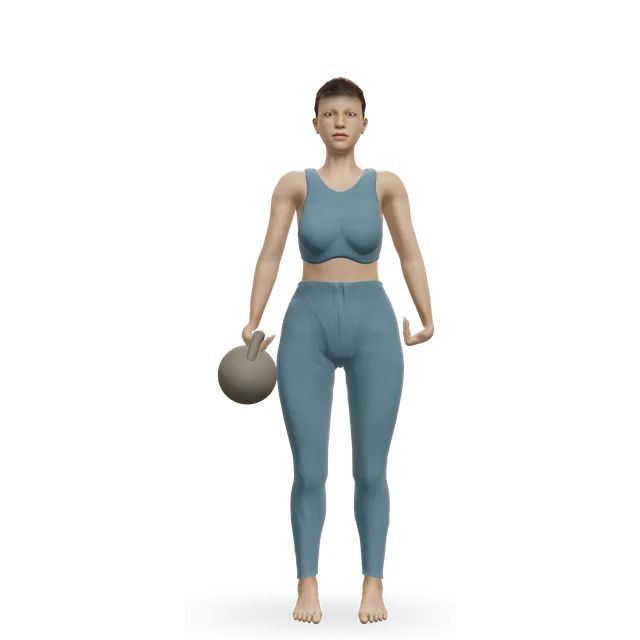
Build back up to strength work twice a week. The UK running guideline suggests squats, lunges and bridges from about 2 to 4 weeks after a straightforward birth, in line with everyday tasks, and deadlift practice from about 6 to 8 weeks, starting no heavier than your baby in a car seat and building up gradually.

Sources 3, 5

Joints and hormones

Breastfeeding isn't a reason to avoid weights. For the first few months, take care not to stretch or twist too far (NHS), and build the load up gradually (UK running guideline).

Sources 7, 5

Running, interval training and yoga

Running and high-intensity interval training (HIIT)

Follow the same timeline as anyone after the birth: about 3 months and the readiness checks first, then build up slowly. Breastfeeding may mean a slower start. Feed first, wear a supportive bra, and ease off if you notice leaking, heaviness or pain.

Sources 5, 7

Yoga, Pilates and classes

Postnatal classes are a good start, and the NHS says to tell the instructor of any class that isn't a postnatal class that you've recently had a baby. Lying face down can be uncomfortable with full or tender breasts, so feed first or swap those poses (our suggestion). Hot yoga adds heat and sweat: drink to thirst, and leave the room if you feel faint (our suggestion).

Source 7

Feeding posture, neck and upper back

Sitting to feed

The NHS: "while feeding your baby, sit with your back well supported and straight. Put a small pillow or cushion behind your waist to support your lower back. Make sure your feet can reach the floor."

Source 42

Lifting and carrying

Kneel or squat for low tasks such as picking up toys or bathing your baby, change nappies on a raised surface, bend your knees and keep your back straight when lifting, and hold heavy things close. Carry your baby in a well-fitting sling, and set the pram or buggy handles so your elbows are bent at right angles.

Sources 42, 7

A stiff neck and shoulders

Long spells looking down at a feeding baby can leave your neck and upper back stiff. The neck and upper back moves below suit a break between feeds (our suggestion), and our neck pain and upper back pain guides cover the warning signs. See your GP if back pain doesn't settle.

Source 42

Walking and cardio

Start with about 10 minutes of walking after the birth and add a few minutes each day, as our easy cardio workout suggests, building towards a brisk 30 minutes most days (NHS). The elliptical trainer and recumbent bike pages' dose is 10 to 20 minutes at a moderate effort to start, building towards 30. The UK running guideline suggests a static bike or cross-trainer from about 4 to 6 weeks, once sitting on a saddle is comfortable. Swim once your bleeding has stopped for 7 days, and run from about 3 months.

Pelvic floor, tummy and breathing

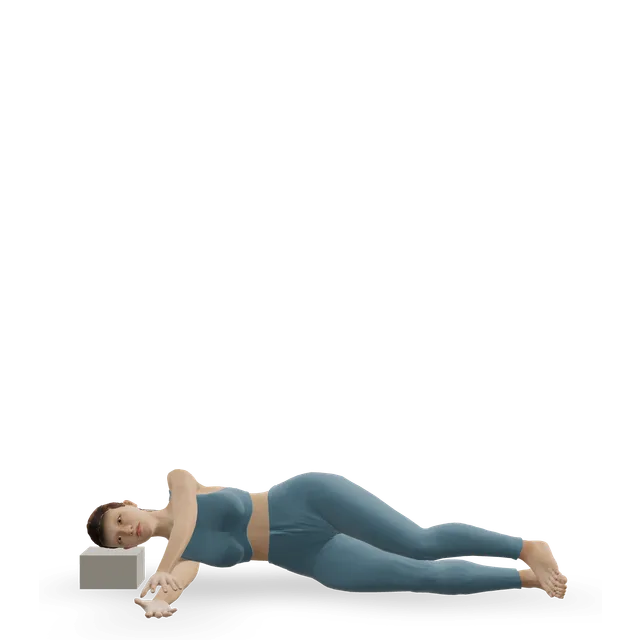
The pelvic floor exercise page's dose: start with 8 slow holds of up to 10 seconds and 8 quick squeezes, three times a day, building towards 10 of each. The side-lying tummy draw-in page's: hold for up to 10 seconds, up to 10 times. Lateral breathing: 5 to 8 breaths at the start of a session; slow breathing: at least 5 minutes, regularly (both the move pages' doses).

Neck and upper back

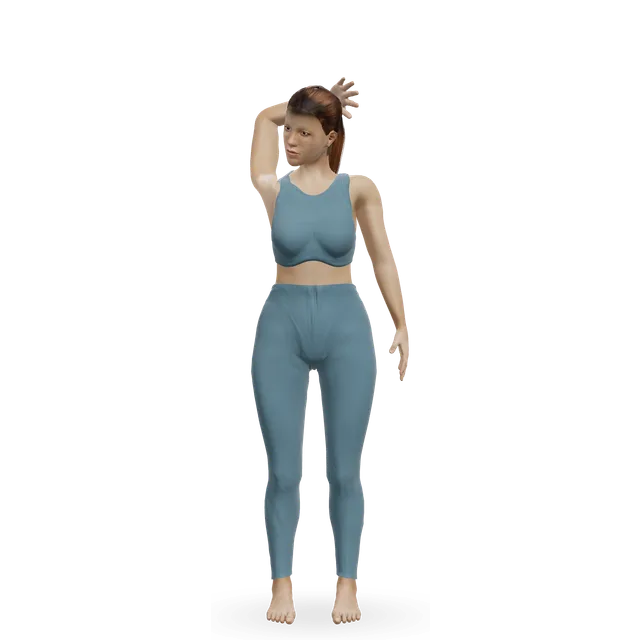
Between feeds, sitting or standing: chin tucks, 10 slow reps, and the doorway chest opener, 45 seconds (from our neck and shoulder stretches workout); thoracic rotation, 6 per side, cat-cow, 8 slow waves, and the upper trap release, 2 slow holds of 30 seconds per side (the move pages' doses).

Strength, twice a week

Our editorial starting point is 2 sets of 8 to 12 for the leg and pulling moves, 8 reps for sit-to-stands and wall push-ups and 10 bridges (as in our 10-minute starter workout), 5 to 8 bird dogs and 6 dead bug heel taps each side, stopping if the middle of your tummy domes. The band row page's dose is 3 sets of 10 to 15 once you're ready. Start deadlift practice no heavier than your baby in a car seat (UK running guideline), keep carries light at first, and do any face-down work after a feed (our suggestions).

Workouts

The postnatal exercises suit the first weeks, and the postnatal strength workout follows from about 6 weeks; its tips already say to feed or express first and wear a supportive bra. The daily pelvic floor workout starts with crocodile breathing, face down: do it on your side or after a feed if your breasts are full. Running waits for the readiness checks, from about 3 months.

Postnatal exercises

A gentle 25-minute routine for the first weeks after birth: pelvic floor, breathing, tummy and hip exercises on the floor, sit-to-stands and a walk.

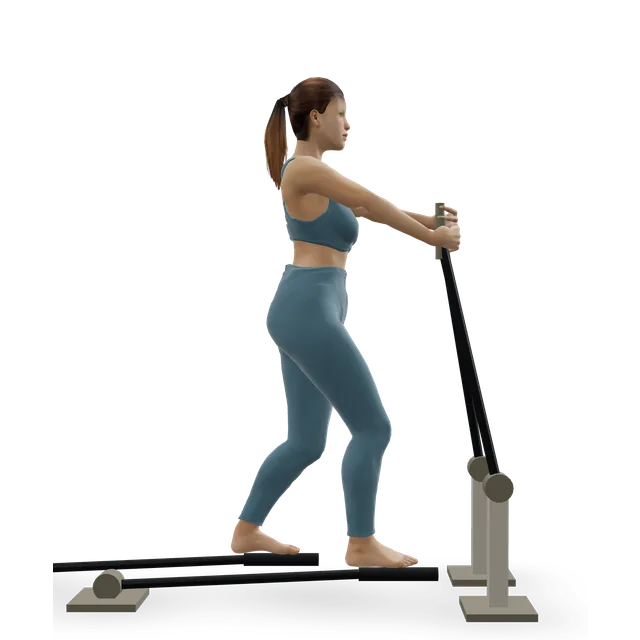
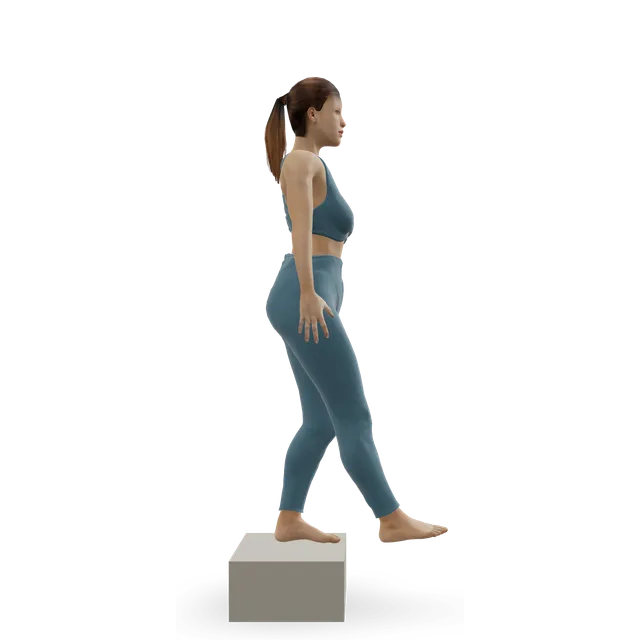
25 minBeginner12 movesA bench or box, Cardio machine

Easy cardio workout

A steady 30 to 45 minute cardio session at talk-but-not-sing pace: walk, cycle, row or cross-train, counting toward weekly activity guidelines.

40 minBeginner3 movesCardio machine, A wall

Daily pelvic floor workout

A 5-minute daily pelvic floor workout for women and men: slow holds and quick squeezes, three times a day, with how to find the right muscles.

5 minBeginner2 movesNo equipment

Neck and shoulder stretches

Eight gentle neck and shoulder stretches for desk stiffness, done standing or seated in ten minutes.

10 minBeginner8 movesA wall

Postnatal strength workout (from about 6 weeks)

A 25-minute strength workout from about 6 weeks after birth: sit-to-stands, deadlift practice, push-ups, rows, bridges and tummy work, with the knack.

25 minBeginner14 movesA bench or box, A kettlebell

Beginner home workout

A gentle 20-minute beginner home workout with a chair, a wall and a band: sit-to-stands, wall push-ups, band rows, step-ups and dead bugs.

20 minBeginner11 movesA bench or box, A wall

Return to running after birth: readiness checks and strength

The UK return-to-running checks after birth as a 25-minute session: balance, single-leg squats, hops and bounds, then strength tests aiming for 20.

25 minIntermediate14 movesCardio machine, A wall

Run-walk intervals for beginners

A 30-minute beginner run-walk session: a brisk walk, then 1-minute jogs with 1-minute walks, building to 3-minute runs over your first three weeks.

30 minBeginner5 movesCardio machine, A wall

Plans

For week-by-week structure from the first days to running and lifting.

Caffeine, supplements and medicines

Caffeine and pre-workout drinks

The NHS recommends no more than 200 mg of caffeine a day while breastfeeding: a mug of coffee has about 90 mg and a 250 ml can of energy drink about 80 mg. Caffeine can reach your baby through your milk and may make them restless. Count any caffeine in pre-workout drinks too (our suggestion).

Source 9

Creatine

Creatine is a normal part of breast milk, but no one has measured what supplements do to milk levels. LactMed, the US drugs and breastfeeding database, says: "Until more data are available, it is probably best to avoid creatine supplementation unless it is prescribed by a healthcare professional."

Source 43

Medicines and herbal remedies

Tell your pharmacist or GP that you're breastfeeding whenever you discuss a medicine. The NHS says not enough is known about herbal remedies to be sure they're safe while breastfeeding, and not to stop taking prescribed medicines without talking to your GP.

Source 44

Mastitis and blocked ducts

What mastitis feels like

Mastitis is inflammation in the breast, often after a blocked duct isn't relieved. Symptoms include a breast that feels hot and tender, a swollen area that may feel hot and painful (redness can be harder to see on black or brown skin), feeling achy, tired and tearful or as if you have flu, and a high temperature.

Sources 14, 45

What to do

Carry on breastfeeding, as stopping suddenly makes it worse. Let your baby feed on the tender breast first, ask your midwife, health visitor or a breastfeeding specialist to watch a feed, and get as much rest as you can. Contact your GP or NHS 111 if you feel worse at any time, or if you're no better within 12 to 24 hours.

Source 14

Don't massage hard or pump extra

The Academy of Breastfeeding Medicine advises against deep massage of the breast and against pumping to "empty" it beyond what your baby needs; the NHS says to express only as much as your baby would usually need. The Academy also notes that the hot flushes and sweats that are common after the birth can feel like a fever.

Sources 41, 14

Exercise and mastitis

Rest while you feel unwell, then start again gently once you feel better (our suggestion). If a breast becomes painful, hot or lumpy during exercise, stop, feed or express, and treat it as a possible blocked duct.

Source 14

When to get help

This is general information, not a diagnosis. In the US, call 911 where this page says 999.

Call 999

Call 999, and don't drive yourself to accident and emergency (A&E), if:

  • You have chest pain that feels tight or like squeezing on your chest.
  • You have chest pain that spreads to your arms, neck or jaw.
  • You're having severe difficulty breathing: you're gasping, choking or not able to get words out.
  • Your lips or skin are pale, blue or grey. On brown or black skin, this may be easier to see on the palms of the hands.
  • Someone has passed out and is not responding normally.

Source 46

Sepsis: call 999

Call 999 if an adult:

  • is breathing very fast
  • is confused, has slurred speech, or isn't making sense
  • has blue, pale or blotchy skin (on black or brown skin, this may be easier to see on the palms of the hands or soles of the feet)
  • has a rash that doesn't fade when you press it

Source 47

Get medical advice without delay

The National Institute for Health and Care Excellence (NICE) says these can be signs of a serious problem after the birth. Contact your midwife or GP the same day, or NHS 111:

  • sudden or very heavy bleeding from the vagina, or bleeding that carries on or increases
  • pain in your tummy, pelvis or the area between your vagina and bottom, a fever, shivering, or a discharge with an unpleasant smell
  • a swollen, tender leg, or shortness of breath
  • a headache that is severe or won't go away
  • red, swollen breasts that are getting worse and haven't settled within 24 hours of looking after them at home

Source 48

Ask for an urgent GP appointment or call NHS 111

  • mastitis that gets worse at any time, or isn't better within 12 to 24 hours
  • breast pain with a very high temperature, or feeling hot, cold or shivery
  • any part of your breast is red, hot or swollen
  • a hard lump in your breast that doesn't move around
  • nipple discharge, which may be streaked with blood
  • a breast that changes shape, skin that is dimpled like orange peel, a rash on or around your nipple, or a nipple that has sunk into the breast

Sources 14, 49

Talk to your midwife, health visitor or GP

If you're worried about how you're feeling, feel you're struggling to cope, or think you may be depressed: effective help is available. Ask for help early, too, with sore nipples or worries about whether your baby is getting enough milk. The National Breastfeeding Helpline is on 0300 100 0212.

Sources 7, 8, 15, 9

Ease off, and see someone soon

Stop and drop back if exercise brings on leaking, heaviness, a dragging feeling or pain, or if your bleeding gets heavier or turns red again; see your GP or a pelvic health physiotherapist if it carries on. A breast that turns painful, hot or lumpy needs feeding or expressing and a rest.

Sources 5, 48, 8

Myths

"Exercise dries up or sours your milk"Strong evidence

Trials and a 2025 review of 46 studies found no difference in milk supply, milk quality or babies' growth with exercise.

Sources 1, 2, 4

"After a workout, pump and dump"Emerging evidence

Lactic acid rises only after all-out efforts, and briefly. When milk from an hour after hard or moderate exercise was given by bottle, babies took it just as well. None of the guidance we read says to throw milk away; feeding first avoids the question.

Sources 23, 6, 25, 11

"Drink lots of extra water to keep your supply up"Emerging evidence

Drink to thirst and keep a drink nearby when you feed. In the one trial of advice to drink extra, milk production didn't rise.

Sources 12, 11, 9

"Breastfeeding burns off the baby weight on its own"Mixed evidence

Most studies find little link between breastfeeding and weight loss. Diet and exercise together are what work.

Sources 33, 34

"You can't lose weight without losing your milk"Emerging evidence

Losing about 0.5 kg a week with a modest calorie cut and exercise didn't affect babies' growth or milk in trials. Crash diets are a different matter.

Sources 13, 31

"Relaxin keeps your joints loose while you breastfeed, so don't lift weights"Mixed evidence

The UK running guideline says that theory hasn't been proven. Strength work twice a week is recommended after the birth, and in one trial, strength training with weight-bearing exercise slowed breastfeeding bone loss.

Sources 5, 3, 17

"Exercise causes mastitis"Emerging evidence

We found no study linking the two. Pressure from a tight bra or strap, or a skipped feed, can block a duct, so wear support that doesn't squeeze and feed first.

Source 8

"Massage a lump hard, or pump extra, to clear it"Strong evidence

The Academy of Breastfeeding Medicine advises against deep massage and pumping beyond your baby's needs, and the NHS says to express only as much as your baby would usually need.

Sources 41, 14

Questions people ask

Does exercise affect breast milk supply?

No. Regular exercise doesn't reduce your milk supply or the quality of your milk, or slow your baby's growth: trials and a 2025 review of 46 studies agree. What matters for supply is feeding often, so plan long sessions around feeds rather than skipping one.

Does lactic acid make breast milk sour after a workout?

Only after all-out efforts, and only for a short time: lactic acid in milk rose after maximal exercise but not after moderate exercise. In one small study babies took milk from just after a maximal test less readily, but milk from an hour later made no difference. You don't need to throw milk away; feeding before a hard session avoids the question.

Should I feed or pump before working out?

Yes, if you can. Feeding or expressing first avoids uncomfortable full breasts, and the UK running guideline suggests planning feeds so your breasts aren't too full when you run. It may also give you a little longer before the next feed.

When can I start exercising if I'm breastfeeding?

Breastfeeding doesn't change the timing. After a straightforward birth, you can start walking, gentle stretches and pelvic floor exercises as soon as you feel up to it, and get advice at your 6-week check before high-impact exercise. Running usually waits until about 3 months.

What sports bra should I wear while breastfeeding?

A supportive, well-fitted one that doesn't squeeze: get measured, as your size has probably changed, and choose support rather than compression. Tight bras and bag straps can press on the breast and cause a blocked duct, so take a tight sports bra off soon after exercise. A nursing sports bra is handy but not essential.

Can I lose weight while breastfeeding without losing my milk?

Yes, if it's gradual. The NHS suggests a healthy, balanced diet and regular moderate exercise, such as a brisk 30-minute walk each day, and says this won't affect the quality or quantity of your milk. In a trial, about 0.5 kg a week from 4 weeks after the birth didn't affect babies' growth; avoid crash diets.

How many extra calories do I need while breastfeeding?

UK reference values add 330 kcal a day for the first 6 months of exclusive breastfeeding, and some other sources give 450 to 700. If you're also training hard, you may need more: in trials, women who exercised ate more. Our calories per day calculator adds the 330 kcal for you.

Do I need to drink more water when I exercise?

Drink before you start, keep a drink beside you when you feed, and drink to your thirst. Drinking extra beyond that won't make more milk.

Can I run or do HIIT while breastfeeding?

Yes, once you're ready after the birth. The UK guideline suggests waiting until about 3 months and passing its readiness checks, and says breastfeeding may mean a slower start. Feed first and wear a supportive bra.

Is it safe to lift weights while breastfeeding?

Yes. UK guidance is to build back up to strength work twice a week, and in one small trial strength training plus weight-bearing exercise slowed the temporary bone loss of breastfeeding. Start light, for example deadlifts no heavier than your baby in a car seat, and build up gradually.

Is creatine or pre-workout safe while breastfeeding?

Keep caffeine to no more than 200 mg a day in total, as the NHS advises, and count what's in a pre-workout drink. The drugs and breastfeeding database LactMed suggests avoiding creatine supplements unless a health professional prescribes them, because their effect on milk hasn't been measured. Ask a pharmacist before taking any supplement.

Can I exercise with mastitis?

Rest first: the NHS advice is to get as much rest as you can and carry on breastfeeding. Contact your GP or NHS 111 if you feel worse at any time or are no better within 12 to 24 hours. Go back to exercise gently once you feel better.

Sources

  1. Dewey 1994 · Aerobic exercise by breastfeeding women: milk volume and composition in 33 women (randomised trial, New England Journal of Medicine; abstract read)
  2. Jones 2025 · Activity after the birth and breastfeeding, injury and babies' growth: 46 studies (systematic review and meta-analysis, British Journal of Sports Medicine; abstract read)
  3. DHSC 2026 · Physical activity for women after childbirth: birth to 12 months (text of the UK Chief Medical Officers' infographic)
  4. ACOG 2020 · Physical activity and exercise during pregnancy and the postpartum period (Committee Opinion 804, reaffirmed 2023)
  5. Goom 2019 · Returning to running postnatal: UK guidelines for medical, health and fitness professionals
  6. Quinn 1999 · Does exercise intensity or diet raise lactic acid in breast milk? (controlled study, Medicine and Science in Sports and Exercise; abstract read)
  7. NHS · Keeping fit and healthy with a baby
  8. NHS · Common breastfeeding problems
  9. NHS · Breastfeeding and diet
  10. SACN 2011 · Dietary reference values for energy (Scientific Advisory Committee on Nutrition report)
  11. La Leche League GB 2022 · Exercise and breastfeeding (charity information)
  12. Ndikom 2014 · Extra fluids for breastfeeding mothers to increase milk (Cochrane review; abstract read)
  13. Lovelady 2000 · Weight loss in 40 overweight breastfeeding women and their babies' growth (randomised trial, New England Journal of Medicine; abstract read)
  14. NHS · Breast pain and breastfeeding
  15. NHS · Breastfeeding: is my baby getting enough milk?
  16. Hassan 2026 · Returning to football after having a baby, including breastfeeding (review, Sports Medicine)
  17. Lovelady 2009 · Exercise training and bone loss while breastfeeding in 20 women (randomised trial, Medicine and Science in Sports and Exercise; abstract read)
  18. Grizzo 2020 · How bone recovers after breastfeeding: 32 studies (systematic review and meta-analysis, Osteoporosis International; abstract read)
  19. Lovelady 1990 · Milk and diet in 8 exercising and 8 inactive breastfeeding women (observational study, American Journal of Clinical Nutrition; abstract read)
  20. CSEP 2025 · Postpartum 24-Hour Movement Guidelines (Canadian guideline)
  21. Daley 2012 · Mothers' exercise and breastfed babies' growth: 4 trials (meta-analysis, Pediatrics; abstract read)
  22. Su 2007 · Breastfeeding mothers can exercise: 587 mothers in Perth (cohort study, Public Health Nutrition; abstract read)
  23. Wallace 1992 · Babies' acceptance of breast milk after maximal exercise in 26 women (study, Pediatrics; abstract read)
  24. Carey 1997 · Breast milk after exercise of different intensities (controlled study, Journal of Human Lactation; abstract read)
  25. Wright 2002 · Babies' acceptance of breast milk an hour after moderate or maximal exercise in 24 women (controlled study, Pediatrics; abstract read)
  26. Gregory 1997 · Exercise and an antibody in breast milk, immunoglobulin A (controlled study, Medicine and Science in Sports and Exercise; abstract read)
  27. Lovelady 2003 · Exercise and immune factors in breast milk in 53 women (study, Pediatrics; abstract read)
  28. Harris 2020 · Exercise and a milk sugar, 3'-sialyllactose, in women and mice (human and animal study, Nature Metabolism; abstract read)
  29. Lemoine 2025 · Milk sugars after endurance exercise in 20 women (randomised crossover trial, Frontiers in Nutrition; abstract read)
  30. Holmen 2023 · Hard intervals and adiponectin in breast milk in 20 women (randomised crossover trial, Frontiers in Nutrition; abstract read)
  31. McCrory 1999 · Dieting with or without aerobic exercise and milk production in 67 women (randomised trial, American Journal of Clinical Nutrition; abstract read)
  32. Amorim Adegboye 2013 · Diet or exercise, or both, for weight loss after childbirth: 12 trials, 910 women (Cochrane review; abstract read)
  33. Neville 2014 · Breastfeeding and weight change after the birth: 45 studies (systematic review, International Journal of Obesity; abstract read)
  34. Jiang 2018 · How long women breastfeed and the weight they keep on: 14 cohorts (meta-analysis, Clinical Nutrition; abstract read)
  35. Colleran 2012 · Eating less, strength training and bone while breastfeeding in 27 women (randomised trial, Medicine and Science in Sports and Exercise; abstract read)
  36. Colleran 2019 · Exercise while breastfeeding and bone at a year in 55 women (two randomised trials combined, Journal of Physical Activity and Health; abstract read)
  37. Lee 2020 · Exercise and bone loss while breastfeeding: 4 studies (meta-analysis, Journal of Obstetrics and Gynaecology Research; abstract read)
  38. Marnach 2003 · Joint laxity and hormones in pregnancy (cohort study, Obstetrics and Gynecology; abstract read)
  39. Schauberger 1996 · Joint laxity in pregnancy and relaxin levels (cohort study, American Journal of Obstetrics and Gynecology; abstract read)
  40. McGhee 2010 · Breast lift and compression, and breast discomfort during exercise in 20 women with large breasts (crossover study, Medicine and Science in Sports and Exercise; abstract read)
  41. Mitchell 2022 · The mastitis spectrum (Academy of Breastfeeding Medicine clinical protocol 36, Breastfeeding Medicine)
  42. NHS · Your post-pregnancy body
  43. LactMed · Creatine (Drugs and Lactation Database, US National Library of Medicine; record read)
  44. NHS · Breastfeeding and medicines
  45. NHS · Mastitis (review was due March 2026)
  46. NHS · Heart attack
  47. NHS · Sepsis
  48. NICE NG194 2021 · Postnatal care, recommendations (guideline)
  49. NHS · Breast pain (review was due May 2026)

Exercise education, not a diagnosis or treatment plan, and clinical review of these guides is pending. Stop and get advice for chest pain, unusual breathlessness, dizziness or fainting, or new pain, and check with your doctor or midwife first if they have told you to limit activity. Health disclaimer.