3D demo
Recumbent exercise bike
Conditioning · Quads, Glutes, Hamstrings
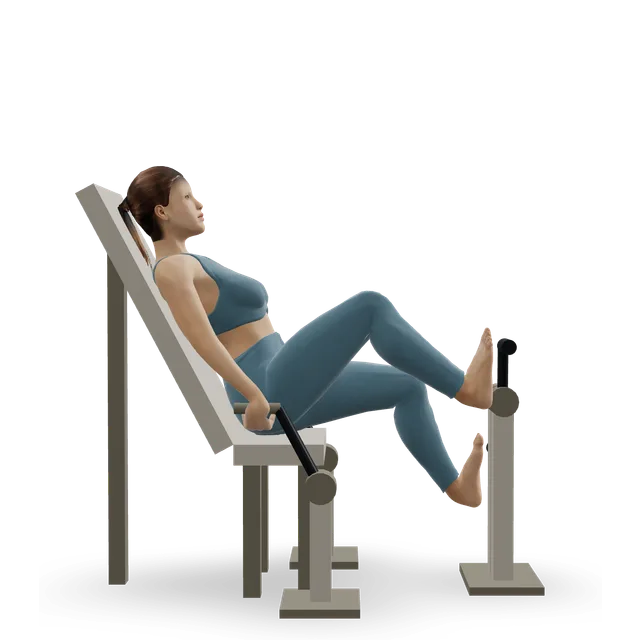
Loading the 3D figure…
The figure repeats the movement from its starting position. Drag to turn it; the arrows open the demos either side.
Pedalling a stationary bike from a low seat with a backrest, the legs out in front: the backrest supports the trunk, and the low seat is easier to get on and off than an upright bike. Leg muscle activity did not differ from an upright bike at a moderate workload (Lopes 2014). In studies of healthy men, recumbent bikes put less pressure on the area between the legs than a standard saddle (Litwinowicz 2021).
Movement guide
Recumbent exercise bike
Make it easier or harder
Choose a version that fits your control and comfort.
Easier option
Practise this same drill at a comfortable pace for less time, keeping its technique. NHS strength exercises
Harder option
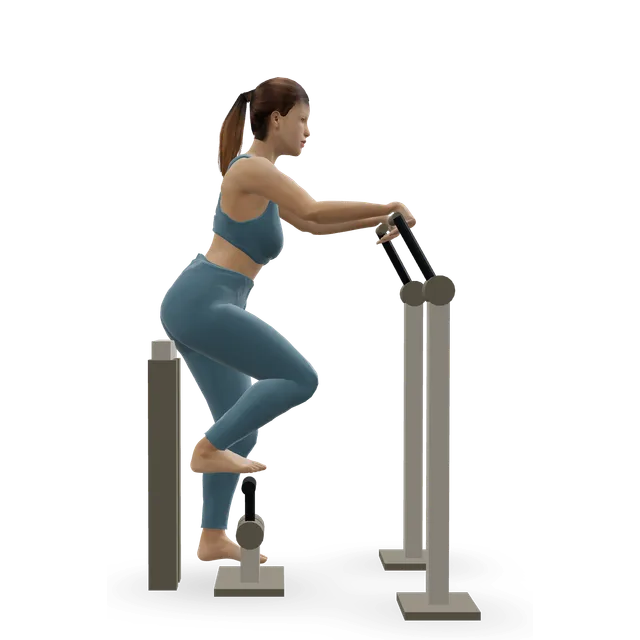 3D demoStationary cyclingBeginner · Cardio machine
Suggested next step, beginner grade.
Source-researched guide.
Form cues
- Keep the knees in line with the feet.
- Sit back against the rest rather than hunching forward.
- Avoid: setting the seat so close that the knees come up high.
Practice and cautions
10 to 20 minutes at a moderate effort to start, building towards 30 (our editorial starting point). Moderate means you can talk but not sing, and those minutes count towards the 150 a week the NHS recommends. The resistance sets the effort: the Compendium rates stationary cycling from very light to very vigorous.
Set the seat so the knee neither locks straight nor bends sharply; knee pain that builds is a sign to lower the resistance. This is movement education, not an assessment or treatment prescription. Stop for sharp or increasing pain, dizziness, numbness or tingling; seek individual guidance for symptoms, injury or restrictions.
Sources and review status
Sources support the educational description; they do not establish that this exercise is suitable for you.
- Lopes 2014 · Leg muscle activity on recumbent and upright exercise bikes did not differ at a moderate workload (EMG, IJSPT) ↗
- NHS · Physical activity guidelines for adults aged 19 to 64 (moderate: you can talk but not sing; vigorous: only a few words without pausing for breath) ↗
- Compendium of Physical Activities · Bicycling (stationary cycling from 3.5 METs at very light effort to 16.3 at very vigorous) ↗
- Litwinowicz 2021 · Ways to reduce saddle pressure on the perineum in healthy men: 22 studies (systematic review and meta-analysis, Sports Medicine) ↗
- Free Exercise DB · community text ↗
Unlicense · Free Exercise DB contributors; derived from wrkout/exercises.json. Text import; no photographs or media. · Revision f00c92c7dcf1216a928a52c3706c7ce8e2f71ed5
No variation is labeled clinically validated.
What it works
Muscles
Main: Quads. Also: Glutes, Hamstrings, Calves.
Anatomy: Sartorius, Quadriceps, Rectus femoris, Vastus medialis, Vastus lateralis.
Equipment
Cardio machine
Level
Beginner. See the easier and harder options above.
Workouts that use it
Pain guides that use it
Part of a staged plan, with when to get help first.
- Meralgia paresthetica: a burning, numb outer thigh, what helps and when it's your back
- Avascular necrosis of the hip: causes, stages, treatment and safe exercise
- Tibial plateau fracture: weight-bearing limits, rehab and the long-term outlook
- Broken pelvis (pelvic fracture): breaks in later life, crash injuries and recovery
- Broken heel (calcaneus fracture): weight limits, surgery or not, and walking again
- Knee pain at night: arthritis, bursitis, gout, sleeping positions and pillows, and the warning signs
- A swollen knee: an injury, arthritis, gout, bursitis, a Baker's cyst or infection, and what helps
- Outer thigh pain: a trapped nerve, the hip tendons, the IT band or your back, and how to build back
Show all 48 pain guidesShow fewer pain guides
- Ankle pain at night: arthritis, an old sprain, tendons, gout, cramps and the night pain to check
- Foot pain at night: nerve pain, gout, circulation, cramps, restless legs and the night pain to check
- Groin pain when walking: the hip joint, a strain, a hernia, pregnancy and a stress fracture
- Lower back and hip pain: back or hip, the SI joint, sciatica, the outer hip and the warning signs
- Knee pain in older adults: arthritis and other causes, what helps, walking aids, stairs and falls
- Hip pain in older adults: arthritis, the outer hip, the back, falls and a broken hip, and what helps
- Knee pain on the leg press: the kneecap, the tendon, depth, foot position, lockout and what helps
- Knee pain on the leg extension: the kneecap, the tendons, range, the pad and what helps
- Knee pain when doing deadlifts: the bar path and shins, conventional, sumo and Romanian deadlifts
- Knee pain on a rowing machine: the catch, the kneecap, the back of the knee and the foot stretcher
- Knee pain when doing kettlebell swings: the kneecap, the inner knee, hinging, the top of the swing
- Knee pain when doing wall sits: the kneecap, how deep you sit, where your feet go and how long
- Knee pain when doing hip thrusts: the front or back of the knee, where your feet go, cramp and swaps
- Foot pain from jump rope: the ball of the foot, arch and heel, stress fractures, floors and shoes
- Back pain from jump rope: landings, posture and rope length, young athletes and what helps
- Lower back pain on the treadmill: incline walking, the rails, running on the belt and what helps
- Knee pain on the treadmill: the kneecap, incline and speed, the outside of the knee and what helps
- Knee pain on the stair climber: the kneecap, step depth and speed, the rails and what helps
- Lower back pain on the stair climber: leaning on the rails, posture, speed and what helps
- Lower back pain climbing stairs: leaning forward, the hips, stenosis, carrying and what helps
- Hip pain on the rowing machine: a pinch at the catch, the hip flexors, the seat and what helps
- Lower back pain on the elliptical: leaning on the handles, stride, the ramp, stenosis and what helps
- Foot pain on the elliptical: numb toes, the ball of the foot, the heel, laces, shoes and what helps
- Shoulder pain on the rowing machine: the front of the shoulder, shoulder blade, grip and the damper
- Ankle pain on the elliptical: the Achilles, the front and outer ankle, the ramp and what helps
- Shin pain from jump rope: shin splints, stress fractures, floors, landings and what helps
- Calf pain from jump rope: soreness, a strain, the Achilles, cramp and how to build back
- Knee pain skiing: twisting falls, the ACL and MCL, kneecap pain, bindings and what helps
- Knee pain from pickleball: the meniscus, arthritis, kneecap pain, courts and shoes, and what helps
- Knee pain from golf: the lead knee, a worn meniscus, arthritis, walking the course and what helps
- Foot pain after dancing: the ball of the foot, the big toe, heels and pointe, and what helps
- Ankle pain after dancing: pointe, plié, landings, sprains and the Achilles, and what helps
- Knee pain from bowling: the fast bowler's front knee, the ten-pin slide, lawn bowls and what helps
- Ankle pain from basketball: rolled ankles, high ankle sprains, the Achilles, braces and what helps
- Knee pain from tennis: the kneecap, the meniscus, arthritis, courts and shoes, and what helps
- Knee pain after football (soccer): twists, tackles, ligaments, the meniscus, growing knees and help
- Ankle pain after football (soccer): sprains, footballer's ankle, the Achilles, Sever's and help
- Knee pain after rugby: twists and tackles, the ACL and MCL, the meniscus, the kneecap and what helps
- Knee pain from netball: landings, the ACL, kneecap and tendon pain, growing knees and what helps
- Ankle pain from netball: sprains, repeat sprains, the Achilles, braces, shoes and courts, and help
Guides that use it
- Pilates for spinal stenosis guide
- Pilates for erectile dysfunction guide
- Yoga for spinal stenosis guide
- Yoga for erectile dysfunction guide
- Lipoedema guide
- Exercise for fatty liver disease (MASLD)
- Exercise with long COVID
- Exercises for lymphoedema (lymphedema)
Show all 72 guidesShow fewer guides
- Exercise for erectile dysfunction
- ME/CFS and exercise
- Exercise for PoTS
- Exercise for lipoedema (lipedema)
- Exercise for an underactive thyroid (hypothyroidism)
- Exercise with gout
- Exercise for endometriosis
- Exercises for peripheral neuropathy
- Exercises for restless legs
- Exercise for IBS
- Exercise with Crohn's and colitis (IBD)
- Exercise for lupus
- Exercise for wheelchair users
- Exercise after an amputation
- Exercise with cerebral palsy
- Exercise after a concussion
- Rhabdomyolysis (rhabdo) and exercise
- Exercise with sickle cell disease, and sickle cell trait in sport
- Exercise with heart failure
- Exercise for psoriatic arthritis
- Exercise with anaemia (anemia) and iron deficiency
- Exercise with prostate cancer
- Exercise after a blood clot (DVT or PE)
- Exercise with an abdominal aortic aneurysm
- Exercise with motor neurone disease (MND, ALS)
- Exercise with muscular dystrophy
- Exercise with myasthenia gravis
- Exercise for polymyalgia rheumatica
- Exercise with scleroderma
- Exercise with fibroids
- Exercise with an overactive thyroid (hyperthyroidism)
- Exercise with pulmonary fibrosis and ILD
- Exercise with pulmonary hypertension
- Exercise after weight-loss surgery
- Exercise after heart surgery
- Exercise with blood cancer
- Exercise after cataract surgery
- Exercise after retinal detachment surgery
- Exercise with diabetic retinopathy
- Exercise after an organ transplant
- Exercise after a brain injury
- Exercise with haemophilia (hemophilia)
- Exercise with gestational diabetes
- Exercise and sleep apnoea
- Exercise with a prolapse
- Exercise after a spinal cord injury
- Exercising when you're ill
- Exercise after gallbladder removal
- Exercise after appendix removal (appendectomy)
- Exercise with piles (haemorrhoids)
- Exercise while breastfeeding
- Exercise during IVF and egg freezing
- Exercise with an enlarged prostate (BPH)
- Exercise after a vasectomy
- Cardio and weights guide
- How to lose thigh fat guide
- How to increase stamina guide
- Gym for beginners guide
- Elliptical guide
- Exercise bike guide
- Air bike guide
- Calf fat guide
- Getting back into working out guide
- Toned legs guide
Similar moves
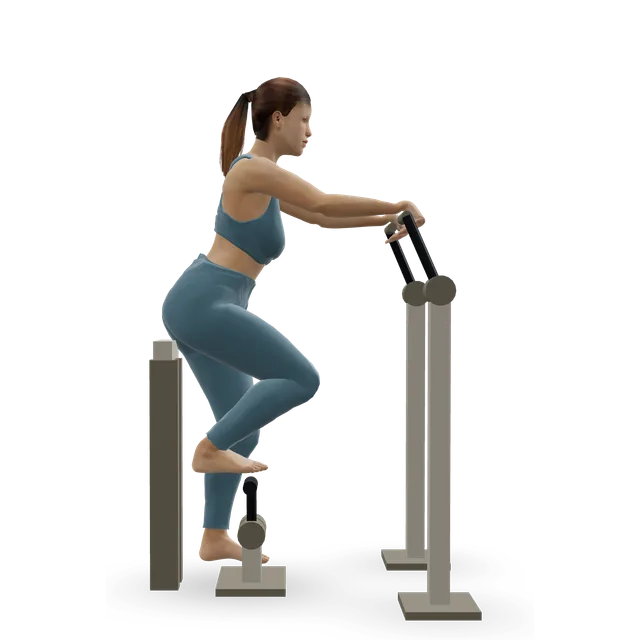 3D demoAir bike intervalsAdvanced · Cardio machine
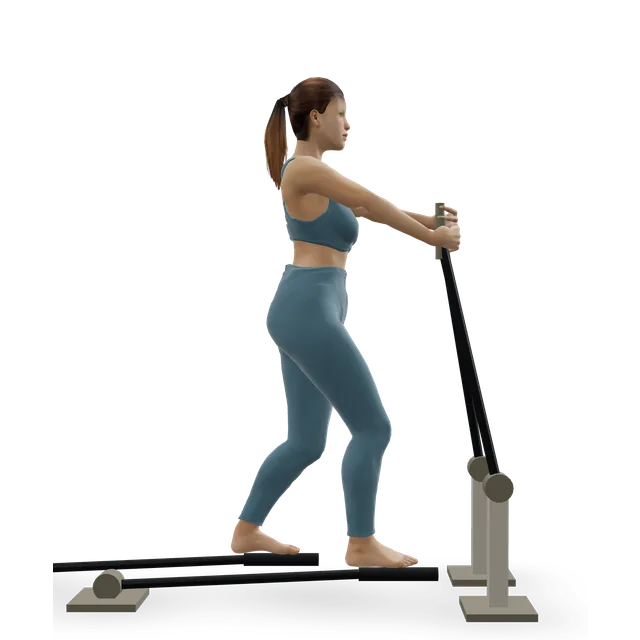 3D demoElliptical trainerBeginner · Cardio machine
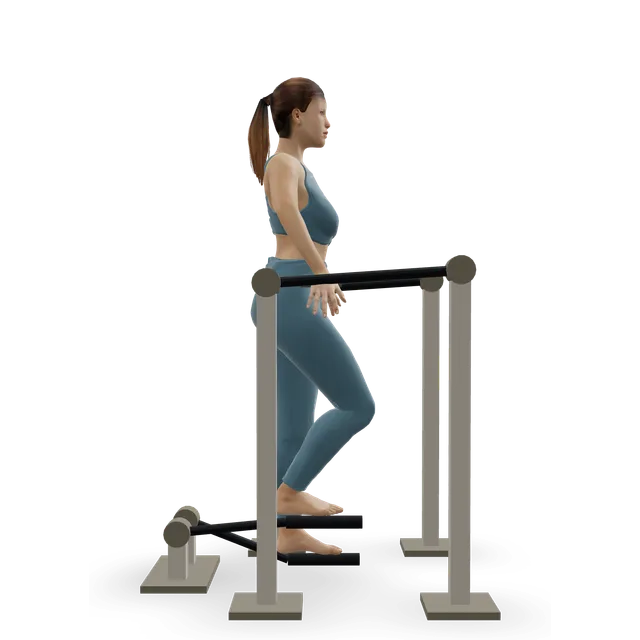 3D demoStair-stepper machineIntermediate · Cardio machine
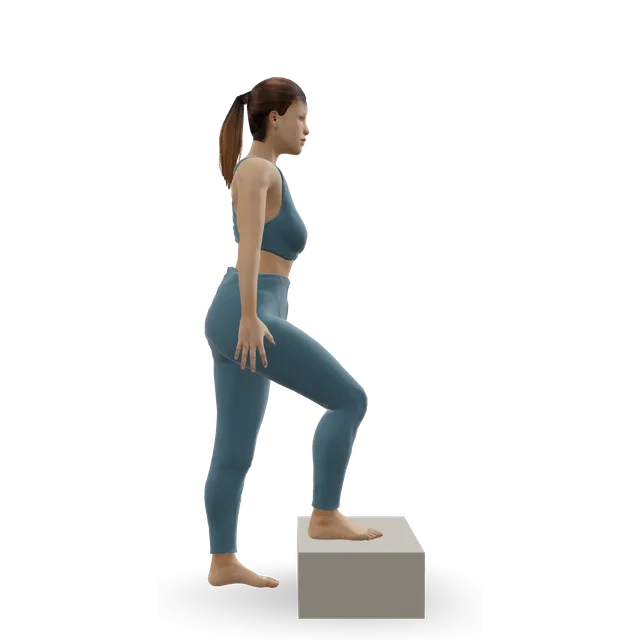 3D demoStep mill (revolving stair machine)Intermediate · Cardio machine
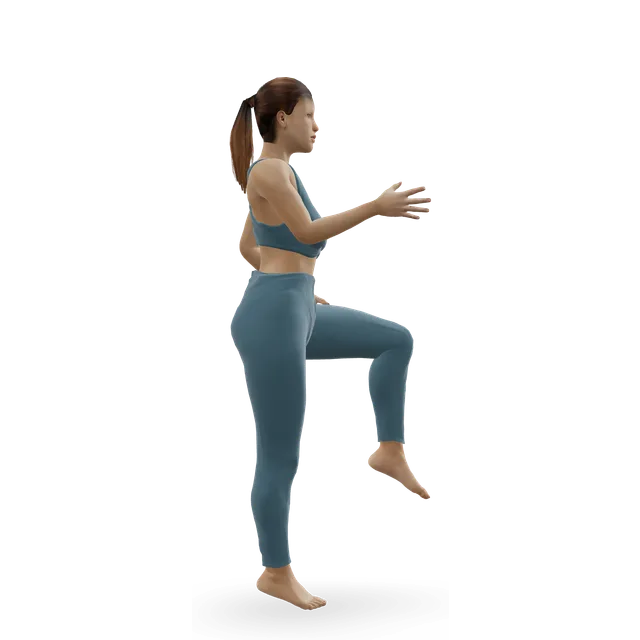 3D demoTrail running and walkingBeginner · No equipment
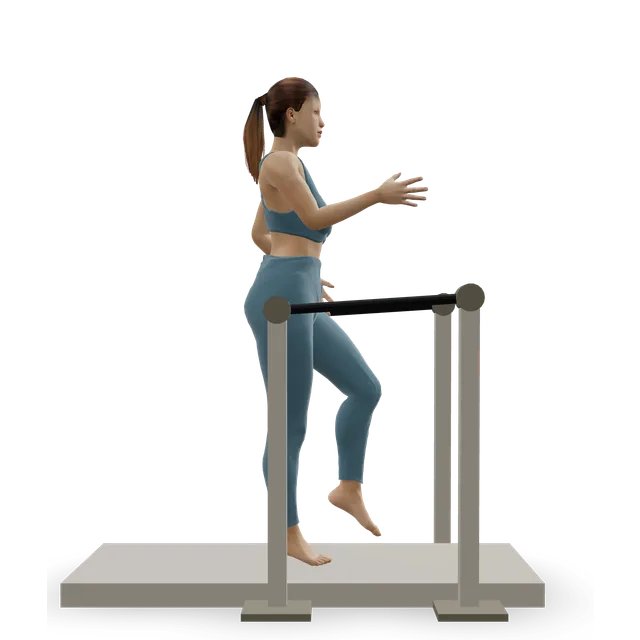 3D demoTreadmill joggingIntermediate · Cardio machine
Browse more
Questions people ask
What muscles does the Recumbent exercise bike work?
Mainly the quads, with help from the glutes, hamstrings and calves.
What equipment do I need for the Recumbent exercise bike?
Cardio machine.
Is the Recumbent exercise bike good for beginners?
It is graded beginner, so it suits most people starting out. When it feels easy, try the Stationary cycling.
How do I make the Recumbent exercise bike harder?
Progress to the Stationary cycling. Follow that guide’s technique and any stated timing.