Two machines, one climb, and what no study has countedEmerging evidence
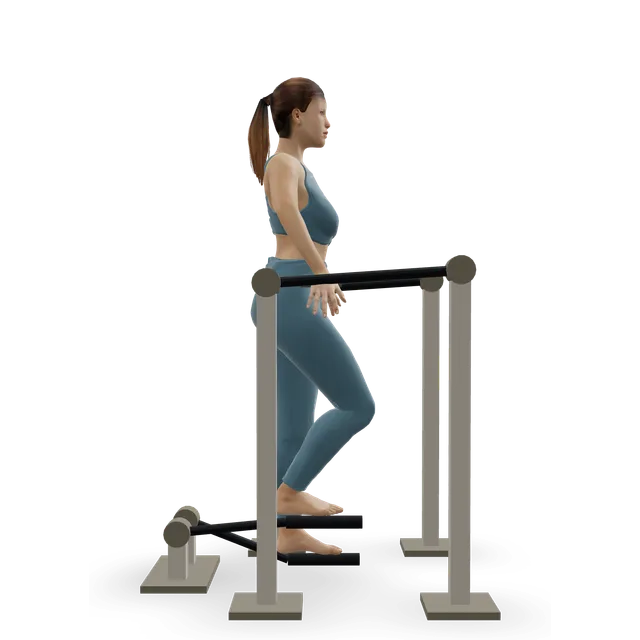
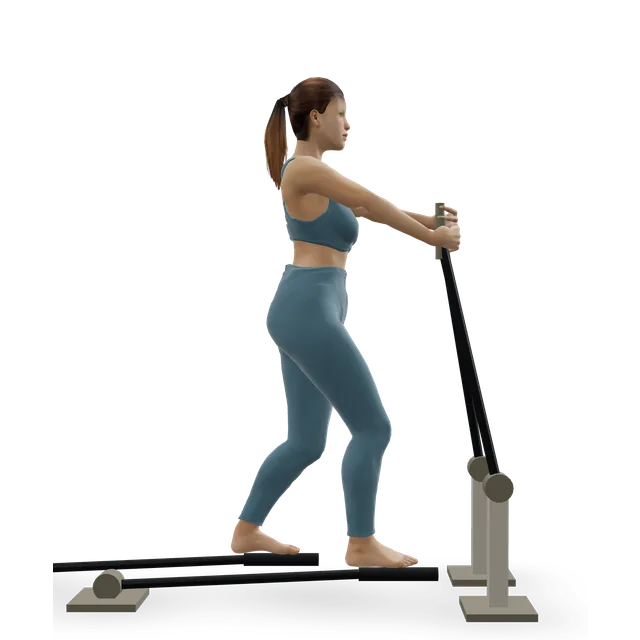
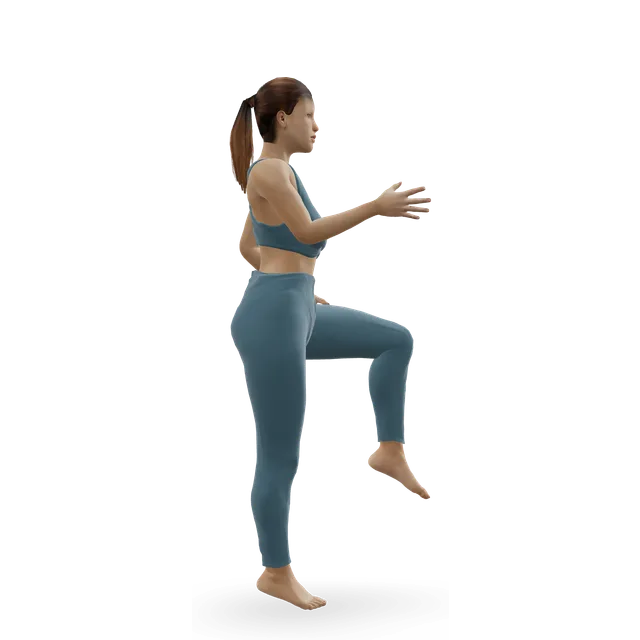
The step mill (a revolving staircase) is a short flight of real steps on a loop: in one validation study the steps were about 20 cm high, and one maker's machine runs from 24 steps a minute ("very easy") to 162. The stepper has two pedals you push down in turn, so the depth of each step is partly up to you. Both make you climb without the walk down.
No study or survey counts knee pain caused by stair machines. US emergency data on home exercise machines grouped the stair climber under "other" because it came up so rarely, and an Australian emergency department series lumped steppers in with other gym equipment. So the map on this page is built from lab studies of stairs, steps and stair machines and from what each condition is known to do; that a jump in level, speed or time is the usual story is our reading.
Sources 1, 2, 3, 4
How hard the climb is on the kneeEmerging evidence
Going up stairs put about 3.2 times body weight behind the kneecap in healthy people, against 0.9 for walking, across many studies; in a model of 35 young adults, the peak force behind the kneecap was 8 times higher going up stairs than walking. Through the whole knee joint, people with sensor knee replacements took about 316% of body weight going up stairs and 261% walking.
Only one study has measured a stair machine inside the knee, in 3 people aged 67 to 83 with sensor knee replacements: knee force was about the same as on the cross-trainer at low levels and rose to over 3 times body weight at higher levels, while the cross-trainer stayed at about 2.2 times body weight whatever the level and a stationary bike was lowest. Three people with knee replacements are a thin base, but the pattern matches the stair studies: the level matters. The stepper is low impact but not easy on the front of the thigh: in 17 trained runners, every leg muscle measured worked less on a stepper than in treadmill running except the quadriceps.
Sources 5, 6, 7, 8, 9
Step depth, speed, posture and the railsEmerging evidence
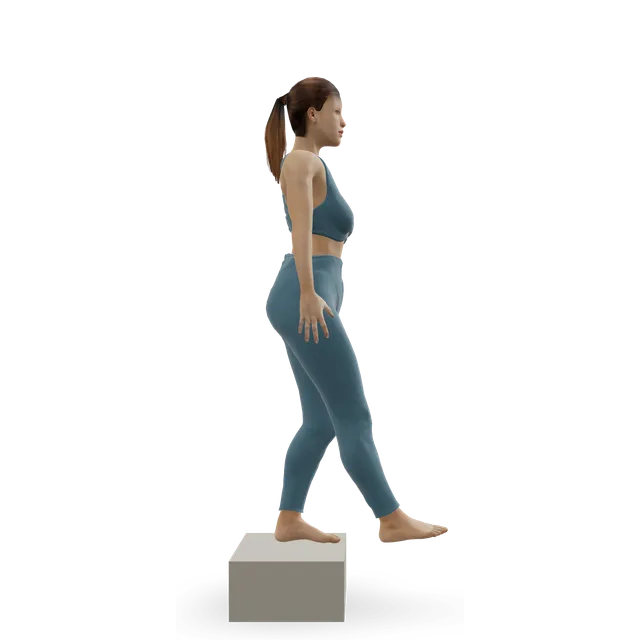
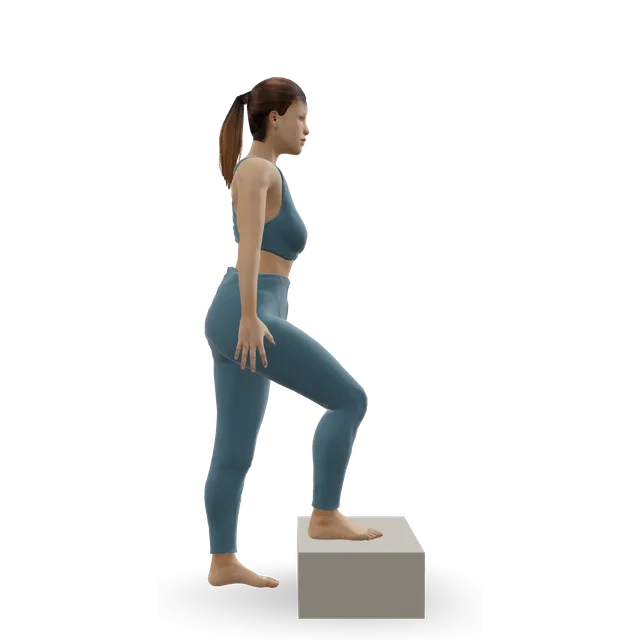
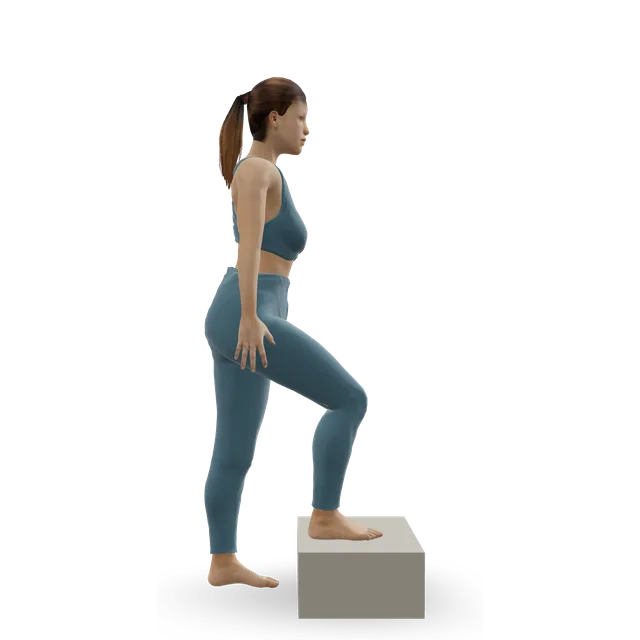
Depth: knee bend rises with step height. On a 20 cm step, about the height of a step mill's, the leading knee bent about 90 degrees in 14 healthy adults, and a 10 cm step-up loaded the kneecap about half as much as a 20 cm one (1.7 against 3.6 times body weight in 20 healthy adults). On a stepper, a shorter push is a fair dial for a sore kneecap; on a step mill the step is fixed, so the dials are speed, time and swapping machines (our reading).
Speed: on a step machine in 33 adults, a faster cadence gave sharper bursts of thigh and buttock muscle work, and people with kneecap pain climbed stairs more slowly on their own, keeping the stress behind the kneecap at normal levels. But in 30 healthy adults on real stairs, speed didn't change the peak knee load per step. So slowing down helps by cutting the loaded steps a minute, not the load per step (our reading).
Posture and the rails: in 20 pain-free women climbing real stairs, leaning the trunk forward lowered the stress behind the kneecap and an upright, leaning-back trunk raised it, and on a pedal climber letting the trunk sway raised the knee's load in 12 people. Holding the rails makes the workout easier: on a stepper and a step mill, even light, steady support lowered oxygen use and heart rate. Whether it protects the knee is untested; on real stairs, light handrail use in 13 older adults raised the leading knee's load. Hence our suggestion: stand tall with a slight forward lean from the hips, hands light for balance, and slow down rather than hang on. Those posture studies were in healthy people on real stairs, not on machines.
Sources 10, 11, 12, 13, 14, 15, 16, 17, 18, 19, 20
Who gets it, and how the causes are told apartStrong evidence
Kneecap pain is common: about 23% of adults and 29% of adolescents had it in a year, pooled across studies. It is defined by pain around or behind the kneecap brought on by loading a bent knee, with stairs named in the definition, and weak thigh muscles predicted it in military recruits. A tendon is one point you can press, at the lower tip of the kneecap or its top edge, and patellar tendon pain builds with how hard the thigh muscles work.
From mid-life, a stiff ache is often arthritis, and in 4,673 people with or at risk of it, knee pain was most likely to appear first on stairs. The National Institute for Health and Care Excellence (NICE) diagnoses it without imaging in people 45 or over with activity-related joint pain and morning stiffness of 30 minutes or less. Catching, locking or swelling at the joint line points to the meniscus, though 61% of people aged 50 to 90 with a meniscus tear on a scan had no knee pain in the month before. So knee pain on the stair climber is most likely after a jump in level, speed or time, in a new routine or challenge, in people new to the machine, and from mid-life with arthritis (our reading).
Sources 21, 22, 23, 24, 25, 26, 27
When a scan or test helpsStrong evidence
Not usually: kneecap, tendon and IT band pain are diagnosed from the story and an examination, and scans of knees that don't hurt often show changes, with signs of arthritis on magnetic resonance imaging (MRI) in 4% to 14% of adults under 40 and 19% to 43% from 40. A report has to match your symptoms before it explains them.
After a fall from the machine, the Ottawa knee rule decides who needs an X-ray: it picked up all 63 fractures in 1,096 adults with knee injuries, and 98.5% across 6 studies of 4,249 adults. A knee that locks or won't straighten, or catching at the joint line that hasn't settled after about 3 months of non-surgical care, is when a clinician may arrange an MRI scan.
Sources 28, 27, 29, 30
How it usually goesEmerging evidence
No study follows knee pain from stair machines. NHS inform says many new knee problems begin to settle within 6 weeks, and an NHS leaflet says kneecap pain can take 3 to 6 months to improve, though it is hard to predict. In a kneecap pain trial in 40 young women, 85% were doing sport without pain at 12 months. But in a 5 to 8 year follow-up in which only 60 of 310 people replied, 57% reported an unfavourable recovery.
No one can promise a date, which is why the plan keeps strength work going after your sessions come back.
Sources 31, 32, 33, 34