Usually soreness in the thighsStrong evidence
Delayed onset muscle soreness (DOMS) follows new or harder exercise, especially work that lowers a weight or your body slowly (eccentric work), and it is commonest at the start of a season, after a break and with new activities. It typically starts 12 to 24 hours after the session, is worst between 24 and 72 hours and is gone within 5 to 7 days, and how sore you feel matches the muscle damage poorly. Every squat, lunge, step-down, landing and downhill stride makes the thigh muscles work while they lengthen.
In 11 healthy men, thigh soreness after lowering exercise was most tender in the lower part of the thigh, nearest the kneecap, at 24 and 48 hours. Our reading is that this is why sore thighs so often feel like knee pain; the study didn't test that. In 17 men, the hamstrings showed more damage than the quadriceps after the same work. One session protects the same muscles in later sessions for weeks, and up to about 6 months, so the next similar session leaves you much less sore.
Sources 1, 2, 3, 4, 5, 6
Pain in the knee itself: the usual causesStrong evidence
Kneecap (patellofemoral) pain is the commonest: an ache around or behind the kneecap, brought on by squatting, stairs, rising from sitting, running and jumping, often after a jump in training. It is 11% to 17% of knee pain seen in general practice and 25% to 40% in sports injury clinics, and across 23 studies 22.7% of the general population and 28.9% of adolescents had it each year.
Tendon pain sits at one point. At the lower tip of the kneecap (the patellar tendon, jumper's knee) it is worst with jumping and landing: it affected 14.2% of 613 elite Norwegian athletes, 44.6% of the volleyball players and none of the road cyclists. At the top edge of the kneecap (the quadriceps tendon) it is worst at the bottom of a deep squat. Tears of either tendon are uncommon, mostly in middle-aged people in running or jumping sports.
A meniscus tear brings pain on the joint line after a twist, a deep squat or a pivot, often with a pop, then stiffness and swelling over 2 to 3 days, and catching or locking. IT band syndrome builds on the outside of the knee at the same point in each run or ride, and is the commonest injury on the outside of the knee in runners; studies disagree on its causes, though female runners who went on to develop it moved their hip inwards more. The NHS lists the same patterns, and adds that pain after overstretching, overusing or twisting during exercise points to a sprain or strain.
Sources 7, 8, 9, 10, 11, 12, 13, 14, 15, 16, 17
How common, in the gym, in classes and on the runEmerging evidence
The knee is one of the three commonest injury sites in weight-training sports, alongside the spine and shoulder, though these sports have low injury rates overall (2.4 to 3.3 injuries per 1,000 hours in weightlifting; mostly low-quality studies). In 6 years of records from elite US weightlifters, 85% of knee injuries were tendinitis, and 90.5% of all injuries cost a day or less of training. Across 42 studies of runners, the knee was 26.2% of new injuries and 31.2% of all injuries, with kneecap pain the commonest diagnosis.
US emergency departments saw an estimated 4 million injuries from high-intensity interval training (HIIT) type exercise and equipment from 2007 to 2016, a third of them in the legs, with knee and ankle sprains up 125% as HIIT grew; these are counts, not rates. CrossFit's injury rate was similar to or lower than weightlifting, running and rugby in 3 retrospective studies. No study we found gives a rate of knee soreness or injury in ordinary gym-goers or class members.
Sources 18, 19, 20, 21, 22, 23
Where each move loads the kneeEmerging evidence
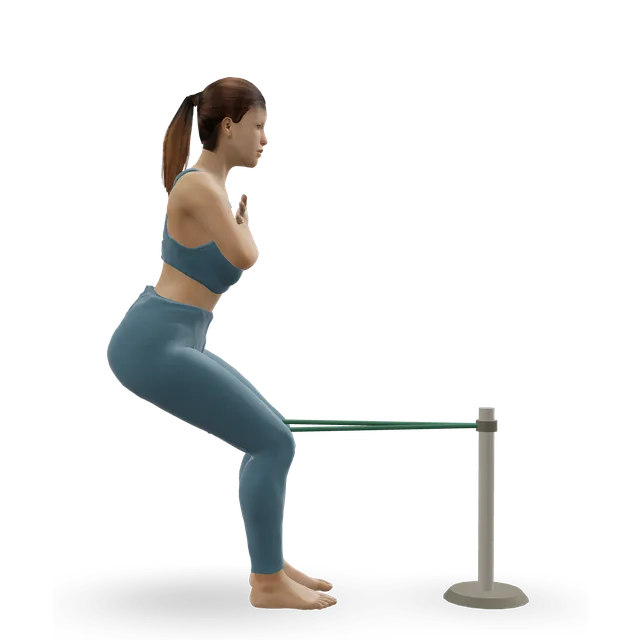
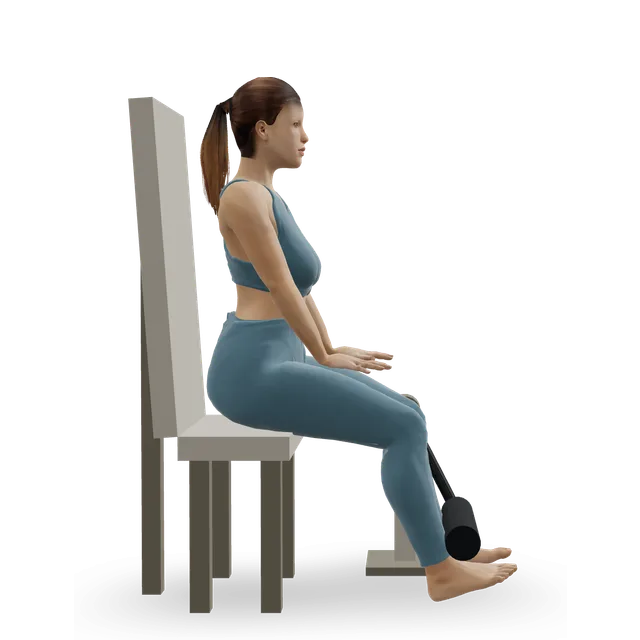
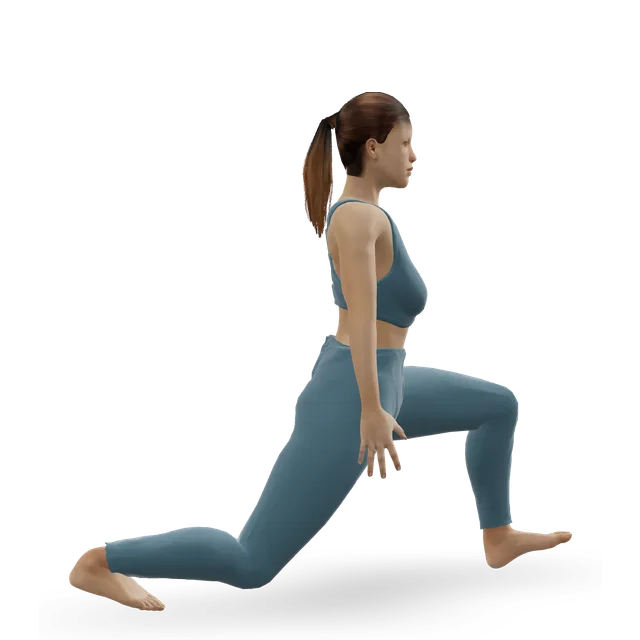
In laboratory studies of healthy people, compression in the knee was highest near full bend in the squat and the leg press, and near full straightening in the seated knee extension, where the move also tensed the anterior cruciate ligament (ACL). Stress behind the kneecap was higher in the squat at 60 to 90 degrees of bend and in the knee extension at 0 to 30 degrees, so one lab study suggests squats from 45 degrees of bend to straight, and knee extensions from 90 to 45 degrees, while the kneecap is sore. In forward lunges, kneecap force rose as the knee bent and was lowest with a long step.
Deep squats aren't the danger they're made out to be: a review of more than 164 articles found worries that deep squats damage healthy knees unfounded, given good technique and gradual loads. In 5 people with instrumented knee replacements, going downstairs put about 3.5 times body weight through the knee, going upstairs 3.2 and walking 2.6, which is why stairs and step-downs show up kneecap pain early.
Sources 24, 25, 26, 27, 28
Knees past your toesMixed evidence
Letting the knees travel forward does raise the force behind the kneecap (about 3,650 against 2,900 newtons in a wall squat, in lab studies quoted in a review), and the NHS's knee exercises for runners ask you not to let your knees go past your toes. But in 7 lifters, blocking it cut the turning load at the knee by about 22% while raising the load at the hip about tenfold and tipping the trunk forward, and researchers who compared the two in 30 people advise against being "overly strict" about it.
No study links knee travel with injury. With a sore kneecap, keeping your shins nearer upright for a few weeks is a reasonable way to unload it, and then you go back to your normal squat. It isn't a rule for life.
Sources 29, 30, 31, 32
Muscle breakdown, a clot and infection: the causes not to missEmerging evidence
Muscle breakdown (rhabdomyolysis) after exercise is rare, but it can harm the kidneys. Of 97 reported cases after indoor cycling classes, most were healthy women at their first class, with thigh pain, dark urine and thigh weakness, about 3 days later. A US college football team had a cluster after a workout of 100 back squats, and a 16-year-old after intervals of wall sits, squats, lunges and jumps, with the thighs worst affected. In 93 people admitted after spin classes, 73.1% had dark urine, so about a quarter didn't: that is why the warning sign says dark pee isn't always there.
A throbbing, swollen calf or thigh can be a blood clot, and a hot, red, swollen knee with sudden severe pain can be an infection or gout. The NHS says an infection usually brings a high temperature, although not everyone has one.
Sources 33, 34, 35, 36, 37, 38, 39, 40, 41
When a scan or test helpsStrong evidence
Soreness, kneecap pain and tendon pain are diagnosed from the story and an examination, without a scan, and tendon changes on scans also turn up in people whose pain comes from somewhere else. After an injury, a short checklist, the Ottawa knee rule, decides whether you need an X-ray, and it missed very few fractures (98.5% sensitivity across 6 studies of 4,249 adults).
Tests answer specific questions: a side-view X-ray often shows a complete tendon tear; a dislocated kneecap usually needs X-rays even if it went back by itself; a magnetic resonance imaging (MRI) scan helps when a suspected ACL or meniscus tear would change the plan; blood and urine tests check for muscle breakdown; an ultrasound scan within 24 hours checks for a clot; and fluid drawn from the knee checks for an infection, or for gout when that is uncertain, as the National Institute for Health and Care Excellence (NICE) suggests.
Sources 7, 10, 42, 12, 43, 14, 38, 40, 44, 41
How it usually goesStrong evidence
Soreness is gone within 5 to 7 days, and the next similar session leaves you less sore. New knee pain, or a flare of an old problem, usually begins to settle within 6 weeks, NHS inform says, and most sprains and strains feel better after 2 weeks, the NHS says.
Kneecap pain improves with exercise over weeks to months but can come back and last for years; in one pain-monitored programme, 85% of 40 young women were back in sport without pain at a year, though there was no untreated group. Tendon pain is slow: in the largest trial, the quickest return to sport was 4 weeks, and most took longer. A tendon or ligament tear, or muscle breakdown, has its own course. No one can promise a timescale.
Sources 1, 5, 45, 46, 7, 47, 48