Pain guide · Hip pain

Hip pain after a workout: soreness or a strain, the groin, squats and running, and training again

Hip or groin pain after a workout is usually soreness: lunges, deep or wide squats, hip thrusts, sprints and a new class work the glutes and the inner, front and back of the thighs while they lengthen, and they're sore a day or two later, then fine within a week. Sharp pain at one moment, often in the groin or the front of the hip, is more often a strain of the inner thigh (adductor) or hip flexor muscles, and a pinch at the bottom of a squat is usually where your hip runs out of bend. What usually needs to change is the session, not whether you train.

Some hip pain needs help first: call 999 or go to accident and emergency (A&E) for severe pain after a fall or if you can't put weight on the leg; stop running and get a same-day check from your general practitioner (GP) or the National Health Service's 111 line (NHS 111) for groin pain in a runner that builds with each run; and get help the same day for a hot, swollen hip with a fever, or muscles far sorer, more swollen or weaker than the session explains. A new lump in the groin needs a GP, and a femoral hernia with very bad tummy pain is a 999 call. This guide covers soreness against a strain, the groin and hip flexors, squats and running, impingement and labral tears, what to change today, and a three-stage plan with 3D demos.

When to get help first

Exercise is for pain that has been checked or is clearly mild and settling.

Get urgent medical help if

  • Call 999 or go to A&E: severe hip pain after a fall or injury, or you cannot stand, walk or put weight on the leg. In an older adult this can be a broken hip; the leg may be at an odd angle or look shorter. Don't drive yourself.
  • Call 999 or go to A&E: tingling or loss of feeling in the hip or leg after an injury.
  • Same day, and stop running now: groin or front-of-hip pain in a runner, sometimes felt in the thigh or knee, that builds with running, hurts with every step or at night, or hurts when the hip is turned to the end of its range. Keep weight off the leg, using crutches if you have them, and get an urgent GP appointment or help from NHS 111 the same day: a stress fracture of the hip (femoral neck) needs urgent imaging.
  • Call 999 or go to A&E now if you have a femoral hernia (a small lump at the top of your thigh, in your groin) and very bad tummy pain, you feel sick or you're being sick, you cannot fart or poo, you have a high temperature or you feel hot, cold or shivery, or you've suddenly become confused. Do not drive to A&E. With any other hernia and pain in or around it, a bloated tummy, feeling or being sick, vomiting blood or vomit that looks like coffee grounds, constipation, a high temperature or feeling hot, cold or shivery, or sudden confusion, get help from NHS 111.
  • Same day (call NHS 111, or go to A&E if you feel very unwell): after a big or unusual session, such as a first spin class, a workout of 100 back squats, or intervals of wall sits, squats, lunges and jumps, a challenge or a new class, muscle pain, swelling or weakness far worse than the session explains, and dark pee (red, brown, tea or cola coloured), sometimes starting hours or days later. Dark pee isn't always there, so muscles far sorer, more swollen or weaker than the session explains still need the same-day check. It can be rhabdomyolysis, a breakdown of muscle that can harm the kidneys.
  • Call 999: sudden, severe pain in a swollen, tight muscle.
  • Ask for an urgent GP appointment or get help from NHS 111 if you have severe hip pain that started suddenly but you've not had a fall or injured your hip, your hip is swollen and feels hot, the skin around your hip has changed colour, or you have hip pain, feel generally unwell and have a high temperature (although not everyone has one) or feel hot, cold or shivery. A hot, swollen hip with a high temperature can be a joint infection.
  • Same day: a teenager with sudden pain at the front or top of the hip bone after a heavy lift, sprint, kick or jump, often with a pop. A piece of growth plate can pull off the pelvis (an avulsion fracture), and it needs an X-ray the same day.
  • Same day: a pop near the sitting bone, a large bruise high on the back of the thigh, or you cannot put weight on the leg. The tendon may have pulled away from the bone, which needs assessing before you start these exercises.
  • Call 999 or go to A&E if you have sciatica on both sides, weakness or numbness in both legs that's severe or getting worse, or numbness around or under your genitals, or around your bottom (anus); if you find it hard to start peeing, cannot pee or cannot control when you pee; or if you do not notice when you need to poo or cannot control when you poo, and this is not normal for you. These could be symptoms of a serious back problem that needs to be treated in hospital as soon as possible.
  • Go to A&E or call 999 for sudden, severe pain in a testicle, testicle pain with feeling or being sick or tummy pain, or testicle pain that has lasted more than an hour or continues at rest. It can be a twisted testicle (testicular torsion), which needs treating straight away. Don't drive yourself. For aching or discomfort in your testicles that you're worried about, a lump, swelling or a change in a testicle's size, shape or feel, ask for an urgent GP appointment or get help from NHS 111.
  • Same day (urgent GP appointment or NHS 111): throbbing pain in one leg (rarely both), usually the calf or thigh; swelling in one leg (rarely both); red, blue or darkened skin around the painful area, which may be harder to see on brown or black skin; or swollen veins. This can be a deep vein thrombosis (DVT). It is more likely after surgery, a hospital stay, 3 or more days in bed, a journey of over 4 hours, pregnancy or a recent birth, cancer, a previous clot, or contraception or hormone replacement therapy (HRT) that contains oestrogen.
  • Call 999 or go to A&E if breathing suddenly becomes difficult, if pain in your chest or upper back comes on suddenly with breathlessness or a very fast heartbeat, or if someone passes out. These are the NHS's signs of a blood clot in the lungs (a pulmonary embolism) or another serious condition. Don't drive yourself.

See a doctor or physiotherapist if

  • Hip pain that stops normal activities or disturbs sleep, keeps getting worse or keeps coming back, or has not improved after 2 weeks of looking after it at home.
  • A lump in the groin, upper thigh or tummy, especially one that appears when you cough or strain and goes when you lie down: see a GP, as it may be a true hernia. A femoral hernia (a small lump at the top of the thigh, mainly in women over 50, though it can happen to anyone) needs treating in hospital.
  • Soreness that isn't better after a week, keeps coming back after normal sessions, or is in one spot: see a GP or physiotherapist (our suggestion).
  • Painful catching or locking deep in the groin, or a hip that gives way: get it assessed.
  • Pain that has not improved after a good 3 months of exercise-based treatment: ask about a hip specialist.
  • Pain in one spot on the pubic bone, or low back or buttock pain on one side, brought on by running in a distance runner, especially if your periods have stopped or become irregular, you've lost weight or you've had a stress fracture before: stop running and see a GP. It can be a stress fracture of the pelvis or the sacrum, and a magnetic resonance imaging (MRI) scan is the usual test.
  • A stress fracture from ordinary activity, more than one stress fracture, periods that have stopped or become irregular, or worries that you're eating too little for your training: see a GP about bone health and energy intake.
  • Stiffness lasting more than 30 minutes after waking.
  • Hip or groin pain that hasn't settled after 6 weeks, especially with a normal X-ray, or new hip pain if you take high-dose steroids, drink heavily, or have sickle cell disease or lupus: ask your GP about an MRI (magnetic resonance imaging) scan and a hip specialist. It can be avascular necrosis, which an X-ray can miss early on.

Where does it hurt?

Location narrows the likely causes; it does not diagnose.

A dull ache in the buttocks or the front, inside or back of the thighs, often both sides, the day after a session

Usually muscle soreness, worst at 1 to 3 days and gone within about a week. Our muscle soreness page covers what helps.

The inner thigh near the groin, after a kick, a sprint or a wide squat

Usually an adductor (groin) strain, sore when you squeeze your knees together.

Read: Groin strain →
The front of the hip when you lift your knee, sprint or kick

Usually a hip flexor strain or an overworked hip flexor.

Read: Hip flexor pain →
A pinch at the front of the hip at the bottom of a squat

Usually where your hip runs out of bend. Our hip squat guide covers depth and stance.

Read: Hip pain when squatting →
Deep groin pain with clicking, catching or locking

Possibly a labral tear, though these are common on scans without pain.

Read: Hip labral tear →
A pinch with deep bending in a young, active adult, that keeps coming back

Possibly hip impingement syndrome, diagnosed only when symptoms, examination and imaging all fit.

Read: Hip impingement (FAI) →
The bony point on the outside of the hip, worse lying on it or crossing your legs

Usually gluteal tendon pain, often called hip bursitis, after hills, stairs, step classes or a jump in mileage.

Read: Hip bursitis (gluteal tendinopathy) →
A deep ache at the sitting bone after deep Romanian deadlifts, lunges or uphill running

Possibly high hamstring tendon pain.

Read: High hamstring tendinopathy →
Groin or front of the hip in a runner, building with each run, then hurting with walking or at night

Possibly a stress fracture of the hip: stop running and get it checked the same day (the warning signs).

Read: Stress fracture →
A lump in the groin or at the top of the thigh, bigger when you cough or strain

Possibly a hernia: see a GP, and see the warning signs for when it's urgent.

Right on the pubic bone at the front

Pubic-related groin pain, once called osteitis pubis.

Read: Osteitis pubis →
Low in the tummy above the groin crease, with sprinting, sit-ups or coughing, and no lump

Inguinal-related groin pain, once called a sports hernia.

Read: Sports hernia →
A teenager with sudden pain at the front of the hip bone after a sprint, kick or jump, often with a pop

Possibly a piece of growth plate pulled off the pelvis: it needs an X-ray the same day.

Read: Hip pointer →
During or after running

Our hip running guide has a run-walk plan.

Read: Hip pain when running →
On the bike or after a spin class

Our hip cycling guide covers saddle height and reach.

Read: Hip pain when cycling →
Groin pain in general

Our groin pain guide maps every cause.

Read: Groin pain →
The buttock and down the leg, with pins and needles below the knee

Usually sciatica, from the back.

Read: Sciatica →
A click or clunk at the front or outside of the hip

Usually snapping hip, often painless.

Read: Snapping hip →
A stiff, aching groin from mid-life, stiff to get going after a new session

Often hip osteoarthritis having a flare; exercise is its main treatment.

Read: Hip arthritis →
Muscles far sorer, more swollen or weaker than the session explains, with or without dark pee

Possibly muscle breakdown (rhabdomyolysis): see the warning signs at the top of this page today. Our rhabdomyolysis exercise page covers getting back to exercise afterwards.

Understand it

Usually soreness, after lunges, squats, sprints and new classesStrong evidence

Delayed onset muscle soreness (DOMS) follows new or harder exercise, especially work that lowers a weight or your body slowly (eccentric work). It typically starts 12 to 24 hours after the session, is worst between 24 and 72 hours and is gone within 5 to 7 days, and it is commonest at the start of a season, after a break and with new activities.

The hip's big muscles, the glutes, the adductors on the inside of the thigh, the hip flexors at the front and the hamstrings at the back, all work while they lengthen in lunges, split squats, deep and wide squats, hip thrusts, sprints and downhill running, which is the kind of work that leaves muscles sore 1 to 3 days later.

Sources 1, 2

A strain is the commonest injury: the groin and the hip flexorsEmerging evidence

The NHS links pain, swelling or bruising after intense or repetitive exercise with a sprain, strain or tendonitis. A strain starts at one moment, often in a kick, a sprint, a change of direction, a slip into a wide stance or the bottom of a deep lunge, with pain, tenderness or weakness, sometimes swelling, bruising or spasm; not warming up, tired muscles and sport are common causes, the NHS says.

In 110 male athletes seen within a week of an acute groin injury, two-thirds were adductor injuries, mainly the adductor longus; kicking was the commonest way it happened in football (40%) and changing direction in other sports (31%). On magnetic resonance imaging (MRI) scans, a third of acute groin injuries were in the hip flexors: the rectus femoris mostly with kicking and sprinting, the iliacus and psoas mostly with changes of direction. These were male athletes at one sports hospital, not gym-goers. An international agreement on groin pain in athletes sorts it into adductor-, iliopsoas-, inguinal- and pubic-related groin pain, plus the hip joint, from the history and examination.

Sources 3, 4, 5, 6, 7

Tendons that complain after a change in trainingEmerging evidence

The outer hip (gluteal) tendons can become painful after hills, stairs, step classes, a jump in mileage or lots of single-leg and side-lying work; this is commonest in mid-life and in women. A review describes squeezing the tendon against the bone while it is loaded, and positions that bring the thigh across the body, such as crossing your legs, as most damaging, and an NHS trust adds that repeated stretching can irritate it. The review doesn't name a sudden change in load, so "a load the tendon isn't used to" is our reading.

Sources 8, 9

A pinch at the bottom of a squat, impingement and labral tearsStrong evidence

Hip shape varies a lot, and scan findings are common in hips that don't hurt. Impingement (cam) shapes were found in 37% of 2,114 pain-free hips (54.8% in athletes, 23.1% in the general population), labral tears on MRI in 69% of 45 volunteers aged 15 to 66 with no hip pain, and labral tears in 54% of people without hip pain across 29 studies.

Femoroacetabular impingement (FAI) syndrome is diagnosed only when symptoms, examination and imaging all fit, an international agreement says. People with cam shapes couldn't squat as deep as matched controls in a small lab study, and a clinical review notes that up to a quarter of people with impingement squat deeply without pain. So a pinch at the front of the hip at the bottom of a squat is usually where your hip runs out of bend, not damage.

Sources 10, 11, 12, 13, 14, 15

Bone: a stress fracture of the hip in runnersEmerging evidence

A stress fracture of the neck of the thigh bone (femoral neck) is uncommon, about 3% of athletes' stress fractures, and commonest in distance runners and in women. The pain comes on gradually at the front of the groin (87% in one series), can spread to the thigh or knee, follows a recent rise in training, and later comes at rest and at night. It is the one cause in this guide that mustn't be trained through, because a fracture that displaces can cut off the blood supply to the top of the thigh bone.

Bone stress injuries often follow a rapid increase in activity, 3 to 4 weeks into a new routine, and low energy intake, too little sleep and no rest days add to the risk. In college track and field athletes, women whose periods had become irregular or stopped had more severe injuries, and femoral neck injuries took longer to return from. Treated early, most heal well: 71% returned to full activity in reported cases.

Sources 16, 17, 18, 19

How common, in lifters and runnersEmerging evidence

The hip and groin are a minority of running injuries: 7.0% by prevalence and 11.3% by incidence across studies with very different definitions. In 104 Swedish powerlifters, 70% were carrying an injury that affected training, with the low back and pelvis, the shoulder and the hip commonest, but only 16% had to stop training completely. No study we found gives a rate of hip soreness or strain in ordinary gym-goers or class members.

In 874 novice runners, weekly distance jumps of more than 30% over 2 weeks went with more overuse injuries in an exploratory analysis, yet in a trial of 532 novice runners, a programme built on the 10% rule didn't reduce injuries (20.8% against 20.3%). Build up gradually, but treat any exact rule as a guess.

Sources 20, 21, 22, 23

Hernias, infections, teenagers and muscle breakdown: the causes not to missStrong evidence

A hernia is a lump that may get bigger when you cough or strain and smaller when you lie down; the NHS asks you to see a GP if you think you have one. Femoral hernias, mainly in women over 50, need treatment in hospital, and with very bad tummy pain or sickness they are an emergency. An inguinal hernia, a lump where the leg joins the tummy, may need planned surgery if it causes symptoms such as pain, and may not need treatment if it doesn't. A joint infection brings sudden severe pain in one joint and hot, swollen or red skin, usually with a fever, although not everyone has one.

In teenagers, a sudden pull can tear a piece of growth plate off the front of the pelvis (an avulsion fracture), mostly during sport; across 852 fractures, the average age was 14, 79% were boys, and 86.6% were treated without surgery. Muscle breakdown (rhabdomyolysis) after a big, unaccustomed session is rare but can harm the kidneys; published cases include a first spin class, a workout of 100 back squats and intervals of wall sits, squats, lunges and jumps, and about a quarter of people admitted after spin classes had no dark urine.

Sources 24, 25, 26, 27, 28, 29, 30, 31, 32, 33, 34

When a scan or test helpsStrong evidence

Soreness, strains and tendon pain are recognised from the story and an examination. Scan findings are common in active people without pain, and an international consensus says imaging must be read alongside the history and examination, with an X-ray or ultrasound first and MRI second.

Tests answer specific questions: an urgent X-ray, then MRI, for a suspected stress fracture; an ultrasound for a suspected hernia, or for a groin strain when it would change the plan; a same-day X-ray for a teenager's suspected avulsion fracture; an X-ray of hip shape, sometimes with MRI, when hip-related pain hasn't settled after about 3 months of exercise and surgery is being discussed; blood and urine tests for suspected muscle breakdown; and fluid drawn from the joint for a suspected infection.

Sources 35, 16, 36, 13, 34, 27

How it usually goesEmerging evidence

Soreness is gone within 5 to 7 days. The NHS says most strains feel better after 2 weeks, and suggests avoiding strenuous exercise such as running for up to 8 weeks. In 81 male athletes with criteria-based rehab, mild to moderate adductor strains were pain-free in a median of 13 days and back to full team training in 18; complete tears took 78 days.

Long-standing groin pain improved over the 8 to 12 weeks of the trial that worked; hip-related pain from impingement or a labral tear gets at least 3 months of exercise first; outer hip tendon pain can take 6 to 12 months with exercise therapy, an NHS trust says; and new hip pain usually begins to settle within 6 weeks, NHS inform says. A stress fracture of the hip means weeks on crutches, and sometimes surgery. No one can promise a timescale.

Sources 1, 4, 37, 38, 36, 9, 39, 16, 19

What helps, and how strong the evidence is

Keep moving, and the first 48 hoursStrong evidence

The NHS asks you to keep moving if you can, without overdoing things, and suggests painkillers such as paracetamol or ibuprofen gel and an ice pack wrapped in a towel for up to 20 minutes every 2 to 3 hours. NHS inform says reduce your activities in the first 48 hours but keep moving as much as your symptoms allow, then build up, avoiding sport and heavy lifting until there's less discomfort and good movement. For a fresh strain, the NHS sprains page adds no heat, alcohol or massage for the first couple of days.

Sources 3, 39, 4

Soreness: train other muscles or go lighter for a day or twoEmerging evidence

Repeating hard lowering work on sore muscles 2 and 4 days later, or on 6 days in a row, didn't worsen the damage or slow recovery, in small trials of young men's arm muscles. A review advises lighter, shorter sessions for 1 to 2 days after a very sore-making session, or training less sore areas, and bringing new lowering-heavy work in over 1 to 2 weeks.

Sources 1, 40, 41

Groin pain: active strengthening worksEmerging evidence

In 68 athletes with long-standing groin pain, an 8 to 12 week programme of active strengthening returned 23 to sport without pain, against 4 given physiotherapy without active training. A team that reproduced the programme starts with ball squeezes (10 holds of 30 seconds, 3 times a week) and builds to standing band adduction, balance and sliding work; adductor stretching wasn't allowed. For acute adductor strains, criteria-based rehab got male athletes back in a median of 18 days for mild to moderate injuries, and reinjury was 5% when the pain-free return checks were met against 21% when they weren't (no control group).

Sources 38, 42, 37

The Copenhagen adduction keeps groin problems awayEmerging evidence

In 35 semi-professional men's football teams (652 players), a Copenhagen adduction programme, 3 times a week in pre-season and once a week in season, cut the average share of players with groin problems from 21.3% to 13.5%, which the authors describe as 41% lower. In 24 under-19 players, 8 weeks raised eccentric adduction strength by 35.7%, with median soreness of 0 to 2 out of 10. Both were in footballers.

Sources 43, 44

Hip flexors: band training builds strengthEmerging evidence

In 33 healthy adults, elastic band hip flexion 3 times a week for 6 weeks, building from about 15 to about 8 hard repetitions, raised hip flexor strength by 17%. It hasn't been tested in people with hip flexor pain, and the trial's summary gives no number of sets, so the plan's sets are editorial.

Source 45

Outer hip tendon pain: education and exercise beat an injectionEmerging evidence

In 204 people aged 35 to 70 with gluteal tendon pain, education about avoiding squeezing positions plus exercise succeeded in 77.3% at 8 weeks, against 58.5% after a steroid injection and 29.4% with wait and see, and it still beat the injection on overall improvement, though not on pain, at a year. The programme started with gentle holds twice a day and built to heavier single-leg work over 8 weeks.

Sources 46, 47, 9

Hip-related pain: at least 3 months of exercise first; surgery adds littleMixed evidence

An international consensus recommends exercise-based treatment for at least 3 months for hip-related pain in young and middle-aged active adults, while noting that strong trial evidence is lacking. In people already referred to surgeons with FAI syndrome, keyhole surgery did a little better than physiotherapy in two UK trials (by 6.8 points on a 100-point scale in 348 people, just above the smallest difference that matters, and by 10 points in 222), no better in a military trial at 2 years, and across 21 trials its gains fell short of the smallest difference people notice, with more adverse events.

Sources 36, 48, 49, 50, 51

Stretching and foam rolling barely change sorenessStrong evidence

Stretching before or after exercise reduced soreness by about 1 point on a 100-point scale across 12 studies, massage eased soreness the most of the recovery methods in 99 studies, and foam rolling after exercise reduced muscle pain by about 6%. For a fresh groin strain, the programme that worked banned adductor stretching, so strength comes first.

Sources 52, 53, 54, 42

Coming back: about half the load, then small steps (our suggestion)Emerging evidence

For healthy lifters, the American College of Sports Medicine adds 2% to 10% to the load once you can do 1 or 2 more reps than planned. No trial has tested a return to training after hip pain, so the plan on this page uses those steps as an editorial guide: about half your old load or volume, then about 5% to 10% a week while your hip is fine the next morning.

Source 55

How much pain is OK while you exercise?

Up to about 5 out of 10, settled by the next morning; a fresh groin strain or a sore tendon starts at 3 or lessEmerging evidence

During the exercise, pain up to about 5 out of 10 is acceptable. It should settle within an hour or so, and your hip should be no worse that night or the next morning. If it is, do less next time (fewer repetitions, a smaller range, a lighter load), not nothing.

That is our hip pain guide's rule. The outer hip tendon trial's programme used the same ceiling for its heavier strength work and asked for no rise in pain during everyday movements; the pain-monitoring model behind the site's 0 to 10 scales counts up to 2 as safe and up to 5 as acceptable; and in trials of long-lasting muscle and joint pain, exercise that allowed some pain did slightly better in the short term and no worse later.

Start stricter with a fresh groin or hip flexor strain, at 3 out of 10 or less, as our groin strain and hip flexor guides do (editorial); the programme that worked for long-standing groin pain let slow running back in from week 6 "only so long as it did not produce groin pain". An even, dull ache in the buttocks or thighs a day or two after a new or harder session is soreness, which is expected: judge the session by the next morning, and end a set or drill at a sharp pain in the groin or the front of the hip rather than pushing through it.

Groin pain in a runner that builds with each run isn't a pain-rule question: stop running and get it checked the same day. Nor is a lump in the groin, or muscles far sorer, more swollen or weaker than the session explains: see the warning signs. The 5 out of 10 figure matches the site's other hip guides and hasn't been tested as a rule in gym-goers.

Sources 47, 56, 57, 42, 1

The exercise plan: 3 stages

Start at the first stage. Each move opens a full guide with a 3D demo.

Stage 1

The first days: settle without stopping

About days 0 to 7, daily and gentle. Keep moving within comfort with NHS inform's first-48-hours steps, find which of the groin, the front of the hip and the outer hip is the sore one, and start the matching holds. No sprints, kicks, wide squats, deep lunges or stretching into the sore area yet (our suggestion, from our groin strain and hip flexor guides). Soreness alone needs none of this: train other muscles or go lighter for a day or two, with 10 to 20 minutes of easy walking or cycling if it helps (editorial). With any warning sign, get checked first; with a known diagnosis, that guide's plan comes first. No trial has tested this plan as a whole.

Treadmill walking demonstrated on the 3D figure3D demoTreadmill walkingBeginner · Cardio machine

10 to 20 minutes at an easy pace, once or twice a day · Editorial, as our muscle soreness page suggests; walking outdoors counts the same

Harder: Treadmill jogging

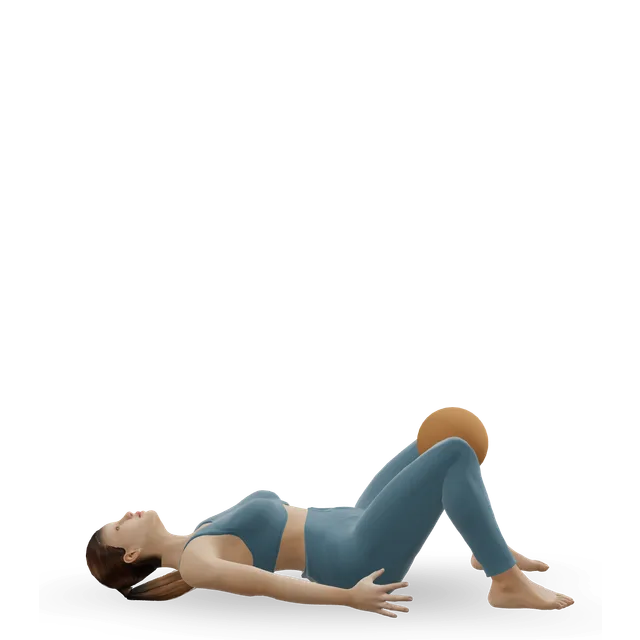
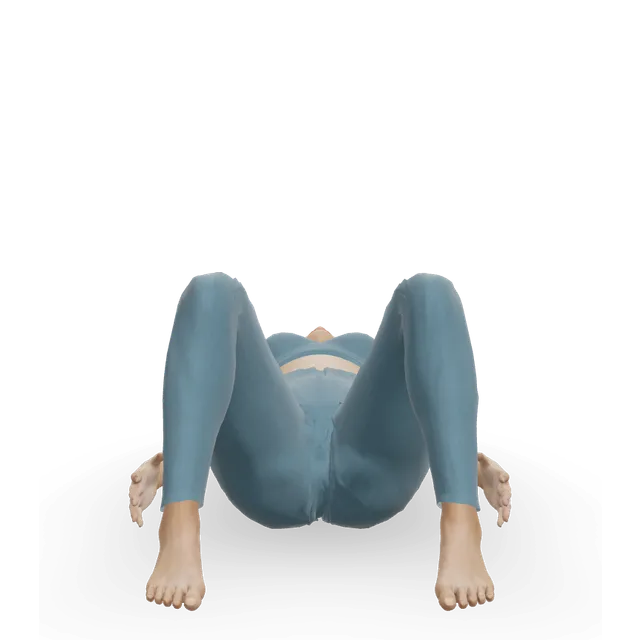
Lying adductor ball squeeze demonstrated on the 3D figure3D demoLying adductor ball squeezeBeginner · Other / check instructions

Groin pain: 5 to 10 holds of 5 to 10 seconds at a firm, pain-free effort, building over the first fortnight to 10 holds of 30 seconds with 30 seconds' rest · The start is our groin strain guide's (editorial); the 30-second holds are the reproduced trial programme's

Harder: Copenhagen plank

Standing march demonstrated on the 3D figure3D demoStanding marchBeginner · No equipment

Front-of-hip pain: 10 each side, with a low knee · As in our hip flexor guide (editorial)

Easier: Seated march · Harder: Standing band hip flexion

Supine isometric hip abduction (belt press) demonstrated on the 3D figure3D demoSupine isometric hip abduction (belt press)Beginner · A band

Outer hip pain: 3 to 5 holds of 5 to 10 seconds, twice a day, at a light effort · The move page's dose, which is the outer hip tendon trial's starting dose; do it lying on your back, not your side

Harder: Lateral band walk

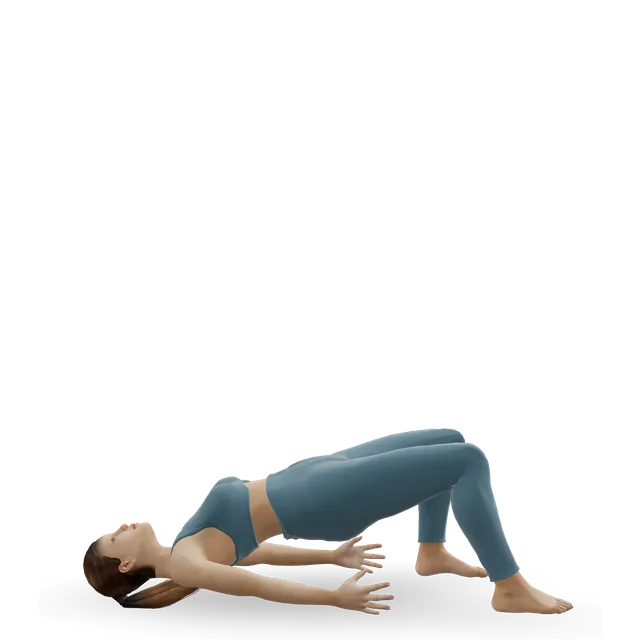
Glute bridge demonstrated on the 3D figure3D demoGlute bridgeBeginner · No equipment

2 sets of 10 · As in our hip pain guide (editorial)

Easier: Pelvic tilt into bridge · Harder: Single-leg glute bridge

Supine heel slide demonstrated on the 3D figure3D demoSupine heel slideBeginner · No equipment

10 slow repetitions each side, once or twice a day · The move page's dose (editorial)

Harder: Hip windshield wipers

Move on when: Walking and stairs are comfortable, the squeeze, the march or the hold is pain-free at a firm effort, and the next morning is no worse (our groin strain and hip flexor guides' checks, editorial).

Follow along: a timer, a cue and the next move, one step at a time.
Stage 2

Load the groin, the hip flexors and the glutes

About weeks 1 to 4: 3 sessions a week, with walks or easy rides on other days. Strength in the muscle that was sore and the hip around it, within the pain rule. The reproduced groin programme ran 3 times a week, and the hip flexor band trial 3 sessions of 10 minutes a week.

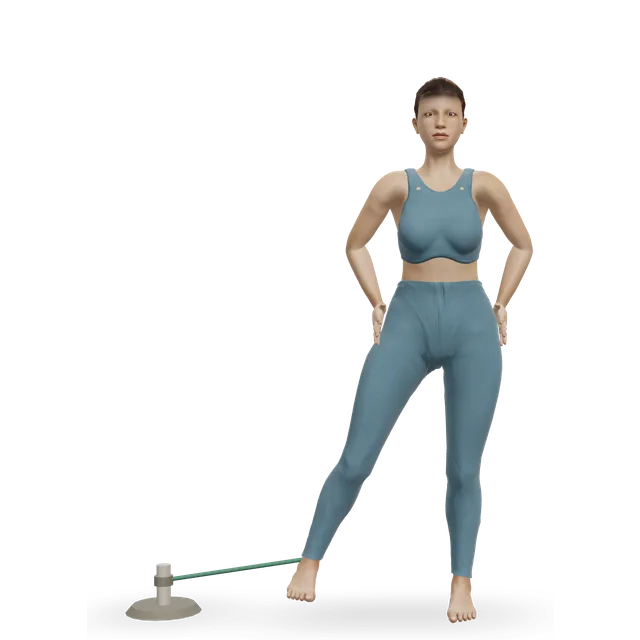
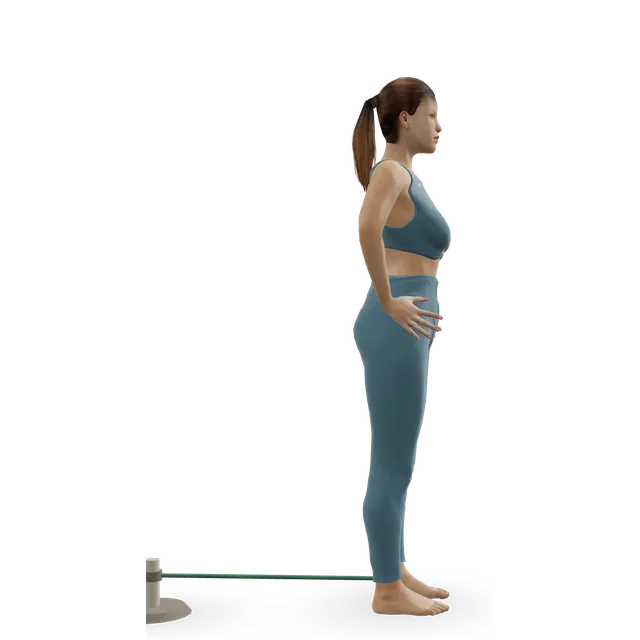
Standing band hip adduction demonstrated on the 3D figure3D demoStanding band hip adductionBeginner · A band + An anchor point

3 sets of 10 to 12 each side · As in our groin strain guide (editorial); the reproduced trial programme used 5 sets of 10 at the most weight that stayed pain-free, raised weekly

Easier: Lying adductor ball squeeze · Harder: Copenhagen plank

Standing band hip flexion demonstrated on the 3D figure3D demoStanding band hip flexionBeginner · A band + An anchor point

2 to 3 sets, building from about 15 to about 8 hard reps over 6 weeks · The progression is the hip flexor trial's; the sets are editorial, since its summary gives none

Easier: Standing march · Harder: Captain's chair knee raise

Staggered-stance bridge (offset bridge) demonstrated on the 3D figure3D demoStaggered-stance bridge (offset bridge)Beginner · No equipment

5 slow repetitions each side once a day, building to 2 sets of 5 to 10 at a somewhat hard effort · The move page's dose, from the outer hip tendon trial's programme

Easier: Pelvic tilt into bridge · Harder: Single-leg glute bridge

Split squat demonstrated on the 3D figure3D demoSplit squatIntermediate · No equipment

3 sets of 8 each side, short range first · As in our hip pain guide (editorial)

Easier: Bodyweight squat · Harder: Reverse lunge

Dumbbell Romanian deadlift demonstrated on the 3D figure3D demoDumbbell Romanian deadliftIntermediate · A dumbbell

3 sets of 8 to 10, only as deep as the back of the thigh and the sitting bone allow · As in our hip pain guide (editorial)

Easier: Hip-hinge practice · Harder: Single-leg Romanian deadlift

Lateral band walk demonstrated on the 3D figure3D demoLateral band walkBeginner · A band

2 sets of 10 steps each way · As in our hip pain guide (editorial); use a lighter band or skip it if it brings on sharp outer hip pain, as the move page says

Easier: Hip abduction machine · Harder: Lateral band walk, band at the feet

Move on when: Side-to-side work and squeezing your knees together are comfortable (our groin strain guide's check), band hip flexion is strong and pain-free on both sides (our hip flexor guide's check), and goblet squats to a box pass the pain rule (editorial).

Follow along: a timer, a cue and the next move, one step at a time.
Stage 3

Back to squats, lunges, running and sport

From about week 3 or 4: 2 or 3 sessions a week. Your usual session at about half the old load or volume, adding about 5% to 10% a week while the pain rule holds (editorial; the American College of Sports Medicine's 2% to 10% steps are for healthy lifters). Depth first, then load, then speed. Sprints, kicks, wide and sumo squats, heavy hip thrusts and deadlifts come back one at a time; running comes back by our hip running guide's run-walk plan, with weekly distance built up gradually. The return-to-sport checks in the adductor study were pain-free pressing, squeezing and stretching, band adduction at a 10-repetition maximum, 10 Copenhagen adductions, full-speed sprints and a change-of-direction test.

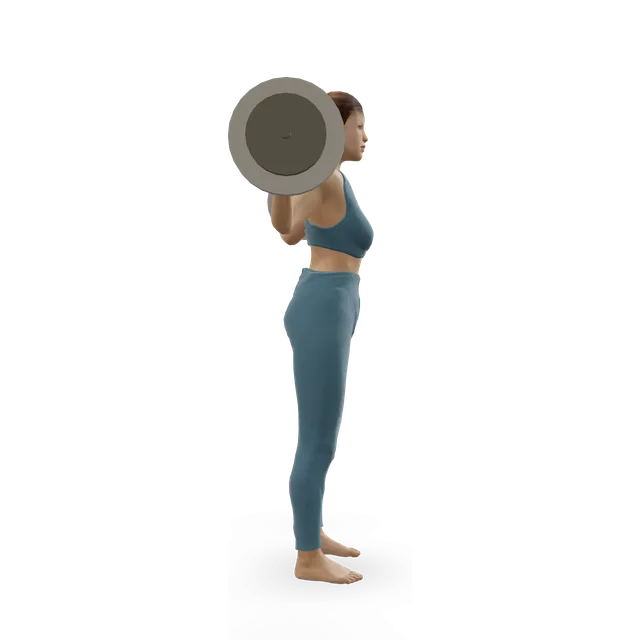
Dumbbell goblet squat demonstrated on the 3D figure3D demoDumbbell goblet squatIntermediate · A dumbbell

3 sets of 8 to 10, to a box just above the depth that pinches, lowering the box over the weeks · As in our hip pain and hip squat guides (editorial)

Easier: Bodyweight squat · Harder: Barbell front squat

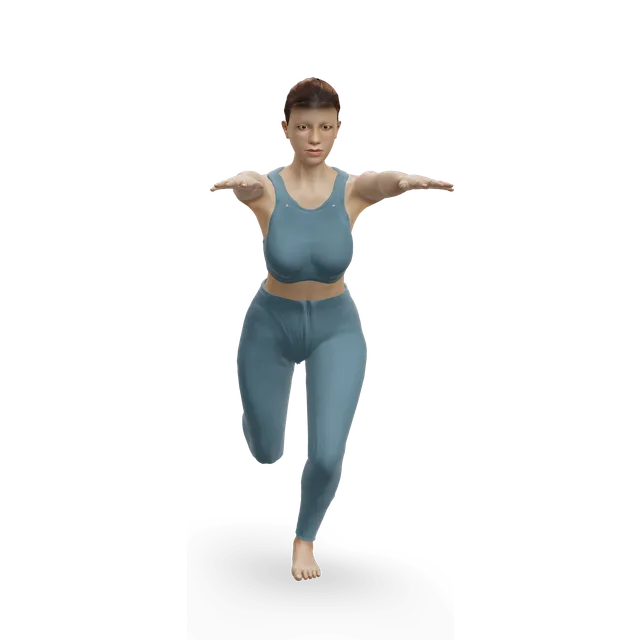
Reverse lunge demonstrated on the 3D figure3D demoReverse lungeIntermediate · No equipment

3 sets of 8 each side, before walking or forward lunges · As in our hip flexor guide (editorial)

Easier: Split squat · Harder: Split squat with dumbbells

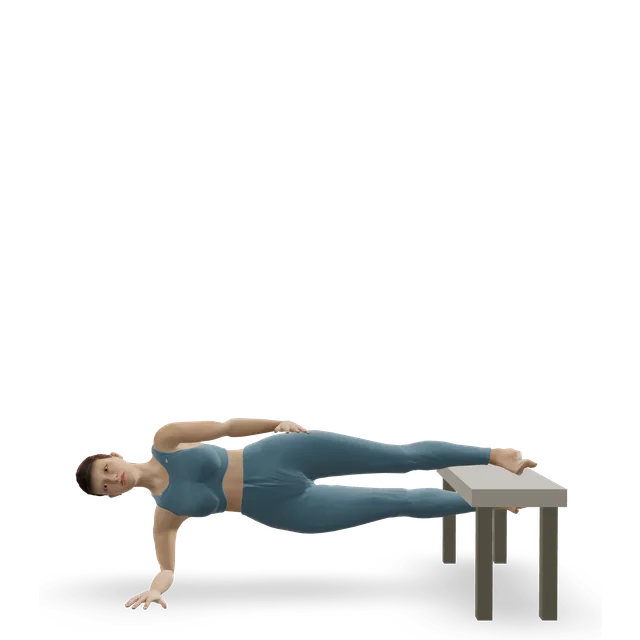
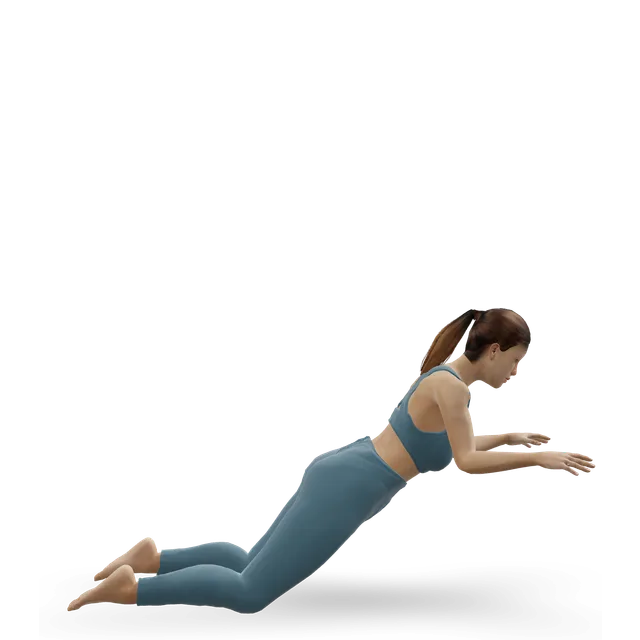
Copenhagen plank demonstrated on the 3D figure3D demoCopenhagen plankAdvanced · A bench or box

The short lever (knee on the bench) first, in small sets; 3 times a week to build, then once a week to keep it · The frequency is the football trial's; the sets are editorial. Expect some soreness in the first weeks, as the move page says, and leave it out during acute groin pain

Easier: Hip adduction machine

Skipping demonstrated on the 3D figure3D demoSkippingBeginner · No equipment

Short blocks, then strides · As in our groin strain and hip flexor guides (editorial)

Easier: Ankle bounces (mini pogo) · Harder: Alternate-leg bounding

Lateral bound (skater jump) demonstrated on the 3D figure3D demoLateral bound (skater jump)Beginner · No equipment

3 sets of 6 to 8 bounds, for field and court sports · The move page's dose (editorial)

Harder: Bench jump-over

Move on when: Our suggestion: full sessions pass the pain rule for 2 weeks. Keep the Copenhagen exercise once a week, as the football trial did in season.

Follow along: a timer, a cue and the next move, one step at a time.

What to change for now

The first days (written steps)

Our 3D figure can't show these. Each step names its source or is our suggestion.

  • 1. Soreness only: train as planned if it eases as you warm up. If it limits your range or form, train other muscles, go lighter or do easy cardio, and leave sprints, jumps and maximal lifts until it eases (our suggestion, from a review and small trials on training while sore).
  • 2. A strain or new hip pain, the first 48 hours: reduce your activities but keep moving as much as your symptoms allow; move the hip gently for a short spell every hour while you're awake; avoid long periods on your feet; lead with your good leg going upstairs and your sore leg coming down, using the handrail; then build up, avoiding sport and heavy lifting until there's less discomfort and good movement (NHS inform).
  • 3. Heat or ice: NHS inform says heat or ice, whichever helps, for up to 20 minutes at a time, while the NHS sprains page says no heat for the first couple of days of a strain. Our reading: ice first for a fresh strain with swelling or bruising, either for an ache without them.

Sources 1, 40, 39, 4

Changing the session (written steps)

No trial has tested exercise swaps for hip pain after training, so these come from a clinical review, the trials' programmes and our sibling guides.

  • 1. Squat depth and stance for a pinch at the front of the hip: squat to a box just above the depth that pinches; try a slightly wider stance with your toes turned out and a little more forward lean of the trunk; lower the box over the weeks (a clinical review's advice; no trial).
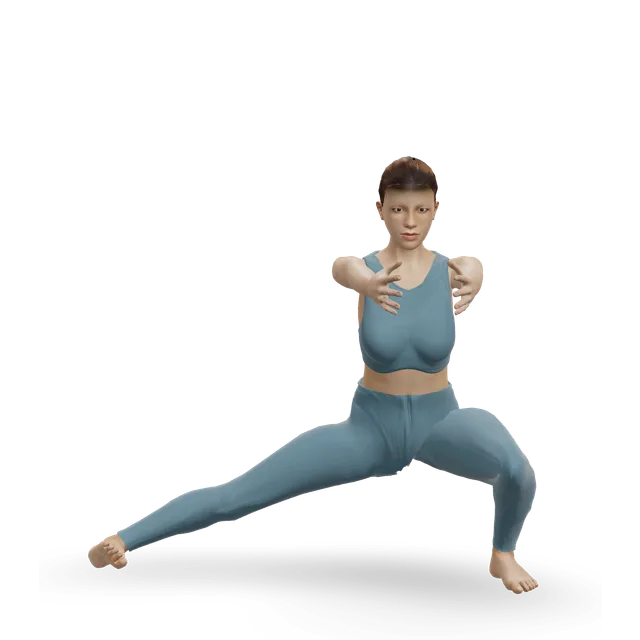
  • 2. Groin strain: no sumo, Cossack or wide squats, side lunges, kicks, sprints or adductor stretches until the squeeze is pain-free at a firm effort (our suggestion, from our groin strain guide and the reproduced trial programme, which didn't allow adductor stretching).
  • 3. Outer hip tendon pain: spread your weight evenly across both feet rather than hanging on one hip, avoid low chairs and crossing your legs, use the handrail on stairs, and don't sleep on the painful side: lie on your back with a pillow under your knees, or on your good side with a pillow between your legs (an NHS trust's advice). Don't stretch a painful outer hip.
  • 4. Running: shorter, flatter runs on softer surfaces for now, no hills or speed work until stage 3, and weekly distance built up gradually (our suggestion; jumps of more than 30% went with more overuse injuries in one exploratory study). Groin pain that builds with each run means stop now: see the warning signs.
  • 5. Coming back: about half your old load or volume, sets with 2 or 3 reps in reserve, adding about 5% to 10% a week while the pain rule holds, one change at a time (editorial, using the American College of Sports Medicine's steps for healthy lifters).

Sources 15, 42, 9, 22, 55

Painkillers, injections, surgery and supports

Paracetamol or ibuprofen gel, or ibuprofen tablets if needed, can help for a short spell, the NHS says; ordinary soreness doesn't need them. For outer hip tendon pain, education plus exercise did better than a steroid injection. Keyhole surgery for impingement added little over physiotherapy in trials. A stress fracture on the tension side of the hip, or a complete fracture, usually needs surgery, and a femoral hernia needs repair in hospital. Braces and supports have no role for soreness or strains (our suggestion).

Sources 3, 46, 48, 51, 16, 25

Positions to swap, and why

Habit or positionWhy it mattersInstead
Resting until it stops hurtingThe NHS asks you to keep moving if you can without overdoing it, and NHS inform to keep moving as your symptoms allow.Short walks and the first-days holds.Try: Treadmill walking
Deep, heavy squats to full depth while the front of the hip pinchesA clinical review advises squatting within your hip's available bend while it pinches.A box just above the pinch, lowered over the weeks.Try: Dumbbell goblet squat
Sumo, Cossack and wide squats with a groin strainWide stances load the adductors at length (our suggestion).Narrow-stance box squats and the ball squeeze.Try: Lying adductor ball squeeze
Stretching a fresh groin or hip flexor strain into painThe groin programme that worked didn't allow adductor stretching, and our hip flexor guide loads before it stretches.Band hip flexion and holds.Try: Standing band hip flexion
Deep walking lunges and Bulgarian split squats early onDeep, lowering-heavy work on the sore side (our suggestion; no study links lunges with hip pain).Short-range split squats, then reverse lunges.Try: Split squat
Sprints, kicks and cutting in the first weeksKicking and changing direction were the commonest ways male athletes injured their groin.Skipping in short blocks in stage 3.Try: Skipping
A jump in weekly running distance, hills or speed workJumps of more than 30% went with more overuse injuries in one exploratory study.Our hip running guide's run-walk plan.
Side-lying leg lifts, clamshells with heavy bands, crossing your legs or hanging on one hip with outer hip painThese squeeze the gluteal tendons against the bone, and repeated stretching irritates them.The lying belt press holds.Try: Supine isometric hip abduction (belt press)
Foam rolling or a massage gun as the treatmentRolling eases soreness a little, by about 6%; it doesn't treat a strain or a tendon, and the move page says skip it with a sore bony point on the outer hip.The stage 2 strength work.Try: Staggered-stance bridge (offset bridge)
Training through a lump in the groinFemoral hernias need treatment in hospital, and a hernia with pain needs NHS 111.See a GP; the warning signs say when it's urgent.
Running through groin pain that builds with each runIt can be a stress fracture of the hip, which can displace.Stop running and get it checked the same day.

Routines to follow

More moves for this area

Questions people ask

Why does my hip hurt after a workout?

Usually because the muscles around it did more than they're used to: lunges, deep or wide squats, hip thrusts, sprints and a new class all load the glutes and the inside and front of the thigh while they lengthen, which leaves them sore a day or two later. Sharp pain at one moment, often in the groin or the front of the hip, is more likely a strain, and the NHS links pain after intense or repetitive exercise with a sprain, strain or tendonitis.

Is it normal for my hips to be sore after leg day?

Yes, if it's a dull ache in the buttocks or thighs that starts the next day: soreness typically starts 12 to 24 hours after a session, peaks at 1 to 3 days and is gone within 5 to 7. Pain in the joint itself, a pinch at the front of the hip, or pain in one spot that is still there a week later is different.

Why does the front of my hip pinch when I squat?

Usually your hip has reached the end of its bend, and hip shape varies, so the depth and stance that suit one person pinch another. Squat to a box just above the pinch, try a slightly wider stance with your toes turned out, and lower the box over the weeks; our hip squat guide goes further.

Have I pulled my groin?

Sudden pain on the inner thigh near the groin during a kick, sprint, change of direction or wide squat, that hurts when you squeeze your knees together, is usually an adductor strain, the commonest groin injury in sport. Mild ones are often back to full training within a few weeks with a staged plan; our groin strain guide has it.

Why does my hip flexor hurt after working out?

Lots of fast knee lifts, such as high knees, mountain climbers, sprints and kicks, or heavy hip bending can strain or overwork the hip flexors at the front of the hip. Keep the knee low for a few days, then load them with band work before you stretch them; our hip flexor guide has the plan.

Why does the outside of my hip hurt after exercise?

Usually the gluteal tendons on the bony point of the hip, especially after hills, stairs, step classes or a jump in mileage, and they're worse lying on that side or crossing your legs. Even weight on both feet, no crossed legs and the gentle holds in this plan help, and education plus exercise beat a steroid injection in a trial.

Should I keep training with hip pain?

With soreness, yes: train other muscles or go lighter for a day or two. With a strain or a pinch, keep moving and change the session (less load, a box for depth, no sprints or kicks), keeping pain to about 5 out of 10 or less and no worse the next morning; with a fresh groin strain, start at 3 or less.

When should I worry about hip pain after exercise?

Get help the same day for groin pain in a runner that builds with each run or hurts at night, a hot, swollen hip with a fever, or muscles far sorer, more swollen or weaker than the session explains. Call 999 or go to A&E for severe pain after a fall, not being able to put weight on the leg, or a femoral hernia lump with very bad tummy pain or sickness.

Could groin pain after the gym be a hernia?

A hernia is a lump that gets bigger when you cough or strain and smaller when you lie down; see a GP if you think you have one. Get help from NHS 111 for a hernia with pain, and call 999 for a femoral hernia (a small lump at the top of the thigh, mainly in women over 50) with very bad tummy pain, sickness or not being able to fart or poo.

Do I need a scan?

Usually not at first: scan findings such as impingement shapes and labral tears are common in hips that don't hurt, and imaging has to be read alongside an examination. A suspected stress fracture needs an urgent X-ray and often an MRI scan, and a suspected hernia an ultrasound scan.

How long does hip pain after a workout last?

Soreness goes within about a week. A mild to moderate adductor strain took a median of 18 days back to full training in male athletes, and a complete tear 78 days; outer hip tendon pain can take 6 to 12 months with exercise therapy. No one can promise a date.

How do I get back to squats and running?

Settle without stopping, load the groin, hip flexors and glutes, then bring back squats to a box, reverse lunges and running in stages, at about half your old load and adding about 5% to 10% a week while your hip is fine the next morning. That progression is our suggestion: no trial has tested a return to training after hip pain.

Related exercise guides

Other pain guides

Sources

  1. Cheung 2003 · Delayed onset muscle soreness: treatment strategies and performance factors (review, Sports Med)
  2. Hody 2019 · Eccentric muscle contractions: risks and benefits, including delayed-onset muscle soreness (review, Frontiers in Physiology)
  3. NHS · Hip pain in adults
  4. NHS · Sprains and strains
  5. Serner 2015 · Diagnosing acute groin injuries in 110 male athletes (prospective study, Am J Sports Med)
  6. Serner 2018 · Acute hip flexor injuries on MRI in male athletes (study, Scand J Med Sci Sports)
  7. Weir 2015 · Doha agreement on terminology and definitions in groin pain in athletes (BJSM)
  8. Grimaldi 2015 · Gluteal tendinopathy: a review of mechanisms, assessment and management (Sports Medicine)
  9. Royal Orthopaedic Hospital NHS Trust · Gluteal tendinopathy (patient information)
  10. Frank 2015 · Impingement findings on scans of volunteers without symptoms (systematic review, Arthroscopy)
  11. Register 2012 · MRI findings in hips without symptoms (prospective blinded study, AJSM)
  12. Heerey 2018 · Hip joint damage on scans in people with and without pain (meta-analysis, BJSM)
  13. Griffin 2016 · The Warwick Agreement on femoroacetabular impingement syndrome (BJSM consensus)
  14. Lamontagne 2009 · Cam FAI and hip and pelvic motion in a maximum-depth squat (lab study, Clinical Orthopaedics and Related Research)
  15. Straub 2024 · A biomechanical review of the squat exercise: implications for clinical practice (clinical commentary, International Journal of Sports Physical Therapy)
  16. Robertson 2017 · Femoral neck stress fractures in sport (current concepts review, Sports Med Int Open)
  17. American Academy of Orthopaedic Surgeons (OrthoInfo) · Stress fractures
  18. Nattiv 2013 · Bone stress injuries on MRI, risk factors and return to play in college track and field athletes (5-year cohort, Am J Sports Med)
  19. Yang 2023 · Return to activity after a femoral neck stress fracture, and the effect of bone metabolism problems (systematic review, J Orthop)
  20. Kakouris 2021 · Running injuries by body site and diagnosis (systematic review, Journal of Sport and Health Science)
  21. Stromback 2018 · Injuries in 104 Swedish classic powerlifters (cross-sectional survey, Orthopaedic Journal of Sports Medicine)
  22. Nielsen 2014 · Sudden jumps in weekly running distance and injuries in 874 novice runners (cohort, J Orthop Sports Phys Ther)
  23. Buist 2008 · A graded beginners' programme built on the 10% rule (RCT of 532 new runners, AJSM)
  24. NHS · Hernia
  25. NHS · Femoral hernia
  26. NHS · Inguinal hernia repair
  27. NHS · Septic arthritis
  28. Molina 2026 · Surgery or no surgery for teenage pelvic and hip avulsion fractures: 852 fractures (systematic review and meta-analysis, J Pediatr Orthop)
  29. Porr 2011 · Avulsion fractures of the pelvis (systematic review, J Can Chiropr Assoc)
  30. Masuda 2023 · Muscle breakdown after indoor cycling classes: 97 reported cases (systematic review, Phys Sportsmed)
  31. Smoot 2013 · A cluster of muscle breakdown in a college football team after a squat workout (case series, Clin J Sport Med)
  32. Cleary 2011 · Muscle breakdown in a teenage athlete during preseason conditioning (case report, J Strength Cond Res)
  33. Lim 2023 · People admitted to hospital with muscle breakdown after spin classes (case series of 93, Ann Acad Med Singap)
  34. NHS · Blood in urine
  35. Holmich 2026 · Hip and groin pain in active adults: terms, examination and imaging (ESSKA-EHPA-ESMA consensus, Knee Surg Sports Traumatol Arthrosc)
  36. Kemp 2020 · Zurich 2018 consensus on physiotherapist-led treatment of hip-related pain (BJSM)
  37. Serner 2020 · Return to sport after criteria-based rehabilitation of acute adductor injuries in 81 male athletes (cohort, Orthop J Sports Med)
  38. Holmich 1999 · Active training for long-standing adductor-related groin pain in athletes (RCT of 68, Lancet)
  39. NHS inform · Hip problems
  40. Nosaka 2002 · Repeating eccentric exercise on sore muscles does not worsen damage or slow recovery (study, JSCR)
  41. Chen 2001 · Seven days of eccentric training on already-damaged muscles in 22 men (RCT, MSSE)
  42. Yousefzadeh 2018 · The Holmich exercise programme for long-standing groin pain in 17 athletes (study without a control group, BMJ Open Sport Exerc Med)
  43. Haroy 2019 · The Adductor Strengthening Programme prevents groin problems in male footballers (cluster RCT, BJSM)
  44. Ishoi 2016 · Eccentric strength gains with the Copenhagen adduction exercise (RCT)
  45. Thorborg 2016 · A hip-flexor training programme's strengthening effect (RCT, KSSTA)
  46. Mellor 2018 · Education plus exercise vs corticosteroid injection vs wait and see for gluteal tendinopathy (RCT, BMJ)
  47. Mellor 2016 · The LEAP trial protocol (BMC Musculoskeletal Disorders)
  48. Griffin 2018 · Hip arthroscopy vs best conservative care for FAI syndrome: UK FASHIoN (RCT, Lancet)
  49. Palmer 2019 · Arthroscopic hip surgery vs physiotherapy and activity modification for FAI: FAIT (RCT, BMJ)
  50. Mansell 2018 · Arthroscopic surgery or physical therapy for impingement: 2-year results (RCT, AJSM)
  51. Ramadanov 2025 · Conservative treatment vs hip arthroscopy for FAI (meta-analysis of RCTs, Bone & Joint Open)
  52. Herbert 2011 · Stretching to prevent or reduce muscle soreness after exercise (Cochrane review)
  53. Dupuy 2018 · Recovery techniques for soreness and fatigue (meta-analysis of 99 studies, Frontiers in Physiology)
  54. Wiewelhove 2019 · Foam rolling, performance and recovery (meta-analysis of 21 studies, Frontiers in Physiology)
  55. American College of Sports Medicine 2009 · Progression models in resistance training for healthy adults (position stand, Med Sci Sports Exerc)
  56. Ageberg 2010 · NEMEX-TJR neuromuscular training for severe hip or knee osteoarthritis, and its pain rule (BMC Musculoskelet Disord)
  57. Smith 2017 · Should exercises be painful in chronic musculoskeletal pain? (meta-analysis, BJSM)
  58. NHS · Acute kidney injury (AKI)
  59. NHS · Compartment syndrome
  60. NHS · Deep vein thrombosis (DVT)
  61. NHS · Pulmonary embolism

Exercise education, not a diagnosis or treatment plan. It is written from the guidelines and studies listed above; review by a clinician is pending. If your pain follows an injury, is severe, is getting worse, or comes with any warning sign listed on this page, get it assessed. Health disclaimer.