Pain guide · Hip pain

Hip pain when cycling: groin, outer hip or buttock, what to change on the bike and how to build back

Hip, groin and buttock pain is one of the commoner complaints on the bike, and it usually comes from a tendon, a muscle or the hip joint doing more than it's used to: more riding or climbing, a new bike or saddle, or a lower position. Where it hurts is the best clue, and the bike decides how far your hip bends at the top of every pedal stroke, which is why the saddle, the bars and the gears are the first things to check.

A few causes can't wait. After a crash, not being able to stand or walk is an accident and emergency (A&E) problem; groin pain that builds with every ride or hurts at night needs a same-day check; and a leg that goes weak or "dead" only at hard efforts needs a general practitioner (GP), as the National Health Service (NHS) advises for leg pain that keeps coming back with exercise. This guide covers those warning signs, a map of where it hurts, what to change on the bike today, how much pain is fine, and a three-stage plan from simple holds to one-leg strength and back to longer rides, with a 3D demo of every move. Most bike-fit evidence is lab work in healthy riders or expert opinion, so we say how strong each piece is.

When to get help first

Exercise is for pain that has been checked or is clearly mild and settling.

Get urgent medical help if

  • Severe hip pain after a fall or injury, or you cannot stand, walk or put weight on the leg. In an older adult this can be a broken hip; the leg may look shorter or turned outward.
  • After a crash, hip, groin or pelvic pain that makes standing or walking hard needs checking the same day, even if a first X-ray was normal. A broken pelvis can hide on a plain X-ray, and a computed tomography (CT) scan may be needed.
  • Tingling or loss of feeling in the hip or leg after an injury.
  • Same day, and stop riding and running: groin or front-of-hip pain, sometimes felt in the thigh or knee, that builds with every ride or run, hurts at night or when you put weight on the leg, or hurts when the hip is turned to the end of its range. Keep weight off the leg, using crutches if you have them, and get an urgent general practitioner (GP) appointment or help from NHS 111 the same day. A stress fracture of the hip (femoral neck) needs urgent imaging, and it can shift if you keep loading it.
  • Same day: a pop near the sitting bone, a large bruise high on the back of the thigh, or you cannot put weight on the leg. The tendon may have pulled away from the bone, which needs assessing before you start these exercises.
  • Same day: a teenager with sudden pain at the front or top of the hip bone after a sprint, kick or jump, often with a pop. A piece of growth plate can pull off the pelvis (an avulsion fracture), and it needs an X-ray the same day.
  • A hot, swollen hip, or hip pain with a fever or feeling generally unwell (a possible joint infection).
  • Call 999 or go to A&E: loss of feeling or numbness around the genitals or bottom, new trouble peeing or controlling your bladder or bowels, changes in genital sensation during sex or problems with erections or orgasm, or pain, tingling, weakness or numbness in both legs. These are signs of cauda equina syndrome, which needs treating in hospital urgently. Don't drive yourself.
  • Numbness in the saddle area that doesn't clear after a ride needs checking urgently, and with any of the signs above it is the 999 emergency. Numbness that clears soon after a ride, with none of those signs, is usually pressure from the saddle (our suggestion).
  • Call 999 or go to A&E: a foot or leg that is suddenly cold, pale, numb, weak or very painful without an injury. A sudden loss of blood supply is a vascular emergency.
  • A child or teenager with sudden hip, thigh or knee pain, a limp, or who will not put weight on a leg. Hip problems in children can sometimes be felt in the thigh or knee, and in some children knee pain is the only sign.

See a doctor or physiotherapist if

  • Pain, cramp, weakness or a "dead" feeling in the buttock, thigh or calf that comes on only at hard efforts on the bike and eases quickly when you back off or stop, usually in the same leg each time: see a GP and say when it happens. The NHS advises seeing a GP for leg pain that keeps coming back when you exercise. In endurance cyclists, a narrowed or kinked artery in the pelvis (iliac artery endofibrosis) is a rare cause that tests at rest can miss, so it needs an exercise test and scans arranged by a vascular specialist.
  • Hip pain that stops normal activities or disturbs sleep, keeps getting worse, or has not improved after 2 weeks of looking after it at home.
  • Painful catching or locking deep in the groin, or a hip that gives way: get it assessed.
  • Stiffness lasting more than 30 minutes after waking.
  • Bone pain that is constant or worse at night, especially with a lump, unexplained weight loss, fever or tiredness, or a past history of cancer.
  • Hip or groin pain that hasn't settled after 6 weeks, especially with a normal X-ray, or new hip pain if you take high-dose steroids, drink heavily, or have sickle cell disease or lupus: ask your GP about an MRI (magnetic resonance imaging) scan and a hip specialist. It can be avascular necrosis, which an X-ray can miss early on.
  • A stress fracture from ordinary activity, more than one stress fracture, periods that have stopped or become irregular, or worries that you're eating too little for your training: see a GP about bone health and energy intake.
  • A lump in the groin, or groin pain with coughing or straining (a possible hernia).
  • Saddle numbness that keeps coming back on most rides despite standing more often, raising the bars and trying another saddle, or any change in erections or sexual sensation: see a GP (our suggestion).
  • Hip or groin pain that comes back each time you build your riding up, despite changes to the saddle, bars and gears: our suggestion is to see a physiotherapist, ideally one who knows cycling, who can check the hip and the bike together.

Where does it hurt?

Location narrows the likely causes; it does not diagnose.

Deep in the groin or the front of the hip, a pinch at the top of the pedal stroke

Worse in the drops, on aero bars, with a low or far-back saddle, or after lowering the bars; off the bike with deep squats, low chairs and getting out of a car: possibly hip impingement or another problem inside the hip joint.

Read: Hip impingement (FAI) →
Deep in the groin, with clicking, catching or locking

Or a hip that gives way: possibly a labral tear. Get it assessed.

Read: Hip labral tear →
The front of the hip when you lift the knee

Worse pulling up hard on the pedals, sprinting or climbing out of the saddle, and on stairs: the hip flexors (iliopsoas).

Read: Hip flexor pain →
A click or clunk at the front of the hip

Usually painless; long rides can aggravate a painful snap: snapping hip.

Read: Snapping hip →
The inner thigh, close to the groin

Worse with sprints and hard efforts, squeezing the knees together, or after a crash: adductor-related groin pain, often called a groin strain.

Read: Groin strain →
Right on the pubic bone at the front

Tender on the bone itself: pubic-related groin pain (osteitis pubis).

Read: Osteitis pubis →
The lower tummy just above the groin crease

Worse coughing, without a lump: inguinal-related groin pain, often called a sports hernia. A lump that comes and goes is a possible hernia: see a GP.

Read: Sports hernia →
The outside of the hip, the bony point you lie on

Worse lying on that side at night, crossing your legs or standing on one leg: gluteal tendon pain, often called hip bursitis. Fitters suspect a saddle so high that your hips rock.

Read: Outer hip pain (hip bursitis) →
Both sitting bones, bruised and sore on the saddle

Commonest in new riders and after a break: saddle pressure. A saddle that suits your sitting-bone width, padded shorts and building up your time in the saddle usually help (our suggestion).

Deep in one buttock at the sitting bone

Worse on climbs, in the drops and sitting on hard chairs, building over weeks: high hamstring tendon pain. A saddle that is too low, or too high and far back, may aggravate it (our reading, untested).

Read: High hamstring tendinopathy →
The buttock without a sore sitting bone, or pain below the knee with pins and needles

It can come from the lower back, the sacroiliac (SI) joint or the hip, and leg symptoms point to a nerve (sciatica). Piriformis syndrome is real but uncommon.

Read: Sciatica →
The tailbone, sore on the saddle

Worse sitting: tailbone (coccyx) pain. The NHS lists long spells sitting while driving or cycling among its causes.

Read: Tailbone pain →
The groin and front of the thigh from mid-life, stiff to get going

Morning stiffness of 30 minutes or less, and riding often feels easier than walking: possibly hip arthritis.

Read: Hip arthritis →
Burning or a numb patch on the outer thigh

A patch you could draw round, worse with tight waistbands or belts: meralgia paresthetica, a squeezed skin nerve.

Read: Meralgia paresthetica →
A leg that goes "dead", cramps or aches only at hard efforts

In the thigh, buttock or calf, usually the same leg each time, easing quickly when you back off, with normal tests at rest: rarely, a narrowed or kinked artery in the pelvis. See a GP: the warning signs explain.

Groin or front-of-hip pain that builds with every ride or run

Later hurting at night or when you put weight on the leg, sometimes felt in the thigh or knee: a possible stress fracture of the hip. Stop and get it checked the same day.

Read: Stress fracture →
After a crash: hip, groin or pelvic pain, and you can't stand or walk

Even if the first X-ray was normal: a possible broken hip or pelvis.

Read: Broken hip →
A child or teenager with hip, thigh or knee pain and a limp

Get help the same day: growth-plate problems of the hip, such as a slipped upper femoral epiphysis.

Read: SUFE (slipped hip growth plate) →
Numbness in the saddle area

Pressure from the saddle if it fades soon after the ride. Numbness that doesn't clear, or comes with bladder or bowel changes, is in the warning signs; our lower back cycling guide covers it.

Read: Back pain when cycling →

Understand it

Who gets it, and what usually lies behind itEmerging evidence

In a 1995 survey of 518 recreational riders, 36.1% reported groin and buttock complaints, behind only the neck and knees, and in men these went with more miles a week, fewer gears and fewer years of riding. At one cycling medicine clinic, the hip was among the three commonest areas of long-lasting discomfort.

The usual story is a change: more riding, more climbing or harder efforts, a new bike, saddle, cranks or shoes, lower bars or a time-trial position, or a return after a break. Across 18 studies, how much people ride was linked with overuse pain, while many bike-fit measurements weren't, and on a 6-day tour, inexperience and not training beforehand were risk factors. One sports medicine commentary describes riders with pain from inside the hip as having groin pain that builds gradually with more riding or a more bent position.

Hip pain in riders comes from the same tendons, muscles and joints as in anyone, and many riders also run, walk and sit at desks. The map above sends each cause to its own guide.

Sources 1, 2, 3, 4, 5

Why the bike changes how far your hip bendsEmerging evidence

The hip bends most at the top of the pedal stroke. On an upright exercise bike, the hip moved between about 32 and 70 degrees of bend through each turn in a 1988 lab study of 6 people, and saddle height and where the foot sat on the pedal changed it most. A lower saddle bent the hip more in 24 riders, and in 5 people with instrumented hip replacements it raised the force through the hip joint by about 15%. The drops bent the hip more than the tops in 18 riders, and tilting the pelvis forward bent it more in 55. Across 47 studies, moving the saddle forward or back changed the hip and trunk angles.

One sports medicine commentary suggests that a saddle set far back, long cranks, low bars and aero positions all bend the hip further at the top of the stroke. It puts the bend there at 65 to 90 degrees in riders without hip pain, and suggests keeping it at least 15 degrees short of the hip's own limit. These are one expert's suggestions: no study has tested them.

A higher saddle raised the activity of the outer hip (gluteus medius) and hamstring muscles in a 1985 lab study, which may be why fitters blame a rocking pelvis for outer hip pain. Force through the hip joint rose in line with power, and across the cadences tested it was lowest at about 60 turns of the pedals a minute, so a light gear at a cadence that feels smooth is our suggestion.

Our reading: for most riders, hip pain on the bike comes from doing more than the tissues are used to, with the position deciding where it bites. These are lab studies in small groups and expert opinion, not injury trials.

Sources 6, 7, 8, 9, 10, 11, 5, 12

Hip shape in riders: small studies, no proof that riding causes damageEmerging evidence

In 11 professional riders, 13 of 22 hips (59%) had a shallow socket (acetabular dysplasia), against 3 of 30 hips in people who didn't ride. In 16 riders having keyhole hip surgery (arthroscopy), cartilage damage on the ball of the hip was greater than in 167 matched non-riders. But in 185 people having arthroscopy, endurance sports such as cycling went with fewer injuries to the cartilage rim of the socket than pivoting sports like football or flexibility sports like dance.

These are small, selected groups. They don't show that riding causes hip damage, and we found no study showing that cycling causes impingement.

Sources 13, 14, 15

A rare cause not to miss: a narrowed artery in the pelvisEmerging evidence

In some endurance athletes, mostly high-level cyclists, the main artery to the leg inside the pelvis (usually the external iliac artery) thickens inside (endofibrosis) or kinks when the hip is bent in a low riding position. At very hard efforts the leg then can't get enough blood. It is rare: a 2025 review found 443 cases reported across 43 studies, mostly in men who were endurance cyclists.

The warning signs are pain, cramp, numbness or weakness, or a "dead" leg, in the thigh, buttock or calf that comes on only at hard efforts and eases quickly when you stop or back off, usually in the same leg each time. It is often missed because examination and tests at rest are usually normal. The diagnosis needs an exercise test on a bike with the ankle blood pressures measured straight afterwards, and an ultrasound or a magnetic resonance scan of the arteries with the hip bent as well as straight.

Cutting back the riding that brings it on is the first step, but there isn't enough evidence to say how well that works. In specialist series from a single centre, without a comparison group, most athletes had fewer symptoms after surgery to release a kinked artery (84% of 142) or to remove the thickened lining and patch the artery (91% of 68). Balloon stretching and stents relapsed more often, and a narrowed artery can also clot or tear. It needs a vascular specialist, not a stretch or a bike fit, and cramp or tired legs at hard efforts are far more often just fatigue.

Sources 16, 17, 18, 19, 20, 21, 22, 23, 24

Stress fractures, bone density and crashesEmerging evidence

Stress fractures of the hip (femoral neck) are about 3% of stress fractures in sport, mostly in long-distance runners. Groin pain with exercise is the usual symptom; an X-ray comes first and magnetic resonance imaging (MRI) next, and a delay makes it more likely the bone shifts. We found no published hip or pelvic stress fracture caused by riding alone, but reviews list stress fractures among cycling injuries, adult road cyclists often have low bone density in the lower spine, and many riders also run. So groin pain that builds with every ride or run gets a same-day check.

After crashes: in people under 80, cycling caused 4.5% of the hip fractures at one trauma unit over 6 years (average age 60). Cycling referrals for pelvic and hip-socket fractures rose 90% in a year at Ireland's national centre, and nearly half of those riders needed surgery. In three professional riders with broken pelvises, the plain X-rays showed no clear fracture, so a computed tomography (CT) scan was needed.

Sources 25, 26, 27, 28, 29, 30

When a scan helps, and what it can't tell youStrong evidence

Hip-related pain is diagnosed from symptoms, examination and imaging together, international agreements say; an X-ray of the pelvis and hip comes first, and MRI only when more detail is needed. Scans of hips without pain often show labral tears (54% in pooled studies) and impingement shapes (a cam shape in 37%, and 54.8% of athletes), so a scan report has to match the story.

A possible stress fracture needs an X-ray, then MRI if the X-ray is normal. A possible artery problem needs the exercise test and scans with the hip bent. After a crash, an X-ray comes first, and a CT scan may be needed if the pain doesn't fit a normal X-ray.

Sources 31, 32, 33, 34, 25, 16, 20

How it usually goesEmerging evidence

No study has followed riders' hip pain, and no one can promise a date. For outer hip tendon pain, 51 of 65 people who had education and exercise rated themselves a success at a year, and about half of those who waited and saw had also improved. For hip-related pain, an international consensus asks for at least 3 months of exercise-based care. In one series without a comparison group, riders who had keyhole surgery for impingement were back on the bike at an average of 4.5 months.

Sources 35, 36, 37
What helps, and how strong the evidence is

How much you ride has the best support; a fit helps comfortEmerging evidence

Across 18 studies, how much people ride was linked with overuse pain on moderate evidence, while many standard bike-fit measurements weren't. In 162 amateur riders, a 3D bike fit eased riding pain at the groin by 1.68 points out of 10 over 15 days more than a posture handout, the biggest change of any area, though the trial was short, unblinded and self-rated. In 71 road riders, body position in photos didn't separate riders with and without hip and buttock pain. No study shows that a fit prevents hip pain.

Sources 3, 38, 39

Saddle height, the bars and the drops: lab evidence, not trialsEmerging evidence

In lab studies, a lower saddle bent the hip more and raised the force through it by about 15%, the drops bent the hip more than the tops, and a forward-tilted pelvis bent it more. A review of 47 studies (none of good quality) found no clear advice on crank length or bar height. These are measurements in small groups of healthy riders, not trials in riders with hip pain, but they explain why a saddle that isn't too low, higher bars and riding on the hoods or tops are the first changes to try.

Sources 7, 8, 9, 10, 11

Outer hip pain: education and exercise beat an injectionEmerging evidence

In an Australian trial of 204 adults aged 35 to 70 with outer hip (gluteal tendon) pain, education plus exercise was rated a success by 51 of 66 people at 8 weeks, against 38 of 65 after a steroid injection and 20 of 68 who waited and saw, and at a year it still did better than the injection on overall improvement. The education taught people to avoid positions that squeeze the tendon, and the exercise started with holds, as our hip bursitis guide describes. The trial wasn't in riders.

Sources 35, 40, 41

The groin and the front of the hip: strength, and at least 3 months of exerciseEmerging evidence

For hip-related pain such as impingement, an international consensus recommends exercise-based treatment for at least 3 months and keeping active, sport included, while noting that strong trial evidence is lacking. In 68 athletes with long-standing inner-thigh (adductor-related) groin pain, an 8 to 12 week active strengthening programme returned 23 to sport without pain, against 4 with passive treatment. A Copenhagen adduction programme cut groin problems by 41% in 652 male footballers, and band training raised hip flexor strength by 17% in 6 weeks in 33 healthy adults. None of these trials was in riders.

Sources 36, 42, 43, 44

Cycling is good for most hipsEmerging evidence

In 221 people with hip arthritis, an 8-week group programme of education and exercise-bike riding did slightly better than usual physiotherapy on daily function at 10 weeks and was good value for money, though the difference was just below the size patients notice. A 6-week version, 30 minutes of education and 30 of cycling once a week, also improved pain and function, without a comparison group. Force through the hip joint was low at a moderate effort with a normal saddle height.

Sources 45, 46, 8

The sitting bone: hamstring tendon painEmerging evidence

For hamstring tendon pain at the sitting bone, individualised physiotherapy and shockwave therapy did equally well over a year in a trial of 100 people. Loading programmes start with holds and avoid deep hip bending early; our high hamstring guide covers them. We found no trial in riders.

Source 47

Tight hip flexors: not shown to cause painEmerging evidence

Long sitting and inactivity went with a little less hip extension, but back pain wasn't independently linked with hip flexor range once body weight was allowed for, and hip and lower back flexibility wasn't linked with back pain in runners and cyclists. Strength training improves range about as much as stretching. Stretch if it feels good, but a stretch that pinches the front of the hip isn't helping.

Sources 48, 49, 50, 51

How much pain is OK while you exercise?

The 5 out of 10 rule, for the exercises and the bikeEmerging evidence

This guide uses the hip hub's rule. During exercise, pain up to about 5 out of 10 is acceptable. It should settle within an hour or so, and your hip should be no worse that night or the next morning. If it is, do less next time (fewer repetitions, a smaller range, a lighter load, a shorter or flatter ride), not nothing.

Pain can go up a little when you start: the National Institute for Health and Care Excellence (NICE) tells people with osteoarthritis that joint pain may increase when they start exercising, and that keeping going will still benefit their joints. In long-lasting muscle and joint pain, exercise that allowed some pain did slightly better in the short term and no worse later, and in an Achilles trial, carrying on with sport under a pain-monitoring rule did no harm.

With outer hip pain, our hip bursitis guide adds a rule from the LEAP trial programme: no extra outer hip pain during bridges, squats and side steps, because pain there suggests the tendon is being squeezed. Heavier strengthening can go up to about 5 out of 10 if it settles afterwards and nights are no worse. With pain at the sitting bone, our hip pain when running guide uses a lower limit from a hamstring tendon trial: up to 4 out of 10, with no rise of more than 2 points over the next 12 to 24 hours.

On the bike (our suggestion): pain should stay steady rather than build through the ride, and you shouldn't change how you pedal or sit. A pinch at the front of the hip is a signal to change the position (the saddle, the bars, the drops), not a pain to ride through. Two symptoms aren't pains to manage at all: groin pain that builds with every ride, and a leg that goes "dead" only at hard efforts. Both need checking.

Sources 52, 40, 53, 54

The exercise plan: 3 stages

Start at the first stage. Each move opens a full guide with a 3D demo.

Stage 1

Settle: change the bike, and load without pinching or squeezing

About weeks 0 to 2. Groin pain that builds with every ride, or a leg that goes "dead" at hard efforts, needs checking first. Otherwise keep riding only within the pain rule, with the bike changes below (a saddle that isn't too low or far back, higher bars, the hoods or tops, lighter gears, shorter and flatter rides), or swap to easy indoor spinning. Holds every day, and strength work 2 to 3 days a week. Doses are editorial unless a source is named.

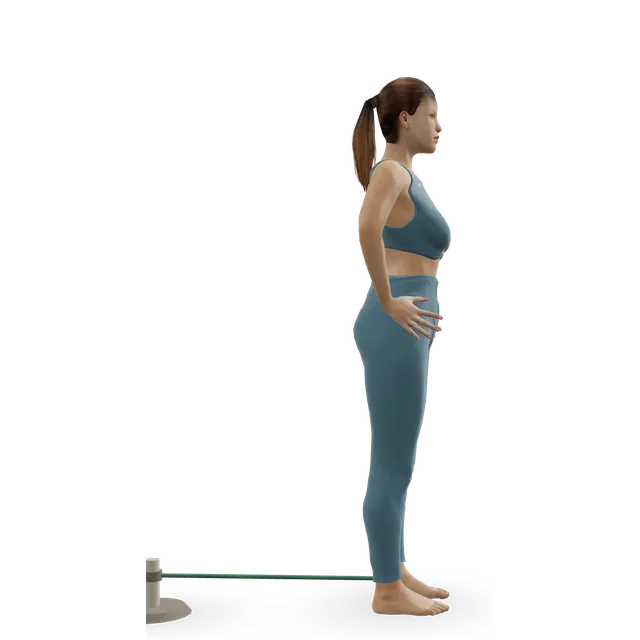
Supine isometric hip abduction (belt press) demonstrated on the 3D figure3D demoSupine isometric hip abduction (belt press)Beginner · A band

3 to 5 holds of 5 to 10 s, twice a day, at a light effort · The move page's dose, from the LEAP trial programme. The core of the plan for outer hip pain

Harder: Lateral band walk

Standing wall-press hip abduction demonstrated on the 3D figure3D demoStanding wall-press hip abductionBeginner · A wall

3 to 5 holds of 5 to 15 s each side, twice a day · The move page's dose. Keep the standing hip level

Easier: Supine isometric hip abduction (belt press) · Harder: Lateral band walk

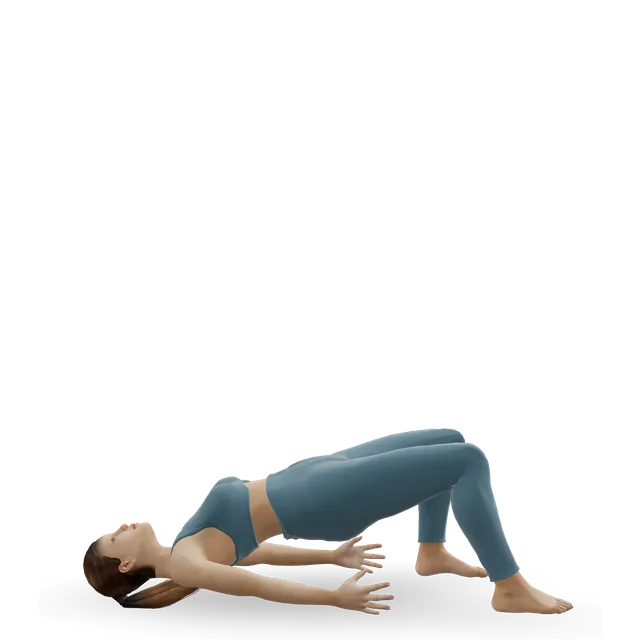
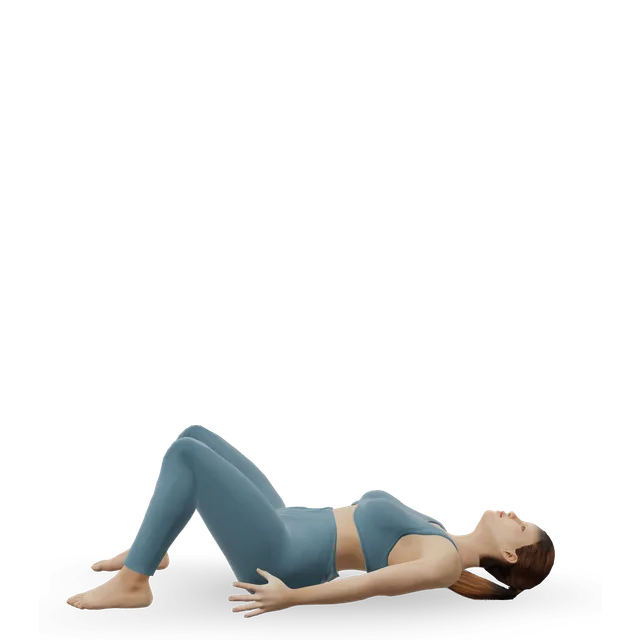
Glute bridge demonstrated on the 3D figure3D demoGlute bridgeBeginner · No equipment

10 slow reps, once a day, knees hip-width apart · As in the hip bursitis guide

Easier: Pelvic tilt into bridge · Harder: Single-leg glute bridge

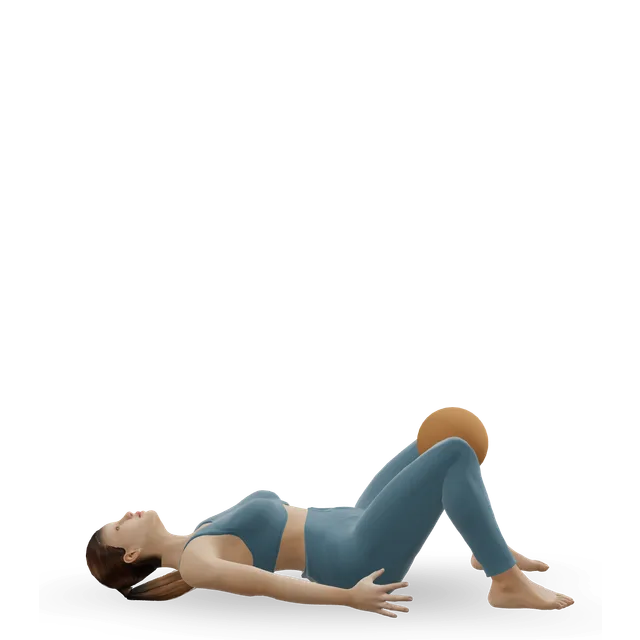
Lying adductor ball squeeze demonstrated on the 3D figure3D demoLying adductor ball squeezeBeginner · Other / check instructions

5 to 10 holds of 5 to 10 s · As in the groin strain guide, at a comfortable effort. For inner-thigh pain

Harder: Copenhagen plank

Dead bug heel taps demonstrated on the 3D figure3D demoDead bug heel tapsBeginner · No equipment

2 sets of 6 to 8 each side · As in the hip flexor guide. For front-of-hip pain, stop short of any pinch

Easier: Bent-knee fall-out · Harder: Forearm plank

Stationary cycling demonstrated on the 3D figure3D demoStationary cyclingBeginner · Cardio machine

15 to 30 min, easy, seated, every other day · Editorial. Raise the saddle a little if the front of the hip pinches

Easier: Recumbent exercise bike · Harder: Air bike intervals

Move on when: These stay within the pain rule, nights are no worse, and 30 minutes of easy spinning leaves the hip no worse the next morning, for about a week.

Follow along: a timer, a cue and the next move, one step at a time.
Stage 2

Build: hip strength on each leg

About weeks 2 to 6, 2 to 3 days a week: shift the load onto one leg with the pelvis level, and load the front of the hip and the inner thigh on purpose. Riding carries on within the pain rule, still short, flat, seated and in light gears. Doses are editorial unless a source is named.

Staggered-stance bridge (offset bridge) demonstrated on the 3D figure3D demoStaggered-stance bridge (offset bridge)Beginner · No equipment

5 slow reps each side once a day, building to 2 sets of 5 to 10 at a somewhat hard effort · The move page's dose, from the LEAP trial programme

Easier: Pelvic tilt into bridge · Harder: Single-leg glute bridge

Standing band hip flexion demonstrated on the 3D figure3D demoStanding band hip flexionBeginner · A band + An anchor point

3 times a week, about 10 min, from a load you can lift 15 times to one you can lift 8 times, over 6 weeks · The hip flexor trial's dose, in healthy adults. For front-of-hip pain, stay below the height that pinches

Easier: Standing march · Harder: Captain's chair knee raise

Standing band hip adduction demonstrated on the 3D figure3D demoStanding band hip adductionBeginner · A band + An anchor point

3 sets of 10 to 12 each side · As in the groin strain guide. For inner-thigh pain

Easier: Lying adductor ball squeeze · Harder: Copenhagen plank

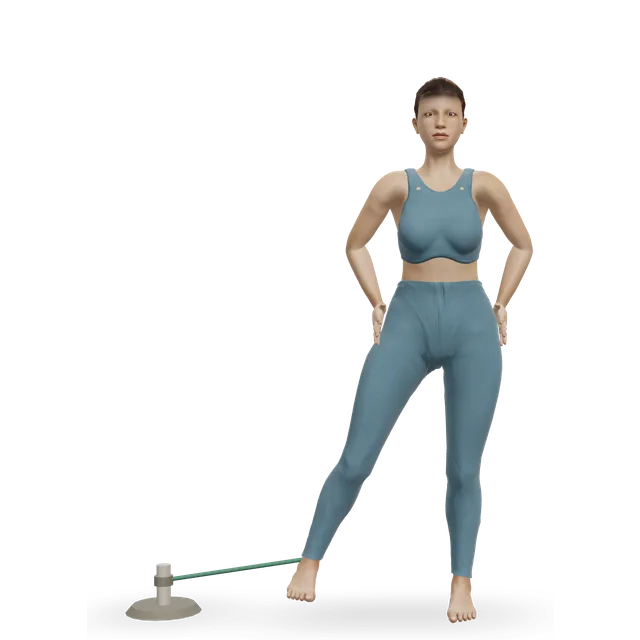
Lateral band walk demonstrated on the 3D figure3D demoLateral band walkBeginner · A band

2 sets of 10 to 15 steps each way with a band · As in the hip pain when running guide

Easier: Hip abduction machine · Harder: Lateral band walk, band at the feet

Split squat demonstrated on the 3D figure3D demoSplit squatIntermediate · No equipment

5 slow reps each side, short range, building to 2 sets of 5 to 10 · As in the hip bursitis guide. Stay above the depth that pinches

Easier: Bodyweight squat · Harder: Reverse lunge

Step-up demonstrated on the 3D figure3D demoStep-upBeginner · A step

2 to 3 sets of 8 each side, low step, pelvis level · As in the hip pain when running guide

Easier: Low step-up · Harder: Dumbbell step-up

Move on when: You can stand on the sore leg for 30 seconds with the pelvis level and no outer hip pain, band hip flexion is comfortable, and 45 to 60 minutes of easy riding on the flat leaves the hip no worse the next morning.

Follow along: a timer, a cue and the next move, one step at a time.
Stage 3

Strength, and back to longer rides

From about week 6, then ongoing: single-leg and inner-thigh strength once or twice a week, the amount a 2026 review of strength training recommends for riders, while riding comes back by our suggested steps. With impingement-type pain, keep the exercises going for at least 3 months, as the consensus advises.

Single-leg Romanian deadlift demonstrated on the 3D figure3D demoSingle-leg Romanian deadliftAdvanced · A dumbbell

2 to 3 sets of 6 to 8 each side · As in the hip bursitis and hip pain when running guides. A short range at first with sitting-bone pain

Easier: Dumbbell Romanian deadlift

Single-leg glute bridge demonstrated on the 3D figure3D demoSingle-leg glute bridgeIntermediate · No equipment

2 to 3 sets of 8 each side · As in the hip bursitis guide

Easier: Glute bridge · Harder: Barbell hip thrust

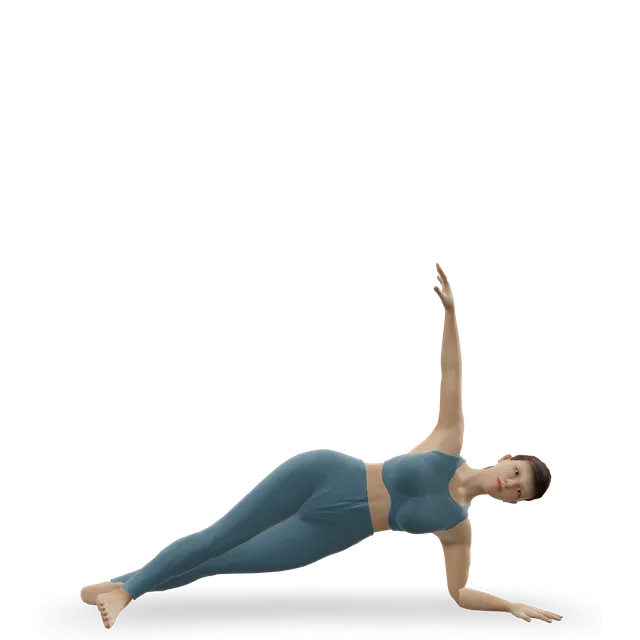
Side plank with leg lift demonstrated on the 3D figure3D demoSide plank with leg liftAdvanced · No equipment

3 sets of 6 to 10 each side · As in the hip impingement guide. Start from a side plank on the knees if you need to

Easier: Side plank · Harder: Copenhagen plank

Side-lying leg raise demonstrated on the 3D figure3D demoSide-lying leg raiseBeginner · No equipment

2 to 3 sets of 8 to 12, lying on the good side · As in the hip bursitis guide: leg slightly behind the body line. The highest gluteus medius activity of 12 exercises in a lab study. Leave it out if lying in this position hurts the outer hip, as the move page cautions

Easier: Lateral band walk · Harder: Lateral band walk, band at the feet

Copenhagen plank demonstrated on the 3D figure3D demoCopenhagen plankAdvanced · A bench or box

Short lever (the top knee on the bench), small sets, 3 times a week, then once a week · The groin strain guide's start, at the frequency of the footballers' programme. Not during acute groin pain, as the move page says

Easier: Hip adduction machine

Stationary cycling demonstrated on the 3D figure3D demoStationary cyclingBeginner · Cardio machine

Every other day: 20 to 30 min at an easy effort, seated, on the hoods or tops · Our suggestion. You should be able to talk in full sentences. Ride a similar route 3 or 4 times within the pain rule before adding anything, then add time, about 10% a week, before hills or harder efforts

Easier: Recumbent exercise bike · Harder: Air bike intervals

Move on when: Our suggestion: keep adding time, about 10% a week, while the pain rule holds, and keep each long ride within your longest pain-free ride of the past month. Hills, standing climbs, sprints, the drops and aero or time-trial positions come back last, one at a time; with a pinch at the front of the hip, the low positions come last of all. If the hip goes above 5 out of 10, or isn't back to normal the next morning, drop back to the last step that was fine.

Follow along: a timer, a cue and the next move, one step at a time.

What to change for now

What to change on the bike today (written steps)

Our 3D figure can't show these changes. Most come from small lab studies in healthy riders or from one sports medicine commentary, and where a step is our suggestion, it says so. Change one thing at a time, a few millimetres at a time and a few rides apart, and note your settings first.

  • 1. Saddle height: with the pedal at the bottom, your knee should be slightly bent. A lower saddle bent the hip more and raised the force through it by about 15% in lab studies. If your hips rock from side to side or you reach for the pedal, it's probably too high (our rule of thumb); a higher saddle raised outer hip muscle activity in a lab study.
  • 2. Saddle setback: with pain at the front of the hip, don't run the saddle far back. Moving the saddle forward or back changes the hip and trunk angles, and one sports medicine commentary suggests moving it forward a little for a stiff or painful hip.
  • 3. Raise the bars or shorten the reach, and ride on the hoods or tops: the drops bent the hip more than the tops in a lab study. Keep the drops, aero bars and time-trial positions for short spells, and bring them back last.
  • 4. Cranks: the same commentary suggests shorter cranks for a pinch at the front of the hip, with the saddle raised by the same amount (for example, 5 mm shorter cranks and a 5 mm higher saddle). No study has tested this, and a review of 47 studies found no clear advice on crank length.
  • 5. Leg length: for a measured difference in leg length, the commentary suggests a shim under the shorter leg's cleat, because the longer leg's hip bends further. It's untested, so get the difference measured first (our suggestion).
  • 6. Gears: spin lighter gears, seated, at a cadence that feels smooth, with fewer standing climbs and sprints for now. Force through the hip rose with power in a lab study.
  • 7. Riding: shorter, flatter rides for a while rather than stopping, because how much you ride is the best-supported link with overuse pain. About half your usual weekly riding time is our starting suggestion.
  • 8. Outer hip pain: off the bike, don't cross your legs, hang on one hip or lie on the sore side. A review explains that these positions squeeze the gluteal tendons, and the LEAP trial's education was about managing that load.
  • 9. Sore sitting bones on both sides: a saddle that suits your sitting-bone width, padded shorts, and building up time in the saddle (our suggestion). Saddle pressure depends on body weight, sitting-bone width and position, and women have wider sitting bones.
  • 10. Pain at one sitting bone: check the saddle isn't too low, or too high and far back, and stand on the pedals for a few strokes every 10 minutes (our suggestion).

Sources 7, 8, 12, 11, 5, 9, 3, 41, 35, 55, 56

A bike fit, injections and surgery

A professional fit eased riding pain over 15 days in one trial, most at the groin, but no study shows a fit prevents hip pain; a physiotherapist who knows cycling can check the hip and the bike together (our suggestion). A steroid injection helped outer hip pain in the short term but did worse than education and exercise over a year.

Keyhole surgery for impingement belongs to our hip impingement guide; in one series without a comparison group, riders who had it were back on the bike at an average of 4.5 months. Surgery on a narrowed iliac artery belongs to a vascular specialist.

Sources 38, 3, 35, 37, 22, 23

Positions to swap, and why

Habit or positionWhy it mattersInstead
Riding on through groin pain that builds with every ride or runA stress fracture of the hip can shift if you keep loading it.Stop, keep weight off the leg and get it checked the same day.
Long spells in the drops, on aero bars or in a time-trial position, with a pinch at the front of the hipThe drops bent the hip more than the tops in a lab study, and low positions bend the hip further at the top of the stroke.The hoods and tops, with low positions back last, in short spells.
A saddle set low or far backBoth bend the hip more at the top of the stroke, and a lower saddle raised the force through the hip by about 15% in a lab study.A slight knee bend at the bottom of the stroke, and the saddle moved forward a few millimetres at a time.
Grinding big gears, sprints and standing climbs while it settlesForce through the hip rose with power in a lab study.Lighter gears, seated, at a smooth cadence, on flatter routes.
Hauling up on the pedalsIt loads the hip flexors (our reading; untested).Spin smoothly and let the push of the other leg bring the pedal round.
Crossing your legs, hanging on one hip or lying on the sore side, with outer hip painThese positions squeeze the gluteal tendons.Knees apart, weight even on both feet, and a pillow between your knees in bed.
Iliotibial (IT) band and outer hip stretches, with outer hip painDrawing the leg across the body presses the gluteal tendons against the bone, as the move page and our hip bursitis guide explain.The lying and standing holds instead.Try: Supine isometric hip abduction (belt press)
Pigeon and figure-four stretches, with outer hip or sitting-bone painDeep hip bending with the thigh drawn across squeezes the outer hip tendons and presses the hamstring tendon against the sitting bone, as our hip pain when running guide explains.Bridges.Try: Staggered-stance bridge (offset bridge)
Deep hamstring stretches, with sitting-bone painStretching presses the tendon against the sitting bone.Bridges and short-range hip hinges.Try: Glute bridge
A kneeling hip flexor stretch that pinches the front of the hipA pinch isn't a stretch. Strength training improves range about as much as stretching, and tight hip flexors haven't been shown to cause pain.Band hip flexion below the height that pinches.Try: Standing band hip flexion
Deep squat holds, with a pinch at the front of the hipDeep positions close to the impingement test tend to pinch, and stretching into it doesn't change a bone shape, as our hip impingement guide explains.Split squats above the depth that pinches.Try: Split squat
Painkillers to get through long ridesThey hide the signal the pain rule relies on (our suggestion).Ride within the pain rule, and ask a pharmacist about pain relief.
Ignoring a leg that goes "dead" at hard effortsRarely, it's a narrowed or kinked artery that needs testing on a bike.See a GP and say when it happens.

Routines to follow

More moves for this area

Questions people ask

Why does my hip hurt when I cycle?

Usually because a tendon, a muscle or the hip joint is doing more than it's used to: more riding, more climbing, a new bike or a lower position. Where it hurts points to the cause, from a pinch at the front of the hip to the tendons on the outside or the hamstring tendon at the sitting bone. The bike decides how far your hip bends at the top of each pedal stroke, which is why small changes to the saddle and bars are worth trying.

Can cycling cause hip pain?

It can bring it on, mostly through how much you ride and how far your hip bends in your riding position. Riding itself is easy on the joint: force through the hip was low at a moderate effort with a normal saddle height, and a cycling and education programme helped people with hip arthritis a little more than usual physiotherapy.

Why does the front of my hip pinch at the top of the pedal stroke?

That's where the hip bends most, and a low or far-back saddle, low bars, the drops and aero bars all bend it further. A pinch with deep bending can be hip impingement or a labral problem, and an examination and an X-ray are the first steps. Try the saddle a little higher and the bars higher, and get it checked if it doesn't settle.

Is my saddle too high or too low for my hips?

With the pedal at the bottom, your knee should be slightly bent. If your hips rock from side to side or you reach for the pedal, it's probably too high, and if your knee stays very bent, it's probably too low (our rules of thumb). A lower saddle bent the hip more and raised the force through it by about 15% in lab studies, so change it a few millimetres at a time.

Why does the outside of my hip hurt after riding?

Usually the gluteal tendons, often called hip bursitis: worse lying on that side, crossing your legs or standing on one leg. Education plus exercise beat a steroid injection in a trial, and avoiding positions that squeeze the tendon is part of it. On the bike, check that your saddle isn't so high that your hips rock (fitters' advice).

Why are my sitting bones sore on the saddle?

If both sides ache, it's usually saddle pressure, commonest in new riders and after a break. A saddle that suits your sitting-bone width, padded shorts and building up your time in the saddle usually help (our suggestion). A deep ache on one side, worse on climbs and on hard chairs, is more often the hamstring tendon, which has its own guide.

Should I stretch my hip flexors?

Stretch if it feels good, but don't stretch into a pinch. Tight hip flexors haven't been shown to cause pain, and strength training improves range about as much as stretching, so the plan uses band hip flexor strengthening instead.

Can I cycle with hip impingement or a labral tear?

Usually yes, within the pain rule and with a more upright position. An international consensus recommends staying active, sport included, alongside at least 3 months of exercise-based treatment. In one series without a comparison group, riders who had keyhole surgery for impingement were back on the bike at an average of 4.5 months.

Is cycling good for hip arthritis?

Yes, for most people. In 221 people with hip arthritis, an 8-week group programme of education and exercise-bike riding did slightly better than usual physiotherapy, though the difference was small, and was good value. Keep the saddle high enough that your hip isn't bent deeply at the top of the stroke.

My leg goes weak or numb when I ride hard, then recovers. What is it?

Most often it's fatigue. But a leg that goes "dead", cramps or aches only at hard efforts and recovers quickly when you ease off, in the same leg each time, can rarely be a narrowed or kinked artery in the pelvis, mostly seen in high-level endurance cyclists. Tests at rest are often normal, so tell your GP it happens on the bike: it needs exercise testing arranged by a vascular specialist.

When is hip pain from cycling serious?

Call 999 or go to A&E if you can't stand or put weight on the leg after a crash, or for numbness around your genitals or bottom with bladder or bowel changes. Get help the same day for groin pain that builds with every ride or run, or hurts at night or when you put weight on the leg, and for a hot, swollen hip or a fever. See a GP for a leg that goes "dead" only at hard efforts.

Do I need a scan?

Usually not at first. Labral tears and impingement shapes are common on scans of hips that don't hurt, so an X-ray comes first if hip-related pain is suspected. A possible stress fracture needs an X-ray and then an MRI scan, and a possible artery problem needs special tests on a bike.

Related exercise guides

Other pain guides

Sources

  1. Wilber 1995 · Overuse injuries in 518 recreational cyclists (survey, Int J Sports Med)
  2. Searle 2026 · The first 9 years of a cycling medicine clinic (clinic series of 323 patients, Curr Sports Med Rep)
  3. Visentini 2022 · Factors linked with overuse injury in cyclists: 18 studies (systematic review, J Sci Med Sport)
  4. Dannenberg 1996 · Injuries among 1,638 riders on a 6-day bicycle tour (prospective cohort study, Am J Sports Med)
  5. Wadsworth 2019 · The role of a bike fit in cyclists with hip pain (clinical commentary, Int J Sports Phys Ther)
  6. Ericson 1988 · Hip, knee and ankle movement during exercise-bike cycling (lab study of 6 people, J Orthop Sports Phys Ther)
  7. Bini 2014 · Saddle height, pedal forces and joint angles in 24 cyclists and triathletes (lab study, Eur J Sport Sci)
  8. Damm 2017 · Hip joint loads during exercise-bike cycling in 5 people with instrumented hip replacements (in vivo study, J Biomech)
  9. Skovereng 2020 · Hand position, joint power and riding posture in 18 cyclists (lab study, PLoS One)
  10. Jongerius 2022 · Force application across riding positions in 55 cyclists (lab study, J Biomech)
  11. Husband 2024 · Riding position changes and cycling biomechanics and physiology: 47 studies (systematic review, J Sports Sci)
  12. Ericson 1985 · Muscle activity during exercise-bike cycling (lab study of 11 people, Scand J Rehabil Med)
  13. Akiho 2024 · Hip bone shape in 11 professional cyclists against controls (case-control study, Int Orthop)
  14. Stone 2016 · Cartilage damage in 16 cyclists at hip arthroscopy against matched controls (case-control study, Arthroscopy)
  15. Mas Martinez 2020 · Recreational sport and hip joint injuries in 185 people having hip arthroscopy (case series, Arthrosc Sports Med Rehabil)
  16. Bender 2004 · Flow limitations in the iliac arteries of endurance athletes (review, Sports Medicine)
  17. Schep 1999 · Flow limitations in the iliac arteries in endurance athletes (review, Int J Sports Med)
  18. Kung 2025 · Diagnosing and treating iliac artery endofibrosis in athletes: 43 studies (scoping review, Vasc Specialist Int)
  19. Peach 2012 · Endofibrosis and kinking of the iliac arteries in athletes (systematic review, Eur J Vasc Endovasc Surg)
  20. Lim 2009 · Iliac artery compression in cyclists: mechanisms, diagnosis and treatment (review, Eur J Vasc Endovasc Surg)
  21. Arnold 2024 · Conservative care, and return to sport after surgery, for iliac artery flow limitation in endurance athletes (scoping review, Sports Medicine)
  22. van Hooff 2022 · Surgical release of a kinked iliac artery in 142 endurance athletes (single-centre series, J Vasc Surg)
  23. van Hooff 2023 · Endarterectomy and patching for iliac artery endofibrosis in 68 endurance athletes (single-centre series, J Vasc Surg)
  24. Veraldi 2015 · Arterial endofibrosis in 2 professional cyclists (case report and review, G Chir)
  25. Robertson 2017 · Femoral neck stress fractures in sport (current concepts review, Sports Medicine International Open)
  26. Wanich 2007 · Cycling injuries of the lower limb (review, J Am Acad Orthop Surg)
  27. Olmedillas 2012 · Cycling and bone health: 31 studies (systematic review, BMC Medicine)
  28. Kanthasamy 2021 · Hip fractures in cyclists under 80 over 6 years at one trauma centre (cohort study, Injury)
  29. Fenelon 2019 · Cycling referrals for pelvic and hip-socket fractures to Ireland's national centre (cohort study, Ir J Med Sci)
  30. Cerynik 2009 · Pelvic fractures in 3 professional cyclists (case series, Sports Health)
  31. Griffin 2016 · The Warwick Agreement on femoroacetabular impingement syndrome (international consensus, BJSM)
  32. Reiman 2020 · Zurich 2018 consensus on classifying and diagnosing hip-related pain (BJSM)
  33. Heerey 2018 · Hip findings on scans in people with and without hip pain: 29 studies (systematic review and meta-analysis, BJSM)
  34. Frank 2015 · Impingement findings on scans of hips without symptoms (systematic review, Arthroscopy)
  35. Mellor 2018 · Education plus exercise, a steroid injection or wait and see for outer hip tendon pain: the LEAP trial (randomised trial of 204, BMJ)
  36. Kemp 2020 · Zurich 2018 consensus on physiotherapist-led treatment of hip-related pain (BJSM)
  37. Frank 2018 · Return to cycling after hip arthroscopy for impingement in 58 riders (case series, Sports Health)
  38. Dias Scoz 2025 · A 3D bike fit vs posture advice in 162 amateur cyclists (randomised trial, Sports Biomech)
  39. Bini 2023 · Pain and body position on the bike in 71 road cyclists (retrospective study, Sports Biomech)
  40. Mellor 2016 · The LEAP trial protocol: exercise and load modification for outer hip tendon pain (BMC Musculoskelet Disord)
  41. Grimaldi 2015 · Gluteal tendinopathy: mechanisms, assessment and management (review, Sports Medicine)
  42. Hölmich 1999 · Active training for long-standing adductor-related groin pain in 68 athletes (randomised trial, Lancet)
  43. Harøy 2019 · The Copenhagen adduction programme and groin problems in 652 footballers (cluster randomised trial, BJSM)
  44. Thorborg 2016 · Band hip flexor training in 33 healthy adults (randomised trial, Knee Surg Sports Traumatol Arthrosc)
  45. Wainwright 2025 · Cycling and education against usual physiotherapy for hip osteoarthritis: the CLEAT trial (randomised trial of 221, Lancet Rheumatol)
  46. Wainwright 2020 · A cycling and education programme for hip osteoarthritis (service evaluation, SAGE Open Med)
  47. Rich 2025 · Physiotherapy or shockwave therapy for hamstring tendon pain at the sitting bone (randomised trial of 100, AJSM)
  48. Boukabache 2021 · Long sitting, inactivity and hip extension (cross-sectional study, Musculoskelet Sci Pract)
  49. Eimiller 2026 · Hip flexor tightness and low back pain in adults not seeking care (cross-sectional study, Clin Biomech)
  50. Brier 1995 · Hip and lower back flexibility and low back pain in runners and cyclists (comparative study, J Manipulative Physiol Ther)
  51. Afonso 2021 · Strength training against stretching for range of motion: 11 trials (systematic review and meta-analysis, Healthcare)
  52. NICE NG226 · Osteoarthritis in over 16s: diagnosis and management (2022)
  53. Silbernagel 2007 · Continuing sport with a pain-monitoring model in Achilles tendinopathy (randomised trial of 38, AJSM)
  54. Smith 2017 · Should exercises be painful in long-lasting muscle and joint pain? (systematic review and meta-analysis of 7 trials, BJSM)
  55. Potter 2008 · Saddle pressure in men and women (lab study, Med Sci Sports Exerc)
  56. Bressel 2010 · Rider attributes and saddle pressure in 40 men (lab study, J Sex Med)
  57. NHS · Hip pain in adults
  58. NHS · Back pain
  59. NHS · Peripheral arterial disease (PAD)
  60. NHS · Sciatica
  61. NHS · Tailbone (coccyx) pain
  62. Weir 2015 · The Doha agreement on terms for groin pain in athletes (consensus, BJSM)
  63. Distefano 2009 · Gluteal muscle activity in 12 common exercises (lab study of 21 people, J Orthop Sports Phys Ther)
  64. de Pablos 2026 · Resistance training for cyclists: evidence and practical recommendations (review, Scand J Med Sci Sports)

Exercise education, not a diagnosis or treatment plan. It is written from the guidelines and studies listed above; review by a clinician is pending. If your pain follows an injury, is severe, is getting worse, or comes with any warning sign listed on this page, get it assessed. Health disclaimer.