Pain guide · Hip pain

Broken pelvis (pelvic fracture): breaks in later life, crash injuries and recovery

A broken pelvis is two different injuries. In later life, a fall from standing height can crack the thin bars of bone at the front of the pelvis (the pubic rami): most of these heal in 6 to 8 weeks without an operation, and walking, with full weight as pain allows, is the treatment. After a crash, a crush or a fall from a height, the ring of the pelvis can break in several places: an emergency that often needs surgery and months of rehabilitation.

This guide covers both: the warning signs, why a broken pelvis in later life deserves the same care as a broken hip, the falls and bone checks that should follow, the long recovery after a high-energy break, and a staged plan from the hospital bed to strength and balance work, with a 3D demo of each move. Your team's plan comes first.

When to get help first

Exercise is for pain that has been checked or is clearly mild and settling.

Get urgent medical help if

  • Call 999 after a crash, a fall from a height or a crush injury with pain in the hips, groin, lower back or pelvis, especially with signs of shock: cold, sweaty skin, a fast or weak pulse, fast or shallow breathing, or blue, grey, pale or blotchy skin or lips. A broken pelvis can bleed heavily inside.
  • Call 999 or go to A&E: severe hip pain after a fall or injury, or you cannot stand, walk or put weight on the leg. In an older adult this can be a broken hip; the leg may look shorter or turned outward. Don't drive to A&E: call 999 and ask for an ambulance.
  • Call 999 or go to A&E: tingling or loss of feeling in the hip or leg after an injury.
  • Call 999: after a fall, someone may have hurt their head, neck, back or hip, or they cannot get up. Keep them comfortable and warm, and help them up only if they can get up themselves: don't try to lift them yourself.
  • Go to A&E or call 999: someone suddenly becomes confused. In hospital, tell the nurses straight away, and say if it isn't normal for the person, even if they have dementia: it can be delirium, which has treatable causes.
  • Call 999 or go to A&E: loss of feeling or numbness around the genitals or bottom, new trouble peeing or controlling your bladder or bowels, changes in genital sensation during sex or problems with erections or orgasm, or pain, tingling, weakness or numbness in both legs. These are signs of cauda equina syndrome, which needs treating in hospital urgently. Don't drive yourself.
  • After a pelvic injury: blood in your pee, being unable to pee, or bleeding from your bottom. Tell the hospital team straight away, or call 999 if you're at home.
  • Same day (GP, NHS 111 or the emergency department), after a pubic rami fracture: a sudden increase in pain, new swelling and bruising of the pelvis or groin, or suddenly being unable to take weight or walk.
  • Pain and swelling in your hip or leg with breathlessness or chest pain: call 999 or go to A&E, and do not drive yourself. It can be a blood clot that has reached the lungs.
  • Throbbing or cramping pain in your hip or leg: ask for an urgent GP appointment or get help from NHS 111. It could be a blood clot.
  • After surgery: a high temperature, or feeling hot, cold or shivery; oozing or pus from the wound; or redness, swelling or pain around it that is getting worse. Ask for an urgent GP appointment or get help from NHS 111, and go to A&E if you feel unwell or feverish and the wound looks infected.

See a doctor or physiotherapist if

  • Pain that still stops you walking after the first few days despite regular painkillers, or isn't easing week by week: tell your GP or the fracture team. UK standards ask for people who can't get moving because of pain to be discussed with a specialist centre.
  • Another fall, feeling unsteady, or being afraid of falling: ask your GP about a falls assessment. You may be able to refer yourself to a falls service without seeing a GP.
  • No one has talked to you about your bones, or you've stopped taking bone treatment: ask your GP or the fracture liaison service about a fracture risk assessment.
  • Bladder, bowel, erection or other sexual problems, or pain during sex, after a pelvic fracture: tell your GP or the pelvic team. Specialist help is available.
  • After a crash: sleep problems, intrusive memories, nightmares, flashbacks, low mood or anxiety that last beyond 4 to 6 weeks, or stop you taking part in rehabilitation: ask your GP or team for psychological support.
  • A limp that isn't improving, or one leg seeming shorter, months after a high-energy fracture: ask for a review.

Understand it

What it is

The pelvis is a ring of bones at the base of the spine: the sacrum and tailbone at the back, and on each side a hip bone made of three parts (the ilium, ischium and pubis), which meet at the hip socket. Because it's a ring, a break in one place often comes with a second break, or torn ligaments, elsewhere in the ring.

Stable breaks (often one break, lined up) include breaks of the wing of the hip bone, partial breaks of the sacrum and breaks of the pubic rami, the thin bars of bone at the front. Unstable breaks (usually two or more, shifted) come from crushing or shearing forces. Pelvic fractures are about 3% of adult fractures.

Source 1

Two very different groupsEmerging evidence

Low-energy (fragility) fractures happen when bones weakened by osteoporosis break in a fall from standing height, or even getting out of the bath or walking downstairs. They're usually stable breaks of one bone, often the pubic rami, but they can be unstable or very painful. In older people, a pubic rami fracture usually follows a fall. In a series of 286 people, pubic rami fractures affected about 7 per 100,000 people a year overall and about 26 per 100,000 over 60; the average age was 75, women were affected 4.2 times as often as men, and a quarter had dementia. NICE (the National Institute for Health and Care Excellence) notes that pelvic fractures are as strongly linked with reduced bone strength as the common fragility fractures of the hip, spine, wrist and shoulder.

High-energy fractures follow car and motorbike crashes, crushes and falls from a height. The pelvis lies close to major blood vessels and organs, so these breaks can bleed heavily and injure the bladder, bowel and nerves, and they often come with head, chest, tummy or leg injuries.

Other pelvic injuries have their own guides: a piece of bone pulled off by a muscle in a young athlete, which rarely makes the pelvis unstable (our hip pointer guide), and stress fractures from repeated load (our stress fracture guide).

Sources 1, 2, 3, 4

How it's recognised, and hidden breaksEmerging evidence

After a low-energy break: pain in the groin, hip or lower back that's worse on moving, tenderness in the groin, mild bruising or swelling, and pain walking; people often keep the hip or knee bent to ease it. It can feel like a broken hip, which has to be ruled out, so the NHS advice after a fall with severe hip pain, or not being able to walk, is 999 or A&E.

X-rays can miss these breaks. Of 63 older people with pubic rami fractures in one hospital's series, 11 were diagnosed only after more scans. In one study of 99 older people whose X-rays showed only the front of the ring broken, a CT (computed tomography) scan found a second break at the back in 6 out of 10. That's a single study, but it explains why a clear X-ray doesn't always end the matter, and why the team may ask for a CT scan, or occasionally an MRI (magnetic resonance imaging) scan. Most low-energy breaks are still treated by walking and pain relief, whatever the scan shows.

Sources 2, 1, 7, 5, 6

How it usually goes after a low-energy breakEmerging evidence

The bone usually heals in 6 to 8 weeks, longer for more severe breaks, with the pain easing gradually. Many people need a hospital stay: in one hospital's series of 63 people who lived at home before, 95% were admitted for pain control and to get walking, for 14 days on average. Of the 38 followed for a year, 92% were living at home, 92% were walking as before, and 84% had little or no groin pain. In a single-centre cohort of 128 people (median age 85), 22.6% moved into a care home after leaving hospital. In 588 people over 65 from 12 hospitals, a third walked less well a year later.

It's a serious injury in later life. In the 588, 91.6% were alive a year later; in the series of 286, 86.7% were alive at a year and 45.6% at 5 years, fewer than other people of the same age, and in that one series from 2001, survival at 5 years was no different from after a broken hip. In 11,624 trauma patients aged 60 and over in Sweden, a pelvic injury independently raised the risk of dying within 30 days and the need for rehabilitation in hospital. Much of this reflects age and other illnesses, and these are observational studies.

Sources 8, 2, 9, 5, 10, 11, 3, 12

How it goes after a high-energy breakEmerging evidence

Stable breaks tend to heal well. After unstable breaks, once bleeding and organ injuries are dealt with, the fracture usually heals well, but a limp can last months and the muscles can take up to a year to recover; pain, reduced mobility, incontinence and sexual problems can follow nerve and organ injury.

In 346 Dutch patients a median of 2.2 years on, full recovery to population levels ranged from 11% to 46% depending on the fracture pattern. In a cohort of 184 people, quality of life improved over 2 years, but almost half still reported pain or discomfort 8 years after the injury, though only about a third answered at 8 years. In 113 people treated with surgery for pelvic or hip socket fractures, 65% of those in work found it hard to go back and 39% never did.

Sources 1, 13, 14, 15

What helps, and how strong the evidence is

Low-energy breaks: walking is the treatmentStrong evidence

NHS leaflets for pubic rami fractures agree: no operation; you can put full weight through the leg as pain allows, with no limits on movement other than avoiding twisting the leg; walking is the best treatment and helps circulation and healing; walk a short distance often, with the walking aid you're given; take regular pain relief, because pain rises with movement; avoid long spells in bed; and expect it to heal in 6 to 8 weeks.

US orthopaedic surgeons (the American Academy of Orthopaedic Surgeons) describe crutches or a walker to avoid bearing weight for up to 3 months for stable breaks; for low-energy breaks in older people, UK practice is full weight as pain allows. A scoping review of 75 studies found pain control, rehabilitation and full weight-bearing increasingly used, though no single element has been linked with better outcomes.

No exercise trial has been done after a pelvic fragility fracture: a review of 37 exercise trials (3,564 people) after fragility fractures of the pelvis or leg found that every one was after a broken hip, apart from one ankle trial. The plan here therefore borrows from falls-prevention evidence and our broken hip guide.

Sources 8, 2, 9, 1, 16, 17

Treated like a broken hipStrong evidence

NICE manages the pain of a suspected low-energy pelvic fracture as in its hip fracture guideline. The British Orthopaedic Association (BOA) standard for older or frail trauma patients covers anyone admitted with a fragility fracture: an older-people's assessment starting within 72 hours, falls and bone health reviews, a nutrition assessment, a check for delirium, not being nursed flat, and a discharge plan with a rehabilitation prescription.

NICE offers blood-thinning injections for a month after a fragility fracture of the pelvis, if the risk of a clot outweighs the risk of bleeding. If pain stops someone with a displaced fragility fracture getting moving, the BOA asks for it to be discussed with a specialist centre for surgery.

Sources 18, 19, 20, 21

Surgery for older people: no clear answerMixed evidence

In a single-centre cohort of 128 people (median age 85), deaths within a year didn't differ significantly between surgery and non-surgical care (16.7% against 24.4%); surgery was used for people who couldn't get moving, at a median of 8 days, and they stayed longer in hospital. In 588 people over 65, surgery for unstable breaks made no significant difference to survival or walking. A 2025 review says studies indicate surgery offers better survival and function, while noting that its role is less defined than for broken hips. All of this is observational, so it's a decision for you and your team.

Sources 10, 11, 22

Bones and falls come nextStrong evidence

NICE asks for a fracture risk assessment in everyone aged 50 or over, and women after the menopause, who has had a fragility fracture, and says pelvic fractures are as strongly linked with weak bones as the common fragility fractures. It offers a falls assessment to people injured in a fall who needed treatment or couldn't get up.

Falls-prevention exercise should be progressive, focused on balance, strength and power, and delivered by trained staff. The World Falls Guidelines recommend balance and functional exercise, such as sit-to-stands and stepping, 3 or more times a week, made harder over at least 12 weeks and kept up, which is their strongest recommendation. The Otago strength and balance booklet gives the home exercises used in the plan here. Osteoporosis doesn't stop a bone healing normally, and most broken bones heal in 6 to 12 weeks.

Sources 4, 23, 24, 25, 26

Bone-building medicine and healingEmerging evidence

Parathyroid hormone treatment (a daily bone-building injection) may speed healing and ease pain after pelvic fragility fractures, but the evidence is limited: 6 studies at high risk of bias. In one small trial of 65 women, healing took 7.8 weeks with daily injections against 12.6 weeks without. Whether a bone medicine suits you is decided as part of NICE's fracture risk assessment.

Sources 27, 28, 4

High-energy breaks: specialist care, then a long rehabilitationStrong evidence

In hospital: a pelvic binder for suspected bleeding, a CT scan, transfer to a major trauma centre, and reconstruction within 72 hours once stable. Afterwards, most people start walking with weight-bearing limits, and foot and leg exercises, as soon as possible; crutches or a walker for 6 to 8 weeks or longer; and full weight usually by about 3 months. The BOA asks for each leg's weight-bearing status, with the reason and how long, to be written down and reviewed at each follow-up.

Early weight-bearing after screw fixation has been reported in 6 small, mostly retrospective studies (297 people) with few failures, but the review calls it a possibility for carefully selected patients, not a routine.

NICE's rehabilitation guideline asks for a rehabilitation plan with goals and a key worker, advice on driving and work, talking about sexual function, reassurance that stress reactions such as disturbed sleep and intrusive memories are common for 4 to 6 weeks, and psychological help if they last or hold rehabilitation back. The BOA asks for specialist follow-up for pain and for physical, psychological and bladder problems, and written advice about sexual problems.

Sources 21, 18, 1, 29, 30, 31

How much pain is OK while you exercise?

Pain relief first, then an ache that settlesEmerging evidence

After a low-energy break, pain at rest is often absent and rises with movement and weight-bearing. Keep on top of the painkillers you're prescribed: an NHS leaflet says it helps you take part in therapy, and moving is essential to healing. Walk short distances often rather than one long walk.

The Otago strength and balance booklet's rule: if a joint or muscle hurts, stop, check your position and try again, and get advice if the pain persists. Feeling your muscles working, or slight soreness the next day, is normal. Stop straight away for chest pain, dizziness or severe breathlessness.

Pain that still stops you walking despite regular painkillers is a reason for a review, not for staying in bed.

After a high-energy break, the weight-bearing instruction for each leg overrides any pain rule. Within it, aim for an ache that settles within about 30 minutes and is no worse the next morning (borrowed from an NHS knee fracture leaflet's rule).

Sources 9, 8, 25, 29, 21

The exercise plan: 4 stages

Start at the first stage. Each move opens a full guide with a 3D demo.

Stage 1

Up and moving within your limits (the first days to about 2 weeks, as your team allows)

As your team allows. After a low-energy break, get up and walk with the frame or aid you're given, putting full weight through the leg as pain allows, taking regular painkillers, avoiding twisting the leg and avoiding long spells in bed. You may be given blood-thinning injections for a month. After a high-energy break, take weight exactly as written for each leg, often none or limited on the injured side for weeks, and move your feet and legs as soon as you can after surgery. Bed and chair exercises little and often; NHS leaflets leave the number of repetitions to your physiotherapist.

Ankle circles demonstrated on the 3D figure3D demoAnkle circlesBeginner · No equipment

Move both ankles and toes up and down, then circle each ankle: 10 slow circles each way · The move page's dose; an NHS pubic rami leaflet's circulation exercise

Harder: Ankle CARs (controlled articular rotations)

Supine heel slide demonstrated on the 3D figure3D demoSupine heel slideBeginner · No equipment

10 slow repetitions, once or twice a day · The move page's dose; an NHS leaflet's bend-and-straighten exercise

Harder: Hip windshield wipers

Supine isometric hip abduction (belt press) demonstrated on the 3D figure3D demoSupine isometric hip abduction (belt press)Beginner · A band

3 to 5 gentle holds of 5 to 10 s, twice a day · The move page's dose, from the LEAP trial programme. An NHS leaflet slides the leg out to the side and back instead; within your limits

Harder: Lateral band walk

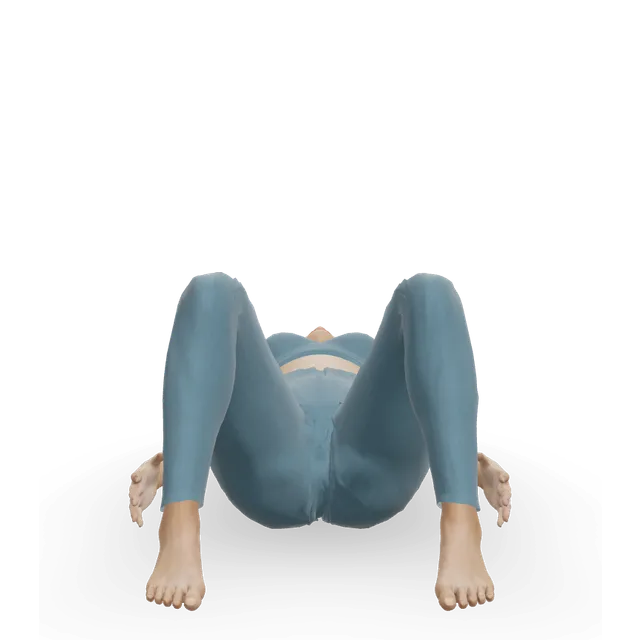
Glute bridge demonstrated on the 3D figure3D demoGlute bridgeBeginner · No equipment

Lift your bottom off the bed and hold 5 s, 5 to 10 times · The 5 s hold is an NHS leaflet's; the repetitions are editorial. Only if lying on your back with bent knees is comfortable and your team agrees

Easier: Pelvic tilt into bridge · Harder: Single-leg glute bridge

Seated knee extension (chair) demonstrated on the 3D figure3D demoSeated knee extension (chair)Beginner · A bench or box + Something with weight

Sitting, straighten the knee so the foot lifts, hold 5 s: up to 10 each leg · The 5 s hold is an NHS leaflet's; up to 10 is the Otago programme's

Easier: Quad set (static quads) · Harder: Leg extension

Move on when: You can get in and out of bed and a chair, walk short distances with your aid, manage the toilet and any stairs at home, and your team agrees a plan for going home.

Follow along: a timer, a cue and the next move, one step at a time.
Stage 2

Walking further and standing exercises (low-energy breaks: about weeks 1 to 6; high-energy breaks: once your weight limits lift; as your team allows)

As your team allows. Walk short distances often, adding a little at a time. On stairs, the good leg goes up first and the injured leg comes down first, with the walking aid as taught. Avoid low chairs. Do the standing exercises holding a worktop or the back of a sturdy chair; chair exercises suit days you can't stand for long. Everyday steps are in the notes below.

Standing march demonstrated on the 3D figure3D demoStanding marchBeginner · No equipment

1 to 2 minutes, holding a support · The Otago programme's warm-up dose

Easier: Seated march · Harder: Standing band hip flexion

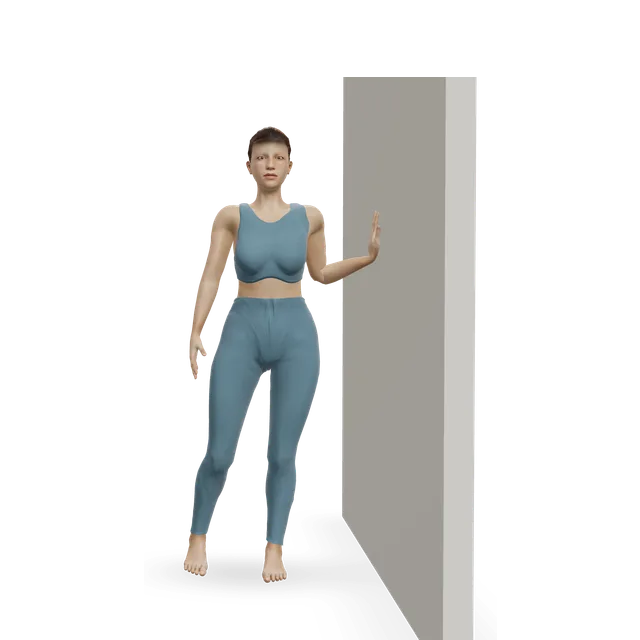
Wall side leg lift (standing side kick at the wall) demonstrated on the 3D figure3D demoWall side leg lift (standing side kick at the wall)Beginner · A wall

Lift the leg out to the side without leaning: up for a slow count of 3, down for 5, up to 10 each leg, holding a support · The Otago programme's dose

Harder: Lateral band walk, band at the feet

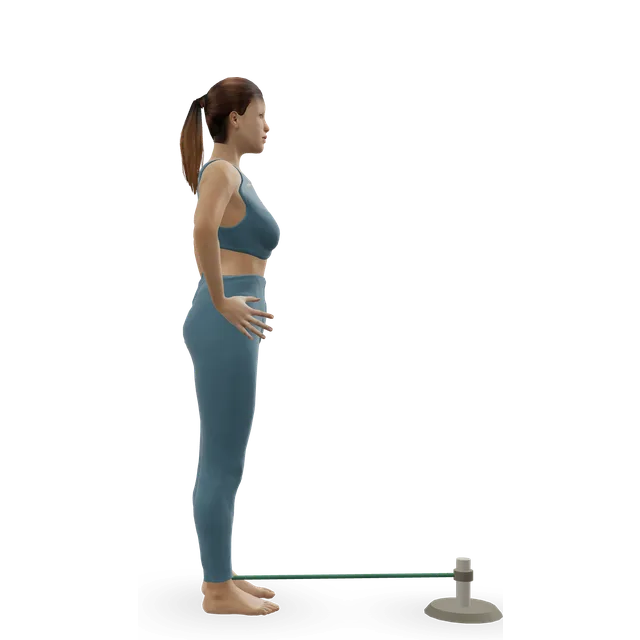
Standing band hip extension demonstrated on the 3D figure3D demoStanding band hip extensionBeginner · A band + An anchor point

No band: holding a chair, take the straight leg back without leaning forward, 10 times each leg · Editorial dose; an NHS leaflet's standing hip exercise

Harder: Back extension on a 45-degree bench

Slow calf raise demonstrated on the 3D figure3D demoSlow calf raiseBeginner · A wall

Holding on: up for a count of 3, down for 5, 10 to 20 times · The Otago programme's dose

Easier: Seated bent-knee calf raise (soleus raise) · Harder: Standing dumbbell calf raise

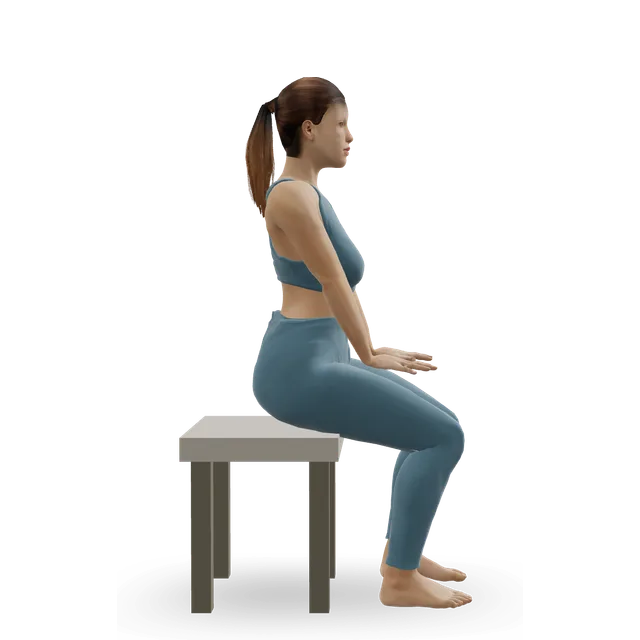
Sit to stand, pushing on the thighs demonstrated on the 3D figure3D demoSit to stand, pushing on the thighsBeginner · A bench or box

Up to 10, slowly, using your hands as needed · The Otago programme's dose

Harder: Bodyweight squat

Treadmill walking demonstrated on the 3D figure3D demoTreadmill walkingBeginner · Cardio machine

Short walks several times a day, indoors first with your aid, then outside · Editorial dose. Walking at home counts

Harder: Treadmill jogging

Move on when: You walk around your home confidently with your aid, manage your stairs, and the standing exercises feel easy.

Follow along: a timer, a cue and the next move, one step at a time.
Stage 3

Strength and balance: 3 times a week for at least 12 weeks (from about week 6, as your team allows)

As your team allows. Balance and functional exercise 3 or more times a week, made harder over at least 12 weeks and kept up, is the falls-prevention dose with the strongest evidence. Ask for a falls assessment if you were injured in a fall or couldn't get up. Take away hand support one finger at a time as your balance improves. Track progress with the timed up and go and chair stand tests.

Sit to stand from a chair demonstrated on the 3D figure3D demoSit to stand from a chairBeginner · A bench or box

Up to 10, lowering slowly; build to 2 to 3 sets · Up to 10 is the Otago programme's dose; the sets are editorial. Hands only if needed

Easier: Sit to stand, pushing on the thighs · Harder: Bodyweight squat

Low step-up demonstrated on the 3D figure3D demoLow step-upBeginner · A step

Up to 5 each leg, slowly, holding a rail; build to 8 to 12 · The first dose is the NHS balance exercises'; the build is editorial

Harder: Step-up

Tandem stance and heel-to-toe walk demonstrated on the 3D figure3D demoTandem stance and heel-to-toe walkBeginner · A wall

At least 5 heel-to-toe steps, fingers on a wall · The NHS balance exercises' dose

Easier: Semi-tandem stance · Harder: Single-leg stand

Single-leg stand demonstrated on the 3D figure3D demoSingle-leg standBeginner · A wall

Fingertips on a wall: hold 5 to 10 s, 3 times each side; build to 30 s · The first dose is the NHS balance exercises'; the build is editorial

Easier: Tandem stance and heel-to-toe walk · Harder: Single-leg reach matrix

Side-stepping (sideways walking) demonstrated on the 3D figure3D demoSide-stepping (sideways walking)Beginner · A wall

10 steps each way along a worktop · The move page's dose, from the NHS balance exercises

Harder: Lateral band walk

Get up and down from the floor demonstrated on the 3D figure3D demoGet up and down from the floorBeginner · No equipment

Learn it with a physiotherapist, with someone present and a sturdy chair nearby; then 2 to 3 practice runs a session · Editorial dose: the move page's 5 to 8 cycles are for people already confident

Easier: Sit to stand from a chair · Harder: Bodyweight get-up

Move on when: Keep going, and progress one thing at a time: less support, more repetitions or a higher step.

Follow along: a timer, a cue and the next move, one step at a time.
Stage 4

Back to work, sport and activities (mostly after high-energy breaks; from about 3 months, as your team allows)

As your team allows. Full weight is usually allowed by about 3 months after a high-energy break; a limp can last months while the muscles recover, which can take up to a year. Work towards the goals in your rehabilitation plan for work, driving and leisure. In later life, keep the strength and balance sessions going and walk most days. Doses are editorial unless named.

Step-up demonstrated on the 3D figure3D demoStep-upBeginner · A step

3 sets of 8 to 12 each leg · Editorial dose

Easier: Low step-up · Harder: Dumbbell step-up

Split squat demonstrated on the 3D figure3D demoSplit squatIntermediate · No equipment

3 sets of 8 each leg · Editorial dose. Pad the back knee

Easier: Bodyweight squat · Harder: Reverse lunge

Glute bridge demonstrated on the 3D figure3D demoGlute bridgeBeginner · No equipment

3 sets of 10 to 12; then single-leg bridges · Editorial dose

Easier: Pelvic tilt into bridge · Harder: Single-leg glute bridge

Lateral band walk demonstrated on the 3D figure3D demoLateral band walkBeginner · A band

2 to 3 sets of 10 steps each way · Editorial dose. Use a lighter band for sharp pain on the outside of the hip

Easier: Hip abduction machine · Harder: Lateral band walk, band at the feet

Recumbent exercise bike demonstrated on the 3D figure3D demoRecumbent exercise bikeBeginner · Cardio machine

10 to 20 minutes at a moderate effort, building towards 30 · The move page's dose. A recumbent seat is kinder than an upright saddle after a pelvic injury (our suggestion)

Harder: Stationary cycling

Treadmill jogging demonstrated on the 3D figure3D demoTreadmill joggingIntermediate · Cardio machine

The NHS walk-jog programme, once your team clears you and 30 minutes of fast walking is pain-free · An Oxford NHS return-to-running leaflet, used here as a guide; the weeks are in the notes below

Easier: Treadmill walking · Harder: Sprint intervals

Move on when: This is the stage to keep going with. If walking, balance or pain get worse rather than better, see your GP or team.

Follow along: a timer, a cue and the next move, one step at a time.

What to change for now

Getting into bed (written steps)

From NHS pubic rami leaflets.

  • 1. Sit on the edge of the bed, then shuffle your bottom back onto the bed as far as you can.
  • 2. Then lift your legs up. If the injured leg is hard to lift, the therapy team can teach you an easier way.
  • 3. Sleep in whichever position is comfortable. A pillow between your knees helps when you lie on your side.

Sources 8, 9

Getting into and out of a car (written steps)

From an NHS pubic rami leaflet.

  • 1. Have the seat pushed right back and reclined slightly.
  • 2. Stand with your back to the seat and lower yourself slowly onto its edge.
  • 3. Push yourself back towards the driver's seat as far as you can, then lift your legs in slowly.
  • 4. Getting out: step out onto the road rather than straight onto the pavement.

Source 9

Stairs, chairs, washing and dressing (written steps)

From NHS pubic rami leaflets. The therapy team can provide equipment if you need it.

  • 1. Stairs: going up, the good leg first, then the injured leg, then the walking aid. Going down, the walking aid first, then the injured leg, then the good leg.
  • 2. Chairs: avoid low chairs and long spells sitting. Use the arms of the chair to lower yourself gently.
  • 3. Washing and dressing: sit at first. Dress the injured leg first and undress it last; long-handled aids help with your feet.
  • 4. Bathing: if getting in and out of the bath isn't safe yet, strip-wash. With a shower cubicle, step in with the good leg first.

Sources 8, 9

The walk-jog programme (written steps)

From an Oxford NHS leaflet written for coming back from any injury lay-off. We use it here as a guide for younger people after a high-energy break, once your team clears you.

  • 1. Start once 30 minutes of fast walking is pain-free, and your team is happy for you to run.
  • 2. Week 1: jog 1 minute, walk 1 minute, for 30 minutes. Do each week's session every other day.
  • 3. Week 2: jog 2 minutes, walk 1 minute, for 30 minutes.
  • 4. Week 3: jog 4 minutes, walk 1 minute, for 30 minutes.
  • 5. Week 4: jog 9 minutes, walk 1 minute, for 30 minutes.
  • 6. Week 5: jog 15 minutes, walk 1 minute.
  • 7. Week 6: jog 30 minutes without stopping.
  • 8. Move up a level after a week without pain, and down a level if it hurts. From week 7, add no more than 10% a week.

Source 32

Positions to swap, and why

Habit or positionWhy it mattersInstead
Staying in bed 'to let it knit' after a low-energy breakWalking is the treatment, and NHS leaflets say avoid long spells in bed.Short walks often with your aid, and sit-to-stands to get up and dressed and sit out of bed.Try: Sit to stand, pushing on the thighs
Rationing painkillersPain on movement stops you walking, and moving helps it heal.Take them regularly as prescribed, timed before walks and exercises.
Twisting on the injured legNHS leaflets advise avoiding twisting.Turn with small steps (our suggestion).
Low, soft chairsNHS leaflets advise avoiding them.A firm, higher chair with arms; use the arms to lower yourself.Try: Sit to stand from a chair
Clutter, loose rugs and dark night-time tripsMost low-energy breaks follow a fall.Clear floors, night lights, and ask about a home hazard check as part of a falls assessment.
More weight than allowed after a high-energy breakUK standards ask for a written weight-bearing status for each leg.Crutches or a frame exactly as taught.
An upright bike saddle soon after a pelvic injuryThat bike's page warns about saddle numbness, and a saddle presses on the pelvis (our reasoning).A recumbent bike with a backrest seat.Try: Recumbent exercise bike
Clamshells lying on the injured side early onLying on it is often painful; that move's page says pad the bottom hip.Standing side leg lifts at a worktop.Try: Wall side leg lift (standing side kick at the wall)
Keeping quiet about bladder, bowel or sexual problemsThey can follow a pelvic fracture, and specialist help exists.Tell your GP or the pelvic team.
Stopping the exercises when physiotherapy endsThe falls-prevention dose is 3 times a week for at least 12 weeks, and kept up.Strength and balance 3 times a week, for good.
Stopping bone treatment on your ownYour GP or fracture liaison service reviews how long you need it.Talk to them first about side effects or worries.

Routines to follow

More moves for this area

Questions people ask

How do I know if I've broken my pelvis?

After a fall, pain in the groin, hip or lower back that's worse on moving, tenderness in the groin and pain walking are the usual signs. Call 999 or go to A&E for severe hip pain after a fall, or if you can't walk or put weight on the leg: a broken hip has to be ruled out. After a crash or a fall from a height, call 999.

Can you walk with a broken pelvis?

With most low-energy breaks, yes: NHS leaflets let you put full weight through the leg as pain allows, and walking is the best treatment. After a high-energy break, you may need crutches with limited weight for 6 to 8 weeks or longer. Your team's plan comes first.

Do I need an operation?

Most low-energy breaks heal without one. Unstable breaks, especially after crashes, often need surgery, and a fragility fracture that stops you walking despite painkillers may be discussed with a specialist centre.

How long does a broken pelvis take to heal?

A pubic rami fracture usually heals in 6 to 8 weeks, with the pain easing gradually through that time. After a high-energy break, full weight usually comes by about 3 months, and the muscles can take a year to recover.

Is a broken pelvis serious in later life?

It can be. It usually follows a fall, many people need a hospital stay and extra help for a while, and NICE says pelvic fractures are as strongly linked with weak bones as broken hips, so falls and bone checks should follow. Most people who were living at home before get back home and walking.

Why didn't the X-ray show it?

Some breaks don't show on an X-ray, especially at the back of the pelvis. In one study of 99 older people whose X-rays showed only the front of the pelvis broken, a CT scan found a second break at the back in 6 out of 10. Most are still treated by walking and pain relief.

What exercises help after a broken pelvis?

Ankle, knee and hip movements in bed and in a chair, then standing exercises holding a worktop, then strength and balance work 3 times a week for at least 12 weeks. No trial has tested exercise after a pelvic fracture itself, so the plan borrows from falls prevention and recovery after a broken hip.

Will I have to stay in hospital?

Many older people do, for pain control and to get walking again: about 2 weeks on average in one series. UK standards ask for an older-people's assessment within 72 hours, with checks for confusion, falls and bones.

How can I stop another fall or fracture?

Ask for a falls assessment and a falls-prevention exercise programme, and for a fracture risk assessment, because a broken pelvis is linked with weak bones. Strength and balance exercise 3 times a week for at least 12 weeks has the best evidence.

What does recovery look like after a crash?

Often specialist surgery, weeks of limited weight on the leg, and then a long rebuild, with a limp that can last months. Years later, many people still have some pain, and going back to work is hard for many. A rehabilitation plan with a key worker should cover work, driving and support.

Can a broken pelvis affect my bladder or sex life?

It can, especially after high-energy breaks, through nerve or organ injury. UK standards ask for specialist follow-up and written advice about sexual problems, and NICE asks teams to talk about sexual function during rehabilitation. Tell your GP or team: help is available.

I keep reliving the crash: is that normal?

Disturbed sleep, intrusive memories, nightmares and low mood are common for 4 to 6 weeks after a traumatic injury. If they last, or get in the way of rehabilitation, ask your GP or team for psychological support.

Related exercise guides

Other pain guides

Sources

  1. AAOS OrthoInfo · Pelvic fractures
  2. Dorset County Hospital NHS · Pubic rami fracture management (physiotherapy leaflet, 2026)
  3. Hill 2001 · Fractures of the pubic rami: epidemiology and five-year survival (series of 286, J Bone Joint Surg Br)
  4. NICE NG259 · Osteoporosis: risk assessment, treatment, and fragility fracture prevention (2026)
  5. Koval 1997 · Pubic rami fractures in older people (series of 63, J Orthop Trauma)
  6. Kułakowski 2026 · CT scans in suspected fragility fractures of the pelvis (prospective study of 99, J Clin Med)
  7. NHS · Hip pain in adults
  8. Worcestershire Acute Hospitals NHS · Fractured pubic rami (patient leaflet)
  9. North Cumbria Integrated Care NHS · Physiotherapy: pubic rami fracture (leaflet, 2025)
  10. Herteleer 2026 · Surgery or not for fragility fractures of the pelvis (cohort of 128, Eur J Trauma Emerg Surg)
  11. Takegami 2026 · Survival and walking after fragility fractures of the pelvis (multicentre cohort of 588, J Orthop Sci)
  12. Enocson 2026 · Pelvic injuries in trauma patients aged 60 and over in Sweden (national registry study of 11,624, Arch Orthop Trauma Surg)
  13. Therrien 2026 · Recovery after pelvic ring injuries, by pattern (cohort of 346, PLoS One)
  14. Van Den Berg 2026 · Quality of life up to 8 years after pelvic fractures (cohort of 184, Injury)
  15. Tremblay 2026 · Return to work and sport after surgery for pelvic and hip socket fractures (cohort of 113, Orthop Traumatol Surg Res)
  16. Endo 2025 · Non-surgical care of fragility fractures of the pelvis (scoping review of 75 studies, Injury)
  17. Keene 2020 · Exercise trials after fragility fractures of the pelvis or leg (systematic review of 37 trials, BMC Musculoskelet Disord)
  18. NICE NG37 · Fractures (complex): assessment and management (2016, updated 2022)
  19. British Orthopaedic Association · BOAST: the care of the older or frail orthopaedic trauma patient (standard, 2019)
  20. NICE NG89 · Venous thromboembolism in over 16s: reducing the risk of hospital-acquired deep vein thrombosis or pulmonary embolism (2018, updated 2019)
  21. British Orthopaedic Association · BOAST: the management of patients with pelvic fractures (standard, 2018)
  22. Gordon 2025 · Fragility fractures of the pelvis: current understanding and open questions (review, J Clin Med)
  23. NICE NG249 · Falls: assessment and prevention in older people and in people 50 and over at higher risk (2025)
  24. Montero-Odasso 2022 · World guidelines for falls prevention and management for older adults (Age Ageing)
  25. Later Life Training · Otago strength and balance home exercise programme: beginners (booklet, 2018)
  26. Royal Osteoporosis Society · Broken hips, wrists and other bones
  27. Crooks 2026 · Parathyroid hormone for pelvic fragility fractures (meta-analysis of 6 studies, J Clin Med)
  28. Peichl 2011 · Parathyroid hormone and healing of pubic bone fractures in older women (RCT of 65, J Bone Joint Surg Am)
  29. British Orthopaedic Association · BOAST: mobilisation and weight-bearing after orthopaedic surgery or musculoskeletal injury (standard, 2024)
  30. Junaidi 2026 · Early weight-bearing after surgery for pelvic and hip socket fractures (systematic review of 6 studies, Narra J)
  31. NICE NG211 · Rehabilitation after traumatic injury (2022)
  32. Oxford University Hospitals NHS · Return to Running Programme (OxSport patient leaflet, 2024)
  33. NHS · Broken leg
  34. NHS · Falls
  35. NHS · Sudden confusion (delirium)
  36. NHS · DVT (deep vein thrombosis)

Exercise education, not a diagnosis or treatment plan. It is written from the guidelines and studies listed above; review by a clinician is pending. If your pain follows an injury, is severe, is getting worse, or comes with any warning sign listed on this page, get it assessed. Health disclaimer.