Speed, then one take-off
A faster run-up gave longer jumps in an elite long jumper, and in an experienced vaulter every extra metre a second of run-up speed added about 0.54 m of height. Sprint speed is part of jump training.
Sport
The jumps turn sprint speed into height or distance in one take-off, through one leg. Among decathletes and heptathletes at international championships, the pole vault, high jump and long jump had the highest injury rates of any event. Ankles, knees, hamstrings and backs take most of the injuries, and in the pole vault a fall off the bed or into the box can be catastrophic.
This guide covers what each jump asks of your body, the common injuries, pole vault safety (landing beds, box padding, poles and helmets, with the rules that set them), safe pits and beds, backs in young vaulters and jumpers, and the training with evidence behind it, including a randomised trial in teenage long jumpers. There are two workouts with 3D demos: a 20-minute warm-up and a 50-minute strength and landing session. We're not connected with any athletics federation.
A faster run-up gave longer jumps in an elite long jumper, and in an experienced vaulter every extra metre a second of run-up speed added about 0.54 m of height. Sprint speed is part of jump training.
Among decathletes and heptathletes at 11 championships, the pole vault, high jump and long jump had the most injuries per start. In college jumpers, ankle sprains led in the long jump, a big-toe tendon problem in the high jump and hamstring strains in the pole vault.
In US schools and colleges, most catastrophic pole vault injuries were head injuries from landing off the bed or in the box. Deaths fell after bigger landing pads and box padding became compulsory there in 2003, but other changes came at the same time, so the fall can't be credited to the pads alone.
World Athletics and UK Athletics set minimum sizes for pole vault and high jump beds and require padding, and UK safety guidance says no vaulting should start until all the pads and padding are in place.
A stress fracture of the lower back (spondylolysis) was found in 28.6% of 21 vaulters scanned, and in a third of college vaulters' lower back injuries. Jumper's knee is common in jump sports, and ankle sprains are common in landings.
In a small randomised trial in 36 teenage long jumpers, pairing heavy squats and Romanian deadlifts with jumps raised the vertical jump by 15.6%, against 5.7% for lifting alone.
Source 13
The long jump and triple jump are run-ups to a take-off board and a sand pit, the triple jump with a hop and a step before the jump. The high jump is a one-foot take-off over a bar onto a bed. The pole vault is a run-up, a plant into a box, a swing up on the bending pole and a fall onto a bed, often from 3 m or more. At top competitions the long jump board sits 1 m to 3 m from the pit, and the triple jump board at least 13 m (men) or 11 m (women) away.
In 71 jumps by one elite long jumper, a faster run-up gave a longer jump, with a quicker, flatter take-off. In 17 vaults by one experienced vaulter, peak height rose about 0.54 m for every 1 m/s of run-up speed, about two-thirds of it from a higher push off the pole. These are studies of single athletes.
The take-off leg's knee and Achilles tendon; the big-toe tendon in high jumpers; the ankles in landings and take-offs; the hamstrings; the lower back in vaulters at the plant and take-off; the bones of the foot; and, rarely but catastrophically, the head and neck in vault falls.
The Compendium of Physical Activities lists the high, long and triple jumps, the javelin and the pole vault together at 6.0 metabolic equivalents (METs). The value is estimated rather than measured.
Source 16
Sprint speed, strong legs and hips, tendons that cope with landings, ankles that land well, and a trunk that controls the arch and the twist; vaulters also need grip and pulling strength.
The studies below use different measures (per start, per athlete-exposure, per athlete per season), so their numbers aren't comparable with each other. An athlete-exposure is one athlete at one practice or competition.
The numbers, by group and measure:
Ankle sprains were the long jumpers' commonest injury (23.3%) in the Japanese college study, and the ankle took 18.2% of US high school jumpers' injuries. Our ankle sprain and chronic ankle instability guides cover them.
Jumper's knee affected 14.2% of 613 Norwegian elite athletes from nine sports, high jumpers and sprinters among them, and 8.5% of 891 Dutch non-elite athletes, more often in younger, taller and heavier athletes. Growing jumpers more often have Osgood-Schlatter or Sinding-Larsen-Johansson. Our jumper's knee, Osgood-Schlatter, Sinding-Larsen-Johansson and Achilles tendinopathy guides cover these.
In the Japanese college study, the commonest high jump injury was tendon pain in the flexor hallucis longus, the muscle that bends the big toe (15.8% of high jump injuries). We don't have a guide to it yet.
Source 4
In the US college vaulters, 83% of lower back injuries happened at the plant and take-off, and a third of their lower back injuries were spondylolysis, a stress fracture of a vertebra, three-quarters of them ending the vaulter's season. Spondylolysis was found in 28.6% of 21 male vaulters scanned in Japan, and pooled studies put these defects in about 12% of track and field athletes, against about 6% of adults generally. Our back pain and spondylolisthesis guides cover them.
Jumpers, sprinters and hurdlers had more stress fractures in the foot than distance runners. In 110 teenagers with stress injuries of the navicular, a high-risk bone in the midfoot, 32% did cross-country or track, and 85% healed without surgery. Our stress fracture guide covers them.
From 1982 to 1998 there were 32 catastrophic pole vault injuries in US schools and colleges, 31 of them head injuries, and half were fatal. From 2003 to 2011 there were 19, about 2 a year, most in or around the vault box; the authors put the rate per vaulter at about 30 times higher in college than in high school. In 2024/25, the direct catastrophic injuries in all US school and college sport included 2 in the pole vault and 1 in the triple jump.
Associations, not proven causes:
No injury prevention programme has been tested in jumpers alone. Equipment rules and safety guidance are graded as what they say, not as proof that they work.
The US school and college rule changes of 2003, as Boden 2012 reports them, enlarged the landing pad behind the box (from 16 ft × 12 ft to 19 ft 8 in × 16 ft 5 in) and required at least 2 inches of padding in the box collar. Afterwards, injuries from landing off the pad fell more than threefold and deaths fell from about 1.0 to 0.22 a year, but injuries in or around the box rose, often where box padding was missing. Other changes came at the same time, so the fall can't be credited to the pads alone.
None of the 19 vaulters catastrophically injured after 2003 wore a helmet. The authors thought helmets warranted, but warned that a fall from 3 m or more onto a hard surface "would easily exceed the protection capabilities of a helmet", and no study has measured their effect. Neither World Athletics nor UK Athletics requires one. A helmet is a personal choice and no substitute for a full, padded, correctly placed bed and a coach (our reading).
84% of 3,335 US vaulters surveyed had landed in the box at least once in their careers (77% 1 to 3 times), and 3% of those needed medical care. Coaching vaulters onto the middle of the bed, and box padding, are the measures; no trial has tested them.
Source 6
UK competition safety guidance says compacted or shallow sand "is the most frequent cause of injury", so pits are dug over to at least 30 cm and raked, and nobody should jump or vault onto a bed smaller than UK Athletics' specification. The details are in the pits and beds section.
Landing badly was the commonest cause of young vaulters' injuries, and at one meet no landing injury followed a good landing. No trial has tested landing training in jumpers; our warm-up and workout rehearse landings first, as our jump guide does.
Jumper's knee is common in jump sports, and whether jump volume causes it is uncertain, as our jump guide explains. Treatment is staged loading with tendon pain kept at 3 out of 10 or less, as our jumper's knee guide explains. We found no prevention trial in jumpers.
Across 25 randomised trials in many sports, strength training cut sports injuries to under a third, while stretching programmes made no difference.
Source 28
Without good evidence in jumpers:
Run-up speed drove distance and height in the single-athlete studies, so sprint training, as in our sprint guide and sprinting page, is part of jump training.
Two sessions a week for 8 to 12 weeks, with about 80 to 100 landings a session for beginners and 100 to 120 for intermediate athletes; landings first, then jumps, then low depth jumps. Our jump guide sets out the progression.
36 boys aged 14 to 16 with about 5 years of long jump training were randomised to complex training (lifts paired with jumps) or lifting alone: three 30-minute sessions a week for 8 weeks, after a 4-week phase learning the movements, on top of three 90-minute technique sessions and two sprint sessions a week. The complex group's programme:
Source 13
In a randomised crossover trial in 27 national-level male junior jumpers and sprinters, 19 weeks of plyometrics with the drop height and volume set by each athlete's reactive strength improved the 60 m and the standing triple jump more than traditional plyometrics, and the group that trained as usual didn't improve over the whole trial. After the first 8 weeks, though, the usual-training group had improved its standing long jump as much as either plyometric group.
Source 30
Weightlifting raised jump height about as much as jump training, as our power clean guide explains, where it's taught from the hang with light weights and a coach.
We found no strength or conditioning trial in vaulters. Vaulting needs sprint speed, grip and pulling strength, and the trunk control to turn upside down on the pole; our gymnastics conditioning workout trains hollow and arch holds. Faster approaches and late stride adjustments went with more past injuries, so a consistent approach is a safety skill as well as a performance one.
Source 19
We found no randomised training trial in high jumpers or triple jumpers. Triple jumpers' bounding fits the evidence that forward jumps improve sprinting.
Source 31
We found no taper study in jumpers. The guidance for strength and power sports is a 2- to 3-week taper with training volume cut by 40% to 60% and the intensity kept. In the last week, keep a few short, fast jumps and full approaches, and drop heavy lifting 3 to 5 days out.
Source 32
Preparation: 2 technique sessions with a coach, 2 jump sessions as in our jump guide, 2 strength sessions such as our strength and landing workout, and sprint work, with jump and lifting days 48 to 72 hours apart. Count full-approach jumps and vaults.
Competition season: 1 strength session early in the week and fewer full approaches, as above. Young jumpers: no triple jump in competition before under-16, and the growth-spurt advice in the backs section below.
Source 8
World Athletics' Technical Rules (Book C, last modified 1 July 2026):
Source 7
Both World Athletics standards apply to competition in the UK, and pole vault beds of UK Athletics' pre-2020 specification are still acceptable.
Source 8
Safe Athletics, from UK Athletics and the home country federations:
Source 9
Athletics Northern Ireland's safety advice for athletes:
Source 27
The 2003 US school and college rules enlarged the landing pad and required box-collar padding, as Boden 2012 reports them. An Ohio association memo from 2009 reproduces the US high school rule that a vaulter's weight must be at or below the pole's rating, a rule dating from 1995. From 2026, US high school rules require padding on hard surfaces raised above ground level near the landing area.
Learn with a qualified coach, on a full bed with the box and upright padding in place, from short run-ups and with a pole suited to your weight. Aim to land in the middle of the bed, and never vault alone.
The rules and the guidance:
The rules and the guidance:
Learn each landing with a coach: feet first into the pit in the long and triple jump, and on your back in the middle of the bed in the high jump and pole vault, never head or neck first.
Spondylolysis was found in 28.6% of 21 male vaulters scanned, a third of US college vaulters' lower back injuries were spondylolysis, and pooled studies put these defects in about 12% of track and field athletes.
Our spondylolisthesis guide describes a trial in which teenagers with an active stress fracture did better starting physiotherapy straight away, out of the painful sport, than resting first. Our gymnastics page gives British Gymnastics' growth-spurt advice, the closest guidance for growing vaulters and high jumpers: modify training, go back to basics, and maintain rather than push flexibility. The NHS says to see a GP for lower back pain that doesn't go away after 3 to 4 weeks.
Source 35
Count vaults and full-approach jumps, cut them during growth spurts, and treat back pain that lasts more than a couple of weeks, or is worse arching back, as a reason to see a GP or a sports physiotherapist.
Under-14s can't compete in the triple jump, and the event limits on our sprinting page apply to every event. Under-10s and under-12s sit outside the formal rules, in multi-event run, jump and throw formats. We found no minimum age for the pole vault in UK Athletics' rules.
Only 10% to 25% of Italy's top adult long and high jumpers had been top-level at 16, and about 60% of the top 16-year-olds didn't stay at the top (women's high jump was the exception). In the World Athletics database, only 8% of boys and 16% of girls in the world's top 50 at 16 reached the senior top 50; the early stars levelled off from about 20, while the top seniors kept improving to 26 or 27.
Young Australian elite athletes who got injured had trained harder at 13 to 14. Judge young jumpers by how they're improving, not by results, and cut jumping during growth spurts (our reading).
Source 40
Built on the site's warm-up guide, the landing-first order of our jump guide and our gymnastics warm-up (editorial): no warm-up has been tested on jumpers' injuries. The checks come from UK competition safety guidance.
Loading the 3D figure…
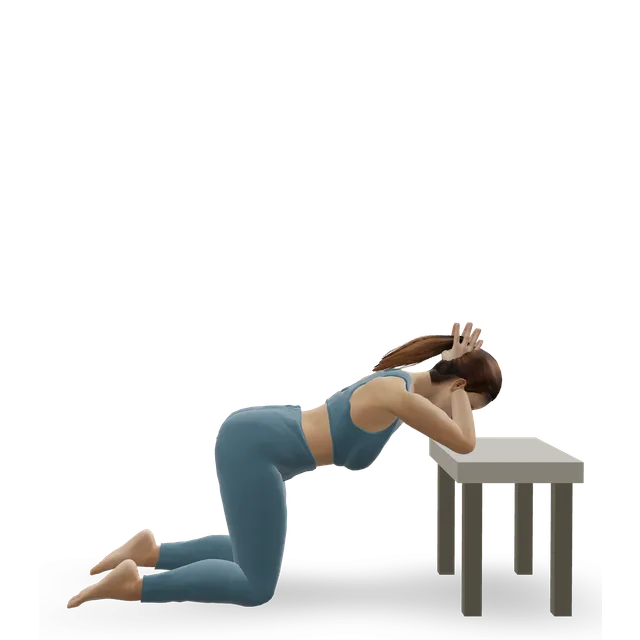
The movement on the figure: Snapdown to athletic landing
Landings, jumps, heavy legs, tendons and the trunk, all with 3D demos. The catalog has no short-approach jump or pole plant drill yet: the jump and reach is the nearest.
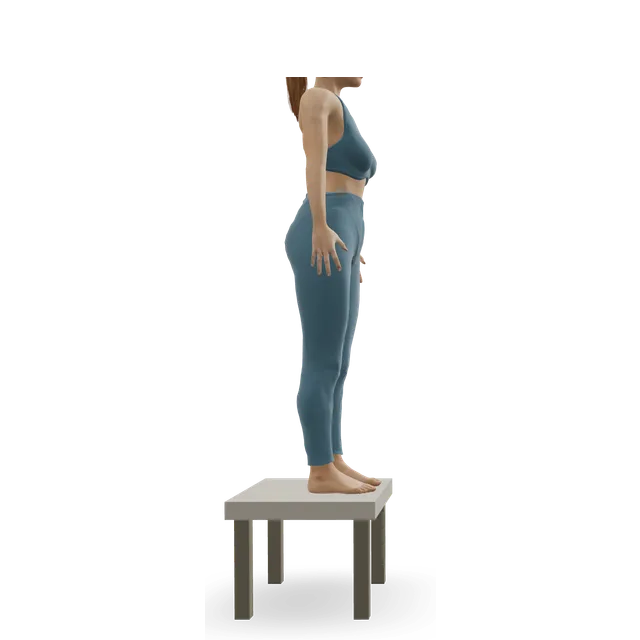 3D demoBox drop landingIntermediate · A step
 3D demoSnapdown to athletic landingBeginner · No equipment
 3D demoSingle-leg hop and stickIntermediate · No equipment
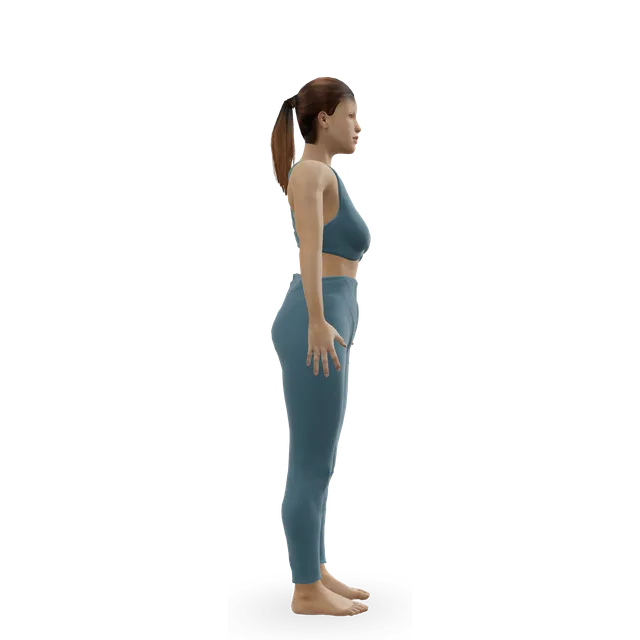 3D demoJump squatIntermediate · No equipment
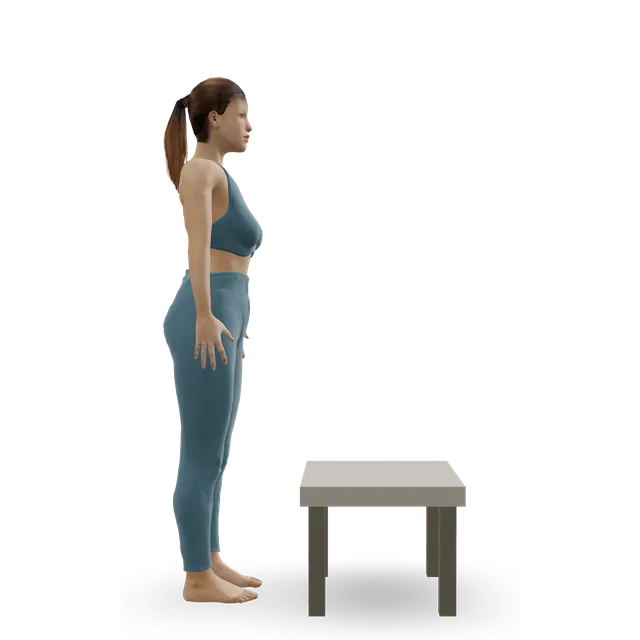 3D demoBox jumpIntermediate · A bench or box
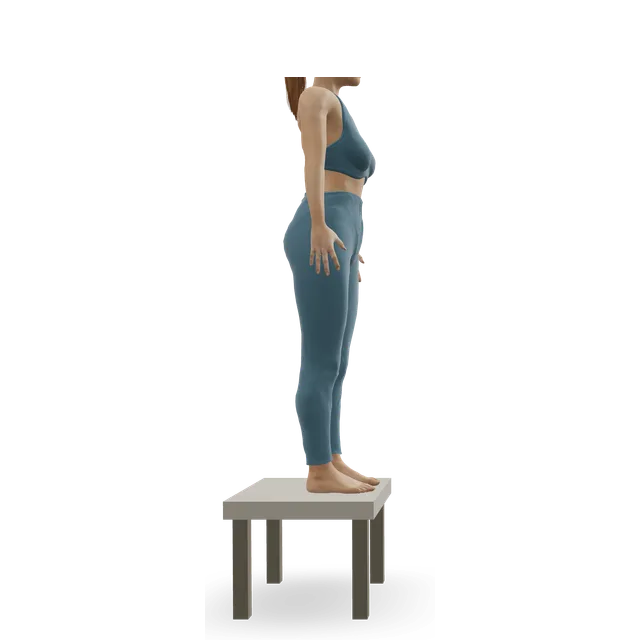 3D demoDepth jumpAdvanced · A step
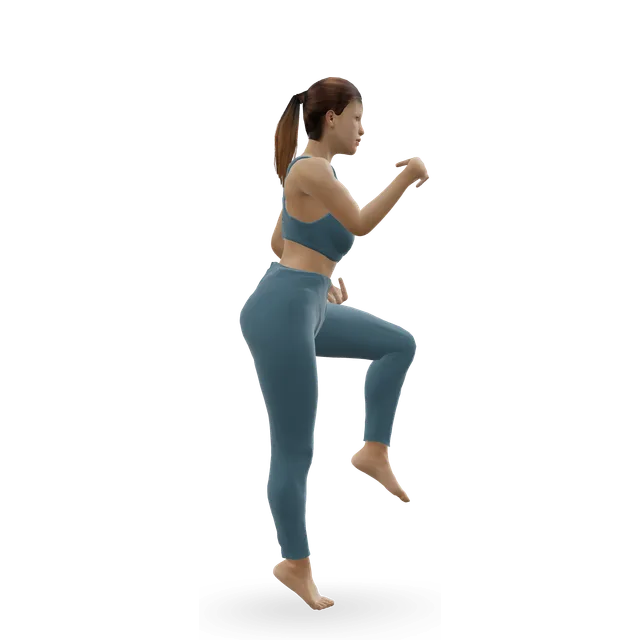 3D demoAlternate-leg boundingAdvanced · No equipment
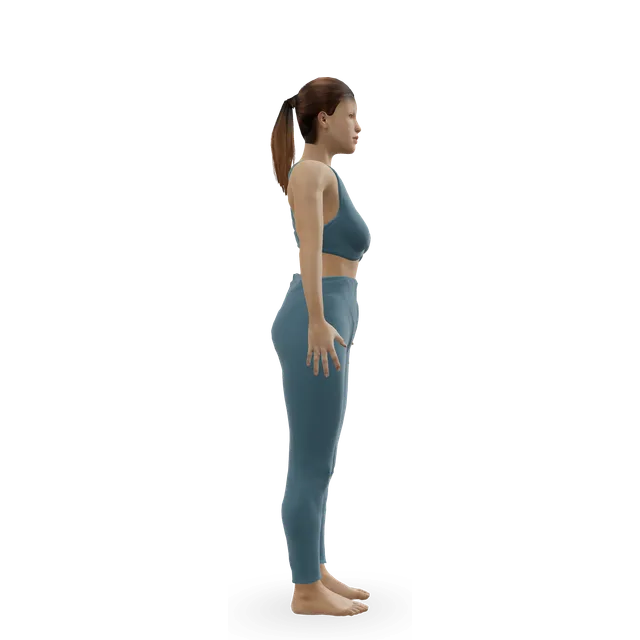 3D demoRocket jump (jump and reach)Intermediate · No equipment
 3D demoBarbell back squatAdvanced · A barbell
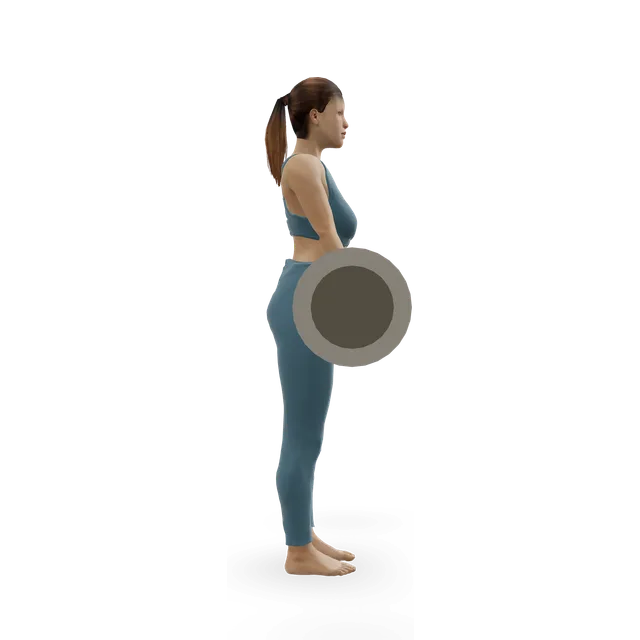 3D demoBarbell Romanian deadliftIntermediate · A barbell
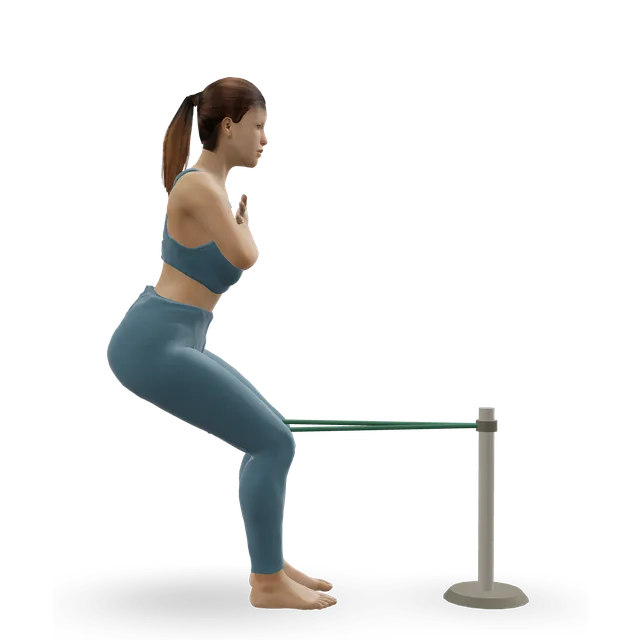 3D demoSpanish squat (band squat hold)Intermediate · A band + An anchor point
 3D demoSingle-leg calf raise from a stepIntermediate · A step + A wall
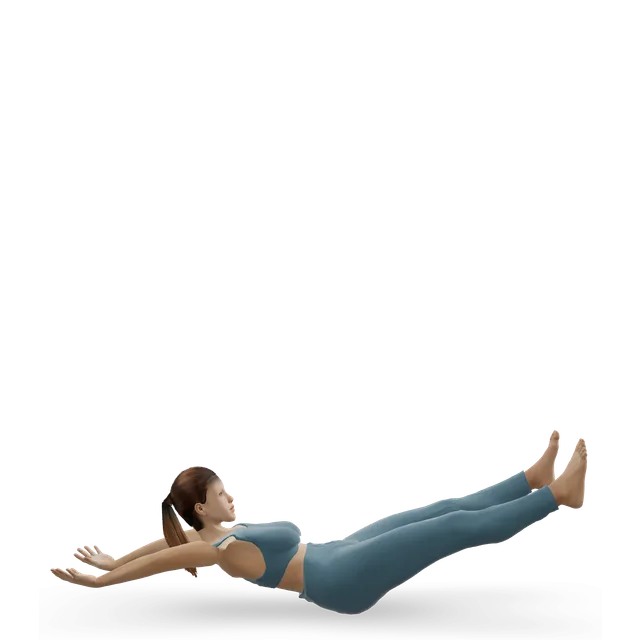 3D demoHollow body holdIntermediate · No equipment
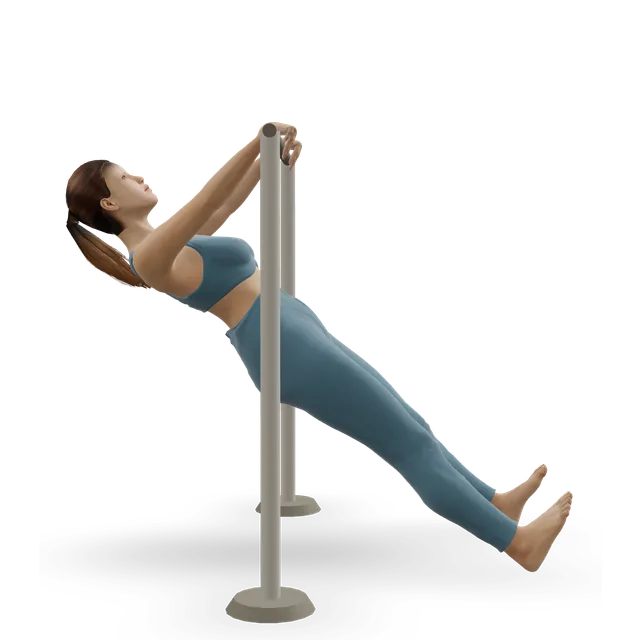
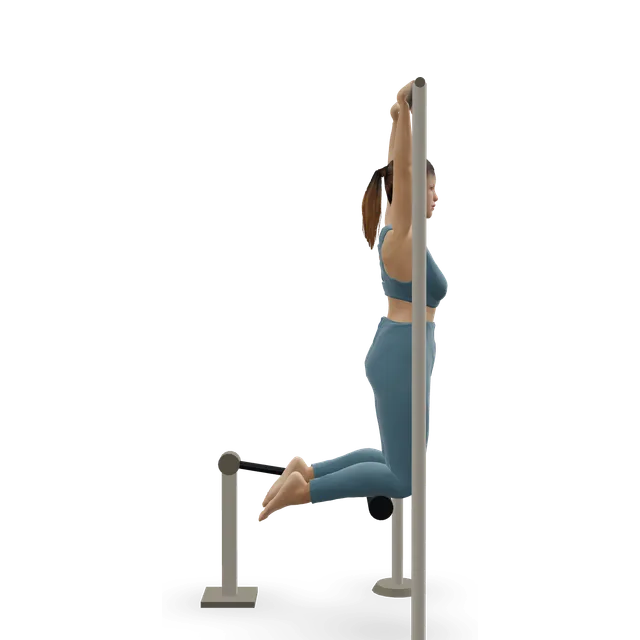
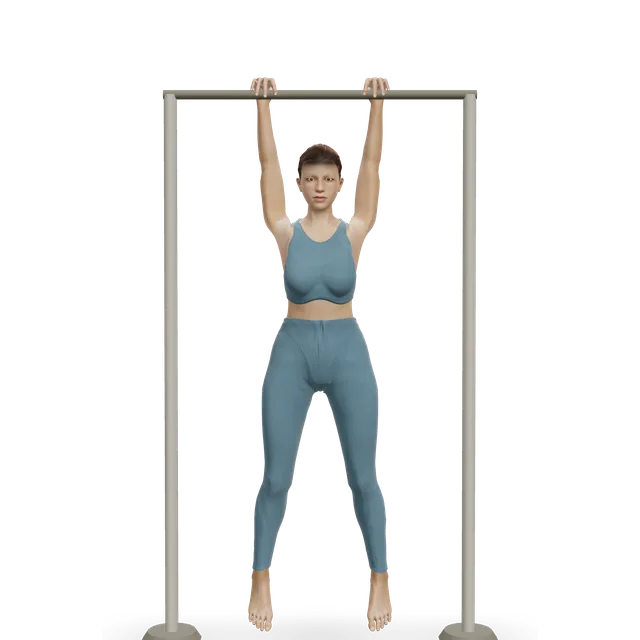 3D demoPull-upAdvanced · Pull-up bar
The first two are new: a strength and landing session built on the long jumper trial, and a warm-up. The others add jump training, knee control, gymnastics conditioning for vaulters, feet and ankles, the Olympic lifts, pull-ups and a return after concussion.
A 50-minute session for jumpers and vaulters: landings and hops, squats and Romanian deadlifts paired with jumps, then tendon holds and trunk work.
50 minIntermediate15 movesCardio machine, A stepA 20-minute warm-up for jumpers: pit and bed checks, jogging, ankle circles, leg swings, cat-cow, bounces, landings, bounds and run-ups before approaches.
20 minBeginner13 movesCardio machine, A wallA staged jump session for 8 weeks: landings and small jumps, then box and broad jumps, then depth jumps, each followed by squats, hinges and calf work.
40 minIntermediate16 movesA step, A bench or boxAn advanced jump training session: pogo hops, box jumps, split squat jumps, broad jumps and depth jumps.
30 minAdvanced8 movesA bench or box, A stepA 45-minute basketball gym session: landings, box jumps, skater bounds and hop-and-sticks, then squats, hinges, split squats, Nordics, calf raises and planks.
45 minIntermediate13 movesA bench or box, A dumbbellA 35-minute netball session: drop landings, hop-and-sticks, lateral bounds and jumps, then goblet squats, split squats, single-leg hinges, Nordics and hip work.
35 minIntermediate15 movesA wall, A stepA 20-minute warm-up that trains your knees to track over your toes: side-hip strength, squats and lunges with alignment practice, balance and quiet landings.
20 minBeginner10 movesA wall, A bandA gymnastics conditioning session: jumps from the youth vault trial, landings, wrist and shoulder strength, wall handstands, and hollow and arch holds.
45 minIntermediate22 movesOther / check instructions, A stepA 15-minute barefoot routine for stronger toes, arches, calves and ankles, finishing with balance. You need only a towel, a wall and a resistance band.
15 minBeginner11 movesA wall, Other / check instructionsBalance practice in 10 minutes: tandem stance, single-leg stands, marches, heel walks, tree pose and floor transfers.
10 minBeginner7 movesA wall, A bench or boxA 40-minute technique session for the power clean: the rack and hang positions, the jump and the turnover, light hang power cleans, then cleans from the floor.
40 minIntermediate14 movesCardio machine, A wallA 30-minute practice session for the front squat: loosen your wrists and upper back, groove an upright squat, then find your grip and depth with a light bar.
30 minBeginner12 movesA wall, A bench or boxWork up to your first pull-up: dead hangs, scapular pulls, rows, negatives and assisted pull-ups.
25 minBeginner7 movesPull-up bar, A stepA 20-minute light session after a concussion: a symptom check, 10 to 15 minutes of easy cycling or walking, gentle bodyweight moves and a cool-down.
20 minBeginner8 movesCardio machine, A bench or boxA strength plan builds the base; keep jump and technique sessions on other days.
A 12-week beginner barbell program: squat every session, alternate bench and row with press and deadlift, and add weight each time until it stalls.
3 training days50 minBeginner3 days a weekFor after about 8 weeks of a beginner plan: three full-body sessions a week, one heavy, one moderate and one light, in a gym or at home, for 12 weeks.
3 training days50 minIntermediate3 days a weekA 12-week calisthenics plan for beginners: three bodyweight sessions a week with push-up, pull-up, squat and dip ladders, and a bar if you have one.
3 training days40 minBeginnerThe PAR-Q+ (Physical Activity Readiness Questionnaire for Everyone) asks about a heart condition or high blood pressure, chest pain, dizziness or losing consciousness, other long-term conditions and their medicines, a bone or joint problem that activity could make worse, and being told to exercise only under supervision. If you answer yes to any, check with your doctor or a qualified exercise professional first.
Back pain that lasts more than a couple of weeks, or is worse arching back, needs a GP or sports physiotherapist, as our spondylolisthesis guide explains: stress fractures of the lower back are common in vaulters. The NHS says to see a GP for lower back pain that doesn't go away after 3 to 4 weeks.
Catastrophic injuries come from landing off the bed or in the box, and landing injuries clustered in less experienced vaulters. Vault only with a coach, on a full, padded, correctly placed bed, with a pole suited to your weight and strength.
Only onto a proper landing area, with a competent coach, as Athletics Northern Ireland says.
Source 27
See our jumper's knee and Achilles guides, and keep tendon pain at 3 out of 10 or less while you load it.
Osgood-Schlatter, Sinding-Larsen-Johansson and Sever's disease are common at this age: our guide to each explains what to do, and our gymnastics page gives the growth-spurt advice.
The navicular is a high-risk site for stress fractures. Stop jumping: our stress fracture guide says these sites need prompt assessment, often with a scan.
The NHS says not to do sports where there's a risk of falling or bumping your tummy. The jumps and the vault carry that risk (our reading); talk to your midwife.
Source 43
No competition before day 21 under the UK guidelines. Our concussion guide explains the graduated return.
Source 44
The NHS says to call 999 if someone has hit their head and:
Source 45
Off the runway: if in doubt, sit them out. No return that day, and an assessment within 24 hours by a healthcare professional or NHS 111. Athletics has no concussion rule of its own in the UK, so the UK guidelines apply, with no competition before day 21.
Don't move them: the UK guidelines say someone with a suspected neck injury should be moved only by healthcare professionals with the right training. Call 999 (our suggestion).
Source 44
Call 999 or go to A&E for back pain with pain, tingling, weakness or numbness in both legs, loss of feeling around your genitals or anus, or changes in your bladder or bowels, or back pain that started after a serious accident.
Source 46
Get advice from NHS 111 if you can't move your knee or put any weight on it, it's badly swollen or has changed shape, or it locks, gives way or painfully clicks.
Source 47
Call 999 or go to A&E if you heard a crack, the ankle has changed shape or points at an odd angle, it's numb or tingling, or the skin has changed colour or is cold. Get help from NHS 111 if you can't put any weight on it or walk more than a few steps.
Source 48
After the 2003 US rules enlarged pads, injuries from landing off the pad fell sharply, but injuries from landing in or around the box tripled, often where box padding was missing.
Source 6
None of the injured vaulters in the US series wore one, and the authors thought helmets warranted, but a fall from 3 m onto a hard surface would exceed a helmet's protection, and no study has measured their effect.
Source 6
Distance rose with run-up speed in an elite long jumper, and vault height with run-up speed in a vaulter: sprint speed matters as much as spring.
Jumper's knee is common in jump sports, but it's a tendon overload problem that responds to staged loading, as our jumper's knee guide explains, and whether jump volume causes it is uncertain.
Spondylolysis was found in 28.6% of 21 vaulters scanned and in a third of college vaulters' lower back injuries. Back pain that lasts needs checking.
Only 8% of boys and 16% of girls in the world's top 50 at 16 reached the senior top 50, and the top seniors kept improving into their mid-twenties.
Sprint speed, take-off power and landings: a faster run-up gave longer jumps in an elite jumper. Jump training twice a week, building from landings to jumps and low depth jumps, plus heavy leg strength, is the evidence-based core. In a small trial in teenage long jumpers, pairing squats with jumps raised the vertical jump more than lifting alone.
One-leg take-offs and landings, jumps and reaches, squats and calf work, and trunk strength for the arch over the bar. No training trial in high jumpers has been published. Learn the flop only onto a full bed with a coach.
Most pole vault injuries are like other jumps', to hamstrings, ankles and backs, but falls off the bed or into the box have caused deaths and paralysis. Deaths in the US fell after bigger pads and box padding became compulsory in 2003, though other changes came at the same time. Vault only with a coach, on a full, padded bed.
Neither World Athletics nor UK Athletics requires one. None of the vaulters in a US series of catastrophic injuries wore a helmet, but the authors noted that a 3 m fall onto a hard surface would exceed a helmet's protection, and no study has measured their effect. Beds, box padding and coaching come first.
World Athletics requires at least 6 m × 6 m × 0.8 m at top competitions and 5 m × 5 m × 0.8 m at others, with front pieces and padded uprights. UK Athletics applies the same standards. UK safety guidance adds that no vaulting should start until all the pads and padding are in place, and that hard surfaces 5 m to the front and sides of the box and 7 m behind it are covered with impact-absorbing material.
Your coach chooses it, from poles rated for your weight. Athletics Northern Ireland advises a pole appropriate to your age, weight and strength, and says a bend of more than 90° is overstressing it.
Arching and the plant load the lower back: 83% of college vaulters' back injuries happened at the plant and take-off, and a third of their lower back injuries were stress fractures. Back pain that lasts more than a couple of weeks, or is worse arching back, needs a GP or sports physiotherapist.
Yes: jumper's knee, pain at the bottom of the kneecap, is common in jump sports. It responds to staged loading with the pain kept low, as our jumper's knee guide explains. In growing children, Osgood-Schlatter and Sinding-Larsen-Johansson are more likely.
Twice a week, about 48 to 72 hours apart, with around 80 to 100 landings a session for beginners and 100 to 120 for intermediate athletes, as our jump guide sets out. The long jumper trial used three short sessions a week.
In UK competitions, under-14s can't triple jump. UK Athletics' rules set no minimum age for the pole vault, but UK safety guidance says a meeting shouldn't be an unsupervised practice session for inexperienced vaulters, so learn it with a coach, on a full bed and with a pole suited to your weight. Under-12s compete in multi-event formats.
Exercise education for people who play sport, not a personal prescription or a diagnosis, and clinical review of these pages is pending. Check with a GP or physiotherapist before hard training if you have a heart condition, chest pain, dizziness or an injury that isn't settling, and stop for sharp or increasing pain. Health disclaimer.