Strength at home
Foot and ankle strengthening routine: toes, arches, calves and balance
Feet get stronger with use: in trials, foot exercises or walking in minimalist shoes built foot muscle within 8 weeks, and balance training cut ankle sprains by about a third. Do this barefoot or in thin socks, about three times a week. If you have diabetes, numb feet or poor circulation, check your feet afterwards and read the warning signs on our foot pain guide.
Mobility
- Ankle circles8 slow circles each way, each footBeginner · Calves, Shins · 3D demo
- Knee-to-wall ankle rock8 slow rocks each sideBeginner · 3D demoHeel down; move the foot further from the wall as it gets easierHarder: Frog rock


Toes and arches
- Towel toe curl2 sets of 12 each footBeginner · Calves · 3D demoSeated; pull the towel in with your toes, keeping the heel stillHarder: Short foot + toe splay

Calves and shins
- Slow calf raise2 sets of 10Beginner · Calves · 3D demoHands on a wall; rise through the big toe and lower slowly. Harder: the single-leg calf raise from a stepEasier: Seated bent-knee calf raise (soleus raise)Harder: Standing dumbbell calf raise
- Beginner · Calves · 3D demoAdd a padded weight on your knees when it gets easyHarder: Slow calf raise
- Tibialis raise15 repsBeginner · Shins · 3D demoBack against a wall; lift the fronts of both feetHarder: Single-leg tibialis raise



Ankle control
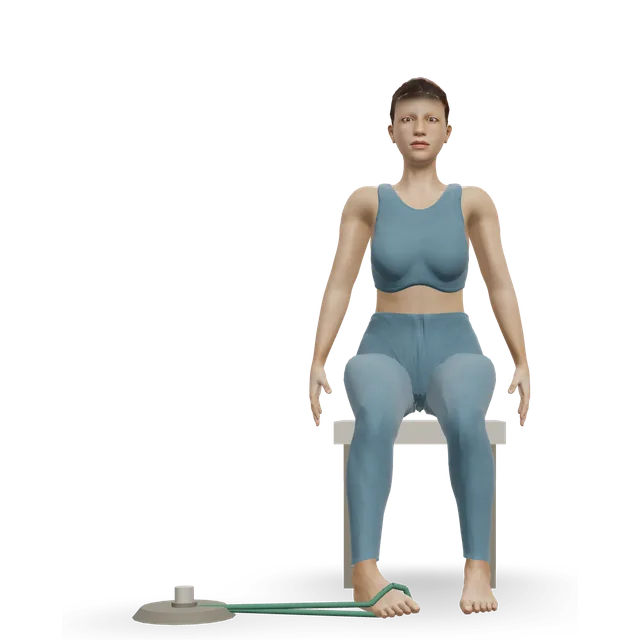
- Band ankle eversion8 each sideBeginner · Calves, Shins · 3D demoSlow: about 3 s out and 3 s backEasier: Isometric ankle eversion against a wallHarder: Pogo hops
- Band ankle inversion8 each sideBeginner · Calves, Shins · 3D demoSlow, in a pain-free rangeHarder: Single-leg calf raise from a step

Balance
- Single-leg stand2 holds of 30 s each legBeginner · Hip abductors, Calves, Glutes · 3D demoNext to a counter; close your eyes only when it's easyEasier: Tandem stance and heel-to-toe walkHarder: Single Leg Reach Matrix
- Tandem stance and heel-to-toe walk30 s, then 10 stepsBeginner · Calves, Hip abductors · 3D demoBeside a wall or counterEasier: Semi-tandem stanceHarder: Single-leg stand


Spring (optional, for active people)
- Ankle bounces (mini pogo)2 sets of 20Beginner · Calves, Shins · 3D demoShort, quiet contactsHarder: Pogo hops

Tips
- Add the short-foot exercise when you can: draw the arch up without curling your toes and hold for 5 seconds, 10 times. It has no 3D demo yet.
- With ball-of-foot pain or big toe arthritis, stop the calf raises short of full tiptoe.
- Pad any weight for the seated calf raise and keep a hand on it, so it can't slide off onto your feet.
- Numb feet, or unsteady with your feet together? Keep a hand on a counter or wall for the balance moves, and check your feet for marks afterwards.
- Leave out the ankle bounces with a suspected stress fracture or with heel or Achilles pain, and build up slowly if you have low bone density or haven't done impact work in years. In pregnancy, don't start new jumping.
- In the first 2 weeks after a sprain, keep the band moves in a pain-free range, and follow the stages in our ankle sprain guide.
- Swapping to minimalist shoes? Build up over months, not weeks: runners who switched had more injuries, and one review suggests taking at least 12 weeks.
- Aim for about 25 single-leg calf raises in a row as a long-term marker of calf strength.
The doses are suggested starting points, not a prescription. Choose a range you can control and stop for sharp or increasing pain, numbness or tingling. Get individual advice after an injury or surgery, or if you are pregnant or managing a health condition.
Guides that recommend it
Find more moves like these
More strength at home




Beginner bodyweight workout
A 20-minute full-body workout with no equipment: squats, knee push-ups, bridges, lunges and planks.
20 minBeginner10 movesNo equipment


Full-body bodyweight workout
An intermediate no-equipment workout: push-ups, split squats, single-leg bridges, pike push-ups and core work.
30 minIntermediate11 movesNo equipment


Full-body dumbbell workout
A 35-minute full-body strength workout with dumbbells: goblet squats, presses, rows, Romanian deadlifts and carries.
35 minIntermediate9 movesA band, A dumbbellQuestions people ask
How long does the foot and ankle strengthening routine: toes, arches, calves and balance take?
About 15 minutes, including any warm-up and cool-down listed. Shorten it by doing fewer rounds; lengthen it by adding one.
What equipment do I need?
You need: A wall, Other / check instructions, A bench or box, A band. Each move links to its guide, where you can find an alternative if you are missing something.
Is it suitable for beginners?
It is written for beginners. 4 of its 11 moves have an easier option listed beside them if you need one.
How do I make it easier or harder?
Use the easier or harder option listed under each move, change the number of rounds, or adjust the rest. Progress one change at a time.