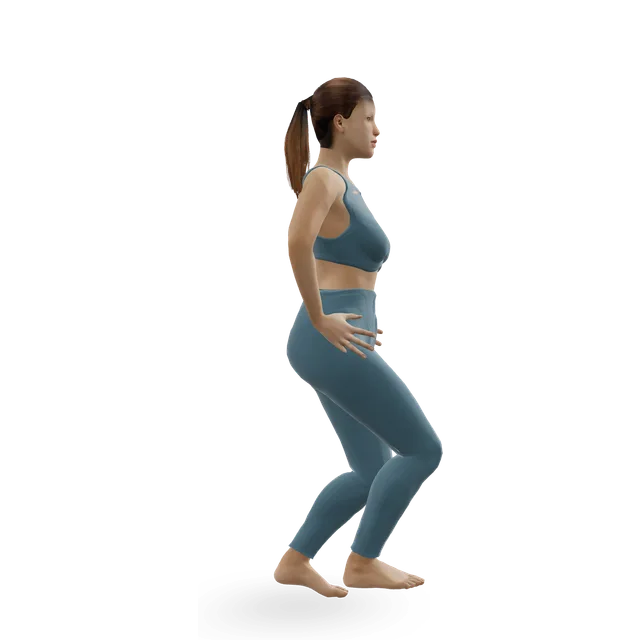
26 bones and 33 joints
7 tarsal bones, 5 metatarsals and 14 toe bones, plus 2 sesamoids under the big toe that the usual count leaves out.
Joint guide
Each foot has 26 bones in the usual count (28 if you include the two small sesamoids under the big toe), 33 joints and three arches. The ankle joint tips the foot up and down, the subtalar joint below it tilts the foot to fit uneven ground, and the arches flex to absorb each step, then stiffen to push you off.
Feet get stronger with use: in trials, foot exercises or walking in minimalist shoes built foot muscle within 8 weeks, and balance training cut ankle sprains by about a third. Flat feet are usually nothing to worry about, and barefoot-style shoes need a slow start, because runners who switched to them had more injuries.
This guide explains how the foot and ankle are built and move, what the evidence says about strength, footwear and flat feet, and the moves that keep them strong. If your foot or ankle hurts, start with our pain guides.
7 tarsal bones, 5 metatarsals and 14 toe bones, plus 2 sesamoids under the big toe that the usual count leaves out.
The ankle tips the foot up and down, the subtalar joint tilts it in and out, and the midfoot joints let it flex, then stiffen for push-off.
When your big toe bends at push-off, the plantar fascia along the sole tightens and lifts the arch.
In one trial, walking in minimalist shoes strengthened foot muscles as much as foot exercises over 8 weeks.
Source 8
Runners who switched to minimalist shoes had more injuries, and minimalist shoes haven't been shown to prevent injuries.
It cut ankle sprains in sport by about a third, and repeat sprains after a first one from 33% to 22%.
26 in the usual count:
Each foot has 33 joints. These matter most:
Three ligaments brace the outside of the ankle; the front one (the anterior talofibular ligament) is the weakest and the most often sprained. On the inside, the fan-shaped deltoid ligament resists the sole turning outwards (eversion). Above the ankle, ligaments hold the two shin bones together, and these are what a "high ankle sprain" injures. Under the arch, the spring ligament supports it, together with the tibialis posterior tendon.
Inside the foot, 19 small (intrinsic) muscles sit in layers, mostly on the sole. They support the arches and move the toes. They don't have a muscle guide of their own yet.
The plantar fascia is a thick band running from the heel to the toes along the sole. At push-off, load moves to the big-toe side of the forefoot, and the big toe joint carries about 119% of body weight with each step.
The inner (medial longitudinal) arch is the highest and has the most joints, so it is the most mobile and shock-absorbing. The outer (lateral longitudinal) arch is lower and stiffer, which suits it to carrying weight and pushing off. The transverse arch runs across the midfoot. Bone shape, ligaments, the plantar fascia and the foot's muscles hold them up.
At push-off your big toe bends up, winding the plantar fascia around the head of the first metatarsal like a rope around a winch. That tightens the fascia and raises the arch, so the foot becomes a stiff lever just when you need one.
Babies look flat-footed, partly because of a fat pad under the arch. The NHS says most children develop arches between 3 and 10; other sources put it at 5 to 6, at 7 to 10, or at 10 to 12 for the full adult shape.
About 20% to 37% of people have some degree of flat foot, mostly the flexible kind, where the arch reappears when the foot is off the ground. The NHS says flat feet are usually nothing to worry about. Trials of treatments for flat feet in children are too limited to draw conclusions.
The gastrocnemius and soleus point the foot through the Achilles tendon; the tibialis anterior lifts it; the tibialis posterior tilts it in and supports the arch; and the peroneals tilt it out. The small muscles inside the foot are described above.
In the CDC (US Centers for Disease Control and Prevention) study of 674 healthy people, measured passively with the knee bent, adults pulled the foot up (dorsiflexion) about 12 to 14 degrees and pointed it (plantarflexion) about 49 to 62 degrees; women pointed further than men. With the knee straight, pulling the foot up is more limited, because the gastrocnemius crosses the knee.
In one study of 30 adults (about a third with a past ankle injury), the same ankles were measured two ways. Sitting, measured from the front of the foot, the sole turned in (inversion) about 31 to 33 degrees and out (eversion) about 10 to 11. Lying face down, measured at the heel, it turned in about 15 to 16 degrees and out about 8 to 9.
The sitting method includes the forefoot, which is why it gives about 43 degrees in total against 24 lying down. Neither figure is wrong; they measure different things.
Source 23
In 33 people, the big toe bent up about 42 degrees during walking and about 58 degrees in a heel raise.
Source 24
Ankle range peaks in childhood and the teens and is lowest after 60, falling more in women. In the CDC data, pulling the foot up fell from about 23 to 25 degrees in children aged 2 to 8 to about 12 in adults aged 45 to 69.
Healthy adults aged 20 to 59 averaged about 28 single-leg heel raises (203 people), and the authors set 25 as the mark of normal. In a later study of 566 adults standing on a 10-degree slope, the median was 24 for men and 21 for women, and women over 60 did better than men of the same age.
In 57 runners, walking in minimalist shoes (building up steps each week) or doing foot exercises at least 5 days a week increased foot muscle size and strength over 8 weeks, and the shoes did as well as the exercises. A review of 28 trials (1,399 people) found minimalist shoes and foot exercises increased foot strength, at low to very low certainty.
In 46 young adults, those who wore minimal shoes for most of the time they wore shoes, 6 days a week, increased toe-flexor strength by 57% over 6 months. The study wasn't described as randomised, and the shoes were supplied by the manufacturer.
Source 30
Men who had worn minimal sandals all their lives had arches 9% higher and 27% stiffer than US men in conventional shoes, and bigger foot muscles; 1% had low arches, against 31% of the US men. A comparison like this can't prove that shoes caused the difference.
Source 19
In 21 people, 4 weeks of short-foot training (drawing the arch up without curling the toes) reduced how far the arch dropped by about 2 mm. In a review of 4 trials, arch movement changed after 8 weeks but not 4, and function and balance improved.
In 118 recreational runners, an 8-week foot and ankle strengthening course followed by remote training cut running injuries over a year: the runners who didn't do it were about 2.4 times as likely to be injured. It is one trial.
Source 33
Across 7 trials (3,726 people in sport), balance (proprioceptive) training cut ankle sprains by about a third, most clearly in people with a previous sprain. After a sprain, an 8-week home balance-board programme cut repeat sprains from 33% to 22% over a year in 522 athletes.
In older people, weak toes, stiff ankles and disabling foot pain predicted falls. In 305 people aged about 74 with foot pain, a podiatry programme that included home foot and ankle exercises three times a week cut falls by 36%, though the number of people who fell didn't change significantly.
The NHS says flat feet are common, usually nothing to worry about, and shouldn't stop you doing any activity, including sport. Insoles, stretches and exercises can help pain or stiffness, but they won't change the shape of your feet.
Source 17
Across 21 studies (6,228 people), a rolled-in (pronated) foot was a small risk factor for shin splints and possibly kneecap pain, and wasn't linked with other foot, ankle or bone-stress injuries.
Source 37
In 103 runners training for a 10 km race over 12 weeks, those in partly minimalist shoes had the most injuries, and fully minimalist shoes brought more shin and calf pain. A review of 7 studies (313 runners) linked switching with a moderate rise in injury risk, mostly bone stress in the forefoot, Achilles pain and calf pain, and suggests a supervised change over at least 12 weeks.
A Cochrane review of running shoes (12 trials, 11,240 people) found that cushioned and minimalist shoes may make little or no difference to injury rates (5 trials, 766 runners, low certainty). It found no trial comparing running shoes with non-running shoes, and most of its evidence was low or very low certainty.
Source 11
In 28 young adults, 4 weeks of walking in minimalist shoes (3,000 rising to 5,000 steps a day) improved single-leg balance and foot posture, and the gains were still there 4 weeks after stopping.
Source 38
In 56 older women with knee arthritis, 6 months of flexible minimal shoes for at least 6 hours a day reduced pain and lowered the load on the knee compared with their usual shoes. In a lab study of 75 people with knee arthritis, walking barefoot lowered peak knee load by about 12%.
We found no trial of barefoot or minimalist shoes for back pain or whole-body posture, so claims that they fix either are unproven.
Minimalist shoes and time barefoot can strengthen feet, but whether they prevent injuries is unproven, and switching raises the risk. Build up over months, add foot and calf strength work first, and protect your feet if you have diabetes or numb feet.
Our editorial starting point: towel toe curls, the short-foot exercise and calf raises about 3 times a week, as in the foot programmes in trials, which mostly used 5-second holds and progressed from sitting to standing.
Ankle range falls after 60. Knee-to-wall rocks (10 slow rocks each side daily, the dose on the move's page) and calf stretches with the knee straight and bent help keep it (our editorial suggestion).
Stand on one leg, barefoot, for 30 seconds at a time, next to a counter, and make it harder over the weeks: eyes closed, or on a cushion. After a sprain, our ankle sprain guide has a staged balance plan.
Aim for about 25 single-leg heel raises in a row as a long-term marker, building up with 2 sets of 10 to 15 slow calf raises (the dose in our workouts). Fewer is a reason to train, not to worry.
Source 27
Check your feet after barefoot work, and see a GP about any foot pain: the NHS notes that foot problems can be more serious if you have diabetes.
Source 41
Gentle range work most days. Starting doses from each move's page and our workouts: 10 slow ankle circles each way, 10 knee-to-wall rocks each side, and 30-second calf stretches. Go gently rolling the sole if your feet are numb or you have diabetes.
 3D demoAnkle circlesBeginner · No equipment
 3D demoAnkle CARsBeginner · No equipment
 3D demoKnee-to-wall ankle rockBeginner · A wall
 3D demoWall calf stretch (gastrocnemius)Beginner · A wall
 3D demoSoleus wall stretchBeginner · A wall
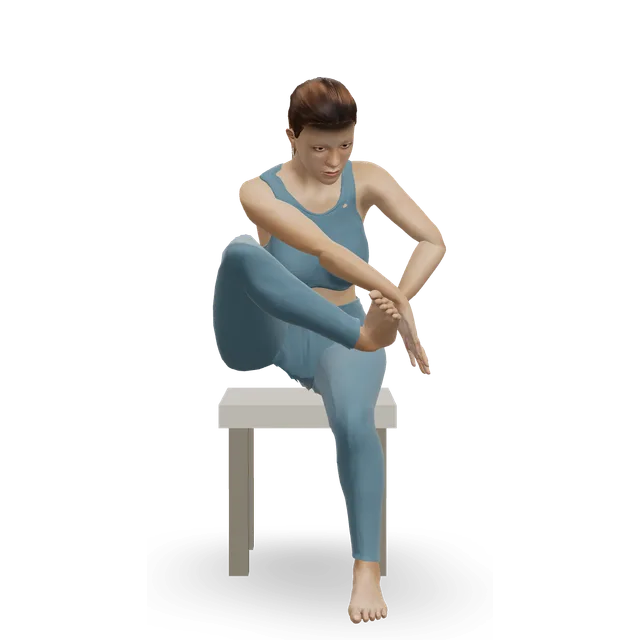 3D demoPlantar fascia stretch (seated)Beginner · A bench or box
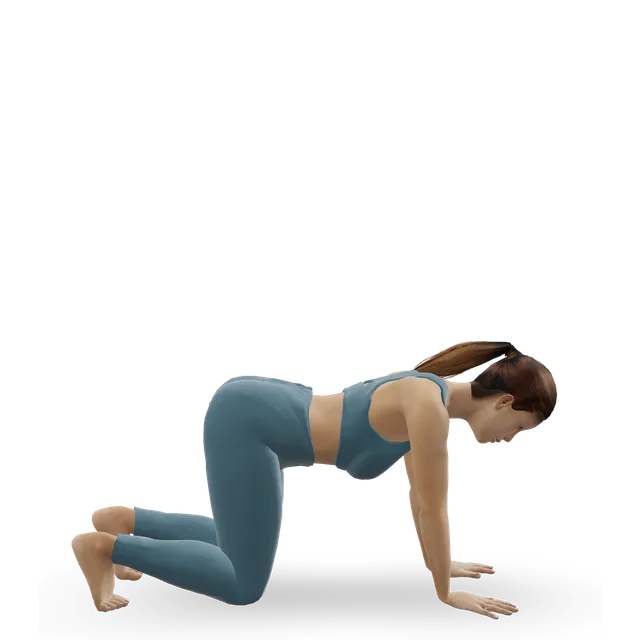 3D demoToes tucked kneelingIntermediate · No equipment
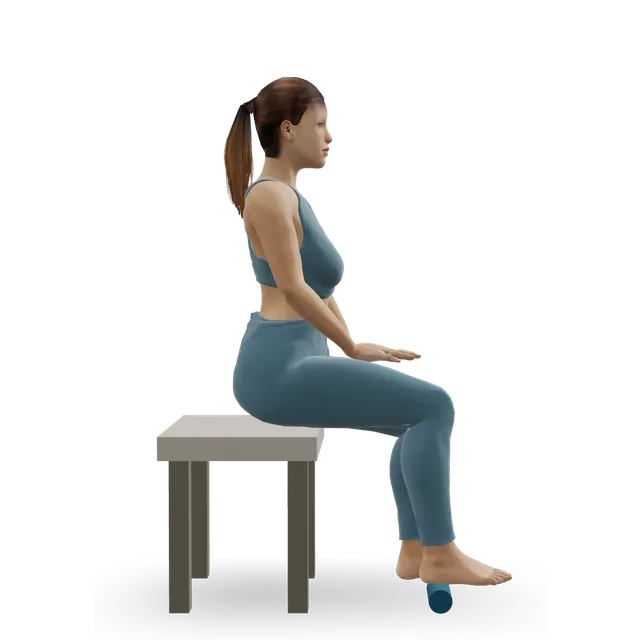 3D demoFoot roll (ball or roller)Beginner · A massage ball
About 3 times a week: 2 to 3 sets of 10 to 20 for the toe and calf moves, and 30-second balance holds (our editorial starting point; doses on each move's page). The short-foot exercise has no 3D demo yet: draw the arch up without curling your toes and hold for 5 seconds. Leave out the bounces and hops with a suspected stress fracture or a sore heel or Achilles.
 3D demoTowel toe curlBeginner · Other / check instructions + A bench or box
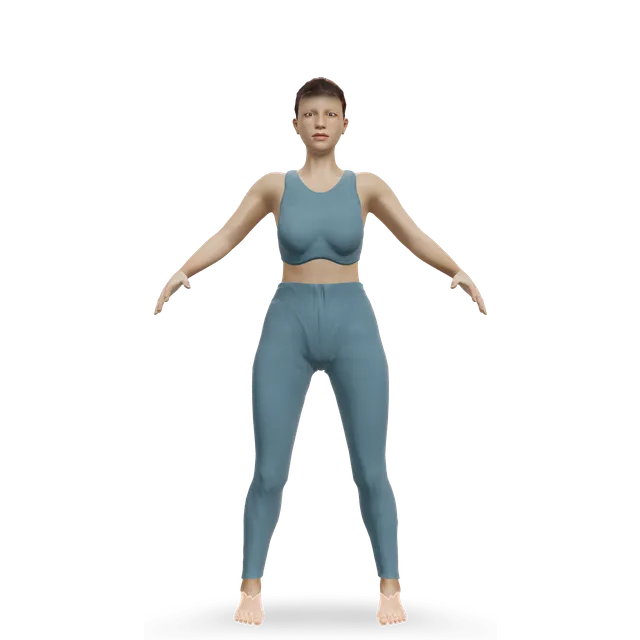 Short foot + toe splayBeginner · No equipment
 3D demoSlow calf raiseBeginner · A wall
 3D demoSingle-leg calf raise from a stepIntermediate · A step + A wall
 3D demoSeated bent-knee calf raise (soleus raise)Beginner · A bench or box
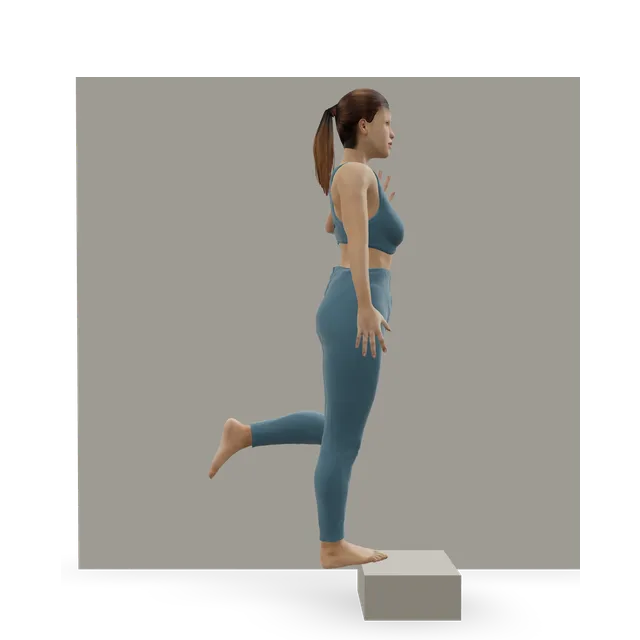 3D demoHeel raise with a towel under the toesIntermediate · A step + Other / check instructions
 3D demoTibialis raiseBeginner · No equipment
 3D demoHeel walkBeginner · No equipment
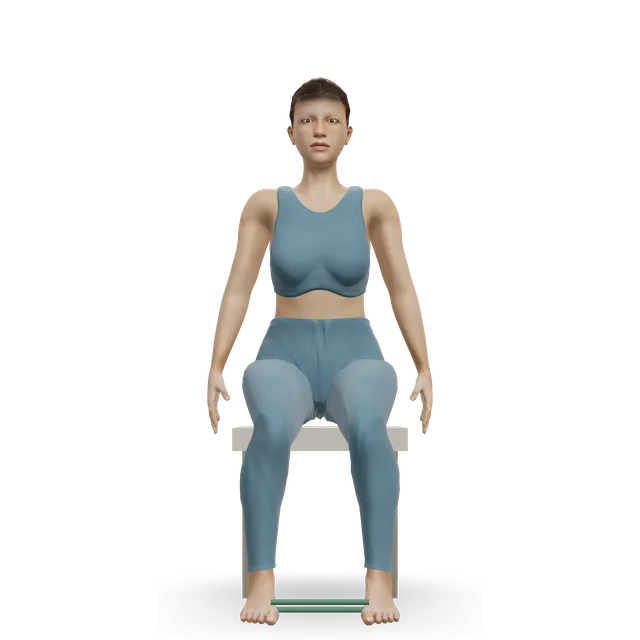 3D demoBand ankle eversionBeginner · A band + A bench or box
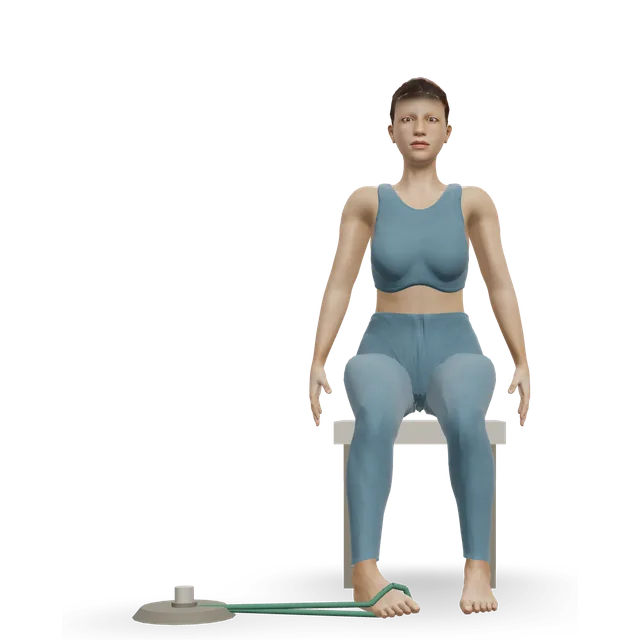 3D demoBand ankle inversionBeginner · A band + A bench or box
 3D demoSingle-leg standBeginner · A wall
 3D demoTandem stance and heel-to-toe walkBeginner · A wall
 3D demoAnkle bounces (mini pogo)Beginner · No equipment
 3D demoPogo hopsIntermediate · No equipment
The foot and ankle strengthening routine is a general session; the plantar fascia routine is for heel pain.
A 15-minute barefoot routine for stronger toes, arches, calves and ankles, finishing with balance. You need only a towel, a wall and a resistance band.
15 minBeginner11 movesA wall, Other / check instructionsBalance practice in 10 minutes: tandem stance, single-leg stands, marches, heel walks, tree pose and floor transfers.
10 minBeginner7 movesA wall, A bench or boxPlantar fascia and calf stretches, a gentle foot roll and the towel heel raise: the exercises the 2023 heel pain guideline supports.
8 minBeginner7 movesA bench or box, A massage ballA 40-minute strength and balance session for over-65s, built from the Otago home programme and NHS exercises, using a chair, a counter and a step.
40 minBeginner18 movesA bench or box, Something with weightAn 8-minute dynamic warm-up for runners: ankle and hip mobility, lunges, skips and pogo hops.
8 minIntermediate8 movesA wallSeven stretches for after a run: calves, soleus, quads, hip flexors, hamstrings and glutes.
10 minBeginner7 movesA wallA one-line orientation for each; the guides below have the detail, a staged plan and the warning signs.
Our foot pain and ankle pain guides sort it by where it hurts, with the rules doctors use to decide whether a twisted ankle needs an X-ray.
Most sprained ankles recover with early movement, but many sprain again; an ankle that keeps giving way has its own guide.
Plantar fasciitis (heel pain), Achilles tendinopathy, shin splints and calf pain each have a guide. One swollen, warm calf needs a same-day check.
Ankle arthritis usually follows an old injury, and big toe arthritis makes the joint stiff and painful.
Ball of foot pain covers metatarsalgia and Morton's neuroma. Exercises may ease bunion pain but are unlikely to straighten the toe.
Most need no treatment, but an arch that flattens in one foot can be a tendon problem worth checking.
If you have severe ankle pain; you feel faint, dizzy or sick from the pain; your ankle or foot has changed shape or is at an odd angle; you heard a snap, grinding or popping noise at the time of injury; or you're not able to walk. These can be signs of a broken ankle or an infection. In the US, contact your doctor or urgent care.
Source 41
If ankle pain is stopping you doing normal activities, is getting worse or keeps coming back, or hasn't improved after treating it at home for 2 weeks; if you have any tingling or loss of feeling in your foot; or if you have diabetes and foot pain, as foot problems can be more serious with diabetes.
Source 41
If your feet are painful, stiff, weak or numb; you often get foot or ankle injuries; you have problems with walking or balance; you didn't have flat feet before; or only one foot is affected.
Source 17
Throbbing pain in one leg, usually in the calf or thigh, with swelling, red, blue or darkened skin around the painful area, or swollen veins: ask for an urgent GP appointment or get help from 111. If you also feel short of breath or have chest pain, call 999 (911 in the US).
Source 42
Stop the bounces and hops for heel, Achilles or shin pain that builds, and check your feet afterwards if they're numb (our editorial advice, as on each move's page).
That's the usual count. Add the two sesamoids under the big toe and it's 28, and extra small bones are common.
Painless flat feet need no treatment, and exercises don't change the shape of the foot.
Source 17
That hasn't been shown, and runners who switched to minimalist shoes had more injuries.
People who have always worn minimal footwear have stronger, stiffer feet, and feet get stronger when people switch, but a difference between groups doesn't prove that ordinary shoes cause weakness.
They reduce how far the arch drops by about 2 mm and change arch movement after about 8 weeks, but they haven't been shown to change the shape of a flat foot.
Balance training cuts repeat sprains. Our chronic ankle instability guide covers ankles that keep giving way.
26 in the usual count: 7 tarsal bones, 5 metatarsals and 14 toe bones (phalanges). Add the two small sesamoid bones under the big toe and you get 28, and some people have extra small bones. Each foot also has 33 joints.
The ankle joint itself (talocrural) is a hinge between the shin bones and the talus that tips the foot up and down. Just below it, the subtalar joint tilts the foot in and out to cope with uneven ground, and the midfoot joints let the foot flex, then stiffen for push-off.
There are three: the high inner (medial longitudinal) arch, the lower outer arch and the transverse arch across the foot. Bones, ligaments, the plantar fascia and muscles hold them up. When your big toe bends at push-off, the plantar fascia tightens and lifts the arch.
Babies look flat-footed partly because of a fat pad. The NHS says arches usually develop between 3 and 10, and other sources put the full adult shape at 10 to 12.
Usually not: the NHS says they don't usually cause problems and shouldn't stop you doing any sport. About 20% to 37% of people have some degree of flat foot, and a rolled-in foot is only a small risk factor for shin splints. See a GP if they hurt, feel weak or numb, or only one foot is flat.
They can make feet stronger: in one trial, walking in minimalist shoes built foot muscle as well as foot exercises did, and another found better balance. But runners who switched to them had more injuries, and no trial shows they prevent injuries overall; we found no trials for back pain or posture. If you try them, change over months.
Towel toe curls, the short-foot exercise, calf raises and single-leg balance, about 3 times a week. In trials, foot strength rose within 8 weeks and the arch dropped about 2 mm less. Foot exercises haven't been shown to change the shape of a flat foot.
With the knee bent, adults pull the foot up about 12 to 14 degrees and point it about 49 to 62 degrees (CDC data). Tilting the sole in and out depends on how it's measured: about 31 to 33 degrees in and 10 out sitting, but about 15 in and 8 to 9 out lying face down. Ankle range is highest in childhood and falls after 60.
Healthy adults aged 20 to 59 average about 28 single-leg heel raises, and 25 is often used as the mark of normal. Fewer is a reason to train your calves, not to worry.
Balance training: in sport it cut sprains by about a third, and after a first sprain an 8-week home balance-board programme cut repeat sprains from 33% to 22%. The effect was clearest in people who had sprained an ankle before.
Weak toes, stiff ankles and foot pain predicted falls in older people. A podiatry programme that included home foot and ankle exercises cut falls by 36%.
Time barefoot uses the small muscles of the foot, and people who've always gone barefoot or in minimal shoes have stronger, stiffer arches, though that doesn't prove going barefoot caused it. Build up gradually, and protect your feet if you have diabetes or numb feet.
Education about how your joints work, not a diagnosis, and clinical review of these guides is pending. For a painful, swollen or injured joint, see the pain guide for that area and a doctor or physiotherapist, and stop any exercise that causes sharp or increasing pain. Health disclaimer.