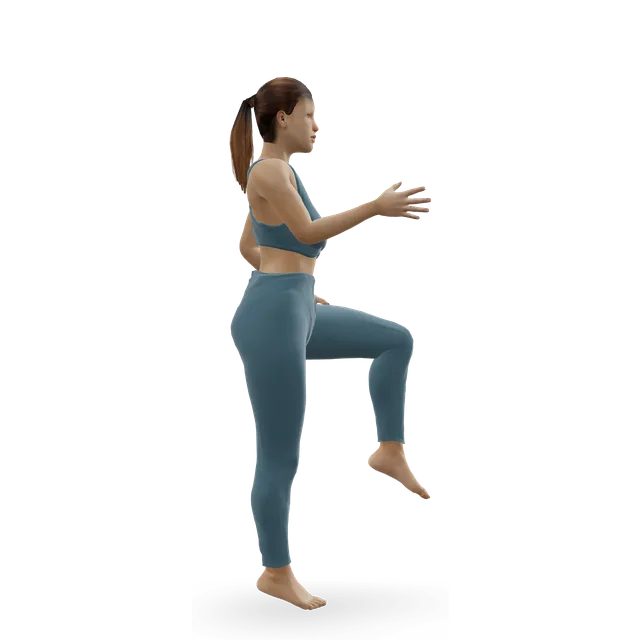
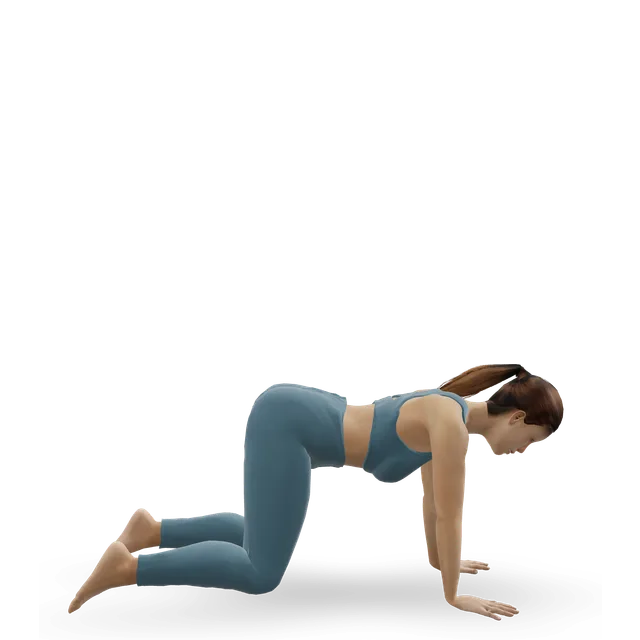
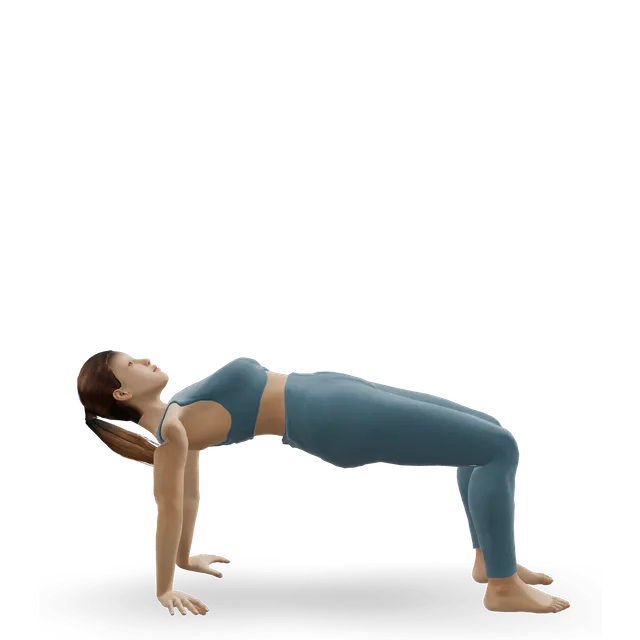
Pain guide · Knee pain

Sinding-Larsen-Johansson syndrome: pain at the bottom of the kneecap in active children

Sinding-Larsen-Johansson syndrome (SLJ) is pain and tenderness at the bottom tip of the kneecap in active children, usually aged about 9 to 15, where the kneecap tendon pulls on a growth area. It is a cousin of Osgood-Schlatter disease, which hurts at the bump below the knee, and like it, SLJ settles as growth finishes.

No treatment for SLJ has been tested in a trial. Most children can keep some sport going: cut back the running and jumping that hurt, keep the thigh strong, and come back step by step, using the plan and pain rule from our Osgood-Schlatter guide, which are borrowed. This guide is for children, parents and coaches. It covers what helps, how long it lasts, the rare injury to recognise after a jump, and a staged plan with 3D demos.

When to get help first

Exercise is for pain that has been checked or is clearly mild and settling.

Get urgent medical help if

  • Ask for an urgent GP appointment or get help from NHS 111 the same day if your child gets sudden pain in their hip, thigh or knee, or is limping or can't put any weight on 1 leg. Hip problems can sometimes be felt in the thigh or knee.
  • After a jump, landing or fall: a pop or sudden severe pain at the bottom of the kneecap, then the knee won't straighten, the straight leg can't be lifted, it won't take weight, or it swells quickly. Get it checked the same day: a sleeve of bone and cartilage can pull off the lower kneecap (a sleeve fracture).
  • Knee pain that came on over a day or two without a sporting reason, with a swollen knee, a limp, or pain when walking and standing: get it checked the same day. A bone infection of the kneecap can look like SLJ, even on an X-ray, and may cause no fever.
  • A hot, red or swollen knee with sudden severe pain, a very high temperature, or feeling hot, cold or shivery. This can be a joint infection.
  • The knee locks, gives way or clicks painfully. Painless clicking is normal.

See a doctor or physiotherapist if

  • Pain at the bottom of the kneecap that keeps coming back with sport, or knee pain that has not improved within a few weeks of cutting back. A GP or physiotherapist can confirm what it is.
  • Any of the NHS reasons to see a GP about a child's leg pain: pain in one leg or one joint, pain in the morning or when walking or taking part in activities, pain bad enough to stop them walking or make them limp, a rash, swelling or unusual bruising on the legs, leg pain with a high temperature, unusual tiredness, or not eating or losing weight.
  • Bone pain that is constant or worse at night, or a lump or swelling that keeps growing.
  • Pain that makes sport no fun, or makes your child want to stop, even after cutting back.
  • In an older teenager or adult, pain at the same spot is usually jumper's knee, which has its own guide.

Understand it

What it is

The kneecap tendon starts at the lower tip of the kneecap and ends on the bump at the top of the shin. In a growing child, the lower kneecap has a growth area, and repeated pulls from the thigh muscles in running, jumping and kicking irritate it, much as Osgood-Schlatter disease irritates the bump on the shin. It usually comes on gradually, often after a growth spurt.

A 1978 series described it as a pulling (traction) problem, with new calcium deposits where the tendon had partly pulled away, and as self-limiting and harmless, like Osgood-Schlatter.

Sources 1, 2, 3, 4, 5, 6

Who gets it

Active children aged about 9 to 17, typically around 10 to 15 (one NHS leaflet says 12 to 15 in boys and 8 to 12 in girls), more often boys. NHS leaflets mention football, rugby, ballet and gymnastics. One children's hospital's records, reported as a conference abstract, counted 778 children with SLJ and 1,530 with Osgood-Schlatter over 7 years, with an average age of 11.1 against 12.7, and a higher body mass index went with lower odds of SLJ there.

It is less common than Osgood-Schlatter elsewhere too: 10 against 13 among 106 young footballers scanned for knee pain, and SLJ-type changes in 0.8% of 1,910 Dutch 12 to 15 year olds on magnetic resonance imaging (MRI). Girls who played only one sport had about 4 times the risk of SLJ or kneecap tendon pain of girls who played several.

Sources 4, 7, 2, 3, 1, 8, 9, 10

How it's recognised

Pain and swelling at the bottom of the kneecap, tender to press, worse during and after running, jumping, squatting, kneeling and stairs. Some children limp after sport, have tight thigh muscles, or have a bony bump at the lower kneecap. One knee or both can be affected (both in up to 30%), and the pain comes and goes.

It is diagnosed from the story and an examination, and an X-ray isn't usually needed. A doctor may want one if something doesn't fit, such as an injury, a hot swollen knee, night pain or a limp. Look-alikes include Osgood-Schlatter (a tender bump on the shin below the kneecap), jumper's knee (the same spot in older teenagers and adults), runner's knee (around or behind the kneecap), a sleeve fracture after a jump or fall, and, rarely, a bone infection of the kneecap.

Sources 1, 6, 2, 3, 11, 12, 9

What X-rays and scans do and don't meanEmerging evidence

X-rays may show calcium deposits or small fragments at the lower kneecap. In young athletes followed over time, these changes varied, merged back into the kneecap and didn't match the stages once described, so they don't predict the course.

In a population study of 13 year olds, 15 of 1,849 had SLJ-type changes on MRI, and 11 of those 15 had had no knee pain in the previous 6 weeks, though changes were commoner in children with knee pain (2.7% against 0.6%). Ultrasound or MRI can help rule out other problems when the picture is unclear.

Sources 13, 14, 4

How it usually goesEmerging evidence

It settles on its own and stops when growth at the kneecap finishes. NHS leaflets say it can take several weeks or months to settle; mild cases settle after a few weeks of rest, while severe ones can come and go for a few years, and it can return with the next growth spurt. In published case reports, children were back to sport after 2 to 8 months.

Sources 5, 1, 3, 2, 4

The injury to recognise: a sleeve fractureEmerging evidence

The signs come first: after a jump, landing or fall, a pop or sudden severe pain at the bottom of the kneecap, then a knee that won't straighten, a straight leg that can't be lifted, a leg that won't take weight, or quick swelling. A sleeve of bone and cartilage can pull off the lower kneecap. It needs checking the same day, because some need an operation to fix them.

In 125 children, 38% of those with a sleeve fracture could lift the straight leg and none could take weight, against 98% and 88% of those with SLJ, and the knee was swollen in 81% against 3%. In 90 children with sleeve injuries (average age 10.7), 29% had surgery. One children's hospital's records, reported as a conference abstract, found that 2.7% of children diagnosed with SLJ later had a sleeve fracture at the same place.

Sources 11, 15, 7

What helps, and how strong the evidence is

No treatment has been tested, so the plan is borrowed from Osgood-SchlatterMixed evidence

A 2026 Cochrane review of non-surgical treatments for growth-area problems in the legs found 10 trials in 654 children, none of them in SLJ. A 2024 review found only case reports and small series, 23 children in all, and suggested treating SLJ like Osgood-Schlatter until better evidence exists.

The Osgood-Schlatter programme our plan borrows (cutting back for about 4 weeks while keeping the thigh strong, then a step-by-step return) was followed by improvement in 80% of 51 adolescents at 12 weeks, but it had no comparison group and excluded children with SLJ. So for SLJ it is a sensible borrowing, not a tested treatment.

Sources 16, 4, 17

Cut back what hurts, and keep active: consistent NHS leaflet adviceEmerging evidence

NHS Lothian advises reducing or changing the activities that increase the pain for 4 to 6 weeks, staying active with gentler activities such as swimming or cycling. Southampton may advise 2 weeks off all activity that works the thigh muscles beyond essential walking, then a steady build-up, perhaps 10 minutes at a time. Cambridge suggests avoiding high-impact running and jumping until the pain stops, with cycling and swimming instead, and Royal Berkshire a period of rest from the activities that make it worse.

The leaflets agree on the direction but differ on the details, and none has been tested.

Sources 6, 2, 1, 3

Playing with pain: the leaflets disagreeMixed evidence

Cambridge says there is no evidence that playing sport with the pain causes damage, though the pain may take longer to settle. Southampton says that if a child ignores the pain and plays through it, it may get worse and be harder to treat. An NHS leaflet for Osgood-Schlatter says don't push into strong pain. Our pain rule sits between them: some mild pain is fine, strong pain is a signal to cut back.

Sources 1, 2, 18

Stretches, ice and painkillers: advised, but untestedMixed evidence

All four NHS leaflets advise stretches for the front and back of the thigh, and some for the calf and buttock: 3 holds of 30 s daily in one, 4 holds of 20 s twice a day in another. Southampton says to stop any stretch that increases the pain. They suggest ice for 10 to 15 minutes after activity, and simple painkillers such as ibuprofen for bad spells, not long term. No trial has tested any of these for SLJ.

Sources 6, 1, 2, 3, 16, 4

Surgery is very rarely neededEmerging evidence

An NHS leaflet says surgery is very rarely needed, and it appears in the literature only as case reports for pain that persisted. Most children grow out of SLJ.

Sources 3, 4

How much pain is OK while you exercise?

Keep it at 2 out of 10 to move up a step (borrowed from Osgood-Schlatter)Mixed evidence

This rule is borrowed from the tested Osgood-Schlatter programme, which excluded children with SLJ, so it hasn't been tested in SLJ. Our Osgood-Schlatter guide uses the same rule.

Rate the knee from 0 to 10 during activity, straight after and the next morning. Move up a step only when it stays at 2 or less at all three points, and go down a step if it suddenly gets worse.

Day to day, don't push into strong pain: an NHS leaflet for Osgood-Schlatter says try not to go over 5. NHS Lothian's SLJ leaflet allows a gradual return as long as it doesn't increase the pain, and Southampton's says stretches shouldn't increase it.

If pain flares with a growth spurt, go back to the easiest stage, then build up again. A pop, a knee that won't straighten, or new swelling isn't part of the rule: see the warning signs.

Sources 17, 18, 6, 2, 1

The exercise plan: 4 stages

Start at the first stage. Each move opens a full guide with a 3D demo.

Stage 1

Settle: ease off and keep the thigh strong (about weeks 1 to 4)

Cut back the sport and activities that bring on the familiar pain (NHS Lothian says for 4 to 6 weeks), keep walking, and cycle or swim for fitness. Ice wrapped in a towel for 10 to 15 minutes after activity can help. The doses are our Osgood-Schlatter guide's, taken from a programme that excluded SLJ.

Wall sit demonstrated on the 3D figure3D demoWall sitBeginner · A wall

10 holds of 30 s, every day · Shallow, with the thigh tightened; press less hard if it hurts. The Osgood-Schlatter programme's dose

Easier: Straight-leg raise · Harder: Spanish squat (band squat hold)

Quad set (static quads) demonstrated on the 3D figure3D demoQuad set (static quads)Beginner · No equipment

10 holds of 30 s each leg, every day · Lying down, if the wall hold hurts (our swap)

Harder: Straight-leg raise

Glute bridge demonstrated on the 3D figure3D demoGlute bridgeBeginner · No equipment

3 sets of 10, every other day · The Osgood-Schlatter programme's dose

Easier: Pelvic tilt into bridge · Harder: Glute kickback (quadruped hip extension)

Treadmill walking demonstrated on the 3D figure3D demoTreadmill walkingBeginner · Cardio machine

Keep walking for getting about and fitness · Any walking counts, if it stays at 2 out of 10 or less

Harder: Treadmill jogging

Stationary cycling demonstrated on the 3D figure3D demoStationary cyclingBeginner · Cardio machine

Keep cycling the same way · Or ride a bike outdoors

Harder: Air bike intervals

Move on when: After about 4 weeks, when everyday activity stays at 2 out of 10 or less during, straight after and the next morning.

Follow along: a timer, a cue and the next move, one step at a time.
Stage 2

Build: wall squats, then slow squats (from about week 5)

Every other day. Start the activity ladder: light walking and cycling, then harder cycling, then slow running and stairs, one step at a time.

Wall sit demonstrated on the 3D figure3D demoWall sitBeginner · A wall

Wall squats: 5 reps, sliding down only as far as the pain rule allows and holding up to 20 s · Once all 5 reach a right angle for 20 s, add a rep each session, up to 10

Easier: Straight-leg raise · Harder: Spanish squat (band squat hold)

Bodyweight squat demonstrated on the 3D figure3D demoBodyweight squatBeginner · No equipment

Then 10 slow squats: 3 s down, hold 10 s, 3 s up · Add a set each session, up to 4 sets of 10

Easier: Sit squat (partial squat) · Harder: Dumbbell goblet squat

Treadmill jogging demonstrated on the 3D figure3D demoTreadmill joggingIntermediate · Cardio machine

Slow running, ladder step 3 · Only once the slow squats stay at 2 or less

Easier: Treadmill walking · Harder: Sprint intervals

Move on when: 4 sets of 10 slow squats, slow running and stairs all stay at 2 out of 10 or less, during and the next morning.

Follow along: a timer, a cue and the next move, one step at a time.
Stage 3

Strengthen: lunges, then skipping and jumping

Every other day. Lunges build one leg at a time, and the ladder moves on to medium-pace running, skipping and jumping.

Split squat demonstrated on the 3D figure3D demoSplit squatIntermediate · No equipment

Lunges: 1 set of 8 to 10 each leg, adding a set each session up to 4 · 3 s down, 2 s hold, 3 s up. The 8 to 10 is editorial in our Osgood-Schlatter guide

Easier: Bodyweight squat · Harder: Reverse lunge

Skipping demonstrated on the 3D figure3D demoSkippingBeginner · No equipment

Short blocks, ladder step 6 · Only once you can do the lunges

Easier: Ankle bounces (mini pogo) · Harder: Alternate-leg bounding

Move on when: Skipping and jumping stay at 2 out of 10 or less during, straight after and the next morning.

Follow along: a timer, a cue and the next move, one step at a time.
Stage 4

Return to sport

Speed, turns and landings, then back to training and matches in steps. Keeping the strength work going twice a week is our suggestion, and the knee control warm-up suits this stage.

Shuttle runs demonstrated on the 3D figure3D demoShuttle runsAdvanced · No equipment

Fast running with turns and jumps, ladder step 8 · Wide, unhurried turns first

Easier: Treadmill jogging

Move on when: Then the ladder's last steps: warm-up plus half a training session, then a full session, then matches once full training has stayed at 2 out of 10 or less for 2 weeks in a row. Drop back a step if pain flares.

Follow along: a timer, a cue and the next move, one step at a time.

What to change for now

Cut back, don't stop

Most children can keep some sport going: less running and jumping, shorter sessions or more breaks, and swimming or cycling for fitness. Come back gradually, starting with part of a training session or game, as long as it doesn't increase the pain. A limp after sport means drop back a step (our suggestion).

Sources 6, 1, 3

Kneeling, growth spurts and variety

Kneeling is often painful: kneel on a cushion or on the other knee, and wear knee pads for sports with kneeling or falls onto the knee (our suggestion). Pain can return with the next growth spurt, so go back to the easiest stage, then build up again. Girls who played only one sport had about 4 times the risk of SLJ or kneecap tendon pain, so mixing sports and free play is sensible.

Sources 1, 2, 10

Ice, painkillers and straps

Ice wrapped in a towel for 10 to 15 minutes after activity can ease it. Simple painkillers such as ibuprofen can help in bad spells but aren't for long-term use, and a pharmacist or GP can advise. Don't give aspirin to anyone under 16 unless a doctor prescribes it.

No study has tested a knee strap or brace for SLJ. If your child wants to try one for comfort during sport, make sure it doesn't press on the sore spot (our suggestion); it isn't a treatment.

Sources 1, 6, 3, 2, 19

Positions to swap, and why

Habit or positionWhy it mattersInstead
Playing full games and training through strong pain, or through a limpAbove 2 out of 10 means drop back a step in the tested Osgood-Schlatter programme, an NHS leaflet says try not to go over 5, and one SLJ leaflet warns that playing through it may make it worse.Shorter sessions, more breaks, and the activity ladder.
Lots of jumping and sprinting during a flareThey load the lower kneecap hardest.Swimming or cycling for fitness.Try: Stationary cycling
Kneeling straight on the sore spotKneeling is painful in SLJ.Kneel on a cushion or on the other knee, and wear knee pads for sport.
The half-kneeling hip flexor stretch while kneeling hurtsIt puts weight through the kneeling knee.The side-lying thigh stretch.Try: Side-lying quad stretch
Jump squats, or deep, fast or loaded squats too earlyThe tested Osgood-Schlatter programme starts with holds and wall squats, then slow squats.Wall holds first, then slow squats within the pain rule.Try: Wall sit
Stopping all activity for monthsNo NHS leaflet advises it, and thigh strength drops.Keep walking or cycling and do the strength stages.
One sport all year with little free playGirls who played only one sport had about 4 times the risk.Mix sports and keep plenty of free play.

Which stretch suits which pain

Hold 2 to 3 times for 20 to 30 seconds, a mild stretch, never sharp.

StretchReasonable forTake care or skipWhy
Face-down quad and hip flexor stretch with a strapA tight front of the thigh, lying face downEase off if bending the knee fully presses on the sore spotNHS Lothian's leaflet: 3 holds of 30 s on each leg, daily. Cambridge's: 4 holds of 20 s, twice a day. No trial has tested stretching for SLJ.
Side-lying quad stretchThe same stretch, lying on your sideUse a strap if the full knee bend pinchesNo kneeling or standing balance needed.
Supine hamstring stretch with a strapA tight back of the thighEase off if it brings on tingling down the legNHS Lothian's leaflet: 3 holds of 30 s. Cambridge's: 4 holds of 20 s, twice a day.
Wall calf stretch (gastrocnemius)A tight calfKeep the back heel down and the back knee straightNHS Lothian's leaflet: 2 to 3 holds of 30 s on each leg.
Lying figure-four stretch (ankle on the knee)A tight buttockRest your head on a pillow or the floorNHS Lothian's leaflet: 2 to 3 holds of 30 s on each leg.

Routines to follow

More moves for this area

Questions people ask

What is Sinding-Larsen-Johansson syndrome?

Pain and swelling at the bottom tip of the kneecap in active children, where the kneecap tendon pulls on a growth area. It is a cousin of Osgood-Schlatter disease, which affects the other end of the same tendon. Doctors often shorten it to SLJ.

What's the difference between SLJ and Osgood-Schlatter?

Osgood-Schlatter hurts at the bony bump on the shin below the kneecap; SLJ hurts at the lower tip of the kneecap itself. SLJ is less common and tends to affect slightly younger children. Both settle with growth and are managed the same way.

How long does SLJ last?

Usually weeks to months. Mild cases settle after a few weeks of cutting back, but severe ones can come and go for a few years, and it can return with a growth spurt. It stops when growth at the kneecap finishes.

Can my child keep playing sport?

Usually, at a level that keeps the pain mild: cut back the running, jumping and kneeling that bring it on, and keep fit with swimming or cycling. Use the same rule as our Osgood-Schlatter guide: move up only when pain stays at 2 out of 10 or less, and try not to go over 5. NHS leaflets differ on playing with pain: one says there is no evidence it causes damage, another that ignoring it may make it worse.

Does my child need an X-ray?

Usually not: it is diagnosed from the story and a tender lower kneecap. A doctor may arrange one if something doesn't fit, such as an injury, a hot swollen knee, night pain or a limp, and the same day after a pop or a knee that won't straighten.

Which exercises help?

Thigh holds against a wall and bridges first, then wall squats, slow squats and lunges every other day, with an activity ladder back to sport. This plan is borrowed from a tested Osgood-Schlatter programme, because no exercise plan has been tested in SLJ. NHS leaflets add stretches for the thigh, calf and buttock, stopping any that increase the pain.

What should we avoid?

During a flare, cut back jumping, sprinting and kneeling on the sore knee, and leave deep or loaded squats until the slow ones are comfortable. Nothing is banned for good; the pain rule guides the build-up.

Do knee straps help?

No study has tested a strap or brace for SLJ. If your child wants to try one for comfort during sport, make sure it doesn't press on the sore spot; it isn't a treatment.

What about ice and painkillers?

Ice wrapped in a towel for 10 to 15 minutes after activity can ease it. Simple painkillers such as ibuprofen can help in bad spells but aren't for long-term use, and a pharmacist or GP can advise. Don't give aspirin to anyone under 16 unless a doctor prescribes it.

What is a patellar sleeve fracture?

An uncommon injury in which a sleeve of bone and cartilage pulls off the lower kneecap, usually after a jump, landing or fall. Unlike SLJ, the child usually can't lift the straight leg or put weight on it, and the knee swells quickly, so it needs checking the same day. One children's hospital's records, reported as a conference abstract, found that 2.7% of children with SLJ later had one.

Can adults get SLJ?

It is a condition of the growing kneecap and stops when growth there finishes. In older teenagers and adults, pain at the same spot is usually jumper's knee (patellar tendinopathy), which has its own guide. Rarely, a bone fragment at the kneecap stays painful after growth.

Is it growing pains?

No. Growing pains are an ache in both legs in the evening or at night that has gone by the morning, and pain in one knee or pain with activity is a reason to see a GP. SLJ is pain at the lower kneecap with running, jumping, squatting and kneeling.

Related exercise guides

Other pain guides

Sources

  1. Cambridge University Hospitals NHS · Sinding-Larsen-Johansson syndrome (patient information, 2024)
  2. University Hospital Southampton NHS · Physiotherapy for Sinding Larsen Johansson syndrome (children's leaflet, 2021)
  3. Royal Berkshire NHS · Sinding-Larsen Johansson condition (paediatric orthopaedic leaflet, 2025)
  4. Wilczyński 2024 · Sinding-Larsen-Johansson disease: 14 case reports and series (scoping review, PeerJ)
  5. Medlar 1978 · Sinding-Larsen-Johansson disease: its cause and natural history (case series, JBJS Am)
  6. NHS Lothian · Sinding-Larsen-Johansson syndrome (children's hospital leaflet, 2023)
  7. Re 2026 · From growth-area pain to a pulled-off fragment at the knee: one children's hospital's records (case-control study, conference abstract, OJSM)
  8. Suzue 2014 · Overuse injuries in young footballers (cross-sectional study, J Med Invest)
  9. Kemmeren 2024 · MRI findings in 3,800 adolescent knees in a population study (cross-sectional study, AJSM)
  10. Hall 2015 · Specialising in one sport and front-of-knee pain in adolescent girls (retrospective cohort, J Sport Rehabil)
  11. Devana 2022 · Telling sleeve fractures apart from other lower-kneecap problems in 125 children (cross-sectional study, AJSM)
  12. Traverso 2020 · A kneecap bone infection that looked like Sinding-Larsen-Johansson (case report, Case Rep Orthop)
  13. Iwamoto 2009 · X-ray changes at the lower kneecap in young athletes (case series, Keio J Med)
  14. van Leeuwen 2024 · Knee pain and MRI changes in 13-year-olds in a population study (cross-sectional study, AJSM)
  15. Yellin 2024 · Patellar sleeve injuries in 90 children and teenagers (case series, J Child Orthop)
  16. Williams 2026 · Non-surgical treatment for growth-area injuries of the leg (Cochrane review)
  17. Rathleff 2020 · Activity modification and knee strengthening for Osgood-Schlatter disease in 51 adolescents (cohort study, OJSM)
  18. Sherwood Forest Hospitals NHS · Osgood Schlatter's disease (patient leaflet, 2025)
  19. NHS · Growing pains
  20. NHS · Hip pain in children (irritable hip)
  21. NHS · Knee pain
  22. NHS · Osteomyelitis
  23. NHS · Septic arthritis
  24. NHS · Bone cancer: symptoms

Exercise education, not a diagnosis or treatment plan. It is written from the guidelines and studies listed above; review by a clinician is pending. If your pain follows an injury, is severe, is getting worse, or comes with any warning sign listed on this page, get it assessed. Health disclaimer.