Pain guide · Leg pain

Growing pains: what's normal, what helps at night, and when to see a GP

Growing pains are aching or throbbing pains in both legs, usually in the calves, shins, thighs or behind the knees, that come in the evening or at night and are gone by the morning. They affect up to 1 in 3 young children, usually between 3 and 12, and the child is well and active the next day. Despite the name, they aren't caused by growing, and they aren't a sign of anything serious.

This guide is for parents. It covers what helps on a painful night (massage, warmth and a children's painkiller), a short bedtime stretch routine from an NHS children's hospital leaflet, and why reassurance matters. It starts with the signs that mean leg pain is something else: pain in one leg, in the day or with a limp, a swollen joint, a fever or weight loss, and hip problems, which can sometimes be felt in the thigh or knee.

When to get help first

Exercise is for pain that has been checked or is clearly mild and settling.

Get urgent medical help if

  • Call 999 or go to A&E if your child seems seriously unwell and you think it could be sepsis: they're breathing very fast or having difficulty breathing; have blue, grey, pale or blotchy skin, lips or tongue; have a rash that does not fade when you press it; are confused, not responding like they normally do, difficult to wake or more sleepy than usual; feel very hot or cold to the touch or are shivery; or, if they're under 5, haven't had a pee for 12 hours.
  • Call 999 or go to A&E after an injury if your child heard a crack, the leg has changed shape or is pointing at an odd angle, it's numb, tingling or has pins and needles, or the skin around it looks blue or grey or is cold to touch. Don't drive yourself.
  • Ask for an urgent GP appointment or get help from NHS 111 the same day if your child gets sudden pain in their hip, thigh or knee, or is limping or can't put any weight on 1 leg. Hip problems can sometimes be felt in the thigh or knee.
  • Ask for an urgent GP appointment or contact NHS 111 for pain, swelling, redness and warmth over a bone, or a very high temperature with feeling generally unwell: it could be a bone infection. Take your child to a GP if they don't want to use a leg and seem irritable: young children don't always get a high temperature with a bone infection.
  • Ask for an urgent GP appointment or get help from NHS 111 for severe pain in 1 joint that started suddenly, swelling around a joint, skin over a joint that has changed colour, or difficulty moving a joint, especially with a high temperature or feeling hot, cold or shivery: it could be a joint infection.
  • Ask for an urgent GP appointment or call 111 if your child is bleeding or bruising easily or for no reason.

See a doctor or physiotherapist if

  • See a GP if your child has pain in 1 leg; leg pain in the morning, or when walking or taking part in activities; leg pain bad enough to stop them walking, or that makes them limp; or pain in 1 joint, such as the knee or ankle.
  • See a GP if your child has a rash, swelling or unusual bruising on the legs, leg pain and a high temperature, is unusually tired or sleepy a lot of the time, or doesn't want to eat or is losing weight.
  • See a GP for bone pain or tenderness, particularly if it's worse at night, a lump or swelling, or looking more pale than usual, getting ill a lot or swollen glands. NICE (the National Institute for Health and Care Excellence) asks GPs to arrange a very urgent blood test for persistent or unexplained bone pain in a child.
  • See a GP if your child develops a limp, warm swollen joints, or stiffness in the morning and a temperature with the pains.
  • A strong urge to move the legs, usually when resting at night, that stops your child sleeping: see a GP. It may be restless legs syndrome, which is linked with iron levels.

Understand it

What growing pains areStrong evidence

The NHS describes growing pains as leg pain that is common in children aged 3 to 12, harmless and usually gets better on its own: an aching or throbbing in both legs, in the evening or at night, gone by the morning, coming and going over months or even years.

Reviews add the details. The pain is usually in the shins, calves, thighs or behind the knees rather than in the joints; it can wake a child; it lasts minutes to hours; there's no swelling, redness or tenderness; and the child is well, runs about normally the next day and has a normal examination. Doctors also call them benign nocturnal limb pains of childhood: harmless night-time pains in the limbs.

Sources 1, 2, 3, 4, 5, 6

How common they areEmerging evidence

In a random sample of 1,445 Australian children aged 4 to 6, 37% had growing pains. In 777 Danish preschool children followed with text messages every 2 weeks, 24% to 43% had them, depending on the definition. Older estimates range from 2.6% to 49%, largely because definitions differ: a review of 145 studies found very poor agreement on what counts, and another review counted 15 different sets of diagnostic criteria.

Sources 7, 8, 4, 9, 10

What the pattern looks like

In the Danish children with growing pains, episodes came 1 to 3 times a week in 80%, started in the late afternoon or evening in 62% (at night in 20%, in the day in 14%), and 80% had pain in both legs. About a quarter had disturbed sleep, but 56% had no other effects. In one series of 44 children, 43% had episodes at least once a week.

One leg can ache more than the other at times, but the NHS lists pain in 1 leg among the reasons to see a GP, so it can be checked.

Sources 8, 2, 5, 1

They aren't caused by growingStrong evidence

The NHS says growing pains are not caused by growing and are not a sign of anything serious. The peak age, around 6, isn't a time of fast growth, and the Danish study found no link with periods of rapid growth.

Sources 1, 2, 8

What might cause them, and where the sources disagreeMixed evidence

Nobody knows the cause. On activity, the sources point in different directions. The NHS says growing pains are more common in active children and can happen after playing lots of sport, and NHS and children's hospital leaflets link them with busy, active days. But an Australian health service says children who do lots of exercise don't often get them, and in a 2026 study of 290 children with growing pains and 467 without, a preference for sport went with fewer growing pains, while extreme tiredness after exercise went with more. A 2026 review grouped very flexible joints and physical activity together as one risk factor. So it isn't known whether activity makes them more or less likely.

Other ideas have some evidence:

  • Very flexible joints: the NHS says growing pains are common in children with joint hypermobility syndrome, which usually affects children and young people, often gets better with age, and is treated mainly by building muscle strength and fitness.
  • A lower pain threshold: in a study reported in a review, children with growing pains felt pressure as pain sooner, and in a 5-year follow-up, those whose pains carried on kept the lower threshold.
  • Families and genes: about 70% have a parent, brother or sister who had them, and identical twins are far more alike than non-identical twins (concordance 0.85 against 0.36).
  • An overlap with restless legs: in a twin family study, about a third of cases also had features of restless legs syndrome, an urge to move the legs. Growing pains as a whole were linked with low iron, but not once those cases were set apart. The NHS links restless legs with iron levels.

Sources 1, 11, 6, 12, 13, 14, 15, 16, 2, 17, 4, 18, 19, 20, 21

How long they lastEmerging evidence

Months to years, coming and going, and they usually stop by the mid-teens, though some young people still get them in their early teens. Of 35 children followed for 5 years, 51% had stopped and 83% of the rest had milder, less frequent episodes. None developed fibromyalgia, a long-term widespread pain condition.

Sources 1, 2, 13, 17

Hip problems that can show up as thigh or knee painStrong evidence

The NHS says hip problems in children can sometimes be felt in the thigh or knee, and that sudden pain in the hip, thigh or knee, or a limp, needs an urgent GP appointment or NHS 111. Irritable hip is the commonest cause of hip pain in children and usually settles in 1 to 2 weeks, but it should always be checked. Two rarer conditions matter because early treatment helps:

  • Perthes disease: the blood supply to the ball of the hip is disrupted and the bone softens, then regrows over 2 to 5 years. It usually starts between 4 and 10, is much commoner in boys, and affects both hips in about 10% to 15%. A limp, often painless, usually comes first, with pain in the hip or groin that can spread to the thigh or knee; in some children knee pain is the first symptom. In the UK it starts in about 2.5 in 100,000 children aged up to 14 each year.
  • A slipped growth plate at the hip (slipped upper femoral epiphysis, or SUFE): the ball at the top of the thigh bone slips at its growth plate around puberty, most often in boys aged 12 to 16 and girls aged 10 to 14, and more often in children who are overweight. It causes weeks or months of groin, hip, thigh or knee pain that's worse with activity, a limp, and a leg that turns out or looks shorter. It needs an operation, usually a screw, and acting fast prevents further slipping. In the UK it starts in about 3 in 100,000 children aged 6 to 18 each year. In a national study of 486 children, 344 had waited more than a week from their first symptoms to treatment, and in 96 of 311 accounts of the delay, the child had been seen more than once with a first diagnosis such as a groin sprain or growing pains.

Sources 22, 23, 24, 25, 26, 27, 28

Other things a GP will want to rule outStrong evidence

A bone infection causes pain, swelling, warmth and redness over a bone, a limp and usually a high temperature, though young children don't always get a temperature. A joint infection causes sudden severe pain in one joint, swelling and difficulty moving it or putting weight on it. Arthritis in children shows as a swollen, stiff joint, and the NHS lists pain in 1 joint and swelling among the reasons to see a GP.

Leukaemia and bone tumours are rare. Warning signs include bone or joint pain with tiredness, looking pale, bruising or bleeding easily, fevers, getting ill a lot, swollen glands or weight loss, and bone pain that is worse at night, or a lump. NICE asks GPs to arrange a very urgent blood count for a child with persistent or unexplained bone pain, and to consider a very urgent X-ray for unexplained bone pain or swelling.

To keep this in proportion: about 1 in 3 young children get growing pains, while Perthes disease and a slipped growth plate each start in about 3 in 100,000 children a year. The warning signs exist because the rare causes need early treatment.

Sources 29, 30, 1, 31, 32, 33

What helps, and how strong the evidence is

Reassurance and a calm routine come firstEmerging evidence

Reviews call explaining that growing pains are harmless and will pass the most important treatment, because it eases the worry that often brings families to a doctor. An NHS hospital leaflet says the pains are not harmful and will go away in time. An Australian health service suggests plenty of cuddles and reassurance that the pain will go away and the legs will feel normal by morning, and advises against telling a child that the pain comes from playing or growing, in case they become afraid of both.

Sources 2, 6, 13, 5

On a painful night: massage, warmth and a painkillerStrong evidence

The NHS advises gently massaging your child's legs, a covered hot water bottle or heat pack on the painful area, and children's ibuprofen or paracetamol, and never aspirin under 16 unless a doctor prescribes it. An NHS orthopaedic leaflet says paracetamol should bring relief in about 15 minutes, and that if you can predict a painful night from the day's activities, it's safe to give pain relief at bedtime, at the right dose for your child's age.

This is consistent health-service advice, not trial evidence. In surveys, parents mostly use leg rubs, heat and paracetamol, and only about a third of children see a health professional.

Sources 1, 5, 6, 12, 4

Stretching: one small 1988 study, and an NHS leaflet's routineEmerging evidence

The evidence for stretching is one small 1988 study of 34 children. Children who stretched the front and back of the thigh and the calf had fewer episodes than children given reassurance and leg rubs: in a review's summary of its results, both groups started at about 10 episodes a month, and at 3 months the stretching group had about 1 a month against 6. The study wasn't blinded, and its abstract doesn't describe how the children were put into groups. A later study of stretches plus painkillers and physiotherapy reported improvement over 8 weeks, but had no comparison group.

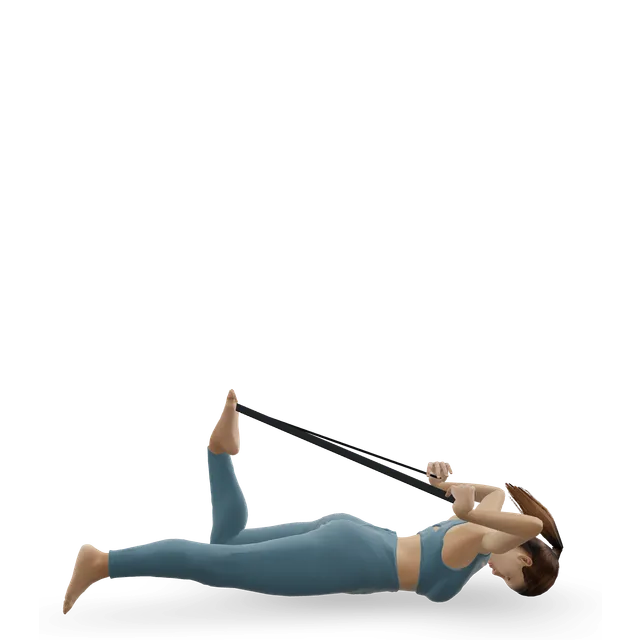
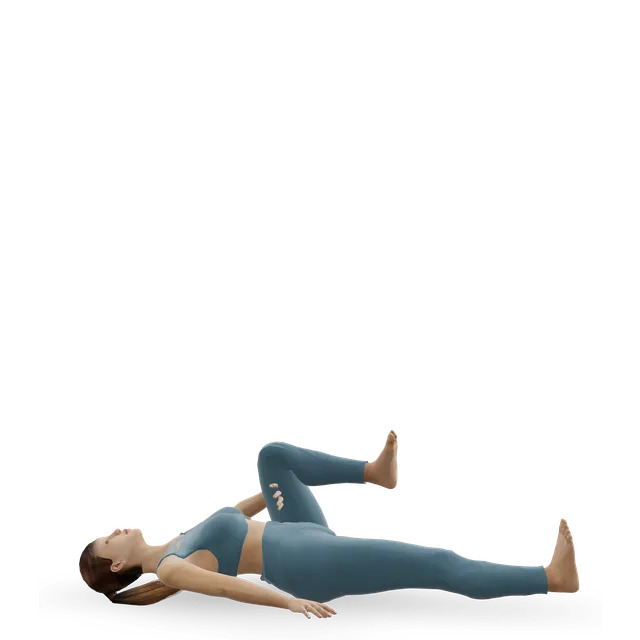
The stretches on this page come from an NHS children's hospital leaflet, which suggests four (a lying hamstring stretch, a lying-face-down thigh stretch, knee to chest and a wall calf stretch), each held for 30 seconds and repeated 2 to 3 times on each leg, to see if they help. A children's hospital fact sheet suggests stretches before bed. They're low-risk, and they may or may not reduce the pains.

Sources 34, 4, 35, 5, 12

Activity doesn't need limitingEmerging evidence

An NHS children's hospital leaflet says growing pains don't cause damage, so you don't have to restrict your child's activity. Pain during activity, pain that stops a child playing or walking, or a limp isn't typical of growing pains, and the NHS asks parents to see a GP for these.

Sources 5, 1, 3

No tests needed when the pattern is typicalStrong evidence

Reviews and NHS leaflets agree that when the story is typical and the examination is normal, no blood tests or X-rays are needed. An NHS children's hospital leaflet adds that if there is anything unusual to see where it hurts, the cause is probably not growing pains. If anything doesn't fit, a doctor can arrange simple blood tests and X-rays, or a scan.

Sources 4, 3, 6, 5

Vitamin D, magnesium, insoles and devices: weak or no evidenceMixed evidence

Vitamin D: in a Turkish study of 120 children with growing pains and low vitamin D, a single large prescribed dose was followed by less pain at 3 months (6.8 to 2.9 out of 10 on average), but there was no comparison group, so natural improvement can't be ruled out. A 2026 review found lower vitamin D in children with growing pains, and an NHS children's hospital in Scotland says vitamin D or multivitamins sometimes seem to help. Follow the standard NHS advice: a daily 10 microgram supplement all year for children aged 1 to 4, and in autumn and winter for everyone older, and no more than 50 micrograms a day for children aged 1 to 10 unless a doctor advises it.

Magnesium has been suggested, but no trial was found, and a review lists it among unfounded treatments. Insoles: 20 children given custom insoles reported less pain, but there was no comparison group, and foot shape doesn't differ between children with and without growing pains. Laser and ultrasound: in a pilot trial of 9 children, pain fell by 4.2 points with the real device and 4.0 with a sham, which mostly shows how much growing pains ease with time and attention.

Sources 36, 15, 5, 37, 4, 38, 39

How much pain is OK while you exercise?

Stretches should feel like a gentle pullEmerging evidence

The stretches should feel like a gentle pull, never pain. If one hurts, ease off or skip it (our suggestion; the NHS leaflet's stretches are all gentle).

Growing pains don't cause damage, so play and sport don't need limiting. But pain during activity, in the daytime, in one leg or in one joint, or with a limp, isn't typical of growing pains and needs a GP.

During a painful episode, comfort comes first: massage, warmth and a children's painkiller. Do the stretches at a calm time, such as before bed, as a children's hospital fact sheet suggests.

Sources 5, 1, 12

The exercise plan: 2 stages

Start at the first stage. Each move opens a full guide with a 3D demo.

Stage 1

Start a calm bedtime routine (about weeks 0 to 2)

About 5 minutes of stretches every day at a calm time, such as before bed, with normal play and sport. On a painful night, comfort comes first. The four stretches and their doses are from an NHS children's hospital leaflet; let your child do them with you.

Supine hamstring stretch with a strap demonstrated on the 3D figure3D demoSupine hamstring stretch with a strapBeginner · No equipment

Hold 30 s, 2 to 3 times each leg · NHS Lothian's dose. A towel round the thigh works instead of a strap

Easier: Leg-up hamstring stretch · Harder: Contract-relax hamstring stretch (PNF)

Face-down quad and hip flexor stretch with a strap demonstrated on the 3D figure3D demoFace-down quad and hip flexor stretch with a strapIntermediate · Other / check instructions

Hold 30 s, 2 to 3 times each leg · NHS Lothian's lying-face-down thigh stretch: ease the heel towards the bottom. A parent can help hold the ankle, or use a strap

Easier: Lying quad stretch off a bench · Harder: Couch stretch

Single knee-to-chest stretch demonstrated on the 3D figure3D demoSingle knee-to-chest stretchBeginner · No equipment

Hold 30 s, 2 to 3 times each leg · NHS Lothian's dose

Harder: 90/90 hip lift-off

Move on when: The routine is easy and has become a habit. If the pains change pattern (one leg, in the daytime, or with a limp), see a GP instead.

Follow along: a timer, a cue and the next move, one step at a time.
Stage 2

Keep going, then taper (about weeks 2 to 12)

Keep the routine daily while the pains are coming. Once there have been no painful nights for a few weeks, do the stretches a few times a week, and go back to daily if the pains return (our suggestion). Keep active play going every day.

Soleus wall stretch demonstrated on the 3D figure3D demoSoleus wall stretchBeginner · A wall

Hold 30 s, 2 to 3 times each leg · The bent-knee calf stretch; the dose follows the NHS leaflet

Easier: Seated calf stretch with a towel · Harder: Toes-tucked kneeling (toe squat)

Standing quad stretch demonstrated on the 3D figure3D demoStanding quad stretchBeginner · A wall

Hold 30 s, 2 to 3 times each leg · Older children can swap the lying thigh stretch for this, holding a wall. Don't pull the heel in hard

Harder: Couch stretch

Single knee-to-chest stretch demonstrated on the 3D figure3D demoSingle knee-to-chest stretchBeginner · No equipment

Hold 30 s, 2 to 3 times each leg · As stage 1

Harder: 90/90 hip lift-off

Move on when: The pains are rare. Keep up active play every day; the animal moves workout is a fun way to do it.

Follow along: a timer, a cue and the next move, one step at a time.

What to change for now

On a painful night

Gently massage your child's legs and use a covered hot water bottle, a heat pack or a warm bath. Give children's paracetamol or ibuprofen at the right dose for their age if needed, and never aspirin under 16 unless a doctor prescribes it. If you can tell from the day's activities that a painful night is likely, an NHS leaflet says it's safe to give pain relief at bedtime.

Sources 1, 6, 5

What to say

Tell your child the pain is real, harmless and will be gone by the morning. An Australian health service suggests plenty of cuddles and reassurance, and advises against saying the pain comes from playing or growing, in case your child becomes afraid of both.

Sources 13, 2

Keep playing

Growing pains don't cause damage, so keep up sport and play. If a sport brings on pain during the activity itself, or your child starts limping, that isn't typical of growing pains: see a GP.

Sources 5, 1

Positions to swap, and why

Habit or positionWhy it mattersInstead
Stopping sport or playGrowing pains don't cause damage, and an NHS leaflet says activity doesn't need restricting.Normal play, with the stretches at bedtime.
Telling your child the pain comes from playing or growingAn Australian health service warns it can make children afraid of both.Reassure them that their legs are fine and the ache will be gone by morning.
AspirinIt's not for under-16s unless a doctor prescribes it.Children's paracetamol or ibuprofen at the right dose.
High-dose vitamin D or other supplements without a doctorNo controlled trial shows a benefit, and children aged 1 to 10 shouldn't have more than 50 micrograms of vitamin D a day.The standard NHS vitamin D advice.
Buying special insoles or shoesThe evidence has no comparison group, and foot shape isn't linked to growing pains.Ask a podiatrist only if your child's feet roll in a lot or they trip often.
Stretching hard during a painful episodeComfort works better in the moment (our suggestion).Massage and warmth now, and stretches at a calm time.
Waiting it out when the pain is in one leg, in the day or with a limpThese aren't typical of growing pains, and the NHS asks parents to see a GP.See a GP.

Routines to follow

More moves for this area

Questions people ask

What are growing pains?

Aching or throbbing in both legs, usually the calves, shins, thighs or behind the knees, in the evening or at night and gone by the morning, in a child who is otherwise well. They're harmless and usually get better on their own.

What age do growing pains start and stop?

Usually between 3 and 12, most often in younger children. Some young people still get them in their early teens, and most have stopped by the mid-teens.

Are growing pains caused by growing?

No. The NHS says they're not caused by growing, and studies have found no link with growth spurts.

Why do growing pains happen at night?

Nobody knows. They run in families, children who get them may feel pain a little more easily, and in one large family study about a third of cases also had features of restless legs. Whether busy, active days make them more likely is unclear, because the sources disagree.

What helps growing pains?

Gently massaging the legs, a covered hot water bottle or a warm bath, and children's paracetamol or ibuprofen, but never aspirin under 16. Calm reassurance that the legs will be fine by morning helps too.

Do stretches help growing pains?

Possibly. In one small 1988 study of 34 children, those who stretched their thighs and calves had fewer episodes, but the study was small and unblinded. An NHS children's hospital suggests four gentle stretches, each held for 30 seconds, 2 to 3 times on each leg, to see if they help.

Does vitamin D or magnesium help?

There's no good trial of either. One study without a comparison group gave a single prescribed high dose of vitamin D to children whose levels were low, and no trial of magnesium was found. Follow the usual NHS vitamin D advice, and don't give high doses without a doctor.

When should I worry about growing pains?

See a GP if the pain is in one leg, in the morning or during activity, causes a limp, is in one joint, or comes with a rash, swelling, unusual bruising, a high temperature, tiredness, poor appetite or weight loss. Sudden hip, thigh or knee pain, or a limp, needs an urgent GP appointment or NHS 111 the same day.

Can growing pains be in one leg?

They're usually in both legs, though one leg can ache more than the other at times. Pain in one leg is on the NHS list of reasons to see a GP, so it can be checked for other causes.

Should my child stop sport?

No: growing pains don't cause damage, and activity doesn't need limiting. Pain during sport, or pain that stops them playing, isn't typical of growing pains and should be checked.

Does my child need tests?

Usually not: when the pattern is typical and the examination is normal, no blood tests or X-rays are needed. A doctor will arrange them if something doesn't fit.

Can teenagers or adults get growing pains?

They're mainly a younger child's problem, though some teenagers still get them. In a teenager with knee or hip pain, think of Osgood-Schlatter disease, kneecap pain or a hip problem, which can sometimes be felt in the knee. Adults with night-time leg symptoms may have cramp or restless legs, which have their own guides.

Related exercise guides

Other pain guides

Sources

  1. NHS · Growing pains
  2. Uziel 2007 · Growing pains in children (review, Pediatr Rheumatol Online J)
  3. Lehman 2017 · Growing pains (review, Sports Health)
  4. Evans 2008 · Growing pains: contemporary knowledge and recommended practice (review, J Foot Ankle Res)
  5. NHS Lothian, Royal Hospital for Children and Young People · Childhood growing pains (physiotherapy leaflet, 2024)
  6. Royal Berkshire NHS Foundation Trust · Growing pains (paediatric orthopaedic leaflet, 2025)
  7. Evans 2004 · How common growing pains are in 4 to 6 year olds (survey of 1,445 children, J Pediatr)
  8. Hestbæk 2024 · Growing pains in Danish preschool children (cohort of 777, Sci Rep)
  9. O'Keeffe 2022 · Defining growing pains (scoping review of 145 studies, Pediatrics)
  10. Smith 2025 · Assessments and diagnostic criteria for growing pains (scoping review, BMJ Open)
  11. Pavone 2019 · What causes growing pains? (systematic review, World J Orthop)
  12. Royal Children's Hospital Melbourne · Growing pains (orthopaedic fact sheet, 2007)
  13. Better Health Channel, Victoria State Government · Growing pains
  14. Guo 2026 · Risk factors for growing pains (case-control study of 290 children and 467 controls, J Child Orthop)
  15. Luo 2026 · Risk factors for growing pains (meta-analysis of 37 studies, Front Pediatr)
  16. NHS · Joint hypermobility syndrome
  17. Uziel 2010 · Five-year outcome of children with growing pains (follow-up of 35 children, J Pediatr)
  18. Champion 2012 · Twin family study of growing pains and restless legs syndrome (Eur J Pain)
  19. Champion 2022 · An improved definition of growing pains (twin family study, Paediatr Neonatal Pain)
  20. Rosen 2025 · Restless legs syndrome and growing pains in childhood (review, Front Neurol)
  21. NHS · Restless legs syndrome
  22. NHS · Hip pain in children (irritable hip)
  23. NHS Lothian, Royal Hospital for Children and Young People · Perthes disease (leaflet for parents and carers, 2023)
  24. AAOS OrthoInfo · Perthes disease
  25. Perry 2022 · Perthes disease in Great Britain (national cohort of 371 children, Bone Joint J)
  26. AAOS OrthoInfo · Slipped capital femoral epiphysis
  27. West Suffolk NHS Foundation Trust · Slipped upper femoral epiphysis (patient leaflet, 2021)
  28. Perry 2022 · Slipped upper femoral epiphysis in Great Britain (national cohort of 486 children, Bone Joint J)
  29. NHS · Osteomyelitis
  30. NHS · Septic arthritis
  31. NHS · Acute lymphoblastic leukaemia: symptoms
  32. NHS · Bone cancer: symptoms
  33. NICE · Suspected cancer: recognition and referral (guideline NG12)
  34. Baxter 1988 · Muscle stretching for growing pains (small controlled study of 34 children, J Pediatr Orthop)
  35. Fuentes-Nucamendi 2011 · A simplified stretching regimen for growing pains (study without a comparison group, Acta Ortop Mex)
  36. Vehapoglu 2015 · Vitamin D treatment for growing pains (study of 120 children without a comparison group, Med Princ Pract)
  37. NHS · Vitamin D
  38. Lee 2015 · Foot orthoses for children with growing pains (study of 20 children without a comparison group, Ann Rehabil Med)
  39. Ferreira 2026 · Laser and ultrasound therapy for growing pains (pilot randomised trial of 9 children, J Biophotonics)
  40. NHS · Sepsis
  41. NHS · Sprains and strains

Exercise education, not a diagnosis or treatment plan. It is written from the guidelines and studies listed above; review by a clinician is pending. If your pain follows an injury, is severe, is getting worse, or comes with any warning sign listed on this page, get it assessed. Health disclaimer.