Three things set your speed
Your VO2 max (the most oxygen your body can use), how much of it you can keep up for the whole race, and your running economy, the oxygen you need at a given pace. A 5K is run close to your VO2 max.
Training guide
Running faster over 5K, 10K or a mile comes down to three things: how much oxygen your body can use (your VO2 max), how much of it you can keep up, and how economically you run. Training improves all three, and the honest headline is modest: interval training improved time trials by about 2% in trained runners and by up to about 6% in less-trained people.
What works is mostly easy running, one or two harder sessions a week, strength training twice a week and even pacing. No single mix of easy and hard running has been shown to be best, and there's no shortcut: the trials that worked lasted weeks.
This guide covers what sets your speed, what the trials show, a week that puts it together, how to pace a race, how to measure progress and how to stay injury-free. Our 5K and 10K plans have the week-by-week schedules; for flat-out speed, see our guide to sprinting faster.
Your VO2 max (the most oxygen your body can use), how much of it you can keep up for the whole race, and your running economy, the oxygen you need at a given pace. A 5K is run close to your VO2 max.
Keep most of your running easy and add intervals of 2 minutes or more once a week, with a tempo run or hills if you have time. No fixed mix of easy and hard running has been shown to be best.
Interval training improved time trials by about 2% in trained people and by up to about 6% in less-trained ones. On a 30-minute 5K, 2 to 6% is about 36 seconds to almost 2 minutes (our arithmetic).
Source 6
Strength training made running 2 to 8% more economical in most studies, without adding bulk. Heavy loads helped most.
The fastest 5,000 and 10,000 m runs ever are close to even pace with a fast finish. Start at a pace you can hold, not faster.
Single runs much longer than your recent longest went with more injuries, while a plan built on the 10% rule didn't prevent them. Build gradually and keep hard days apart.
The most oxygen your body can take in and use in all-out exercise. Training raises it mainly by making your heart pump more blood with each beat; our VO2 max guide covers it in full.
Your threshold is the hardest pace you can hold before lactate builds up steeply in your blood. In untrained people it sits at about 60% of VO2 max, and trained runners can work at 75 to 85% or more. A 5K is run close to VO2 max and a 10K at about 90 to 100% of it.
Source 1
How much oxygen you need at a given pace: better economy means more speed for the same effort. Your speed at lactate threshold, which combines all three, is the best single predictor of distance running performance.
The same three things matter over a mile, with more of the energy coming from anaerobic sources at middle distances of 800 to 3,000 m. Strength trials measured time trials from 1.5 to 10 km, so the evidence below fits the mile too.
Source 7
Across 28 studies of 723 healthy adults, steady endurance training raised VO2 max by about 4.9 mL/kg/min (millilitres of oxygen per kilogram of body weight per minute) and interval training by about 5.5, against no exercise. Intervals added a possibly small extra 1.2.
Source 13
Across 53 trials, intervals of 2 minutes or more, with at least 15 minutes of hard work in a session, for 4 to 12 weeks or more, beat steady training for VO2 max. Shorter, smaller doses still clearly beat no exercise.
Source 5
Across 29 studies of 491 people, mostly young men, interval training improved time trials by about 2% in trained people and by up to about 6% in less-trained ones. More sessions helped only up to a point. We found no meta-analysis comparing intervals with steady running on race times directly.
Source 6
In 6 studies of moderately trained people, intervals of 4 minutes or more improved time trials by about 2% more than short all-out sprint intervals.
Source 14
Short all-out sprints raised fitness across 19 studies, but across 55 studies, small studies seemed to overstate the effects, and most lasted 4 weeks or less.
Across 17 studies, polarised training (mostly easy, some very hard, little in between) gave slightly more VO2 max only in short programmes and in highly trained athletes, and no better time trials. Pooled individual data from 13 studies found no clear winner, and recreational athletes may do as well or better with a pyramid: mostly easy, some threshold work and a little very hard.
In 30 recreational runners over 10 weeks, 10K times improved by 5.0% with mostly easy and some very hard running and by 3.6% with more threshold running, a difference that wasn't significant. In 38 recreational runners over 8 weeks, 2 km speed rose by 3.5% and 3.0%, and the threshold-focused plan took 17% less training time.
In 20 well-trained runners, 6 weeks of uphill intervals improved 5 km time trials by 2%, with no clear best intensity.
Source 19
In 2,303 recreational runners, more weekly mileage, intervals and tempo runs all went with faster race times, and tempo runs mattered more for shorter races. A review of 66 mostly cross-sectional studies found the same for longer races. These are associations, not trials.
Across 24 studies, strength training improved running economy by 2 to 8% in most, and 1.5 to 10 km time trials tended to improve, without changing VO2 max or body composition. Highly trained runners improved too, and so did explosive training.
Heavy loads, ideally 90% of your maximum or more, improved economy more than jump training, and programmes of 10 to 14 weeks did better than shorter ones. Jumps alone had only small effects on time trials, and heavy lifting combined with jumps did best. In 17 well-trained runners, heavy half squats 3 times a week for 8 weeks improved economy by 5%, with no change in body weight.
In 20 middle-aged recreational runners, 10 weeks of lifting or jumping improved economy by 2% but didn't change 5 km time.
Source 27
Our editorial week, built on the interval meta-analyses (Wen 2019; Rosenblat 2021), the strength training review (Blagrove 2018), the single-run cohort study (Frandsen 2025) and our 5K plan, which sets out the weeks.
Loading the 3D figure…
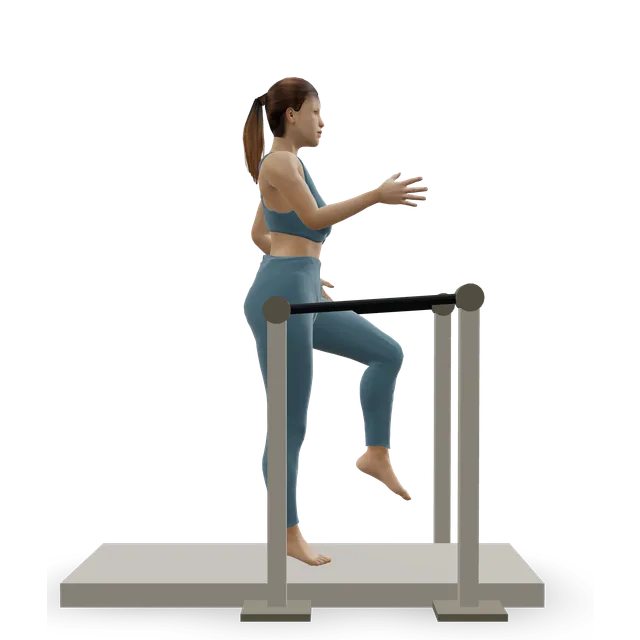
The movement on the figure: Treadmill running
Most of your running at a pace where you can talk in full sentences. No fixed ratio, such as 80% easy and 20% hard, has been shown to suit recreational runners best, so the exact split is up to you.
Repeats of 2 minutes or more, adding up to at least 15 minutes of hard work, beat steady running for fitness, and longer repeats beat all-out sprints for race times. Our 5K intervals workout uses 3-minute repeats at 5K effort: hard but controlled, a few words at most.
Comfortably hard tempo runs went with faster times in shorter races in a large survey, and uphill intervals improved 5 km times by 2% in 6 weeks in trained runners.
Two sessions a week is likely enough. Heavy work in the trials used 2 to 6 sets of 3 to 10 reps. Lift more than 3 hours after high-intensity running and at least 24 hours before your next hard run, and keep it going for 10 weeks or more.
Jump sessions in the trials built from 30 to 60 foot contacts in the first week to over 100 after 6 to 9 weeks, and jumps helped economy most at easy paces. Our plyometrics for runners workout builds up slowly.
Two sessions a week: heavy squats 3 to 4 × 4 to 6, split squats and one-leg Romanian deadlifts 3 × 6 to 10, calf raises with a straight and a bent knee 3 × 10 to 15, and pogo hops as in our runners' workouts, stopping lifts 2 to 3 reps short of failure.
 3D demoBarbell back squatAdvanced · A barbell
 3D demoRear-foot-elevated split squat (Bulgarian split squat)Intermediate · A bench or box
 3D demoSingle-leg Romanian deadliftAdvanced · A dumbbell
 3D demoSingle-leg calf raise from a stepIntermediate · A step + A wall
 3D demoSeated bent-knee calf raise (soleus raise)Beginner · A bench or box
 3D demoPogo hopsIntermediate · No equipment
In 32 world records at 5,000 m and 34 at 10,000 m, the first and last kilometres were the fastest and the middle was even. For runners with more modest aims, a review advises 'a realistic pace during the initial stages' and running with a group.
In 16,315 runners in a 10 km race, women slowed by about 4% and men by about 3% in the second half.
Source 28
In 11 trained women on a treadmill, running the first 1.63 km 3 or 6% faster than their average didn't slow their 5K times. It's one small study.
Source 29
Start at your goal pace or a touch quicker, hold it through the middle, and push the last kilometre (our editorial rule, as in our 5K plan). If you're not sure of your goal pace, start a little slower and finish faster.
Run a 5K time trial or a timed 5 km event every 4 to 6 weeks (our suggestion). Even in the fastest runners, times varied by about 1 to 2% from race to race, more in slower runners, so a 30-second change in a 25-minute 5K (2%) is at the edge of real (our arithmetic).
Source 30
Watch estimates of VO2 max were right on average across 14 studies but could be about 10 mL/kg/min out for one person, and one Garmin model read high.
In 154 amateur runners, one watch predicted 5 km times to within about 20 seconds on average, but 10 km and half marathon predictions could be minutes out, and a Garmin model predicted half marathons about 7.6 minutes too fast.
Put a recent time into our running pace calculator to set your training paces and estimate other distances.
In 5,205 runners, a single run more than 10% longer than the longest in the past 30 days went with 52 to 128% higher injury rates, depending on how much longer it was, while week-to-week changes in distance weren't linked. It's an association from one study.
Source 11
A training plan built on the 10% rule didn't prevent injuries in 532 new runners (20.8% against 20.3% injured), and the evidence on weekly increases is weak.
Across 25 trials, stretching didn't clearly reduce running injuries. Stretch if you enjoy it, not to prevent injury.
Source 36
Across sports, strength training cut injuries to about a third, but in runners a conditioning programme hasn't clearly prevented them. Lift to run faster and stronger; our running guide covers injury prevention.
Endurance performance held until about 35, fell modestly until 50 to 60, then faster, mainly as VO2 max fell. Running economy held up in trained older runners, and part of the decline came from training less.
Source 38
Men typically outperform women by 10 to 30%, depending on the event, a gap that appears at puberty. The training principles are the same.
Source 39
Less-trained people improved their time trials most, by up to about 6%. If you're new, regular easy running comes first; our Couch to 5K plan starts there.
Source 6
Intervals at 5K effort, a tempo run, hill repeats and a time trial, with easy runs, a Norwegian 4x4 interval session and two strength sessions for runners.
A 50-minute interval session for a faster 5K: an easy warm-up and strides, then five 3-minute repeats at 5K effort with 2-minute jogs, and an easy cool-down.
50 minIntermediate8 movesCardio machine, A wallA 45-minute tempo run for 10K and half marathon training: an easy warm-up and strides, then two 8-minute blocks at a comfortably hard, short-sentences effort.
45 minIntermediate6 movesCardio machine, A wallA 35-minute hill session for beginners: an easy warm-up jog, then 6 uphill runs of 60 seconds at a hard effort, walking back down between them.
35 minIntermediate7 movesCardio machine, A wallA 60-minute 5K time trial or race: a running warm-up with strides, 5 km at your best even effort and an easy cool-down. Use the result to set your paces.
60 minIntermediate8 movesCardio machine, A wallA 40-minute easy run at a pace where you can talk in full sentences, with a brisk-walk warm-up and an easy cool-down: the base of every running plan.
40 minBeginner6 movesCardio machine, A wallThe Norwegian 4x4, a well-studied interval session for raising VO2 max: four 4-minute hard efforts with 3 easy minutes between, on a bike, rower or treadmill.
40 minIntermediate3 movesCardio machine, A wallA 45-minute gym strength workout for runners: hops, heavy squats, Bulgarian split squats, calf raises and side planks, with sets, reps and rest.
45 minIntermediate13 movesA wall, A bench or boxA 20-minute hop and bound session for runners: ankle bounces to pogo hops, one-leg hops and bounding, building foot contacts slowly over 10 weeks.
20 minIntermediate8 movesCardio machineThe 5K plan adds hills, intervals and tempo runs to run a faster 5K in 8 weeks; the 10K and half marathon plans take you further, and Couch to 5K gets you started. The strength plan for runners fits two sessions a week around your running.
An 8-week plan to run a faster 5K once you can run one: hills, then intervals and tempo runs, mostly easy running, strength, a time trial and a light race week.
4 training days40 minIntermediate4 days a weekAn 8-week beginner 10K plan: three runs a week plus strength, a long run that grows about 10% at a time, optional hills and tempo runs, and a light race week.
4 training days45 minBeginner3 days a weekA 9-week beginner plan with the same walk-to-run shape as Couch to 5K: three run-walk sessions a week, from 1-minute jogs to 30 minutes of running.
3 training days35 minBeginner4 days a weekA 12-week beginner half marathon plan: three or four runs a week, a long run building to about 15 km, one harder session, strength, a taper and race-day tips.
4 training days50 minBeginner2 days a weekA 12-week strength plan for runners: two sessions a week of heavy lifts, single-leg work, calf raises and hops, fitted around your runs.
2 training days45 minBeginnerStop and call 999 for:
Heat exhaustion should ease within 30 minutes of resting somewhere cool, cooling the skin and drinking fluids; get help from NHS 111 if you're struggling to treat it. Call 999 for heatstroke: still unwell after 30 minutes of that, a very high temperature, hot skin that isn't sweating, a fast heartbeat or fast breathing, confusion, a fit or loss of consciousness.
Source 45
Don't run if you're in pain. Get it checked if:
Mostly easy plans did as well as harder ones for race times, and easy days let you run the hard ones well.
Strength training improved economy and left body composition unchanged in the trials, including heavy half squats 3 times a week.
A 10%-rule plan didn't prevent injuries in its trial, and single long runs matter more than weekly totals.
Changing to a forefoot strike gave no economy benefit and made it worse at first, and no study following runners forward links foot strike with injury.
Your own preferred stride length is about your most economical, and strides up to 3% shorter are fine. Reaching out with your foot doesn't make you faster.
Source 55
Not needed: a normal diet and a light carbohydrate meal 2 to 3 hours before is enough. Taking carbohydrate during exercise helps only when you're working hard for more than about an hour.
Watch predictions were close for the 5K but could be minutes out for longer races, and watch VO2 max can be about 10 mL/kg/min out for one person.
Keep most of your running easy, add one interval session a week (repeats of 2 to 4 minutes at hard but controlled effort) and a tempo run or hills, lift twice a week and pace your races evenly. Expect a few per cent over a couple of months: about 2% in trained runners and up to 6% in newer ones.
Build your aerobic base with mostly easy running, so a given pace costs you less, and start races at a pace you can hold rather than too fast. Strength training also makes running 2 to 8% more economical, which means less effort at the same speed.
Keep most of your running easy, add one interval session and one tempo run or hill session a week, lift twice a week and pace evenly. Our 8-week 5K plan puts it together, with a time trial in week 4.
Weeks rather than days. Interval training improved time trials by about 2% in trained runners and by up to about 6% in less-trained people; on a 30-minute 5K, that's about 36 seconds to almost 2 minutes.
Not by much through fitness: the trials that worked lasted weeks. In 2 weeks you can still run faster on the day by tapering a little, warming up well and pacing evenly from the start.
The same training works, with intervals and strides suiting a shorter, faster race. Strength training improved time trials from 1.5 to 10 km, and the mile leans more on anaerobic energy, so keep some fast running in your week.
Three or four, with an easy day or a rest day after each hard session, plus two strength sessions. More running went with faster race times in a large survey, but build up gradually.
Both have a place: intervals of 2 minutes or more raised fitness most, and tempo runs went with faster times in shorter races. Most plans, including ours, use one of each a week, with easy running between.
It makes running about 2 to 8% more economical without adding bulk, and time trials tended to improve. Heavy loads helped most, though in middle-aged recreational runners 10 weeks improved economy but not 5K time.
Start at your goal pace or a touch quicker, hold it, and push the last kilometre. The fastest races ever run are close to even pace with a fast finish, while most recreational runners slow down by 3 to 4% in the second half.
No. Switching to a forefoot strike gave no economy benefit, made it worse at first, and has no proven injury benefit. Your own stride length is about your most economical.
No. A normal diet and a light carbohydrate meal 2 to 3 hours before is enough for a 5K or 10K. Carbohydrate during exercise only helps when you're working hard for more than about an hour.
Exercise education, not a personal prescription, and clinical review of these guides is pending. Check with a GP before starting hard training if you have a heart condition, chest pain, dizziness or breathlessness when active, and stop for sharp or increasing pain. Health disclaimer.