Sport

Hyrox and other fitness races: what the race asks of you, how to train for the runs and stations, and injuries

Hyrox is an indoor fitness race: eight 1 km runs, each followed by a station, from a ski ergometer and a sled push to a farmers carry and 100 wall balls, with weights set by division. Other fitness races, such as DEKA, follow a similar pattern. The stations get the attention, but the race is mostly running: in studies, running took over half the time, and aerobic fitness, not strength, went with the fastest finishes.

This guide explains what the race asks of your body, what little is known about injuries (one small 12-week study, with mostly knee and lower-leg overuse problems), and how to train: running first, two strength sessions a week, and station practice, with links to our running plans and our circuit training and EMOM (every minute on the minute) guides. It also covers pacing, heat in race halls, and who should check with a GP first. There are two workouts with 3D demos. We're not connected with HYROX or any race organiser, and the official rulebook sets the weights.

The short version

What the race is

Eight 1 km runs, each followed by one station in a fixed order: 1,000 m on a ski ergometer, a 50 m sled push, a 50 m sled pull, 80 m of burpee broad jumps, a 1,000 m row, a 200 m farmers carry, 100 m of sandbag lunges and 100 wall balls. Weights depend on the division, and racers must be at least 16.

Source 1

Mostly a running race

In 11 recreational athletes, running took 59% of a simulated race, and aerobic fitness, not strength, went with faster finishes. In Pro and Elite races, running was about half of race time and most of the improvement over seven seasons.

Sources 3, 4

Little is known about injuries

One small 12-week study of 89 mostly novice athletes found 14.4 injuries per 1,000 hours of training, three-quarters of them overuse injuries, the knee most often. No one has measured injuries in races, and no prevention programme has been tested.

Source 5

Train like a runner who lifts

Strength training 2 to 3 times a week made trained runners 2 to 8% more economical, and running alongside lifting doesn't hold back strength or muscle gains, though explosive gains suffer if both are in one session.

Sources 6, 7

Heat, water and checking first

Drink when water is offered, don't pour it over yourself (that earns a penalty), and know the signs of heat exhaustion. Use the Physical Activity Readiness Questionnaire for Everyone (PAR-Q+) before you start training hard.

Sources 1, 8, 9

What a fitness race asks of your body

The race, from HYROX's rulebook

HYROX's race page says "HYROX is for everybody", for professional athletes and everyday fitness enthusiasts alike. Each racer runs 1 km and then completes a station, 8 times over. The list below is our summary of the 2026/27 singles rulebook for the women's and men's divisions, not an official table. Women Pro race at the men's weights and Men Pro heavier; Doubles, Relay and Adaptive races have rulebooks of their own; and the current rulebook, in our sources, sets the standards. Lane layouts vary between venues.

  • Ski ergometer (SkiErg): 1,000 m.
  • Sled push: 50 metres, as 4 lengths of 12.5 metres; 102 kg including the sled for women, 152 kg for men.
  • Sled pull: 50 metres, as 4 lengths of 12.5 metres, pulled in with a rope while standing; 78 kg including the sled for women, 103 kg for men.
  • Burpee broad jumps: 80 m, chest to the floor on each burpee and both feet together on each jump.
  • Rowing: 1,000 m.
  • Farmers carry: 200 m with two kettlebells of 16 kg (women) or 24 kg (men).
  • Sandbag lunges: 100 m with 10 kg (women) or 20 kg (men), the back knee touching the floor each time.
  • Wall balls: 100 squats to below parallel, each with a throw of a 4 kg ball to a 2.7 m target (women) or a 6 kg ball to 3.0 m (men).

Sources 1, 2

Other fitness races

Spartan's DEKA FIT "combines ten functional training zones", each preceded by 500 m of running, 5 km in all. The research below is on HYROX; we found none on DEKA.

Source 10

Over an hour of hard work

In 11 recreational athletes with a median of 18 months' experience, a simulated Open race took a median of 86.5 minutes: 51 minutes running and 33 at the stations. They spent about 80% of the race above 90% of their maximum heart rate. Blood lactate was higher after the stations than after the runs, the wall balls, which come last, were the hardest, and the sled push and pull were the quickest stations.

In 24 Pro men (race time about 70 minutes), the runs averaged 84% of the speed at their second ventilatory threshold, the top of sustainable hard effort, and speed fell from 16.1 km/h in the first run to 13.6 km/h in the last.

Sources 3, 11

What the stations cost

The Compendium of Physical Activities rates hard rowing at 7.3 METs (multiples of your resting energy use), a ski ergometer at 10.5 to 18.0 depending on speed, vigorous circuits with kettlebells at 7.5, and burpee-style intervals at 11.0. The UK's National Health Service (NHS) counts circuit training and heavy lifting as very vigorous.

Sources 12, 13

What goes with a faster race

In the simulated race, a higher VO2 max (the most oxygen the body can use), more weekly endurance training and less body fat went with faster times, and none of the athletes' measures predicted station times. Across seven seasons of Pro and Elite results (11,842 women and 27,854 men), the top 100 got about 13 minutes (men) and 17 minutes (women) faster, mostly through faster running, and the strength stations reshuffled the rankings more among slower racers.

A narrative review of the 11 Hyrox studies so far, not yet peer reviewed, reached the same view: running capacity is the strongest determinant. Benchmarks now exist for every station from over 186,000 results, and more than 275,000 people raced up to the 2023/24 season. These are associations from race data.

Sources 3, 4, 14, 15, 16

What takes the load

8 km of running loads the calves, Achilles tendons, knees and feet. The ski ergometer is a double-pole pull for the back, triceps and trunk, the sled push is driven by the legs, the carry tests grip and trunk, and the lunges and wall balls load the thighs. In the only injury study, the knee and the lower leg and Achilles carried most of the injury burden.

Sources 1, 5

What little is known about injuries

One small 12-week studyEmerging evidence

The only injury study so far followed 89 mostly novice athletes in the UK for 12 weeks, an undergraduate project: 63% were women, 62% had been doing Hyrox for a year or less, and the median training was 7 hours a week. On average, 62% of the weekly questionnaires came back.

  • In an average week, 30% had a health problem and 18% a substantial one.
  • 14.4 injuries per 1,000 hours of training, 6.4 of them stopping training, and 9.6 that the athletes put down to Hyrox training.
  • 73% were overuse injuries. The knee was involved most often (22% of episodes), and the knee and the lower leg and Achilles carried most of the burden. Shoulder problems were almost absent.
  • A previous injury that had stopped training was the strongest, though uncertain, marker of more severe problems.

Source 5

What we don't knowMixed evidence

No one has measured injury rates in races, compared training plans, or tested a prevention programme, and a review of the research so far says injuries remain insufficiently studied. Treat any confident claim about Hyrox injuries with care.

Sources 5, 14

Compared with running and CrossFitEmerging evidence

New runners have about 17.8 running injuries per 1,000 hours of running and recreational runners about 7.7. In CrossFit, studies report 0.2 to 18.9 injuries per 1,000 hours of training, most often to the shoulders, spine and knees. Across resistance training styles, traditional strength training had among the lowest injury rates. These are different groups and measures, so they give context rather than a direct comparison.

Sources 17, 18, 19

Where it hurts, and our guides

Knee pain from running and lunges: our runner's knee, jumper's knee and knee pain guides. The Achilles and calves: our Achilles tendinopathy, calf pain and shin splints guides. The lower back on long rows or carries: our back pain guide. Hips and groin: our hip flexor pain and groin strain guides. Elbows: our tennis elbow and golfer's elbow guides. Wrists in burpees: our wrist pain from push-ups guide.

What prevents injuries

No prevention trial yetMixed evidence

No trial has tested any way to prevent injuries in Hyrox or other fitness races, so any specific programme is untested. What follows borrows from running, strength training and CrossFit.

Sources 5, 14

What the injury pattern suggestsEmerging evidence

The injuries look like running injuries plus some strain from the loaded stations: knees, lower legs and Achilles, coming on gradually. So the lessons from our running page apply: build your running gradually, and add strength training. A survey that hasn't been peer reviewed also found more injuries reported by people doing more Hyrox-specific sessions a week, which is an association. Our suggestion: keep full race practice to every week or two rather than every session (editorial).

Sources 5, 17, 6, 20

Lessons from CrossFitEmerging evidence

In CrossFit, a previous injury and training without a coach's supervision went with more injuries, and most studies were of poor quality. The evidence on competing is mixed: the largest study, of 3,049 people, found competitors had no higher injury rate. Hyrox's fixed stations involve little overhead lifting, which may be why shoulder problems were rare in the one Hyrox study (our reading).

Sources 18, 21, 30

Race rules that helpStrong evidence

Racers must wear closed-toe shoes, and may take them off for the wall balls. Knee sleeves, gloves, a weightlifting belt and wristbands are allowed. You can stop and rest on the rower and put the kettlebells down on the carry. Injured racers must have medical clearance and can arrange adapted movements in advance, racing outside the rankings.

Source 1

Training for performance

Running fitness comes firstEmerging evidence

Aerobic fitness and weekly endurance training went with faster simulated races, faster running explained most of the improvement in Pro and Elite results, and in Pro men, running closer to threshold speed went with faster running splits. These are small or observational studies, but they agree.

Sources 3, 4, 11, 14

Strength makes runners more economicalEmerging evidence

Across 24 studies in trained distance runners, 2 to 3 strength sessions a week of heavy, explosive or jumping exercises improved running economy by 2 to 8% compared with running alone, and often time trials of 1.5 to 10 km, without changing VO2 max or body composition. Our running page says the same.

Source 6

Lift and run in separate sessionsStrong evidence

Across 43 studies, adding aerobic training to strength training didn't reduce gains in maximal strength or muscle size, but it did reduce gains in explosive strength, mainly when both were done in the same session rather than at least 3 hours apart.

Source 7

Stations and compromised runningMixed evidence

No trial has tested station practice, compromised running (running straight after a station) or race simulations; they're coaching practice. The authors of the simulated-race study suggest endurance training, intervals, swapping some running for rowing or skiing to limit running load, runs combined with stations, and a strength block for anyone who can't yet handle the race weights. A scoping review of 39 studies of high-intensity functional training reported gains in VO2 max of 8 to 15% and in strength of 10 to 20%, mostly in trained people.

Sources 3, 22

A training weekEmerging evidence

Our suggestion for the 8 to 12 weeks before a race: 3 runs (one easy or long, one tempo or intervals, one easy), 2 strength sessions and 1 station or compromised running session, with at least one rest day. Lift more than 3 hours after hard running and at least a day before the next hard run, as our running page advises, and go lighter in the final week (editorial). Our Hyrox training plan sets out this week for 12 weeks, with each week's doses.

If 8 km of running is new to you, start with our couch to 5K plan and then our 10K plan, learning the stations at light weights as you go. Our circuit training and EMOM guides cover ways to structure station practice, though the evidence on those formats for fitness racing is thin.

Sources 6, 7

Pacing the race

Start the first run under controlEmerging evidence

In Pro men, running speed fell by about a sixth between the first and last runs, and the transitions through the Roxzone (the area between the runs and the stations) were slowest of all. Our reading: start the first run at a pace you could hold to the last one, and expect the wall balls at the end to be the hardest part.

Our suggestion: set your 1 km pace from a recent 5K or 10K time with our running pace calculator, and practise it in training on tired legs (editorial).

Sources 11, 3

Heat, water and very sore muscles

Water is for drinkingStrong evidence

The rulebook says water will be available at least once on each pass through the Roxzone, and that fluids "are for drinking only. They are not to be used for active cooling"; pouring water over your head or body earns a 2-minute penalty each time. Any nutrition has to be carried from the start.

Source 1

Know the signs of heat exhaustionStrong evidence

Race halls can be warm, though no one has measured heat illness at fitness races. The NHS lists tiredness, dizziness, a headache, feeling or being sick, heavy sweating with pale, clammy skin, cramps, a high temperature and intense thirst as signs of heat exhaustion. Move somewhere cool, drink water and cool your skin, and you should feel better within 30 minutes. A consensus on sport in the heat advises getting used to heat with repeated sessions over 1 to 2 weeks and starting well hydrated.

Sources 8, 23

RhabdomyolysisStrong evidence

Rarely, severe or unaccustomed exercise breaks down muscle fast enough to harm the kidneys. Signs include dark, red or cola-coloured urine, much less urine than usual, and very painful, weak or swollen muscles in the days after a session. Across 772 cases, most followed running or weightlifting. Get medical help the same day if you have these signs. Building up gradually, rather than jumping into huge unfamiliar sessions, is the sensible protection (our reading).

Sources 24, 25, 26

A warm-up for Hyrox and fitness races

Built on the site's warm-up guide and the rulebook's start procedure (editorial): racers must be at the start 10 minutes before their wave, and venues have a warm-up area. No study has tested a warm-up for fitness races.

  1. Jog easily for 5 to 8 minutes, building to a comfortable pace.
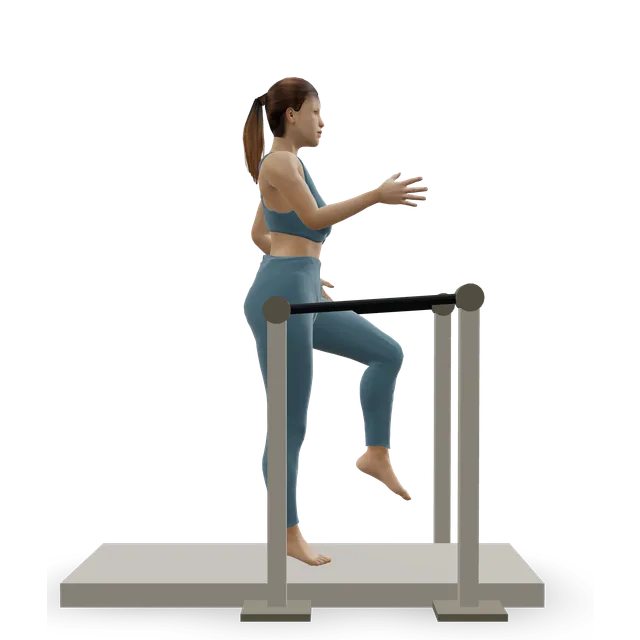
  2. Hips: 3 slow circles with each leg, holding a rail or rack.
  3. Open up: 3 world's greatest stretches on each side.
  4. Legs: 6 walking lunges on each leg.
  5. Calves and ankles: 2 sets of 20 small bounces.
  6. Strides: 2 or 3 runs of 20 seconds at about your first-run pace.
  7. Rehearse the stations: 1 to 2 minutes of easy rowing or skiing and 5 easy wall balls, if the warm-up area has them.
  8. Drink, then go to the start.

Loading the 3D figure…

Gets into position, then repeats the movement. Technical checks passed; qualified exercise review is pending.

The movement on the figure: Walking lunge

Moves for Hyrox and fitness races

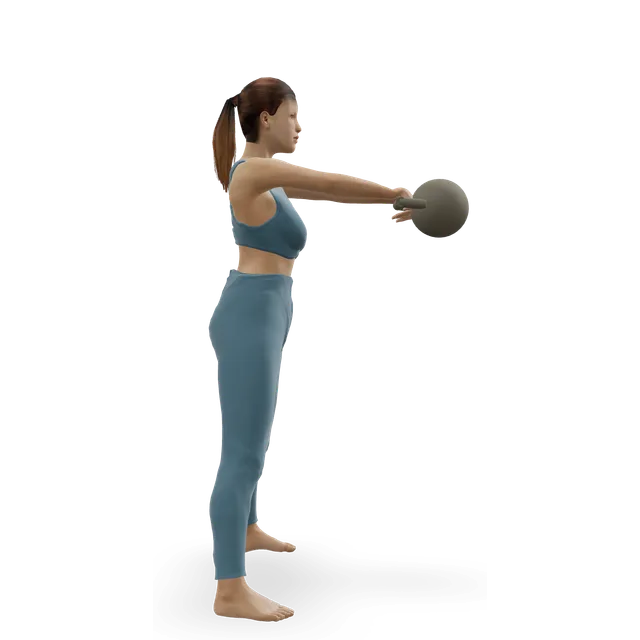
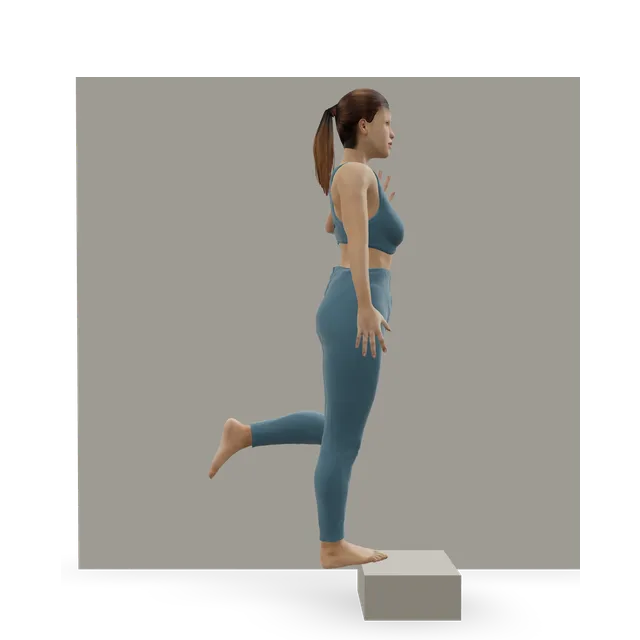
Each has a 3D demo. The figure can't show the ski ergometer, the rope sled pull, the burpee broad jump as one move, the sandbag lunge or the wall ball itself, so the workouts use the closest moves and describe the station in the cue.

Workouts

The first two are new: a Hyrox strength workout and a compromised running workout. The runners' strength workouts, the running sessions and the circuit and EMOM workouts fill out a training week.

Hyrox strength workout: legs, pulling, carries and sleds

A 50-minute strength session for Hyrox and fitness races: squats, lunges, Romanian deadlifts, sleds or step-ups, thrusters, carries, calf raises and planks.

50 minIntermediate14 movesCardio machine, A wall

Hyrox compromised running workout: runs and stations

A 60-minute fitness-race session: four 1 km runs at goal pace, each followed by stations at half race distance, from rowing and sleds to lunges and thrusters.

60 minIntermediate14 movesCardio machine, A sled

Strength workout for runners (gym)

A 45-minute gym strength workout for runners: hops, heavy squats, Bulgarian split squats, calf raises and side planks, with sets, reps and rest.

45 minIntermediate13 movesA wall, A bench or box

Strength workout for runners at home

A 40-minute strength workout for runners at home: hops, Bulgarian split squats, single-leg deadlifts, step-ups, calf raises and side planks.

40 minIntermediate15 movesA wall, A bench or box

Easy run (30 minutes)

A 40-minute easy run at a pace where you can talk in full sentences, with a brisk-walk warm-up and an easy cool-down: the base of every running plan.

40 minBeginner6 movesCardio machine, A wall

Long run with walk breaks

Your weekly long run: 50 minutes at an easy, conversational pace with an optional 1-minute walk every 9 minutes, and how to fuel and drink on longer runs.

60 minIntermediate6 movesCardio machine, A wall

Tempo run: comfortably hard

A 45-minute tempo run for 10K and half marathon training: an easy warm-up and strides, then two 8-minute blocks at a comfortably hard, short-sentences effort.

45 minIntermediate6 movesCardio machine, A wall

Norwegian 4x4 interval workout

The Norwegian 4x4, a well-studied interval session for raising VO2 max: four 4-minute hard efforts with 3 easy minutes between, on a bike, rower or treadmill.

40 minIntermediate3 movesCardio machine, A wall

Circuit training workout: 8 stations, dumbbells or bodyweight

A full-body circuit of 8 stations: dumbbell squats, push-ups, rows, lunges, deadlifts and cardio moves, 40 seconds each, for 2 or 3 rounds.

35 minBeginner14 movesA dumbbell, A bench or box

EMOM workout: every minute on the minute

A 16-minute EMOM: start squats, push-ups, lunges or jumping jacks at the top of each minute and rest for what's left, with easier and harder targets.

22 minBeginner9 movesA wall

Kettlebell swing workout: 12-minute intervals

A 20-minute kettlebell swing workout: 30 seconds of swings, 30 seconds of rest, building to the 12 rounds a training trial used, then carries.

20 minIntermediate7 movesA kettlebell, A dumbbell

Injury prevention exercises for runners

Foot, calf, balance and hop exercises taken from the running trials with positive results, in a 25-minute home routine for 3 or 4 days a week.

25 minBeginner11 movesOther / check instructions, A bench or box

Runner's warm-up

An 8-minute dynamic warm-up for runners: ankle and hip mobility, lunges, skips and pogo hops.

8 minIntermediate8 movesA wall

Plans

If 8 km of running is new to you, build up with the running plans first; the runners' strength plan adds two strength sessions a week.

Who should check first

If you haven't exercised for a while, or have a health condition

The NHS advises speaking to your GP first if you haven't exercised for some time, or if you have medical conditions or concerns. The Physical Activity Readiness Questionnaire for Everyone (PAR-Q+) asks about a heart condition or high blood pressure, chest pain, dizziness or fainting, other long-term conditions and their medicines, and bone or joint problems. A yes to any of them means checking first.

Sources 13, 9

Over 45 and not used to hard exercise

The PAR-Q+ asks you to see a qualified exercise professional before vigorous to maximal exercise if you're over 45 and not used to it. Recreational racers spent about 80% of a simulated race above 90% of their maximum heart rate.

Sources 9, 3

A heart condition, chest pain or fainting with exercise

See your GP before training hard or racing.

Sources 9, 27

If you're injured

HYROX says "Injured racers are responsible for ensuring they have received medical clearance from a qualified health professional prior to participating". Adapted movements can be arranged in advance.

Source 1

In pregnancy

HYROX's rule: pregnant racers are welcome, the decision is theirs, and HYROX strongly recommends consulting a medical professional before racing; movements and weights can be adapted by arrangement.

The NHS and our pregnancy guide: don't start a new vigorous activity in pregnancy. If you already train hard, talk to your midwife or doctor about keeping it up, and stop if you feel too hot or unwell.

Sources 1, 28

Under 16

Racers must be at least 16 on race day.

Source 1

Long-term conditions and heat

The NHS says people with long-term conditions such as diabetes or heart problems are more at risk of heat illness. Plan your drinks and cooling, and ask your GP.

Source 8

After a running injury

A previous injury was the strongest, though uncertain, marker of worse problems in Hyrox athletes. Build your running back gradually with our running guides.

Source 5

When to stop and get help

Chest pain: call 999

Call 999 for sudden chest pain that doesn't go away, pain that spreads to your arms, neck, jaw, stomach or back, or chest pain with sweating, feeling sick, light-headedness or breathlessness.

Source 27

Heatstroke: call 999

Call 999 if someone with heat exhaustion is still unwell after 30 minutes of cooling, or has a very high temperature, hot skin that isn't sweating, a fast heartbeat, fast breathing or breathlessness, confusion and lack of coordination, a fit, or loss of consciousness.

Source 8

Dark urine and very sore muscles

Dark, red or cola-coloured urine, much less urine than usual, or very painful, weak or swollen muscles in the days after a hard session: get medical help the same day.

Source 24

A sprain or a crack

Call 999 or go to A&E (accident and emergency) if you heard a crack when you were injured, the injured part has changed shape or points at an odd angle, it's numb or tingling, or the skin has turned blue or grey or is cold to touch. Get help from NHS 111 if it's very painful, very swollen or bruised, or you can't put weight on it or walk more than a few steps.

Source 29

A knee that gives way, locks or swells quickly

Stop and get it checked. Our knee pain guide says what to do.

Myths

"It's a strength race"Emerging evidence

Running took more than half of race time, and aerobic fitness predicted finishing times while strength measures didn't.

Sources 3, 4

"Hyrox wrecks shoulders, like CrossFit"Emerging evidence

In the one small Hyrox study, injuries were mainly to the knees and lower legs, and shoulder problems were almost absent. CrossFit's injuries centre on the shoulders, spine and knees.

Sources 5, 18

"Pour water over your head to cool down"Strong evidence

In HYROX it earns a 2-minute penalty. Drink the water, and learn the signs of heat exhaustion.

Sources 1, 8

"Race simulations every week are the best training"Mixed evidence

No trial supports them, and in a survey that hasn't been peer reviewed, more Hyrox-specific sessions a week went with more injury reports. That's an association, but it's a reason to keep full simulations occasional.

Sources 3, 20

"Lifting will ruin your running", or the reverseStrong evidence

Combined training didn't reduce strength or muscle gains, and strength work made runners more economical. Only explosive gains suffered, mainly when both were done in one session.

Sources 7, 6

"You need a 12-week plan to finish"Mixed evidence

No study has compared plan lengths for fitness races. A base of regular running and two strength sessions a week, built up gradually, is a sensible start (our suggestion).

Source 14

Questions people ask

How do I train for Hyrox?

Run 3 times a week (easy, long and one faster session), lift twice a week (squats, lunges, hinges, pushes, pulls, carries and calf raises), and practise the stations once a week, building towards race weights. Running fitness went with finishing times more than anything else, so don't skimp on it.

How long should a Hyrox training plan be?

No study has compared plan lengths. Our suggestion is at least 8 to 12 weeks if you can already run 5 km, and longer if you can't; start with a couch to 5K or 10K plan if 8 km of running is new to you. Our 12-week Hyrox training plan starts from 5 km of running and some strength training, with three runs, two strength sessions and one station session a week.

What are the Hyrox stations and weights?

In order: 1,000 m on a ski ergometer, a 50 m sled push, a 50 m sled pull, 80 m of burpee broad jumps, a 1,000 m row, a 200 m farmers carry, 100 m of sandbag lunges and 100 wall balls, each after a 1 km run. Weights depend on the division; for example, the women's sled push is 102 kg including the sled and the Men Pro push 202 kg. Check the current rulebook before you race.

How long does a Hyrox take?

In one study, 11 recreational athletes took a median of 86.5 minutes over a simulated race. Pro men in one official race averaged about 70 minutes, and the median Elite time has fallen to about 57 minutes for men and 63 minutes for women.

What is compromised running?

Running straight after a station, on tired legs, as you do in the race. No trial has tested training it, but every run after the first is like this, so practising a few runs after stations makes sense (our suggestion).

How should I pace a Hyrox?

Start the first run at a pace you can hold to the last: Pro men slowed by about a sixth across the 8 runs. Set the pace from a recent 5K or 10K time with a running pace calculator.

What are the most common Hyrox injuries?

Overuse injuries, mostly to the knees and the lower leg and Achilles, in one small 12-week study of 89 mostly novice athletes; shoulder problems were rare. A previous injury was the strongest warning sign, so build your running gradually.

Is Hyrox suitable for beginners?

Racers must be 16 or over, and there are Doubles and Relay races as well as the singles divisions, but every format is very hard work. Check the PAR-Q+ first, see a GP if you have a heart condition, chest pain or fainting, and if you're injured, get medical clearance.

How do I stay cool and hydrated in a Hyrox?

Drink when water is offered, at least once on each pass through the transition area, and don't pour water over yourself, which earns a penalty. Stop if you feel dizzy, sick or very hot, and call 999 for signs of heatstroke such as confusion or hot skin that isn't sweating.

Is Hyrox like CrossFit?

Both mix running or cardio with functional strength moves, but Hyrox is always the same 8 runs and 8 stations, and it's more of a running race. In the one small study so far, its injuries looked more like running's: knees rather than shoulders.

Sources

  1. HYROX 2026 · Rulebook: singles, season 2026/27

  2. HYROX · The fitness race (official race page)
  3. Brandt 2025 · Physiology and performance in a simulated Hyrox race, 11 recreational athletes (study, Front Physiol)
  4. Rappelt 2026 · Pro and Elite Hyrox results over seven seasons (race-data analysis, Front Physiol)
  5. Chittenden 2026 · Health problems in 89 Hyrox athletes over 12 weeks (prospective cohort, Front Sports Act Living)
  6. Blagrove 2018 · Strength training and middle- and long-distance running performance: 24 studies (systematic review, Sports Medicine)
  7. Schumann 2022 · Aerobic training alongside strength training and gains in strength and muscle: 43 studies (meta-analysis, Sports Medicine)
  8. NHS · Heat exhaustion and heatstroke
  9. PAR-Q+ Collaboration 2025 · The Physical Activity Readiness Questionnaire for Everyone (PAR-Q+)
  10. Spartan Race · DEKA FIT
  11. Gutiérrez-Hellín 2026 · Running intensity and pacing in 24 Hyrox Pro men (study, Int J Sports Physiol Perform)
  12. Compendium of Physical Activities 2024 · Conditioning exercise
  13. NHS · Physical activity guidelines for adults aged 19 to 64
  14. Tibana 2026 · Hyrox physiology, psychology and performance: 11 studies (narrative review, preprint, Preprints.org)
  15. Fernández-Navarrete 2026 · Benchmarks for every station and category in Hyrox (race-data study, J Sports Med Phys Fitness)
  16. Fernández-Navarrete 2026 · Participation in Hyrox among over 275,000 athletes (descriptive study, Res Q Exerc Sport)
  17. Videbæk 2015 · Running injuries per 1,000 hours in different types of runner: 13 studies (meta-analysis, Sports Medicine)
  18. Ángel Rodríguez 2022 · Injuries in CrossFit: 25 studies, 12,079 people (systematic review, Phys Sportsmed)
  19. Serafim 2023 · Injury rates across resistance training styles (systematic review, J Orthop Surg Res)
  20. Ketzer 2026 · Injuries in Hyrox athletes: an international survey (preprint, not peer reviewed, medRxiv)
  21. Barranco-Ruiz 2020 · Injuries in CrossFit, cross training and high-intensity functional training (systematic review, J Hum Kinet)
  22. Villarroel López 2025 · High-intensity functional training in hybrid competitions: 39 studies (scoping review, J Funct Morphol Kinesiol)
  23. Racinais 2015 · Training and competing in the heat (consensus recommendations, BJSM)
  24. MedlinePlus (US National Library of Medicine) 2025 · Rhabdomyolysis
  25. Rawson 2017 · Perspectives on exertional rhabdomyolysis (review, Sports Medicine)
  26. Bäcker 2023 · Exertional rhabdomyolysis in athletes: 772 cases (systematic review, Clin J Sport Med)
  27. NHS · Chest pain
  28. NHS · Exercise in pregnancy
  29. NHS · Sprains and strains
  30. Feito 2020 · Competing and injuries in 3,049 CrossFit-trained participants (cross-sectional survey, BMJ Open Sport Exerc Med)

Exercise education for people who play sport, not a personal prescription or a diagnosis, and clinical review of these pages is pending. Check with a GP or physiotherapist before hard training if you have a heart condition, chest pain, dizziness or an injury that isn't settling, and stop for sharp or increasing pain. Health disclaimer.