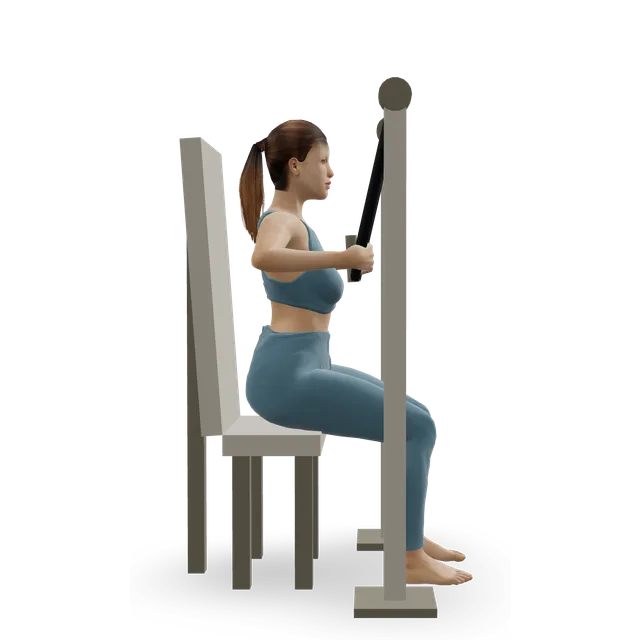
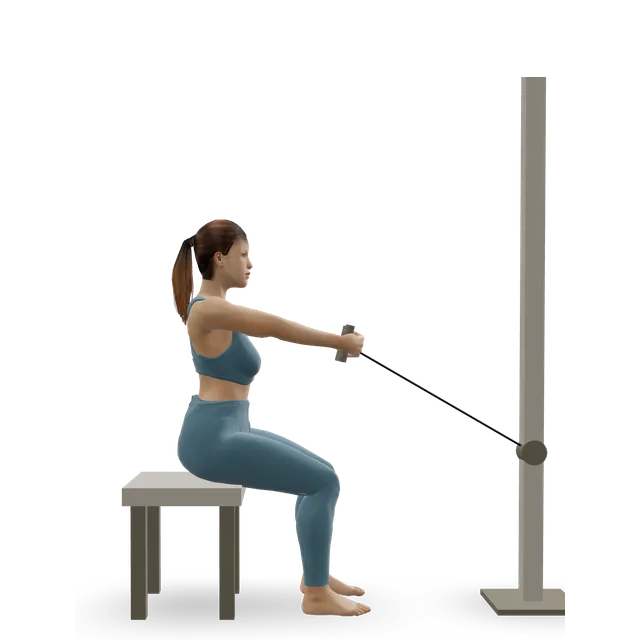
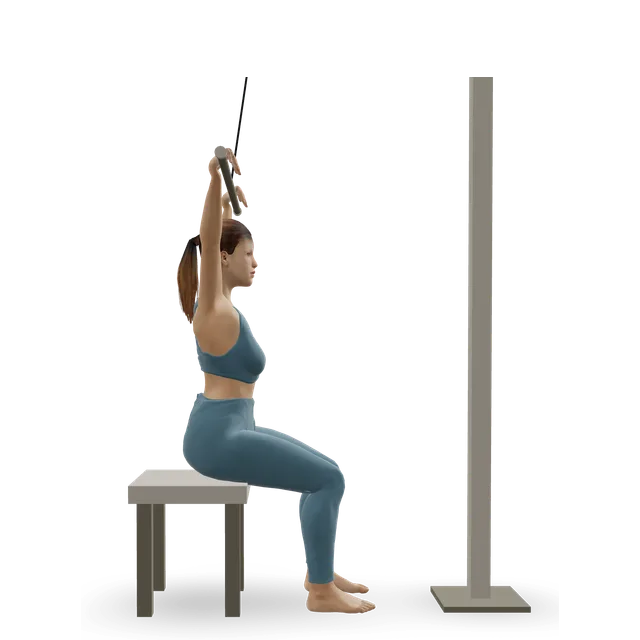
What it is
Exercise stations done one after another with little rest, then repeated. The classic circuit used 9 to 12 stations at light to moderate weights, and many now put cardio stations between the strength ones.
Training guide
Circuit training means doing a series of exercises one after another with little rest, then going round again. It began at the University of Leeds in the 1950s, and in pooled trials it builds strength and muscle, raises aerobic fitness a little, and trims a little body fat.
Done hard, a circuit built about as much strength as traditional sets in less time in small trials; done light and easy, it mainly builds endurance.
This guide covers the formats, what the research shows, how circuits compare with straight sets and with high-intensity interval training (HIIT), and how to build your own, with an 8-station follow-along workout.
Exercise stations done one after another with little rest, then repeated. The classic circuit used 9 to 12 stations at light to moderate weights, and many now put cardio stations between the strength ones.
The American College of Sports Medicine's (ACSM) 2026 overview counts circuit training among the methods that build strength and muscle. How much is less certain: the largest meta-analysis found strength gains of about a fifth, but most of its studies were at high risk of bias.
VO2 max (the most oxygen your body can use, a measure of aerobic fitness) rose by about 6% on average. Bodyweight circuits raised it a little less than running or cycling training.
About 1 kg of fat lost and 1 kg of muscle gained on average, with body weight unchanged. In people with overweight or obesity, about 4 kg of weight came off in 9 trials.
Heavy or near-failure circuits matched traditional sets for strength and lean mass in less time in three small trials. Light, easy circuits build less maximal strength.
Circuit training was developed at the University of Leeds in the 1950s by R.E. Morgan and a colleague. The classic design used 9 to 12 stations of 15 to 45 seconds, or 8 to 20 reps, at about 40 to 60% of the most you can lift once (your one-rep maximum), with 15 to 30 seconds, or no rest, between stations. Machines, free weights, bands or bodyweight all work.
Circuits are arranged in a few common ways:
Coaching Ireland's fact sheet suggests working the upper, middle and lower body in turn, balancing the front and back of the body, varying direction (forwards and back, up and down, side to side) and alternating high and low-impact moves. Its muscular endurance circuit uses 30 seconds of work and 15 of rest. Its beginners' cardio circuit uses 30 seconds on and 10 off, for 2 circuits with 90 seconds between, and its combined circuit alternates cardio and strength stations on the same timing.
Source 2
Circuit training is a way of arranging exercises; HIIT (high-intensity interval training) is a pattern of effort, hard bursts with easier recovery. A circuit becomes interval training when its stations are short and hard, like the 7-minute workout. The NHS lists circuit training among its very vigorous activities.
The ACSM's 2026 overview of reviews counts circuit resistance training among the methods that improve strength (3 reviews, 843 people) and muscle size (1 review, 236 people) against no training.
Source 3
A meta-analysis of 45 studies (897 people trained in circuits, aged 18 to 42, for 4 to 28 weeks) found bench and leg press strength up by about 20% and 23%, muscle up by about 1.2 kg and fat down by about 1 kg, with body weight unchanged. But most of the studies were at high risk of bias and their results varied widely, so treat the sizes as rough.
Another analysis found the biggest bench press gains at 30 to 60% of one-rep maximum, in sessions of at least 22.5 minutes, though its authors note that less fit volunteers in those studies may explain why lighter loads looked best.
VO2 max rose by about 2.9 mL/kg/min (millilitres of oxygen per kilogram of body weight per minute), about 6%, across 45 studies. The largest gains came with about 14 to 30 sessions over 6 to 12 weeks, in sessions of at least 20 to 30 minutes. Bodyweight interval circuits raised aerobic fitness a little less than running or cycling training (19 trials), though in one 5-week trial in sedentary young women, a circuit raised VO2 max by 11%, more than separate strength and cardio sessions.
Across 45 studies, fat fell by about 1 kg on average, with muscle gained and body weight unchanged. In 9 randomised trials (837 people), circuits took off about 3.8 kg in people with overweight or obesity and nothing in people of a healthy weight. In adults with overweight or obesity, combined aerobic and strength training ranked first, and circuit-style hybrid training second, of five exercise types for heart and metabolic health (81 trials).
European guidance puts the weight loss to expect from exercise alone at no more than 2 to 3 kg, so circuits help most alongside eating less.
In 15 trials of 576 people aged 60 to 75, circuits improved strength and lean mass (about 1.4 kg), lengthened the 6-minute walk by about 94 metres and lowered blood pressure by about 10/4 mmHg, though most trials raised some concerns about bias. In 10 studies of adults averaging 64.5 years, circuits increased upper and lower-body strength, and middle-aged and older women gained fitness and strength and lost fat in 16 studies.
In a review of interval or circuit strength training in older adults, 74 to 96% of sessions were attended and no serious adverse events were reported, on low-certainty evidence.
In 33 trained men, 8 weeks of heavy circuits (a weight they could lift about 6 times, with about 35 seconds between stations) matched training with 3-minute rests for squat and bench press strength and lean mass, in shorter sessions; only the circuit group lost body fat, but bike sprint power rose only with traditional sets. In 37 adults aged about 62, heavy circuits twice a week for 12 weeks matched traditional training for strength, lean mass and bone density. In 14 trained women, near-failure circuits matched straight sets for strength and lean mass in sessions of about 50 to 60 minutes instead of 75 to 85. All small trials.
The 7-minute workout's authors noted that light circuits may be less effective for maximal strength and power, and in sedentary young women, separate strength training built more chest, back and thigh strength than a bodyweight circuit.
Across 19 studies (313 people), supersets kept the same reps and volume in less time and gave similar long-term gains in strength, endurance and muscle, at the cost of higher effort. Pooled markers of muscle damage weren't higher, though one study found more. Pairing opposing muscles kept the volume best.
Source 20
The ACSM's 2026 overview found set structure (traditional, cluster or rest redistribution) made no consistent difference to strength or power, and found too little data to judge its effect on muscle size.
Source 3
Circuits are a time-efficient way to strength-train if the strength stations are genuinely hard and opposing muscles take turns. For your heaviest lifts, or if maximal strength or power is your goal, straight sets with longer rests remain the standard (our rest between sets guide).
From the classic circuit designs (Kravitz; Coaching Ireland; the 2013 ACSM article), the strength guidelines and our plans' shared notes; the order of progression is our editorial suggestion.
Loading the 3D figure…
The movement on the figure: Dumbbell goblet squat
Starting points, not prescriptions. Each names its source, or says it's our suggestion.
Classic circuits: 9 to 12 stations of 15 to 45 seconds or 8 to 20 reps, with 15 to 30 seconds to move. Our editorial starting point: 8 stations of 40 seconds, with 20 seconds to move.
In trials, circuits matched straight sets when the sets were heavy (a 6-rep maximum) or close to failure. Our plans use 2 to 3 reps in reserve (RIR: how many more reps you could have done). For timed stations, pick a weight you could lift about 15 to 20 times (our suggestion).
Two or three days a week, with a day between. The World Health Organization (WHO) recommends muscle strengthening on 2 or more days a week, and subgroup analyses found larger strength gains with 3 sessions a week and with 21 to 30 sessions in all.
Two or three rounds: the coaching fact sheet's beginner circuits use 2, with 90 seconds between. Our editorial range is 1 to 2 minutes between rounds, moving gently.
In a circuit, 40 seconds or 10 to 15 reps each, 2 or 3 reps short of failure (our circuit dose; carries go by distance, 30 to 40 metres).
 3D demoDumbbell goblet squatIntermediate · A dumbbell
 3D demoPush-upIntermediate · No equipment
 3D demoSupported single-arm dumbbell rowIntermediate · A dumbbell + A bench or box
 3D demoReverse lungeIntermediate · No equipment
 3D demoDumbbell Romanian deadliftIntermediate · A dumbbell
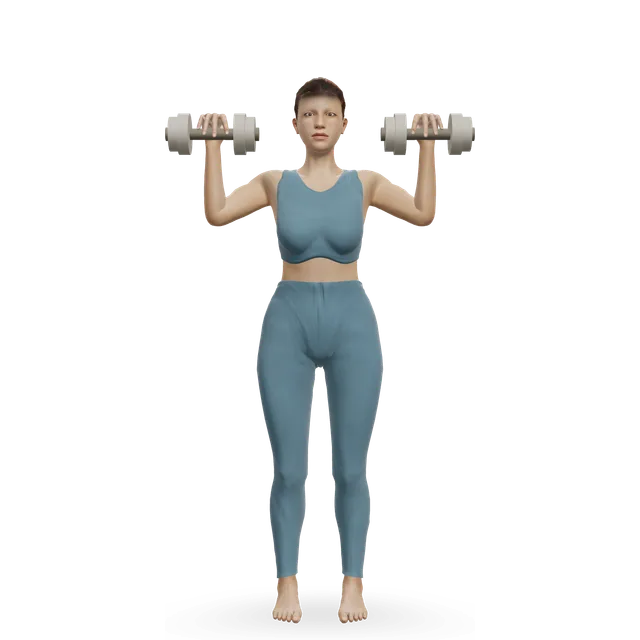 3D demoStanding overhead pressIntermediate · A barbell + A dumbbell
 3D demoDead bugBeginner · No equipment
 3D demoFarmer's carryBeginner · A dumbbell + A kettlebell
Forty seconds at a brisk, steady pace, or 1 to 3 minutes on a machine in an aerobic circuit, keeping mountain climbers smooth with level hips.
 3D demoJumping jackBeginner · No equipment
 3D demoStep jack (low-impact jumping jack)Beginner · No equipment
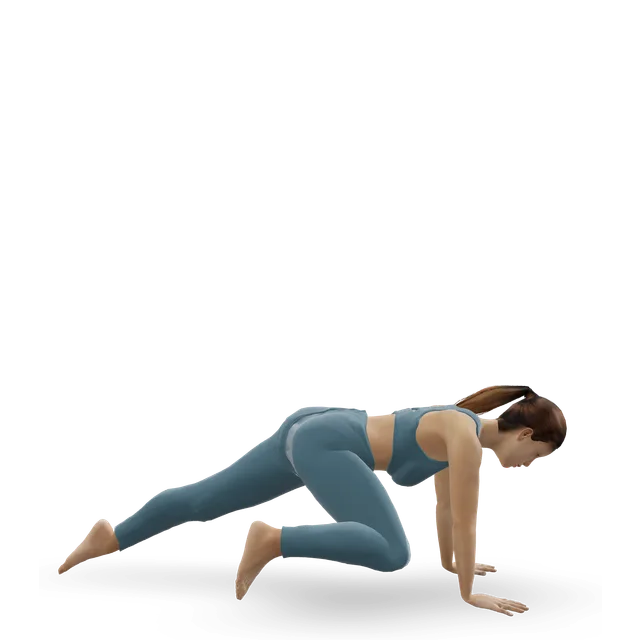 3D demoMountain climbersIntermediate · No equipment
 3D demoStanding marchBeginner · No equipment
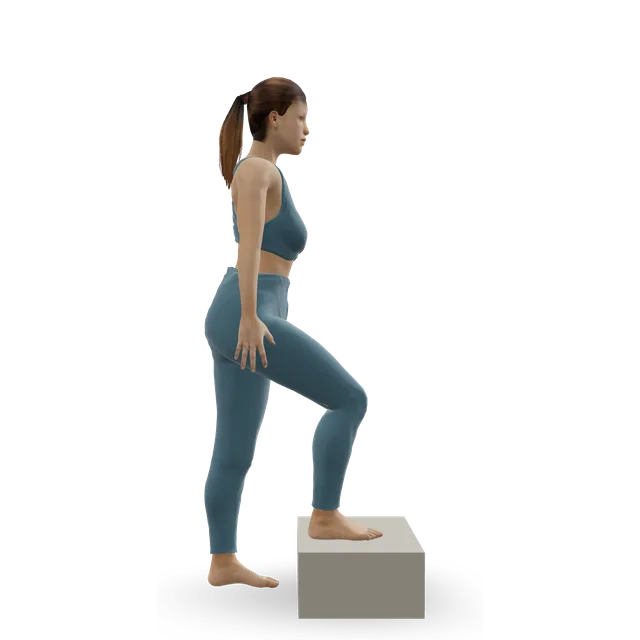 3D demoStair climbingIntermediate · A step
 3D demoStationary cyclingBeginner · Cardio machine
 3D demoIndoor rowing (rowing machine)Beginner · Cardio machine
One set of 10 to 15 at each machine, a minute on a bike or rower between pairs, 2 or 3 rounds (our example).
Swap in these at home: a band for rows (10 to 15 reps), bridges and hinge practice for the deadlift, split squats for lunges.
Our circuit training workout has 8 stations with a bodyweight swap for each. The 20-minute strength workout uses supersets; the arthritis routine is a joint-friendly circuit.
A full-body circuit of 8 stations: dumbbell squats, push-ups, rows, lunges, deadlifts and cardio moves, 40 seconds each, for 2 or 3 rounds.
35 minBeginner14 movesA dumbbell, A bench or boxA 20-minute full-body dumbbell workout: two supersets of squats, rows, Romanian deadlifts and push-ups. Twice a week covers the minimum dose.
20 minBeginner8 movesA dumbbell, A bench or boxA 25-minute standing cardio circuit with no jumping: marching, step jacks, sit-to-stands, punches, step-ups and wall push-ups, with a seated option for most moves.
25 minBeginner9 movesA bench or box, A stepA 20-minute full-body workout with no equipment: squats, knee push-ups, bridges, lunges and planks.
20 minBeginner10 movesNo equipmentAn intermediate no-equipment workout: push-ups, split squats, single-leg bridges, pike push-ups and core work.
30 minIntermediate11 movesNo equipmentA 30-minute joint-friendly circuit built like the GLA:D and ESCAPE-pain programmes: a gentle warm-up, chair, step and band strength moves, balance, then stretches.
30 minBeginner14 movesA bench or box, A stepThe 12-move circuit from a 2013 fitness journal article: 30 seconds per move and 10 to switch, with a short warm-up and an easier swap for every move.
12 minIntermediate13 movesA wall, A stepEach of these can use a circuit for its strength days (our suggestion).
Three full-body home workouts a week with dumbbells or no equipment at all, plus walks and an 8-week plan to keep progressing.
3 training days35 minBeginner4 days a weekA 4-day dumbbell-only plan for home or gym: two upper and two lower days, every set, rep and rest, and how to keep progressing when the dumbbells max out.
4 training days45 minBeginner5 days a weekA 12-week workout plan for weight loss: three strength days, two cardio days and daily steps, building to 200 minutes a week, with honest results.
3 training days45 minBeginner3 days a weekA 12-week exercise plan for over-65s: strength and balance three times a week, short balance sessions and daily walks, based on falls-prevention trials.
3 training days40 minBeginnerStop and call 999 (don't drive yourself to A&E) for:
Get advice the same day for:
Drop to a lighter weight rather than let your back round on the hinge, and stop a move for sharp or increasing joint pain; see a GP or physiotherapist if it keeps happening (our suggestion, as in our plans). Some muscle soreness for a day or two after a new routine is normal.
Circuit training builds strength and muscle against no training, by the ACSM's overview, and heavy or near-failure circuits matched traditional sets in small trials. Light, easy circuits build less maximal strength.
The extra energy you use after any session (the afterburn) is about 6 to 15% of the session's own cost. In trials, circuits took off about 1 kg of fat over about 10 weeks.
Circuits raise VO2 max by about 6% on average, but bodyweight interval circuits raised aerobic fitness less than running or cycling training in pooled trials, though one short trial found the opposite. Walking or other cardio still helps (our zone 2 guide).
Muscle grows across a wide range of loads when sets are hard, and heavier loads build more maximal strength (as in our plans' shared notes). There's no special toning effect of circuits.
Source 3
Short changeovers save time and went with larger gains in some subgroup analyses, but back-to-back moves for the same muscles cut the work you can do, and for your heaviest lifts longer rests build more strength (our rest between sets guide).
A series of exercise stations done one after another with little rest, then repeated, usually covering the whole body. It was developed at the University of Leeds in the 1950s, originally with 9 to 12 stations at light to moderate weights.
In pooled trials it built strength and muscle, raised aerobic fitness by about 6%, and took off about 1 kg of fat, though many of the studies were weak. Done hard, it builds strength in less time than traditional sets with long rests.
Yes: the American College of Sports Medicine counts circuit training among the forms of resistance training that build strength and muscle. In small trials, circuits done close to failure built as much strength and lean mass as traditional sets.
Both, depending on how you set it up: resistance circuits raise strength and VO2 max, and the NHS counts circuit training as very vigorous activity. For the biggest gains in aerobic fitness, running, cycling or rowing intervals still do more.
Circuit training is a way of arranging exercises, stations done in a row; HIIT is a pattern of effort, hard bursts with easier recovery. A circuit becomes HIIT when the stations are short and hard, as in the 7-minute workout.
Neither is better for strength and muscle when the sets are hard: in small trials, circuits matched traditional sets in less time, and supersets did the same across 19 studies. For your heaviest lifts, straight sets with longer rests remain the standard.
In 9 trials, circuit training took off about 4 kg in people with overweight or obesity, and nothing in people of a healthy weight. Like any exercise, it works best alongside eating less: exercise on its own usually takes off no more than 2 to 3 kg.
Two or three rounds of 6 to 10 stations, about 20 to 35 minutes, suits most people (our suggestion, in line with the classic designs). The largest fitness gains in trials came with sessions of at least 20 to 30 minutes, over 6 to 12 weeks.
Two or three times a week, with a day between: that meets the guideline for muscle strengthening, and trials found larger gains with 3 sessions a week. On other days, walking or other cardio fills out the week.
Yes: in 15 trials of people aged 60 to 75, circuits improved strength, walking distance and blood pressure, and in a review of older adults, attendance was high and no serious harms were reported. Start with lighter loads, and add balance exercises.
Yes: bodyweight circuits improve fitness and muscular endurance, and a pair of dumbbells or a resistance band adds load for strength. Our follow-along circuit has a bodyweight swap for every station.
Add a round, then add reps or weight at the strength stations, then shorten the changeovers (our suggested order). Keep the strength stations 2 or 3 reps short of failure, as in our plans.
Exercise education, not a personal prescription, and clinical review of these guides is pending. Check with a GP before starting hard training if you have a heart condition, chest pain, dizziness or breathlessness when active, and stop for sharp or increasing pain. Health disclaimer.