How to do a push-up: good form, the 45-degree elbow, and the steps from the wall to the floor and beyond
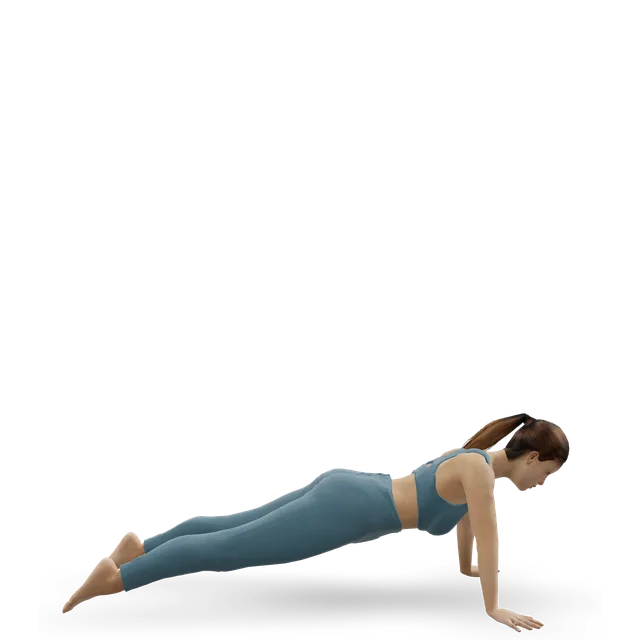
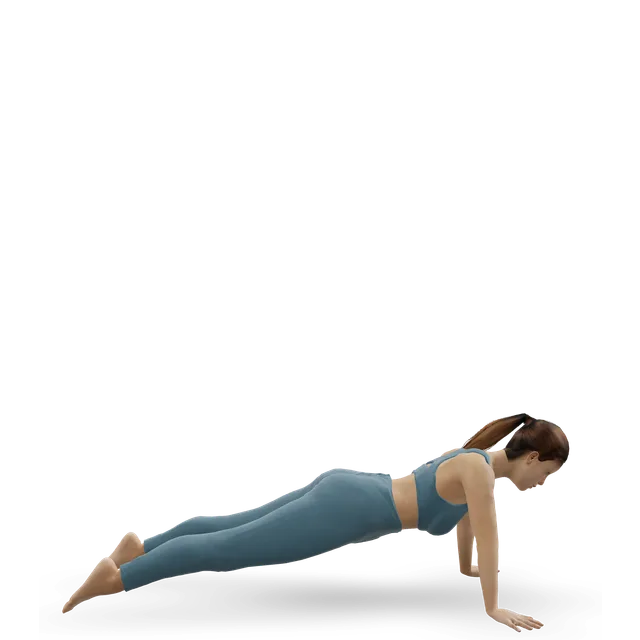
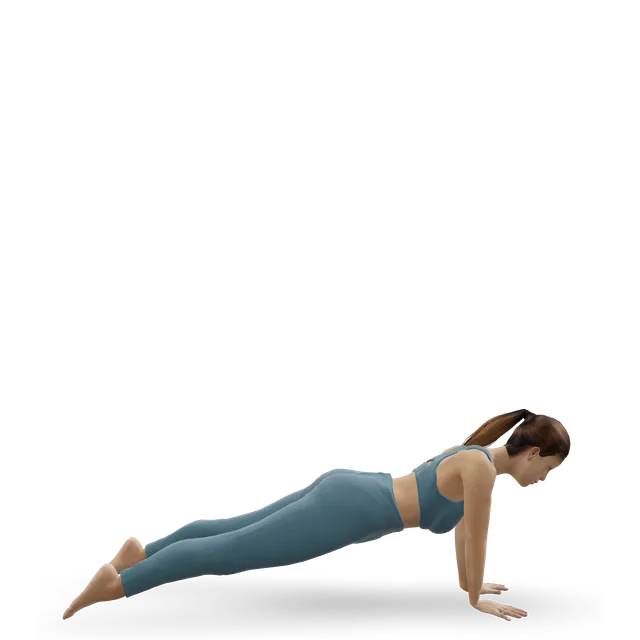
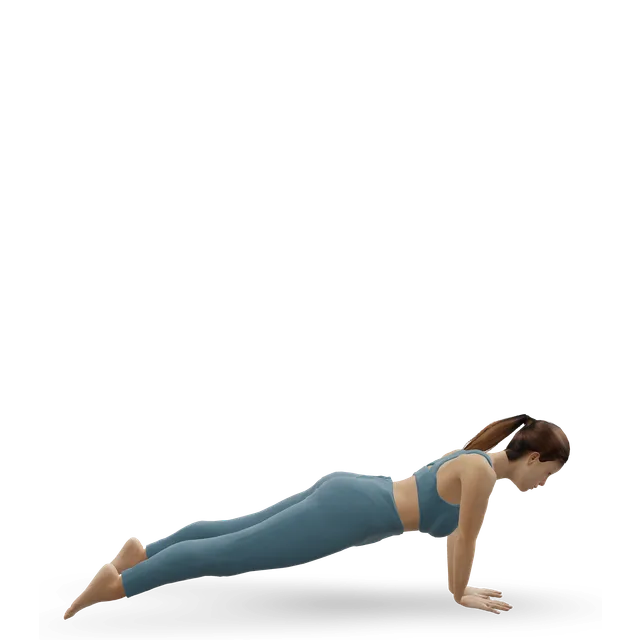
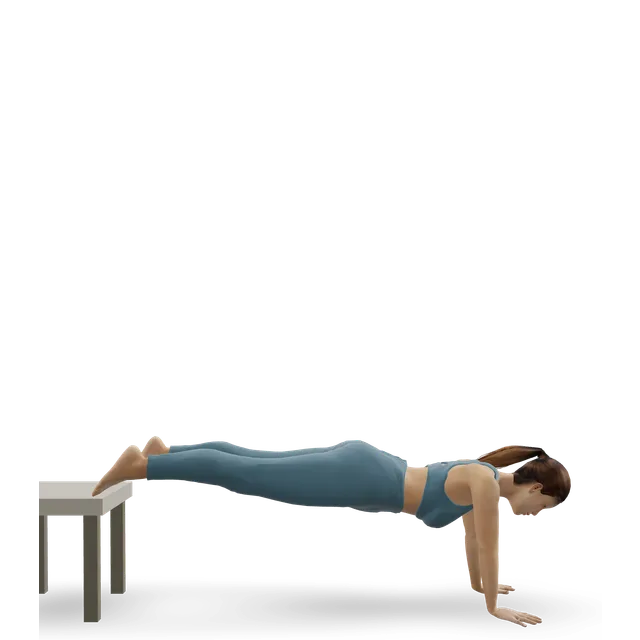
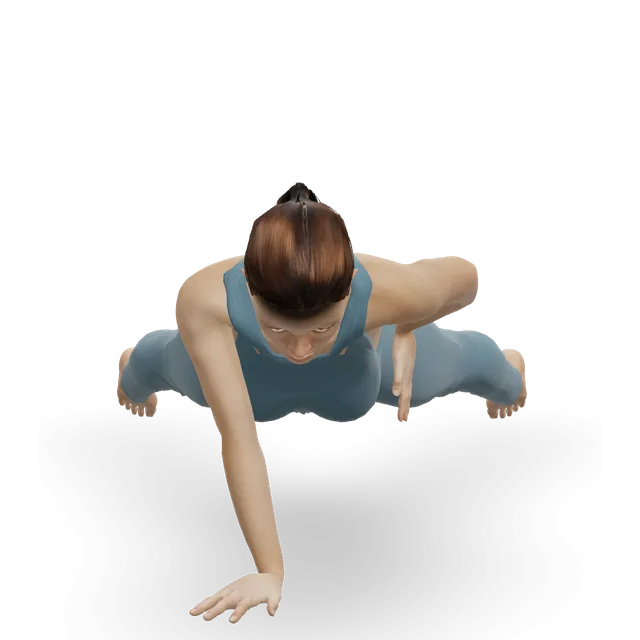
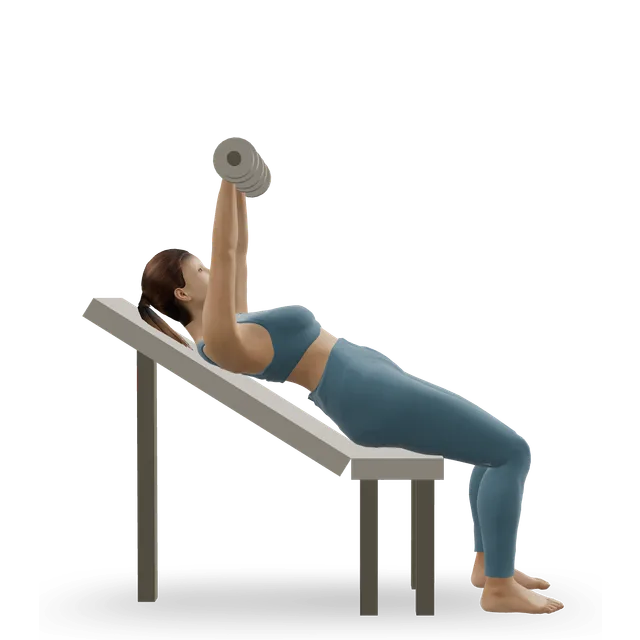
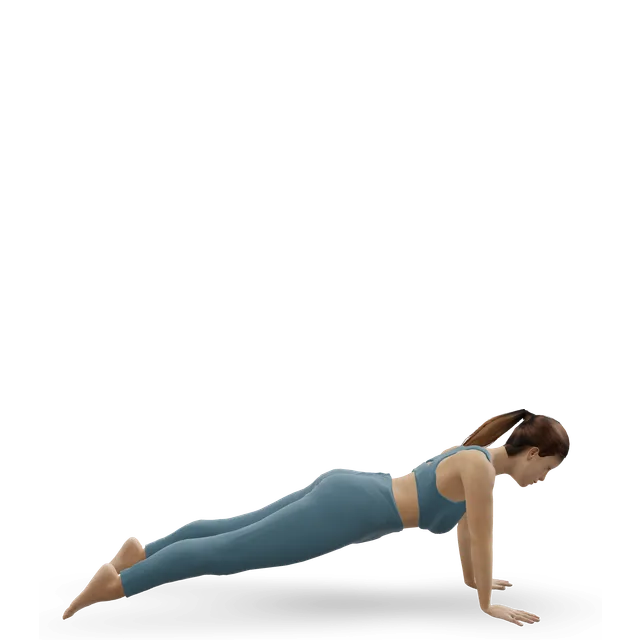
A good push-up is a moving plank: hands just outside your shoulders, one straight line from head to heels, elbows angled back about 45 degrees rather than flared out, and your chest lowered towards the floor and pressed back up. If you can't do one yet, start at a wall, then a bench, then your knees: each step puts more of your weight on your hands, and each has a 3D demo below.
The evidence behind these details comes from small lab studies, mostly of 8 to 40 people, so treat it as a guide to sensible form rather than hard rules. Push-ups build real strength: in small trials they matched the bench press.
This guide explains why elbow angle and hand width matter, the common mistakes, the ladder from wall push-ups to archer and one-arm push-ups, how to train it, what the much-quoted firefighter study does and doesn't say about push-ups and heart health, and what to do if your wrists hurt.
Hands just outside shoulder width, your body straight from head to heels, elbows about 45 degrees from your sides, and your chest lowered towards the floor under control, then pressed back up. This is our push-up page's cue and the National Academy of Sports Medicine's.
In a lab study of 16 people, flaring the upper arms out to about 90 degrees moved the shoulder blade into a position the authors linked with impingement. The American Council on Exercise lets the elbows flare but says tucking them may reduce shoulder stress. About 45 degrees sits between the two.
Hand width changes the muscles more than the difficulty
Narrow hands worked the triceps and chest harder and loaded the elbows more; wide hands worked the serratus anterior, the muscle that holds the shoulder blade to the ribs, more and loaded the elbows less. These findings come from lab studies of 9 to 40 people.
Raising your hands or kneeling takes weight off your hands, and raising your feet adds it. In a study of 8 men, about 66% of body weight was on the hands at the start of a floor push-up and about 53% from the knees.
In 1,104 male firefighters, those who managed 41 or more push-ups had far fewer heart events over 10 years than those who managed 10 or fewer. There were only 37 events, the groups differed in age and body size, and the authors say it doesn't show push-ups predict heart disease on their own. There is no standard number everyone should reach.
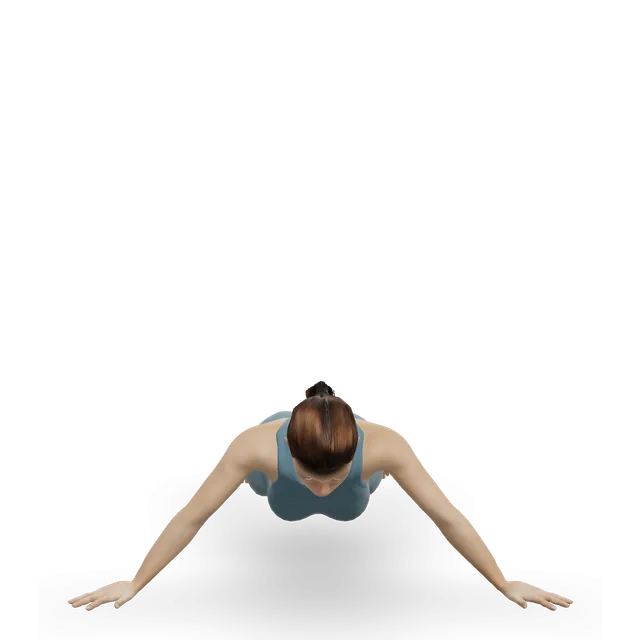
Place your hands just outside shoulder width: the National Academy of Sports Medicine (NASM) says slightly wider than shoulder width, and the American Council on Exercise (ACE) says shoulder width. Point your fingers forward or turn them slightly out. In a lab study, hands turned inward raised the shearing forces at the elbow, so we don't suggest it.
Step back onto your toes and make one straight line from head to heels, with your feet together or hip-width apart. Brace your trunk and keep your head in line with your body.
Bend your elbows to lower your chest with control, keeping them about 45 degrees from your body: angled back, not flared straight out to the sides. Don't let your hips drop or lift first.
Go down until your chest nearly touches the floor, or as low as you can control. Full range built more strength than partial range in a review of 16 studies, so raise your hands on a bench rather than shortening the rep.
Push the floor away to straight arms without snapping your elbows straight. A little extra push at the top, spreading your shoulder blades, is the push-up plus, which works the serratus anterior hardest.
Breathe in on the way down and out on the way up, and don't hold your breath (our suggestion, in line with our move page).
Elbows and hand width: what the lab studies show
Flared elbows and the shoulder bladeEmerging evidence
In 16 healthy people, push-ups with the upper arms raised to about 90 degrees from the body, the elbows flared, reduced the shoulder blade's backward tilt and outward rotation compared with a self-chosen or tucked position. The authors say this may place the shoulder blade in a position linked with impingement, where tendons are squeezed at the top of the shoulder. No injuries were measured.
Coaching bodies differ on elbow angleEmerging evidence
NASM teaches about 45 degrees. ACE lets the elbows flare and offers tucked elbows as an option that may reduce shoulder stress. Our 45 degrees sits between them: a sensible default rather than a proven rule.
Narrow hands: more triceps and chestEmerging evidence
In 12 men, hands at half shoulder width worked the triceps, pectoralis minor and infraspinatus hardest, and the main chest muscle (pectoralis major) more than hands at one and a half shoulder widths; the wide position worked the serratus anterior most. In 40 adults, narrow hands drew more chest and triceps activity than wide hands. Moving the hands forward or back mainly changes how hard the trunk and back muscles work, and one study's authors advise care in those positions if you have back pain.
In 9 men, the load at the elbow reached 71% of the elbow's maximal straightening strength with the hands together, against 56% in the normal position and 29% with the hands far apart. In another lab study, turning the hands inward raised the shearing forces at the elbow. With sore elbows, use a wider base and point your fingers forward.
How much of your weight is on your handsEmerging evidence
In 8 men, about 66% of body weight was on the hands at the start of a floor push-up and about 53% from the knees. In 23 adults, raising the feet loaded the hands most, and raising the hands or kneeling loaded them least. In 28 strength-trained men, less weight was on the hands at the top than at the bottom, a bigger change in knee push-ups. A systematic review of push-up forces reached the same order.
Whether a low incline or a knee push-up is easier depends on the height of the bench, so pick whichever you can do for 8 clean reps (our suggestion).
Push-ups build strength like the bench pressEmerging evidence
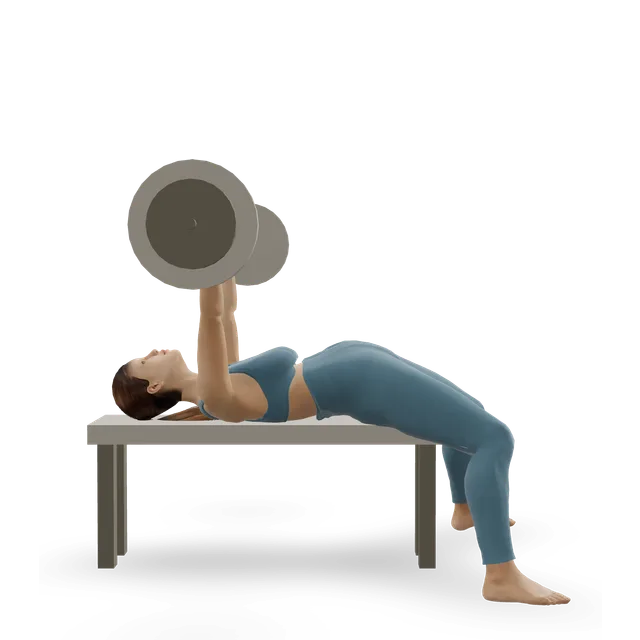
In 23 moderately trained men, 4 weeks of progressively harder push-ups raised bench-press strength as bench pressing did. In 30 experienced lifters, band-resisted push-ups and the bench press at matched muscle activity gave similar strength gains over 5 weeks. In 18 men, push-ups adjusted to 40% of their one-rep best, by kneeling for example, built as much muscle and strength as bench pressing at that load over 8 weeks. All three trials were small and short.
Across 30 studies of shoulder muscle activity, the triceps and chest worked hardest in standard, unstable and suspension push-ups, and the serratus anterior in the push-up plus and incline push-ups.
Explosive push-ups load the spine moreEmerging evidence
In 10 young adults, clap-style and hand-moving push-ups needed more muscle activity and loaded the lower spine more, while balls under the hands added only a little. Build up to them, and leave them out while your back is sore (our suggestion).
Two or three sessions a week, with a day between hard ones. An overview of reviews by the American College of Sports Medicine found strength rose more with 2 or more sessions a week.
Our editorial starting point: 3 sets at the hardest step you can do for 8 clean reps, stopping 1 to 3 reps short of failure. Move one step up when every set reaches 15, as in our push-up progression.
Rest
About 60 to 90 seconds between most sets, and up to 2 minutes for hard sets of 5 to 8, such as archer and one-arm push-ups (our suggestion, within our rest guide).
For muscle
Push-ups count towards your weekly chest and triceps sets. Our sets and reps guide covers how many hard sets a week build more muscle.
Every day?
Easy daily sets, well short of failure, are fine if your wrists, elbows and shoulders feel normal, but hard sets still need recovery between them (our suggestion; see our rest days guide).
How long it takes
No study has timed it. Our estimate: from knee push-ups to a first floor push-up usually takes weeks, not months, at 2 or 3 sessions a week, and from the wall about 1 to 3 months. In one trial, moderately trained men moved up the push-up steps within 4 weeks.
In 1,104 male firefighters followed for 10 years, those who managed 41 or more push-ups at the start had about 96% fewer heart events than those who managed 10 or fewer. The test used a metronome at 80 beats a minute and stopped at 80 push-ups.
The limits matter. There were only 37 heart events, the men were active and middle-aged, and the groups differed in age and body mass index. In the authors' analysis over time that allowed for both, the top group's lower risk was no longer statistically clear. The authors say the study doesn't support push-ups as an independent predictor of heart disease.
We found no push-up norms by age that we could check at the source, so we don't give any. If you test yourself, do it fresh every 4 to 8 weeks, with full reps to a fixed depth at a steady pace, and compare yourself with yourself (our suggestion).
Workouts
The push-up progression follows the ladder above; the others build push-ups into a full session.
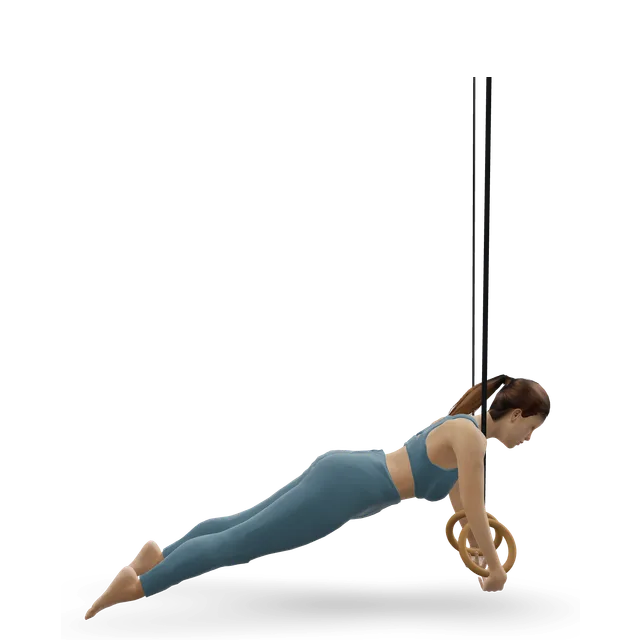
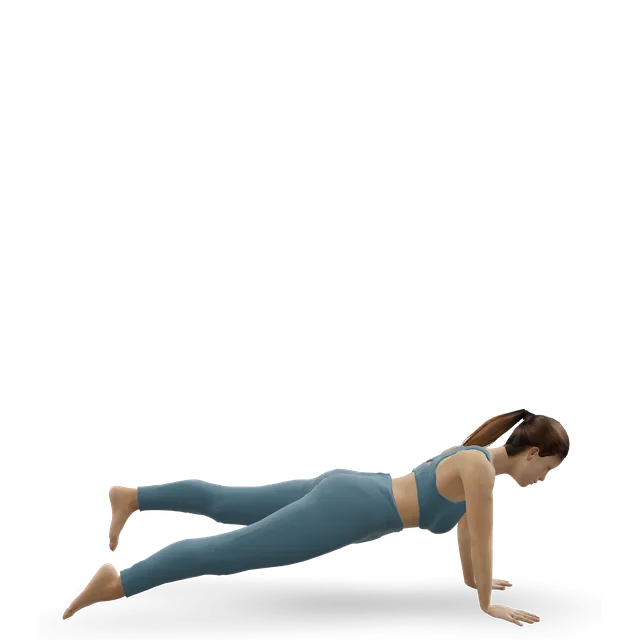
Rings and one-leg push-ups add instability, clap push-ups come after several solid sets of standard push-ups, pike push-ups lead towards the handstand push-up, and the scapular push-up trains the shoulder blades for all of them.
Why push-ups can hurt your wristsEmerging evidence
A push-up bends your wrist back under your body weight. In 8 donated wrists tested in a lab, the bent-back position raised pressure in part of the wrist joint compared with a straight-wrist knuckle push-up.
Keep the wrist straight with fists, push-up handles or dumbbells, or put your hands on a bench to take some weight off. Choose a forearm plank over a high plank. Our wrist pain from push-ups guide has a staged plan.
Sore elbows
Use a base wider than usual rather than hands together, and point your fingers forward. Our elbow pain guide covers the rest.
Wall and incline push-ups and the push-up plus fit our shoulder plans. Keep pain during exercise to about 5 out of 10 or less, settling by your next session: the rule our shoulder guides use.
Who should modify, and warning signs
Call 999 (911 in the US) for chest pain
For sudden chest pain that doesn't go away, pain that spreads to your arms, neck, jaw, stomach or back, or chest pain with sweating, feeling sick, light-headedness or shortness of breath.
For severe wrist pain; feeling faint, dizzy or sick from the pain; a snap, grinding or popping noise at the time of the injury; being unable to move your wrist or hold things; a wrist that has changed shape or colour; a very painful, hot or red lump; or lost feeling in your hand. In the US, use urgent care.
The British Heart Foundation advises avoiding exercises that use your whole body as the weight, such as press-ups and planks. Wall push-ups with steady breathing are gentler; ask your heart team.
Breathe out on each press and never hold your breath, as our high blood pressure guide advises.
Pregnancy
Wall push-ups appear in our pregnancy routines. Ask your midwife about floor push-ups as your bump grows (our suggestion).
Myths
"Keep your elbows pinned to your sides" or "flare them for more chest"Emerging evidence
Flaring to about 90 degrees put the shoulder blade in a position linked with impingement in 16 people. Narrow hands with the elbows by the ribs worked the triceps and chest more but loaded the elbows more. About 45 degrees is a sensible middle, though coaching bodies differ.
In muscle activity studies, narrow and shoulder-width hands worked the chest muscle more than wide hands; wide hands worked the serratus anterior more.
They are a lighter load, about 53% of body weight against 66%. Push-ups adjusted to a lighter load built as much muscle and strength as light bench pressing over 8 weeks. Use them to build reps, then move on.
"If you can do 40 push-ups, your heart is fine"Emerging evidence
The firefighter study found an association in active men, with only 37 heart events, and once age and body size were allowed for over time, the top group's lower risk was no longer statistically clear. Push-up capacity is a rough marker of fitness, not a heart test.
Should my elbows be in or out when doing push-ups?
About 45 degrees from your body: angled back, not flared straight out. In a lab study of 16 people, flaring the arms out to about 90 degrees put the shoulder blade in a position linked with impingement. Coaching bodies differ, so treat 45 degrees as a sensible default rather than a rule.
How wide should my hands be for push-ups?
Just outside shoulder width for a standard push-up. Narrow hands work the triceps and chest harder but load the elbows more; wide hands work the serratus anterior more and load the elbows less.
Are knee push-ups real push-ups?
Yes, a lighter version: about 53% of your body weight is on your hands at the start, against about 66% in a floor push-up. In an 8-week trial, push-ups set to a lighter load built as much muscle as light bench pressing. Build reps on your knees, then move on.
I can't do a single push-up. Where do I start?
At a wall, then a worktop or bench, then your knees, then the floor. Train at the hardest version you can do for 8 good reps, and move on when every set reaches 15.
How many push-ups should I be able to do?
There's no single standard, and we found no push-up norms by age that we could check at the source. In 1,104 male firefighters, those who managed 41 or more had far fewer heart problems over 10 years than those who managed 10 or fewer, but that's an association in one group of active men, not a target for everyone. Compare yourself with yourself.
Can push-ups predict heart disease?
Not on their own. The firefighter study had only 37 heart events, the groups differed in age and size, and once those were allowed for over time, the 41-plus group's advantage was no longer statistically clear. The authors say push-ups weren't shown to be an independent predictor.
Do push-ups build muscle?
Yes. In small trials, harder push-up variations raised bench-press strength as much as benching, band push-ups matched the bench press, and load-matched push-ups built as much chest and triceps muscle.
Is it OK to do push-ups every day?
Hard sets work best 2 or 3 times a week, with recovery between. Easy daily sets, well short of failure, are fine if your wrists, elbows and shoulders feel normal. Our guides to how often to work out and rest days cover the rest.
Why do my wrists hurt when doing push-ups?
A push-up bends your wrist back under your body weight, which raised joint pressure compared with a straight-wrist knuckle push-up in a lab study. Use fists, handles or dumbbells for now, and follow our wrist pain from push-ups guide.
How low should you go in a push-up?
Until your chest nearly touches the floor, or as low as you can control. Full range builds more strength, so use an incline rather than shortening the rep.
How should I breathe during push-ups?
Breathe in as you lower and out as you push up, and don't hold your breath. Holding it raises blood pressure during the effort.
How long does it take to do a full push-up?
No study has timed it. Our estimate: from knee push-ups, usually a few weeks at 2 or 3 sessions a week, and from the wall about 1 to 3 months.
Exercise education, not a personal prescription, and clinical review of these guides is pending. Check with a GP before starting hard training if you have a heart condition, chest pain, dizziness or breathlessness when active, and stop for sharp or increasing pain. Health disclaimer.