Short rallies, quick feet
Rallies last about 3.5 seconds with 8 to 20 seconds between them. The Compendium of Physical Activities gives table tennis 4.0 metabolic equivalents (METs), moderate activity.
Sport
Table tennis is quick and low: rallies of a few seconds, small fast steps, a crouched ready position and a lot of trunk rotation. It's moderate exercise for most people and harder at a competitive level, and injuries are uncommon, mostly to shoulders, lower backs and knees and, in professionals, hips.
It's also popular with older players and in Parkinson's groups, and some of the research is encouraging: in a 6-month trial, older men who played three times a week got quicker at switching between mental tasks, as did men who cycled or walked briskly. Most studies are small, and none shows that table tennis prevents dementia. This guide covers what the game asks of your body, the common injuries, a 10-minute warm-up, a strength and footwork workout, and the evidence for older adults, Parkinson's and children, with each move shown in 3D.
Rallies last about 3.5 seconds with 8 to 20 seconds between them. The Compendium of Physical Activities gives table tennis 4.0 metabolic equivalents (METs), moderate activity.
At international events, 10.0 injuries per 1,000 playing hours; in young national-level players, 1.2 per 1,000 hours, mostly from overuse.
Shoulder pain in elite players went with a loss of inward shoulder rotation, 40% of young players' injuries were growth-related, and 11 of 19 professionals had hip pain.
In a 6-month trial, playing three times a week sped up task switching in sedentary men aged 60 to 80, as cycling or brisk walking did.
Source 7
Three small studies without comparison groups reported better movement scores and few problems. It isn't a treatment, but it's a sociable way to be active.
A 2026 review of 17 studies of table tennis for health called the evidence promising but preliminary.
Source 11
Rallies average about 3.5 seconds with 8 to 20 seconds of rest, and the energy demand of matches is relatively low. Each rally is a short, explosive burst, and aerobic fitness helps you recover between them and between matches. A review of racket sports found the lowest heart rates (about 104 beats a minute) and lactate in table tennis, mostly in studies of elite men.
The Compendium gives table tennis 4.0 METs, moderate activity. On the UK National Health Service's (NHS) talk test, moderate activity means you can talk but not sing; competitive play is harder in bursts.
A crouched ready position with bent knees, small side-steps and crossover steps, short lunges, fast trunk rotation for topspin, and wrist and forearm work, reacting to a ball 40 mm across and weighing 2.7 g. Researchers think the bent knees and twisting trunk put turning loads through the knees.
The sites the studies point to:
Quick, low footwork side to side and in and out, leg strength for a low stance, trunk rotation, shoulder control and reaction speed.
Most table tennis injury data come from short multi-sport events or single clinics, and a scoping review rated most studies as weak. Figures in different lines were counted differently and aren't comparable.
The numbers, by group:
In 20 league players, the playing shoulder had about 15 to 16° less inward rotation than the other, and in 46 elite players, shoulder pain went with a large side-to-side loss (6.86 times the odds). Shoulder tendon problems were 11.6% of young players' injuries. Our shoulder pain, shoulder impingement and rotator cuff guides cover these.
The lumbar spine was 14.7% of young players' injuries, and long-term low back pain 8.4%. In 22 female players, the ready position rounded the spine and made the pelvis and spine less symmetrical, which the authors suggest may explain the back pain the players reported. Our back pain and upper back pain guides cover it.
Knees were 30.5% of young players' injuries, most of them Osgood-Schlatter disease (15.8%) or Sinding-Larsen-Johansson syndrome (9.5%), and Sever's disease at the heel was another 13.7%. In 22 ex-elite players in their 50s, 78.3% had signs of knee arthritis on X-ray against 36.3% of men who hadn't played, an association. Our Osgood-Schlatter, Sinding-Larsen-Johansson, Sever's disease and knee arthritis guides cover these.
11 of 19 French professional players had hip pain, 8 with hip impingement, and 5 needed surgery, after which all returned to the sport. Hip impingement was 6.3% of young players' injuries. Our hip impingement guide covers it.
Across 42 studies, tendon irritation (tenosynovitis) was among the commonest types of injury, and the legs were the most affected region. Our wrist pain, tennis elbow and ankle sprain guides cover these.
Source 19
Falls were the commonest cause of racket-sport injuries in US emergency departments, at 36.5%. Table tennis involves little running, but balance still matters.
Source 22
No table tennis warm-up or injury prevention programme has been tested. Injury rates are low, so the advice here is targeted and borrowed, and says so.
Reviews of 42 table tennis injury studies and of international competition found no trial of a warm-up or prevention programme.
A side-to-side loss of inward rotation went with shoulder pain in elite players. Our shoulder guides start with the cross-body stretch and keep the sleeper stretch for a clear loss on one side; the shoulder programmes with trial support come from handball, as our tennis and padel page explains.
Source 5
40% of young players' injuries were growth-related, and 83% came from overuse. Our children's guide and growth plate guides cover training load and when to rest.
Source 4
Strength and balance training prevents falls in older adults, as our older adults guide explains, and the NHS asks over-65s for strength, balance and flexibility work on at least 2 days a week. Table tennis involves little running, which a 2026 review suggests may make it safer for older players, but it hasn't been tested as falls prevention.
Measures without evidence in table tennis:
Source 19
In 45 elite male junior players, 8 weeks of weightlifting twice a week, added to normal practice, improved strength, jumps and change of direction more than jump training did, and both beat practice alone. In 24 female junior players aged about 15, 8 weeks of complex training twice a week, pairing back squats with jumps, leg presses with box jumps and lunges with side bounds, raised squat strength by 18.5% (against 3.2%), jump height by 12.3% (against 2.1%) and change-of-direction speed by 7.5% (against 1.1%) compared with regular strength training.
In 30 young players, 8 weeks of multidirectional footwork training three times a week improved change of direction more when the balance work was on unstable surfaces. In 40 young male players, 6 weeks of reactive agility training, responding to light signals, sped up choice reactions within the group, though not significantly more than pre-planned drills by the end. A review of 10 studies in young players found training improved speed, strength, endurance, agility and flexibility, and core training helped racket players' balance and agility.
No table tennis study. In other sports, cutting training volume by 41% to 60% for about 2 weeks while keeping intensity worked best. Our reading: keep table sessions sharp and halve gym work in the last week or two before a key event.
Source 30
Built on the junior trials and the NHS guidelines:
In a 6-month randomised trial, 64 sedentary men aged 60 to 80 did table tennis, cycling or brisk walking, or a balance and stretching class, three times a week. Both exercise groups got faster on the harder trials of a task-switching test than the balance and stretching group; the table tennis group also sped up on the simpler trials, while cycling and walking did better on a working memory test.
Source 7
20 older men who played regularly had more muscle strength, bone density and physical performance, and less body fat, than 20 sedentary men of the same age and weight, an association. In a randomised trial in adults aged 40 to 70, structured competitive play improved quality of life more than recreational play.
Sports where you react to an opponent and a moving ball may help some thinking skills more than steady exercise such as running, but most of the evidence is cross-sectional. A 2026 review of 17 table tennis studies calls the evidence for health promising but preliminary.
No trial has shown that table tennis prevents dementia. Being physically and socially active is part of reducing dementia risk, as our dementia guide explains, and table tennis is one way to be both.
Source 11
Table Tennis England runs Bat & Chat sessions for the over-50s. Add strength and balance work on at least 2 days a week, as the NHS advises for over-65s; table tennis hasn't been tested as falls prevention.
None had a comparison group, so the changes can't be put down to table tennis alone:
Our Parkinson's guide finds most kinds of exercise help, and the best is the one you'll keep doing. Table tennis is a sociable option: Table Tennis England is working with Parkinson's UK to help more Parkinson's groups get started.
Source 36
In a crossover trial in 32 children with attention deficit hyperactivity disorder (ADHD), 12 weeks of table tennis improved executive functions, the thinking skills used to plan and control behaviour, and some motor and social measures. A review of 12 studies in children reports benefits for thinking, coordination and behaviour, but calls for more research.
A meta-analysis of 9 trials in 531 children and teenagers found better uncorrected eyesight with table tennis, but results varied a lot between studies and the authors call the finding exploratory. It isn't a treatment for short sight.
Source 39
Growth-related knee and heel pain made up 40% of young competitive players' injuries; our Osgood-Schlatter, Sinding-Larsen-Johansson and Sever's disease guides cover when to rest.
Source 4
Built on the site's warm-up guide and racket sport warm-up (editorial), swapping overheads and court runs for low footwork and trunk rotation. No table tennis warm-up has been tested.
Loading the 3D figure…
The movement on the figure: Side-stepping (sideways walking)
Low footwork and side lunges, squats paired with jumps as in the junior trials, balance board work, trunk rotation against a band, and shoulder and wrist care. Each has a 3D demo.
 3D demoSide-stepping (sideways walking)Beginner · A wall
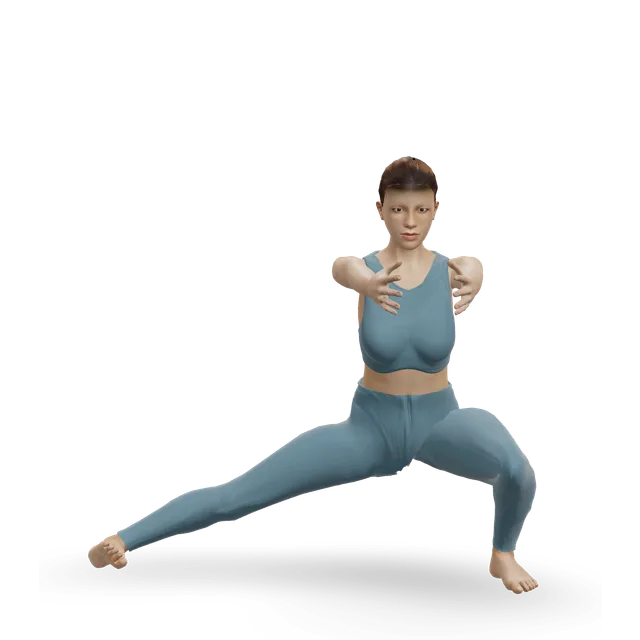 3D demoCossack squatIntermediate · No equipment
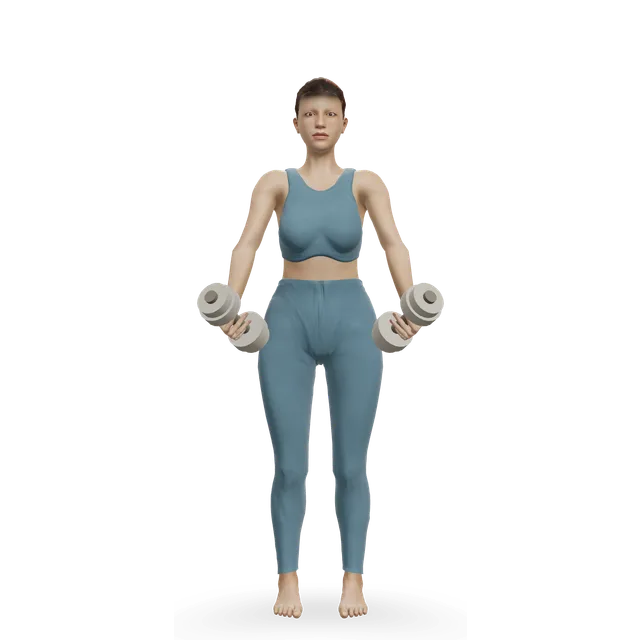
 3D demoDumbbell goblet squatIntermediate · A dumbbell
 3D demoJump squatIntermediate · No equipment
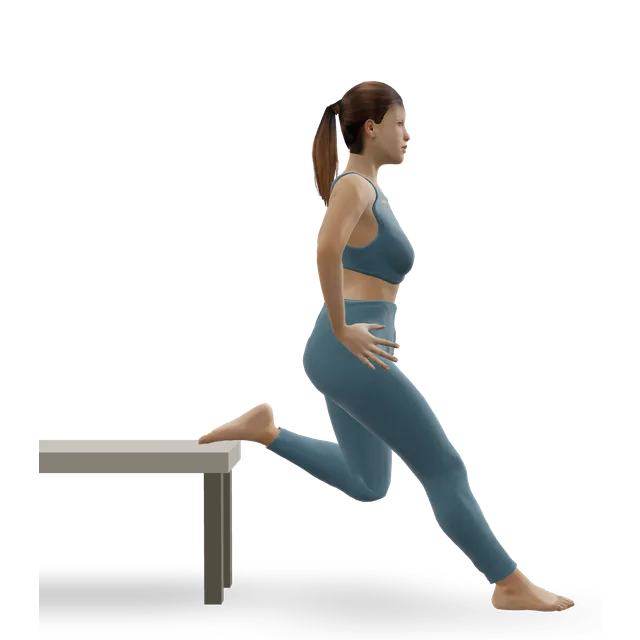 3D demoRear-foot-elevated split squat (Bulgarian split squat)Intermediate · A bench or box
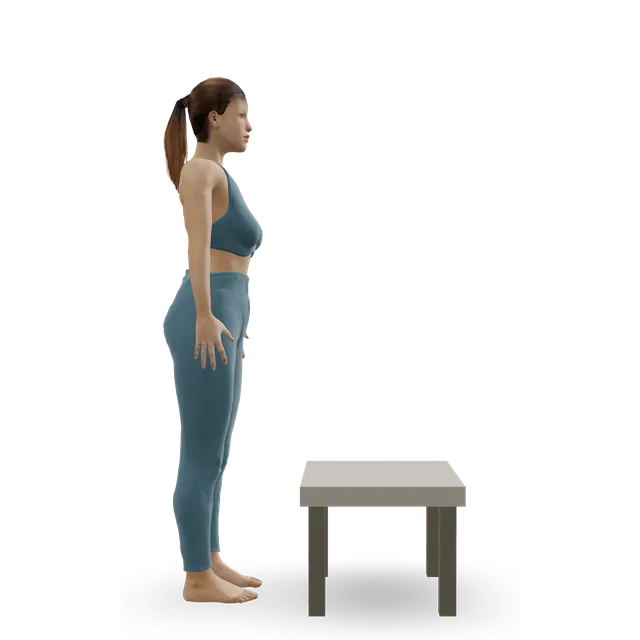 3D demoBox jumpIntermediate · A bench or box
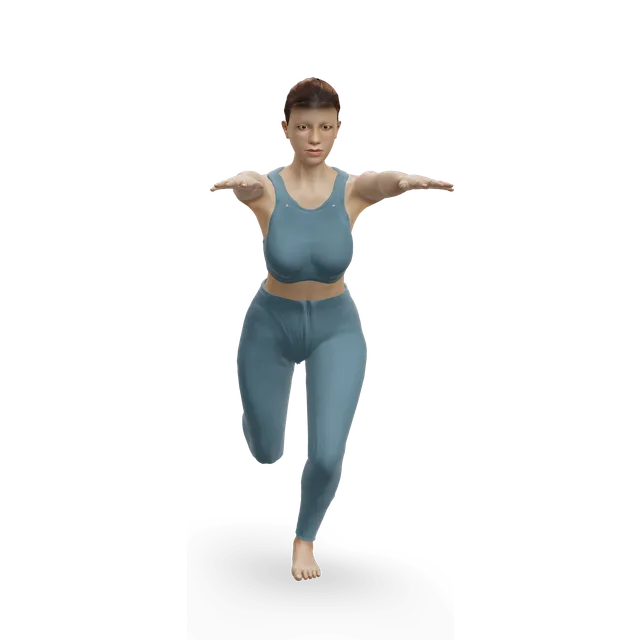 3D demoLateral bound (skater jump)Beginner · No equipment
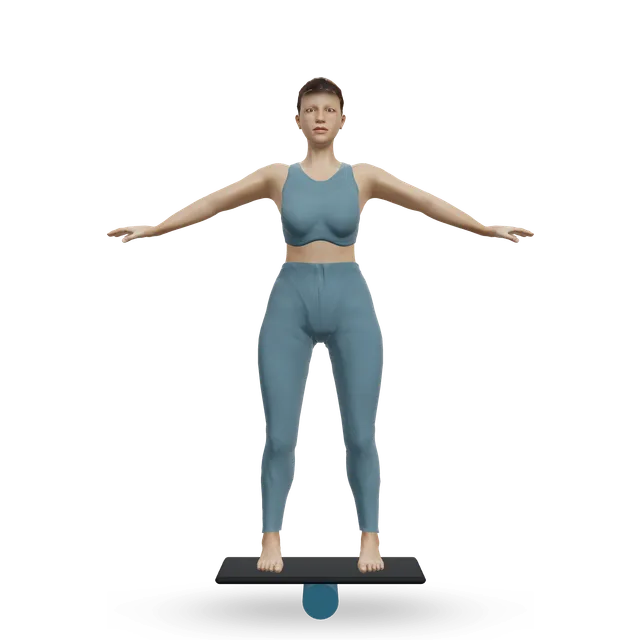 3D demoBalance board standBeginner · Other / check instructions
 3D demoSingle-leg standBeginner · A wall
 3D demoHalf-kneeling Pallof pressBeginner · A band + An anchor point
 3D demoThoracic rotationBeginner · No equipment
 3D demoStanding band external rotationBeginner · A band + An anchor point
 3D demoCross-body shoulder stretchBeginner · No equipment
 3D demoWrist & forearm flowBeginner · No equipment
The first two are new: a 10-minute warm-up and a strength and footwork session. The seniors' and balance sessions suit older and social players, and the Parkinson's routine sits alongside play.
A 10-minute table tennis warm-up: skipping, leg swings, trunk turns, shoulder and wrist circles, low side-steps, a wide side lunge and light hops.
10 minBeginner8 movesA wallA 40-minute table tennis session: squats with jumps, split squats with box jumps, lunges with side bounds, balance board, fast side-steps and shoulder work.
40 minIntermediate14 movesA wall, A dumbbellA 12-minute warm-up for tennis, padel, squash or badminton: skipping, leg swings, trunk turns, band shoulder work, forearm circles, shuttles and landings.
12 minBeginner10 movesA wall, A bandA 25-minute band routine for healthy shoulders: move the shoulder and upper back through their range, then strengthen the rotator cuff and shoulder blades.
25 minBeginner12 movesA wall, A bandA 25-minute routine for racket players: the five-part Shoulder Control programme from handball trials, band rotations, forearm lowering, hops and balance.
25 minBeginner12 movesA dumbbell, A cable machineA 40-minute strength and balance session for over-65s, built from the Otago home programme and NHS exercises, using a chair, a counter and a step.
40 minBeginner18 movesA bench or box, Something with weightStrength and balance in one session: squats, Romanian deadlifts, push-ups, rows, step-ups, back extensions, carries and single-leg balance.
45 minBeginner14 movesA wall, A dumbbellBalance practice in 10 minutes: tandem stance, single-leg stands, marches, heel walks, tree pose and floor transfers.
10 minBeginner7 movesA wall, A bench or boxA 35-minute home routine for Parkinson's: big steps to a beat, boxing-style punches, strength moves and balance at a counter, then posture stretches.
35 minBeginner18 movesCardio machine, A wallA 20-minute seated workout for older adults who cannot stand for long: marching, leg and arm strength, posture, and sit-to-stands that lead back to standing.
20 minBeginner11 movesA bench or box, Something with weightWrist mobility and forearm strength for desk work, climbing, push-ups and handstands.
10 minBeginner7 movesA wall, A dumbbellA 12-minute routine for a stiff upper back and rounded shoulders: chin tucks, wall angels, Y-T-W raises and open books.
12 minBeginner8 movesA foam roller, A wallThe McGill big three for the core: curl-ups, side planks and bird dogs, each held for 10 seconds at a time in falling sets of 5, 3 and 1 reps.
12 minBeginner3 movesNo equipmentOlder and social players: pair table tennis with a plan's strength and balance days.
A 12-week exercise plan for over-65s: strength and balance three times a week, short balance sessions and daily walks, based on falls-prevention trials.
3 training days40 minBeginner3 days a weekA weekly plan for women over 50: strength, bone-loading and balance on 3 days plus walking, built on UK osteoporosis consensus advice.
3 training days45 minBeginner3 days a weekA 3-day strength plan for men over 40 with power and bone work, two cardio days and mobility, built on research on ageing muscle.
3 training days45 minBeginner2 days a weekTwo full-body strength sessions a week: the minimum that meets health guidelines, with every set, rep and rest, and an 8-week progression.
2 training days45 minBeginnerThe PAR-Q+ (Physical Activity Readiness Questionnaire for Everyone) asks about a heart condition or high blood pressure, chest pain, dizziness or losing consciousness, other long-term conditions and their medicines, a bone or joint problem that activity could make worse, and being told to exercise only under supervision. If you answer yes to any, check with your GP or a qualified exercise professional first, and delay if you're ill.
Source 40
Table tennis is moderate, but competitive play has bursts of hard effort. Use the PAR-Q+, see your GP if it flags anything, and start with social play (our suggestion).
Falls were the commonest cause of racket-sport emergency visits, and the NHS advises seeing a GP after a fall or if you're worried about your balance. Wear shoes with grip, hold the table during the warm-up, and add our strength and balance workouts (our suggestion).
Table tennis was safe and practical in small studies, with one fall and one backache among 12 people in one of them. Follow our Parkinson's guide on exercising in your "on" times, freezing and falls, and look for a Parkinson's-friendly group.
Our shoulder guides allow discomfort up to about 5 out of 10 if it settles by your next session, and start with the cross-body stretch.
Source 5
40% of young players' injuries were growth-related; see our Osgood-Schlatter, Sinding-Larsen-Johansson and Sever's disease guides.
Source 4
Our replacement guides suggest doubles or gentle tennis from about 3 to 6 months. Ask your surgical team, and treat table tennis as a lower-impact step (our reading).
The NHS says it's usually fine to keep doing the activities you already do, but advises against sports with a risk of falling or bumping your tummy. Talk to your midwife.
Source 42
The NHS says to call 999 if:
Source 43
Call 999 if someone faints while exercising, isn't breathing, or can't be woken within a minute. Call 999 or go to A&E (accident and emergency) for palpitations that don't go away or come with chest pain, shortness of breath or fainting.
Call 999 if you or someone else has fallen and may have injured the head, back, neck or hip, or can't get up. Get help from NHS 111 if they may be in pain, injured or unwell, and see a GP after a fall or if you're worried about your balance.
Source 41
Ask for an urgent GP appointment or contact NHS 111 for sudden or very bad shoulder pain, an arm you can't move, a shoulder that has changed shape or is badly swollen, pins and needles that don't go away, or pain that started after a fall.
Source 46
Get advice from NHS 111 if your knee is very painful, you can't move it or put weight on it, it's badly swollen or has changed shape, or it locks, gives way or painfully clicks.
Source 47
Call 999 or go to A&E for back pain with pain, tingling, weakness or numbness in both legs, loss of feeling around your genitals or bottom, changes in your bladder or bowels, or chest pain.
Source 48
It's moderate activity at 4.0 METs, it counts towards the NHS's 150 minutes a week, and competitive play includes bursts of hard effort.
No trial has shown it. In healthy older men, it sped up task switching over 6 months, as cycling and walking did, and most of the evidence on sports like it is cross-sectional.
Three small studies without comparison groups reported better movement scores. It's an enjoyable part of the exercise mix, not a treatment.
Injury rates are low, but competitive players get shoulder, back, knee and hip problems.
Sports where you react to an opponent may have an edge for some thinking skills, mostly in cross-sectional studies. No study has shown that one sport is best.
In children, a meta-analysis found better uncorrected eyesight, but the results varied a lot and the authors call them exploratory. It hasn't been shown in adults, and it isn't a treatment for short sight.
Source 39
Yes: it's moderate activity for most people, 4.0 METs, and counts towards the NHS's 150 minutes a week. Competitive play includes bursts of hard effort.
Studies are small but encouraging: faster task switching in older men after 6 months, better quality of life with structured play in adults aged 40 to 70, and improvements in children with ADHD. A 2026 review calls the evidence promising but preliminary.
It can be: it's moderate, social and involves little running, and Table Tennis England runs sessions for the over-50s. Add strength and balance exercises on at least 2 days a week, as the NHS advises; table tennis hasn't been tested as falls prevention.
No trial has shown that. In one 6-month trial, healthy older men who played got quicker at switching between tasks, as did men who cycled or walked, and being physically and socially active is part of reducing dementia risk.
Small studies without comparison groups found better movement scores and few problems. It isn't a treatment, but it's a sociable way to get the exercise our Parkinson's guide recommends, and Table Tennis England is working with Parkinson's UK on groups.
Low side-steps, crossover steps and lunges, plus leg strength paired with jumps: in junior players, 8 weeks of this twice a week improved change of direction. Shadow footwork across the width of a table and reaction drills help too.
Injuries are uncommon. When they happen, they're mostly shoulders, lower backs and knees, with hip problems in some professionals and growth-related knee and heel pain in young players.
Shoulder pain in elite players went with losing inward rotation on the playing side. Our shoulder guides start with the cross-body stretch and band rotations, keeping discomfort to about 5 out of 10. Get sudden, severe or post-fall pain checked.
About 10 minutes: skipping, leg swings, trunk turns, shoulder and wrist circles, low side-steps, a wide side lunge and light hops, then forehand and backhand rallying before serves. No table tennis warm-up has been tested, so this one follows our warm-up guide.
Reactive agility training sped up choice reactions in young players. In children, a meta-analysis found better uncorrected eyesight, but the evidence is exploratory and it isn't a treatment for short sight.
Exercise education for people who play sport, not a personal prescription or a diagnosis, and clinical review of these pages is pending. Check with a GP or physiotherapist before hard training if you have a heart condition, chest pain, dizziness or an injury that isn't settling, and stop for sharp or increasing pain. Health disclaimer.