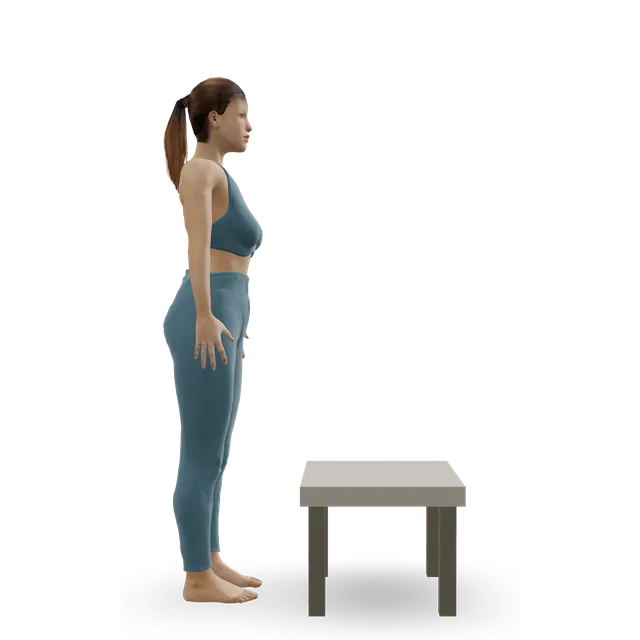
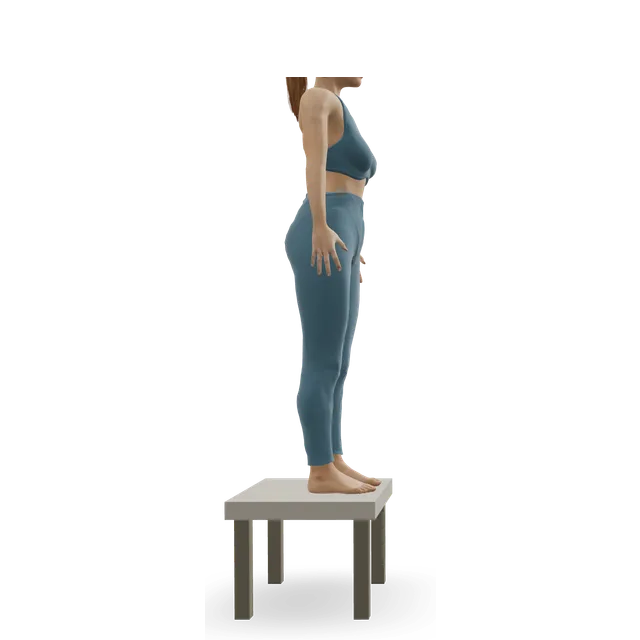
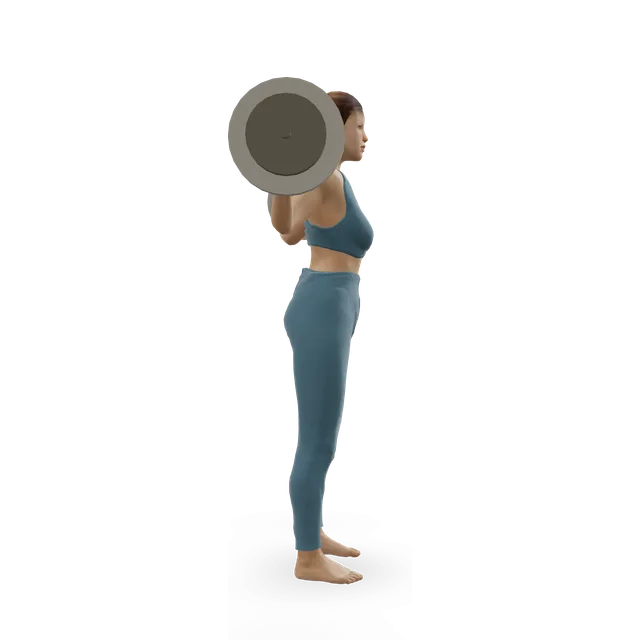
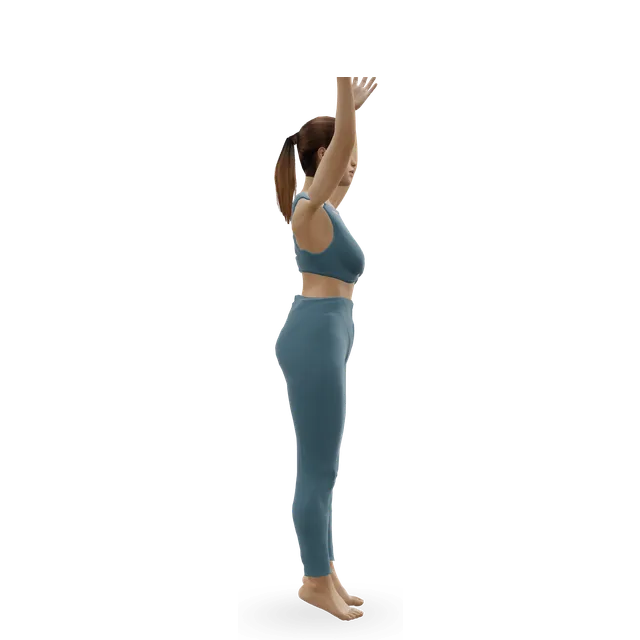
Training guide

How to power clean with good technique: the hang, the catch and your progression

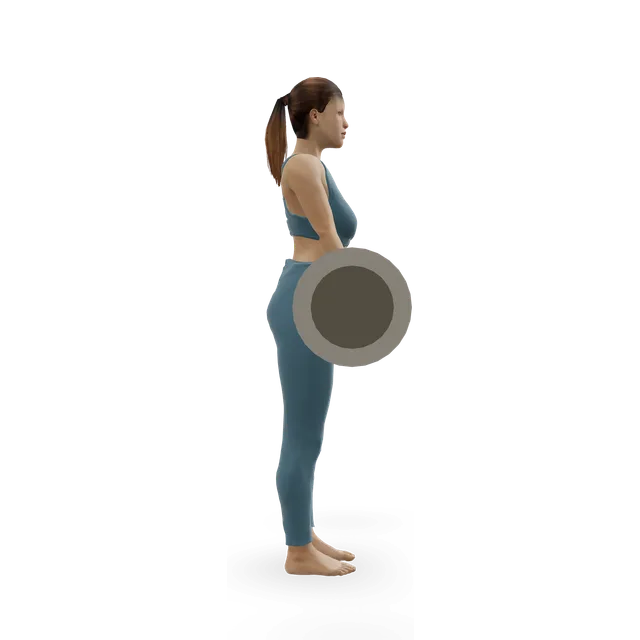
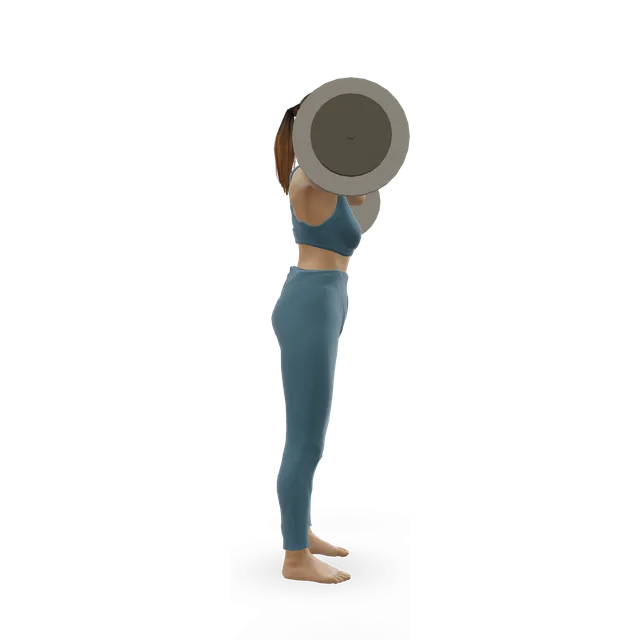
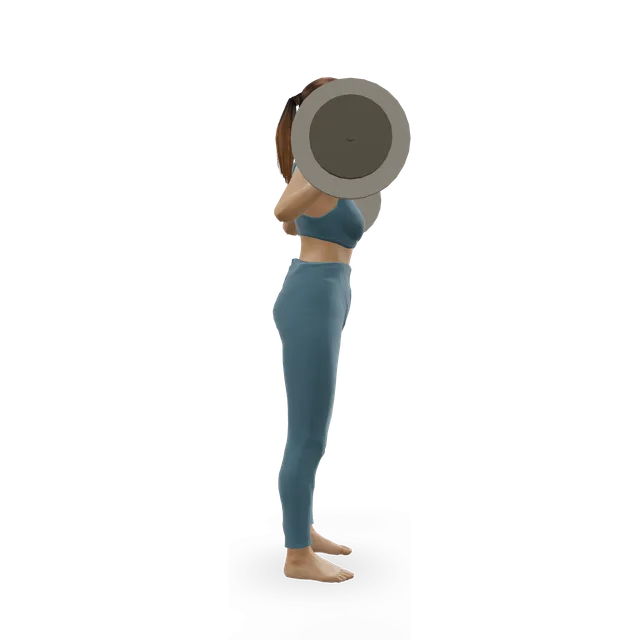
A power clean takes a barbell from the floor to the front of your shoulders in one fast movement: push the floor away, let your knees come forward as the bar passes them, jump with your arms straight, then pull yourself under and catch the bar in a quarter squat. The hang power clean starts from just above your knees and is the usual way in. Learn it with a coach and light weights, from the top down.

The research is mostly small trials in young men. For jumping it points one way: weightlifting training raised jump height by about 5% more than ordinary strength training, and about as much as jump training. For sprinting it's less certain, and two trials found no benefit at all. You don't even have to catch the bar: in two small trials, versions without the catch improved power as much.

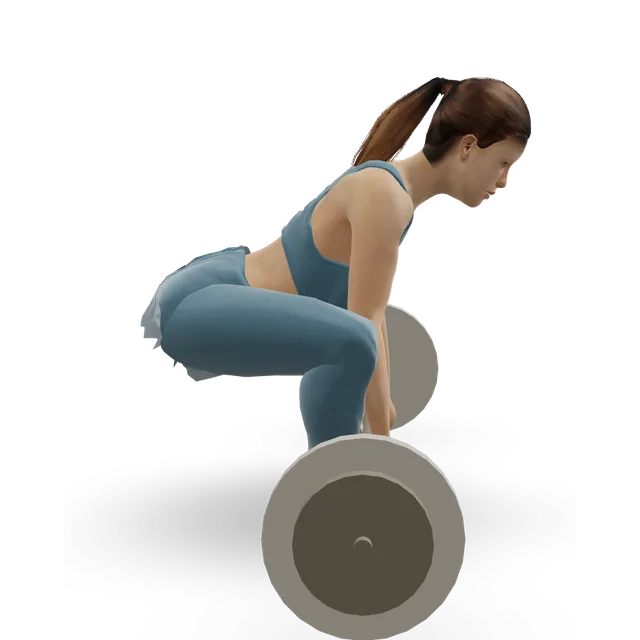
This guide covers each step on the 3D figure, where to start the lift from, the progression from the hang to the floor, sets and reps, the common mistakes, who should change the lift, and the warning signs to act on.

The short version

Floor to shoulders in one movement

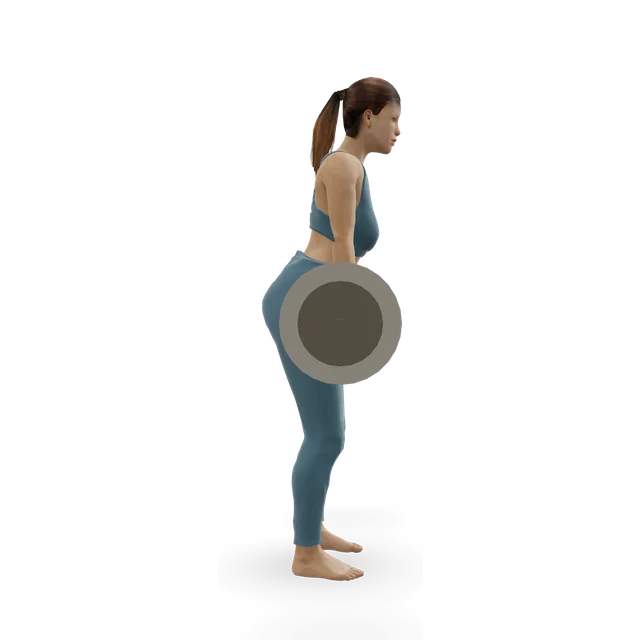
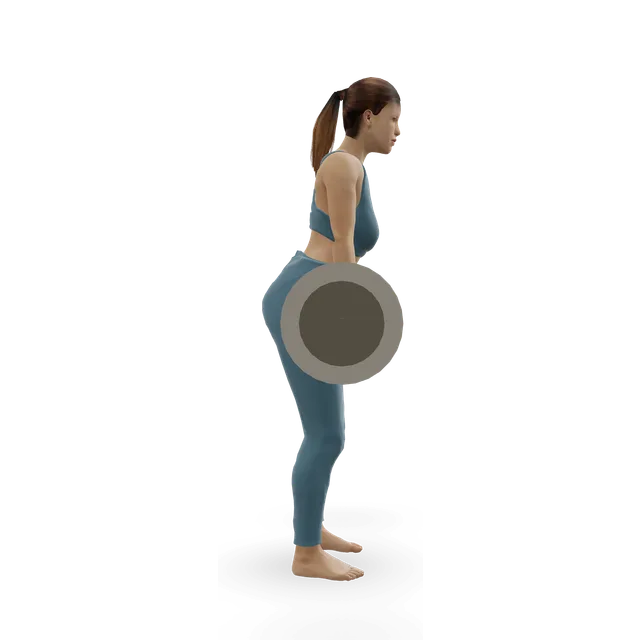
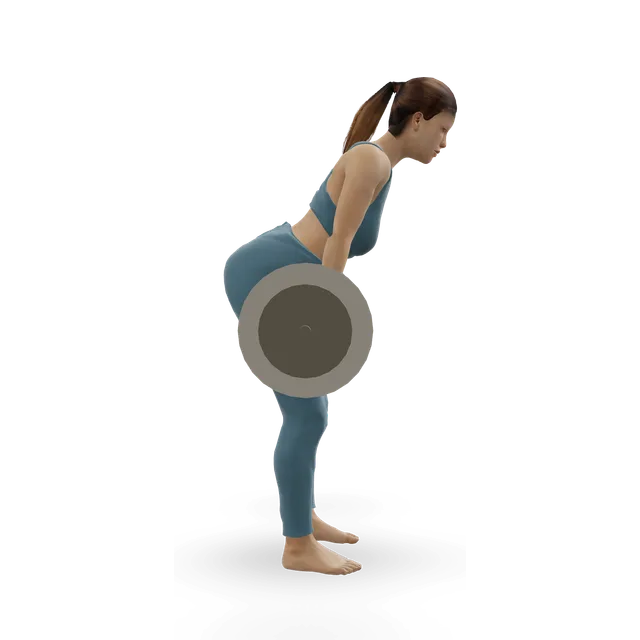
A power clean catches the bar on the front of your shoulders in a quarter squat, with your thighs above parallel; a plain clean is caught in a full front squat. The hang power clean starts standing: you lower the bar to mid-thigh or just above your knees, as in a Romanian deadlift, and leave out the pull from the floor.

Sources 1, 2, 3

Learn it coached, from the top down

British Weight Lifting: "We advise that no-one attempts an Olympic lift without prior training and supervision." The National Strength and Conditioning Association (NSCA) teaches the end of the lift first: the front squat, which is the catch, then the jump from mid-thigh, then from the knee, then from the floor. Your technique, not a percentage of your body weight, decides when you move on.

Sources 4, 1

Push, scoop, jump, catch

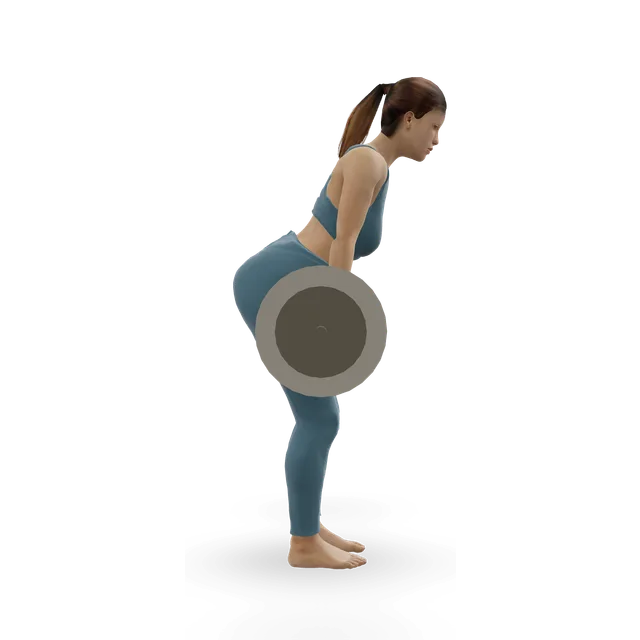
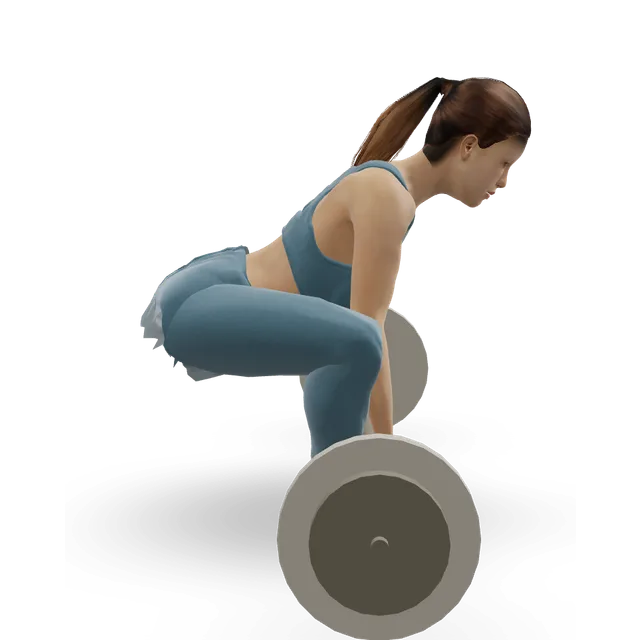
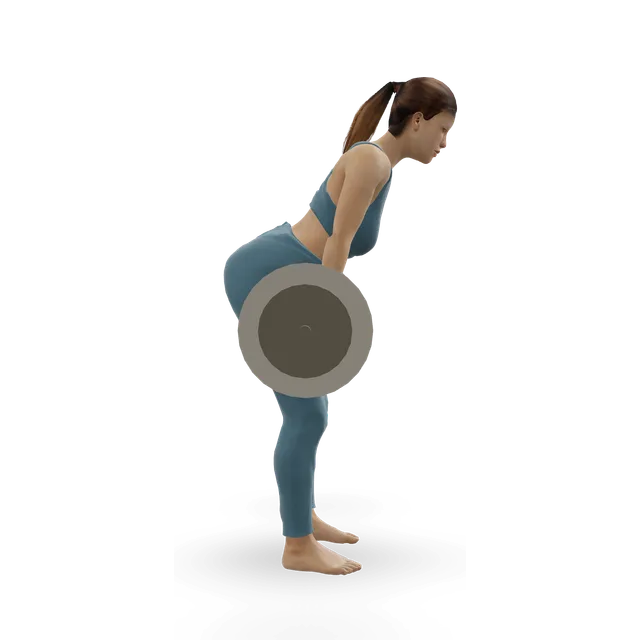
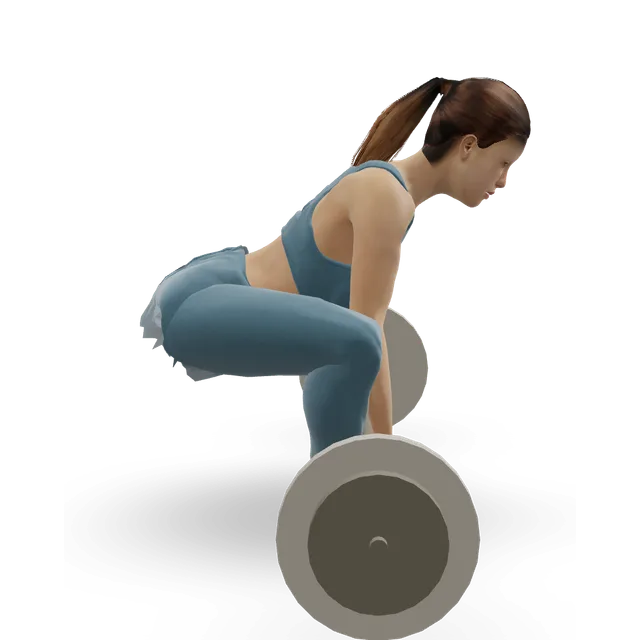
Start with the bar over your mid-foot, your hips below your shoulders and your arms straight. Push the floor away until the bar passes your knees, let your knees come forward under it as it slides to mid-thigh, then jump and shrug with your arms straight. Only then pull yourself under, whip your elbows round and catch the bar on your shoulders, elbows high and feet flat.

Sources 3, 1

Fast, low reps, never to failure

3 to 5 sets of 2 or 3 power cleans, or 2 to 4 hang power cleans, resting 2 to 3 minutes, early in your session (our move pages' doses). NSCA coaches keep sets under 3 reps when maximum power is the aim. End the set when the bar slows or a rep looks different.

Sources 5, 1

Good for jumping, less certain for sprinting

In trials of mostly young men, weightlifting training raised jump height by about 5% more than ordinary strength training, and about as much as jump training. The pooled edge for sprinting wasn't statistically significant, and two trials found no benefit at all, so the lifts work best beside squats and jumps, not instead of them.

Sources 6, 7, 8, 9, 10

You don't have to catch it

In two small trials, of 34 athletes over 8 weeks and 27 men over 10 weeks, pull variations without the catch improved power as much as the full lift. That makes pulls a fair choice while you learn or when your wrists are sore. The catch matters if you want to compete.

Sources 11, 12

How to power clean, step by step

These steps describe the power clean from the floor. For the hang power clean, stand tall with the bar, lower it to mid-thigh or just above your knees as in step 6, then do steps 7 to 10, resetting at the top between reps.

1. Set up the space

Use bumper plates and collars on a platform or rubber floor, with nobody close by, as our move page asks. If light plates leave the bar too low, raise them on blocks so the bar starts at the height a full-size plate gives (our suggestion).

2. Feet and bar

Stand with your feet hip- to shoulder-width apart and your toes turned out a little, with the bar over your mid-foot, about 2.5 cm (an inch) in front of your shins.

Sources 3, 5

3. Grip

Take an overhand grip a little wider than your shoulders, with your hands outside your knees. Chalk helps. The hook grip, with your fingers wrapped over your thumb, is allowed in competition, and it let 11 trained men who already used it power clean more. It hurts your thumbs at first, so build up to it.

Sources 3, 5, 13, 14

4. The start position

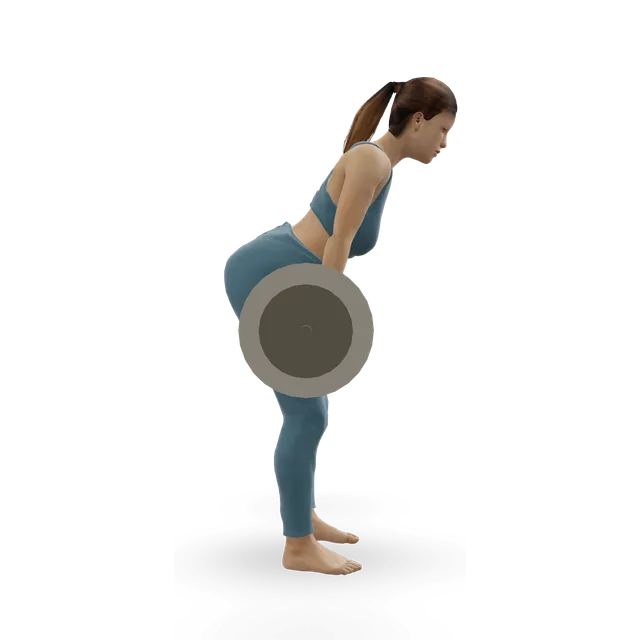
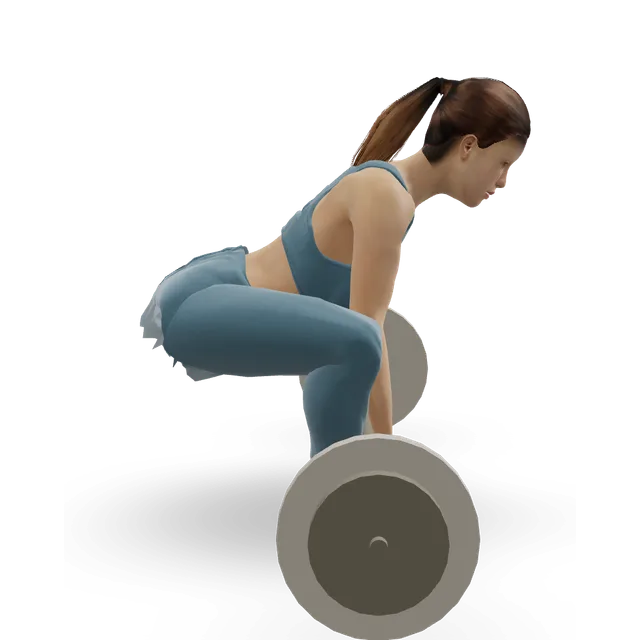
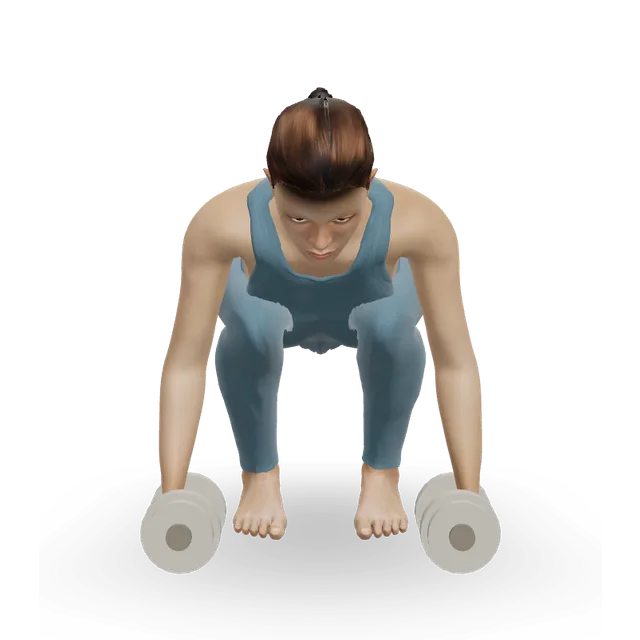
Bend down to the bar with your hips below your shoulders and above your knees, your shoulders over or slightly in front of the bar, your back flat, chest up, arms straight and eyes ahead. Our deadlift demo starts the same way.

Sources 3, 5

5. The first pull: push the floor away

Breathe in and brace. Push the floor away so that your hips and shoulders rise together and your back keeps the same angle until the bar passes your knees. Keep the bar close to your shins.

Sources 3, 1

6. The scoop

As the bar passes your knees, your hips move forward and your knees come forward under the bar, so it slides up your thighs to mid-thigh with your shoulders still over it and your arms long. Coaches call this the transition, or the double knee bend. It's the bottom half of a Romanian deadlift in reverse.

Sources 3, 1

7. The jump

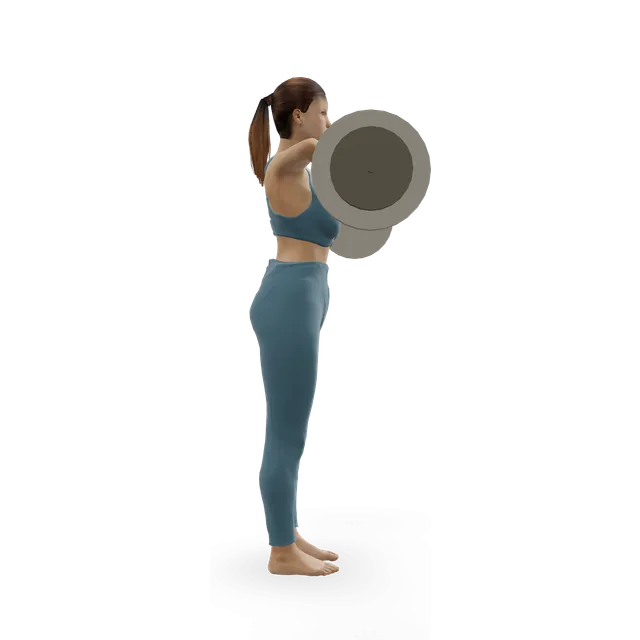
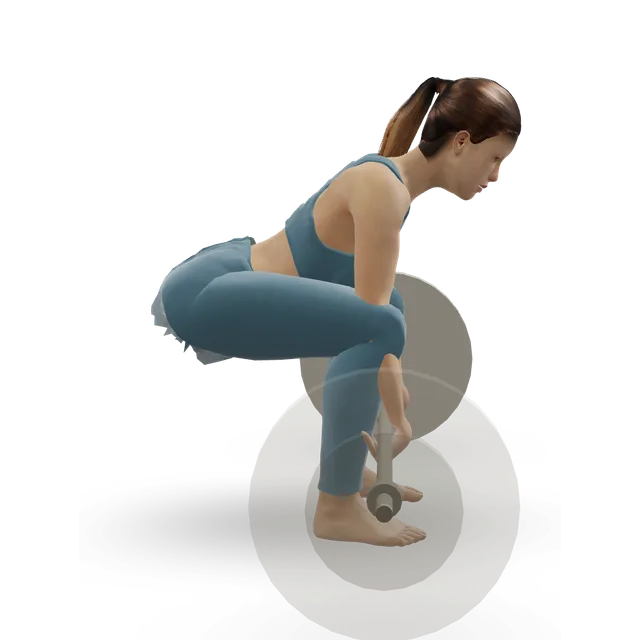
Extend your hips, knees and ankles fast, as if jumping, with your heels down as long as you can and your arms straight, and finish tall with a shrug. The NSCA's cue: "Push through the ground and get as tall as possible." This is where the power comes from.

Sources 3, 1

8. Pull yourself under

Only now bend your elbows, pulling yourself down under the bar as it keeps rising, with your elbows high and out to the sides.

Sources 3, 15

9. The catch

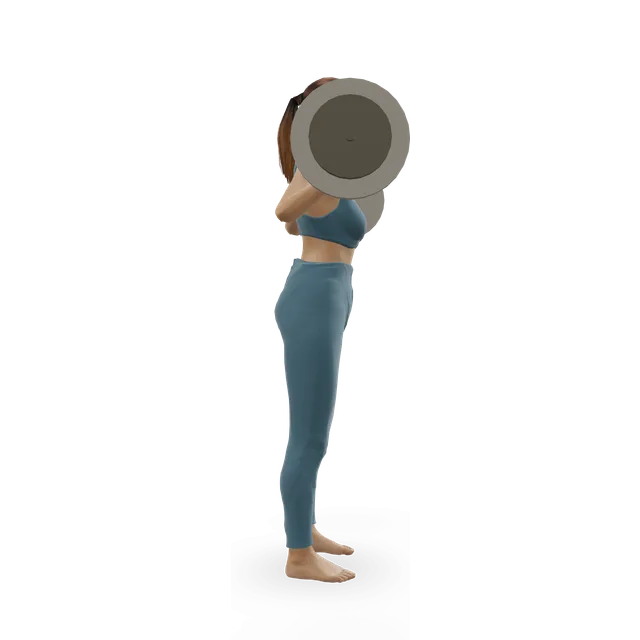
Whip your elbows round and forward so your upper arms are about level with the floor. The bar lands across the front of your shoulders and collarbones, your fingers loose around it, as you land in a quarter squat on flat feet with your trunk nearly upright.

Sources 3, 5

10. Stand up and lower the bar

Stand up tall. Lower the bar to your thighs, bending your hips and knees to take it, then to the floor. On bumper plates you can let it drop in front of you once it's below your shoulders, which is what competition rules ask.

Sources 3, 13

11. If a rep goes wrong, let it go

If the bar runs out in front or your elbows won't come through, don't fight it: push the bar away, let it drop in front of you and step back, as our move page advises. Practise this with an empty bar on bumper plates before you need it.

Cues that help

"Push, scoop, jump, catch" (our summary of the steps); "push through the ground and get as tall as possible" and "tall belly button" (from the NSCA); "the hips move the bar, not the arms"; and "fast elbows". These are coaching cues, not tested in trials.

Source 1

What the evidence says: jumping, sprinting and strength

Jumping: better than ordinary strength training, about the same as jump trainingEmerging evidence

In 6 studies of 232 trained young people, about 20 years old, weightlifting training raised vertical jump by 7.7% more than in groups that didn't do it, and by 5.1% more than ordinary strength training, both moderate effects, and it matched jump training. Another review found the countermovement jump (a jump with a quick dip first) rose by 7.5% with weightlifting against 2.1% with ordinary strength training, and by 8.8% against 8.1% with jump training.

Across 16 studies of 427 people, weightlifting beat ordinary strength training for jump height by a large amount, though the studies varied a lot. In 8 trials of 233 recreationally trained adults, it added about 2 to 2.5 cm more than control, jump or ordinary strength training.

Sources 6, 7, 8, 16

Sprinting and changing direction: uncertainMixed evidence

Against ordinary strength training, the pooled effect on sprinting was large but not statistically significant: the likely range ran from about no difference to a very large advantage. Against jump training it was close to zero. Single trials point different ways: 10 m sprints improved after 8 weeks of Olympic lifts in 32 young men, and handball players sprinted faster after 7 weeks of hang power cleans, though that trial had no group that skipped the lift. The American College of Sports Medicine (ACSM) found too little data to judge Olympic lifting for running and agility.

Sprinting itself, with strength and jump training, stays the core of getting faster, as our sprint guide says.

Sources 8, 17, 18, 19

Strength: mostly in the lifts themselvesEmerging evidence

Against ordinary strength training, weightlifting training raised the weightlifting lifts themselves most, a large effect. It built more squat strength than kettlebell training over 6 weeks in 30 men. But jump training raised half-squat strength a little more than Olympic lifts in another trial (47.8% against 43.7%), and in a third, cleans and snatches on their own didn't grow the thigh muscles, while squat training did.

Sources 8, 20, 17, 9

Two trials found no benefitMixed evidence

In 39 young athletes, 8 weeks of cleans and snatches with no other lifting gave trivial gains, less than squat-based strength and power training with free weights or machines. In 45 trained men who first spent 4 weeks learning the lifts, 8 more weeks of a technique-focused programme improved neither jumps nor sprints, while jump training improved both. The NSCA's answer to the first is that it left out the simpler versions and squats, and the athletes were new to the lifts.

Our reading: the lifts help most as part of a programme that also squats and jumps, once technique no longer limits the effort.

Sources 9, 10, 1

The ACSM lists Olympic-style lifts among what builds powerEmerging evidence

The ACSM's 2026 position stand found power improved most with moderate loads (30 to 70% of your one-rep maximum, the most you can lift once), low to moderate volume (24 or fewer reps in total, sets times reps) and lifting fast, including Olympic-style lifts. Its conclusion on the Olympic lifts rests on one review, the 16-study analysis above.

Sources 19, 8

What the trials don't cover

Most trials were small, lasted 6 to 10 weeks and studied young men: 12 of the 16 studies in the main review were in men only, and 221 of 233 people in the newest. The results varied a lot between studies, assessors were blinded in only 2 of 16, and dropping the weaker studies removed the strength and squat-jump advantages over ordinary lifting. No study has measured whether teaching the lift from the top down prevents injuries.

Sources 8, 16

Hang, blocks or the floor?

Three places to start

From the hang, you stand with the bar and lower it with a Romanian deadlift to the top of your thighs, mid-thigh or just above your knees. From blocks, the bar rests on blocks at those heights. From the floor, you do the whole lift. The NSCA notes there's little research comparing hang and block starts, and the authors of one NSCA coaching article teach starts below the knee only from blocks, to lifters who can't yet hold that position from the hang.

Sources 2, 1

Mid-thigh versions produce the most power in trained athletesEmerging evidence

In 16 elite rugby league players lifting 60% of their best power clean, peak power was about 3,570 watts in the mid-thigh power clean and 3,690 in the mid-thigh pull, against 3,180 in the hang power clean and 2,590 from the floor; force and the rate of force development followed the same pattern in 11 players. In 16 inexperienced female athletes, the floor, hang and mid-thigh versions didn't differ.

Sources 21, 22, 23

The hang power clean is a lift in its own rightMixed evidence

In professional female handball players who already knew the lift, 7 weeks of hang power cleans at 90% or 50% of their best made both groups stronger in the lift and faster over 5 to 30 m, though neither group jumped higher and there was no comparison group. Many athletes only ever train from the hang; you need the floor start if you want to compete (our view).

Source 18

Where coaches disagree: hang first, or the floor from day one?

An NSCA coaching article says teaching the power clean from the floor in the first phase "is acceptable", while smaller pieces from blocks or the hang "may demonstrate improved motor learning", and that "there is no clear consensus on the best approach". Some coaches teach the floor start like a deadlift from the first session. Both work with light weights and a coach; we follow the NSCA position statement's top-down order.

Sources 5, 1

Do you need to catch it?

Pulls without the catch improved power as muchEmerging evidence

In two small trials, pull variations without the catch improved power as much as the full lift. Over two 4-week blocks in season, 34 athletes doing power clean exercises with the catch (16) or without it (18) both improved: jump height by 10.8% and 5.2%, and the power clean maximum by 9.5% and 8.4%, and the differences between the groups weren't significant. Over 10 weeks in 27 trained men, pulls loaded heavier for force or lighter for speed improved sprints, mid-thigh pull strength and, on one side, change of direction more than catching or pulling exercises at the same relative loads.

Sources 11, 12

Why pulls work, and what the catch addsEmerging evidence

Pulls leave out the catch, so they're quicker to learn and can be loaded heavier: the NSCA suggests 100 to 140% of your best clean, staying under 120% for pulls from the floor. The catch adds a loaded landing, much like landing from a jump, and makes you pull with intent to get the bar high enough, so the NSCA wants pulls to add to catches rather than replace them.

Sources 24, 1

The jump shrug: the fastest pullEmerging evidence

A jump shrug is a jump from mid-thigh with a shrug and straight arms. In 17 men it produced more power, force and speed than the hang clean and the high pull; in 15 lacrosse players it did more work at the hip and knee than the hang power clean. The NSCA puts its best loads at about 30 to 45% of your best hang power clean. We don't have a 3D demo of it yet: the clean shrug, a fast shrug from mid-thigh without leaving the floor, is the nearest.

Sources 25, 26, 1

When to pull, and when to catch

Pulls make sense while you learn, when your wrists or elbows complain in the catch, and for heavy strength work. Learn the catch if you want to compete in weightlifting or CrossFit, where a lift only counts when you catch it. Most programmes use both (our view).

Sources 11, 1

Your progression: from the hang to the floor

Before you start: the checks

NSCA coaches check a deep front squat with the bar in the clean position and a Romanian deadlift with a flat back before teaching the power clean, and the NSCA's position statement wants jumping and landing skills in place too. If one is missing, start there.

Sources 5, 1

Step 1: the hinge

Hip hinge practice, 2 or 3 sets of 8 (our deadlift guide's dose), then the Romanian deadlift with a clean grip, 3 sets of 6 to 8 (our weightlifting strength workout). Move on when you can slide the bar to just above your knees with a flat back and the bar touching your thighs: that's your hang position.

Source 5

Step 2: the catch position

The goblet squat, then the front squat, then the front squat with a clean grip: our front squat guide has the steps. Move on when you can squat deep with your elbows up and the bar staying on your shoulders. The front squat is the catch, and the first step of the NSCA's clean progression.

Sources 1, 5

Step 3: jump and land

Jump squats and box jumps, stepping down from the box: 3 sets of 5 (our jump guide's first stage). Move on when your landings are quiet and balanced.

Source 1

Step 4: the parts

The clean deadlift for the start and the first pull, 3 sets of 5, light (our suggestion); the clean shrug for the jump, 3 sets of 3 to 5, fast, with your arms long (our move page's suggestion); and the rack delivery for the turnover, 2 sets of 5 to 10 with the empty bar. Move on when each looks the same every rep.

Sources 15, 5

A lighter way in: dumbbell and kettlebell cleans

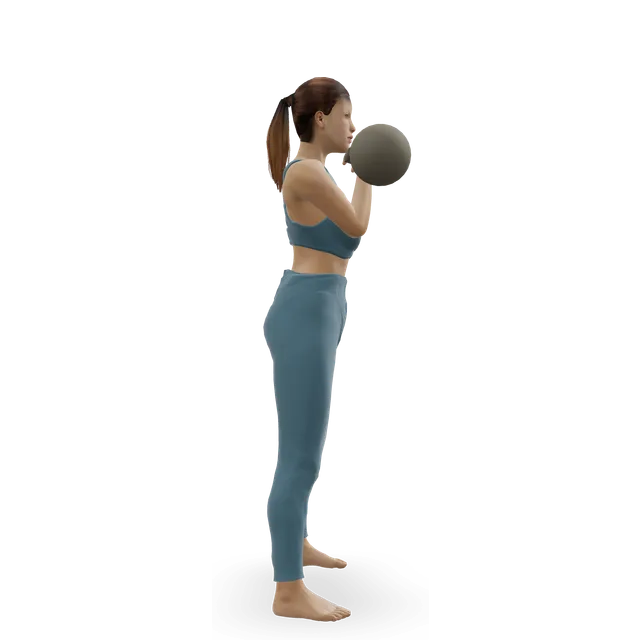
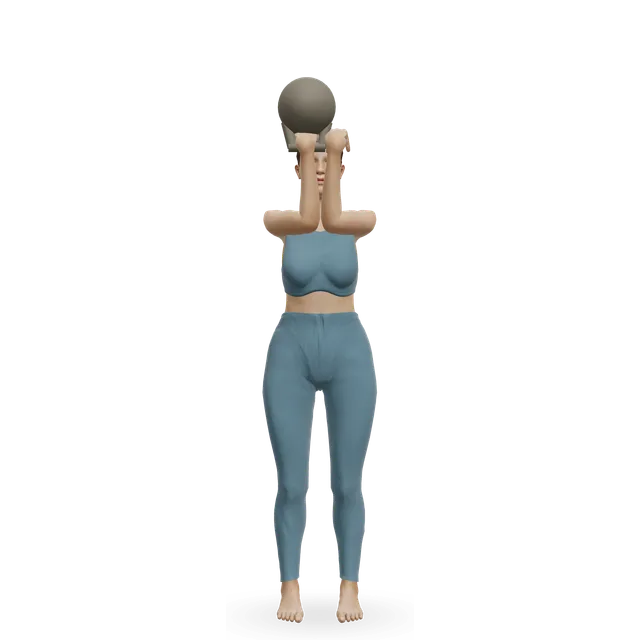
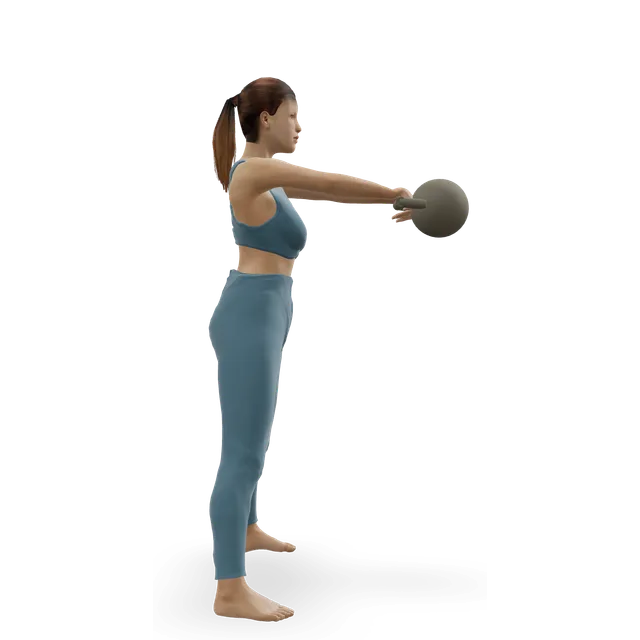
A published football strength programme uses dumbbell cleans before power cleans, and the NSCA's technique manual teaches the dumbbell hang power clean from mid-thigh. The kettlebell clean, 3 to 5 sets of 5 to 8 a side with a light bell (its move page's dose), teaches a smooth catch too.

Sources 27, 28

Step 5: from mid-thigh

Hang power cleans from mid-thigh, or power cleans from blocks set at mid-thigh: 3 to 5 sets of 2 to 4, light, resting 2 minutes (the move page's dose). Move on when every rep is fast, with your elbows high and your feet flat.

Sources 1, 5

Step 6: from the knee

The same lifts from just above your knees: 3 to 5 sets of 2 or 3. Move on when the knee start looks like the mid-thigh one.

Sources 1, 5

Step 7: from the floor

Clean pulls first, 3 sets of 3 at about your best power clean (our suggestion, inside the NSCA's 80 to 120% for the clean pull), then the power clean itself: 3 to 5 sets of 2 or 3, resting 2 to 3 minutes (the move page's dose). You're there when your floor rep looks like your hang rep.

Source 1

After that

The squat clean, caught in a full front squat, with a coach; hang cleans from below the knee and cleans from blocks; the push press and then the split jerk, towards the clean and jerk; and heavier pulls. Our weightlifting workouts take it from there.

Source 1

How long it takes: an expert estimate

NSCA coaches plan 2 to 4 weeks or 2 to 4 months of progressions, depending on the person and the coaching: that's expert opinion, not a trial result. A coach speeds it up: in one trial, college football players given feedback on their power snatch improved their power and bar path in 4 weeks, and those without feedback didn't.

The training effect takes a while too. In 16 men doing weightlifting-style training for 10 weeks, the stronger, more experienced lifters improved within 5 weeks; the weaker ones improved as well, but later, between weeks 5 and 10.

Sources 5, 29, 30

Sets, reps, rest and how often

How often: twice a week while you learn

Two sessions a week with a day between, as our weightlifting technique workout suggests. Example NSCA coaching programmes run the lifts 2 or 3 days a week.

Source 5

Sets and reps: low and fast

3 to 5 sets of 2 or 3 power cleans, or 2 to 4 hang power cleans (our move pages' doses). An NSCA coaching article: "maximum power development will be less than three repetitions". Keep the total to about 24 reps or fewer (sets times reps), the low to moderate volume that improved power most in the ACSM's 2026 review.

Sources 5, 19

Rest: 2 to 3 minutes

Rest 2 to 3 minutes between sets (our move pages); NSCA coaches use 2 to 5. If you want more reps, split them with short rests of about 30 to 40 seconds (cluster sets): in a study the NSCA cites, the bar drifted forward by the last of 6 straight power cleans at 80% of the lifters' best.

Sources 5, 1

How heavy

Start with an empty bar or a light technique bar, and add weight in small steps only when every rep looks the same. The NSCA advises cautious loading while you learn, and not setting beginners' weights as a percentage of body weight. Once you're fluent, much of the work sits at about 70 to 85% of your best power clean (our middle of the NSCA's 70 to 95% range), with pulls at about 80 to 110% of your best clean and jump shrugs at about 30 to 45% of your best hang power clean.

Source 1

When to stop the set

Reps in reserve (how many more reps you could have done) is the wrong gauge for a speed lift. End the set when the bar slows, lands further forward or a rep looks different, and never go to failure.

Source 1

Where it goes in your session

First, while you're fresh. In the ACSM's review, strength gains were larger when lifts came at the start of a session. Keep hard runs and intervals at least 3 hours away, as our plans advise.

Source 19

Warm-up

3 to 5 minutes of easy rowing or cycling, then wrist circles, ankle rocks and upper-back rotations. Take the empty bar through the positions, then do 2 or 3 lighter sets, as in our weightlifting technique workout and our warm-up guide.

Source 5

Measuring progress

For your jump, a phone app that times your flight was within about 1 cm of a force plate; test the same way each time. For sprints, use timing gates or a phone app filming at high speed, never a stopwatch: gates vary by about 2.8% over 5 m from one test to the next, so small changes are noise. For the lift, film a set from the side every week or two and look for a closer bar path and a higher, faster catch. Bar-speed apps are fine for watching speed within a set, but they couldn't reliably estimate a power clean maximum.

Sources 31, 32, 29, 33

Common mistakes and how to fix them

The bar swinging away from you

If the bar drifts forward off the floor, you have to jump forward to catch it. Keep it close to your shins and thighs, with your shoulders over it until the jump, and push the floor away rather than heaving with your back.

Sources 1, 3

Hips shooting up first

Your back tips forward and the bar swings out. Raise your hips and shoulders together until the bar passes your knees; take weight off and drill it with the clean deadlift.

Sources 3, 1

Bending your arms early (the reverse curl)

Pulling with your arms before your hips, knees and ankles finish extending is a named fault, and it slows the bar. Keep your arms long until the jump is done; the clean shrug drills it.

Sources 1, 3

Jumping forward or back to catch it

Usually the bar was away from your body. Film from the side and keep the bar close; a line on the floor between your feet shows whether you're jumping forward (our suggestion).

Source 1

Slow, low elbows: the bar landing in your hands

The bar crashes onto your wrists and pulls you forward. Whip your elbows round fast so your upper arms are about level with the floor, loosen your grip and let the bar sit on your shoulders. The rack delivery drills it.

Sources 3, 15

Landing on your toes

Land on flat feet in a quarter squat. If your heels come up, the bar was probably in front of you (our view).

Sources 3, 1

Too heavy, too soon

Heavy weights while you're learning ingrain errors. Add weight only when every rep looks the same, and take some off when it doesn't.

Source 1

Trying to save a bad rep

Let it go: push the bar away, let it drop in front of you on bumper plates and step back, as our move page advises.

Who should change the power clean

Sore wrists or elbows in the catch

The catch asks a lot of your wrists and shoulders: in 20 CrossFit athletes, a good clean catch went with about 92 degrees of wrist extension and plenty of outward shoulder rotation and forearm turning. Loosen your grip so the bar sits on your shoulders, try a slightly wider grip, and while it settles do pulls and shrugs, which trained jumping and strength as well as catches in an 8-week trial. Hand and finger injuries are about 15% of weightlifting injuries.

Sources 34, 11, 35

Back pain

Lift from the hang or from blocks above the knee, lighter, and reset every rep. Back injuries in elite US weightlifters were mostly strains. Check the warning signs below and our back pain guide. A teenager who lifts and has back pain that lasts more than a couple of weeks, or is worse arching back, should get it checked: our spondylolisthesis guide explains why.

Source 36

Pain below the kneecap

Most knee injuries in elite weightlifters were tendon pain. If pain just below your kneecap builds with training, follow our jumper's knee guide, and cut back the jumps and catches while it settles.

Source 36

High blood pressure, heart disease and eye conditions

A brief held breath is unavoidable above about 80% of your maximum, and it drives blood pressure very high for a moment: an average of 320/250 mmHg in 5 bodybuilders leg-pressing to failure. Breathing out slowly through a maximal leg press lowered it from 311/284 to 198/175 in 10 men. Measured just after a near-maximal clean and jerk, blood pressure was moderately raised, about 147/87, and back to normal within 15 minutes in 18 experienced lifters; peaks during the lift weren't measured.

With high blood pressure, heart disease, glaucoma or diabetic eye disease, breathe out through each rep, keep the weights moderate, and leave maximal lifts until your blood pressure is controlled and you've had advice, as our high blood pressure guide says. The American Heart Association calls strength training safe and effective for adults with and without heart disease.

Sources 37, 38, 39, 40, 41

Children and teenagers

Coached weightlifting is safe and beneficial for young people, the NSCA and British Weight Lifting say, with technique first, no adult programmes and no more than 10 young lifters per coach. Youth training statements support supervised strength training, and a review found injuries in young weightlifters uncommon, and severe ones rare, when training is supervised. In 63 children aged 10 to 12, 12 weeks of Olympic lifting improved jumping and sprinting more than jump training did, by the study's estimate. Most young people's weight-room injuries are accidents with dropped weights, which supervision prevents. Our children's exercise guide has more.

Sources 1, 42, 43, 44, 45, 46, 47

Older lifters

In a survey of 976 masters weightlifters aged 35 to 88, injuries that limited training were common, more so in men, and arthritis or chronic inflammation went with more injuries. Lift from the hang or from blocks if the floor start is too much, and keep loads where any pain settles by the next morning, as our weightlifting guide suggests.

Source 48

Pregnancy

The NHS says strength training at a gym is fine "if you do this already", but to avoid activities with a risk of falling or bumping your tummy. A bar travelling close to your body is one of those as pregnancy progresses (our view). Talk to your midwife, and see our pregnancy guide.

Source 49

Leaking

Leaking urine was reported by half of women and 9% of men in weightlifting and powerlifting. It's common and treatable, and a reason to see our pelvic floor guide and a pelvic health physiotherapist, not to stop lifting.

Source 35

No barbell

Dumbbell and kettlebell cleans teach the jump and the catch with a lighter load, and jump training on its own builds jumping about as well as the lifts do.

Sources 28, 27, 7

The clean ladder: from the hinge to the floor

Work up in order, moving on when every rep looks the same; the doses are in the progression above. The clean shrug stands in for the jump shrug, which we don't have a demo of yet.

Clean variations and what comes next

The squat clean, split clean and jerks belong with a coach once the power clean is solid; dumbbell and kettlebell cleans are lighter ways to learn the catch.

Jump, land and warm up

Practise jumping and landing before the clean; the last three loosen your wrists, upper back and ankles in the warm-up, a few slow reps each.

Workouts to follow

The power clean technique workout walks the progression from the hang to the floor; the weightlifting workouts add the snatch, the jerk and the strength work behind them, and the jump workouts train jumping without a barbell.

Learn the power clean: from the hang to the floor

A 40-minute technique session for the power clean: the rack and hang positions, the jump and the turnover, light hang power cleans, then cleans from the floor.

40 minIntermediate14 movesCardio machine, A wall

Weightlifting technique workout: the snatch and the clean and jerk from the top down

A 60-minute coached technique session: wrists, ankles and overhead squats, then the snatch and the clean and jerk built from the top down with light weights.

60 minBeginner15 movesCardio machine, A wall

Weightlifting strength workout: front squats, clean pulls and push presses

A 65-minute strength session for weightlifters: front squats, clean pulls at or above your best clean, push presses, Romanian deadlifts and trunk work.

65 minIntermediate11 movesCardio machine, A wall

Strength workout for American football: power, legs, upper body, hamstrings and neck

A 55-minute gym session for American football: hang cleans or jump squats, back squats, bench press, Romanian deadlifts, rows, Nordics, neck work and carries.

55 minIntermediate16 movesA band, A barbell

Vertical jump workout: landings, jumps and strength

A staged jump session for 8 weeks: landings and small jumps, then box and broad jumps, then depth jumps, each followed by squats, hinges and calf work.

40 minIntermediate16 movesA step, A bench or box

Plyometric workout

An advanced jump training session: pogo hops, box jumps, split squat jumps, broad jumps and depth jumps.

30 minAdvanced8 movesA bench or box, A step

Learn to deadlift: hinge to bar workout

A 30-minute session from the hip hinge to your first deadlift: hinge practice, kettlebell deadlifts, slow Romanian deadlifts, a light bar and a carry.

30 minBeginner9 movesA kettlebell, A dumbbell

Kettlebell workout

A 30-minute full-body kettlebell workout: deadlifts, swings, cleans, presses, rows, halos and carries.

30 minIntermediate9 movesA kettlebell, A dumbbell

Warning signs

Stop and get medical help

For chest pain or pressure, unusual breathlessness, dizziness or fainting, or a racing or irregular heartbeat during exercise, as our plans advise.

Call 999 (911 in the US) or go to A&E

If someone faints while exercising. If a headache started suddenly and is extremely painful, or comes with numbness or weakness, difficulty speaking or loss of vision. If back pain comes with pain, tingling, weakness or numbness in both legs, loss of feeling around your genitals or anus, or changes in your bladder or bowels. If arm pain comes on suddenly with pressure, heaviness or squeezing across your chest, which can be a heart attack.

Go to an urgent treatment centre or A&E if you injure your arm and hear a snap, or it changes shape, tingles or feels numb.

Sources 50, 51, 52, 53

Get help from NHS 111 now

In the US, contact your doctor or urgent care. For wrist pain that's severe, or if you heard a snap, grinding or popping when it happened, can't move your wrist or hold things, it has changed shape or colour, or you've lost feeling in your hand. For a knee that's very painful, can't take your weight, is badly swollen or has changed shape, or locks or gives way. For an arm that hurts when you exercise but eases when you rest. For a headache brought on or made worse by exercising, coughing, sneezing or bending down.

Sources 54, 55, 53, 51

See a GP

If wrist pain stops you doing normal activities, keeps coming back or hasn't improved after 2 weeks of treating it at home; if elbow or arm pain hasn't gone after a few weeks; if back pain hasn't improved after a few weeks, is worse at night or comes with weight loss you can't explain; or if you have fainted.

Sources 54, 53, 52, 50

Light-headed after a heavy lift

Stop, sit or lie down until it passes, and get up slowly. If it keeps happening, see your GP, as our high blood pressure guide advises.

Sources 56, 37

Stop the set

If a joint pain is sharp, builds during a set or lingers into the next day, swap to an easier option, such as pulls instead of catches, and see a clinician if it persists.

Myths

"You need power cleans to jump higher"Emerging evidence

Weightlifting training beat ordinary strength training for jump height, but jump training did about as well. And for weaker people, the NSCA says, getting stronger improves rapid force about as well as specialised power work.

Sources 6, 7, 8, 1

"If you don't catch it, it doesn't count"Emerging evidence

In two small trials, pull variations without the catch improved power as much as the full lift, and pulls can be loaded heavier. The catch matters if you want to compete.

Sources 11, 12, 1

"Power cleans make you faster"Mixed evidence

The sprint evidence is the weakest part: a large edge over ordinary lifting that wasn't statistically significant, none over jump training, and two trials with no benefit at all.

Sources 8, 9, 10

"A power clean is a deadlift with a reverse curl"Emerging evidence

Bending your arms before your hips, knees and ankles finish extending is a named fault. The jump moves the bar; your arms only pull you under it.

Sources 1, 3

"Hang cleans are the cheat's version"Emerging evidence

In inexperienced female athletes, the floor, hang and mid-thigh power cleans produced the same force and power; in trained rugby players, the mid-thigh versions produced the most; and hang power cleans made handball players faster.

Sources 23, 21, 18

"Olympic lifts are too dangerous for ordinary people"Emerging evidence

Weightlifting has about 2.4 to 3.3 injuries per 1,000 hours of training, similar to other non-contact strength sports and lower than contact sports, and 90.5% of elite US lifters' injuries cost a day or less of training. Most of these studies were of low quality. Learn it with a coach.

Sources 57, 35, 36, 4

"Children shouldn't lift like this"Strong evidence

Coached weightlifting is safe and beneficial for children and teenagers, with technique first, no adult programmes and no more than 10 young lifters per coach. Children's weight-room injuries are mostly accidents that supervision prevents.

Sources 1, 42, 47

Questions people ask

How do you do a power clean?

Start with the bar over your mid-foot, close to your shins, and your hands just outside your knees. Push the floor away, let your knees come forward as the bar passes them, then jump, extending your hips, knees and ankles with your arms straight. Only then pull yourself under and catch the bar on the front of your shoulders in a quarter squat, elbows high.

What's the difference between a power clean and a hang power clean?

The power clean starts on the floor. The hang power clean starts standing, with the bar lowered to just above your knees or mid-thigh, so it leaves out the pull from the floor and is easier to learn. In inexperienced female athletes the two produced the same power.

What's the difference between a power clean and a clean?

Where you catch the bar. A power clean is caught in a quarter to half squat with your thighs above parallel; a clean, or squat clean, is caught at the bottom of a full front squat, which lets you lift more but needs more mobility and skill.

Do power cleans help you jump higher?

In trials of mostly young athletes, weightlifting training raised jump height by about 5% more than ordinary strength training, and about as much as jump training. Not every trial agrees: two found no benefit from weightlifting-only or technique-focused programmes, so combine the lifts with squats and jumps.

Do power cleans make you faster?

Possibly, but the evidence is weaker than for jumping: a large but uncertain edge over ordinary lifting in pooled trials, none over jump training, and single trials that disagree. Sprinting itself, with strength and jump training, is still the core of getting faster.

Do I have to catch the bar?

Not for power. In two small trials, pull variations without the catch improved power as much as the full lift. Pulls are simpler and can be loaded heavier, but you need the catch if you want to compete, and coaches often use both.

How heavy should a beginner power clean?

Start with an empty bar or a light technique bar, and add weight only when every rep looks the same. The NSCA advises against setting beginners' weights as a percentage of body weight, so compare yourself with yourself.

How many sets and reps of power cleans should I do?

3 to 5 sets of 2 or 3, resting 2 to 3 minutes, early in your session. Coaches keep sets under 3 reps when maximum power is the aim. Stop a set when the bar slows or a rep looks different, and keep the total to about 24 reps or fewer.

How long does it take to learn the power clean?

NSCA coaches plan anything from 2 to 4 weeks to 2 to 4 months of progressions, depending on the person and the coaching: an expert estimate rather than a trial result. A coach speeds it up, and starting from the hang makes the first sessions simpler.

Why do my wrists hurt when I power clean?

A common reason is the bar landing in your hands instead of on your shoulders (our reading): loosen your grip, get your elbows round faster and higher, and let the bar sit on the front of your shoulders. The catch needs a lot of wrist and shoulder range. While it settles, do pulls and shrugs instead, and see a GP if it hasn't improved after 2 weeks.

Should I power clean before or after squats and deadlifts?

Before. Speed lifts belong at the start of a session while you're fresh, and strength gains were larger with lifts at the start of sessions. The deadlift builds strength; the power clean trains you to use it fast.

Is the power clean safe? Can teenagers do it?

Weightlifting has about 2.4 to 3.3 injuries per 1,000 hours of training, similar to other non-contact strength sports, and most elite injuries cost a day or less. Coached children and teenagers can learn it safely, with technique first, no adult programmes and no more than 10 young lifters per coach.

Sources

  1. Comfort 2023 · Weightlifting for sports performance (NSCA position statement, JSCR)
  2. Gough, Dombrowski and Gardner · What is the catch? Clarifying weightlifting exercises and terminology (coaching article, NSCA Coach)
  3. Caulfield, Hornsby and Haff · Power exercises: the power clean and hang power clean (NSCA textbook excerpt, Essentials of Strength Training and Conditioning, 5th edition)
  4. British Weight Lifting · Weightlifting 101: how to start (governing body)
  5. Waller 2023 · Clean variations, progressions and how to use them in strength programmes (coaching article, NSCA Coach)
  6. Hackett 2016 · Olympic weightlifting training and vertical jump height in sportspeople: 6 studies (systematic review and meta-analysis, BJSM)
  7. Berton 2018 · Weightlifting, ordinary strength training and jump training for the countermovement jump (meta-analysis, J Sports Sci)
  8. Morris 2022 · Weightlifting, ordinary strength training and plyometrics for strength, power and speed: 16 studies (systematic review and meta-analysis, Sports Medicine)
  9. Helland 2017 · Olympic-style weightlifting, free weights and machine training for power in 39 young athletes (randomised trial, MSSE)
  10. Berton 2022 · Weightlifting exercises vs jump training for jumps and sprints in 45 trained men (randomised trial, PLoS One)
  11. Comfort 2018 · Power clean exercises with or without the catch for 8 weeks in 34 athletes (training study, JSCR)
  12. Suchomel 2020 · Catching, pulling and overloaded pulling exercises for 10 weeks in 27 trained men (training study, JSCR)
  13. British Weight Lifting 2026 · Technical and competition rules, sections 2.2 to 2.5: the lifts, the grip and incorrect movements (rulebook)
  14. Oranchuk 2019 · The hook grip and the power clean in 11 trained men (lab study, IJSPP)
  15. Catalyst Athletics · The clean rack delivery (weightlifting exercise library)
  16. Zhang 2026 · Weightlifting training and vertical jump in recreationally trained adults: 8 trials (network meta-analysis, Appl Bionics Biomech)
  17. Tricoli 2005 · Weightlifting vs jump training for 8 weeks in 32 young men (training study, JSCR)
  18. Silva 2024 · Hang power cleans at 90% or 50% for 7 weeks in professional female handball players (randomised trial, IJSPP)

  19. Currier 2026 · Resistance training for muscle function, size and performance in healthy adults: 137 reviews (ACSM position stand, MSSE)

  20. Otto 2012 · Weightlifting vs kettlebell training for 6 weeks in 30 men (randomised trial, JSCR)
  21. Comfort 2011 · Power in variations of the power clean: 16 elite rugby league players (lab study, JSCR)
  22. Comfort 2011 · Peak force and rate of force development in variations of the power clean: 11 rugby league players (lab study, JSCR)
  23. Comfort 2013 · Power clean variations in 16 inexperienced female athletes (lab study, JSCR)
  24. Suchomel 2015 · Weightlifting pulling exercises: why and how to use them (review, Sports Medicine)
  25. Suchomel 2014 · Power in the hang clean, jump shrug and high pull: 17 men (lab study, JSCR)
  26. Kipp 2018 · The hang power clean and jump shrug at the hip, knee and ankle: 15 lacrosse players (lab study, JSCR)
  27. Palmieri and Krein · Recommended exercises for an off-season programme (textbook excerpt, Strength Training for Football)
  28. NSCA · Dumbbell hang power clean to push press (textbook excerpt, Exercise Technique Manual for Resistance Training, 4th edition)
  29. Winchester 2009 · Feedback during 4 weeks of power snatch training in 24 college football players (training study, JSCR)
  30. James 2019 · Power clean ability, training age and the response to weightlifting-style training: 16 men (training study, JSCR)
  31. Balsalobre-Fernández 2015 · A phone app for measuring jump height: 20 men (validity study, J Sports Sci)
  32. Fristrup 2024 · How repeatable strength, jump and sprint tests are in elite female handball players (reliability study, Eur J Appl Physiol)
  33. Haff 2020 · Bar speed and predicting the power clean maximum (lab study, Sports)
  34. Cejudo 2022 · Upper-limb range of motion and the clean catch in 20 CrossFit athletes (cohort study, IJERPH)
  35. Tung 2024 · Injuries in weightlifting and powerlifting: an updated review (systematic review, BMJ Open Sport Exerc Med)
  36. Calhoon 1999 · Injury rates and types in elite US weightlifters over 6 years (records study, J Athl Train)
  37. Hackett 2013 · Holding the breath (the Valsalva manoeuvre), abdominal pressure and safety in resistance exercise (review, JSCR)
  38. MacDougall 1985 · Blood pressure during heavy lifting in 5 bodybuilders (lab study, J Appl Physiol)
  39. Narloch 1995 · Breathing technique and blood pressure during heavy lifting: 10 men (lab study, Arch Phys Med Rehabil)
  40. Tomschi 2019 · Blood pressure after a heavy clean and jerk in 18 experienced lifters (study, Eur J Appl Physiol)
  41. Paluch 2024 · Resistance exercise training with and without cardiovascular disease: 2023 update (American Heart Association scientific statement, Circulation)
  42. Kite 2018 · Youth weightlifting (British Weight Lifting position statement)
  43. Faigenbaum 2009 · Youth resistance training (NSCA position statement, JSCR)
  44. Lloyd 2014 · Youth resistance training: the 2014 international consensus (position statement, BJSM)
  45. Pierce 2022 · Weightlifting for children and adolescents (narrative review, Sports Health)
  46. Chaouachi 2014 · Olympic lifting, jump training and ordinary strength training in 63 children aged 10 to 12 (randomised trial, JSCR)
  47. Myer 2009 · Weight-training injuries in young people and adults in US emergency departments: 4,111 patients (study, JSCR)
  48. Huebner 2022 · Health problems and injuries in 976 masters weightlifters (survey, BMJ Open Sport Exerc Med)
  49. NHS · Exercise in pregnancy
  50. NHS · Fainting
  51. NHS · Headaches
  52. NHS · Back pain
  53. NHS · Elbow and arm pain
  54. NHS · Wrist pain
  55. NHS · Knee pain
  56. NHS · Dizziness
  57. Aasa 2017 · Injuries among weightlifters and powerlifters (systematic review, BJSM)

Exercise education, not a personal prescription, and clinical review of these guides is pending. Check with a GP before starting hard training if you have a heart condition, chest pain, dizziness or breathlessness when active, and stop for sharp or increasing pain. Health disclaimer.